Showing posts with label WiFi. Show all posts

Tuesday, 5 May 2026

Wireless I/O modules.

Offering dual-band Wi-Fi connectivity to link sensors and actuators to control networks in locations where cabling is impractical.

The release of Acromag's new BusWorks® NTW Series Wireless I/O modules has been announced. These units expand the popular NT Ethernet I/O family with secure Wi‑Fi connectivity for remote monitoring and control applications. The NTW Series enables engineers and system integrators to connect sensors and actuators to control systems without running network cabling, making it ideal for applications where wiring is difficult or costly. Each NTW module combines Acromag’s proven NT modular I/O architecture with dual‑band 2.4 GHz and 5 GHz Wi‑Fi communication based on IEEE 802.11 a/b/g/n standards.

NTW communication modules support Acromag’s full range of NTX expansion I/O modules, allowing users to append additional channels or signal types. Up to 64 I/O points can be managed over a single IP address. Available I/O options include discrete I/O, analog voltage or current, and temperature, enabling customized signal mixes at each installation point.

“Wireless connectivity opens new possibilities for deploying NT Series I/O in remote and hard‑to‑reach locations,” said Robert Greenfield, Acromag’s Director of Business Development. “The NTW Series gives users a simple and cost‑effective way to extend industrial I/O systems beyond the limits of traditional Ethernet cabling.”.

In addition to Wi‑Fi connectivity, NTW models include an Ethernet RJ45 port, allowing units to be daisy‑chained when a wired connection is preferred or available. This hybrid approach gives users flexibility to deploy wired or wireless networking as application requirements evolve.

The NTW Series supports common industrial Ethernet protocols including Modbus TCP/IP and EtherNet/IP, along with peer‑to‑peer communication. NTW modules also support IIoT connectivity, including OPC UA and MQTT, with a built‑in RESTful API for integration with modern data systems. Security features include WPA3 Wi‑Fi security, TLS 1.2 with PKI and X.509 certificate management, and AES 256‑bit encryption to help protect data transmitted over wireless networks.

NTW modules are housed in a slim 25 mm DIN rail mountable enclosure with pluggable terminals and are designed for reliable operation across wide industrial temperature ranges. The NTW Series has been developed to meet global RF and regulatory requirements, with certifications supporting deployment in multiple international markets.


@Acromag #PAuto #Comms #I/O

Monday, 28 April 2025

Testing over the air!

A new solution that combines Microwave Vision Group's (MVG) multi-probe OTA (Over The Air) test systems with Anritsu's Wireless Connectivity Test Set MT8862A to support IEEE 802.11be (Wi-Fi 7) OTA measurements has been announced.

Keita Masuhara, Product Manager, IoT Test Solutions Div., Anritsu Corporation, said: "We are pleased to be able to provide high-quality Wi-Fi 7 OTA measurement solutions through our collaboration with MVG. We will continue to collaborate with industry leaders like MVG to provide our customers with a more stable and efficient measurement environment."

Wi-Fi 7 is a standard designed to achieve high throughput for use cases such as ultra-high-definition video streaming, multi-user AR/VR/XR, and immersive gaming and entertainment. It is already being integrated into high-end smartphones, AR/VR devices, routers, and is expected to see further adoption in the future.

Advanced technologies such as 320 MHz channels, 4K QAM, and MLO (Multi-Link Operation) are incorporated in Wi-Fi 7. For device vendors, ensuring and guaranteeing the RF performance of their products is a critical challenge. Therefore, the comprehensive evaluation of RF performance, including OTA measurements, is becoming increasingly essential.

This solution leverages Anritsu’s MT8862A to generate and analyze Wi-Fi 7 signals within MVG’s multi-probe OTA test systems, enabling manufacturers to efficiently perform Wi-Fi 7 RF evaluations through fast and stable measurement. Using the MT8862A's network mode, RF evaluation can be performed at all data rates of major WLAN standards, including Wi-Fi 7. The setup allows for the measurement of key parameters such as Total Radiated Power (TRP) and Total Isotropic Sensitivity (TIS).

“Integrating the MT8862A with our OTA systems brings the stability and speed needed to evaluate Wi-Fi 7 performance at every stage of development,” said Sun Kim, Product Manager at MVG. “It ensures a streamlined workflow for engineers seeking to validate EHT (Extremely High Throughput) performance.”

Seamlessly integrated within MVG’s WaveStudio platform, combining Anritsu’s instrumentation, combined with MVG’s advanced test chambers, provides a reliable and high-performance testing framework for verifying Wi-Fi 7 device compliance, helping wireless device manufacturers optimize their product development and validation processes.


@Anritsu @AnritsuEMEA @microwavevision @NapierPR #TandM #Comms

Tuesday, 22 October 2024

WLAN tester enhanced.

An option that evaluates the RF transmit and receive characteristics of 2x2 MIMO as defined in IEEE 802.11be (Wi-Fi 7) for Anritsu's Wireless Connectivity Test Set MT8862A (WLAN Tester) has been introduced. With this new expanded capability, the MT8862A supports to measure the receive sensitivity and transmit power of devices supporting Wi-Fi 7 2x2 MIMO, using the Network Mode*, which allows devices to be evaluated under real-world operating conditions, thus helping to improve the communication quality of WLAN-equipped devices.

Although the official release of the Wi-Fi 7 standard is scheduled for 2024, product development based on the draft standard is underway, with leading companies already beginning to bring their products to market. Especially, in devices for applications such as ultra-high-definition video streaming and AR/VR, large amounts of high-speed data is being handled. Multiple-Input Multiple-Output (MIMO) technology is used to increase transmission speed and the amount of traffic, but the complexity of the evaluation is a challenge. Anritsu has therefore enhanced the functionality of the MT8862A, which can easily measure WLAN-equipped devices under real-world operating conditions, to enable the evaluation of devices supporting Wi-Fi 7 2x2 MIMO, which requires two antennas for each of the transmitter and receiver.

Product Overview.

  • Evaluating RF TRX characterization of Wi-Fi 7 in Network Mode The MT8862A supports three frequency bands (2.4 GHz/5 GHz/6 GHz), a 320 MHz channel bandwidth, and 4096 QAM modulation, and the new option allows it to evaluate the RF TRX characteristics of devices supporting Wi-Fi 7 2x2 MIMO in Network Mode.
  • Easy to use and measure The MT8862A can perform the necessary measurements by simply connecting to the WLAN-equipped device under test. No target control settings are required, and measurements can be taken even by personnel unfamiliar with how to configure the measurement system.


* Network Mode emulates real-world operation to evaluate RF characteristics. It uses the data link layer communication protocol implemented in both the chip and the tester to establish communication. In addition to evaluating the RF characteristics through testing, Network Mode is especially useful for the Over-The-Air (OTA) wireless performance testing – including antenna characteristics – of finished products.


@Anritsu @AnritsuEMEA @NapierPR #TandM #Communications

Monday, 29 January 2024

Wi-Fi I/O module.

The WISE-4250 dual band industrial WiFi I/O module, from Advantech, features interchangeable I/O and sensors integrated with IoT data acquisition, processing and publishing. Data can be sent directly from Edge to Cloud with higher security and no loss functions. All Wi-Fi channels can be flexibly connected with a smart roaming function. Users can directly configure products with devices via a HTML5 based web page user interface. Products support RESTful API in JSON format for any IoT integration.

It supports 2.4/5GHz dual band concurrently, enabling leverage of both frequencies at the same time, reducing wireless interference against device data transmission delay. Diverse I/O modules support a wide range of data acquisition. WISE-4250 provides a number of embedded drivers which can easily plug-and-play with wireless modules. The data logger provides data resume functions ensuring zero data loss during on-line, off-line and power off situations. Users can easily find real data with RTC time stamps.

Secure Edge-to-Cloud AES encrypted security is built-in with 802.1x, up to WPA3 Personal and Enterprise, and effortlessly configurable via P2P (peer to peer) functions with mobile devices. Push data to SCADA, the cloud, or private servers while integrating IoT through RESTful web APIs or diverse protocols.

The WISE-4250 features and industrial-Grade design suitable for use in harsh environments. The device will operate over wide temperature and humidity ranges and provides voltage endurance. Diverse mounting methods and fast roaming simplify implementation in a wide variety of applications.

Elevate system connectivity with WISE-4250 - key features include:

  • Wi-Fi IoT Wireless I/O Module.
  • Wi-Fi Dual band 2.4/5 GHz up to 802.11 a/b/g/n/ac.
  • Support interchangeable I/O and Sensor module and easily configured with web UI MQTT, Modbus/TCP, SNMP, SNTP, TCP/IP, HTTP, HTTPS, UDP, and DHCP protocols supported.
  • Supports smart roaming function.
  • Supports X.509 and up to WPA3 /TLS1.3.
  • UDP based AES-128 encrypted wireless P2P (Peer to Peer) function for multiple modules.
  • 10000+ data logger with SNTP/RTC time sync and WDT auto connection recovery. Reduces installation wiring costs.

@Advantech_IIoT @AdvantechIA @proactivefleet #PAuto

Tuesday, 2 January 2024

Passive PoE Injector for high temperature installations.

Balancing device power requirements with budget limitations is a challenge for industrial networks, one that Antaira is answering with its new INJ-C200G-PASS-T, an industrial-rated Gigabit Passive Power over Ethernet (PoE) injector. By deploying the INJ-C200G-PASS-T, a network administrator can reliably supply up to 90 Watts of power to Passive PoE devices, such as cameras, IP phones, and WiFi access points, in a wide temperature range.

The INJ-C200G-PASS-T provides power flexibility in extreme environments. Its plug-and-play design brings instant PoE capability to non-PoE Ethernet switches. Able to be either DIN-rail or wall mounted, the highly versatile INJ-C200G-PASS-T supplies up to 90 watts of PoE power through a 10/100/1000Tx Gigabit copper port.

Another advantage of the INJ-C200G-PASS-T is its rugged design. Standard commercial-rated PoE injectors cannot be used in harsh industrial or outdoor environments subject to wide temperature swings, heavy vibration, and humidity. That's why Antaira housed the INJ-C200G-PASS-T in an IP30-rated metal enclosure, with support for an extended operating temperature range of -40°C to 75°C (-40°F to 167°F) and protection from overload current and reverse polarity. It is a safe choice for outdoor NEMA cabinets and industrial applications.

The INJ-C200G-PASS-T features a Power Input Range of 12VDC to 55VDC and Power Output Range supporting between 12VDC to 55VDC Passive PoE. It has a 4-pin removable terminal block for 12VDC to 55VDC power input, permitting dual redundant power supply connections.


@AntairaTech @OConnell_PR #PAuto #Harsh

Tuesday, 7 November 2023

OTA measurements for Wi-Fi 7.

Anritsu and Bluetest have combined their recent product upgrades to create an Over-the-Air (OTA) measurement*1 solution for verifying RF performance in tri-frequency bands of the latest WLAN standard (IEEE 802.11be). This collaboration provides customers with a WLAN test solution capable of transmit power (TRP) and receive sensitivity (TIS) measurements on IEEE 802.11be supported devices. Measuring the OTA performance in life-like, but repeatable conditions, enables manufacturers of high-speed data transmission devices, including high-end smartphones, AR/VR devices and cloud gaming consoles, to optimize the radio performance and end-user satisfaction.
IEEE 802.11be is being standardized as the successor to IEEE 802.11ax (Wi-Fi 6/6E) and is targeted to realize high-speed communications that significantly exceed IEEE 802.11ax. The standard is expected to be a fundamental technology supporting the latest applications and services, such as ultra-high resolution video streaming beyond 4K and AR/VR.

Although the official release of the standard is scheduled for 2024, product development based on the draft standard is underway, and leading companies have already begun to bring their products to market. IEEE 802.11be adopts innovative technologies such as 320 MHz bandwidth, 4096 QAM modulation and Multiple RU, and a comprehensive evaluation of RF performance is required.

The Anritsu Wireless Connectivity Test Set MT8862A is dedicated to the WLAN standard, hence optimized for stable and reliable connections with wider dynamic range, even in a faded environment such as in the Bluetest reverberation chamber. It is now updated with a new radio module adding support for 320 MHz bandwidth, in addition to the supported 2.4, 5 and 6 GHz bands. The test setup is easily expanded to support 2x2 MIMO measurements using two MT8862A units.

“The combination of Bluetest reverberation chamber test system and Anritsu MT8862A offers a compact and fast solution for evaluating WLAN device performance." says Bluetest Product Manager Klas Arvidsson. "Various sizes of chambers, from the very compact, “fits-through-an-office-door”, RTS25 up to the walk-in RTS95 chamber, caters for measurements on small, as well as very large WLAN devices such as television screens or other home appliances. It is even possible to measure wearables while used by a real person.”

"IEEE 802.11be is not only an extension of the physical layer technology, but also adopts innovative technologies such as Multi-link Operation*2, which enables easier comfortable high-speed communication than ever before by efficiently using three frequency bands simultaneously," adds Keita Masuhara, Product Manager, IoT Test Solutions Div.with Anritsu. "However, specific performance evaluation is necessary to prevent problems and realize its full potential. Anritsu has worked with Bluetest to provide a valuable solution for OTA RF performance evaluation. We are confident that the new measurement system will contribute to efficient performance testing."


The Anritsu MT8862A and all Bluetest chambers are available for order, and upgrade packages are offered for already installed systems.

*1 Over-The-Air (OTA) measurement Measurement for accurately evaluating wireless device reliability, efficiency, and performance by sending/receiving over-the-air radio waves. This is especially useful for comprehensively evaluating the wireless communications performance of equipment including antennas.
*2 Multi-link Operation Technology enabling one device to simultaneously send and receive data across different frequency bands and channels.

@Anritsu @AnritsuEMEA @NapierPR #Bluetest #Communications #TandM

Thursday, 2 November 2023

WiFi 7 support.

The launch of devices based on the new Wi-Fi 7 communications standard, shows that there is a growing demand already for test instrumentation that can evaluate them.

Anritsu Corporation has introduced a new Network Mode*1 option for its MT8862A Wireless Connectivity Test Set to meet this need, allowing the instrument to evaluate the Wi-Fi 7 signal quality of devices under test.

Developed by the Institute of Electrical and Electronics Engineers, the IEEE802.11be (Wi-Fi 7) wireless communication standard is the successor to the IEEE802.11ax*2 (Wi-Fi 6/6E) WLAN standard. The new standard is designed to achieve a transmission speed of 30 Gbps or more, much faster than Wi-Fi 6/6E. In addition to extending conventional technologies, including 4096 QAM, 320 MHz channel bandwidth, and Multi-RU, Wi-Fi 7 also adopts new technologies such as Multi-Link Operation*3 (MLO), enabling a device to simultaneously send and receive data across different frequency bands and channels.

The new Network Mode option from Anritsu plays a major role in improving the signal quality of Wi-Fi 7 devices and contributing to the growth and success of this important new communications protocol.

Development Background.
The development of the Wi-Fi 7 standard is scheduled for completion in 2024 and is expected to be used for devices that support the latest applications and services, such as ultra-high-definition video streaming and AR/VR. Devices using chips based on the draft standard of Wi-Fi 7 have already appeared and there is rapidly increasing demand for test instruments to evaluate these devices.

Product Summary and Features.
● Wi-Fi 7 RF Evaluation Capability with Network Mode Because the signal quality of WLAN varies with the data rate, it is very important to evaluate the signal at each of the proposed rates. The MT8862A allows the user to specify the data rate for the test, enabling RF evaluation to be conducted at all the data rates used by the major WLAN standards, including Wi-Fi 7.
● Flexible Test Environment Provides a test environment for evaluating RF TRX characteristics (TX power, modulation accuracy, RX sensitivity, etc.) of WLAN devices, including Wi-Fi 7.

Technical Terms.
  1. Network Mode - The Network Mode emulates real-world operation to evaluate RF characteristics. It uses the data link layer communication protocol implemented in both the chip and the tester to establish communication. In addition to evaluating RF characteristics using conducted tests, the Network Mode is especially useful for Over-The-Air (OTA) wireless performance testing – including antenna characteristics – of finished products.
  2. IEEE802.11ax - Wireless LAN standard defined by IEEE supporting theoretical maximum speeds up to 9.61 Gbps.
  3. Multi-link Operation (MLO) - Technology enabling one device to simultaneously send and receive data across different frequency bands and channels.

@Anritsu @AnritsuEMEA @NapierPR #Communications #TandM

Tuesday, 6 June 2023

Wireless test set.

The Universal Wireless Test Set MT8870A/MT8872A, just announced by the Anritsu Corporation, supports Wi-Fi 7 TRX tests by software options of the WLAN 802.11be TX Measurement MX887034A and WLAN 802.11be Waveforms MV887034A. The set has excellent test features for manufacturing inspection of various wireless communications equipment, modules, etc., while also supporting all prior Wi-Fi TRX test standards (IEEE 802.11b/g/a/n/ac/ax).

These MX887034A and MV887034A add test features for the latest WLAN IEEE 802.11be Wi-Fi 7 standard to the MT8870A/MT8872A. These software options facilitate Wi-Fi 7 TRX testing without changing the manufacturing software and production line configurations. By releasing these software options, Anritsu helps customers to optimize the efficiency of their equipment investment.

Along with smartphones and tablets, all kinds of things such as home appliances, automobiles and factory equipment are connecting to the network, and future numbers of IoT devices are expected to increase. Network data traffic is also likely to continue increasing due to the increase in numbers of IoT devices and amounts of rich content. On the other hand, the capacity of cellular communication networks, mainly used for mobile phones, is limited. Therefore, offloading mobile data to the WLAN network is important to reduce traffic congestion.

The latest Wi-Fi 7 WLAN standard uses a wider channel bandwidth and higher-order modulation to increase data-traffic capacity. Furthermore, Wi-Fi 7 has a multi-link feature to improve the stability of even congested networks. Introduction of Wi-Fi 7 helps implement a more robust communications environment, which is expected to drive further demand for Wi-Fi 7 devices.

@Anritsu @AnritsuEMEA @NapierPR #TandM #Wireless

Wednesday, 3 May 2023

Chip verified for WiFi.


Anritsu Corporation and MediaTek have successfully verified the performance and functions of MediaTek’s Filogic chip for IEEE802.11be wireless LAN (WLAN) by testing RF characteristics with the network mode.

Takeshi Shima, Director, Senior Vice President, Test & Measurement Company President at Anritsu stated, “The synergy between Anritsu’s leading-edge test solutions and MediaTek’s leading wireless technology creates a new user experience leading to developments in a wide range of businesses, including IoT, automotive, smartphones, etc., supporting a secure, safe and rich global society.”

The IEEE802.11be (Wi-Fi 7) wireless communication standard being developed by the Institute of Electrical and Electronics Engineers is the successor to the IEEE802.11ax1 (Wi-Fi 6/6E) WLAN standard. The new standard is proposed to achieve a transmission speed of 30 Gbps or more, which is much faster than Wi-Fi 6/6E. In addition to extending conventional technologies, including 4096 QAM, 320 MHz channel bandwidth, and Multi-RU, it also adopts new technologies such as Multi-Link Operation2 (MLO) enabling a device to simultaneously send and receive data across different frequency bands and channels.

Development of IEEE802.11be is expected to be completed in 2024 and devices using chips based on the draft standard are already appearing to support the latest applications and services, such as ultra-high-definition video streaming and AR/VR.

The network mode emulates real operation to evaluate RF characteristics. Its uses the data link layer communication protocol implemented in both the chip and tester to establish communication. In addition to evaluating RF characteristics using conducted tests, the network mode is especially useful for Over-The-Air3 (OTA) wireless performance tests – including antenna characteristics – of finished products.

MediaTek has released its Filogic 880 and Filogic 380 with world-leading high performance, low power, and high reliability for Wi-Fi 7 platforms. Due to the seamless, stable, high connectivity of MediaTek’s chips, their RF characteristics were evaluated jointly under actual operating conditions by using Anritsu’s network mode technology to establish and maintain the wireless communications. This evaluation of IEEE 802.11be RF characteristics with the network mode marks a world-first in wireless testing.

With support for both conducted and OTA network-mode connectivity tests, Anritsu’s WLAN tester will help assure the success of products using MediaTek’s IEEE802.11be chip. Alan Hsu, corporate vice president and general manager of the Intelligent Connectivity business at MediaTek, stated, “Our collaboration with Anritsu helps further our mission of bringing the most advanced wireless connectivity technologies to market, and represents MediaTek’s commitment to meet the industry’s growing demands for fast, reliable, and always-on connected experiences with MediaTek’s Filogic solution inside.”

Anritsu continues to develop advanced test solutions assuring successful deployment of future WLAN products.


Technical Terms
1 IEEE 802.11ax Wireless LAN standard defined by IEEE supporting theoretical maximum speeds up to 9.61 Gbps.
2 Multi-link Operation (MLO) Technology enabling one device to simultaneously send and receive data across different frequency bands and channels.
3 Over-The-Air (OTA) Tests Tests for accurately evaluating wireless device reliability, efficiency, and performance by sending/receiving over-the-air radio waves. This is especially useful for comprehensively evaluating the wireless communications performance of equipment including antennas.

@Anritsu @AnritsuEMEA @NapierPR @MediaTek #Standards #WiFi #WLan

Tuesday, 18 April 2023

Facilitating high data transfer rates.

The Anybus® Wireless Bolt™ II, an industrial Wi-Fi 5 access point (AP) and wireless distribution system (WDS) client has been released by HMS. While remaining as user-friendly as its predecessors, the Wireless Bolt II features even better durability, security, and performance. With faster speeds and increased throughput, it is an excellent complement to the existing range of Wireless Bolts and an ideal choice for applications that demand high data transfer rates.

Samuel Holst, Product Manager at HMS Networks, comments, "We're thrilled to introduce the Anybus Wireless Bolt II to the industrial connectivity market as we are confident that it will help our customers to solve the recurring problem of broken or damaged cables bringing production to a halt. The Bolt II is robust and easy to install, but most importantly, it allows companies to avoid the costs and inconveniences of traditional cables and increase system uptime.”

The Anybus Wireless Bolt II is an excellent fit for companies seeking to avoid the high costs and inconveniences of traditional installations with cables. It can be configured as an Access Point to provide wireless access, where it enables data accessibility and increases operator safety. Alternatively, by using a pair of Wireless Bolt IIs, a wireless bridge can be achieved for industrial Ethernet networks such as PROFINET, Modbus TCP, and EtherNet/IP, replacing cables in both point-to-point and point-to-multipoint applications. Additionally, the rugged design makes the Wireless Bolt II ideal for industries operating in harsh environments, such as manufacturing, where uptime is critical.

Improved Wireless Technology.
With the use of Wi-Fi 5 and MIMO antennas, the Anybus Wireless Bolt II offers very fast and reliable wireless performance, leading to improved connectivity and reduced data loss.

Advanced Security.
The Anybus Wireless Bolt II supports HTTPS and WPA3 security protocols, providing a more secure wireless network and protecting against unauthorized access and data breaches.

Durability and Robustness.
Built to withstand the harshest industrial environments, the Anybus Wireless Bolt II features a robust enclosure that is impact-resistant (prepared for IK10 and ATEX) and ingress-protected (certified for IP66 and prepared for IP69K). The Wireless Bolt II can operate in a wide temperature range of -25°C to 65°C, making it suitable for indoor as well as outdoor use.

Easy Installation and Integration.
Setting up and configuring the Anybus Wireless Bolt II is easy, thanks to its intuitive user interface. With its time-tested through-hole mounting method, the Bolt II can be securely mounted onto cabinets and equipment without exposing any wires, making it look like an integrated part of the installation. The Bolt II can be easily integrated into existing systems, saving time and effort compared to installing new cabling and/or infrastructure.

@hmsnetworks @mepaxIntPR #pauto #Communications

Tuesday, 28 March 2023

Industrial LAN.

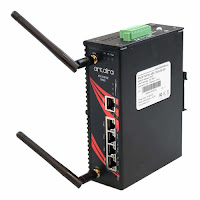
An industrial dual-radio wireless LAN access point optimized with added router capabilities that securely extends connectivity to the ever-growing number of WiFi devices deployed on high-density plant floors has been launched by Antaira Technologies. Empowered by 802.11a/b/g/n/ac Wi-Fi and boasting ultra-reliable stability thanks to the embedded Qualcomm IPQ4029 SoC chipset, the Antaira ARS-7235-5E-AC-T accelerates data transmission speeds up to 867Mbps to facilitate uninterrupted access to a steady, strong wireless signal. Two adjustable MIMO antennas mitigate interference to allow IT professionals to squeeze every inch of reliable range from coverage.

The ARS-7235-5E-AC-T will add value in countless use cases including the enabling of remote monitoring and operation of machinery in harsh industrial environments, the providing of real-time access to WiFi sensors for machine diagnostics and troubleshooting, and supplying wireless connectivity to Autonomous Guided Vehicles (AGVs) and Autonomous Mobile Robots. Its dual-radio (2.4GHz/5GHz) improves plant productivity by enabling multiple devices to concurrently tap into secure, high-speed WiFi signals and automatically find the least congested channel. Five Gigabit Ethernet ports help customers future-proof their networks as they work to digitally transform their operations with next-generation smart sensors, IP cameras, and industrial IoT devices.

Another box the ARS-7235-5E-AC-T checks is compatibility with ConnectVPN, a cloud-based Virtual Private Network (VPN) developed by Antaira for their wireless router series. ConnectVPN implements encrypted VPN tunnels and WiFi routing to securely configure, monitor, and collect data from connected remote devices.

Featuring a true industrial-grade network design, the ARS-7235-5E-AC-T is engineered to withstand conditions that would severely compromise less robust devices. Its metal housing offers IP30-rated protection, along with a temperature range of -35° to 70°C. Antaira backs the ARS-7235-5E-AC-T with five year warranty.

@AntairaTech @OConnell_PR #PAuto

Tuesday, 28 February 2023

Next-generation industrial Wi-Fi access.

The AWK Series is a new lineup of next-generation industrial wireless networking solutions offering 802.11ac Gigabit Wi-Fi, IEC 62443-4-2 SL2 certified security* from Moxa, and dual-band Turbo Roaming™ for unmatched wireless reliability and availability. When combined, these advanced features meet the current and future demands of applications where Autonomous Guided Vehicles (AGVs) and Autonomous Mobile Robots (AMRs) are at the heart of boosting productivity and operational safety, such as mobile automation and IP surveillance in mining, manufacturing, healthcare, and transportation, among others. 

The Moxa AWK Series is made up of three models: the AWK-3252A, AWK-4252A, and AWK-1151C AP/bridge/client.

Enabling Futureproof Wireless Automation.
According to LogisticsIQ’s latest market research study, AGV and AMR Market, the market for AGVs and AMRs are expected to exceed $18 billion (USD) by 2027 with an estimated growth rate of roughly 24% and 43% for the AGV and AMR segments, respectively. The combined number of AGV and AMR installations is set to cross the 2.4 million mark by 2027, paving the way for mobile robots to become the new normal for day-to-day operations.

“AGVs and AMRs bring remarkable benefits to a variety of industries, making them a firmly established part of day-to-day operations, anywhere from manufacturing sites, logistic and warehouse centers, to mining farms, hospitals, and even last-mile delivery vehicles for packages and goods,” said Tony Chen, Product Manager, Industrial Wireless, Moxa, Inc. “We are seeing sophisticated applications emerging in mining, for example, where handling devices are being enhanced with HD video streaming and 3D sensing technology to improve operational efficiency and safety. These developments give rise to innovative remote-controlled solutions that require high-bandwidth wireless infrastructure capable of seamlessly integrating mobile systems and operations.”

Moxa AWK Series AP/bridge/clients simplify wireless operations and the integration of mobile systems outfitted with complex sensors and cameras, while also addressing the heightened requirements for industrial-grade reliable networks. With speeds of up to 400 Mbps on the 2.4 GHz band and 867 Mbps on the 5 GHz band, AWK Series AP/bridge/clients enable a high-bandwidth, dynamic mobile environment to accommodate a large number of devices and support high-volume data communication. In addition, support for one-to-many network address translation (1-to-n NAT) helps optimize the machine integration flow by simplifying IP address assignment while avoiding IP conflicts between existing devices connecting to the OT network wirelessly.

Moxa considers security an integral part of network reliability. Engineered on the principle of Secure-by-Design, the AWK-3252A, AWK-4252A, and AWK-1151C are certified for IEC 62443-4-2 by the IECEE*. Compliance with this standard not only ensures device-level security for industrial automation and control systems (IACS), but also verifies that these devices are suitable for building an IEC 62443-3-3 compliant security environment, resulting in lower development risk, time, and cost. The lineup also supports the latest WPA3 encryption for an additional layer of WLAN security.

Wireless reliability is a key challenge for mobile automation applications. Several long-term stability tests showed Moxa AWK devices achieved an average roaming handover time of less than 150 ms and an average network availability rate of 99.95%. Powered by 802.11ac, the AWK devices support millisecond-level Turbo Roaming and automatic 2.4 GHz and 5 GHz band switching to ensure a seamless transition between APs while on the move.

Moxa AWK devices have RF compliance certifications from the FCC, Industry Canada, Europe, and many other countries. Combined with an intuitive RF configuration tool, the new devices allow users to build a cost-effective single-model inventory for global market development without the need to stock diverse wireless devices due to regional RF regulations.

The AWK's modern user-interface simplifies device configuration and network management. Additionally, a full-feature set of tools simplifies collecting specific data, such as Wi-Fi performance and network services for review and troubleshooting. From the intuitive dashboard, users can get a clear overview of system status. Physical LED indicators on both sides of the device display the status of the AWK regardless of mounting orientation.


*Industrial Certifications - Moxa AWK Series models are certified for IECEx, C1D2, ATEX Zone 2, and E1 Mark to support a wide variety of demanding industrial applications, including hazardous areas.

@MoxaInc @OConnellPR @thelogisticsiq #Pauto #IIoT #Cybersecurity 

Monday, 13 February 2023

E-book for components in automotive design.

Mouser Electronics has announced a new eBook in collaboration with Qorvo, highlighting the technology innovations reshaping automotive design. In The Future of Automotive, subject matter experts from Qorvo and Mouser offer rich, practical analyses of technologies including vehicle-to-everything (V2X) architectures, ultra-wideband (UWB) communications, and on-board chargers (OBC) for electric vehicles.

The automotive industry is currently experiencing a broad range of technological innovations. As automotive manufacturers invest in electric vehicle design, the way in which we power our vehicles is changing. At the same time, new technologies and components are enabling the design of the connected vehicle. These advanced automobiles contain more safety features than their predecessors, while also supporting a variety of new entertainment and information possibilities for those traveling as passengers. The Future of Automotive, the new eBook from Mouser and Qorvo, offers a detailed collection of articles exploring the products and solutions underpinning these innovations.

The eBook highlights product information for six specific Qorvo solutions, connecting automotive designers to the components that will enable the next generation of automobile designs. The QPF1002Q Automotive Front End Module is optimised for cellular V2X systems, supporting real-time monitoring through low-latency direct transmission in the 5.9 GHz Intelligent Transportation System (ITS) band. Qorvo’s QPF1003Q Wi-Fi® Front End Module is designed for multi-standard systems, supporting Wi-Fi infotainment in connected vehicles.

The eBook also features information on the QPQ2200Q 5855-5925 MHz RF BAW Filter. The QPQ2200Q filter enables the coexistence of Wi-Fi and LTE signals with a connected vehicle’s C-V2X/DSRC signals, supporting the array of simultaneous functions required for a next-generation automotive experience.

@MouserElecEU @QorvoInc @Publitek #Automotive #Communications #WiFi

Monday, 31 October 2022

Wi-Fi networks in demanding and device-dense environments.

Two new access points have been added to Westermo's Ibex range of WLAN solutions to provide high-performance data communications onboard trains, industrial vehicles and outdoor applications. The Ibex-1310 and Ibex-1510 are concurrent dual band (2.4 GHz and 5 GHz) access points and clients designed to meet the IEEE 802.11ax standard, also known as Wi-Fi 6. By delivering enhanced performance and speed, especially in device-dense environments, the access points create networks that better support applications such as maintenance access, train data offloading and management systems, and hotspots for passenger Wi-Fi.

The Ibex-1310 is approved for use on industrial vehicles, while the Ibex-1510 has been tested and certified to meet rail standards EN 50155 and EN 45545-2, allowing deployment both onboard trains and trackside. The devices are designed to withstand the tough environment onboard vehicles, including the exposure to constant vibration, extreme temperatures, humidity and demanding electromagnetic environments. An extremely compact and power efficient design enables easy integration in space-restricted installations.

“Wi-Fi 6 is the next-generation wireless standard, that provides improved performance in areas containing lots of connected Wi-Fi enabled devices, faster data transfer speeds, and functionality to enable lower power usage from connected devices,” explained Sami Anttila, Business Development Manager, Westermo. “The new Ibex access points have been designed to deliver these benefits within the demanding environments typically found onboard trains and buses.”

A range of design and construction features helps to ensure a high degree of reliability over an extended lifecycle, which reduces total cost of ownership. A GORE-TEX® membrane prevents internal condensation, while IP66 protection prevents ingress of water and dust, even at the quick connect QMA connectors available on the Ibex-1510. A high level of isolation between all interfaces enables direct connectivity to vehicle auxiliary power and protects against overvoltage and surges.

As with all Westermo networking technology products, the access points are very easy to install, operate and maintain. The two devices are powered by Westermo’s robust and easy to use SW6 operating system, which provides the latest cybersecurity features and updates.

@WestermoUK @westermo @HHC_Lewis #Transportation #Communications #Pauto 

Tuesday, 11 January 2022

Rapid roaming enhanced WiFi.

Rapid Roaming provides many of the same advantages of 802.11r wireless at a much lower cost in areas where necessary infrastructure does not exist.

Modern factories heavily rely on Artificial Intelligence (AI) driven processes in order to optimize every step of production. Often, the sensors used to collect data for AI were connected with slow cable-driven serial protocols with RS-232 cables or twisted pairs for RS-422/485. With the development of newer technologies, however, there has been a transition to Ethernet-based communication. Two main factors played a key role in this process: one, the price of Ethernet nodes went down with the advent of cheap microcontrollers that included fully integrated Ethernet communication hardware in one chipset, and two, sophisticated new sensors came to market that were not compatible with old serial buses.

Rapid Roaming WIFI
To solve these problems, WIFI communication has become a key technology to deliver metrics from sensors, providing freedom from cables and to allow unrestricted 3D movements by a client in motion such as a vehicle or robot.

The trouble is that 802.11ac wireless communication extends only 100 meters, a distance normally not sufficient for reliable service and requiring multiple access points (AP) be installed to cover a large area of operation. A moving vehicle or robot needs to constantly switch over communication to the next strong signal access point.

The best solution is the implementation of 802.11r across the infrastructure that manages the switch-over mechanism with below 50ms transition. However, some areas of a factory or warehouse may not support 802.11r. In this situation, Antaira's new Rapid Roaming enhanced WIFI client is an ideal solution, as it monitors surroundings and prepares new possible access points (APs) connection opportunities before die-down and drop-off connection processes take place. Supported by the new Antaira ARS-7235-AC-T dual-radio industrial WAP, Rapid Roaming protocols seek a new AP when communication is still healthy, assuring superior throughput and faster transitions with below 150ms switch time.

Steps of Fast Roaming
IEEE 802.11R Wireless Roaming
Roaming has been a desired feature in wireless devices for decades. In 2002, the IEEE 802.11r standard was introduced and is still under heavy development with major fundamentals published in IEEE 802.11r-2008. The main goal of 802.11r was to hand over wireless connections between numerous APs along a client travel path without significant delay. It has been particularly important for Voice over Internet Protocol (VoIP) applications where human conversation requires 50ms or better of transmission time to avoid undesired noticeable interruptions. The 802.11r standard allowed for speed with secure and seamless handoffs where authentication and Quality of Service (QoS) configurations were preconfigured ahead of switching to the next AP. It made for a stable throughput of data without delays caused by the regular authentication process.

To implement 802.11r, the wireless infrastructure needs to support this standard. This typically will require significant additional investment as most systems that support 802.11r must have a Wireless LAN Controller in addition to the APs that are then controlled by the Wireless LAN Controller. Applications where necessary infrastructure does not exist and there are cost restrictions, then Antaira Rapid Roaming technology can provide many of the same advantages at a much lower cost.

Steps of Fast Roaming
1) Authentication and QoS
a. In this step, two technologies are properly transitioning. Not just units are connected to one AP, but it has the same privileges in respect to communication priority. It is important in voice-over IP scenarios when delays could affect the human-to-human conversation.
2) Exchange 802.11r (2a - cable, 2b - radio)
a. This special protocol allows to exchange all necessary information ahead of travel path of a client. Making the transition smooth and fast.
3) Travel path
a. This is the way Client travels along the available APs

Infrastructure requirements for rapid roaming

Infrastructure Requirements for Rapid Roaming
1) Same Service Identifier (SSID)
2) Same Password
3) Same Security Mode
4) Sand Band
5) Same Channel Width

In order for the rapid roaming technology to work correctly, it is necessary to use an AP with the same SSID and security key. When rapid roaming is enabled, the client device will be configured to scan for the surrounding APs. It is necessary to set slow scan time intervals to specify relatively slow scans when Received Signal Strength Indication (RSSI) signal levels are high and the client device can comfortably concentrate on delivering the maximum data throughput. Next, specify the RSSI threshold level that will indicate an imminent need for a new connection. When this level is reached, the client device will be performing fast scans looking for a new AP. When it is detected it will authenticate and auto-connect to the new AP while simultaneously dropping the current connection. This active process eliminates weak signals deprived of links and prepares a new connection ahead when needed.

Warehouse application
Additionally, there are two modes of channels for scanning. One mode is “standard” and it works when all the channels are scanned. The other mode is “intelligent” and it works when a client device for example goes back and forth along the same APs. In this scenario, it can learn those APs channels and look for them automatically, further speeding up the reconnection process. 

Warehouse wireless system(Graphic 3)
One example of where this scenario plays out is in a warehouse application with autonomous robots that move about the warehouse stocking shelves and fulfilling orders. Here, a legacy WIFI network was already in place to support employees connecting their PCs, tablets and phones, but the network did not have the necessary equipment to support 802.11r. Antaira was able to provide the solution by fitting each of the robots with an ARS-7235-AC wireless router that could implement Rapid Roaming technology at a fraction of the cost of installing an entirely new wireless network.

@AntairaTech @OConnell_PR #PAuto #Communications

Wednesday, 5 January 2022

High speed industrial applications.

Antaira Technologies has expanded its wireless communication portfolio with the introduction of the ARS-7235-5E-AC dual-band 802.11a/b/g/n/ac WLAN access point with added router capabilities and five gigabit Ethernet ports.

Designed to address the high-throughput requirements of dense industrial applications, the ARS-7235-5E-AC supports a net data rate of up to 867Mbp with 2x2 MIMO future-proof communication. It is embedded with the Qualcomm IPQ4029 SoC chipset so it can concurrently operate on both the 2.4 or 5 GHz bands, plus is backwards-compatible with 802.11a/b/g/n deployments to maximize existing wireless investments.

The unit gives IT professionals the flexibility to balance required wireless coverage with the need for faster, easier deployments, thanks to its compact dimensions, DIN-rail or wall mountable options, secure WPA3 encryption, and low voltage input of 9V. Five gigabit Ethernet ports enable connectivity to laptops, PCs and other wired devices. In addition, it is capable of operating in different modes, which makes it suitable for a wide variety of wireless applications including long-distance deployments.

Like all Antaira wireless devices, the ARS-7235-5E-AC-T is engineered to deliver reliability in harsh environments with a wide operating temperature of -35°C to 70°C, an IP30 metal housing, and its industrial-grade resistance to shock, vibration, power surges, and EMI.

@AntairaTech @OConnell_PR #PAuto #Wireless

Monday, 1 November 2021

Powerful Ethernet switch.

A powerful Ethernet switch, optimised to meet the increasing data communications demands of onboard rail applications has been launched by Westermo. The Viper-8 series is designed to provide high-performance, reliable and secure networks that support important services such as public address systems, passenger information systems, onboard Wi-Fi, video surveillance and train control and management systems.

Onboard data networks must be extremely reliable to maximise the availability of services, support high-bandwidth applications, combat increasing cybersecurity threats and match the long lifecycle of trains. The Viper-8 meets these requirements by offering enhanced full-speed routing through all of its eight gigabit ports. This helps to maximise network performance, provides network designers with greater flexibility, and reduces the number of switches needed for typical consist ring or backbone switching applications. Cyber threats are met by a range of security features, such as routing capacity for network segmentation, secure boot, firewalls, VPN, intrusion detection and access control.

Viper-8 adopts the Westermo WeOS operating system, which offers an extensive suite of IP networking features for resilient and flexible networks, and ensures continued long-term product support. Westermo product lifecycle management complements the needs of the rail industry by providing backwards compatible designs and long-term availability of new designs in the same form factor. The combination of exceptional performance, flexible port configuration and broad range of features provided by the WeOS operating software, creates a versatile solution that is suitable for a broad range of applications.

Compliant with the EN 50155 rail standard, this very compact and rugged device has a GORE-TEX® membrane that prevents internal condensation, and an all-metal casing and IP67 rating, enabling mounting anywhere on the train. Extremely low hardware and software failure rates and low service requirements maximise network availability. To further simplify network design and installation, triple isolation between all interfaces protects against overvoltage and flashover, enabling connection to the train’s auxiliary power.

“Onboard rail systems not only require more robust and reliable data networks, but these also need greater performance and functionality, and lower total cost of ownership,” explained Anders Hanberg, product manager at Westermo. “The Viper-8 has been specifically designed to meet current demands, but also offers functionality and long-term support that ensure the installed networks offer the extended lifecycles expected by train operators.”

@westermo @HHC_Lewis #Transport #Communications

Wednesday, 29 September 2021

Support for Wi-Fi 6E.

ETS-Lindgren has announced support for Wi-Fi 802.11ax tests in the newly opened extension band from 5.925 GHz to 7.125 GHz. Using Anritsu’s Wireless Connectivity Test Set MT8862A, OTA testing on 160 MHz wide channels located in the Wi-Fi 6E band is now available. ETS-Lindgren’s EMQuest EMQ-100 Antenna Measurement Software controls the MT8862A, device modes and all measurement hardware to yield a fully automated TRP or TIS pattern measurement.

The Wi-Fi 6E test package for EMQuest can be applied to existing OTA test systems as an upgrade and is recommended for all new systems testing Wi-Fi SISO or MIMO configurations. User equipment (UE) developers and access point (AP) manufacturers can easily upgrade their OTA chambers to characterize and validate the increasingly pivotal role Wi-Fi plays in user satisfaction.

EMQuest EMQ-100 offers a wide range of fully parameterized test methods for measuring basic antenna performance metrics, as well as testing both radiated and conducted performance of various wireless devices. Flexible in its design, the EMQuest EMQ-100 can be used to analyze antennas in stand-alone applications, or to test an embedded antenna system and radio module against any of the industry standard OTA-radiated performance test requirements.

Anritsu’s Wireless Connectivity Test Set MT8862A supports the latest Wi-Fi technologies, including 802.11ax in 80 MHz legacy bands and 160 MHz in the Wi-Fi 6E band. The Anritsu MT8862A, dedicated to the WLAN standard, is optimized for stable and reliable connections with wider dynamic range, even in a faded environment. It is enhanced with a new radio module to support the 6 GHz band and 160 MHz channels, in addition to existing 2.4 GHz and 5 GHz band support. The test configuration is easily expanded to support 2x2 MIMO measurements using two MT8862A WLAN testers.

6 GHz has for a long time been the upper frequency limit of most public communication systems. This is now changing with the WLAN standard IEEE 802.11ax expanding up to 7.125 GHz range (“Wi-Fi 6E”). The growth of WLAN connected devices and services are expected to benefit greatly from this increase in available frequency space and number of 160 MHz channels.

ETS-Lindgren’s flexible approach to instrumentation remains a key advantage for OTA test labs. ETS-Lindgren has a long tradition in supporting all major instrumentation manufacturers, including those addressing the new 5G, Bluetooth® and Wi-Fi technologies. James Young, Director of Business Development with ETS-Lindgren said, “Our software team does a top notch job at supporting the constantly evolving OTA measurement requirements. Feedback from system users tells us the flexibility to choose best-in-class instrumentation across brand and model number is a key decision point in our favor. While it is not easy to keep up with all the firmware and hardware changes happening in wireless technologies, great partners like Anritsu really help.”

Industry benefits from this collaboration and the availability of instrument-agnostic EMQuest software.
Anritsu Market Development Manager, Keyvan Yasami, added, “Expanding the frequency range to 6 GHz spectrum and addition of 160 MHz bandwidth supports the most recent regulatory and industry requirements for conformance and performance evaluation. This addition enables R&D applications as well as certification testing in a single integrated test platform. It continues Anritsu’s commitment to developing solutions that meet the design test requirements associated with emerging technologies.”

@AnritsuEMEA @anritsu @ETSLindgren @NapierPR #TandM #Communications

Tuesday, 7 September 2021

Testers ready for PoE.

A promotion to encourage customers to upgrade old cable testers to ensure that their wired Internet of Things (IoT) networks comply with the standard requirements for Power over Ethernet (PoE) has been launched by Fluke.

As people, processes, data and devices connect to the Internet and each other, demand for better network access with minimum disruption is leading to increased installations of PoE infrastructure and compatible devices across a wide range of industries and applications. Recent research conducted by Cisco revealed almost 70 per cent of networked devices in Western Europe will be wired or connected via Wi-Fi by 2023.

Trade-In promotion
For a limited time, Fluke Networks is offering up to € 2500 trade-in discount on an old copper cable tester. Customers who trade in their old testers of any make or model can get a new Fluke cable analyser that meets the latest PoE standards at a reduced price. This promotion is available to customers from 1 September to 15 December 2021. Customers can simply purchase their desired cable tester available as part of the Trade-In offer from their preferred participating distributor. 

Nicolas Bravo de Medina, Marketing Director EMEA at Fluke said: “Wired devices will increasingly be powered by PoE as it offers lower cable costs, simplified infrastructure management, easier maintenance, less downtime, greater installation flexibility, and reduced power consumption. With the DSX2-5000 and DSX2-8000 CableAnalyzersTM customers can certify the modular plug terminated link that typically connects the PoE device to the network. On top of that they can execute ‘+PoE’ tests that trigger a complete set of resistance measurements that ensure proper PoE connection is possible on the link. This will give our customers the confidence and peace of mind that their network meets the latest PoE standards and is ready to use this highly beneficial connectivity technology.”

@FlukeNetDCI @FlukeCorp @NapierPR #TandM #PAuto #IoT

Monday, 28 June 2021

CAN communication via Wi-Fi or Bluetooth.

Since its launch five years ago, the Anybus® Wireless Bolt™ has provided thousands of industrial applications with wireless Ethernet access. With a rugged and unique form factor for bolt-on-machine mounting, it is today proven and trusted in the most demanding industrial applications. Use cases vary from warehouse installations and AGVs to manufacturing of food, underground mining or rough outdoor applications. Building on the success, HMS now launches the Anybus Wireless Bolt CAN, featuring CAN-based communication to the host equipment.
The new Anybus Wireless Bolt for CAN enables CAN-based, heavy-duty machinery and applications to transfer CAN data over a robust wireless link. Wireless communication is established either over a fast Wi-Fi connection or a reliable Bluetooth link. The CAN data is transported over a TCP/IP link which enables other standard Wi-Fi infrastructure to also connect to the wireless link if desired.

A typical use case is wireless access to CAN data from an industrial vehicle, such as a bulk material transport truck. For example, with the Anybus Wireless Bolt CAN, J1939 CAN data is easily communicated to a handheld tablet which gives the operator full control and visibility of the ongoing bulk material filling process.

Anybus Wireless Bolt CAN is fully transparent when it comes to transporting CAN data, meaning that it works with any CAN-based protocol, including CANopen. This opens the possibility to create mobile automation islands in any manufacturing process – the Anybus Wireless Bolt CAN will bridge the CANopen line wirelessly.

A wide range of wireless connectivity options for industrial networks and IoT applications In addition to the new Anybus Wireless Bolt CAN, the Wireless Bolt product family includes other versions which can connect to the host equipment using serial and industrial Ethernet connectivity. On the wireless side of the Wireless Bolt, the Wi-Fi and Bluetooth options were recently complemented with a version that supports the new LTE standards NB-IoT and CAT-M1, targeting IoT applications.

@hmsnetworks @CANopen @mepaxIntPR  #PAuto #Communication