Showing posts with label POE. Show all posts

Tuesday, 18 August 2026

Protection from lightening, surges and voltage spikes.

The LSP Series is a new line of multi-port Power-over-Ethernet (PoE) surge protection devices from Antaira Technologies. Engineered to safeguard industrial networks, the LSP Series shields connected PoE devices from lightning strikes, electrical surges, and transient voltage spikes. The LSP Series is IP30-rated, DIN-rail or wall mountable, and built to perform from -40°F to 167°F (-40°C to 75°C). It delivers zero-compromise protection, even in the harshest industrial environments.

"Our new LSP Series safeguards PoE devices up to 100W, ensuring operational continuity for the critical systems that depend on them," said Joe Cook, General Manager, Antaira Technologies. "As PoE power budgets continue to grow and network speeds of up to 10GbE become increasingly common, that level of protection isn't optional anymore — it's foundational."

Protection scales with the network.
The series is available in two configurations: a dual-port model LSP-0200X-bt-100-T for two data lines and a four-port model LSP-0400X-bt-100-T for four data lines. Both models deliver 100W 802.3bt PoE++ pass-through per data line and support data speeds from 10/100M up to 10GbE.

Compared to single-port units, the LSP-0200X-bt-100-T and LSP-0400X-bt-100-T offer integrators and IT teams a lower cost-per-port and simpler installation through their multi-port design. This makes the Antaira LSP Series a compelling option for large-scale deployments across utility sites, large warehouses, transportation hubs, and industrial plants.

Target applications.
Modern industrial PoE infrastructures sit exposed on the front lines, where a single transient surge current can shutdown critical communication systems in an instant. The Antaira LSP Series stands guard against that threat, engineered to absorb and redirect up to 10kA of surge energy away from sensitive PoE-powered devices before damage happens, not after. Built for the environments where failure isn't an option, the LSP Series keeps your network running when it matters most:

  • Security and surveillance: IP cameras at building perimeters, parking lots, traffic intersections, campuses, and other outdoor installations.
  • Intelligent transportation systems (ITS): Traffic cameras, license plate recognition (LPR) systems, roadside communication devices, and digital message signs.
  • Wireless networking: Outdoor Wi-Fi access points, wireless bridges, mesh network nodes, and small-cell infrastructure.
  • Industrial automation: Outdoor Ethernet switches, remote I/O cabinets, process monitoring equipment, and SCADA networks.
  • Smart city infrastructure: Environmental sensors, smart lighting controllers, emergency call boxes, public Wi-Fi, and IoT gateways.
  • Building automation: PoE-powered access control systems, intercoms, IP speakers, and outdoor building management devices.
  • Energy and utilities: Substation communications, solar monitoring systems, EV charging communications, and remote telemetry equipment.
  • Transportation hubs: Airports, seaports, rail stations, and transit facilities with mission-critical PoE-connected devices.

@AntairaTech @OConnell_PR #PAuto #Safety #PoE

Monday, 10 August 2026

AC-Powered PoE injector.

Simple AC plug-in PoE++ injector supplies power over a single Ethernet cable to industrial automation, security, and transportation deployments.

Antaira Technologies' INJ-0201G-bt-AC-100-T has just been unveiled. This a high-power  Power over Ethernet (PoE) injector engineered to deliver the robust, reliable power today's mission-critical Powered Devices demand. Featuring an integrated AC power input, this injector delivers reliable, high-wattage performance in the toughest environments and stands up to wide temperature swings. Users can simply plug it into any 100-240VAC wall outlet to unlock up to 90W of 802.3bt power, 100W High PoE, or 100W four-pair (4PPoE) output from a single connection, seamlessly enabling PoE deployment in non-PoE environments.

Connects to existing networks
The Antaira INJ-0201G-bt-AC-100-T PoE Injector delivers both high-power PoE and Gigabit data to IP cameras, motorized PTZ cameras, Wi-Fi 6 and Wi-Fi 7 access points, and industrial sensors on existing networks. Simply connect the AC Injector between a standard non-PoE switch and the Powered Device (PD). The result: fewer cables, faster installs, and PoE capability added to legacy infrastructure using what's already installed.

Maximum power, maximum reliability.
With up to 100W of PoE++ power, the INJ-0201G-bt-AC-100-T is built for the field, powering automation equipment, IP security systems, and transportation infrastructure while performing reliably in extreme heat or bitter cold. The device gives integrators a simple, drop-in path to full PoE++ power without compromising ruggedness, compliance, or reliability.

  • 10/100/1000TX Gigabit Support: Full-speed data and PoE output on a single port, ready for high bandwidth applications.
  • IEEE 802.3af/at/bt PoE++ Compliant: Backward- and forward-compatible designed to meet a spectrum of PoE standards.
  • Up to 100W Output: Delivers up to 100W on the PoE port, 90W bt, a.PoE 100W including 95W High PoE, and 4PPoE 100W, with an Enhanced PoE mode purpose-built for the industry's most power-hungry PDs.
  • Integrated 100-240VAC Power Input: allows the PoE injector to be plugged directly into a standard wall outlet for full 100W PoE output.
  • Fanless, IP30-Rated Design: Silent, dust-resistant operation with no moving parts.
  • Extended Operating Temperature Range: -40°C to 75°C (-40°F to 167°F).


@AntairaTech @OConnell_PR #PAuto #Communications

Tuesday, 5 May 2026

High-power for Industrial artificial intelligence ready networks.

Henry Martel, Field Application Engineer, Antaira Technologies, discusses how High-Power PoE solutions help ensure that industrial networks remain reliable, scalable, and ready for the next generation of edge intelligence.

High-Power PoE (IEEE 802.3bt) is the power infrastructure the intelligent edge has been waiting for. As factories automate, smart cities scale, and mission-critical networks push compute closer to the action, a single cable now needs to do it all: deliver the bandwidth and the wattage to keep pace with multi-sensor fusion, advanced imaging, and real-time analytics. IEEE 802.3bt rises to meet that demand, purpose-built for an era where edge devices don't just connect, they compute.

Earlier PoE standards, IEEE 802.3af (15.4W) and 802.3at (30W), were not designed for this new generation of Ai-enabled edge devices. Today’s 4K/8K security cameras, Wi-Fi 6/7 APs, and IIoT sensors frequently exceed 30 to 60W of power consumption, creating the need for a new standard supporting the next decade of power-hungry edge equipment.

IEEE 802.3bt meets this demand head-on. It delivers up to 90W-100W per port at the PSE, enough to power AI-enhanced vision and inference modules. Industrial analytics systems run with the stable, uninterrupted power they need for real-time operation, while the standard's backward compatibility makes scaling Ai and IIoT deployments straightforward and future-ready. In short, High-Power PoE has become a foundational element for Industrial AI-Ready Networks.

Built for the AI-Driven Industrial Edge.
Prior PoE standards were limited by available power, leaving them unable to meet the requirements of PTZ cameras, robotics, LED lighting, RFID readers, or HD/4K displays. Power dissipation further constrained deployments. For instance, while an 802.3af PSE can supply 15.4W, the PD receives only 12.95W.

This table shows the effective power a PD receives under different PoE standards.

Defining Power Across Classes.
The IEEE 802.3 framework defines PoE power levels across Classes 0 to 8, giving engineers precise power budgeting and interoperability between PSEs and PDs. IEEE 802.3bt (Type 3/4) extends that range with Class 5–8 support while maintaining full backward compatibility with 802.3at/af. This way, mixed-generation devices coexist on the same network without compromise.

Optimised Power Management Through PD Type Recognition. IEEE 802.3bt introduces several enhancements that improve PoE predictability and efficiency:
  • Single- vs. Dual-Signature PDs: Single-signature PDs use one classification circuit, while dual-signature PDs separate power to functional modules such as heaters and PTZ motors.
  • Connection Check: bt PoE can distinguish between these PD types. This is something af/at could not do.
  • Autoclass: Enables the PSE to measure a PD’s actual power draw for more accurate budgeting in multi-port deployments.

Together, these enhancements improve system stability and enable more efficient use of available power resources.

Key Applications for High-Power PoE.
With up to 90W per port, High-Power PoE supports edge devices that previously required local power sources:

  • PTZ & AI-Enhanced IP Cameras: Motors, IR, heaters, and onboard Ai modules often exceed 30 to 60W. High Power PoE ensures full functionality via a single cable.
  • LED Lighting & Smart Buildings: High-Power PoE can power advanced luminaires and control modules, while reducing standby consumption for greater energy efficiency.
  • Wi-Fi 6/7 Access Points: Multi-radio APs often require 60W+ for sustained throughput. The bt PoE supports stable operation without external power.
  • Next-Generation IIoT Sensors: Sensors with local processing, wireless modules, or multi-function capabilities now rely on bt PoE for stable, centralised power delivery.

Choosing an 802.3bt Industrial PoE Switch.
Deploying bt PoE requires careful evaluation of PD power requirements and overall switch power budget. Both the PSE and PD must be compliant with IEEE 802.3bt to ensure safe and predictable operation.

Although many vendors advertise 802.3bt compatibility, some only support Type 3 (60W). Antaira provides full Type 3 and true Type 4 (90W) power across industrial managed switches, unmanaged switches, injectors, and media converters. Flagship examples include the LMP-1204G-SFP-bt-T (pictured), a 12-port Gigabit Layer 3 Lite managed switch capable of delivering Type 4 power across multiple ports.

Across its portfolio, Antaira’s high-power PoE solutions offer:
• Robust industrial performance
• Full IEEE 802.3bt compliance
• Up to 100W per port for high-power PDs and future-proof deployments
• Support for high-density, multi-device deployments
• Over 200 models across nine product lines for diverse industrial environments

To address practical challenges in field deployments, Antaira incorporates several patented mechanisms throughout the system lifecycle to improve operational robustness. These include long-distance remote recovery, automatic adjustment of power budgets when input voltage varies, uninterrupted PoE during firmware upgrades, and controlled power-off to prevent electrical arcing during cable removal.

The Edge Just Got More Powerful.
High-Power bt PoE delivering up to 90W dramatically expands what's deployable at the network edge. With 4-pair powering, improved efficiency, and seamless backward compatibility, IEEE 802.3bt Type 4 has become a core enabler for modern industrial, smart building, and IIoT infrastructures.


@AntairaTech @OConnell_PR #PAuto #Ai

Wednesday, 8 January 2025

Powering up IIoT!

Henry Martel, Application Field Engineer, Antaira Technologies explores how PoE effectively tackles the power challenges of the IIoT. He also discusses how PoE is incorporating new intelligent features for more efficient power management and control. 

The Industrial Internet of Things (IIoT) is increasingly being made possible by Power over Ethernet (PoE). In the past, installing data-gathering devices in industrial settings, especially at the network’s edge, was a complex task due to the need for individual power supplies, intricate wiring, limited mounting options, and extra costs. By delivering power and data over Ethernet cables, PoE has simplified connectivity for the growing range of PoE-enabled industrial devices, such as IP cameras, smart sensors, and other data collection tools, making build-outs more convenient and cost-effective.

IIoT: The Future of Manufacturing.
The transformative application of IoT technology in industrial processes and applications is known as the IIoT. Connection of machinery, network devices, smart sensors, and software, the IIoT gathers, enables the exchange and analysis of data at every stage of the production process. As a result, seemingly unrelated information becomes valuable insights that can be acted upon, inspiring a new era of productivity. By enhancing visibility, the IIoT also helps businesses identify potential inefficiencies – such as underperforming machinery, excessive power consumption, or processes causing bottlenecks – to reduce downtime. Examples of the IIoT in action include automation, predictive maintenance, quality assurance, smart logistics, and product development, among countless others.

PoE is an IIoT Game-Changer.
The evolution of PoE standards from 802.3af (PoE) and 802.3at (PoE+) to the latest ultra-high power 802.3bt (PoE++) is a testament to the technology’s adaptability and future potential. With maximum power support of 90 watts, PoE now applies to a broader range of industrial verticals, bringing the following benefits:

  • PoE can slash overall installation costs by up to 50 percent by eliminating the need for separate electrical wiring, conduit, safety equipment, and power outlets. This also expands options for how and where end-devices can be mounted.
  • PoE systems offer stability since they adhere to the strict regulations of the IEEE for more reliable network connections and smoother operation. These standards also incorporate mechanisms that ensure compatibility between devices and protect those devices that do not support PoE.
  • PoE improves employee safety by eliminating the requirement for high-voltage power cables. PoE operates at a lower voltage, typically 48VDC, which is considered safe for handling. Conversely, 120VAC is 2.4 times higher than 48VDC, plus AC is generally considered more dangerous because its alternating current can disrupt the electrical signals in the human body, especially the heart.
  • PoE opens up new opportunities for scalability. PoE-enabled IIoT devices can be installed in remote areas without available local power or easily relocated up to 100 meters from power-sourcing equipment. Cable length can also be extended beyond 100 meters using a repeater or another industrial PoE switch.
  • PoE allows for centralized power management.
  • PoE improved the continuity of power delivery by offering backup power options.

Another plus for PoE is that its power can be automatically shut off or reduced for non-essential devices when they are not in use. If the power budget is overdrawn, PoE switch ports can be configured to receive power from higher-priority devices. All these advantages make PoE a game-changer for IIoT.

Power Delivery Process.
Power Sourcing Equipment (PSE), which can be either an industrial switch, router, or other network device that supports PoE, provides DC power over an Ethernet cable to Powered Devices (PDs). Typically, the power supply is 48V-55V DC, although some devices may support higher or lower voltages depending on their specific needs.

Ethernet cables are the backbone of PoE technology. These cables contain four twisted pairs of copper wires, which are used to carry both the data signals and the DC power required by powered devices. To ensure reliable and efficient transmission, the Ethernet cable must be Category 5e (Cat 5e) or higher. However, note that using Cat5e to power Class 3 or Class 4 PD devices may cause them to overheat. Cat 6A is therefore recommended, especially for longer distances. Proper connectivity is also crucial; the Ethernet cable must be securely connected to both the PSE and the PD to maintain a stable and reliable connection.

Standard Configurations Simplify Installation.
The 802.3af, 802.3at, and 802.3bt standards of the Institute of Electrical and Electronics Engineers (IEEE) regulate PoE. These standards outline the requirements for both the PSE and the PD, including the maximum amount of power that can be supplied and the signaling mechanisms used to negotiate power requirements. Typically, the configuration process involves setting up the PSE to supply power to the PD, with the PD communicating its power needs to the PSE through a standardized protocol, also known as the handshake. This negotiation process is usually automated, ensuring that the PD receives the appropriate amount of power without manual intervention. Adhering to these standards ensures compatibility across different PoE devices.

The Antaira LNP-C501G-SFP-bt
Availability and Redundancy.
High availability and redundancy are essential in industrial applications to minimize downtime and achieve continuous operation. PoE technology addresses these needs by allowing for redundant power supplies and dual power input configurations. Redundancy helps the device remains operational even in the event of a power source failure.

Redundant power supplies enable a device to continue operating even if one power supply fails, while dual power input allows the device to be powered from two separate power sources. By incorporating these features, PoE enhances the reliability and resilience of networked systems, making it a robust solution for critical industrial applications.

Smarter PoE Switches for the IIoT.
Antaira PoE Ethernet switches adhere to IEEE standards, serving as foundational PSEs for IIoT networks. Beyond compliance, their industrial PoE switches incorporate patented technologies that add intelligence to networks. Let’s explore how these innovative features work:

  • Safe PoE Disconnect: To meet the rising number of high-power PoE cameras, wireless and LIDAR installed in various applications, Antaira developed the patented Safe PoE Disconnect technology supported by unmanaged IEEE 802.3bt industrial ethernet switches. Safe PoE Disconnect is a hardware safety feature that lets engineers easily turn on/off power to a single 802.3vt PoE++ port using a front panel DIP switch. Turning off the DIP Switch allows the end device to be safely discovered.
  • Persistent PoE: During a switch firmware update, persistent PoE enables their industrial switch to reboot while continuing to provide PoE power to a connected PD. It keeps connected devices powered on to avoid the end device reboot, which otherwise can result in several minutes of device downtime.
  • Power Remote Reset Technology (PRRT): Available on Antaira LNP-C501G-SFP-bt-T and IMP-C1000-SFP-bt-T series products, PRRT allows a user to reset a PD at a remote site without physically visiting the location, helping to save on travel costs and minimizing powered device downtime.
  • iPoE Budget Control: To protect connected devices in applications where input voltage varies, Antaira has designed an automatic mechanism -- “Intelligent PoE” or “iPoE” for short -- with patents in the USA and Taiwan.
  • This technology further confirms the power input voltage of the PSE before determining the safe maximum power output budget to allocate to the PD. For example, when 12VDC is powering the industrial switch, the switch auto-senses the voltage input and limits the PoE power budget to 90 Watts. In contrast, if the voltage input increases to 24VDC, it would increase the PoE power budget up to 150 Watts.
  • Low-Voltage PoE: Although not a patented technology, Antaira low-voltage PoE opens up new opportunities in network design. Adding an internal DC-to-DC power boost to select models allows low-voltage PoE to power up to 90W bt PoE++ from a low-voltage input, such as 9VDC, 12VDC, 24VDC, or 36VDC.

Partner in IIoT for Industrial PoE Switches.
PoE helps network engineers start fast, scale easily, and evolve IIoT projects to meet changing market dynamics. The diversity of possibilities the IIoT offers means that organizations may have multiple IIoT projects ongoing simultaneously, in a mix of small and large, some internally focused and others externally.  Antaira offers an extensive range of PoE solutions, including managed and unmanaged Ethernet switches in IEEE PoE at/af/bt standards, alongside PoE injectors and media converters.


@AntairaTech @OConnell_PR #PAuto #Ethernet #IIoT

Friday, 6 December 2024

Power over Ethernet.

Discussion by by Henry Martel, a Field Application Engineer with Antaira Technologies

As global industries transition to the digital realm, standalone remote sites are following suit. Whether these sites are located in a barren desert, on an offshore oil platform, or across a corporate campus, remote sites introduce challenges for industrial enterprises but also deliver significant benefits. Supplying power to heavy equipment deployed in these locations -- which are frequently in geographically isolated areas unconnected to the electrical grid -- is a major challenge. For instance, remote oil field operations must rely on diesel generators or solar power systems with battery storage where no grid is available.

Although far less demanding than drilling equipment or process machinery, the network hardware providing connectivity for the site also consumes electricity. Power over Ethernet (PoE) technology offers a streamlined way to supply low-voltage DC power to Powered Devices (PDs), such as IP cameras, sensors, and wireless access points, over the same Ethernet cable transmitting data. PoE injectors and extenders work especially well in remote sites because of their compatibility with both new and legacy hardware, cost-effectiveness, flexibility in device placement, and remote manageability.

Powering remote devices with PoE.
A range of networking devices are required in the successful operation of remote sites. For organisations with highly distributed assets, remote monitoring devices reduce unnecessary maintenance cycles by addressing equipment issues before they become critical. IoT sensors at the remote site collect data on process performance, machine health, energy consumption, environmental conditions, and other valuable data. Connected equipment can be diagnosed and problems remediated remotely, saving the enterprise valuable time and travel expenses.

Also, since the majority of remote sites are unmanned, IP cameras, proximity sensors, access control systems, and smart lighting are commonly installed for security. When crew members are on-site, internet connectivity is critical to facilitate communication. Depending on the location's remoteness and bandwidth needs, cellular networks like 4G LTE or 5G, satellite internet, or specialised private networks can provide internet connectivity.

In most cases, PoE injectors and extenders are far better options than a nearby electrical outlet. In fact, sometimes they are the only options. Both can supply the necessary voltage and current to support power-hungry devices. Over the last decade, PoE technology has evolved through standards development to provide higher power capacity. PoE injectors and extenders adhere to IEEE 802.3af (15W), 802.3at (30W), and 802.3bt (60W or 90W) standards, which define the industrial specifications for this technology.

Ethernet distance limitations.
Long cable runs are usually needed for remote locations. However, a standard Ethernet cable can only function up to 100 meters (328 feet). Beyond this limit, data signals will become distorted due to wire resistance and electromagnetic interference (EMI). As cable distances increase, resistance goes up, resulting in higher heat generation, which attenuates and distorts data signals. Data signal loss will also occur during transmission due to extended exposure to EMI generated by the flow of electricity. Furthermore, the cable's insulation shield will eventually absorb data signals, worsening degradation.

Like data signals, PoE transmission is impacted by extended cable lengths. The main culprit is voltage drop. Voltage drop refers to the measured power delivered by power sourcing equipment being higher than the power available at the powered device. As the distance increases, so does the power loss. Substantial voltage drops will threaten the functionality of the end device.

PoE injectors and extenders are widely used solutions in these situations. Let’s examine both.

1. PoE injectors.

Antaira PoE injector 
PoE injectors are simple, inexpensive standalone devices. As their name implies, they inject power onto an Ethernet cable so that the cable can simultaneously transmit data and energy to a connected PoE-compatible device. The PoE injector combines a power port and data cable into a single PoE output port. The powered gadget at the receiving end isolates the power and data for its intended use.

PoE injectors draw power by connecting to a wall outlet or a power supply inside a network cabinet. They apply this power to the Ethernet cable through a technique known as modulation. Modulation is the superimposing of direct current (DC) onto an alternating (AC) data signal. This process enables the injector to combine power input and data cables into a single PoE output, which the receiving device or router can use for its intended purpose.

Per the Ethernet standard, the maximum distance between a PoE injector and the non-PoE switch is 328 feet (100 meters). However, multiple injectors can be installed to extend the cable distance if necessary. Each additional PoE injector provides power to the extended Ethernet cable, compensating for voltage drop and allowing for longer cable runs. Besides injecting energy into the cable and possibly extending it, PoE injectors also eliminate the need for separate power cables for remote devices, reducing clutter and installation complexity in tight spaces. They also eliminate the cost of replacing an existing non-PoE Ethernet switch with a new PoE switch when upgrading a network to PoE capabilities.

As an example of this technology, let's look at the Antaira INJ-0200G-60-24-T industrial PoE Injector. This high-power model adheres to IEEE 802.3bt Type 3 PoE, delivering up to 60W of power to end devices, yet is backward compatible with previous 802.3af/at standards to support legacy devices. It is also IP30-rated, DIN-rail mountable, and supports an extended temperature range from -40°C to 75°C, making it suitable for outdoor or industrial applications. Its robust design and versatile compatibility make it a smart choice for remote sites.

2. PoE Ethernet extenders.

Antaira PoE Extender
By using regeneration, PoE extenders—also referred to as PoE repeaters—can transmit PoE power to devices beyond Ethernet's 100-meter limit without experiencing packet loss. PoE extenders expand the network's coverage area and simplify network architecture by reducing the need for numerous power sources. Additionally, some PoE extender types can be daisy-chained to increase the overall connection distance although extension distance may vary depending on the extender, the cable's quality, and the connected device's power needs.

Conveniently, a PoE Extender does not require an AC power connection. Instead, it consumes some of its power it receives from the power source equipment to run itself. It transfers the remaining energy to an end device or to another PoE extender. Because PoE extenders are compatible with IEEE 802.3af, 802.3at, and 802.3bt, they can be used in a variety of network configurations and remote sites.

The Antaira LEP-401M-KIT serves as an excellent example. For optimum range, this plug-and-play kit includes a long-reach transmitter and a long-reach receiver. By enabling simultaneous power and data transmission up to 800 meters, it removes the inconvenience of daisy-chaining several PoE extenders. The kit offers versatility and ease of integration by being compatible with 802.3af/at and providing up to 30 Watts to IP cameras, WAPs, and VoIP phones, among other devices.

Conclusion.
Industrial PoE injectors and extenders help build and maintain reliable network architecture in remote industrial sites. These simple plug-and-play devices maximize cost-effectiveness, speed, scalability, and performance by enabling seamless data transmission and power integration over a single cable.


@AntairaTech @OConnell_PR #PAuto #Communications

Tuesday, 2 January 2024

Passive PoE Injector for high temperature installations.

Balancing device power requirements with budget limitations is a challenge for industrial networks, one that Antaira is answering with its new INJ-C200G-PASS-T, an industrial-rated Gigabit Passive Power over Ethernet (PoE) injector. By deploying the INJ-C200G-PASS-T, a network administrator can reliably supply up to 90 Watts of power to Passive PoE devices, such as cameras, IP phones, and WiFi access points, in a wide temperature range.

The INJ-C200G-PASS-T provides power flexibility in extreme environments. Its plug-and-play design brings instant PoE capability to non-PoE Ethernet switches. Able to be either DIN-rail or wall mounted, the highly versatile INJ-C200G-PASS-T supplies up to 90 watts of PoE power through a 10/100/1000Tx Gigabit copper port.

Another advantage of the INJ-C200G-PASS-T is its rugged design. Standard commercial-rated PoE injectors cannot be used in harsh industrial or outdoor environments subject to wide temperature swings, heavy vibration, and humidity. That's why Antaira housed the INJ-C200G-PASS-T in an IP30-rated metal enclosure, with support for an extended operating temperature range of -40°C to 75°C (-40°F to 167°F) and protection from overload current and reverse polarity. It is a safe choice for outdoor NEMA cabinets and industrial applications.

The INJ-C200G-PASS-T features a Power Input Range of 12VDC to 55VDC and Power Output Range supporting between 12VDC to 55VDC Passive PoE. It has a 4-pin removable terminal block for 12VDC to 55VDC power input, permitting dual redundant power supply connections.


@AntairaTech @OConnell_PR #PAuto #Harsh

Thursday, 2 June 2022

Power to managed switches.

Technology prevents power drop during switch firmware upgrades

When deploying managed PoE switches in an industrial network, upgrading firmware is an inevitable action to enhance switch performance. However, upgrading typically requires devices powered by the switch's PoE to be shutdown for up to 15 minutes or more. As a result, data from these Powered Devices (PDs) that businesses rely upon to make informed decisions cannot be captured. PoE-powered PDs at risk include IP cameras, sensors, PLCs, VoIP phones, PoE lighting, and non-PoE switches.

Antaira provides an innovative new solution to this problem by integrating Persistent PoE technology into its 802.3bt PoE managed switches. This patented technology ensures power is continuously carried to PDs during firmware upgrades so data collection is not terminated, plus it prevents connected PDs from rebooting once power is restored. Uninterrupted PD availability is mission critical in IP video surveillance, Intelligent Traffic Systems, Smart Factories, remote kiosks, and automated parking — all applications that would benefit from Persistent PoE.

As enterprises modernize, they're increasingly adopting PD devices and facing greater exposure to the danger of lost PoE power that will compromise data collection and video monitoring. Antaira Persistent PoE technology mitigates this risk. Customers can opt for Antaira LMP-1204G-SFP-bt, LMP-0702G-SFP-bt or LMP-C602G-SFP-bt series managed switches, featuring a mix of 6 to 12 Ethernet and SFP fiber ports combined with 802.3bt PoE++ delivering up to 90W per port with the reliability of Persistent PoE.

@AntairaTech @OConnellPR #PAuto #Communications
Friday, 14 January 2022

OCR in freight terminals.

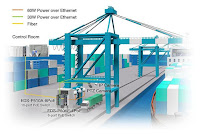
An American global port operator deployed Moxa PoE+ (Power over Ethernet) switches to provide highly reliable data transmissions for their crane optical character recognition (OCR) system. The OCR system tracks the loading and unloading of freight containers at port terminals, and may help in lessoning the severe supply chain issues currently impacting the global economy.

As the key to automating the cargo handling process, the OCR system improves the efficiency of moving containers from ship to shore and reduces occupational hazards for personnel. In order to realize these benefits, the port system integrator had to overcome critical challenges to building a reliable crane OCR system. These challenges included deploying wiring in an environment with many obstacles, providing power supply for a variety of high-resolution outdoor cameras, ensuring reliable data transmissions, and reducing maintenance efforts.

To automate the container checking process, the crane OCR system is equipped with multiple cameras to capture images of all passing containers, including each container’s serial number, from different angles. Some of these cameras are high-resolution PTZ (Pan Tilt Zoom) cameras that have above-standard requirements, such as input of 60W per port. Moxa provided a complete portfolio of switches to satisfy all camera requirements. 

Solutions included the EDS-P506E-4PoE managed switch, which provides high power output of up to 60W per port. Where the demand for power was not high, other cost-efficient options such as the Moxa EDS-P510A-8PoE managed switch, was installed. The managed switches provide high MTBF and protect against extreme environments where outdoor crane systems are often used. Moreover, Moxa PoE managed switches include a built-in “Smart PoE” feature to support remote powered device (PD) management, including PD status monitoring, remote PoE port power cycling, and PoE port power cycle scheduling. These switches not only satisfy all of the system requirements, but also enable smooth operation and reduce overall maintenance costs.

Moreover, reliable data transmission is necessary for sending real-time images back to the port terminal’s remote control center for further identification and analysis. Moxa’s redundancy technologies, Turbo Ring and Turbo Chain, are specially designed to protect networks against transmission failures. Turbo Ring and Turbo Chain both support millisecond-level fast recovery to ensure that there are no interruptions to image data transmissions.

In certain situations redundancy technologies alone may not suffice, for example, a device could malfunction or lose cable communications. By using Moxa MXview or MXview ToGo graphical network management software, system administrators can remotely visualize the crane OCR system network to gain immediate insights and take the necessary steps to resolve network problems.

@MoxaInc @OConnell_PR #PAuto #Transport

Wednesday, 24 November 2021

Waterproof managed Ethernet switch.

A new line of industrial M12 managed Ethernet switches - the LMP-1802G-M12-10G-SFP-67-24 and LMX-1802G-M12-10G-SFP-67 Series has been announced by Antaira Technologies.

The PoE Version
Their LMP-1802G-M12-10G-SFP-67-24 Light Layer 3 managed Ethernet switch series offers dependability and ease-of-use functionality in harsh industrial environments. The IP67-rated switch was designed specifically for industrial applications that are subject to high vibration and shock, water, and dust.

These switches offer 24 to 55VDC redundant power inputs through a 5-pin M12 K-coded male connector. The total power of 240W is available for supplying up to 16 IEEE 802.3af (PoE) & 802.3at (PoE+) devices. Built-in fault tolerance ensures against PoE system or PD overloads thanks to the PSE management system. In the cases of complete power failure, the LMP-1802G-M12-10G-SFP-67-24 uses bypass technology to keep data communication flowing even if the switch is offline.

Their LMX-1802G-M12-10G-SFP-67-24 Series has the same features as the LMP-1802G-M12-10G-SFP-67-24 Series except for the PoE functionality.

@AntairaTech #PAuto #Communications

Thursday, 27 October 2016

Power over Ethernet Plus (PoE+) Gigabit Products.

Three new additions to their N-Tron® series of industrial Power over Ethernet Plus (PoE+) Gigabit products: NT24k-16TX-POE, 1008TX-POE+ and 1000-POE4+ have been announced by Red Lion Controls. These new POE+ switches and injectors complement Red Lion’s industrial networking portfolio to offer customers additional PoE options that drive operational efficiencies while addressing industry demands.
“PoE simplifies installations and reduces costs by eliminating the need to run extra wires for electricity or to get permits to run wires,” said Diane Davis, director of product management, networking at Red Lion Controls. “With more and more industrial devices using PoE, customers demand a broader range of products packaged in a variety of PoE configurations to meet specific application requirements.”

Built on Red Lion’s foundation of reliable performance and easy configuration, Red Lion’s IEEE 802.3af/at compliant PoE offerings are designed to deliver robust and reliable connectivity for industrial applications. The following new PoE products offer metal DIN-Rail mountable enclosures and plug-and-play installation combined with wide operating temperature ranges and industry-leading shock and vibration tolerances:

  • NT24k-16TX-POE: Layer 2 managed Gigabit switch provides 16 10/100/1000BaseT(X) RJ45 ports. Advanced PoE management allows quick and easy allocation of the switch’s 240 Watt PoE power budget to any of its 16 ports (up to 30 Watts per port). Additional comprehensive features include auto IGMP configuration, N-Link™ and N-Ring™ technology, RSTP, N-View™ monitoring, CIP messaging, SNTP, IEEE802.1x and Radius remote server authentication.
  • 1008TX-POE+: industrial unmanaged Gigabit switch provides 8 10/100/1000BaseT(X) RJ45 ports, including 4 PoE+ capable ports (up to 30 Watts each), jumbo frame support and LED link/activity and PoE status indication.
  • 1000-POE4+: 8-port Gigabit mid-span PoE+ injector provides 4 10/100/1000BaseT(X) RJ45 ports (data in) and 4 10/100/1000BaseT(X) RJ45 PoE+ ports (data and power out) that support 30 Watts per port.

All three PoE models include a built-in power boost circuit that allows 24VDC power input to meet PoE voltage requirements.

• Red Lion Products are marketed in Ireland by Instrument Technology.


@redlioncontrols #PAuto 

Friday, 29 August 2014

Ethernet switches use PoE+ standard to provide more power for system devices!

Harting is exploiting the Power over Ethernet (PoE) standard in its latest range of Ethernet switches to provide more power to connected system devices.

PoE and its higher-power variant PoE+ are standards for the parallel transfer of power and data over twisted-pair cable. The Harting switches use the PoE+ standard (based on IEEE 802.3at) to offer power levels of up to 34.2 W, thereby significantly increasing the variety of potential applications.

Up to four Ethernet Switch ports can be simultaneously deployed for the supply of power with Harting's Ha-VIS eCon models. The portfolio includes switches with a 54 V supply voltage and variants with integrated voltage converters. These allow the use of standard 24 V power supplies.

These higher power levels mean that users benefit from greater flexibility in the connection of end devices and the extension of the network by saving on additional components such as power supplies - in addition to time, money and space savings with the cabling.

Developed and optimised for applications in harsh industrial environments, the unmanaged Ha-VIS eCon Ethernet Switches enable the cost-effective extension of existing network infrastructures as well as the construction of new industrial networks.

Thanks to their compact dimensions, the switches in the Ha-VIS eCon family are easy to fit into industrial installations. Users can select exactly the combination of power characteristics and port combinations that fits the application.

Thursday, 29 July 2010

Power-over-Ethernet PSU

Gresham Power Electronics has introduced a flexible range of Power-over-Ethernet (POE) power supplies with an integral DC injector. Power-over-Ethernet provides a means to safely pass electrical power alongside data on Ethernet cabling. Power can come from a power supply within a POE-enabled networking device or from a device built for "injecting" power onto the Ethernet cabling, such as a Gresham Power-Over-Ethernet Power Supply.

Their POE power supplies provide 1 Amp of either 48V or 55V DC output power as utilised by 10/100 Base-T transformers for connection to an IEEE 802.3 (10/100 Base-T) compatible device. An output RJ45 connector provides the 10/100 Base-T data and DC output voltage for connection to network peripherals.

Three models of POE power supplies are available from Gresham Power. Two universal AC input (90-264VAC, 47-63Hz) models are available, one for indoor use and the other for outdoor use (when installed in a suitable environmental enclosure). These two high efficiency devices have an output current of 1A at either 48 or 55 VDC. With free air convection cooling the POE adapters are very compact at just 160 x 63 x 32 mm and have full output protection including Over Current Protection, Short Circuit Protection and Over Voltage Protection. They meet FCC 15 & EN55022 class B requirements and are CE, UL & CSA ,CCC approved These power supplies have LED indicators for Power and Data “good”, feature an impact resistant polycarbonate enclosure with a 3-prong IEC-320 C14 power inlet and have the option of being wall mounted. The model 0334B5555 is for indoor use and has an operating temperature range of -5 to +45C, while the 0525B5555 model is an outdoor unit with an operating temperature range of -40 to +70C and is capable of providing a 70W output if used indoors.

The third Gresham POE unit is also for outdoor use and has a DC input of 10.5 to 32VDC via a captive input cable. Also convection cooled It has an operating temperature range of -40˚C to 70˚C at full load. All other specifications and approvals are the same as the AC input versions.

Jake Moir, Managing Director of Gresham Power Electronics, comments; “Our Power-over-Ethernet power supplies provide a complete range of indoor and outdoor, AC and DC input power solutions for IT network installers to provide power to remote peripheral devices. This reduces installation cost and simplifies cabling requirements by not have to run power cables to remote locations and provides secure power from the host IT system’s UPS or back-up generator, which can be vital in industrial applications.”

Typical applications for Gresham POE adapters would be to provide power for network routers installed in remote locations, to support a small cluster of ports from one uplink cable, network webcams, network intercom/paging /public address systems and hallway speaker amplifiers, VoIP phones, wall clocks in rooms and hallways with time set using network time protocol, or wireless access points in process control systems.