Showing posts with label Digititalisation. Show all posts

Tuesday, 5 May 2026

High-power for Industrial artificial intelligence ready networks.

Henry Martel, Field Application Engineer, Antaira Technologies, discusses how High-Power PoE solutions help ensure that industrial networks remain reliable, scalable, and ready for the next generation of edge intelligence.

High-Power PoE (IEEE 802.3bt) is the power infrastructure the intelligent edge has been waiting for. As factories automate, smart cities scale, and mission-critical networks push compute closer to the action, a single cable now needs to do it all: deliver the bandwidth and the wattage to keep pace with multi-sensor fusion, advanced imaging, and real-time analytics. IEEE 802.3bt rises to meet that demand, purpose-built for an era where edge devices don't just connect, they compute.

Earlier PoE standards, IEEE 802.3af (15.4W) and 802.3at (30W), were not designed for this new generation of Ai-enabled edge devices. Today’s 4K/8K security cameras, Wi-Fi 6/7 APs, and IIoT sensors frequently exceed 30 to 60W of power consumption, creating the need for a new standard supporting the next decade of power-hungry edge equipment.

IEEE 802.3bt meets this demand head-on. It delivers up to 90W-100W per port at the PSE, enough to power AI-enhanced vision and inference modules. Industrial analytics systems run with the stable, uninterrupted power they need for real-time operation, while the standard's backward compatibility makes scaling Ai and IIoT deployments straightforward and future-ready. In short, High-Power PoE has become a foundational element for Industrial AI-Ready Networks.

Built for the AI-Driven Industrial Edge.
Prior PoE standards were limited by available power, leaving them unable to meet the requirements of PTZ cameras, robotics, LED lighting, RFID readers, or HD/4K displays. Power dissipation further constrained deployments. For instance, while an 802.3af PSE can supply 15.4W, the PD receives only 12.95W.

This table shows the effective power a PD receives under different PoE standards.

Defining Power Across Classes.
The IEEE 802.3 framework defines PoE power levels across Classes 0 to 8, giving engineers precise power budgeting and interoperability between PSEs and PDs. IEEE 802.3bt (Type 3/4) extends that range with Class 5–8 support while maintaining full backward compatibility with 802.3at/af. This way, mixed-generation devices coexist on the same network without compromise.

Optimised Power Management Through PD Type Recognition. IEEE 802.3bt introduces several enhancements that improve PoE predictability and efficiency:
  • Single- vs. Dual-Signature PDs: Single-signature PDs use one classification circuit, while dual-signature PDs separate power to functional modules such as heaters and PTZ motors.
  • Connection Check: bt PoE can distinguish between these PD types. This is something af/at could not do.
  • Autoclass: Enables the PSE to measure a PD’s actual power draw for more accurate budgeting in multi-port deployments.

Together, these enhancements improve system stability and enable more efficient use of available power resources.

Key Applications for High-Power PoE.
With up to 90W per port, High-Power PoE supports edge devices that previously required local power sources:

  • PTZ & AI-Enhanced IP Cameras: Motors, IR, heaters, and onboard Ai modules often exceed 30 to 60W. High Power PoE ensures full functionality via a single cable.
  • LED Lighting & Smart Buildings: High-Power PoE can power advanced luminaires and control modules, while reducing standby consumption for greater energy efficiency.
  • Wi-Fi 6/7 Access Points: Multi-radio APs often require 60W+ for sustained throughput. The bt PoE supports stable operation without external power.
  • Next-Generation IIoT Sensors: Sensors with local processing, wireless modules, or multi-function capabilities now rely on bt PoE for stable, centralised power delivery.

Choosing an 802.3bt Industrial PoE Switch.
Deploying bt PoE requires careful evaluation of PD power requirements and overall switch power budget. Both the PSE and PD must be compliant with IEEE 802.3bt to ensure safe and predictable operation.

Although many vendors advertise 802.3bt compatibility, some only support Type 3 (60W). Antaira provides full Type 3 and true Type 4 (90W) power across industrial managed switches, unmanaged switches, injectors, and media converters. Flagship examples include the LMP-1204G-SFP-bt-T (pictured), a 12-port Gigabit Layer 3 Lite managed switch capable of delivering Type 4 power across multiple ports.

Across its portfolio, Antaira’s high-power PoE solutions offer:
• Robust industrial performance
• Full IEEE 802.3bt compliance
• Up to 100W per port for high-power PDs and future-proof deployments
• Support for high-density, multi-device deployments
• Over 200 models across nine product lines for diverse industrial environments

To address practical challenges in field deployments, Antaira incorporates several patented mechanisms throughout the system lifecycle to improve operational robustness. These include long-distance remote recovery, automatic adjustment of power budgets when input voltage varies, uninterrupted PoE during firmware upgrades, and controlled power-off to prevent electrical arcing during cable removal.

The Edge Just Got More Powerful.
High-Power bt PoE delivering up to 90W dramatically expands what's deployable at the network edge. With 4-pair powering, improved efficiency, and seamless backward compatibility, IEEE 802.3bt Type 4 has become a core enabler for modern industrial, smart building, and IIoT infrastructures.


@AntairaTech @OConnell_PR #PAuto #Ai

Wednesday, 4 December 2024

Seamless data interoperability for machines.

Siemens and Eplan are to make engineering and production processes for customers in machine and line building more efficient.

This will be achieved by both companies significantly expanding data interoperability between their offerings. The automated interaction between Siemens’ Teamcenter X® software, TIA Portal, Eplan Electric P8 and Eplan Pro Panel makes engineering information available right on Eplan and vice-versa. Customers will benefit from a more efficient tool chain for machine and line engineering, making electrical engineering much faster and less prone to errors.

Accelerating the digital transformation with Siemens Xcelerator.

• Seamless data exchange between Siemens’ Teamcenter® X software, TIA-Selection Tool and the Eplan software
• Collaboration improves tool chain in machine engineering
• Machine builders can realize their projects in construction, operation and expansion faster and more efficiently
This collaboration expands Siemens’ and Eplan’s partner ecosystems. The Siemens Xcelerator open digital business platform creates a powerful ecosystem of partners that’s accelerating the digital and sustainable transformation of industry. Eplan customers are benefiting from the extended collaboration via the Eplan Partner Network.

"The partnership between Siemens and Eplan is a milestone in digital engineering. The optimized data exchange enables customers to realize their projects in construction, operation and expansion faster and more efficiently," said Cedrik Neike, member of the Managing Board of Siemens AG and CEO of Digital Industries. “With this collaboration we’re strengthening our Siemens Xcelerator ecosystem and are creating more value for our customers than each of us could individually."

Eplan CEO Sebastian Seitz added: "With this collaboration, Eplan and Siemens are bringing together their extensive experience in machine engineering to provide our joint customers with an end-to-end engineering tool chain. This makes engineering processes much faster and less prone to errors."

Prof. Dr. Friedhelm Loh, owner and chairman of Friedhelm Loh Group and Cedrik Neike, Member of the Managing Board of Siemens AG and CEO of Digital Industries sealed the agreement at SPS

The collaboration between the two companies was agreed on by Cedrik Neike and Prof. Dr. Friedhelm Loh, owner and chairman of Friedhelm Loh Group, at the SPS trade show (Eplan is part of the Friedhelm Loh Group). The improved offerings will become successively available to customers beginning next year.


@EPLAN_global @siemensindustry @mepaxIntPR #PAuto

Tuesday, 30 July 2024

IT and OT convergence.

Providing complete monitoring of IT infrastructure and operational technologies (OT) for business continuity,  Centreon is foremost in confronting the challenges of IT and OT convergence.* 

"At Centreon, we're noting a significant evolution in the importance of IT and OT convergence for businesses. This topic is strongly growing year after year. Our monitoring solutions help optimize the performance of these critical infrastructure, ensuring business continuity and enhanced security," said Julien Mathis, Centreon’s CEO. "We are committed to contributing to this new digital revolution by offering holistic visibility and helping our customers meet tomorrow’s challenges.

Download the ebook:
IT and OT convergence,
connecting the physical and digital worlds.
The market for OT (Operational Technologies) is experiencing steady growth. Valued at $175 (€162) billion in 2024, it is projected to reach $256 €236.5)billion by 2030, with a compound annual growth rate (CAGR) of 6.5%, according to Prescient & Strategic Intelligence. The analyst notes, “the market is driven by the increasing emphasis on real-time data analysis and predictive maintenance, strategic initiatives by governments to promote OT adoption, and emergence of connected enterprises.” Operational Technologies (OT) are vital across various industries, including automotive, construction, energy, food and beverage, and oil and gas.

In an era of intense digitisation, the convergence of IT and OT has become an inevitable necessity. Infrastructure are evolving rapidly, transforming urban, industrial and service environments. Holistic visibility of these technological environments is critical. Whether managing factories, coordinating smart cities or monitoring logistics warehouses, the seamless integration and coordination of IT, OT and IoT elements is essential to anticipate challenges, optimize operations and ensure operational excellence.

Centreon can monitor non-IT devices, regardless of number or location, thanks to its catalogue of over 700 monitoring connectors. Centreon provides complete visibility into IT and OT infrastructure that is shared with all stakeholders, with operational and geographic views for rapid problem detection and resolution, and drastically reduced operational maintenance costs.

Concrete examples
Centreon effectively monitors a wide range of infrastructure worldwide. Examples include monitoring utility distribution: water, electricity, gas, heating energy, for a Swiss public utility organization; monitoring electricity distribution, traffic control and check-in terminals for a German airport; monitoring cold storage equipment temperature for a Japanese food company; monitoring accessibility and security of some sixty parking lots for a car park management company in Belgium; and monitoring digital radio transmission towers and infrastructure for a national radio station.


* Download the ebook: IT and OT convergence, connecting the physical and digital worlds.

@Centreon #PAuto #IT #OT

Thursday, 4 May 2023

Automation components get their digital representations.

Designing and programming efficient handling systems using the virtual model: That is how errors can be detected and corrected at an early stage, which significantly contributes to efficient and stable operation later.
Faster time-to-market, more efficient engineering, more functionality, and higher quality – these are the benefits of a digital twin for machine and system builders. Festo is working to equip its automation components with a digital twin – a digital representation in the form of administration shells. The company has joined forces with other international automation partners and the Industrial Digital Twin Association because standardisation is what machine and system builders expect. The advantages offered by digital twins was very effectively demonstrated by a collaboratively built machine for a labelling application at the Hannover Fair last month.

Gerhard Borho
Digital twins can be used in many places in engineering, depending on the application. "Machine and system builders will demand digital twins so that they can develop their machines and systems faster and make fewer mistakes during the process," explains Gerhard Borho, Member of the Management Board Digitalisation at Festo. Step by step, the principle of "digital first" continues to advance. Components and machines are developed virtually as much as possible before the hardware is produced; this also applies to testing and system integration. Similar developments can be seen in factory planning.

Shortening project timelines.
Shorter development times require further simultaneous engineering by the machine builders. Digital twins therefore need to precisely replicate the capabilities of the components, if necessary, down to the physical behaviour. This significantly shortens customers' project timelines and increases productivity. Even before a machine developer has assembled the machine hardware, they can simulate it, test it, and make adjustments. For example, they can design and program optimum, efficient handling systems using the virtual model. That is how errors can be detected and corrected at an early stage, which significantly contributes to efficient and stable operation later.

Graphic digital twin (cube)
Digital twins of automation components are much more than just 3D models that move virtually. They are digital representations that provide all kinds of information about the components, including a clear description of their capabilities, the documentation, the behaviour – e.g., simulation of their kinematics and kinetics – and the communication with them, including the role they play in the machine.

Focus on the entire life cycle.
The Industry 4.0 machine architecture is based entirely on digital twins. Thanks to their standardised communication interfaces, they make life easier for our customers throughout virtually the entire lifecycle of a machine: from virtual commissioning and control of the machine to data acquisition and the resulting value-added services such as maintenance or diagnostics. Behavioural models of pneumatic functions were used to virtually commission the labelling machine mentioned earlier. The reduced need for searching in catalogues, on support portals or for preparing machine documentation provides further time savings.

Until now, there was a multitude of data for each automation component in different formats such as CAD, PDF or even paper manuals. Data management was therefore cumbersome and difficult to access throughout the entire lifecycle of an automation product. This lack of digital continuity also made it difficult to fully network all objects. Festo is therefore working on seamless and consistent communication technology such as OPC-UA. Ultimately, the administration shell is used as a central source of information to utilise digital twins throughout a component's service life.

Digital twins make things easier right from the planning stage and the preparation of concrete proposals. "Intelligent algorithms can be used to design and configure optimum and, at the same time, energy-efficient components," adds the Member of the Management Board Digitalisation at Festo.

Advantages during commissioning.
A virtual model allows the developer to test whether the slide can be moved, for example, and view the process data from the displacement encoder or the signal from the end position sensors. If the developer wants to create control sequences for the machine, they can easily be created using the components' functions such as extend, rotate, or grip.

Other value-added services can also be implemented on the basis of digital twins. The condition monitoring function generates a message when, for example, operating components are approaching the end of their service life. The machine's digital twin could then automatically order spare parts. If at that point there are newer models for the components being replaced, the customer can use the virtual environment to first test how the new components interact before ordering them.

Condition monitoring can also be used in conjunction with the simulation models of the digital twins to create predictive maintenance plans. Furthermore, customers can use the digital twins to develop and test subsequent changes, optimisations, or reconfigurations on the virtual model before these are implemented on the machine, which speeds up the process.

Together with other component suppliers, Festo has incorporated the digital twins of its electric and pneumatic automation products into a use case that gives machine and system builders the opportunity to discover the advantages of the digital twins live in the engineering tools from Siemens.

@FestoGB  @festo_global @Publitek #Automation #PAuto #Manufacturing

Wednesday, 3 May 2023

What About Your Industrial Network Infrastructure?

Industries are transforming muses Ethan Chen, Product Manager with Moxa but how complete is that transformation or how integrated?

Recent global events have made digitalization an urgent and compelling goal. Most companies, regardless of industry, are beginning to realize that digital transformation is imperative to avoid falling behind and becoming uncompetitive. We are seeing more and more industries speeding up innovation. Yet, many businesses are unable to successfully transform and futureproof their operations. One of the most common reasons is the misconception that digital transformation is just a matter of deploying new technologies or buying newer equipment.

Digital transformation is more than new technology.
When only focusing on adding new technologies, companies will likely be unable to tap into their full potential despite the huge amounts of resources invested into the project. Achieving digital transformation for industrial applications not only involves introducing new technologies, but also seamlessly integrating all the systems on the network. A smooth-running and fully integrated infrastructure is the foundation that enables newly added technologies to work in harmony with existing systems to enhance industrial operations.

Among industry leaders, IT/OT convergence has gained a lot of ground as the best-practice method to integrate new systems and create value. According to IDC’s IT/OT convergence survey1, more than 30% of organizations are planning to integrate operational data from systems such as data historian software, industrial control systems, and asset management into their enterprise data governance model for the first time.

When operational technology (OT) data is accessible to information technology (IT), it can be converted into a valuable asset and increase organizational agility. Therefore, seamless transmission of OT data between application endpoints, control centers, and corporate headquarters is essential for merging IT and OT systems and making sure newly added technologies work flawlessly. This explains why enhanced, robust industrial networks are an indispensable part of any successful digital transformation.

Industrial networks need to take a leap forward. The rapid growth of IT/OT converged applications has led to more diverse and real-time data as well as larger volumes of OT data. The complexity of industrial network infrastructure has also grown significantly. As a result, it becomes increasingly more difficult to maintain the network’s reliability, which determines the stability of machine-to-machine and machine-to-control center communications which, in turn, ensure continuous operations.

For the longest time, maintenance engineers were only concerned with whether the indicators on the network equipment were flashing green. Today, things are no longer that simple. As data is becoming the catalyst for future innovation, ensuring that data is delivered to the right place at the right time is critical. It’s the job of futureproof networks to make that possible. Therefore, businesses should instead direct their attention to functional reliability. That is, to meet future needs, businesses should not only focus on stable network connectivity, but also design their network to support seamless OT data connectivity.

To build an industrial network for the future, you need the help of an expert Transitioning industrial networks in this new direction is not easy and is unfamiliar territory for most OT engineers. Shifting towards a future industrial networking model comes with its own set of challenges and hurdles, including:

  • The integration of OT and IT systems exposes traditionally isolated OT networks to outside threats. Cybersecurity attacks in the OT field have also soared in recent years.
  • Expanding network connections have greatly increased the complexity of management. It’s impossible to rely on old tried-and-tested methods to manage hundreds and thousands of network devices efficiently.
  • Successful digital transformation relies on the ability to ensure uninterrupted operations. Maintaining system reliability while implementing digitalization can be challenging.
  • Industrial networks typically undergo minimal change from year to year. Considering long-term future usability when designing the network is important.

To help businesses overcome these hurdles and ensure a smooth transformation of their industrial networks, we offer some suggestions. We recommend choosing reliable hardware and software that can support the seamless data transmission and integration needs to sustain continuous operations. Additionally, dedicated OT network security is an essential building block that shouldn’t be overlooked in order to protect OT networks from cyberthreats and maximize system availability. Lastly, businesses should prioritize intuitive software to simplify management and reduce the workload on OT engineers. This allows for complex systems across the network to be more easily monitored and maintained. By combining the capabilities of network and data connectivity, businesses can incorporate intelligent functionality such as remote control commands and incident response mechanisms into their operations, and prepare for the needs of future OT applications.

With more than 35 years of industry experience and a deep understanding of OT networks, Moxa is committed to helping industrial networks take the leap towards the new generation of networking. Our futureproof networking solutions are designed to help businesses seamlessly merge their IT and OT systems and prepare them for transitioning to a digitalized future.With an expert like Moxa, businesses can worry less about their industrial networks and focus on fully embracing digital transformation so they can leverage these digital innovations to boost performance and set themselves apart from the competition.


1 IDC, Worldwide IT/OT Convergence Survey Findings, 2020

@MoxaInc @OConnellPR  #PAuto #Manufacturing #Digitalisation

Monday, 17 January 2022

Digitalisation and automation.


Automation professionals are critical to successfully selecting and applying new technologies and guiding management to maximize an organization's success. The collaboration of experienced industrial automation veterans with younger professionals who understand IoT and computing industry technologies is already leading to the creation of highly effective solutions at manufacturing organizations.

These are exciting times to be involved in industrial automation. The changes that come from the digitalization of manufacturing and production systems through the use of new technologies are starting to have impacts that will be as transformational as the introduction of PLC and DCS systems were years ago.

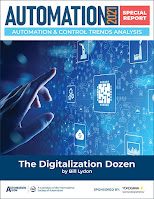
The dozen trends that are manifesting the manufacturing digital revolution feature in Bill Lydon's ebook "The Digitalization Dozen" where he examines some of the trends in this area.

Download your copy here!

@ISA_Interchange @IrelandISA @automation_com #Pauto

Monday, 3 January 2022

Digitalisation in drive technology.

Predictive maintenance is the systematic continuation of condition maintenance with the aim of proactively maintaining machinery and equipment and detecting changes, reducing downtimes and increasing the efficiency of the entire plant. A status-oriented maintenance replaces the traditional time-based maintenance. Fast, efficient and comprehensive evaluation of analogue and digital data by the intelligent PLC in the NORD drive technology forms the basis for condition monitoring and predictive maintenance.

Especially for drive systems in demanding production environments where industrial gear unit installations are usually used in sensitive applications and their failure can cause severe damage, for example in intralogistics, the food industry or the heavy duty sector, condition monitoring supplements the triad of gear unit, electric motor and frequency inverter with improved safety and reliability. This is where condition monitoring for predictive maintenance comes into play: Based on intelligent algorithms and software in an IIoT environment, the networked drive units can collect their condition data in the inverter’s own PLC and pre-process it together with data of connected sensors and actuators. The result of the pre-processing or the complete data can be optionally transmitted to an edge device. There, data of all subsystems is managed and evaluated. It is then available as pre-selected and edited smart data for further use and clear visualisation.

A concrete application example is the sensorless determination of the optimum oil change time based on the oil temperature. This is based on the fact that the oil temperature is a key factor for oil ageing in gear units. This information in combination with available gear unit parameters and specific operational parameters make it possible to precisely calculate the oil change time. A physical temperature sensor is not required. The pre-processing of drive data takes place in the NORD frequency inverter's integrated PLC that is used as an evaluation unit. The customer can access the calculated data via all common interfaces.

The drive equipment can be optionally extended and adjusted to the respective automation task. Customers can select what tasks (drive monitoring, drive control, process control) they want to directly shift into the drive. In smaller production areas, this scalability offers the possibility to gain first experiences before reorganising the plant. There are three configuration levels available. At the first level, the drive unit PLC only performs the drive monitoring. The drive parameters are pre-processed in the PLC and communicated to the higher level control system that is responsible for drive and process control. At the medium level, the PLC integrates the drive control and also runs drive-related functions. At the higher configuration level, the inverter PLC completely replaces the higher level control system. Apart from the communication to a control unit, a local data management without internet connection can optionally apply the data.

@NORD_Drive @mepaxIntPR  #PAuto

Tuesday, 17 August 2021

Virtual event unites automation industry for digital technologies in Britain.

Following the recent announcement from the British Department for Business, Energy and Industrial Strategy, where £53 million funding is being made available for manufacturers to boost competitiveness through digital technologies, Rittal and Eplan have partnered with the likes of GAMBICA, B&R, Machineering, Omron, Panasonic, Phoenix Contact and Rockwell Automation, to bring The Future Forum. The online event aims to address the scope, possible effects of automation as well as the solutions currently available.

The event’s strongly practical orientation will be particularly in evidence with live talks and software demonstrations which provide insights into industry trends, as well as tips and tricks that’ll help to streamline daily tasks in engineering and manufacturing.

Among the many highlights of the Future Forum will be keynote presentations from both GAMBICA and the Rittal and Eplan management board. Nikesh Mistry, Sector Head for Industrial Automation at GAMBICA will be kicking off the series of talks and demonstrations and will discuss the latest industry trends and how the pandemic has acted as a catalyst for digital innovation and adoption. Nikesh will also talk through challenges faced and obstacles tackled by members and how digitalisation has helped companies with efficiency, sustainability and profitability.

Live between 09:00 and 17:00 on the 6th October, all those interested in attending can register free of charge here

Shane Hope, Managing Director at Rittal comments “we’re witnessing rapid technological progress, with digital platforms, automation and many other innovations are changing the world around us. As we look to the future, we know that major changes will take place. The Rittal and Eplan Future Forum will provide the opportunity to network, participate in panel discussions and discover ways in which to overcome challenges associated with implementing automation.”

@Rittal_Ltd @EPLAN_global @beisgovuk @gambica #PAuto #Digitization #Britain

Monday, 9 August 2021

Supporting the delivery of low-cost, renewable power.

The completion of a digital transformation project to increase the reliability of clean energy generation at Golden Valley Electric Association’s (GVEA) Eva Creek wind farm has been announced by Emerson. The project improves the management of Alaska’s largest wind farm.

Rural Alaskan communities are on the front line of climate change, given the region’s extreme weather. As the largest electric utility serving northern Alaska, GVEA and its Eva Creek wind farm supply nearly 25MW of reliable, low-cost electricity to customers, while reducing fossil fuel usage.

Emerson’s sustainable grid solutions have delivered fast results, increasing the reliability of GVEA’s wind turbines and contributing to a 65% reduction in operations and maintenance costs.

“Emerson is a key collaborator in our goal to increase access to clean energy for our customers in northern Alaska,” said Frank Perkins, GVEA vice president of power supply. “Our investment in a common automation platform helps us efficiently incorporate more renewable energy and minimise our carbon footprint.”

Emerson’s solutions simplify management of the Eva Creek wind farm and provide more accurate equipment diagnostics and analytics for forecasting and dispatch. The end-to-end solution incorporates Emerson’s Ovation™ automation platform and OSI monarch™ software to expertly help utilities achieve a more resilient, responsible and smarter power grid.

“Increased visibility into Eva Creek operations enables GVEA to further safeguard the reliable operation of this critical source of renewable energy for northern Alaska,” said Bob Yeager, president of Emerson’s power and water solutions business. “With Emerson’s comprehensive portfolio of sustainable grid solutions, GVEA is well positioned to optimise operations across its entire power system, from generation to meter.”

@Emerson_News @EMR_Automation @OSI_USA #Pauto #Power #Alaska


Constructing the Eva Creek Wind Farm

Tuesday, 16 March 2021

Bridging the digital divide engineering, manufacturing and beyond!

Aegis Software has significantly expanded capabilities in their latest FactoryLogix® 2021.1 release. This most recent release adds native, vendor-agnostic support for any 3D Mechanical CAD (Computer-Aided Design), including animations and annotations, interrogation of detailed part data from PLM, quality data collection against the actual digital twin, and many other new feature enhancements throughout other areas of the solution. 

Manufacturers can natively merge the real world with the digital world into a real Digital Twin. This forms a seamless bridge between the PLM that may be hosting either or both ECAD (Electronics Computer-Aided Design) and 3D mechanical engineering to the shop floor.  The first singular MOM/MES platform to natively achieve a truly end-to-end Digital Thread and a Digital Twin for any form of discrete manufacturing. Accelerating time-to-market, propelling productivity, increasing revenues, and improving quality are a fraction of the benefits manufacturers can achieve. 

“Manufacturers today are realizing the functional and business value of meaningful non-redundant data from their manufacturing system. We at Aegis see the true Digital Twin and Digital Thread as a critical prerequisite to achieving that. And to achieve the Digital Twin and Thread, the solution must be built upon the design data of the products being manufactured. The native support of all PCB design file types, as well as all major 3D mechanical CAD, enables our customers to use any PLM platform they wish and carry the design ‘Twin’ through the entire process and out into the field using FactoryLogix. This capability places our customers in a unique competitive position, as FactoryLogix is the only single solution able to deliver this true Digital Thread and all the benefits to analytics, traceability, and quality that come with that,” said Jason Spera, Co-Founder, and CEO, Aegis Software. “The expanded support for 3D CAD integration also further enriches FactoryLogix’ unprecedented unique ontological data model, delivering out-of-the-box contextualized analytics and providing a single source of truth.”

FactoryLogix 2021.1 utilizes the extended capabilities in many 3D CAD formats to give manufacturers abilities that ECAD cannot support.  Abilities such as leveraging solid model animations that R&D built into the files, accessing detailed information about each part, enabling operators on the floor to spin, explode, explore, and cross-section the assemblies in front of them in a virtual way. It provides operators interactive and animated visual work instructions, enables capture defects right against the physical model, and merges that data with existing IIoT data feeds to provide total visibility and traceability unlike any other platform on the market today.

See also: IIoT-Based MES platform expanded (12/3/2021)


@FactoryLogix #PAuto #MES #IIoT

Monday, 15 February 2021

Ag ceann an chomhairimh!

Story in English

Chuir Údarás na Gaeltachta fáilte roimh chinneadh an chomhlachta clúiteach taighde margaíochta IPSOS/MRBI láithreacht a bhunú iin Iarthair Mhaigh Eo agus i ngréasán gteic ach go háirithe.  Beidh dhá phost bhuana á gcruthú i gteic@Béal an Mhuirthead mar thús agus tá sé fógartha ag IPSOS go bhfuil 30 duine, idir oibrithe páirt agus lánaimseartha, á gcuardach acu faoi láthair ó cheantar Iorrais agus iarthar Mhaigh Eo trí chéile.


Dúirt Anna Ní Ghallachair, Cathaoirleach Bhord Údarás na Gaeltachta “Cuireann muid fáilte chroíúil roimh IPSOS go Gaeltacht Mhaigh Eo agus guíonn muid gach aon rath orthu sa ghné nua seo dá ngnó. Is céim shuntasach í seo don ghréasán gteic i Maigh Eo agus léiríonn sé an deis atá ann do chomhlachtaí iad féin a lonnú sa nGaeltacht agus a gcuid fostaithe a bheith ag feidhmiú i gteic-anna éagsúla ar fud na Gaeltachta.”

Tá ionad lárnach glaonna á fheistiú i gteic@Béal an Mhuirthead don chomhlacht faoi láthair ach táthar ag dréim go mbeidh ar chumas fostaithe an chomhlachta aon cheann de na hionaid nua gteic, gteic@An Eachléim nó gteic@An Corrán Buí atá á bhforbairt faoi láthair, a úsáid de réir mar a mhéadaíonn an comhlacht agus nuair a ardaíonn srianta COVID-19.

Tá 18,000 duine fostaithe ag IPSOS ar fud an domhain, agus iad ag cur seirbhís taighde margaíochta ar fáil do chomhlachtaí ar líne, tríd agallaimh aonair, tríd an bpostas agus trí ghlaonna fóin.

Dúirt Aoife O’Connor, Bainisteoir CATI, “Tá áthas orainn a bheith ag lonnú i mBéal an Mhuirthead le tacaíocht Údarás na Gaeltachta agus táimid ag súil go mór le leas a bhaint as gréasán gteic sna blianta atá romhainn. Tá deis iontach ag ár bhfoireann leas a bhaint as an gcothromaíocht saoil atá ar fáil i nGaeltacht Mhaigh Eo.”

Is é nádúr na hoibre sheirbhís taighde margaíochta gur fostaíocht pháirtaimseartha den chuid is mó a bhíonn sa ngnó chun sealanna oibre éagsúla a chlúdach i rith agus taobh amuigh de ghnáthuaireanta oifige. Tá tús curtha ag IPSOS le hearcú 30 duine páirtaimseartha i gceantar Iorrais cheana féin agus tá cúrsaí oiliúna (Seirbhís do Chustaiméirí - QQI 1 - Leibhéal 6) á gcur ar fáil ar bhonn comhpháirtíochta ag Údarás na Gaeltachta agus Clár Gníomhachtúcháin Pobail agus Cuimsiú Sóisialta (SICAP) Oirthuaisceart Mhaigh Eo sa gceantar mar chúrsaí réamhoiliúna do dhaoine ar spéis leo na poist atá á dtairiscint ag an gcomhlacht.

Dúir Príomhfheidhmeannach Údarás na Gaeltachta Mícheál Ó hÉanaigh: “Cúis misnigh dúinn go bhfuil comhlacht idirnáisiúnta de sheasamh IPSOS chun leas a bhaint as an ngréasán gteic agus chun an deis a bhaineann le cianoibriú sna ceantair Ghaeltachta a thapú. Cuireann gteic deireadh le haon bhac atá ann a bheith i do chónaí agus ag obair i gceantair áille tuaithe na tíre agus tú ag nascadh le gnóthaí agus daoine ar fud an domhain.”

@IpsosMRBI @UdarasnaG #Éire

Tuesday, 15 December 2020

Digital Toolset for efficient maintenance planning and execution.

MyAssets delivers faster access to device-specific content for improved schedule compliance and first-time fix rate

Emerson is adding the MyAssets toolset to its MyEmerson personalised digital experience to help users execute their maintenance plan more effectively. As part of the MyEmerson digital tools portfolio launched last year to improve productivity and collaboration, MyAssets provides instant access to device documentation, replacements, spares, and walkdown reports to help plant personnel better maintain and manage the useful life of their Emerson devices.

“Our focus continues to be on connecting people and technology to make workers better at their jobs,” said Brad Budde, vice-president of digital customer experience for Emerson’s Automation Solutions business. “Digital tools are about making work processes simpler. With a MyEmerson account, maintenance teams can now more easily find relevant device-specific information to do their work an order of magnitude faster.”

For maintenance planners, MyAssets improves schedule compliance with a single location for device information, technical documentation, spare and replacement part details, and lifecycle status condition. Easy access to curated, relevant device content enables faster creation of work packets, reducing time from hours to minutes. Digital walkdown reports provide detailed analyses of a site’s device conditions – regardless of manufacturer – and prioritised recommendations for next steps, guiding faster and more predictable shutdowns, turnarounds and outages.

Up-to-date manufacturer information is connected to installed products by serial number, ensuring confidence in spare and replacement parts selection. At release, information for over 10 million Emerson products, covering five years of factory shipments, is already integrated with the MyAssets database. MyAssets is also connected to online engineering and procurement tools in MyEmerson, making it easy for maintenance planners to manage lead times and delivery of parts.

Field technicians can quickly and easily identify devices by scanning a QR code or RFID tag to verify the asset tag and serial number in MyAssets. Device-specific content is automatically connected to the tag, delivering installation instructions and technical documentation to technicians in the field and enabling them to more easily fix problems the first time, improving both safety and speed.

#Pauto 

Tuesday, 8 December 2020

Accelerating Digital Transformation in a Post-COVID World.


ARC Advisory Group is to host its European Industry Forum on May 18-19, 2021 as an online event. The forum is part of ARC’s successful series of worldwide conferences in the USA, India, China and Japan. Earlier this year, ARC Europe hosted a highly successful virtual event attended by 250 delegates.

Participants are invited to attend a series of exclusive speeches and workshops to discover strategies and stories from the digital front lines. ARC industry analysts and other automation experts from the end-user and supplier communities will analyze trends and drivers for the following topics:
  • 21st Century Operations: Where IT, OT and ET Converge
  • AI and Machine Learning
  • Asset Performance Management
  • Automation Innovations
  • Blockchain for Industry
  • Cybersecurity for the New Normal in Industry, Infrastructure and Smart Cities
  • Digital Twins and Connected Smart Machines
  • Digital Workforce and Culture
  • Industrial 5G
  • Industrial IoT Platforms, Edge Infrastructure and End Devices
  • Manufacturing Execution Systems
  • Smart Cities
A representative of Philip Morris International comments on a previous forum: “ARC's forum is a very good opportunity to learn much more about the IT/OT transition. We all know the technology is available and we have learned that important success factors are people, culture, and security.”

ARC’s Industry Forum Europe helps delegates to learn more about how transforming factories, cities, and infrastructure will benefit technology end users and suppliers alike. They will discover what their peers and industry leaders are doing today and what steps they are taking to prepare for the future.

@ARCWorldForum @arc_advisory #PAuto #Cybersecurity #Digititalisation
#coróinvíreas #COVID19 #coronavirus

Wednesday, 25 November 2020

Analogue-to-digital converter.

Analog Devices (ADI) has introduced the AD7134 alias-free analogue-to-digital converter (ADC) that significantly simplifies front-end design and speeds up time to market for precision DC-350kHz applications. Traditional precision data-acquisition signal chain design is a time-consuming activity as designers balance anti-alias filter requirements, passive component tolerances, phase and gain errors, as well as high-speed ADC drive requirements. The AD7134 introduces a new architecture for precision ADCs that fundamentally changes the design process. The new device removes the need for anti-alias filter, and its resistive input significantly simplifies ADC drive.

Data sheet, order samples and evaluation boards
• Connect with engineers and ADI product experts on EngineerZone™, the online technical support community
• Watch a video about the AD7134 
• Read the technical article about AC and DC data acquisition signal chains
The AD7134 is a quad-channel, 24-bit precision ADC with output data rate scalable from 10SPS to 1.5MSPS. Inherent anti-aliasing up to 102 dB eliminates the need for an external anti-alias filter, thus requiring 60 fewer passive components and five fewer active components. It also saves 70% board area, relative to a typical alternative implementation. Asynchronous sample-rate converter, simplifies multi-device synchronization, enables user to achieve coherent sampling system with ease, and simplifies isolation requirements.

AD7134 Key Features: • Alias-Free: inherent antialias rejection up to 102.5dB, typical • THD: -120dB typical (ideal for AC, vibration or acoustic measurements) • 108dB Dynamic Range (at ODR = 374kSPS) • Multiple Linear Phase Digital Filter Options (SINC6 for low latency, FIR for passband flatness) • Offset error drift: 0.7uV/°C typical • Gain drift: 2ppm/°C typical


@ADI_News #PAuto 

Friday, 13 November 2020

Strategic alliance expanded and extended.

Expansion to streamline extending a comprehensive digital thread solution

PTC  and Rockwell Automation have announced the expansion and early extension of their strategic alliance

This extension will ensure continuity in both companies’ sales and product development efforts and expand the agreement to include PTC’s product lifecycle management and software as a service (SaaS) products. This expansion will streamline both companies’ commercial efforts to extend a comprehensive digital thread solution, from upfront design through the operate, maintain and optimize-lifecycle stages. PTC will also offer Rockwell Automation’s virtual machinery simulation and testing software to its own customer and partner network. Under the agreement, both organizations will continue to leverage each other’s resources, technologies, industry expertise, and market presence to seamlessly serve their customers through 2023 and beyond.  


The companies’ primary joint offering, FactoryTalk InnovationSuite, powered by PTC, is the industry’s first comprehensive digital transformation software suite that offers fully integrated Industrial Internet of Things (IIoT), edge-to-cloud analytics, manufacturing execution systems (MES), and augmented reality (AR) – required for the connected enterprise. FactoryTalk InnovationSuite makes it simple to rapidly develop, operationalize, and globally scale innovative solutions to operations.


“Our selection of FactoryTalk InnovationSuite, powered by PTC could not have come at a better time for our company,” said Teja Schubert, Director, Controls, Automation and Technology, Norbord, an international producer of wood-based panels.  “As the first wave of COVID-19 hit, it became even more important to have a platform that helps us reduce costs, improve our employee's experience, and make better use of our maintenance and training efforts. This ever-important alliance has made it easier for our company to navigate the COVID-19 pandemic so far, and we look forward to leveraging future solutions.”


As manufacturers reset their operations, competitive pressures and demands for better financial performance have accelerated the need to digitally transform products, processes, and people across all business levels. PTC and Rockwell Automation’s industry-leading digital manufacturing solutions provide manufacturers with robust end-to-end digital thread capabilities, empowering them to continue their digital transformation initiatives amid the global pandemic.


“Over the past two years, PTC and Rockwell Automation teams have combined great innovation to offer our customers the world-class FactoryTalk InnovationSuite solution,” said Blake Moret, chairman and CEO, Rockwell Automation. “The expansion and early extension of our contract with PTC signifies the increasing value of this strategic alliance and its importance to the Connected Enterprise.”


Jim Heppelmann, president and CEO, PTC, said: “The strategic alliance with Rockwell Automation has expanded our reach and our capabilities as we champion Industry 4.0 initiatives around the world. The powerful impact of our offerings amid the current macroeconomic environment proves the market’s need for this collaboration.”


@PTC @ROKAutomation @ROKAutomationUK #PAuto 


See also: Augmented reality in packaging.

Thursday, 10 September 2020

Alliance for digital transformation.

Wunderlich-Malec Engineering (WM) and Quartic.ai have formed an Alliance to deliver smart manufacturing solutions for industrial applications using WM automation expertise and the Quartic Platform’s IIoT, Machine Learning and Artificial Intelligence (AI) capabilities.

Manufacturers who successfully apply AI will increase efficiency by an average of 12% in 5 years. Digitalization of manufacturing is therefore a key business imperative for all manufacturers. Shoring up local supply chains in the wake of the COVID-19 crisis has further increased the urgency to leverage these new powerful technology solution.

Quartic.ai, founded by a team of process manufacturing and reliability experts, has developed a platform that accelerates the deployment of machine learning and artificial intelligence applications when combined with subject matter expertise. WM’s deep domain expertise and knowledge of customer’s automation challenges will accelerate the delivery of value to these customers.

“Our mission is to keep building smart manufacturing technology. While ease of use and focus on subject matter experts are the key attributes of our technology, the value to the end users is delivered when subject matter experts use our platform to build valuable applications.” said Rajiv Anand, CEO, Quartic.ai. “End users have relied on and trust the expertise that WM brings to deliver technology-based integrated automation solutions. We are excited that this alliance will bring the value of our technologies to many more users.”

“Digitalization of process and operations is a top priority for our customers. Quartic.ai have proven the unique value their platform brings to industries like life-sciences, medical devices, chemicals, energy and mining. We are excited to deliver valuable applications built on this technology foundation and integrate them with the end-users’ automation and business management systems”, said Neal Wunderlich, President. Wunderlich-Malec Engineering, Inc.

@WunderlichMalec @QuarticAI #PAuto #IIoT

Tuesday, 4 August 2020

Developing digital technologies in power.

Companies to develop solutions that drive operational excellence and create cleaner, more reliable power for consumers

Emerson and Mitsubishi Hitachi Power Systems Americas (MHPS) are joining forces again to develop digital technologies, software and services to help utility customers drive operational excellence in North America. The companies will collaborate on digital solutions to optimise performance and reliability, enable predictive and AI-driven maintenance strategies, and automate operational decision-making.

The collaboration will build on the expertise of Emerson and MHPS to enhance the performance and reliability of power plants operating with MHPS gas or steam turbines.

“Emerson has worked collaboratively with MHPS for over a decade to bring the best experts, technologies and services to the power generation industry,” said Bob Yeager, president of Emerson’s power and water solutions business. “This next chapter will focus on identifying and delivering the best digital transformation strategies and technologies that will drive operational performance for our customers and create cleaner, more reliable power for consumers.”

Emerson’s Ovation™ automation technologies, software and solutions portfolio for power generation is highly regarded in the industry, controlling thousands of plants across the globe. Its embedded digital twin enables power plants to identify and implement new operating efficiencies, improve safety, decrease unscheduled maintenance and train workers.

As a leading global provider of power generation and energy storage solutions, MHPS is driving the development of next-generation power plants and digital solutions that deliver higher efficiencies to reduce carbon emissions and the highest levels of reliability to lower maintenance costs. Its industry-known MHPS-TOMONI™ digital solutions platform provides real-time adaptive control and actionable knowledge to optimise plant performance and significantly improve reliability.

The two companies will explore these and other advanced technologies: advanced sensing; thermal, process and equipment modelling and diagnostics; advanced control; analytics; pattern recognition; remote monitoring; digital twin; automated workflows; and AI-driven predictive maintenance.

One of the companies’ collaborations is to build and deploy the next generation of total plant simulation for the Intermountain Power Plant Renewal project. “This collaboration leverages Emerson’s digital twin technology, MHPS’ high-fidelity gas turbine and steam turbine models, and advanced analytics. The simulation solution will seamlessly receive data and operate in parallel with the plant’s integrated control systems and other enterprise platforms to support commissioning and training,” said Marco Sanchez, vice president of intelligent solutions at MHPS.

Paul Browning, president and CEO of MHPS Americas and chief regional officer for Europe, Africa, the Middle East and the Americas, said: “MHPS looks forward to this next stage of collaboration with Emerson as we continue developing digital solutions that will enable our customers to provide affordable and reliable electricity, maximise profitability of existing and future power plants, and combat climate change. Together with Emerson and our customers, we will achieve a Change in Power.”

@Emerson_News @EMR_Automation @MHPS_Global #PAuto #Power

Thursday, 11 June 2020

Assisting maintenance personnel remotely.

Digital service offering proves its worth in the coronavirus crisis


Extraordinary times require extraordinary measures:  Endress+Hauser has thus released the Visual Support service application ahead of schedule during the coronavirus crisis. In the acute phase of the pandemic, customers were able to take advantage of the remote audiovisual support free of charge – and were enthusiastic about the possibilities of this innovation in the Endress+Hauser service portfolio.

Endress+Hauser has been driving digitization forward for years – in the product and service area, in customer interaction and in external and internal collaboration. In the coronavirus crisis, the development of powerful digital platforms and offerings has now proven its worth for customers and the company. “We can bridge the physical distance forced upon us by the coronavirus through digital and emotional proximity,” says Matthias Altendorf, CEO of the Endress+Hauser Group.

This also applies to the service area. Travel restrictions and protective measures due to the coronavirus pandemic have made it impossible to use external service providers in many cases in recent weeks. In order to carry out critical service work related to instrumentation in a timely and appropriate manner, Endress+Hauser has taken the latest innovation in this area, Visual Support, from the pilot project phase to global rollout.

The Endress+Hauser service organization has been using the possibilities of a cloud-based platform based on the Salesforce customer relationship management system for some time. The Salesforce Service Cloud module enables completely new ways of serving the customer base. Now Endress+Hauser has integrated Visual Support into its support services portfolio, giving customers access to in-depth technology and product knowledge, including the guaranteed availability and response time from Endress+Hauser’s global network of technical experts.

The use of this technology for remote support enables audio-visual support for diagnosis and troubleshooting, commissioning and regular maintenance of field devices. With the help of live video transmission and screen casting, Endress+Hauser’s technical support team can work almost as if they were on site, helping customers in a reliable and flexible manner with their service tasks via remote access.

For ten weeks the service was free of charge for customers. During this time, more than 250 Visual Support sessions were conducted worldwide. “Customers have given us a lot of positive feedback,” says Franck Perrin, who heads the Endress+Hauser Group’s service organization. “They are enthusiastic about this new form of support and have experienced how Visual Support can save time and money.”

@Endress_Hauser @Endress_UK #PAuto 

Friday, 22 May 2020

Potential of digital technology to reengage rural business.

New research to investigate the potential of digital technology to reengage rural business communities.

Údarás na Gaeltachta is cofunding new research, in conjunction with Waterford Institute of Technology, to explore methods in which increased digital technology interventions and learnings can assist peripheral and rural businesses in the Gaeltacht to connect and develop.

Mícheál Ó hÉanaigh, Údarás na Gaeltachta’s Chief Executive Officer said “Údarás na Gaeltachta has a long-standing partnership with WIT in supporting the Higher Diploma in Television and Digital Media Production. We are delighted with this new partnership and hope that we can build on our close working relationship with the Institute on other future projects. Research and innovation will be very important to the Gaeltacht as we try to recover from the COVID-19 crisis. To that end, it will be vital for businesses to maximise the value of new technologies in their recovery phase and this research will assist them greatly to realise the benefits.”

The research is opportune at this time and will provide an insight into the benefits that rural businesses can achieve from digital technologies in the recovery from the COVID-19 crisis.

The research will also investigate the development of peripheral Gaeltacht business communities by the use of technology – something that is very timely at the moment in light of the importance of technology to all who are currently working from home, continuing to operate a business or keeping families linked.

The proposed 4-year PhD action research project will embed the researcher in the Waterford Gaeltacht business community and Waterford Institute of Technology.

Údarás na Gaeltachta and WIT are seeking a researcher with an enthusiasm for cutting-edge social research and a well-developed understanding of the latest advances in qualitative research methods. Due to the embedded nature of this research the successful applicant will be expected to be ordinarily resident in the southeast region of Ireland, engaging with Gaeltacht communities and must be present at Waterford Institute of Technology to participate in structured PhD modules. As the applicant will be immersed in a Gaeltacht business community, proficiency in the Irish language is necessary to complete the study and it is anticipated that the PhD candidate will be able to exhibit oral and written proficiency in both Irish and English.

The scholarship co-funded by Údarás na Gaeltachta and Waterford Institute of Technology will provide an annual stipend to the successful scholar of €12,000. Údarás na Gaeltachta has a long established and successful educational pillar and has a long history of implementing various educational schemes. In recent years a number of partnerships have emerged with other third level institutes where post graduate students are supported to pursue areas of study, with a particular relevance to the Gaeltacht.

The closing date for applications for this PhD research opportunity is Friday May 29th 2020 and further information can be found here


#Digitization @UdarasnaG @waterfordit

Friday, 15 May 2020

Driving digitization with mobile devices.

The industry of the future is based on a comprehensive collection and analysis of production data. In order to enable IoT applications and machine learning, this data must be collected, analysed and managed. This is done peripherally, with foresight and increasingly close to the process – if possible, in real time and with low latency. With the integration of cyber physical systems into production, the boundaries between classic IT and operation technology blur more and more.

Unfortunately, these systems are still mainly open and inhomogeneous despite all standardization approaches. In order to optimize manufacturing and production processes, solutions are needed that decentralize and facilitate data processing and management. Mobile terminals integrated by means of comprehensive mobile device management not only function as digital gateways, they also support networking to a central system by means of special applications and a wide range of functions from cameras to employee protection. The latter is particularly important because of the dangerous working environment and the regular working alone. Hence, they must not only be particularly robust, but also provide effective protection for mobile workers – in the field as well as in potentially hazardous areas.

With this in mind, specially designed, mobile devices such as Pepperl+Fuchs' ecom's Smartphone Smart-Ex® 02 offer numerous advantages. In addition to robustness, high ergonomics and ease of use, sensors in combination with the corresponding software guarantee comprehensive lone worker protection in accordance with the DGUV regulation BGR-139. Emergency calls can be triggered not only by the software for the sole worker, but also via emergency call buttons. In this way alone workers are reliably protected. With Bluetooth Low Energy (BLE) beacons specially developed for the hazardous areas, employees can even be located without GPS and indoors. At the same time, the intrinsically safe Android smartphone works as a mobile hub: it supports 21 different LTE frequency bands and is delivered without simlock.

Global Ex- certificates as well as local regulatory approval enable worldwide use. The intrinsically safe smartphone, designed for a temperature range of -20 to +60°C, is thus designed for worldwide use even under the most extreme conditions. In addition, it is the first device certified for Zone 1/21 and Div. 1 to receive Google's demanding Android Enterprise Recommended Validation. This ensures consistent, easy deployment and management of the mobile solutions through hardware and operating system support as well as guaranteed Android upgrades and regular, timely security patches. In this way users save time and money in the deployment and maintenance of the devices in terms of total cost of ownership (TCO).

To ensure that data transmission is as easy as possible, it is important that mobile devices communicate directly and smoothly with enterprise mobility management (EMM) systems. For mobile devices, this means comprehensive certifications for the support of the hardware and software of EMM systems. ecom guarantees both: through Android Enterprise certification as well as certifications for the market-leading device management systems. With suitable software and apps, companies can be comprehensively networked without limiting themselves to one technology. A solution like this enables the central management and protection of data as well as devices and fits into any infrastructure. Mobile device management software thereby enables a faster rollout of the devices as well as a secure and fast connection to the operative systems. Besides, apps and operating systems can be installed, updated and managed automatically.

ecom's new Digital Products & Services division enables the staging, management and real-time monitoring of mobile devices such as the Smart-Ex® 02. It combines automated pre-configuration during device manufacturing with comprehensive mobile device management and analytics. Mobile devices are therefore not only easy to set up and manage, but can also be updated at any time – even over-the-air. An analysis of historical data is possible at any time to reveal security-critical processes. If necessary, the solution can also be used as a full-fledged EMM system, which relieves the IT departments and provides more security during operation.

Thanks to devices designed for industrial use and suitable digital services for companies, mobile devices effectively support digitization by becoming independent hubs. The evaluation of data becomes faster and easier with their use. Therefore, companies gain a comprehensive insight into procedures and processes and recognize where improvements need to be made. At the same time, mobile devices protect employees – even in explosive environments – and facilitate their everyday work.

#PAuto @PepperlFuchs