Showing posts with label Predictive Maintenance. Show all posts

Tuesday, 9 June 2026

Platform for predictive maintenance solution.

PROGNOST* Systems' UP! product family provides cloud-based fleet diagnostics and early failure detection for compressors. It is hosted on Nerve, TTTECH Industrial’s secure, IEC 62443-4-2 certified edge computing platform. With Nerve as basis, PROGNOST’s solutions can operate reliably in their customers’ existing industrial environments, while complying with high requirements for data sovereignty, availability, and offline capability. 

Their UP! product family was introduced in April 2024, extending the company’s offering for machinery monitoring and predictive maintenance. UP! Detect enables automated vibration analysis for the early detection of abnormal compressor behavior to ensure maximum availability and uptime. UP! Insight provides cloud-based fleet monitoring and analytics to improve machine health, reduce costs, and maximize the uptime of compressors. The UP! product family is run as Docker applications on Nerve from TTTECH Industrial, which serves as the secure, IEC 62443‑certified foundation for edge‑based condition monitoring and remote device management via the Nerve Management System.

TTTECH’s long-time experience in reliable industrial automation and solutions for safety-critical systems played a key role in PROGNOST’s decision for Nerve, according to Robin Schlup, Team Leader IoT Solutions & Cybersecurity, Burckhardt Compression AG: “Compliance with the Cyber Resilience Act and NIS2 is a must. That’s why we needed a cybersecure platform to host our cloud-based UP! product family and support real-time data collection, processing, and transfer for monitoring and predictive maintenance. Nerve provides this cybersecure basis, as well as the flexibility to extend and upgrade systems. The collaboration with TTTECH Industrial was smooth – they took our concerns seriously, were open for feature suggestions and adjustments of the roadmap and provided us with competent and fast technical support.”

The IIoT platform Nerve is certified on product level according to the industrial cybersecurity standard IEC 62443-4-2, covering the requirements of the Cyber Resilience Act as well as NIS2-compliant incident reporting and risk management. It provides centralized device, software, and update management via the Nerve Management System and can be run completely offline, keeping data fully on premises if required, which supports use cases in critical infrastructure applications. As it can be run on any industrial PC, customers can integrate it easily into their existing shop-floor environments.

Herbert Hufnagl, Senior Vice President Industrial, TTTECH, adds: “We are excited to collaborate with PROGNOST on their UP! product family and deliver new, valuable services for their customers. Nerve can be applied for a range of use cases, from brownfield digitalization to condition monitoring, predictive maintenance to machine learning. PROGNOST’s customers operate in critical infrastructure, which often has specific demands. Nerve can accommodate such requirements - it is an open, secure, and scalable IIoT platform that can grow with customers’ business and provide actionable insights for maximizing uptime and reliability in their production.”

The UP! product family in combination with Nerve make high-quality machine monitoring affordable and accessible for all types of reciprocating compressors. End customers gain access to advanced diagnostic and prognostic capabilities tailored for critical infrastructure across sectors such as oil and gas downstream, petrochemicals, marine, and industrial gases. This combined system supports the deployment of artificial intelligence and machine learning analytics for extensive machine fleets, based on real-time telemetry data and edge computing. End customers can establish predictive maintenance strategies using instantly accessible vibration and process data in expert diagnostic systems.

The solution from PROGNOST and TTTECH enables machine builders and operators to implement condition monitoring, predictive maintenance, and digital services without compromising on cybersecurity and scalability for future upgrades and extensions.


* PROGNOST Systems GmbH is part of Burckhardt Compression AG.


#TTTech #ProgNost #PAuto

Thursday, 10 April 2025

Instant digital transformation of industrial plants.

The Industrial Internet of Things (IIoT) relies on comprehensive sensor and process data from the field level. Pepperl+Fuchs, together with Bosch Digital Twins Industries and Syntax, showcased (at HM25) a joint product that demonstrates how easily aggregated data can be transferred to established cloud platforms such as AWS and MS-Azure.

The Digital Twin Starter Kit from Pepperl+Fuchs will be shown with this model at the trade fair to simulate a real application. The kit consists of powerful sensors, an IO-Link master, a fanless embedded PC, and all other components required for seamless integration of the hardware.

The IO-Link master serves as the interface between the sensors and the embedded PC for preprocessing and aggregating data from the field level, which is then transferred to the Bosch Digital Twin platform, also known as the Intelligence Core. Using a simulation model, the integrated intelligent asset performance management (IAPM) solution performs real-time data analysis.

The use of ML algorithms and AI allows functions such as prediction of potential failures, optimization of maintenance schedules, and recommendation of actions. This ensures preventive interventions for trouble-free operation of the production plant.

The starter kit configures itself automatically after connecting to the internet and powering on. The open platform and open communication standards used guarantee maximum flexibility and individual scalability.


@PepperlFuchsUSA @hannover_messe @mepaxIntPR #Pauto #AI

Thursday, 27 March 2025

Predictive maintenance solutions resource.

Mouser Electronics has introduced its new Predictive Maintenance Solutions online resource, dedicated to providing leading-edge technology and information directly to engineers of all skill levels. The new site explores the opportunities and benefits of predictive maintenance, supporting readers through their design journey.

Although developing predictive models that are easy to integrate and customised to the specific needs of manufacturers demands considerable time and research, the efforts typically yield substantial cost savings and a marked improvement in productivity. Discover how it's transforming factory operations in this educational video.

To assist engineers with their designs, Mouser stocks "the industry's widest selection" of semiconductors and electronic components, including the following predictive maintenance solutions:

  • The WEIDOS MKR1010/ESP32 PLC controllers from Industrial Shields are designed for simple control and data storage applications in installations. They come in two main CPU variants, the MKR1010 and the ESP32, and feature 30-watt maximum power, 10% to 90% (non-condensation) operating humidity, and 24AWG to 14AWG wire connection cross-section AWG. The controllers are best suited for simple control and data storage applications in installations and other IoT solutions.
  • The TXN Series AC-DC industrial power supplies by TRACO Power offer three power levels of 50-, 75-, and 100-watts and are easy to install in any equipment. They are convection-cooled and feature an internal EMC filter, high IO isolation, and a wide temperature range. TXN power supplies are ideal for cost-effective applications and are suitable for various industrial applications, including industrial/automation and test and measurement industries.
  • The M5601 wireless pressure transducers from TE Connectivity are high-accuracy, 24-bit ADC digital output wireless sensors ideal for industrial and smart factory applications. These transducers are enclosed in stainless steel and PBT housing and eliminate hard wiring while providing remote process control and monitoring via Bluetooth® 4.2 wireless communication. The M5601 transducers are suitable for measuring liquid or gas pressure, even for difficult media such as contaminated steam, water, and mildly corrosive fluids.
  • The MS300 Compact Vector Control Drives from Delta Electronics support both IM and PM motor control for application flexibility and include a safe-torque-off (STO) safety mechanism. The compact systems have a communication card slot that fits various cards, a USB port, and PLC capacity for simple programming. It is ideal for machine tools, automatic tool changers (ATC), pumps, woodworking, packaging machines, and textile machines.


@MouserElecEU @Publitek #Electronics #PAuto

Monday, 24 February 2025

Predictive maintenance solutions for GB & Ireland.

The launch of Megger Industrial Reliability in Britain and Ireland has been announced. This marks a significant milestone in the company’s evolution, driven by the strategic acquisitions of Diagnostic Solutions and Distance. The new division is dedicated to advancing reliability solutions within the industrial sector.

“Megger Industrial Reliability is about more than technology – it’s about partnership. We work side by side with our customers to understand their specific challenges and deliver solutions that guarantee results. By focusing on trust, collaboration, and measurable outcomes, we help businesses achieve lasting improvements in reliability and operational efficiency,” said Stephan Sommer, Industry Director at Megger Industrial Reliability

Megger Industrial Reliability is designed to reduce unplanned downtime and extend the lifespan of critical industrial assets. Using techniques such as vibration analysis and advanced monitoring tools, the division provides organisations with actionable data to improve decision-making and streamline maintenance processes.

The approach goes beyond providing technology, focusing on building strong relationships and ensuring success at every step. From commissioning systems on-site to delivering ongoing support, Megger partners with customers to develop tailored reliability plans that address unique challenges and deliver measurable results.

Three tailored packages are available to meet diverse industrial needs. Each package is designed to simplify maintenance workflows while providing expert insights and a clear path to optimising reliability. Whether customers are beginning their reliability journey or seeking to enhance an existing strategy, Megger offers a solution that aligns with their goals.


#Megger #TandM #Ireland #Britain

Friday, 16 February 2024

Security management certification.

Sensirion Connected Solutions has successfully obtained the ISO 27001 certification, the internationally recognized standard for information security management systems (ISMS).

The company, by achieving the ISO 27001 certification, the company demonstrates its commitment to protecting the data of its customers, partners and employees, as well as complying with all relevant laws and regulations. The certification also validates the effectiveness and efficiency of the company’s security processes and controls.

Two innovative solutions are offered for the industrial sector: AiSight and Nubo Sphere. AiSight is a cloud-based platform that uses advanced analytics to provide actionable insights for predictive maintenance. Nubo Sphere is a continuous emissions monitoring solution that uses advanced sensor technology and algorithms to detect, localize and quantify methane emissions from oil and gas facilities.

Both solutions require a high level of data security and reliability, as they deal with sensitive and critical information. By obtaining the ISO 27001 certification, Sensirion assures its customers that their data is handled with the utmost care and respect, and that the company follows the highest security standards. This is part of Sensirion Connected Solutions dedication towards the highest quality standards for its solutions and services, as already shown with its ISO 9001 certified production facilities.

Felix Hoehne, General Manager at Sensirion Connected Solutions says: “I’m delighted to share this achievement with our global stakeholders. It underscores our goal to deliver high quality and secure solutions for the energy and industrial sector. I would like to thank our dedicated team for their hard work and contribution to this milestone”.

Difference between ISO 27001 and SOC 2 The ISO 27001 certification is different from the SOC 2 attestation, which is a common security framework in the US market. While both frameworks aim to ensure data security, they have slightly different scopes and approaches.

The ISO 27001 certification covers the entire ISMS of an organization, while the SOC 2 attestation focuses on specific security controls relevant to the services provided by an organization. The ISO 27001 certification is more rigorous and comprehensive, as it requires an organization to implement and maintain an ISMS that meets the universal standards for every industry and geographic location. The SOC 2 attestation is more flexible and tailored, as it allows an organization to choose the security controls that suit its individual industry standards and needs. Both frameworks are valuable and respected in the market, but the ISO 27001 certification is more widely recognized and accepted internationally.


@sensirion #Energy #PAuto

Wednesday, 28 September 2022

Accurately measure and log dew point data.

The Extech RH600 Dew Point Meter for accurate and fast dew point temperature measurement primarily positioned to prevent problems associated with water vapor in compressed air systems has been announced by Teledyne Flir.

As part of a predictive maintenance program in manufacturing environments, the Extech RH600 provides measurement down to -50°C (-58°F) with an accuracy of ±2 °C (±3.6 °F) over the entire range pressure, up to 20 bar. The instrument is ideal for monitoring dew point across long periods of time, including for monitoring switch behavior within the drying process and better optimizing energy consumption.

“For inspectors who require the convenience and freedom to inspect multiple positions within a compressed air system, the Extech RH600 provides the ideal form factor at a competitive price to capture accurate readings and then data log that information as part of an integrated predictive maintenance program,” said Rob Milner, director of business development, Teledyne FLIR. “The Extech RH600 is also optimal for low-humidity measurement with high accuracy, but should the sensor get wet, it can withstand the condensation and fully recover for future use.”

The included RH601 dew point probe provides accuracy and long-term stability. Users can directly insert the probe sensor into the compressed air system through a G half-inch thread, ensuring reliable readings with increased peace of mind, knowing the probe will dry quickly after moisture contact. The highly sensitive probe provides inspectors the ability to measure relative humidity at less than 5 percent and with high accuracy (±0.025 percent).

Data Logging for Predictive Maintenance.
Users can easily monitor dew point on the built-in color graphical display with a menu-based user interface. They can program high/low set points for temperature as well as relatively humidity and dew point with visual and audible alarms. The device also enables logging and transferring up to 32,000 datasets to a PC in CVS format via a USB cable connection. The easy data transfer provides inspectors all key datapoints to create inspection reports for colleagues and clients, as well as to integrate the data into broader predictive maintenance initiatives that consolidate and analyze data across multiple inspection types and equipment.

The Extech RH600 consists of the RH601 dew point probe, AC adapter, micro-USB-to-USB-A cable, a 3.7 V Li-ion battery, and a hard case for storage.

@flir @mepaxIntPR #PAuto #Manufacturing

Wednesday, 17 August 2022

Predictive maintenance of computers for IIoT.

Predictive maintenance of computers is critical to IIoT-Enabled systems says Johnny Fang, a Product Manager with Moxa.*

Businesses are striving to achieve intelligence at the edge of their industrial networks by deploying computers that can collect, process, and analyze data in unmanned or remote sites. The consequences are dire when these computers have a performance issue or run out of memory, therefore preventing them from performing their role efficiently, if at all. Industrial processes come to a halt, leading to huge financial losses. If an industrial process malfunctions because of a failure to detect and fix computer issues on time, it could also lead to accidents that result in employee injuries. For these reasons, computers used in IIoT- enabled systems must be treated as critical equipment that require a higher level of maintenance strategy than non-critical devices.

Traditionally, manufacturers have maintained their assets using manual processes that are time-consuming and resource-intensive. The IIoT brings with it a paradigm shift with respect to the operation and maintenance of industrial equipment. Now, instead of waiting for equipment to fail before fixing it, or scheduling time-based maintenance that sometimes leads to unnecessary maintenance of equipment and downtime, companies are adopting predictive maintenance strategies to stay ahead of the game. These same practices should be applied to industrial computers.

Predictive maintenance tools for a computer can keep track of any variance from expected behavior for key parts, such as CPU usage, CPU temperature, memory usage, and disk usage. Predictive analytics empowers users to explore potential root causes and apply appropriate remedies. By identifying issues early on and allowing repairs to be scheduled in an orderly fashion, predictive maintenance provides lead time to purchase parts for the necessary repairs and reduces the need for maintaining an inventory of key parts. Hard drives, processors and other damaged parts are replaced before failures occur, and since maintenance work is only performed when needed, production capacity is likely to increase as well.

The goal of any predictive maintenance program is to enable proactive access to data for each piece of critical equipment, enabling the monitoring of its realtime health status, analyzing historical trends, and planning maintenance downtime based on the data.

Predictive maintenance tools for industrial computers monitor its health in order to make repairs well in advance to maximize system uptime. The tools will feature a well-designed dashboard that helps operators keep an eye on key indicators such as CPU loading and memory usage, plus an alarm function to trigger audio or visual alarms and SNMP traps when parameters go over predetermined thresholds.

Additional tool capabilities that aid in predictive maintenance are:

  • Easy-to-use remote monitoring functions
  • A ready-to-use tool that runs on a Windows or Linux OS
  • RESTful APIs that give access to key-part parameters.

Predictive maintenance in action.
Below are demonstrated the importance of predictive maintenance for rail, marine, and power segments using remote-site scenarios.

Railroads: In a metro transit system, computers are widely deployed in onboard control and video recording systems. Because space is limited on refurbished traincars, computing systems are often installed in places that are hard to reach and even more difficult to maintain such as cabinets, compartments under passenger’s seats, or on the ceiling. Having ready access to a computer’s current condition so that you can implement a preventive maintenance routine is an important aspect of ensuring a smooth transit system.

Marine Bridges: An electronic chart display and information system (ECDIS) is one of the most important systems on a ship’s bridge. An ECDIS system takes real-time information from sensors deployed on equipment, including speed logs, radar, wind stations, AIS, and gyrocompasses, into consideration when planning the ship’s voyage. It combines the data from sensors with information on dangerous areas or areas of special attention on the route to chart a safe course for the ship. Therefore, a reliable and durable computer is crucial for running the ECDIS system. Information on the status of the key parts of the ECDIS computer can be monitored by integrating the computer’s key-part data with the bridge system using monitoring APIs or by another means. In addition, an alert function can help provide warning messages when a parameter associated with a key part goes over a preset threshold. One example is when CPU usage exceeds a threshold due to system software errors. When this happens, an alert message is sent out so that the crew can deal with the problem.

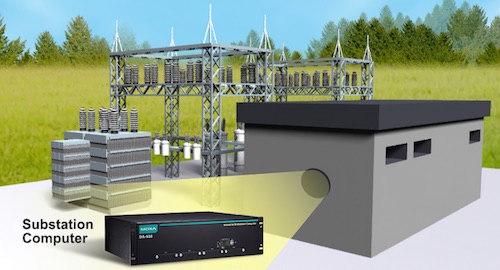
Power Stations: Unmanned power stations are increasingly becoming the norm, and are often located in remote, hard-to-reach sites. A predictive maintenance tool is required to monitor, control and maintain critical equipment, including computers, in an unmanned substation so that it functions smoothly.

Built-in Maintenance tool.
Rugged industrial computers typically feature built-in proactive monitoring solutions that help reduce the costs of remote system maintenance and maximize system uptime. The computer's dashboard may graphically display CPU usage, memory usage, storage partition usage, operating temperature of the CPU and motherboard, and the redundant-power monitor, and trigger relay outputs to provide either visual or audio alarms, or send out SNMP traps. Most of these tools also provide for setting-up the threshold and time period for the key parts to monitor.

The relentless pursuit of excellence in the IIoT world has renewed an interest in predictive maintenance solutions that ensure higher equipment reliability and system uptime. Since computing systems are the pillars of the IIoT, implementing predictive maintenance for them is essential to realizing the full potential of the IIoT.


*See also Countries Investing the Most into Predictive Maintenance from Automation-com (15/8/2022).

@MoxaInc @OConnell_PR #PAuto #IIoT 

Monday, 8 August 2022

Top tools and technologies.

Rising energy costs and more stringent legislation guiding sustainable practices is spurring companies to re-evaluate processes and seek new tools and technologies to reduce waste and overcome challenges in today’s industrial environments.


The top three trends that are enhancing operational efficiency in today’s industrial environments are highlighted by Fluke. Challenges posed to industrial operations managers by the pandemic have now been superseded by the rising cost of energy, and the need to deliver on net zero ambitions. As the price of energy continues to increase, the need to reduce costs and deliver on shared sustainability goals intensifies for small-to-medium sized enterprises through to large corporations.

Paul Feenstra, Vice President Fluke EMEA, at Fluke said: “We are working together with our customers to help drive new initiatives to improve operations, increase efficiencies, and take reliability to a new level in the 21st century.”

1 Reducing energy costs with upgraded technology and cloud-based data monitoring.
Approximately 90% of all companies use compressed air in some aspect of their operation, such that it is often referred to as the fourth utility. Recent developments in industrial acoustic imaging technology have enabled the fast identification of leaks in compressed air systems used in industrial and manufacturing environments. Fluke’s ii900 Industrial Acoustic Imager features an array of microphones, providing visualisation of sound field within an expanded field-of-view and on a distance of up to 70 meters, that enables maintenance teams to visually locate air leaks very quickly and accurately in compressed air systems.

Beyond the improvement of rugged handheld tools, monitoring practices are also evolving with the use of internet-connected instruments. Analysis and data is captured on a cloud platform allowing operators to monitor the key performance indicators (KPI) of compressed air systems including energy, electric power, flow, pressure and leakage flow. Fluke’s LeakQ™ Report Generator creates detailed air compressor leak reports from images captured by Fluke ii900 or the ii910 Precision Acoustic Imager and calculates the energy savings once the leaks are repaired.

2 Using data to deliver predictive maintenance.
For generations, maintenance professionals have used preventive maintenance to avoid equipment failures and turned to reactive maintenance when assets failed. With the emergence of Industrial Internet of Things (IIoT) technologies, maintenance professionals can now connect tools, software and sensors to collect, store and analyse multiple data sources in one place. The pandemic accelerated investment in technologies that make remote monitoring possible. The technology enables reliability and maintenance teams to meet up-time requirements no matter how fluid on-site staffing might be. The trend for remote monitoring will continue, with small scale operations turning to remote condition monitoring services.

Artificial intelligence (AI) and machine learning (ML) have held the promise to quickly identify trends and adapt quickly to changing operational conditions. Software armed with prescriptive analytics is finally meeting up with modern condition monitoring hardware to spark a revolution in the use of AI/ML in maintenance operations. Now a new race has emerged to pair that hardware and software with ML and AI algorithms. Companies, like Fluke, are working to combine technologies so that the software can identify trends, recognise data patterns and make specific recommendations for equipment maintenance.

3 Digital SI speeds integration of critical equipment measurements.
The accelerated uptake in digital measurement solutions for industrial applications can save time and money, whilst facilitating a shift towards predictive maintenance for systems. Although modern measurement digital devices are typically not fit-and-forget solutions, the increase in digital measurement solutions paves the way for verification technologies that can help to reduce the maintenance burden on personnel, without compromising on accuracy or reliability.

Digital SI (International System of Units), an initiative created as part of the industry 4.0 revolution, relates to the creation of a globalised system to transmit calibration certification information electronically. This is critical as the exchange of data and the data itself are the basis of highly automated industrial processes. The system ensures measurement traceability from all calibrations performed and enables sharing of information in a paperless manner. This speeds up the integration of measurements that can be performed using critical test equipment as part of an integrated factory enhancing maintenance efficiency and plant efficiency.

“The tests we have faced within the last 24-36 months is delivering a growing awareness among top management that fundamental changes in maintenance best practice need to occur in order to protect the bottom line,” said Paul Feenstra.

“This is music to the ears of progressive industrial managers who have been advocating for investments to improve efficiencies and reliability of systems. Now is the time to make the case to adopt innovative technologies, tools, and processes to ensure your company maintains a competitive edge and thrives in this new environment.”

@FlukeCorp @NapierPR #PAuto #TandM

Monday, 3 January 2022

Digitalisation in drive technology.

Predictive maintenance is the systematic continuation of condition maintenance with the aim of proactively maintaining machinery and equipment and detecting changes, reducing downtimes and increasing the efficiency of the entire plant. A status-oriented maintenance replaces the traditional time-based maintenance. Fast, efficient and comprehensive evaluation of analogue and digital data by the intelligent PLC in the NORD drive technology forms the basis for condition monitoring and predictive maintenance.

Especially for drive systems in demanding production environments where industrial gear unit installations are usually used in sensitive applications and their failure can cause severe damage, for example in intralogistics, the food industry or the heavy duty sector, condition monitoring supplements the triad of gear unit, electric motor and frequency inverter with improved safety and reliability. This is where condition monitoring for predictive maintenance comes into play: Based on intelligent algorithms and software in an IIoT environment, the networked drive units can collect their condition data in the inverter’s own PLC and pre-process it together with data of connected sensors and actuators. The result of the pre-processing or the complete data can be optionally transmitted to an edge device. There, data of all subsystems is managed and evaluated. It is then available as pre-selected and edited smart data for further use and clear visualisation.

A concrete application example is the sensorless determination of the optimum oil change time based on the oil temperature. This is based on the fact that the oil temperature is a key factor for oil ageing in gear units. This information in combination with available gear unit parameters and specific operational parameters make it possible to precisely calculate the oil change time. A physical temperature sensor is not required. The pre-processing of drive data takes place in the NORD frequency inverter's integrated PLC that is used as an evaluation unit. The customer can access the calculated data via all common interfaces.

The drive equipment can be optionally extended and adjusted to the respective automation task. Customers can select what tasks (drive monitoring, drive control, process control) they want to directly shift into the drive. In smaller production areas, this scalability offers the possibility to gain first experiences before reorganising the plant. There are three configuration levels available. At the first level, the drive unit PLC only performs the drive monitoring. The drive parameters are pre-processed in the PLC and communicated to the higher level control system that is responsible for drive and process control. At the medium level, the PLC integrates the drive control and also runs drive-related functions. At the higher configuration level, the inverter PLC completely replaces the higher level control system. Apart from the communication to a control unit, a local data management without internet connection can optionally apply the data.

@NORD_Drive @mepaxIntPR  #PAuto

Tuesday, 5 October 2021

Live smart manufacturing.

With the resumption of in-person trade fairs, in November 2021 SPS returns to its traditional venue of the Nuremberg exhibition centre. Analog Devices (ADI) will be there to showcase and discuss its comprehensive, industry-leading sensing and connectivity solutions that are driving the transformation to Digital Industry and enable increased productivity and enhanced efficiency for more sustainable and smart manufacturing – matching the SPS event’s tag line of“Smart Production Solutions”.*

Complete Ethernet Solutions for the Digitisation of Process Automation

A featured demonstration on ADI’s stand at SPS will focus on 10BASE-T1L connectivity. Digitisation of the process industry is reliant on seamless access to data from edge devices in hazardous locations, driving productivity increases and optimisation of raw material usage. ADI Chronous can give access to new insights, reduce system deployment time, and increase asset utilisation with real time configurability and direct IP addressability of each node. The demo will show a process automation network based on 10BASE-T1L connectivity, with multiple field instruments and sensor nodes connected to a fully featured field switch, with multiprotocol support. By interacting with diagnostics features live, visitors can experience how ADI’s solution can reduce system downtime and support optimised traffic management with its low power long reach connectivity spanning more than 1km.

Precision Magnetic Angle Sensing
Magnetic technologies have been progressively challenging the role of the optical encoder in detection of linear and rotary motion. ADI now demonstrates its latest AMR (anisotropic magneto-resistive) -based technology which makes that transition conclusive. Examples shown on the ADI stand will illustrate the simplicity, robustness, accuracy, and ease of deployment of this generation of angle-sensing capability, including meeting the needs of the most safety-critical applications.

Time-of-Flight Position Sensing
The fundamentals of ToF sensing are simple; nanosecond-duration light pulses are reflected from an object, and the round-trip time from emitter to detector yields a distance measurement. ADI has been at the forefront of transforming this “optical echo” approach into a practical proposition that is simple to apply and which delivers accurate depth/distance information. This demonstration will showcase ADI’s latest ToF offering, using a 1 Mpixel CMOS image sensor that can be combined with machine-vision systems for location of assets, verification of position in production flows, and in in-line quality inspection.

Vibration Analysis/Condition Monitoring
Another demo on the ADI booth will focus on condition monitoring featuring the company’s Galileo platform. Condition-based monitoring of assets reduces unplanned downtime, increases asset utilisation and lifetime, thereby significantly increasing productivity. The Galileo platform enables seamless Ethernet access to asset health data in a compact form factor mechanical enclosure for easy mounting to assets. The platform uses a MEMS vibration sensor for high performance, low noise, low power vibration sensing that is combined with ultra-low power processing and 10BASE-T1L single pair Ethernet connectivity supporting distances up to 1km, providing both accurate vibration data and power over two wires. The smart sensor can be deployed in remote, harsh industrial applications including intrinsically safe zone 0 applications.

Advanced Predictive Maintenance Solutions for Electric Motors
Combining leading sensing technologies with advanced analytics is enabling improved solutions for monitoring and diagnosing of electric motor health. ADI will demonstrate its OtoSense Smart Motor Sensor, a comprehensive hardware and software solution that enables predictive maintenance of electric motors by providing detailed tracking of motor health characteristics. Regular tasks required for reliable operation of industrial electric motors – such as bearing replacement – can be carried out on a planned basis rather than waiting for failure. These capabilities enable operators to forecast and schedule corrective maintenance to minimise disruption in production processes, increase machinery productivity, reduce downtime and maintenance costs, and extend asset lifecycles. Once again, ADI’s range of technologies encompasses the complete task, from physical sensing, though networking, signal processing, analysis and the machine learning, adding a significant new level of utility.

* See also "Face to face automation highlight returns." (4/8/2021)

@ADI_News @spsmesse @Mesago #Automation #PAuto #Sensors 

Tuesday, 2 March 2021

Combating the hackers.

Seeq has announced that it is co-sponsoring the Microsoft Energy Core Methane Emissions Hackathon virtual event on March 1-8, 2021. The objective of the hackathon is to overlay oil & gas asset and geographic information system data to pinpoint leak location, and to identify the timing and quantify of unplanned emissions.

“Our energy industry customers are improving sustainability and production outcomes with Seeq to create advanced analytics insights on their process manufacturing data,” notes Steve Sliwa, co-founder and CEO, Seeq Corporation. “This Hackathon represents an excellent opportunity to demonstrate the importance of self-service analytics to improve employee insights and innovation."

Microsoft Energy Core Hackathon participants are from energy operators and academic institutions around the world, and they will use Seeq to diagnose and predict methane and greenhouse gas (GHG) emissions. Participating teams will compete to present final use cases to the Microsoft Energy Core board of directors to share for the establishment of sustainability best practices for the oil & gas and process industries.

Microsoft Energy Core is a global initiative dedicated to digital transformation in the energy sector. Building on AI and cloud-based technologies, Microsoft Energy Core supports organizations developing innovative solutions to improve operational efficiencies, enhance sustainability, increase energy innovation, and drive workforce transformation.

“We are pleased to partner with Seeq, a finalist for the 2020 Microsoft Partner of the Year, on this effort to learn and share insights on GHG analytics” says Darryl Willis, Vice President, Energy, at Microsoft Corporation. “Our partners deliver timely solutions to solve the complex challenges energy businesses around the world face, from communicating and collaborating virtually, to helping customers realize their full potential with Azure cloud services, and beyond.”

Also this week, Seeq will participate in the Upstream Leadership Summit at CERAWeek by IHS Markit, the world's premier energy conference. Seeq was a CERA Week Energy Innovation Pioneer in 2016, a designation recognizing companies and entrepreneurs participating in the event to develop technologies and business plans for transforming the energy future. The Upstream Leadership Summit is an invitation-only event for industry CEOs to gather and discuss key issues including innovation, sustainability, and best practices.

Seeq has been available as a SaaS application in the Azure Marketplace since 2018 with support for many Azure cloud services including Synapse, Azure Data Lake, and Azure Notebooks for machine learning integration, in addition to on premise support for Windows Server, Active Directory, and SQL Server. Seeq is now adding connectivity to Azure Data Explorer, the latest release of Time Series Insights, and Power Automate.

@SeeqCorporation @CERAWeek @Microsoft #PAuto #Power #Energy #CyberSecurity

Friday, 7 August 2020

Predictive maintenance in pumps.

Omni recently installed a pair of pumps and wanted to monitor vibration as an indicator of their operating condition. The goal was to integrate the measured signal into the existing BMS system to provide predictive maintenance reporting to the service team in order to avoid unplanned downtime.

While choosing a sensor, it was determined that a combined vibration/temperature sensor could be obtained at a small additional charge to add temperature monitoring as well. The logical location for the sensor was at the most likely point of failure, the drive motor end bearing. Fitting the sensor was straightforward. The problem then became how to integrate the collected data into the BMS.

Contemporary Controls was approached with the problem and suggested a solution utilizing the BAScontrol22 unitary controller which supports BACnet/IP and Sedona using a 2-port Ethernet switch connection. The controller complies with the B-ASC device profile having a convenient mix of 8 universal inputs, 4 binary inputs, 4 analog outputs and 6 relay outputs. Unique to the unit are 48 web components which link Sedona wire sheet readable/writeable data to web pages, and 24 virtual points which link Sedona wire sheet readable/writeable data to a BACnet client.

The sensor’s 0 to 10VDC temperature and 4 to 20 milliamp vibration outputs were easily input into the BAScontrol. The free Sedona drag-and-drop programming methodology of assembling components onto a wire sheet was then used to create the application.

Utilizing the BAScontrol22’s BACnet/IP interface, the data was then available to the BMS. By operating at the BACnet/IP level, the BAScontrol22 can share the same Ethernet network with supervisory controllers and operator workstations. The unit can be configured for a fixed IP address or can operate as a DHCP client receiving its IP address from a DHCP server. A real-time clock with a supercap backup allows for creating local schedules.

The customer then created graphics and alarms. Manufacturers data confirmed that the bearings should be serviced at 40°C., so an email alarm was set to alert the maintenance team if this value was reached. The vibration data was more about degradation of the data trends, so again an alarm was set slightly above the average value. A second alarm at a higher value was set for both the above to allow the operators to monitor a value that had gone over the first limit as well as a backup alarm for a critical failure.

Predictive maintenance techniques are designed to help determine the condition of in-service equipment in order to estimate when maintenance should be performed. This approach promises cost savings over routine or time-based preventive maintenance and avoids a “run to failure” approach by being more proactive.

#CControls #PAuto 

Thursday, 31 October 2019

Acquires to expand condition-based monitoring range.

Analog Devices, Inc. (ADI) has acquired Test Motors, a company specialising in predictive maintenance of electric motors and generators. Based in Barcelona, Test Motors offers products and services that detect faults in electric motors before they cause damage to production cycles and advises on how and when to repair them. The acquisition expands ADI’s portfolio of condition-based monitoring solutions capable of identifying equipment faults before downtime and catastrophic failure occur.

“Machine maintenance relies heavily on experienced technicians and engineers able to detect and diagnose issues that can lead to unplanned downtime,” said Kevin Carlin, Vice President Automation and Energy Group, Analog Devices. “There are not enough trained professionals, however, to keep up with the demand as the number of machines to maintain rapidly grows. ADI’s condition-based monitoring applications, driven by the acquisitions of Test Motors and OtoSense, will tackle this expert resource challenge by providing customers with a system able to perform complete and early detection of anomalies to avoid unexpected and costly machine downtime.”

This acquisition builds on Analog Devices’ 2018 addition of OtoSense, a startup that developed “sensing interpretation” software able to learn and recognize sounds or vibration and identify potential problems in a factory machine or a car’s engine before they become severe. OtoSense’s artificial intelligence (AI) platform is dedicated to sensing interpretation and enabling the monitoring of any asset, wherever located. Analog Devices plans to combine software from OtoSense with Test Motors’ monitoring capabilities to create solutions that offer an advanced, holistic snapshot of machine health by capturing a wider breadth of potential faults.

The Test Motors team will join ADI’s Automation and Energy Group and operate as a key technology group. Financial terms of the acquisition were not disclosed.

“We are excited to become part of Analog Devices and work with its team of industrial technology experts,” said Emili Valero, Test Motors’ former CEO. “The combining of our technology and expertise will enable us to develop the next generation of condition-based monitoring solutions designed to greatly extend manufacturing equipment life for electrical and non-electrical rotating machines and deliver significant cost savings that benefit both businesses and consumers.”


#PAuto #TandM @ADI_News @otosense

Thursday, 28 March 2019

Safe & fast predictive maintenance!

By using the capacity of cloud-based software to combine the real-time and historical data from Fluke Connect™-enabled tools and sensors, Fluke now enables maintenance engineers and managers to monitor a comprehensive picture of equipment health throughout the facility. The introduction of condition monitoring products that wirelessly transmit data from the field, combined with Fluke Connect Condition Monitoring (FCCM) software, has enabled safe, cost-effective maintenance programs.
Maintenance teams can remotely detect potential equipment failures and remedy them before they cause costly downtime. Predictive maintenance is now not only simplified, but it is safer and faster.

Monitoring all plant equipment can be difficult, especially when working with shrinking budgets and limited personnel. Quite often, critical equipment in commercial and industrial settings may display symptoms that indicate a future failure, but those indications go undetected. While many critical pieces of equipment may have fixed monitoring systems, many other important assets, such as pumps, heat exchangers, compressors, motors and blowers, may not be monitored and can require an extra level of monitoring to identify intermittent events. For this less critical, but still essential equipment, it isn’t always possible to catch events before they result in failure or downtime. This is where condition monitoring can help.

Fluke’s latest condition monitoring systems are easy to install and move around. They are changing the way the industrial world performs maintenance activities with portable, wireless sensors and connectivity gateways - a versatile system that a team can easily move around a plant. This technology enables teams to continuously monitor assets, so they can log vibration, electrical and temperature data from anywhere in a facility. The measurements can be monitored via real-time alarms sent to a phone or other mobile device. By correlating historical trends and tracking current conditions, faults can be detected, and equipment uptime increased.

Fluke has introduced two new condition monitoring products that alert maintenance team members to abnormalities before they cause equipment failures. The new Fluke™ 3561 FC Vibration Sensor is quick and easy to install and allows maintenance teams to improve uptime by adding remote, continuous vibration monitoring to virtually any rotating equipment. Vibration data from the 3561 FC is wirelessly transmitted via a Fluke 3502 FC Gateway to Fluke ConnectTM Condition Monitoring (FCCM) software allowing maintenance teams to remotely monitor asset health anytime and virtually anywhere, whether on the desktop or a smart device. The new Fluke 3540 FC Three-Phase Power Monitor is a portable device offering a scalable, remote power monitoring solution. Current, voltage, frequency, and energy consumption fluctuate when machinery experiences excess load. The Fluke 3540 FC monitors equipment for changes in key electrical variables, thus assets can be screened for performance, premature wear, or power cleanliness.

 @FlukeCorp  #TandM #PAuto #Power

Tuesday, 18 September 2018

Identify the first signs of machine failure.

Senseye,  provider of predictive maintenance analytics, is rolling out new Trend Recognition algorithms capable of automatically identifying machine problems at an earlier stage than was previously possible.

Simon Kampa
Simon Kampa, CEO of Senseye, comments: “The earliest warning signs of machine failure tend to emerge very gradually and have previously been difficult for an A.I. application to spot. Our new algorithms can reliably and automatically identify problems several weeks earlier than was previously possible. This reduces the cost of downtime by providing a greater window of opportunity for engineers to apply the right maintenance remedy without impacting on production schedules.”

Senseye’s new Automatic Trend Recognition algorithms use Artificial Intelligence (A.I.) to monitor very gradual changes in the condition of industrial machinery. The algorithms analyze basic diagnostics data from machine sensors to spot small but significant variations in vibration, pressure, temperature, torque, electrical current and other sources that indicate deterioration in machine health.

Senseye has invested more than 8,000 work hours from its data scientists, mechanical engineers and application developers in developing its Automatic Trend Recognition algorithms, which are the first automated offering of its kind to be deployed as a SaaS application. The algorithms will be made available to all Senseye customers around the world by the end of the month (September 2018).

@senseyeIO #PAuto


Thursday, 23 August 2018

Using predictive analytics technology.

In this article, Stefan Reuther of COPA-DATA explains how these manufacturers can use predictive analytics technology to reduce factory downtime and increase their business competitveness.

Research by IndustryWeek shows that equipment failure is the cause of 42 per cent of unplanned downtime. This raises questions about why more manufacturers aren’t using technology to improve machine and factory performance.

There is more to remaining competitive in industry than machine performance, and predictive analytics is the key to unlocking success.
A report from Statistics MRC estimates that the global predictive analytics market will grow from $3.89 billion in 2016, to $14.95 billion in 2023. You could argue that this growth is a result of advancing technology. However, I believe that a larger contributor to this adoption is the growing understanding of the benefits predictive analytics can offer.

Traditionally, maintenance in manufacturing facilities has been performed on a fixed cycle, often referred to as scheduled maintenance. Plant managers schedule time to conduct checks on machinery and plan downtime for more in-depth maintenance. However, this can mean that parts are replaced too late, or even too early, increasing the risk of failure.

As an alternative, predictive analytics empowers plant managers to detect potential defects before they materialize — and avoid unnecessary maintenance for parts that do not need repair. It also prevents unnecessary downtime by allowing potential problems to be fixed without the need to stop the machinery.

These analytics help plant managers spot potential hardware or system problems by comparing historical machine data with current performance. However, there is much more to the software than simply identifying future equipment failures. One example is the integration of new machinery.

Industry 4.0-compliant systems and technologies are changing the factory floor. While advancement is great, investment in this machinery can be costly — and how can manufacturers ensure that these changes will be positive?

This has been the question plaguing plant managers in recent years. Thankfully, using analytics, they no longer have to accept a sales person’s guarantee that their offering is the best option. Analytics can predict how the process will react as a result of a change in specific parameters, giving manufacturers an accurate view of whether the investment has been beneficial.

To support this, predictive analytics software, like COPA-DATA’s zenon, can statistically evaluate production quality. The technology, when implemented to function at its fullest capability, can monitor historical processes to predict potential production variances at a very early stage. Supporting quality assurance (QA) from the start of a process reduces wasted time, materials and money.

Predictive analytics is the tool that will make sense of all other Industry 4.0 technology. Connecting devices and collecting masses of data is only useful if that data is then presented in a way that is understandable and perhaps more importantly, actionable.

COPA-DATA’s zenon, for example, takes data from various sources, such as a PLC or smart meter, and uses predictive analytics reports to produce smart analyses. This enables decisions to be made based on past values with the assistance of prediction models. It supports two types of prediction: time-based prediction, which forecasts how a value will develop over time, and value-based prediction, which shows how one value will behave if another is changed.

This includes classic uses for predictive analytics, by monitoring how machinery will perform over time, but it can also help in other areas, such as reducing energy consumption. The system can take data about previous energy usage and predict how it will be affected in the future based on changes to production tools or processes.

Predictive maintenance is incredibly useful, and it will help manufacturers reduce the risk of unplanned downtime. However, we shouldn’t limit predictive analytics just to this area of manufacturing. There is more to remaining competitive in industry than machine performance, and predictive analytics is the key to unlocking success.

@copadata #PAuto #Industrie4.0 @StoneJunctionPR

Wednesday, 19 July 2017

Reducing downtime from the cloud!

Senseye has reached a significant prognostics-at-scale milestone of automatically monitoring over 1,000 machines at a single customer site for early signs of mechanical damage and failure; using machine learning to help the client to avoid unplanned downtime, without relying on expensive consultants.

Senseye is based in the cloud and has been able to rapidly scale with client demands after quickly proving its capabilities on a small cluster of machines. Rather than relying on preventative maintenance, the client is now automatically notified of current issues as well as the Remaining Useful Life of industrial machinery, enabling its maintenance teams to implement effective predictive maintenance.

“Senseye is designed to make condition monitoring and prognostics analysis at scale accessible and affordable. Automatically monitoring the future health of over 1,000 machines 24/7, has traditionally been out of reach both technically and financially. We’re proud to have broken a significant milestone in making prognostics accessible to all!” said Robert Russell, CTO of Senseye.

Trusted by a number of Fortune 100 companies, Senseye is the leading automated cloud-based condition monitoring and prognostics product. The award-winning solution is usable from day one and available as a simple subscription service, enabling customers to rapidly start and expand their predictive maintenance programs.

@senseyeIO #PAuto

Wednesday, 7 December 2016

Moving From Data Paralysis to Predictive Analysis.

The National Maritime College of Ireland was the venue last month (Nov 2016) for a joint seminar organised by the Irish Affilate of the ISPE and the Ireland Section of International Society of Automation (ISA). The topic, "Moving From Data Paralysis to Predictive Analysis," proved very attractive and attracted a large number of delegates. The following report is from the ISA.

Click to see pictures taken at event! (D. Lordan)
"20 years ago Kaizan, LEAN, 5S and 6 sigma were the techniques being applied to improve efficiency, reduce waste and remove variability in processes. We analysed and recorded data and measured our successes, however that analysis tended to be historical and was most effective on processes that were well understood. These techniques still apply to manufacturing facilities today, however now we have added a mountain of data to be recorded, analysed, interpreted and presented in real-time, on processes that have become more complex and are less understood.

The nature of the Pharmaceutical and Healthcare manufacturing Industry is changing. We are seeing an increased number of multi-product process trains, coupled with more complex manufacturing processes in the biotech/biologics market. The challenge for the pharma sector today is to take the mountain of data and apply the correct data analytics tools/techniques to provide a meaningful and useful output. When you have hundreds of potential variables in a process train knowing which ones are the most critical to achieve optimum efficiency and output is difficult.

It is no surprise to see pharma companies and manufacturing facilities at very different stages of the journey, not only in the application and approach but also in terms of the technology, connectivity and availability of data. The recent ISA/ISPE Seminar: “Moving from Data Paralysis to Predictive Analysis” in Cork gave an insight into how companies are approaching this challenge in different ways. It also highlighted that despite different approaches the challenges facing the industry were common.

At an organisation level the main reoccurring challenge is making data analytics a key cross functional goal with senior management buy-in across the organisation. Many speakers identified the need to identify smaller projects and clear organisational wins to help establish a business case and clear ROI for larger projects. At a technical level one of the advantages of using smaller projects before launching an organisation wide project, is that you get to proof out the processes, techniques and systems at a smaller scale.

Another major challenge is the need to change the culture of the company. That is the need to transform users to “Citizen Data Scientist”, moving them from an understanding of univariate analysis to an awareness of multi-interdependent-variable analysis. Data analytics projects need to be driven by these user groups. “Citizen Data Scientist” has not only an understanding of the process or business functions but also can identify where data analytics can help solve problems or increase knowledge to optimise processes or workflows. This can be achieved by the use of education, coaching, and mentoring but also by running smaller projects to show people the possibilities.

As the proportion of drugs manufactured using a biotech process increases, the level of risk in our drug supply chain increases due to the complexity, variability and current understanding of these processes. The data captured around these processes hold the key to gaining control and minimizing risk and delivering stable regulatory compliance. Without understanding the operational risk of the hundreds of interdependent variables in the biotech process, a manufacturing site will struggle to maintain efficiency and financial success and runs the risk of falling foul of regulatory authorities .

The world of Smart data has only just begun. Grasp the opportunities."


@IrelandISA #PAuto #ISAuto

Thursday, 22 October 2015

Acquisition aids monitoring for critical power transmission & distribution equipment.

Emerson has acquired IntelliSAW Inc., a leading provider of systems that protect electric power transmission and distribution equipment by measuring and monitoring temperature, humidity, and partial discharge using advanced sensor and analytic technologies.

Tom Moser - Emerson
The IntelliSAW suite of predictive maintenance, continuous monitoring systems enable users to reduce maintenance costs and increase quality of service. The systems also increase personnel safety and protect equipment from significant damage.

“Continuous, reliable power is essential to our customers’ businesses, with outages potentially costing millions of dollars of lost production per day,” said Tom Moser, group vice president for Emerson Process Management’s measurement and analytical technologies. “Continuous and passive wireless monitoring allows users to safely monitor the health of critical power assets to avoid unplanned downtime, allowing for increased uptime and revenue generation.”

The IntelliSAW product line will become part of Emerson’s Rosemount™ portfolio of measurement and analytical technologies, which includes Pervasive Sensing™ applications that give customers a more complete view of their operations and facilities. The acquisition strengthens customers’ ability to make better business decisions about their electric distribution systems.


IntelliSAW wireless monitoring capabilities consist of SAW-based temperature sensing, RF-based partial discharge detection, and humidity monitoring instruments along with an advanced human-machine interface. A suite of software tools seamlessly integrates the information into the user’s asset management infrastructure, including standard historians and alarm systems.

Monday, 5 October 2015

Entry-level model for LCD touchscreen infrared cameras.

With a full 180° articulating lens and 14.5cm touchscreen, the new entry-level Fluke® TiX500 Infrared Camera allows thermographers to easily navigate over, under, and around objects to preview and capture images. The recently-introduced Fluke TiX Expert Series cameras are ideal for predictive maintenance, in R&D, oil and gas, and utility applications, where flexibility and higher resolution are essential, and they enable users to share their data in real time via Fluke Connect™.

The responsive 14.5cm LCD touchscreens of the Fluke TiX Expert Series offer a large viewing area, which enables thermographers to quickly identify issues while still in the field, as well as easily edit images directly on the camera, eliminating time in the office. SuperResolution mode boosts resolution four times, so the normal 320 x 240 pixels resolution of the images captured increases to 640 x 480 pixels, revealing even greater detail.

Optional telephoto and wide-angle lenses add versatility to meet a wide variety of applications. The TiX500 is suitable for temperatures between -20°C and +650°C, while the other models cover up to +850°C (TiX520) and +1200°C (TiX560).

Out of focus images may produce inaccurate temperature measurements that can be off by as much as 20°, making it easy to miss potential problems. To ensure consistently in-focus images, the cameras feature LaserSharp® Auto Focus, exclusive to Fluke, which uses a built-in laser distance meter to pinpoint the target, and accurately calculate and display the distance.

The cameras also feature Fluke IR-Fusion® technology with Picture-in-Picture, full visible light, and AutoBlend™ modes for easier identification and reporting of problems. On-board advanced analytics allow users to adjust or enhance images right on the camera without additional software. Also included is Fluke SmartView® software, which provides a suite of advanced tools to view, optimise, annotate, and analyse infrared images, and generate fully customisable professional reports.