Showing posts with label Data Management. Show all posts

Wednesday, 25 March 2026

A secure Linux edge platform.

Kvaser Edge is an open, secure Linux‑based edge computing platform that transforms how automotive and industrial teams collect, process, and act on data. Designed for harsh environments and real‑time performance, Kvaser Edge runs analytics directly where data is generated: on the vehicle, test bench, or machine.

Traditional machine‑test workflows depend on PC connections and large data logs. Kvaser Edge introduces a new model for logging and edge computing applications across industries: a secure Linux-based system that processes data in real‑time, with optional cloud or desktop analysis layers for deeper processing and collaboration. Test engineers or fleet managers capture only the data that matters, accelerating development and reducing unnecessary logging across automotive, off‑highway, and industrial use cases, including:
  • Real‑time and remote diagnostics
  • Predictive maintenance
  • Intelligent filtering and event‑based logging
  • Fleet monitoring
  • Off-highway telematics

Intelligence at the point of measurement.
Modern vehicles and machines generate huge data volumes, but most teams need smarter data, not more of it. Kvaser Edge delivers a full Linux environment that is compact enough to mount anywhere. It supports real‑time filtering, data aggregation, and anomaly detection at the source, enabling faster insights and iteration during testing.

Secure, reliable remote access.
At its core is a powerful ARM‑based Linux computer with an NXP SE051C2 Secure Element, designed to support CRA and RED cybersecurity requirements. Hardware based security protects collected data and intellectual property, making Kvaser Edge suitable for prototyping and large-scale deployments. Teams can use the Kvaser Edge to monitor and troubleshoot units remotely. Integrated GPS support* adds optional location awareness for improved fleet visibility and security.

Containerised applications and a dedicated OS.
The platform runs Kvaser Edge OS (KEOS), a Linux operating system designed for data acquisition and edge analytics. KEOS allows developers and test engineers to build secure, isolated Linux‑based environments using containers that run on top of the OS. Each container offers a clean, reproducible workspace where teams can install their preferred distribution and tools, run multiple versions in parallel, and update them independently of the base system.

This containerised approach enables consistent deployments across vehicles or test rigs, with processed data easily routed to cloud or local servers. KEOS is designed for automotive‑grade power conditions and resilience against sudden shutdowns, supporting rapid prototyping while keeping sensitive work protected.

A platform for software developers, integrators, and early adopters.
Early adopters, including software partners such as Alkit, are already demonstrating how Kvaser Edge accelerates development and unlocks new test workflows. Kvaser is building a growing developer ecosystem with documentation, SDKs, and example projects that make it straightforward to build and package applications for Edge users. This enables software partners to bring specialised tools directly to automotive and industrial teams.

Building on decades of trusted CAN and LIN expertise, Kvaser Edge introduces a new category of intelligent, secure, in‑vehicle and in‑machine edge computing. Together with KEOS, it provides a scalable path for modernising data workflows.


*external antenna not included

@KvaserAB @mepaxIntPR #Automotive #Pauto #TandM

Thursday, 4 December 2025

Driving coherent communications, Ai & data transmission.

Photon Design enables rigorous 3D simulations of entire, Thin Film Lithium Niobate (TFLN), Mach-Zehnder Modulators (MZM’s), within a single design environment. Designing fast modulators for high-speed data transmission is central to driving coherent communications, AI, and co-located optics-based processers. TFLN’s strong and near instant response to applied voltage, and its wafer-scale fabrication capability, make it the key material for MZMs and next-generation modulators

Dr. Dominic Gallagher, CEO of Photon Design, said, “MZM device simulation is critical to many, new and emerging, high-data rate, photonics technologies. Photon Design’s Multi-Topology (MT)-FIMMPROP simulator enables thorough, MZM, 3D simulation, with export to layout by GDS-II. It is unique in enabling engineers to use a single tool for designing MMIs, Y-splitters, and waveguide bends; investigating the waveguide’s response under voltage; building a circuit simulator; and producing a layout tool. Additionally, the MT-FIMMPRP’s electro-optic solver simulates the Pockles effect of the isotropic, TFLN material in MZMs, as it changes refractive properties with voltage, to switch phase. 

“Accurately simulating a full MZM within a single design environment is only possible using EigenMode Expansion (EME) for processing, found in our MT-FIMMPROP simulator. EME can perform 3D simulations on a standard laptop, with results back within minutes. Whereas, the more commonly available FDTD-based simulators are barely viable, with equivalent results taking hours, not minutes to process, and often requiring expensive, cloud computing services for the calculations.

“EME’s simulation efficiency comes from only processing the active areas of the MZM, not the entire bounding box, wasting no resources simulating empty space. EME is unaffected by the MZM’s size, which can often be large in photonics terms, measuring 1600um in some cases. Since MZM design is an iterative process, design and simulation of MZMs using FDTD modelling is barely viable.”


@photond  #Design #Communications 

Wednesday, 8 October 2025

Modular camera concept enhancement.

Power supply and Gigabit Ethernet via a single cable simplify the integration of uEye cameras.

IDS Imaging Development Systems has expanded its modular camera concept with a remote GigE PoE board (Daughterboard). It enables power supply and data transfer via a single cable, thereby facilitating the integration of motherboard board-level cameras from the GigE uEye LE and uEye SLE series. The motherboards are based on a flexible interface concept: Instead of a connector block, they feature a compact flat ribbon connector, allowing connection via a flexible cable to a remote interface electronics unit.

This principle allows sensors and optics to be placed in the housing independently of the power supply and data connection – an advantage particularly for individual or space-critical product designs. 

"With the new PoE daughterboard, we are once again significantly simplifying the use of our smallest single-board cameras. Power supply and data transmission can now be achieved using a single cable with an RJ45 connector – this makes integration more convenient for our customers and opens up additional freedom for individual housing concepts," explained Marcus Rembold, Product Owner at IDS.

Product overview: GigE uEye LE Rev.2/uEye SLE PoE Daughterboard

  • Interface: Gigabit Ethernet with Power over Ethernet (PoE, IEEE 802.3af)
  • Connector: RJ45 socket for single-cable operation (power supply + data transmission)
  • Compatibility: Motherboard variants of the GigE uEye LE Rev. 2 and uEye SLE monitoring cameras
  • Special features: Space-saving integration, reduced cabling, no additional power supply required
  • Target applications: Customised housing concepts, space-critical designs, modular camera solutions

This new daughterboard opens up a wide range of possibilities for developers and integrators to create space-saving yet powerful camera systems.


@IDS_Imaging @mepaxIntPR #Pauto #Manufacturing

Thursday, 5 June 2025

Ai-driven sensor technology co-operation.

Sensirion has announced a collaboration with Sintropy.ai, a dynamic start-up focused on automation and Ai-driven solutions. Facilitated by Repcom, a leading distributor in Italy, this partnership is set to redefine data collection and automation capabilities across various industries.

Born of the R&D engineering expertise at Centri Medici Santagostino in Milan (I), Sintropy.ai is dedicated to leveraging high-quality data for advanced automation and AI applications. In an era dominated by SaaS solutions, Sintropy.ai stands out by emphasising that the true foundation of robust AI ecosystems lies not just in software, but in the quality of the data itself. To produce such high-value data, the company recognizes the importance of using reliable, versatile, and precise sensors making them essential components in building effective, scalable, and intelligent automation solutions.

After extensive research and testing of various sensor brands and chips, Sintropy.ai identified Sensirion as the optimal choice for its innovative solutions. The decision was driven by Sensirion’s exceptional quality, data stability, and reliability. It was through Repcom, an Italian distributor that Sintropy.ai discovered Sensirion and it was an instant match.

At Sintropy.ai, hardware is more than just a component; it’s the gateway to enabling innovative technology. Many companies face barriers to adopting smart solutions due to high costs and complexity. By integrating high-quality Sensirion sensors into competitively priced devices, Sintropy.ai delivers powerful tools that connect effortlessly to cloud and on-premises systems. Backed by a robust multinodal backend and the EOS platform, these solutions enable real-time data collection, automation, and enhanced operational efficiency, making advanced technology more accessible and practical for businesses of all sizes.

"At Sintropy.ai, we believe that high-quality data is the foundation for automation and AI-driven ecosystems. Sensirion's sensors offer the accuracy and reliability we need to power our innovative solutions," said Andrea Codini, CEO and Co-Founder at Sintropy.ai

During the design phase, Sintropy.ai benefited from the interchangeability of Sensirion's chips, allowing easy transitions between different humidity and temperature sensors while maintaining board compatibility. Notably, Sensirion's SCD41 (CO2 sensor), SEN55 (environmental sensor node for PM, RH/T, VOC, NOx measurements), and SPS30 (PM 2.5 sensor) sensors played a crucial role in enabling new levels of precision and efficiency in Sintropy.ai’s products.

Key product IR Blaster.
Designed to combine data collection and automation, the IR Blaster integrates Sensirion's SHT4X sensor for temperature and humidity measurement, the SCD41 for CO2 monitoring, and a lux sensor. Additionally, it features an IR control that enables seamless management of fan coils or HVAC units without requiring wiring modifications. When mounted on a wall, it measures environmental conditions, transmits data, and automates air quality adjustments, optimizing indoor environments for comfort and efficiency.

Key product Quark Tag.
Bringing Sensirion's SHT4X sensor to a portable format, the Quark Tag is a BLE device powered by the INPLAY IN100 chip. Engineered for ultra-low power consumption, it ensures years of reliable operation while providing accurate temperature and humidity data. Enhanced with an IMU and lux sensor, the Quark Tag offers advanced environmental monitoring in a compact, energy-efficient design making it ideal for real-time environmental monitoring.

The collaboration between Sensirion, Sintropy.ai, and Repcom represents a significant step forward in making AI-powered automation more accessible and efficient. By integrating Sensirion’s cutting-edge components into innovative products, Sintropy.ai enables businesses to access smart solutions that are affordable, scalable, and easy to implement. This partnership underscores a shared commitment to excellence, innovation, and the transformative power of data-driven automation.


@sensirion #PAuto #sintropy_ai #repcom  #PAuto #Environment

Tuesday, 25 March 2025

Data portal progress.

Data isn’t just the driver for project planning and design. The Eplan Data Portal offers users access to high-quality product catalogues from a continually growing pool of renowned component manufacturers. The portal has now passed the mark of more than two-million sets of static device data from around five hundred manufacturers! By using integrated configurators, users have far more than four million data sets at their fingertips. It’s a nearly limitless and ever-increasing variety of components that can quickly and easily be integrated into projects – and the data quality is naturally top notch.

Around five hundred manufacturers are represented in the Eplan Data Portal – and the numbers keep rising.

More than four million device data sets available means an enormous amount of variety for projects. However, it isn’t just the quantity, but rather the quality of the data. “Quantity and quality is something that goes hand in hand for us,” says Eplan Head of Content Quality Management Rainer Ackermann. “We have high expectations for the quality and completeness of the data sets so that we can offer our users the greatest possible added value. That’s also why we continue to work on the Eplan Data Standard, or EDS.” Manufacturers are also striving to meet these expectations of providing data sets that are as comprehensive as possible. This can include components for control cabinets, the 3D representation of a device, dimensions for drilling patterns, connection diagrams as well as commercial data, device numbers and text descriptions.

Siemens energy automation and building technology integrated.
Siemens has been represented in the Data Portal with energy automation and building automation products for many years. Now, protection and automation devices from the Siprotec 5 family have been added. Protection, automation, and monitoring of the power grid are essential for a resilient network. "We need a secure and reliable power supply to establish a sustainable infrastructure and achieve our net-zero goals," explains Stefan Werben, Portfolio Manager of Siprotec Medium Voltage Products at Siemens, adding: "We are pleased that we can now additionally support those customers who have chosen Eplan as their engineering platform to efficiently realize their projects in the construction, operation, and expansion of plants."

Sauter, a leading technology manufacturer in the field of building automation, system integration and building services, headquartered in Basel, Switzerland, and Freiburg, Germany, recently added to the Eplan Data Portal their ecos504/505 range of products for integrated room automation. “The positive feedback from our customers as well as from within our own company has motivated us to provide even more device data in the Eplan Data Standard,” says Sauter Head of Marketing and Product Management Peter Schoenenberger.

Rittal has stored around 7,300 devices in the Portal

A majority of the device data stored in the portal – 1.4 of more than 2 million components – are already available in the Eplan Data Standard. The EDS increases and guarantees the quality of the data sets so that they can be used efficiently – ideally from engineering through to production. Rittal has around 7,300 devices stored in the Eplan Data Portal – around 5,600 of them in the Eplan Data Standard. These include control cabinets, control cabinet accessories, Blue e+ climate control devices and more. 

There are almost no limits globally speaking as well: If a device data set is created using ECLASS as a step file in an IEC format (the European standard), the Eplan software automatically also supports the NFPA device data set (the American standard). With this multi-standard support in one single data set, macros can also be saved in accordance with various standards that the Eplan Electric P8 software then recognises automatically. Furthermore, modifiable data from configurators and selectors of various manufacturers can also be used. These have linked their product catalogues directly with the Eplan Data Portal.

Development continues Less visible but at least as important is the continued development of the data quality in the Eplan Data Portal. This year the focus is on preassembled cables. To ensure that machine cabling works as efficiently as possible with the new Eplan Cable proD solution, 3D data for the connectors is also being successively introduced. Technically speaking, functional improvements are also on the horizon: The Eplan Data Portal will be able to be directly integrated into local device management with the upcoming release of the new Eplan Platform 2026. This will again even further simplify selecting components and accelerate project planning and design work.


@EPLAN_global @siemensindustry @Rittal @mepaxIntPR #PAuto

Saturday, 8 February 2025

Integrate data acquisition.

The Nuvo-2822, a new, compact expansion box PC from Neousys is now available from Impulse Embedded. This offers five times the performance over their previous model using the impressive and power-efficient Intel® Alder Lake N97 CPU that can efficiently process vast amounts of data in real time. That, combined with its four PCIe/PCI expansion slots and affordable price, make it a powerful and versatile PC all in one.

The Nuvo-2822 is designed for real-world applications that need reliability, such as on a factory floor, as part of an IoT system, or in machine automation setups. It features a 4-channel isolated DI, a 4-channel isolated DO, and four COM ports to communicate with and control various industrial sensors, indicators, motors, and actuators.

Key features of the Nuvo-2822 include:

  • Intel Alder Lake N97 quad core 2.0Ghz processor Max. TDP 12W
  • CE, FCC Class A, ROHS certified
  • -10°C to +60°C operating temperature (-10°C to +70°C with fan)
  • 12V to 24V DC (Terminal block)
  • 1x PCIe in x4 size (supports x4), 1x PCIe in x4 size (supports x1), 2x PCI (33MHz/32bit 5V)

Measuring only 164.6mm (W) x 214.6mm (D) x 135.6mm (H), the Nuvo-2822 is perfect for systems with space constraints. It can easily be fitted into a compact control cabinet, mounted within machinery, or tucked away in a tight industrial workspace without affecting accessibility. This small footprint allows it to be integrated into environments where rack computers simply wouldn’t fit.

Aside from its size, this box PC is also made to be durable. The rugged build is designed to handle extreme conditions, with an operating temperature range of -10°C to 60°C or, with the addition of a fan, as high as 70°C. Its Intel® Alder Lake N CPU can process large amounts of data in real time. The Alder Lake N family of CPUs are low-power, cost-effective processors designed primarily for embedded systems, IoT, and edge computing using Intel's 12th-generation Alder Lake architecture. Unlike mainstream Alder Lake chips, the N series focuses solely on efficiency cores (E-cores) rather than performance cores (P-cores).

Its wide-range DC input (12V to 24V) further enhances its ability to adapt to different industrial power setups. This flexibility is particularly valuable in industrial automation, transportation, and remote monitoring applications, where power sources can vary.

Despite its small form factor, the device has dual Gigabit Ethernet ports, four USB 3.0 ports, and two COM ports, offering plenty of options for integrating with existing systems. Support for PCIe and PCI expansion cards makes it flexible enough to handle specialised tasks in industrial control or automation, and storage options are versatile, too, with an M.2 SATA SSD slot and a 2.5” drive bay for added capacity.

The Nuvo-2822 introduces a new feature for improved power efficiency: its “Super Power Saving Mode” dramatically reduces energy consumption when the system is in standby (S4/S5) mode. This makes it practical for anyone aiming to optimise energy and improve the sustainability of their operations, not to mention cost savings, without sacrificing functionality.

Thanks to its compatibility with Neousys’ 100 TOPS Intelligent Frame Grabber Card, powered by the NVIDIA Jetson Orin NX, the system can also be easily upgraded to handle AI inference tasks. This means existing x86-based setups can be transformed into high-performance AI platforms without needing an entirely new infrastructure. By integrating the Intelligent Frame Grabber Card, the Nuvo-2822 can efficiently handle object detection, anomaly detection, and predictive maintenance—all at the edge, reducing latency and reliance on cloud computing.

The Nuvo-2822 offers a high degree of flexibility. It balances performance, efficiency, and adaptability, meaning it can fit naturally into a range of industrial scenarios. Its compact design means it can run easily in tight spaces and contribute to energy-conscious operations, and its practicality makes it an all-arounder for industrial systems with modern challenges.


@ImpulseEmbedded @neousys @proactivefleet #Automation #PAuto

Wednesday, 4 December 2024

Seamless data interoperability for machines.

Siemens and Eplan are to make engineering and production processes for customers in machine and line building more efficient.

This will be achieved by both companies significantly expanding data interoperability between their offerings. The automated interaction between Siemens’ Teamcenter X® software, TIA Portal, Eplan Electric P8 and Eplan Pro Panel makes engineering information available right on Eplan and vice-versa. Customers will benefit from a more efficient tool chain for machine and line engineering, making electrical engineering much faster and less prone to errors.

Accelerating the digital transformation with Siemens Xcelerator.

• Seamless data exchange between Siemens’ Teamcenter® X software, TIA-Selection Tool and the Eplan software
• Collaboration improves tool chain in machine engineering
• Machine builders can realize their projects in construction, operation and expansion faster and more efficiently
This collaboration expands Siemens’ and Eplan’s partner ecosystems. The Siemens Xcelerator open digital business platform creates a powerful ecosystem of partners that’s accelerating the digital and sustainable transformation of industry. Eplan customers are benefiting from the extended collaboration via the Eplan Partner Network.

"The partnership between Siemens and Eplan is a milestone in digital engineering. The optimized data exchange enables customers to realize their projects in construction, operation and expansion faster and more efficiently," said Cedrik Neike, member of the Managing Board of Siemens AG and CEO of Digital Industries. “With this collaboration we’re strengthening our Siemens Xcelerator ecosystem and are creating more value for our customers than each of us could individually."

Eplan CEO Sebastian Seitz added: "With this collaboration, Eplan and Siemens are bringing together their extensive experience in machine engineering to provide our joint customers with an end-to-end engineering tool chain. This makes engineering processes much faster and less prone to errors."

Prof. Dr. Friedhelm Loh, owner and chairman of Friedhelm Loh Group and Cedrik Neike, Member of the Managing Board of Siemens AG and CEO of Digital Industries sealed the agreement at SPS

The collaboration between the two companies was agreed on by Cedrik Neike and Prof. Dr. Friedhelm Loh, owner and chairman of Friedhelm Loh Group, at the SPS trade show (Eplan is part of the Friedhelm Loh Group). The improved offerings will become successively available to customers beginning next year.


@EPLAN_global @siemensindustry @mepaxIntPR #PAuto

Wednesday, 21 August 2024

Managing large groups of data collection agents or telemetry fleets.

Fleet Data Management for Managing Telemetry Agents

The launch of Fleet Data Management, a new solution designed to upgrade traditional telemetry from a static system to a dynamic, adaptable framework has been announced by Apica. This framework is not just a one-size-fits-all, but it's tailored to meet the specific operational requirements of modern businesses, ensuring compatibility and reassurance.

Fleet Data Management integrates with other services and tools within the Apica Ascent platform and third-party solutions. This integration ensures organizations have a holistic understanding of their technology environment and can leverage telemetry data for various use cases, such as active observability, user experience monitoring, security, and compliance. An essential part of the Apica Ascent platform, this telemetry offering enables comprehensive observability, helping organizations monitor, analyze, and optimize their applications and infrastructure effectively.

Addressing the challenges of traditional telemetry.
Static data collection methods are increasingly inefficient in today's fast-paced digital environment. These outdated systems struggle to respond to rapid changes, leading to delays and missed opportunities for optimization. Collecting data indiscriminately incurs high costs, wasting resources on gathering and storing irrelevant information. Traditional telemetry systems also often suffer from rigid configurations, leading to errors and reduced performance, and vendor lock-in can limit options, stifling innovation and adaptability. In addition, today, many enterprise organizations are struggling to deal with a heterogeneous fleet of data collectors, configuration drift and inconsistencies, static data collection methods that result in a lot of “noise” and cumbersome integration into observability solutions.

What they say
“A telemetry pipeline is foundational for any modern observability architecture. Fleet management solves the first mile problem that is a barrier to accelerated rollout of telemetry pipeline implementations. We are solving this with our integrated Fleet Data Management solution,” said Ranjan Parthasarathy, Chief Product and Technology Officer at Apica.

“In today's complex digital ecosystems, the ability to collect, analyze, and act upon telemetry data in real-time is essential for maintaining optimal system performance and ensuring a seamless user experience,” said Mathias Thomsen, CEO, Apica. “Our new Fleet Data Management solution enhances the efficiency and flexibility of data collection and integrates seamlessly with our observability platform. This empowers organizations to achieve unprecedented visibility and control over their IT environments, driving innovation and operational excellence.”

These challenges are handled head-on. It supports various agents, including OpenTelemetry Collector, Fluent-bit, OpenTelemetry Kubernetes Collector, and Telegraf, to avoid vendor lock-in and fully support OpenTelemetry standards. This diversity ensures smooth integration across various agent types through a BYOA (Bring Your Own Agent) strategy. Additionally, Fleet Data Management offers a centralized hybrid management system, consolidating the management of both on-premises and cloud-based telemetry agents, streamlining the setup, updating, and maintenance for enhanced security and efficiency.

Fleet Data Management transforms traditional telemetry by automating agent configurations, customizing data collection strategies, and scaling efforts based on real-time environmental factors. This dynamic scalability ensures optimal resource use, increasing data collection during peak usage times and scaling back during quieter periods to save on costs. Centralized control over agent configurations and software versions makes rolling out updates, patches, or new features easy, ensuring all agents operate efficiently without manual intervention.

Its consumer-grade intuitive interface simplifies managing agent configurations, reducing errors and accelerating data collection. This user-friendly interface ensures that IT teams can quickly adjust settings without extensive training or the risk of misconfiguration, leading to more reliable performance. Apica’s approach supports a broad spectrum of open-source agents, adapting swiftly to changing needs without requiring deep technical knowledge.

In addition, Fleet Data Management solves first-mile challenges often experienced in the initial stages of data collection and ingestion, including the following:

  • Data volume: The sheer volume of data generated by modern applications and infrastructure can overwhelm systems, leading to data loss or delays.
  • Data variety: Telemetry data comes in diverse formats (Logs, metrics, traces), requiring flexible ingestion and processing capabilities.
  • Data velocity: Real-time or near-real-time processing is often required, demanding high-performance ingestion systems.
  • Data quality: Data accuracy, completeness, and consistency are crucial for reliable analysis.
  • Data security: Protecting sensitive data during collection and transmission is paramount.


* Apica keeps enterprises operating by providing full-stack visibility. Their Ascent platform delivers advanced telemetry, data management, and active observability, enabling organizations to detect and resolve modern data challenges. Business operations today depend on understanding the health of multi-cloud, hybrid, and on-premises environments to keep business-critical applications and systems active, accessible, and affordable to ensure optimal user experiences. This platform significantly reduces, prevents, and resolves outages and minimises revenue loss. 

@apicaio @Notified #PAuto #Manufacturing


Tuesday, 6 February 2024

Access to centralised device management.

When searching for a component in Eplan eStock, the system display potential hits in the Eplan Data Portal.

Eplan eStock – the cloud-based device management system on the Eplan Platform – lets users manage and maintain device data right in a browser, including voltages, currents, data sheets and component designations. They have already had access to the data stored there since Version 2023. This all makes collaboration easier and reduces coordination times and media discontinuities. The data is thus more consistent and of higher quality – after all, there is no need for multiple data entry. This is also reflected in the project quality while taking into account all the required standards.
Eplan eStock gives companies access to centralised device man-agement in the Eplan Cloud, simplifying colla-boration and reducing coordination times and media discontinuities. Working with eStock has become even easier in the Eplan Platform 2024, meaning that users can automatically and quickly access the full range of more than 1.5 million device datasets in the Eplan Data Portal. Another benefit is that all the data – from a company’s in-house device manage-ment system or from the Data Portal – can be edited together and saved via user rights management.

New: Eplan Data Portal integration.
Now a few crucial innovations have been added: devices can be imported from the Eplan Data Portal into eStock. When making the first keystrokes for the entry, users see all devices in their own database in addition to all the relevant devices for the search in the Eplan Data Portal. Users can then open the desired device in the same window and, in case it hasn’t been already, import it with one or two clicks. When items are transferred from the Data Portal into Eplan eStock, the software initially created a draft version – meaning that previously approved device data isn’t automatically “overwritten” but the saving must instead be actively confirmed – i.e., accepted – by the user. Users can thus add data and/or make changes to the draft version before approving it and actually using the device in a project.

Eplan Platform 2024 – faster data access.
Another practical benefit is that users have access to more than 1.5 million device datasets in eStock with the new direct integration to the Eplan Data Portal. Component manufacturers involved in the Data Portal upload new and/or updated data on an ongoing basis and the pool of device data is continually growing. Eplan’s developers have also paid attention to efficiency when using data from the cloud and the system only downloads data changes to a local computer based on the last time it accessed eStock, considerably speeding up data access. Another performance gain also benefits users – in the Eplan Platform 2024, it is quick and easy to switch between the source of a local database and an eStock collection based in the Eplan Cloud. This also offers users considered time savings and even greater ease of use.

Better cross-departmental collaboration.
Eplan eStock, the centralised device data management system in the cloud, simplifies collaboration. Data sovereignty always lies with the company or the user, who determine the quality and level of access themselves. Standards can be easily and comprehensively implemented via rights management. Access to the centralised device management in the cloud is available to Eplan users with a subscription licence for the Eplan Platform 2023 at no additional cost.


@EPLAN_global @mepaxIntPR #PAuto

Monday, 28 August 2023

Transmitting data reliably.

ODU looks back on a company history of more than 80 years and established itself early on as a globally active contact specialist with currently more than 2.600 employees - 1.400 of them at the main site in Mühldorf am Inn (D).

Data Technology.
When exchanging information between different participants, communication protocols are the basis that define different framework conditions of data transfer. A distinction is made here between standardized network protocols such as TCI/IP and data transmission protocols such as HDMI® (High Definition Multimedia Interface) or USB® (Universal Serial Bus).

A reliable connection system is always an optimal interaction of three central components: connectors, termination technology and the right cable. A connector can meet the requirements of a specific customer application only in connection with the appropriate cable and a process-safe connection. If the connection system needs to achieve the desired transmission performance even under harsh conditions such as vibration, contamination or moisture, the corresponding standard interface plugs are not sufficient.

ODU remedies this with qualified cable assemblies for standard protocols, which typically include an ODU connector at one end of the cable and a standard interface connector at the other. At ODU you get the complete solutions quickly available with 100% tested quality and any length (within the frame of technical possibilities), and without any minimum purchase quantity. Likewise, other premium connectors can be integrated without any problems.

The data technology portfolio includes various circular and rectangular connectors for the following standard transmission protocols: 
• Ethernet/IP® 
• SPE 
• USB® 
• HDMI® 
• DisplayPort®
In data technology, a tested system solution is the right choice, as the process-safe execution of the cable assembly is tested for the specific protocol in terms of transmission properties and signal integrity. Here ODU guarantees the reliability of the cable assembly. ODU ensures the simulation of the entire transmission system and provides complex solutions that achieve high performance in real life scenarios.

Any quantity and length.
ODU offers qualified standard assemblies (see "Data Technology" catalog) starting at batch size 1 - rapid availability based on factory stocking.

The standard cable assembly is available in any length (within the limits of technical possibilities), so that customers do not have to limit themselves to predefined dimensions.

Advantages of the ODU cable assembly.
Customers benefit from the following advantages with ODU data technology cable assembly:
• Proven quality of the complete solution (data rates, attenuation, signal integrity, etc.))
• Fast availability
• Fair pricing (incl. cost reduction vs. individual acquisition)
• Length neutrality
• No minimum purchase quantity
• Development of exclusive and customized interfaces (even for samples or small series)
• Simulations and inspections already in the early development phase
• Reduction of effort, as the supply chain is limited to one contact person and only one part number needs to be managed by the customer
• The ideal combination enables the insertion of the connector systems in a wide variety of applications - whether as a standard version or as a customer-specific solution.


@ODU_Connectors  @PresseBox  #PAuto #Communications

Wednesday, 24 May 2023

Competitive edge with scalable cloud based capabilities.

Test & Lab Management, Data Collection and Customizable Analysis. 

NI, (formerly known as National Instruments) has introduced the widespread availability of SystemLink Enterprise. Revolutionizing how companies use test insights and data to drive product and business performance, SystemLink Enterprise allows companies to manage test systems, data collection, and reporting from a central location and to use product-centric analytics for actionable insights.

Created in partnership with GM, SystemLink Enterprise, built on Kubernetes, centralizes the way test systems and data are managed. This standardization enables increased visibility and control of test processes across an entire organization simultaneously, giving companies more time to focus on data insights and to increase their production.

“By harnessing the power of test insights and data, companies gain competitive advantages through increasing product and business performance,” said Thomas Benjamin, Chief Technology Officer at NI. “SystemLink Enterprise connects test workflows to business performance through linking people, processes and technology across the enterprise, and gives engineers a smarter way to interact with their data, bringing high-quality products to market more quickly.”

Companies can ensure they are maximizing their use of test equipment through SystemLink Enterprise’s following capabilities:

● Systems management: Perform operations such as managing system health, comparing systems, and deploying software to multiple systems at once. 
● Asset management: Track utilization, calibration information, and locate assets. 
● Test Insights: Applications to ingest test data and monitor performance and status. 
● Data tables: Standardize data from multiple formats allowing analysis on all data in a common format. 
● Dashboards: Monitor live systems and display key performance indicators. 
● Jupyter notebooks & Routines: Automate analysis, HTML, and PDF report generation. 
● Role-based access control: Simplify user management and data access in a large organization. 
● Kubernetes: A cloud-ready architecture that enables seamless integration with modern IT architectures for better reliability and horizontal scaling with Helm charts to simplify installation.

@niukie @NIglobal @Publitek #TandM

Monday, 7 November 2022

Acquisition strengthens thermal product and technology vision.

Watlow®, a designer and manufacturer of complete industrial thermal systems has just completed its acquisition of Eurotherm® from Schneider. The terms of the transaction were not disclosed.

Eurotherm is a premier provider of temperature, power and process control, measurement and data management equipment, systems, software and services for global industrial markets. The company employs about 650 people worldwide, with headquarters in Worthing, (GB). and core manufacturing operations in Ledziny, Poland.

Rob Gilmore, Watlow’s CEO, said, “We are excited about Watlow and Eurotherm and all we will accomplish together. This acquisition aligns with our vision of providing innovative thermal products and technologies that help increase our customers’ competitive advantage. The combination of Watlow and Eurotherm products and technologies will create new global opportunities for our collective customers and allow us to focus our advanced thermal systems in important areas.”

Watlow will establish Eurotherm’s sites in Worthing and Dardilly (F) as Advanced Development Centers for its electronics and controls product offering and plans to invest in Eurotherm’s facility in Poland to become Watlow’s Manufacturing Center of Excellence in Europe. This additional capacity and capability also provide a path to growth in other parts of the world including the Americas and Asia.

@watlow @eurotherm @mepaxIntPR #PAuto #Europe

Tuesday, 12 July 2022

Across the industrial edge and hybrid cloud.

A global partnership has been announced which enable industries using ABB’s process automation and industrial software to scale rapidly and flexibly leveraging Red Hat’s industry leading enterprise platforms and application services built on Red Hat Enterprise Linux.

The collection, management and analysis of industrial plant data is critical to improve the efficiency of operations while addressing safety, security and productivity needs. This is consistent with ABB’s strategy for the evolution of process automation.

The partnership enables virtualization and containerization of automation software with Red Hat OpenShift to provide advanced flexibility in hardware deployment, optimized according to application needs. It also provides efficient system orchestration, enabling real-time, data-based decision making at the edge and further processing in the cloud.

Red Hat OpenShift, a leading enterprise Kubernetes platform, with Red Hat Enterprise Linux as its foundation, provides ABB with a single consistent application platform, from small single node systems to scaled-out hyperconverged clusters at the industrial edge, which simplifies development and management efforts for ABB’s customers.

“This exciting partnership with Red Hat demonstrates ABB’s commitment to meet customer needs by seeking alliances with other innovative market leaders,” said Bernhard Eschermann, Chief Technology Officer, ABB Process Automation. “The alliance with Red Hat will see ABB continue helping our customers improve their operations as they navigate a rapidly evolving digital landscape. It will give them access to the tools they need to integrate plantwide IT and OT, while reducing risks and optimizing performance.”

Red Hat OpenShift increases the deployment flexibility and scalability of ABB Ability™ Edgenius, a comprehensive edge platform for industrial software applications, together with ABB Ability™ Genix Industrial Analytics and AI Suite, an enterprise-grade platform and applications suite that leverages industrial AI to drive Industry 4.0 digital business outcomes for customers. ABB’s Edgenius and Genix can both be scaled seamlessly and securely across multiple deployments. With this partnership, ABB will have access to capabilities like zero-touch provisioning (remote configuration of networks) which can increase manageability and consistency across plant environments.

“Red Hat is excited to work with ABB to bring operational and information technology closer together to form the industrial edge. Together, we intend to streamline the transition from automated to autonomous operations and address current and future manufacturing needs using open-source technologies,” said Matt Hicks, executive vice president, Products and Technologies, Red Hat. “As we work to break down barriers between IT and the plant level, we look to drive limitless innovation and mark a paradigm shift in operational technology based on open source.”

@ABBgroupnews @abb_automation @ABBMeasurement @RedHat #PAuto 

Thursday, 28 April 2022

Monumental registration achievement.

 FieldComm Group Announces Registration of First Process Automation FDI Host System

Emerson’s AMS Device Manager has successfully completed conformance requirements testing under FieldComm Group’s FDI Technology Host Registration Policy. Thus, AMS Device Manager became the first FDI host system to earn the right to display the FDI registration logo in product marketing materials.

By pairing a registered FDI Device Package with a registered FDI host, end users are assured of achieving the multi-vendor interoperability FDI promise of “One Device – One Package – All Tools.” In practice, this means any HART device supporting FDI will communicate seamlessly with AMS Device Manager, and with future host systems as these become registered.

“This is a monumental achievement for FDI technology and Emerson,” says Ted Masters, President and CEO of FieldComm Group. “Over the past several years we have registered over 100 FDI Device Packages. However, the requirements for host registration are extremely rigorous to ensure compatibility among devices and hosts, making this advancement by Emerson very significant.”

Registration is conformance
There are several steps required when preparing host systems for conformance testing against current standards. An FDI host must conform to at least the HART Protocol test specification for host systems, in addition to the FDI specifications.

End users benefit because FDI is the preferred path to digital transformation in the process industry, and conforming host systems provide everything needed to advance existing HART process automation infrastructure into the 21st century, while delivering the latest offerings of new instrumentation with data rich FDI Device Packages.

Registration benefits suppliers and end-users 
According to Stephen Mitschke, Director, Standards Development and Technical Services with FieldComm Group, “End users and automation suppliers both benefit from host registration. Like the current device registration process, host registration strengthens interoperability and device integration. The breadth of facets covered in the test specifications includes FDI UIPs, menu layouts, and offline configuration, among others. The suite of host test specifications encompasses FDI and HART, with over 1,100 test cases combined. 

“FDI host test specifications were developed through the cooperation of leading device suppliers, host system vendors, and end users. Every effort was made to provide the industry with a robust solution for verifying HART device interoperability. Now with FDI on top of the existing protocols, end users have a complete integration solution,”

Each host test begins with an audited plan that details the specific implementation of the host against the specifications. Next, there is an onsite test utilizing standard test devices and registered products. This takes multiple weeks, with complete testing spanning several months.

About AMS Device Manager and FDI
Emerson included several key features in its AMS Device Manager host software suite to support process automation end users when integrating FDI-enabled products. Traditional HART instrumentation will see continued support with this release of AMS Device Manager.

FDI brings modern techniques for security, and it aims to alleviate restrictions on device description developers by expanding the scope to include User Interface Plug-Ins (UIPs), a software component in the FDI Device Package. UIPs are used to represent complex device functionalities via a rich graphical user interface. Examples include diagnostic information, configuration wizards, and valve signature analysis. Emerson’s AMS Device Manager supports the execution of UIPs, which are built with .NET in a secure sandbox.

AMS Device Manager also supports device configuration using Templates if these are present in the instrument’s EDD or FDI Device Package. A Template describes a set of parameter values used for offline configuration by the host to simplify the initial deployment of devices, reducing configuration time for end users.

Security is paramount in FDI. An FDI Device Package is a sophisticated and standardized container for all the components required to describe a field device in the plant. An FDI Device Package carries one or more digitally signed FDI Registration Certificates to ensure its authenticity and integrity. AMS Device Manager can display these digitally-signed certificates to ensure protection from unauthorized access and tampering.

End users need multi-vendor inoperability between field devices and host systems, and this functionality is ensured by registration. Over 100 field devices are now registered, with more to come. Emerson AMS Device Manager is the first host system registered, but additional host system registrations are in progress. Eventually, most of the leading device and host system suppliers will be registered, ushering in a new era of multi-vendor inoperability.

@FieldCommGroup @EMR_Automation @EmersonExchange #PAuto

Monday, 25 April 2022

What’s Next for IIoT Device Connectivity?

The Industrial Internet of Things (IIoT) has not only blurred the lines between OT and IT disciplines, but also led to the increasing prevalence of large-scale and highly distributed applications where field devices are dispersed over a wide area and need to communicate directly with remote servers. This means that where the data is going to and from, how all the different devices are managed, and keeping your data safe matter even more than before. In this article, Moxa provides three expert tips to keep in mind for selecting device connectivity solutions that can meet the demanding requirements of large-scale and highly distributed IIoT applications in the connected world.

With widespread adoption of the IIoT, the traditional boundaries between OT and IT in industrial automation are becoming blurred (click to download image from dropbox. (Image Moxa) 

Know Where Your Data Goes
Large-scale and highly distributed IIoT applications need to collect data from many different sites. Just imagine all the wellheads in a typical oil-drilling application that could be spread out over a massive desert. All the data from each wellhead not only needs to be collected and constantly monitored and controlled from afar, but also needs to be sent somewhere to process all the digital bits of information into human-readable insights. You could deploy an edge computer at each field site to collect, locally preprocess, and transmit your data to a remote server for more advanced analysis. However, some applications may only need to enable connectivity and be able to sufficiently process their data on a cloud server.

Using connectivity devices at each IIoT field site to transmit your OT data to a remote server could save you time, effort, and costs. That is because many distributed applications, such as oil drilling, only require collecting relatively small amounts of data from each field site, so the costs and programming effort associated with deploying edge computers at multiple locations may not be justified. Instead, connectivity devices can usually do the trick and be more cost-effective and efficient too.

You’ll also want to consider the type of remote server you’re working with. For private servers, MQTT is one of most commonly used protocols to bridge the data between OT and IT systems. As for public cloud servers—such as Microsoft Azure, Amazon Web Services (AWS), or Google Cloud—each service provider has its own methods and protocols for collecting data. Before you choose your connectivity devices, you should know (or decide) whether your applications use private or public servers, and then find the connectivity devices that support related protocols or SDKs to save you time and money in the development stage.

Stay on Top of Device Management
When you finally get all your field devices with multiple communication interfaces connected, another big question arises. How do you manage dozens or hundreds of different kinds of connectivity devices? During your daily operations, you need to monitor your connectivity devices to keep them up-to-date with the latest firmware and minimize unauthorized access and potential intrusions by updating device logon credentials for every user. Such tasks might not be an issue when there are only a few devices and one type of connectivity device. However, it can be a huge burden if dozens of different kinds of connectivity devices are used in your IIoT application.

Having a software tool or utility that can help you manage large amounts of different kinds of connectivity devices can make daily operation much easier. With the lines between the IT and OT worlds becoming increasingly blurry in the IIoT era, management tools need to be flexible enough to serve users from both domains. Besides mass device management capabilities, the connectivity device you choose should have both a GUI for OT users and CLI for IT users to optimize IIoT system maintenance.

As Always, Cybersecurity Matters
The diversity of end devices in industrial field sites, distributed architectures, and legacy systems increases the security risk of your IIoT applications because most of these devices are not designed with cybersecurity in mind. As a result, it is essential to select connectivity solutions with built-in security features to place in front of your end devices. But with so many connectivity solutions on the market to fulfill the communication demands of different edge devices, how can you ensure your field data is well protected? Enter the IEC 62443 standard, a set of global security guidelines that list specific security requirements for device manufacturers to follow to ensure the device you choose meets the latest cybersecurity standards.

When you choose a connectivity device, use the following checklist to make sure the devices support sufficient security features and allow you to define and control user access to your IIoT applications.

  • Identify and control who can log on to devices
  • Increase password complexity to enhance access control
  • Verify authorized devices before the devices gain access to the network and communicate with other devices
  • Encrypt confidential serial interface data on the network to ensure data integrity
  • Encrypt configuration data to increase confidentiality
  • Select device vendors that respond quickly to and fix reported vulnerabilities

To l more about industrial connectivity,
download this E-book
Keep the above three tips in mind so that enabling device connectivity for your IIoT applications can be easier, more secure, and more efficient. To help you get started, Moxa has developed a series of device connectivity solutions, including serial device servers, protocol gateways, and remote I/O devices, that are capable of connecting your field data to private or public servers securely and efficiently. 

 @MoxaInc @OConnell_PR #PAuto #Communications

Friday, 18 February 2022

PoE++ Injectors for networks

Added connectivity, versatility and cost-efficiency to factory automation systems with a new line of Gigabit PoE++ Injectors is being broght by Antaira Technologies. These new injectors will be capable of transmitting both high-speed data and up to 100W of power per port on the same Ethernet cable. PoE++ injectors provide PoE power to Ethernet connections coming from standard Ethernet switches extending their functionality and providing high power to a new generation of PoE clients, including sensors, IP PTZ cameras, Wi-Fi Access Points and thin clients, without the expense of upgrading to a new switch.

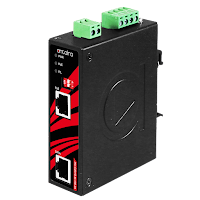
INJ-C201G-bt Series PoE Power Injector
Comprising four individual models, Antaria INJ-C201G-bt Series injectors represent a flexible solution for automation system designers, helping them achieve seamless network migration and easier upgrades to infrastructure capacity. Backward compatible with 802.3af/at PoE standards, these injectors eliminate the requirements of locating network devices close to power outlets, while protecting existing investments in legacy, non-PoE switches. Versatility is further extended by DIN-rail or wall mount options, as well as a compact footprint that requires only minimal space. Environmentally hardened, these IP30-rated injectors will operate over a temperature range of -40°C to 75°C (-40°F to 167°F) and are standards compliant ensuring compatibility with existing network devices. All four are UL Pending.

INJ-C201G-bt-T: This entry-level unit supports power input from 48VDC to 55VDC, ensuring full 90W PoE output in compliance with 802.3bt, making it ideal in the automation, surveillance and vehicle industries.

INJ-C201G-bt-24-T: In addition to supporting power input from 48VDC to 55VDC, ensuring full 90W PoE output, this model features power boosting technology for increasing low-voltage up to the required 802.3bt PoE requirements of 55 VDC, a common situation in light-duty industrial environments, building automation, and telecommunications.

INJ-C201G-bt-100-T: Designed specifically for higher powered network equipment, this injector supports power input from 48VDC to 55VDC, ensuring full 90W PoE output, along with an Enhanced PoE mode to offer up to 100W to higher-powered equipment such as digital signage displays, touch PCs, and lighting.

INJ-C201G-bt-100-24-T: This versatile model has the PoE budget to handle the requirements of low, standard and high voltage equipment. It ensures full 90W PoE output, while offering both power boosting technology and Enhanced PoE mode. A dip-switch setting enables PoE mode and dual PD signature verification process. The first PD verifies backwards compatibility with PoE and PoE+, while the second PD confirms there are two power negotiations before releasing 90W power.

@AntairaTech @OConnell_PR #PAuto Communications

Saturday, 12 February 2022

Accelerating AI development with thermal imaging.

The data lifecycle management (DLM) application optimizes dataset development with access to an annotated infrared and visible library for neural network training and advanced model performance testing.

Conservator™, a cloud-based dataset development subscription software for perception engineers using thermal infrared and visible image datasets to train neural networks has been announced by Teledyne FLIR.

Subscribers also gain access to application specific segments of their annotated image library of more than one million images with more than 100 object label categories. Designed to meet the workflow demands of data scientists in automotive, security, and smart cities applications, Conservator scales to support enterprise artificial intelligence (AI) teams in the research and development of object detection models.

“Conservator is a powerful application for data scientists developing datasets with a full complement of workflow functions including annotation, version control, data right access and model performance,” said Arthur Stout, director of AI product management at Teledyne FLIR Infrared Imaging OEM. “AI starts with quality data and this application supports collaboration to advance multi-sensor neural network development in commercial and defense AI applications.”

Conservator includes dataset workflow tools for annotation, curation, quality assurance, and dataset version control. Built on a scalable and stable database, Conservator can manage petabyte scale libraries. In addition, the included Conservator Insights™ desktop tool provides analysis and visualization of model performance against ground truth references. This empowers data scientists to quickly pinpoint the specific images in large datasets causing false positives or missed detections, enabling rapid dataset iteration and neural network re-training.

Conservator follows the recent release of the Teledyne FLIR expanded free starter thermal dataset for Advanced Driver Assistance Systems (ADAS) and self-driving vehicle researchers and developers. With both thermal and visible annotated images across fifteen object categories, the free starter thermal dataset allows the automotive and academic community to quickly evaluate the vehicle safety algorithm performance, neural network testing, and thermal sensors, such as the FLIR ADK™.

@flir @mepaxIntPR #PAuto #Automotive

Monday, 10 January 2022

Sharing recorded data easily.

Professional Edition Software Fits Needs of High-End Researchers and Scientists with Additional Recording, Analysis, and Sharing Capabilities.

The latest versions of FLIR Research Studio software has just been released by Teledyne FLIR. This new release includes both a Professional Edition with FLIR Research Studio Player—designed for research and science applications requiring robust data capture and analysis—and an upgraded version of the FLIR Research Studio Standard Edition. Both the Standard and Professional Editions are now offered as one-year subscriptions or perpetual licenses.
New FLIR Research Studio Player
The Research Studio Player is a free software application for sharing recorded data easily in 21 different languages and across Linux, Windows, and MacOS operating systems. With a Professional Edition License of Research Studio, the user can export .FRS files that are readable in the Research Studio Player with no limitations on file sizes. The Player has the same analysis capabilities as Research Studio Professional Edition, but it cannot connect to thermal cameras or record data.

FLIR Research Studio Professional Edition with Player and FLIR Research Studio Standard Edition are available for purchase today globally from Teledyne FLIR and its authorized dealers.

“The new FLIR Research Studio Professional Edition works the way you work, featuring the recording and analysis capabilities needed for cutting-edge research and development applications,” said Chris Bainter, vice president of business development, Teledyne FLIR. “Both the Standard and Professional versions offer a streamlined, intuitive ‘Connect – View – Record – Analyze – Share’ workflow, making it easy to quickly characterize important thermal data to support critical decisions. This helps improve collaboration and increase efficiency to reduce the potential for misunderstanding critical thermal data.”

The new Research Studio Standard Edition includes several updates including improvements in data recording and export. Connectivity options have also been enhanced across both editions with the Professional Edition supporting the FLIR High-Speed Data Recorder (HSDR). In addition, the Professional Edition includes advanced image enhancement tools, analysis capabilities, and data-plotting features along with to the ability to export data to the new FLIR Research Studio Player.

@flir @mepaxIntPR #TandM 

Friday, 9 April 2021

Information security management.

We reported the IEC 62443-4-1 certification by TÜV Rheinland for Endress+Hauser  product development processes and product life cycles recently. Now we report on further certification in digital security.

Rolf Birkhofer
Endress+Hauser reports that it has taken the next step toward achieving the highest standard in digital product and services security. After achieving the demanding StarAudit certification, Endress+Hauser Digital Solutions has been awarded the internationally recognized ISO 27001 certification for its comprehensive information security management system. In addition, confirmation has been received that the Netilion IIoT ecosystem fulfills the requirements of ISO 27017, a standard designed specifically for cloud application information security.

The importance of digital solutions for customers is growing rapidly. For this reason Endress+Hauser strove to achieve a certification according to the highest industry standard. “As the center of competence for digital solutions at Endress+Hauser, we’re proud to have received ISO 27001 certification,” says Dr Rolf Birkhofer, managing director at Endress+Hauser Digital Solutions.

This international norm offers a structured approach for protecting the confidentiality, integrity and availability of the information that is produced and processed in organizations and companies. Using the standard as a foundation, Endress+Hauser created an information security management system (ISMS) and implemented processes that safeguard and continuously optimize the protection of all types of information, data and systems.

High significance
Achieving ISO 27001 certification requires setting aside resources and making investments. “This was an effort that we were glad to undertake, because ultimately we lower our risks and optimize our business processes. But the even more important aspect is that we build trust among our customers. With these measures we’re in a position to reliably detect threats and actively protect our customers’ data as a result,” says Birkhofer in explaining the motivation.

Three years ago Endress+Hauser was one of the first industrial companies to receive the StarAudit certification, which confirmed that the company’s web-based services operate in accordance with specially defined standards. The internationally recognized ISO certification also requires a holistic approach and ensures that all affected activities at Endress+Hauser Digital Solutions are taken into account, not just individual applications.

As part of these efforts the Netilion cloud solution also reached a new milestone with ISO 27017 certification, which provides confirmation that the Endress+Hauser IIoT ecosystem continues to fulfill all the requirements for cloud services.

#PAuto #Cybersecurity #Digitalisation #IIoT

Thursday, 25 March 2021

Efficient data management can save time and money during design.

New digital services are now available to simplify the data management of Harting products and solutions.


Behind every electrical engineering project are many individual components and a wide range of data: 2D/3D CAD data, data sheets, type sheets and certificates are all part of the documentation trail. 

"Comparatively more time is spent on article research and the collection, conversion and storage of related documents than on the design itself," says Andreas Wedel, Director of Digital Transformation at the Harting Technology Group. That is why he and his team are working on new functions that will improve the data management for their products and solutions.

"Many of our customers still use the old HARTING catalogues, not so much out of nostalgia, but because they are full of notes and bookmarks," explains Wedel. “We wanted to make this practical way of working also possible in our online catalogue.”  The option to add items to wish lists has been available in the Harting eShop for a long time. Thanks to a new update, it is now possible to add text notes to individual articles. These notes can be managed and filtered via the myHARTING customer portal.

Saving time with data packets
Additional functions are aimed at the rapid provision of product data and documents that are necessary for electrical design. The design data, data sheets and type sheets for all individual components often add up to hundreds of documents. Previously, these had to be downloaded from the provider (including Harting) in individual steps. Using the new data manager, product data for up to 50 Harting articles can now be obtained in a single step from their website as a collected data packet.

50 different 2D/3D data formats for direct download
Up until now, HARTING has provided design data for its products in STEP and JT formats. In practice, however, significantly more formats are used. Therefore, many Harting customers still had to convert the data into their desired format. With the new MultiCAD download function, native 2D/3D CAD data is now available for download in over 50 different formats. This means that articles can be processed immediately in the desired data format for design purposes. This MultiCAD function is currently available for over 13,000 items in their online catalogue.

Customer portal offers many options
This new functionality can be found in the myHARTING customer portal, which already provides many e-commerce services. "Anyone who is professionally involved with our products and solutions can easily register and use all the services at myHARTING free of charge," explains Andreas Wedel.

@hartinguk @HARTING #PAuto #Design