Showing posts with label Connectivity. Show all posts

Wednesday, 27 May 2026

The future of automated storage.

A system that combines speed, safety, and scalability.

With e-commerce booming and customers expecting faster deliveries, Jungheinrich recognised that warehouses need a smarter, fully automated way to process goods while making the most of limited space. This insight led to the development of an innovative solution that redefines automated storage: the PowerCube, an automated compact container storage system.
“Our customers need a way to use limited space efficiently while meeting growing demands for faster order processing,” explains Carlos de Almeida.

Meet the PowerCube.

The PowerCube was designed with one clear goal—to improve efficiency. By maximising storage density and accelerating order processing, it helps warehouses handle more goods in less space and time.

At the heart of the system is Jungheinrich’s own Warehouse Control System (WCS), which controls automated shuttles via Ethernet communication to ensure they move quickly and safely within a high-density storage grid. These shuttles operate on the entire bottom level in two dimensions, leveraging the full vertical space above the system for maximum storage capacity.

Benefits:

  • Unique use of space: Up to four times higher storage density compared to conventional shelving.
  • High system height: Vertical storage up to 12 meters.
  • Scalable design: Flexible throughput, container capacity, and shuttle count.
  • Powerful performance: Each shuttle can carry two containers at once, up to 50 kg per container.
  • Easy integration: Short assembly times and simple IT connections—no need for floor milling.

“We wanted a system that combines speed, safety, and scalability. PowerCube delivers all three,” says Carlos.

Turning to HMS Networks for Reliable Connectivity.
Keeping shuttles moving safely in two dimensions is no easy task—it demands reliable and deterministic wireless communication. Any delay or disruption stops a shuttle, blocks access to storage areas, and can halt the entire line, leading to costly delays. Cables were not an option because the shuttles need complete freedom to move across the bottom level without restrictions. Recognising the need for reliable connectivity, Jungheinrich turned to HMS Networks. As Carlos puts it, “we’re experts in logistics, not networking, so we contacted HMS for help.”

The following robust wireless setup recommended:

• Anybus Wireless Access Points installed throughout the installation for full signal coverage. Dual-band segmentation using 5 GHz for communication with tablets and maintenance devices, and 2.4 GHz for shuttle control and safety communication.
• Anybus Wireless Bridge II, with its integrated antenna and compact IP67 form factor, for a space-saving installation on each shuttle.
• Point-to-multipoint architecture allows shuttles to roam freely between APs with continuous Ethernet connectivity wherever they are in the system.
• IP67-rated hardware ensures durability in harsh environments, including cold storage where condensation is a risk.

“We really appreciated HMS’ support and guidance. The Bridges and Access Points are working well, but it wasn’t just about the products. Their Wireless & Infrastructure Implementation Assistance service made a big difference, helping us overcome the challenges of deploying wireless connectivity in a dense, metallic structure. Using their expertise and analysis tools, HMS designed the best layout for access points to ensure reliable performance in every installation. In some cases, we even asked HMS to join us at our customer’s warehouse to perform a site survey and validate signal coverage,” adds Carlos.

First field deployments. The PowerCube is now entering real-world applications, proving its efficiency and reliability in multiple installations. “It’s great to see PowerCube out in the field solving issues. Fastbolt, for example, wanted faster order processing and better space utilisation. And that’s exactly what the PowerCube is providing,” enthuses Carlos de Almeida.

With the PowerCube, Jungheinrich is setting a new benchmark for automated storage systems. And with HMS providing the wireless backbone that keeps shuttles moving, this partnership is paving the way for smarter, more efficient warehouses worldwide.

Jungheinrich has plans to scale the PowerCube to larger deployment systems with increasing storage surface and numbers of shuttles, a move that will require advanced wireless design and continuous network monitoring. At the same time, meeting cybersecurity requirements and complying with regulations such as RED, CRA, and NIS2, along with optimising safety architecture for the upcoming EU Machinery Regulations (2027), will be critical.

“We’re really pleased with the collaboration with HMS. It’s helped us achieve the required robust connectivity, and as we expand and meet cybersecurity and safety requirements, our partnership with HMS will become even more valuable. This is only the start!” concludes Carlos.


@JungheinrichSA @hmsnetworks @HMSAnybus @mepaxIntPR #PAuto #Connectivity

Friday, 8 May 2026

Fibre to chip connectivity specialist company acquired.

The acquisition of Teramount Ltd., the developer of detachable fiber to chip connectivity solutions optimised for high volume Co Packaged Optics (CPO) and other silicon photonics applications, has been completed by Molex.

“Teramount’s passive, detachable coupling approach supports large assembly tolerances and semiconductor grade wafer level processes—filling a critical gap in the optical stack,” said Aldo Lopez, president, Datacom Solutions, Molex. “By integrating this unique technology into our optical interconnect portfolio, Molex offers a more seamless path from early-stage prototypes to high-volume CPO and other silicon photonics architectures required for the AI era.”

Teramount will continue to operate as a design and engineering hub in Jerusalem (IL), supported by Molex’s global optical capabilities. It will become part of the Optical Connectivity segment within the Optical Solutions Business at Molex.

Financial terms of the transaction were not disclosed.


See also: Agreement for fibre-to-chip connectivity (15/4/2026)

@MolexConnectors  @TeramountLTD @NapierPR #PAuto


Wednesday, 15 April 2026

Agreement for fibre-to-chip connectivity.

An agreement to acquire Teramount Ltd., the developer of detachable fibre-to-chip connectivity solutions optimized for high-volume Co-Packaged Optics (CPO) and other silicon photonics applications has been announced by Molex. Teramount’s TeraVERSE® platform, based on its universal photonic coupler and wafer-level self-aligning optics, provides a pragmatic, field-serviceable interface between optical fibre and silicon photonics chips and was recently announced as part of the Molex one-stop CPO solution at OFC 2026. TeraVERSE is an innovative, passively-aligned solution that enables faster data rates necessary to support AI adoption while consuming less energy to reduce power and cooling demands in hyperscale data centers.

“Teramount’s TeraVERSE technology fills a crucial gap in the CPO stack, offering an advantaged and strategic complement to our optical solutions portfolio. With a practical, detachable fibre-to-chip interface we are afforded a foundational element to realize mainstream CPO adoption,” said Aldo Lopez, president, Datacom Solutions, Molex. “Combining Teramount’s IP and engineering talent with Molex’s innovative portfolio, manufacturing scale, supply-chain expertise and systems know-how gives customers an integrated, high-volume path to deploy scalable CPO.”

Their passive, detachable coupling approach supports large assembly tolerances and semiconductor-grade wafer-level processes. Compared with active alignment methods, passive alignment is materially more scalable as CPO moves toward volume production. Molex will combine Teramount’s IP and engineering expertise with its optical capability and global manufacturing scale to deliver industry-leading performance specifications and accelerate production of TeraVERSE.

“Harnessing Molex’s global scale and system-level expertise with Teramount’s innovation expertise and detachable, wafer-level coupling technology creates a real pathway for scalable, high-density CPO,” said Hesham Taha, CEO and co-founder of Teramount. “Joining forces with Molex will enable us to accelerate delivery of a manufacturable, serviceable fibre-to-chip interface that meets the pressing needs of AI and hyperscale data centers.”

The addition of TeraVERSE to Molex’s comprehensive optical interconnect portfolio provides customers with greater support across their CPO and silicon photonics architectures. As a leader in high-speed communications interconnects, Molex is uniquely positioned to deliver industry-leading copper and optical solutions.

Teramount will remain a design and engineering center in Jerusalem (IL) supported by Molex’s global optical capabilities. The acquisition is expected to close in the first half of 2026, subject to regulatory approvals and other customary closing conditions. 


@MolexConnectors  @TeramountLTD @NapierPR #PAuto

Monday, 23 March 2026

Appointment at major distributor.

Maintaining customer interaction with real people who can respond pro-actively to their needs.

Callon O'Keeffe has been appointed to the role of Business Development Administrator (BDA) with Lane Electronics. The appointment is in response to continued business growth and Lane Electronics’ key strategy of bringing new talented staff on board to maintain customer interaction with real people who can respond pro-actively to their needs

Callon is qualified in General Engineering, including electronics, with diplomas from Chichester college. A team player, Callon is responsive to customer’s needs and provides a reliable source of information. He is interested in emerging and evolving technology, enjoys problem solving and values creativity while working collaboratively and building strong relationships. Outside of work he enjoys the countryside and has a passion for travelling and experiencing different cultures

Nick Wheeler, Sales Director of Lane Electronics, says, “As a business development administrator, Callon’s primary objective is following up and assisting with quotations and working alongside our internal and external sales teams. Continuing to build direct relationships with our customers he will be able to help integrate our wide range of products and high levels of customer service and supply adaptability, adding value to our customer’s supply chains."

Lane Electronics have been supplying connectivity solutions for over 50 years; their RF and Fibre-Optic connector and cable assemblies are widely used in defence and security applications. The company is a franchised distributor for many of the industry’s leading electrical and electronic connector manufacturers including EATON Souriau, CINCH Fibreco, HUBER+SUHNER, HellermannTyton, Positronic, Nicomatic and LEMO.


@FC_Lane @proactivefleet  #PAuto #Electrical

Monday, 16 March 2026

Industrial connectivity.

In industrial wireless deployments, one technology sits at the center of every high-performance network: the Wireless Distribution System (WDS) bridge. It is the fundamental building block that transforms isolated access points into a unified, scalable network fabric yet it remains one of the most misunderstood components in the field.

Whether connecting data across a sprawling manufacturing floor, linking multiple buildings on a corporate campus, or extending coverage across remote field sites, every WDS application demands one thing: reliable, intelligent network bridging.

WDS bridges eliminate the cost, complexity, and downtime risk of deploying wired Ethernet backbones in environments where cable is impractical or impossible.

Why industrial environments demand WDS.
For plant managers and network engineers alike, the challenge is familiar: industrial environments make traditional wired Ethernet backbones impractical, cost-prohibitive, or outright impossible. Moving cables through active production facilities, bridging across open yards, or connecting distributed sites on a campus introduces enormous installation costs and operational disruption.

Since the early days of IEEE 802.11 networking, engineers have solved this problem with WDS — the wireless interconnection of access points that replaces the wired backbone with a seamless, high-performance wireless bridge. The result is faster deployment, lower costs, and the flexibility to extend network coverage exactly where it is needed, without touching a conduit.

How WDS bridge configuration works.
A WDS deployment designates one device as the main access point — the main base station — which anchors the connection to the wired network. Additional access points, known as relay stations or remote base stations, connect wirelessly to the main base station and forward traffic between the core network and all downstream users and devices.

APs are configured in one of two bridge modes depending on deployment requirements:

  • Point-to-Point: Two APs communicate via high-gain directional antennas, wirelessly joining two discrete LAN segments across distances that would be impossible or cost-prohibitive to cable.
  • Point-to-Multipoint: A single main AP anchors connections to multiple remote APs simultaneously, enabling centralized network distribution across a large facility or multi-site campus.

In a point-to-multipoint configuration, all APs must share the same SSID, wireless channel, authentication mode, security settings, and LAN IP subnet range. Both the 2.4 GHz and 5 GHz bands support WDS bridging, however, the two bands cannot be bridged together within the same link.

Critical design considerations.
AP Placement & Signal Strength: Every WDS hop introduces latency and reduces potential throughput. Placing APs too far apart compounds this effect, degrading link speed across the entire network. Strategic AP placement, optimized for signal strength and line of sight, is essential to maximizing WDS link performance.

Security & Access Control: Industrial networks are high-value targets. Restricting WDS access to authorized personnel requires strong wireless encryption. While WEP remains an option for legacy compatibility, WPA and WPA2 are the protocols of choice for modern deployments, delivering the authentication strength and encryption depth needed to protect critical infrastructure from unauthorized access.

Antaira delivers purpose-built WDS bridge hardware designed for the demands of real-world industrial environments from bridge-only devices to full-featured multifunction platforms.
  • AMY-5133-AC-PD: A compact, cost-effective 802.11 5 GHz wireless AP/Client Bridge engineered for straightforward WDS deployments. Purpose-built, reliable, and ready to deploy.
  • ARX-7235-AC-PD-T: A multifunction industrial powerhouse combining 802.11a/b/g/n/ac Wireless Access Point, Client, Bridge, Repeater, Router, NAT, and VPN all in a single PoE PD device. One platform. Every function. (Pictured right)

Both platforms deliver secure, stable wireless bridging with the performance margins that industrial operations require. And they are joined by Antaira’s full portfolio of industrial wireless routers, IoT gateways, access points, clients, and repeaters, all engineered to the same exacting standard. Every Antaira wireless device is hardened to endure the conditions that would destroy standard network equipment: extreme temperatures, high humidity, vibration, shock, and industrial-grade electromagnetic interference.


@AntairaTech @OConnell_PR #PAuto #Comms

Friday, 17 October 2025

Mission-critical connectivity provider acquired.

Customers and partners to benefit from combined engineering expertise, expanded technology portfolio and enhanced global footprint

An agreement has been signed by Molex to acquire Smiths Interconnect, a leading provider of high-reliability connectivity products and solutions serving the aerospace, medical and semiconductor test and industrial markets. Smiths will receive cash consideration for the transaction, subject to customary adjustments for working capital, cash and debt.

“Molex is excited to reinforce our commitment to the aerospace and defense market with the acquisition of Smiths Interconnect,” said Joe Nelligan, CEO, Molex. “Smiths Interconnect has a highly complementary portfolio of advantaged solutions that strongly enhances the platform established by our acquisition of AirBorn last November. The combination of Molex’s global scale, capabilities and financial stability with Smiths Interconnect’s complementary technologies, products, customers and footprint will enable us to expand our aerospace and defense business and support customers in new and innovative ways.”

Smiths Interconnect designs and manufactures technically differentiated electronic components, along with microwave, optical and radio frequency products and subsystems that connect, protect and control critical applications. Smiths Interconnect has 21 sales, R&D and manufacturing locations across 12 countries, including the United States, Canada, Mexico, Costa Rica, France, Germany, Italy, the United Kingdom, Tunisia, India, China and Singapore.

The acquisition is expected to close in the first half of 2026, subject to regulatory approvals and other customary closing conditions. More information will be shared at that time. Jones Day is acting as Molex’s legal advisor and Rothschild & Co is serving as Molex’s exclusive financial advisor.


@MolexConnectors @smithsinterconn @NapierPR #Pauto #Communications

Monday, 15 September 2025

Interconnect's strong leadership announced.

Intelliconnect has strengthened its senior leadership team with the appointment of Yiannis Metallinos as Managing Director and Gary Langridge as Engineering Manager.

Intelliconnect is a market-leading provider of interconnects, cable assemblies and subsystems for applications in RF, microwave, space, medical, test and measurement, education, research, quantum computing and other emerging low-temperature computing markets.

• Yiannis Metallinos brings extensive leadership and operational experience gained across PE, private and PLC environments, spanning industries including electronics, precision engineering, FMCG, EV, automotive and marine. With expertise across manufacturing, engineering, and quality, he has a proven track record in driving organisational development, operational excellence, and talent management.

• Gary Langridge offers more than 30 years of engineering and product development experience. His career spans industries where technical innovation must balance with cost, quality, and time-to-market. Gary’s background in product manufacturing organisations will support Intelliconnect in reducing the cost of solution development and lifecycle management while enhancing engineering capabilities.

Steve Groves, Sales & Marketing Director at Intelliconnect (Europe) Ltd, commented: “We are very pleased to welcome Yiannis and Gary to our management team to ensure that Intelliconnect continues to innovate and meet the future needs of our customers.”


@Intelli_Connect @proactivefleet #TrexonGlobal #PAuto

Thursday, 19 June 2025

Automation product brands under one roof!

Red Lion and N-Tron are officially product brands “by HMS Networks.” For thousands of automation engineers and system integrators all over the world, this means that scalable industrial solutions for cloud connectivity, edge intelligence, asset management, industrial Ethernet switches, panel meters and operator panels are now available from one trusted source . Indeed the entire HMS product offering now includes the product brands Anybus, Ewon, Intesis, Ixxat, N-Tron and Red Lion.

Following the 2024 acquisition of Red Lion Controls Inc., HMS and Red Lion teams have worked together to seamlessly integrate their offerings. The result: two trusted brands — Red Lion and N-Tron — now under the HMS umbrella, offering enhanced value and streamlined access to industrial connectivity solutions.

Red Lion® by HMS Networks will offer scalable industrial solutions for cloud connectivity, edge intelligence, asset management, as well as rugged operator panels and panel meters—designed to deliver real-time data visibility, especially in demanding environments.

N-Tron® by HMS Networks will focus on rugged industrial Ethernet switches, providing secure, reliable connectivity for industrial networking.

What does this mean for HMS Networks and legacy Red Lion customers? Existing HMS and Red Lion customers will continue to enjoy their trusted purchasing channels and integration partners. Now, they will benefit from a wider, more integrated product offering.

For example:

  • Red Lion control panels can be paired with remote access solutions from Ewon®.
  • N-Tron switches will complement HMS’s robust offerings in network connectivity and diagnostics.
  • Alexander Hess
    The complete portfolio supports secure edge and cloud communication—built on HMS’s 30-year track record in industrial networking.

“With the Red Lion and N-Tron product brands, we can offer our customers more choices and a seamless experience,” says Alexander Hess, Senior Vice President of HMS division for Industrial Data Solutions. “By aligning these brands under the HMS umbrella, we’re making it easier for automation engineers and system integrators to build smarter, more connected industrial systems. This means faster deployment, better support, and solutions that simply work better together.”


@hmsnetworks  @redlioncontrols @mepaxIntPR #PAuto #Communications

Thursday, 30 January 2025

Industrial remote connectivity for large machine fleets.

HMS Networks has strengthened its industrial remote connectivity solutions, delivering scalable, secure connectivity for businesses managing large fleets of machines with the introduction of Ewon Cloud and Ewon Edge. This new solution combines HMS Networks’ established expertise with a customer-centric approach, enabling operators to streamline machine monitoring and maximize operational efficiency.

The Ewon product line from HMS Networks is globally recognized for its reliability in industrial remote access and data monitoring. Ewon Cloud and Ewon Edge are designed to meet the demands of large-scale machine operations, providing industrial users with secure access to machines and simplified user access management.

Building on decades of industry knowledge, Ewon Cloud and Edge are developed with a forward-looking approach, ensuring future growth and adaptation to evolving needs.

Once an Ewon Edge device is installed, it registers seamlessly with Ewon Cloud, integrating machines into a unified “space” where an unlimited number of devices can be grouped. With flexible access control, users can securely monitor and manage machine data anytime, from anywhere.

“With Ewon Cloud and Ewon Edge, we’re fulfilling our motto: ‘Hardware Meets Software,’” says Sébastien Thinnes, Vice President Marketing of HMS Networks’ IDS Division. “Machine builders and operators managing large fleets need a solution that’s powerful, secure, flexible, and evolutive. With over 500,000 Ewon gateways connected worldwide, we understand industrial expectations. This knowledge shaped our new solution and reinforces our commitment to advancing industrial connectivity.”


 @hmsnetworks #PAuto @ewonrouters

Thursday, 16 May 2024

Contactless data and power transmission.

The correct interface plays a crucial role in the safe and efficient connection of devices, machines and systems. Contactless connectivity offers the ability to transmit power and data over short distances without relying on physical connections. In environments where traditional connectivity is compromised by vibration and dust, the contactless solution proves to be extremely reliable.

The advantages of contactless connectivity are many. It not only ensures reliable transmission, but also makes maintenance considerably easier and enables an almost unlimited number of mating cycles. By using RoProxCon®, from Rosenberger, both data and power can be transferred efficiently, e.g. in turntable mechanisms and robot arms. The robust connectors are able to withstand high shock loads and transmit 30 W of electrical power via inductive coupling.

In addition, they support data transfer rates of up to 3.125 Gbps at a carrier frequency of 60 GHz via an air interface. Furthermore, they enable reliable transmission through a wide variety of materials.

In situations where traditional connections have reached their limits, contactless connectivity offers a highly reliable, maintenance-free solution with flexible application options.


@PresseBox  #Rosenberger #Pauto #Manufacture

Thursday, 19 October 2023

Angled connectors.

Connectors reduce depth required behind panels USB-2, USB-3.1 and USB-C connectivity options.

New additions to Cliff Electronics' Right-Angle FeedThrough (RAFT) connector range have been announced. Their RAFT connector range is ideal for connectivity in wall mounted boxes where the depth is not available for rear entry or where cable access is required from the bottom or top. They also reduce the space required for interconnection at the rear of rack panel systems and provide vertical connections for convenient top to bottom wiring.

Nick Leppard, Technical Sales Manager of Cliff Electronics, says "Our right-angle FeedThrough connector range has been highly successful and the increasing adoption of USB for data and power connectivity means our new USB options will be very useful for our customers."

Cliff’s wide range of XLR and DualSLIMS form factor types allows designers to integrate power, audio, video, digital, optical, networking and data feeds into industrial, transport, energy storage, medical diagnostic and treatment equipment, PoE and industrial applications, instrumentation and control connectivity as well as professional equipment for broadcast (studio and mobile), lighting and audio.

Three new RAFT connectors have been introduced: USB-2, USB-3.1 and USB-C. They are available in two widths to assist with product design:

  • Standard width of the popular XLR connector, 26 x 31mm, with a panel cut out diameter of 24mm.
  • The compact DualSLIMS which have dimensions of 19 × 35.5mm and fit in to a narrow 17.15 × 22.86mm panel cutout.

Other RAFT connector options available in both sizes include CAT5e RJ45, CAT6 RJ45 and HDMI.

Nickel or black metal, and black plastic bodies are available for the DualSLIM version with currently plastic only for the XLR cutout types. Mounting options include front or back panel mounting with 2.5mm plain or 3.2mm countersunk holes or M3 and #4-40 UNC threaded versions. They can supply standard, off the shelf, connecting cables suitable for use with their new USB RAFT connectors which can be used for internal connectivity, simplifying, and speeding up system assembly and facilitating easy repurposing of equipment. The FeedThrough connector range may be mounted on 19” rack panels with up to 16 standard XLR connectors or 20 of the DualSLIMS. Blank and pre-assembled panels are available direct from Cliff.


@proactivefleet #CliffElectronics #PAuto #Electronic

Wednesday, 29 March 2023

Industrial connectivity roadshow for Ireland.


MatrikonOPC
will be in Ireland visiting companies next month (On April 25th, 26th and 27th, 2023). They are scheduling private presentations and welcome expressions of interest.

The purpose of this visit is to present their new IoT Connectivity Solutions for Industry 4.0 projects, clarify doubts about industrial connectivity protocols and advise about the new trends in terms of data movement. They are dedicated to industrial connectivity projects based on different protocols like OPC, MQTT, REST, etc

Interested parties may sign up directly here: Matrikon Roadshow 2023 in Ireland.

@MatrikonOPC #Pauto #IoT #Ireland

Friday, 10 March 2023

Integrated connectivity.

Bar code readers from Leuze are equipped with "integrated connectivity" Integrated connectivity means: All relevant industrial Ethernet interfaces are integrated into the sensor. It sounds simple but is not standard on the market. Instead, manufacturers often offer devices without an industrial Ethernet interface to save development effort. In such cases, the interface is available via a gateway. 
Leuze bar code reader  BCL 300i

The following examples show why this is not the optimal solution and why the system operator benefits in multiple ways with integrated connectivity from Leuze. The benefits range from commissioning (device management) to machine monitoring (condition monitoring) to process optimization.

Streamlined system layout.
Leuze offers devices with integrated interfaces for PROFINET, Ethernet/IP, and EtherCAT. The significant advantage that can already be gained during commissioning is demonstrated using design example with and without integrated connectivity. First a look at systems with barcode readers without integrated interfaces: here, each scanner must be connected to a separate gateway - this means an additional gateway with its own power supply for each barcode reader. As a result, the installation effort and the number of cables are twice as much as needed. The parameterization is also considerably more complex. Don’t forget: Because of the required gateways, there are significantly more devices in the system that can cause a malfunction and must be checked. In comparison, the same system with integrated connectivity: The industrial Ethernet interface is already integrated into every bar code reader. This makes separate gateways superfluous. Above all, the system layout is very clean and requires fewer cables. Last but not least, errors can be eliminated more quickly as fewer devices have to be checked.

The implementation of a linear topology for each integrated switch reduces the cabling requirements, saving time and money

Leuze sensors with integrated connectivity also have an additional feature that contributes to efficient commissioning: the devices have one switch as standard, i.e. an Ethernet input port and output port each. As a result, system operators do not need an external switch. In addition, several devices can be wired more easily, for example in a ring or linear topology. With linear wiring, the system operator connects one sensor to another through integrated switches. Only the last sensor in the chian is connected to the controller. The advantage here is also a simpler system design and fewer cables. Devices without an integrated switch, on the other hand, require an external Ethernet switch. Users must also connect each individual sensor to the switch via a star topology and then connect this to the controller

The usual control environment.
Integrated connectivity also means that you can work in your usual control environment. This is possible because the entire device parametrization is integrated into the GSDML file ("Generic Station Description Markup Language") of PROFINET, for example. In contrast, many other Ethernet-based devices on the market generally have to be parametrized via a web server. This is complicated because each manufacturer provides its own web server version with its own user interface. Users have to familiarize themselves with new interfaces every time and find the corresponding functions. In addition: devices without Ethernet that are connected via a gateway often require productspecific manufacturer's software for parametrization. This may result in compatibility issues with the hardware used.

For example, if the manufacturer does not update their software after a few years. Here too, integrated connectivity has multiple advantages:

  • Users remain in their usual control environment
  • No manufacturer software installation and related training required.
  • No need to access a web server

Leuze devices with integrated connectivity are very easy to parametrize. Only the GSDML file has to be downloaded from the Leuze website via the control and copied once into your engineering software. The modules are then available in the hardware catalogue. The function of the device is explained in a clear and concise way. This makes parametrization and sensor usage easy and the manual is not required in most cases.

Support from the sensor.
A look at the sensor’s device profile with integrated connectivity further simplifies programming. As an example: for the AMS and BPS positioning sensors, Leuze not only provides positioning values but also a calculated speed value. Anyone who needs this value in their system saves time as it does not need to be calculated. In addition, if you only want to filter for certain barcodes without integrated connectivity, you have to do this via the controller. Leuze BCL bar code readers can be done more efficiently because here you can prefilter according to specific criteria. Only codes which correspond to the required pattern are transferred to the control. The option to duplicate PROFINET devices in the engineering tool saves time. Users only have to specify the parameters once and can then copy the settings as needed. Integrated connectivity even helps when a device is replaced: If a damaged sensor has to be replaced, the system automatically transfers all the parameters stored in the controller to the new device. The sensor is immediately ready for use.

Simple interface management in all control environments with "integrated connectivity" from Leuze


Keeping an eye on quality. 
Integrated connectivity not only provides support during commissioning but also with machine monitoring, i.e condition monitoring. For efficient operation, system operators need answers to questions such as: is the plant operating correctly? When do I need to schedule maintenance? The answers are provided by the integrated interface. Via industrial Ethernet communication, it not only transmits the actual process values but also diagnostic data which are available in the controller. As a result, all identifying data can be read out via a barcode reader to manage the device. This includes the serial number or the software/hardware of the sensor. Moreover, there are quite a number of diagnostic parameters, such as the number of OK and NOK readings. In particular, the system with the bar code readers, the system also supplies a quality indicator for each individual code reading. This provides information about the quality of the readings. The value is generally between 90 and 95 percent and can be monitored to detect deviations during operation. For example, caused by contamination or mechanical damage. Remote monitoring can also be implemented as an additional communication channel via OPC UA. The control can be used for this purpose, but Leuze sensors provide a much easier solution, as they can be accessed directly via the OPC UA. As a result, system operators can monitor their devices while the process is running. This gives them real-time information on the performance of the system. If required, the data can also be transferred to a cloud - there are no restrictions whatsoever.

Simple process optimization.
How can processes be optimized on the basis of the collected data? This is demonstrated by two representative practical examples using barcode readers. First example: The scanning window of the sensor can become contaminated. In some systems this does not happen for years, in others, it occurs more quickly. In order to determine which sensor is contaminated, data evaluation via OPC UA can be used. Based on the data, a software program records the reading quality of each individual decoding process. This indicates maintenance for bar code readers with impaired reading performance. Second example: The label itself can also cause problems - for example, if the code is damaged or printed incompletely. In this case, it is not enough to monitor an individual sensor to determine the error. Instead, the faulty label has to be traced along different reading stations to identify it. This makes it possible to detect similar evaluations and use the identification number to determine the label involved.

Summary.
Integrated connectivity offers advantages on several levels. It contributes to easier commissioning and provides additional information for machine monitoring. This information is particularly useful for process optimization, resulting in optimal system performance. All sensors developed by Leuze for Fieldbus-controlled automation, for example in intralogistics, are equipped with integrated connectivity. This allows system operators to save time and money. "The Sensor People" from Leuze will help to provide you with support to select and implement the optimum solution.

@LeuzeUK @LeuzeUSA @mepaxIntPR #PAuto #Manufacturing

Thursday, 17 November 2022

Distribution agreement for connectors in Europe.

An agreement to expand TTI, Inc. - Europe as authorised distributor for Harting in Europe has been signed. The agreement was signed at Electronica 2022 in Munich (D).

The signing with (L to R): TTI Europe's Ronald Velda, Director Supplier Marketing Europe-Connectors, Geoff Breed, Vice President Marketing Europe with Harting's Edgar Peter Düning, Managing Director and Jon DeSouza, President & Chief Executive Officer Americas.

The Harting Technology Group is one of the world's leading providers of industrial connection technology for the three lifelines of Data, Signal and Power. Moreover, the company also produces retail checkout systems, electromagnetic actuators for automotive and industrial series use, charging equipment for electric vehicles, as well as hardware and software for customers and applications in automation technology, mechanical and plant engineering, robotics and transportation engineering.

“We are delighted to be able to offer Harting’s world-renowned connectivity products to all our customers in Europe,” said Geoff Breed, Vice President TTI Europe. “Introducing the Harting products into our portfolio and making them available to our sales and engineering teams, backed by our in-depth stocking models, means customers will be able to benefit from more choice and flexibility to advance their designs. We are excited about the future and generating new business for the continued success of both Harting and TTI Europe.”

"Based on TTI's proven and successful go to market model with a clear technical focus and strong stock commitment Harting is absolutely sure to set the course for joined growth,“ said Edgar Düning, Managing Director of Harting Electric, Electronics and HCS.

The authorisation of TTI Europe complements the success initially started through TTI’s subsidiary, Mouser. The European agreement follows a similar arrangement between the TTI Family of Companies and Harting Americas, cementing the relationship between the two companies.

@ttiinc @HARTING_Group @HARTING @Publitek #PAuto #Europe

Friday, 6 May 2022

Appointment at connectivity company.

Franz Praxenthaler has been appointed as Chief Financial Officer (CFO) to the Management Board of Rosenberger Hochdrucktechnik GmbH & Co. KG.

Franz Praxenthaler
Franz Praxenthaler began his professional career with an apprenticeship as a precision mechanic at Rosenberger. He was given management responsibilities at an early stage, initially as head of production and later, after continuous professional development, as head of controlling and finance.

In 2010, he became commercial managing director of Hörl Kunststofftechnik GmbH & Co KG, part of the Rosenberger group. With proven success in all functions ever taken over and with the profound knowledge of the family values and the company tradition, he will be responsible for the areas of finance and controlling at board level as CFO and will significantly shape the further development of the corporate group in the management together with CEO, Eric Küppers. (see  Strengthening connectivity company's management - July 2021).

@PresseBox #RosenbergerGruppe #Pauto #Connectivity

Thursday, 27 January 2022

Rugged embedded computer system.

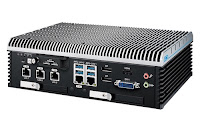
Impulse Embedded now supplies the ECX-3000 series from Vecow, a fanless embedded system powered by the latest range of Intel 12th Generation Core ‘Alder Lake’ processors. Featuring breakthrough technologies, enhanced graphics and high speed I/O the ECX-3000 series is perfectly suited for IoT, machine vision, in-vehicle computing, public safety and Edge AI applications.

The 12th Generation Intel Core processor family is Intel’s first to contain two different cores in a single chip design. With up to 8 performance cores and 8 efficient cores the Alder Lake offers users a new intelligent workload optimisation feature called Thread Director.

Thread Director has been designed by Intel with the help of Microsoft to manage resources at a processor level with assigning correct tasks. Low power background processes can be managed by “Efficient” cores leaving “Performance” cores free and available for heavy lifting when needed. This processor optimisation is great for AI and Edge applications where there is a need for the system to be running all the time doing low level monitoring and reporting, whilst occasionally needing to react to an event with a process heavy workload as quickly as possible. In addition to these intelligent workload optimisation features the Alder Lake CPU features Intel UHD 770 graphics, an integrated Graphics Processing Unit (GPU) built around Intel Xe graphics featuring up to 32 execution units which can be used to accelerate neural networks in object identification, processing, and other Edge AI tasks.

Comprehensive I/O and expansion options for a variety of embedded applications The ECX-3000 is packed with high speed I/O including new features such as six 10Gbps USB3.2 Gen 2 ports and up to eight 2.5GbE Ethernet ports with two models (ECX-3071XRT/XFR) supporting even faster 10GbE LAN speeds. Every system has at least one 2.5GbE Ethernet port that supports TSN (Time Sensitive Networking), a crucial step forward in high-speed Edge communication standards, allowing critical information to be transmitted in real-time. Moreover, there are options for up to four 2.5GbE PoE+ ports offering 25.5W / 48V per port power for the latest IP cameras and other PoE powered devices.

In addition to its high-speed I/O options, all ECX-3000 models come with one M.2 3042/3052 B-key socket suitable for 5G modules, one M.2 2230 E-key socket plus one miniPCIe slot for expansion modules. Quad display output support comes via two DisplayPort, one HDMI and one DVI-I interface. For storage there are two SATA III ports, one mSATA connector and one M.2. 2280 M-key (PCIe x4) socket with some models offering easy front access removable storage.

As with all of their embedded computing range, Impulse can fully configure the ECX-3000 to customer’s exact specification in their  engineering facility with a wide choice of processor, memory, storage, peripheral card and operating system.

@ImpulseEmbedded @proactivefleet #PAuto #Communications

Thursday, 30 September 2021

Global catalogue recognised with award.

Mouser Electronics has been named the 2020 Global e-Catalogue Distributor of the Year by Molex. This is the second consecutive year — and fifth year overall — that Mouser has received this prestigious distribution award. Molex also honoured Kristina Cole, Corporate Supplier Manager at Mouser, with the Molex MVP Award.

Mouser received the Global e-Catalogue Distributor of the Year award for helping Molex achieve outstanding financial growth in e‑catalog sales, as well as for driving significant customer growth for Molex worldwide.

“For the second year in a row, Mouser has excelled in customer service, sales, and product breadth, playing a key role in our success,” said Fred Bell, Vice President of Global Distribution at Molex. “Congratulations to all of the worldwide teams at Mouser on this well-deserved award.”

“We are thrilled and greatly appreciative to Molex for these awards, which recognise our teams’ top-tier efforts,” said Jeff Newell, Senior Vice President of Products at Mouser Electronics. “Mouser strives to be the distributor with the widest selection of Molex products, and we’re proud of our continuing collaboration.”

Earlier this year, Molex honoured Mouser with the Americas e-Catalog Distributor of the Year, APS e-Catalogue Distributor of the Year, and European e-Catalogue Distributor of the Year awards. Mouser previously earned the Global e‑Catalogue Distributor of the Year award in 2019, 2015, 2014, and 2013, the European and APS e-Catalogue Distributor of the Year awards in 2019 and 2018, and the Americas e-Catalogue Distributor of the Year award in 2019.

 @MouserElecEU @MolexConnectors @Publitek #Electrics #Pauto

Monday, 12 July 2021

Strengthening connectivity company's management.

Dr. Kristijan Bauer has joined the management team of the Rosenberger Group as Chief Operations Officer (COO). Along with Eric Küppers, who became Chief Executive Officer (CEO) in Fridolfing (D) last May, he will work together to lead the organization to implement the Rosenberger Group's corporate strategy across the globe.

Dr Kristijan Bauer (top)
and Eric Küppers
The entrepreneurial and international experience of both bring to the Rosenberger Group will be a great asset for the expanding company.

Eric Küppers has already held various positions in private as well as internationally operating companies. Most recently, he was responsible for the automotive business at the technology company TE Connectivity as President Global Automotive.

Dr. Kristijan Bauer held international management positions at the globally operating Continental AG for more than 20 years and was most recently responsible for the worldwide production at Festo SE & Co. KG, an automation and control technology company which is a family-owned company of similar size and structure to Rosenberger.

Rosenberger continues as a family-owned enterprise. The current managing directors, brothers Peter, Hans and Bernhard Rosenberger, will withdraw from the daily operational business and participate in the newly created Supervisory Board, to which the new management will report in the future.

@PresseBox #RosenbergerGruppe #Pauto #Connectivity

Wednesday, 30 June 2021

Last mile connectivity.

Analog Devices has expanded its ADI Chronous™ Industrial Ethernet portfolio with solutions that bring long-reach Ethernet connectivity from the edge to the cloud and enable real-time configurability, lower energy consumption, and increased asset utilisation. The new ADI Chronous offerings support the 10BASE-T1L physical layer Ethernet standard allowing new data streams from edge nodes in remote and hazardous locations across process and building facilities. This previously unavailable data can now be seamlessly accessed across the network and used to assess factors such as asset health, raw material usage, and process parameters enabling cleaner manufacturing.

“Many process plants and buildings are struggling with constant manual local intervention required by service personnel and limited ability to optimise assets at an enterprise level,” said Mark Barry, General Manager of Automation and Energy at Analog Devices. “By providing long-reach Industrial Ethernet solutions that adhere to the 10BASE-T1L Ethernet standard, we’re making it possible for our customers to achieve reliable communications over much longer distances, covering the last mile in connectivity. This truly enables the benefits of digitalisation through seamless access to edge data and improved control of remote assets.”

The newest ADI Chronous offerings enable customers to reduce energy consumption in buildings as well as their overall carbon footprint through improved control of building parameters. The ADI Chronous ADIN1100 and ADIN1110 Industrial Ethernet solutions can transfer data over 1.7 kilometres or more than a mile (a significant increase from previous Ethernet standards) through a single twisted pair of Ethernet cables, which helps reduce space, weight, and cost. These cables are lighter and more malleable than traditional Ethernet cables, and can support reuse of existing cabling infrastructure, reducing commissioning cost and complexity.

The new Industrial Ethernet solutions are offered in two flexible options: MAC PHY and PHY. The MAC PHY (ADIN1110) enables the industry’s lowest power systems, which simplifies retrofitting for Ethernet in field sensors or actuators and preserves existing investment in software and processor technology. The PHY (ADIN1100) provides standard Ethernet interfaces and supports use in more complex designs such as field switch developments or building controllers.

@ADI_News #PAuto #Ethernet

Friday, 7 May 2021

Pressure with advanced connectivity.

The new Cerabar and Deltabar pressure and differential pressure instruments  from Endress+Hauser offer with a Bluetooth interface for easier operation and improved efficiency in regulatory control, safety, and other systems. A high level of safety combined with enhanced productivity follows the Endress+Hauser smart safety approach to increase plant availability. Heartbeat Technology creates the data basis for predictive maintenance and allows the instruments’ functionality to be verified without process interruption.

Benefits at a glance

Improve your process safety
• Virtual wizards guide users through the SIL lock and proof test to prevent errors
• Safety by Design: Developed according to IEC 61508
• A checksum ensures security parameters are unchanged
• Backlight of the display changes from green to red in case of error
Increase your productivity
• Intuitive operation via Endress+Hauser SmartBlue app and Bluetooth interface
• Guided operating sequences simplify commissioning
• HistoROM data management concept ensures safe and easy transmission of the parameters
• Operation of the instrument by control buttons without opening the cover
Unlock your IIoT potential
• Verification of instruments without process interruption thanks to Heartbeat Technology
• Heartbeat Monitoring detects process irregularities and clogged impulse lines
• Heartbeat Technology provides smart diagnostic functions
Many industries are struggling with attrition, personnel turnover, and training new hires, and major plant additions are often performed by service providers who may not have a thorough knowledge of the equipment and systems on site. The amount of safety-related equipment continues to grow in many industries, and with it the number of costly required proof tests for maintaining safety integrity level (SIL).

To comply with these and other requirements, Endress+Hauser's new transmitters offer a more user-friendly user interface in its new Cerabar and Deltabar pressure transmitters. Intuitive operation is now provided via the SmartBlue app, which includes guided operating sequences for parameterization and commissioning of the pressure sensor, bridging distances of up to 50 feet. Thus, even measuring points that are difficult to reach or in hazardous areas are easy to maintain, even if they are only integrated into the process via a 4–20mA interface.

Plant personnel do not have to connect a cable, and real-time data from the pressure transmitter is easily available without the need for permits to open the housing, or for safety equipment to reach the instrument.

The Bluetooth connection has a special protocol that meets the increased safety requirements in industrial applications, and all connectivity is password protected. The Fraunhofer Institute AISEC tested the interface for its level of cybersecurity protection and rated it "high" for protocol and algorithm.

The NAMUR roadmap "Process-Sensors 4.0" names three key criteria for digital process sensors: wireless communication, sensor diagnosis, and the provision of information about the sensor and the process. With the optionally available Bluetooth and Heartbeat Technology functions, the new Cerabar and Deltabar product lines meet these criteria, providing a solid foundation for implementing an IIoT strategy.

For example, Heartbeat Technology supports maintenance staff when verifying measuring points. This can be done via a Bluetooth connection and at the touch of a button with the SmartBlue app, which can be hosted on a smartphone or the Endress+Hauser SMT70 tablet, which is rated for use in hazardous areas. The verification can be carried out in less than three minutes without process interruption. A verification protocol, which provides detailed information about all tests, is generated automatically.

Continuous self-diagnostic functionality provides a coverage rate of over 95 percent. With this information, it is possible to plan system revisions and maintenance work in advance to reduce downtime significantly and simplify the maintenance processes.

Heartbeat Technology provides users with the tools needed to optimize production through data-based insights into the process by providing transparency about the condition of the instruments and the process, but Heartbeat Technology can do even more.

It also detects irregularities in the process, for example deviations in the loop resistance, which in turn indicate a defective cable. Blocked impulse lines, e.g. due to crystallized medium, are detected by differential pressure transmitters. This type of data provides the basis for predictive maintenance.

Heartbeat Technology’s diagnostic, monitoring, and verification functionalities allow users to more efficiently interact with their instruments to improve process productivity. For example, predictive maintenance and better diagnostic information or in-situ health verification result in less unscheduled downtime.

Guided operating sequences support plant personnel during the commissioning of measurement points and during SIL proof tests by showing technicians what to do, step by step. This prevents operating errors and systematic errors to improve safety. These tasks can also be completed more quickly because there is no need to consult a manual.

The new color display also provides safety at first glance. In the event of an error, it switches from green to red and thus provides a quick overview. These instruments feature proven, reliable, and robust sensor technology. New pressure measurement technology includes self-explanatory and efficient operating instructions to prevent systematic errors during instrument parameterization. These features maintain the high safety level of the system and at the same time reduce maintenance costs, during commissioning as well as maintenance.

@Endress_Hauser @Endress_CA @endress_UK @Endress_US @endress_MESC#PAuto #Safety