Showing posts with label Frequency. Show all posts

Thursday, 2 January 2025

Intelligently control movements.

Individual drive solutions from a single source.
 
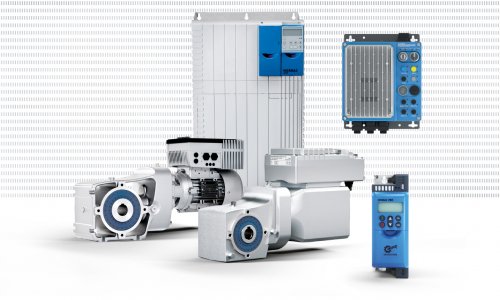
NORD offers solution expertise in all fields, where movements must be intelligently controlled, with its NORDAC frequency invertersWith these frequency inverters, the system supplier demonstrates its solution expertise also in the fields, where movements must be intelligently controlled. These can be found in various applications, which also have an influence on daily life.

One example is the safe and efficient cutting of food products such as bread, meat or cheese. In every cutting machine used in commerce, crafts and industry, the aim is to precisely control the contact pressure of the relevant food product in the machine. This is made possible by the PLC, integrated in all their frequency inverters. It allows to freely programme drive-based control functions. This ensures consistent cutting quality.

Intelligent control functions master industry-specific drive applications
When it comes to bottling liquid food products, speed is an essential factor. These frequency inverters ideally meet the great demands on precise speed control. They thus ensure an optimally balanced production process. Furthermore, for example, the NORDAC PRO control cabinet inverter can be integrated via Ethernet. It thereby allows for the remote maintenance of the system. Online tools can thus be used to check components for errors and to evaluate any recorded data of the frequency inverter. This way, they ensure high system reliability.

Drive solutions from NORD also take effect when it comes to precise positioning tasks. Here, the company offers its integrated POSICON module, which, for example, is contained in frequency inverters such as NORDAC PRO. It allows automatic positioning control for different applications such as travelling theatre sceneries for trouble-free theatre performances.

Extensive modular range of products meets industry expertise
NORD DriveSystems develops and manufactures application-specific drive systems from a single source. For that, the company uses its industry expertise with which it supports customers in about 100 industries. The extensive range of modular products consisting of gear units, motors and electronic drive technology forms the basis for the implementation of solutions. The components can be assembled in a modular and optimally matched manner to create customised systems.

The field of drive technology is the newest one of NORD, which will celebrate its 60th anniversary next year. Since the beginning of the 1980s, the company has been developing and manufacturing the NORD portfolio for electronic drive control at its site in Aurich (D). This comprises the frequency inverters for control cabinet installation, decentralised frequency inverters and motor starters. 


@NORD_Drive @mepaxIntPR #PAuto #Drives

Thursday, 9 March 2023

Frequency extender modules for signal generators.

Solution to provide industry’s broadest frequency coverage and best signal purity, output power.

Anritsu Company has introduced frequency extender modules for its Rubidium™ line of signal generators, in partnership with Virginia Diodes, Inc. (VDI). Covering 50 GHz to 1100 GHz, the modules complement Rubidium’s best-in-class performance by providing the industry’s broadest frequency coverage and best output power to create a sub-THz signal generator solution for emerging scientific, wireless communications systems, and body and material scanner applications.

The integrated solution brings significant signal purity and output power benefits to sub-THz design environments. Rubidium outperforms all other signal generators in its class in phase noise and harmonic/spurious by a substantial margin. The performance advantages are preserved at sub-THz frequencies.

When the VDI frequency extender modules are used with Rubidium signal generators, engineers realize the industry’s highest output power at THz frequencies. The VDI modules offer high test port power, voltage-controlled RF attenuation, and TTL controlled ON/OFF modulation rates to a few kHz as standard.

Each frequency extender module has two multipliers, which can be configured to allow input signals in two frequency bands. One multiplier has low frequency input for < 20 GHz and 10 dBm input level and the other has high frequency input for < 50 GHz and 0 dBm input level. The Rubidium-VDI signal generation solution meets the growing demand for emerging sub-THz radio spectrum designs. It can be used during development of satellite services, radio astronomy, earth exploration, and meteorology applications.

Wireless communication systems focusing on the W band (90 GHz to 120 GHz) and D band (130 GHz to 170 GHz), as well as intersatellite links operating at 220 GHz to 330 GHz, are also applications for which the solution is designed.

“VDI strives to produce the highest quality test and measurement solutions for the mmWave, sub-THz and THz frequency ranges through frequency extension of existing microwave test infrastructure. Achieving this requires continual innovation and development to integrate leading-edge active devices with our in-house Schottky diode technology to meet tomorrow’s measurement challenges,” said Cliff Rowland V.P. Business Development, VDI. “VDI is exited to work with Anritsu to combine our high-frequency SGX extension modules with its new signal generation capability to bring high-performance solutions to the market.” 


Rubidium Delivers New Level of Performance.
The Rubidium signal generator family delivers outstanding signal purity and frequency stability, even at high output power levels, across a broad frequency range of 9 kHz to 43.5 GHz. Coupled with built-in, easy-to-use, at-location frequency and power calibration capability, Rubidium offers exceptional overall utility and long-term value in a broad range of commercial, scientific, and military/aerospace measurement applications. Rubidium offers an order of magnitude with better frequency stability compared to other signal generators that use an OCXO-based reference. The signal generators offer groundbreaking low single sideband (SSB) phase noise of -136 dBc/Hz (typical) and -140 dBc/Hz (measured) at 10 GHz and 10 kHz offset that is unmatched in the industry. Coupled with best-in-class harmonic and spurious performance, Rubidium signal generators enable customers to make highly accurate measurements.

@AnritsuEMEA @Anritsu @vadiodes @NapierPR #TandM 

Wednesday, 9 November 2022

Vector signal transceiver.

Their most versatile and capable Vector Signal Transceiver (VST), the 3rd generation PXIe-5842 VST has been announced by NI. It is the only VST to offer continuous frequency coverage from 50MHz all the way up to 23 GHz, doubles the available instantaneous bandwidth from 1GHz, on the previous generation, to 2 GHz and provides best-in-class RF performance on key metrics such as Error Vector Magnitude (EVM) and Average Noise Density.
Additional Key Features Include:

● Continuous frequency coverage from 50 MHz up to 23 GHz
● 2 GHz instantaneous bandwidth
● Direct RF path below 1.75 GHz
● Baseband conditioning modes optimized for Wide Bandwidth or High Dynamic Range
● MGT connectors for streaming at full data rate (Q1 '23)
● Increasing test coverage capability with best-in-class VST performance
● Combine multiple VSTs in one integrated PXIe system for MIMO applications, allowing for up to 4x4 MIMO configuration into one 18-slot chassis
● Common software tools to PXIe-583x and PXIe-5841 for a seamless upgrade experience

Rapidly changing wireless technologies present new risks and challenges for the industry. The increased complexity of technologies, standards and frequencies, coupled with pressures for faster time to market, have created a demand for NI’s products to cover all bands in a single instrument. The PXIe-5842 is the highest-performing PXI VST instrument available. EVM performance has been improved by 3dB for key Wi-Fi 7 and 5GNR waveforms. The PXIe-5842’s low cost, scalable approach is now the only PXI product that can offer a single instrument that can be configured to 8 GHz for sub-8 cellular and Wi-Fi applications, 12 GHz for cellular and connectivity applications, and 23 GHz for applications that require the ultimate flexibility on frequency spectrum ranging from VHF to Ku for applications such as Radar target simulation and spectrum monitoring in electronic warfare and satellite communications.

“NI is excited to bring this revolutionary product to the wireless industry,” said Chen Chang, Strategic Business Development Director, NI. “The PXIe-5842 can be configured to offer 23 Gigahertz, two times the coverage of competitor’s models. And at 2 Gigahertz bandwidth, the PXIe-5842 provides a 67% increase in bandwidth over currently available models, giving our customers the competitive advantage.”

Traditional RF box instrumentation can be bulky, expensive, and lacking versatility. The PXIe-5842 offers excellent measurement accuracy and can measure 802.11be Error Vector Magnitude (EVM) performance of more than –49 dB, for standard compliant test cases. Its scalability and simplified test benches offer customers one instrument and one connection.

@NIglobal #TandM #PXI

Monday, 20 December 2021

VFD manufacturer drives ahead!

Invertek Drives is expanding following significant growth in global sales.said the investment will create an expansion to its global variable frequency drive (VFD) manufacturing and distribution centre, along with the development of a new Application Centre.

It will create 85 new jobs over the next 12 months on top of the 280 people already employed at the global HQ in Mid Wales and follows a major recruitment drive over the past year in both its production and research and development departments.

The company designs and manufacturers VFDs used for the accurate control of electric motors used in many applications and industries globally. These range from conveyors to CNC machines, HVAC and ventilation systems, to water pumping applications

The VFDs are also major contributors to creating energy savings and reducing associated CO2 emissions in processes by making electric motors more efficient, cutting energy use by between 30% and 50% in many cases. They control the speed of motors, pumps and fans, ensuring they operate at optimum speeds.

They control the speed of motors, pumps and fans, ensuring they operate at optimum speeds.

Shaun Dean, CEO of Invertek Drives, and who is also Senior Vice President of Sumitomo Heavy Industries and CEO of Power Transmission and Controls Group (EMEIA Business HQ), said: “We’ve seen significant growth in sales and turnover over the past 18 months despite the global pandemic.

“Invertek’s approach to maintaining strategic stock of components has ensured we’ve been able to continue manufacturing our Optidrive range of VFDs despite the global supply chain problems currently facing many manufacturers.

“We continues to commit to investing heavily in the innovation, development and manufacturing of VFD technology. The expanded manufacturing facility will allow us to increase production from 350,000 units a year to 600,000.

“This is part of our drive to create the leading next generation VFD technology that will help to further reduce energy use and associated CO2 emissions globally.

We will add three new production lines each consisting of six Global Assembly Cells (GACS) allowing the increase in production."

Around eight billion electric motors consume nearly 50 per cent of the electricity produced in Europe. Globally, 40 per cent of electricity is used to power industry, with two-thirds of this used by electric motors. And yet less than 20 per cent of electric motors are controlled by VFDs.

@Invertek_Drives #Wales #Pauto #HVAC

Tuesday, 3 August 2021

Precise individual pulse measurement.

Pulsed lasers can be analyzed with pulse precision even at high repetition rates using Gentec-EO’s QE12HR and QE25HR product series pyroelectric energy detectors,. The different models are based on the requirements of standard laser specifications and applications:
  • The MB version supports repetition rates of up to 1 kHz and is equipped with a robust broadband absorber.
  • Models with a QED attenuator are also suitable for high energy and power densities. For high repetition rates of up to 10 kHz, models with a metallic absorber are available.
Until recently, it has not been possible to measure the energy of individual pulses in fast pulsed lasers. This energy was only calculated from the average power. Now, even the smallest deviations such as weaker or missing pulses can be detected. This offers advantages in development and during operation, for example when it comes to assessing the reliability of pulsed lasers. In industrial lasers, corrective measures can be initiated during operation before an error affects the performance of the entire system.

@LCGermany @LaserComponents @PresseBox #Energy #Pauto 

Monday, 22 July 2019

Towards a universal measuring instrument.

Frequency is a crucial parameter for efficient level detection. Just how crucial, however, was surprising even to VEGA as a manufacturer of measurement technology.

Level (L) and Solid applications
80-GHz radar technology found market acceptance at a pace nobody had expected. It quickly replaced the previous 26-GHz technology standard in many areas. With more than 100,000 80-GHz radar instruments already sold, there is good reason to celebrate at the company headquarters.

80-GHz radar sensors can be used universally for the majority of industrial level applications. VEGAPULS 64 detects liquids with unwavering accuracy, even with condensate or buildup on the antenna. Since the sensor can also be equipped with the smallest antenna of its kind, there’s hardly a mounting location where it doesn't fit.

80-GHz sensors also set standards for applications with bulk solids. It doesn't matter if there’s a lot of dust in the air or material sticking to the sensor: VEGAPULS 69 has the performance reserves needed to reliably handle measuring situations like these.

• VEGA products are marketed in Ireland through Hanley Controls.

 @VEGAControls #PAuto @EolasTec

Wednesday, 20 September 2017

Testing low frequency sensors.

Accelerometers and velocity meters are used to measure a wide range of frequencies, including low frequency vibrations found in building maintenance. They occur at less than 2Hz, and can also be useful in monitoring bearing wear in cooling tower fans and gearboxes for example.

To characterise the performance of its low frequency sensors in that range, which is too low for most test shakers, Monitran has developed a new high displacement test rig that can generate oscillations accurately at frequencies as low as 0.2 Hz. The system allows real-time back to back testing between different devices and its own inbuilt, calibrated MEMS sensors.

“The new oscillating beam rig gives us accurate extreme low frequency data and is a highly useful addition to our accelerometer test and calibration capabilities,” said Andy Anthony, Monitran’s managing director.

The horizontal linear beam oscillator has a powerful motion control system that incorporates a precision AC servo with 17 bit encoder feedback. Running on two precision rails, it uses magnetic springs and magnetic damping to ensure smooth operation.

Its software produces fast code, at 1.7 milliradians per step, which generates fine sinusoidal motion for the linear track driven by a rotary motor.

The intelligent shuttle, which can carry a sensor payload of up to 0.5 kg, incorporates seven MEMS accelerometers, signal processing and a microcontroller to monitor its motion. It also includes a mechanical low pass filter and has an operating distance of up to 1000mm, exerting up to 8g acceleration to the devices under test. That amounts over 35 kilometres per hour peak velocity, down to nearly 1/20th of walking speed.

 @MonitranLtd #Pauto

Friday, 3 February 2017

Safe Frequency-to-DC Transmitter.

The SIL 3 capable SFY Functional Safety Frequency-to-DC Transmitter with display has been released by Moore Industries. Part of the FS Functional Safety Series, this instrument provides reliable and accurate monitoring of frequency or pulse signals in Safety Instrumented Systems (SIS) that often helps provide over speed protection by sending signals that warn the logic solver to alarm or shut down the monitored device for plant, process and personnel safety. The SFY has been certified by exida after rigorous evaluation to ensure conformance with strict IEC 61508:2010 standards for safety-related applications.
It is designed and approved for use in a wide variety of processes and factory automation SIS including turbine flow meters, magnetic pickups, dry contact closures, variable frequency drives, turbine tachometer generators, rotating equipment, motor and conveyor speed as well as pulse and frequency output transducers. Moore Industries’ SFY technology allows the user to monitor frequency, period, high or low pulse width, and contact closure signals. The SFY converts the input signal to a proportional input-to-output isolated 4-20mA output ready for direct interface with a Safety System, readout instrument, recorder, PLC, DCS, or SCADA system.

The SFY sets up in minutes with a free Windows® compatible Intelligent PC Configuration Software that lets users choose, and then view to confirm, all application specific operating parameters. The SFY also allows users to program a moving average filter which minimizes measurement instability caused by the effects of bent turbine blades or other frequency variations.

The unit is exida certified to IEC 61508:2010 for systematic integrity up to SIL 3 and for random integrity up to SIL 2. This means the SFY can be used for many safety applications because it is approved for single use in SIS up to SIL 2 and in a redundant architecture (1oo2, 2oo3, etc.) up to SIL 3. Comprehensive FMEDA certified safety data is available upon request allowing a functional safety practitioner to access the FMEDA data on the SFY to determine the SFY’s applicability in specific safety-related applications.

The SFY has an exceptional accuracy and long-term stability with a typical accuracy of ±0.025% of span and up to 5 years between scheduled calibrations. The SFY also has a user-configurable 5–digit LCD display that shows the process variable in selectable frequency units. The exida certified SFY is input-to-output isolated and RFI/EMI protected, making it resistant to unpredictable ground loops and the harmful effects of plant and equipment noise. It is also available in explosion-proof/flameproof housings for use in hazardous environments.

@MII_Worldwide #PAuto #SIS

Tuesday, 3 March 2015

Ex d inverters!

R. Stahl's solutions for hazardous area equipment also include explosion-protected motor switches and frequency inverters for installation close to Ex d or Ex e motors in ATEX zones 1 and 2. As a rule, the company can add Ex d / Ex de ignition protection to any choice of power electronics for distributed drive units. They area a company with great expertise in implementing customised, application-specific drive control. In addition, drives featuring a very compact design and up to 7.5 kW output power are now available as ready-to-use, fully certified systems (ATEX / IECEx) from a single source.

These fan-less, almost maintenance-free explosion-protected frequency inverters ensure very efficient heat dissipation, which allows for operation even at ambient temperatures up to 55 °C. Due to their special aluminium flameproof enclosures, they can be used in onshore as well as offshore applications. The inverters feature a wide functional range including optional PLC functions for intelligent and efficient drive control in installations such as conveyor systems, pumps, heating and cooling equipment, centrifuges, textile machines, and various others.

Communication modules enable flexible configurations and enhancements. The drives ensure PTC motor monitoring compliant with ATEX regulations, provide class C2 electromagnetic compatibility, and support safe solutions as per SIL categories 1 through 3. Throttles and mains filters are available as optional features. Moreover, R. Stahl also offers stainless steel versions, special paints, and versions with a window or wiring space.

• Stahl products are marketed in Ireland by Douglas Controls & Automation

Thursday, 15 May 2014

New bypass function HVAC frequency inverter


WEG's CFW701 frequency inverter now has bypass capability for higher system availability in demanding HVAC applications.

WEG has enhanced the functionality of the CFW701 frequency inverter for heating, ventilation and air conditioning (HVAC) applications with the addition of a manual/automatic override. An integrated motor protection switch gives the new system, consisting of a cabinet unit fitted with a CFW701 frequency inverter, redundant motor protection for consistently reliable operation. In case of a frequency inverter defect or outage, the output relay of the CFW701 connects the motor directly to the mains through an external bypass circuit. A switch on the front of the cabinet unit allows the user to configure the bypass function for either manual or automatic switching to bypass mode in the event of a fault. This stand-alone system is primarily suitable for the reliable and energy-efficient control of induction motors, used to drive pumps or fans in HVAC installations in hospitals, airports, office buildings, hotels, shopping centres or other facilities.

The CFW701 is equipped with an integrated maintenance switch to allow the frequency inverter to be replaced, tested or programmed while the motor continues operating through the bypass. The controls on the front of the cabinet unit allow users to issue start and stop commands over the frequency inverter as well as the bypass circuit. The CFW701 has a built-in fused disconnect switch, eliminating the need for additional protection components such as circuit breakers or fuses. The package also has high short circuit capacity without additional components covering a range of 35 to 100 kA. The control and power sections are located in the cabinet unit below the frequency inverter to prevent accidental user contact with live components while operating the CFW701. All components of the system come from WEG’s automation products portfolio and comply with the UL508a standard. The enclosure protection rating is IP20 in the standard version. The CFW701 with bypass function is optionally available in versions with IP21 or NEMA1 protection rating.

The CFW701, featuring a PLC and integrated HMI, is ideally suited to HVAC applications in the 5.5 to 110 kilowatt (kW) power range. The user-friendly display is also able to display specific physical units such as bar, mbar and m3/h. Furthermore, the frequency inverter software incorporates three integrated PID controllers for enhanced process monitoring and higher accuracy. A special fire mode prevents motor shutdown when critical operating conditions, such as internal device overtemperature, are detected by the frequency inverter. The fire mode will be typically used for very demanding applications like smoke extraction fans and exhausters. Even in the basic configuration, the CFW701 provides interfaces for integration with the most commonly used building automation communication systems, such as Bacnet, MetaSys N2 and Modbus RTU. The device’s plug-and-play design enables extremely easy installation and commissioning. The CFW701 with integrated bypass function also utilises the full potential of speed and frequency control to maximise the efficiency of the controlled motor.

The CFW701 series from WEG is presently available in the following five sizes: 1: 5.5 – 7.5 kW; 2: 11 – 15 kW; 3: 18 – 30 kW; 4: 37 – 45 kW; 5: 55 – 110 kW.

Thursday, 10 April 2014

One of the world’s most compact frequency inverters.

WEG has added the CFW100 mini frequency inverter to its line of frequency inverters. This compact inverter is available in three sizes (A, B and C) for rated motor power from 0,18 to 0,75 kW and rated current from 1.6 to 4.2 A. With a height of 100 to 126 mm, a width of 55 mm and a depth of 129 mm, the CFW100 units are among the smallest frequency inverters currently available offering many applications at the user’s fingertips.

The mini frequency inverters with integrated micro-PLC are particularly suited to simple technical applications in the commercial and consumer sector, such as swimming pool pumps, motorised hospital beds, lift doors and fitness equipment, as well as small fans or mixing machines and special-purpose machines. With its combination of extensive functionality and extremely small size, the CFW100 is easy to integrate into electrical cabinets and machines. This gives users an especially compact and cost-effective solution for controlling the speed of three-phase induction motors.

Along with the integrated micro-PLC, which supports IEC 61131-3 compatible programming, the CFW100 features an intuitive human-machine interface (HMI) with an LCD display. The plug-and-play design of the new frequency inverter makes installation and commissioning especially easy. As part of the modular CFW100 platform architecture, WEG offers various plug-in base terminals, including USB and Modbus RTU communication interfaces, to facilitate easy access to major field bus systems such as Modbus, DeviceNet or CANopen. Extension modules are also available to enable remote control of the device with an HMI/keypad or an infrared remote control. An optional flash memory card with integrated copy and paste functions allows parameter data sets to be saved and transferred conveniently. A Bluetooth link can also be implemented with an accessory plug-in module. The low-maintenance device concept additionally includes an easily replaceable ventilation module for size B and C units.

The CFW100 operates three-phase motors from single-phase 200 to 240 V supply (50/60 Hz). It has an overload capacity of 150% of rated current for an interval of 60 seconds every 10 minutes. Voltage vector control (VVC) and V/f characteristic curve control are supported for driving three-phase induction motors. The CFW100 has electronic thermal protection capability to prevent motor overheating and four digital inputs as standard, with possibility to increase by expansion plug-in module. The enclosure protection rating is IP20, and the mini frequency inverter can be used at ambient temperatures up to 50°C without derating. Another bonus feature is the SuperDrive G2 setup software for free downloading on WEG website.

Thursday, 25 July 2013

Universal Power Cell for motor load control

The innovative range of UPC high performance "Hall Effect" power sensors designed specifically for motor load control applications, is available from Vydas International.

The New "Universal" Power Cell range manufactured by Load Controls Inc has been designed specifically for precision process monitoring & control and is particularly suitable where variable frequency drives are fitted.

The product is designed to cope with the most difficult of motor load sensing tasks when other power sensors and motor load controls are unable to function reliably. The control of many process machines such as grinders, mills, mixers, rollers, pumps, compressors, conveyers etc may be improved dramatically by sensing true power instead of just current.

There are various models allowing the product to be used in a large number of industries, in fact anywhere that electric motors are used such as the food industry, pharmaceutical, chemical, gas, oil, water treatment, building industries, machine tools and many more. Applications include mixture viscosity, tool condition, optimum feed rate, pump or fan flow, beginning or end of processes, detecting obstructions & overloads or loss of load (prime).

The Universal Power Cell Series includes the original standard UPC with analogue outputs but also the UPC-FR (Fast Response) for machine tool or very fast applications as well as the UPC-E (Ethernet) which has an Ethernet Connection and an analogue output. In addition the UPC-LB is suitable for applications where large cable holes are required.

The standard UPC is particularly suited to mixer "process endpoint detection" where by measuring the power drawn by stirrer or paddle drives, the Power Cell is sensitive enough to detect minute viscosity changes on machines ranging from laboratory sizes to large production machines. Power changes may be used to indicate the start or end of a cycle, viscosity end-point or overload.

In combination with associated KWH3 energy meter and DM100 load meter, the UPC-KWH is suitable for many applications such as “Batch Mixing”, where the sensor accumulates the total power absorbed in the mixing process for consistent production batches. Examples of this are processes such as the mixing of rubber, dough and clay which all respond to energy control.

The UPC is truly "Universal and is unique, and is suitable for any 3 phase, single phase AC or DC motors. The UPC uses fast "Hall Effect" devices and does not use CT’s (current transformers) or external VT’s (voltage transformers) where power measurement errors may occur.

Wednesday, 10 July 2013

Frequency control and timing components added to portfolio

Anglia has greatly expanded its portfolio of frequency control and timing components following its appointment as Ireland & Britain distributor for IQD Frequency Products, a recognised leader in the market. Anglia act as distributor for a number of world class semiconductor suppliers including Analog Devices, Microchip and STMicroelectronics, the addition of IQD allows it to offer customers a complete timing solution for their applications.

LtoR: Sarah Porter, Commercial Marketing Manager and David Pearson, Technical Director, Anglia, Sarah Bradley, Business Development Manager and  Karen Cox, Sales Office Manager, IQD Frequency Products
According to Anglia Technical Director, David Pearson, the addition of the IQD line means that Anglia covers the whole frequency spectrum and offers a range that extends from standard crystals to high performance VCXOs, TCXOs and OCXOs. He said, “The IQD line is a great fit in the Anglia portfolio and fits perfectly with our very strong range of microcontrollers and interface products. It is one of the best known names in the industry for timing devices, with a pedigree of nearly 40 years.”

The agreement covers the full IQD Frequency Products range including quartz crystals, crystal clock oscillators, fast make oscillators, VCXOs, TCXOs, OCXOs, rubidium oscillators, industrial and automotive crystals, custom filters, real time clocks, SAW filters, VCOs and synthesisers. Anglia will be supporting the full range, and making the most popular devices that are recommended for new designs available through Anglia Live for same day shipment.

Sarah Bradley, Business Development Manager, IQD Frequency Products added, “With their vast experienced design and demand creation team throughout the UK we see Anglia as a perfect distribution partner to promote and sell IQD's wide range of frequency control products. The exceptional strength of Anglia’s technical team enables them to design in and sell our high performance products including OCXOs, Crystal Filters and VCOs. They have a very strong portfolio of microcontroller, digital and analog semiconductor products from Analog Devices, Microchip and ST Microelectronics. We believe that they will be able to create many new opportunities for IQD by offering our timing solutions alongside these devices.”

Friday, 31 May 2013

Frequency/pulse input Transmitters.

USB-configured transmitters with a model that provides a process current or voltage output proportional to the frequency of a pulse or waveform input signal

Acromag’s new TT339 frequency transmitter converts the rate of pulsed, sinusoidal and other periodic waveform input signals to a proportional 0-20mA, 0-10V, or ±10V DC output. This versatile signal conditioner accepts unipolar and bipolar input signals with amplitudes up to 120Vrms (±170V DC) and frequencies up to 100KHz.Setting your input/output ranges and other operating parameters is extremely easy using a PC with free configuration software and a convenient USB connection to the transmitter. Common uses involve monitoring power line frequency, flow rates, rotational speed, and periodic events. A flexible power requirement (12-32V DC), wide temperature range (-40 to 80°C), and rugged design make the TT339 ideal for many applications, even in hazardous locations (Class 1, Div 2, Zone 2).

“The TT339 is very easily tailored to satisfy your unique requirements for frequency monitoring with precise software control over input/output scaling, thresholds, sample averaging, update rates as fast as 10ms, and other settings,” asserts Don Lupo, Acromag’s sales and marketing director for process products. “By simplifying entry of your desired values, Acromag can deliver greater flexibility and better performance than competitors with limited DIP-switch settings or burdensome zero/span pots.”

Supported input types include power mains, magnetic pickups, rotary encoders, flow meters, TTL logic, NPN/PNP transistors, proximity switches, and dry contact closures. Software speeds selection of operating parameters. Picklists help choose bipolar (zero-crossing) or unipolar threshold with hysteresis levels, enable pull-ups, and activate sensor excitation. A 0Hz cutoff field sets the lowest input frequency that will produce a non-0Hz measurement. User-defined sample averaging can compensate for uneven frequencies. Output range options are ±20mA, 0-20mA, 4-20mA, ±10V, 0-10V, ±5V, and 0-5V with approximately 5% over/under-range capability built-in. For precise I/O scaling, you can directly enter min/max input frequencies for the zero and full-scale output signal levels, as well as the update rate.

Installation of this DC-powered 4-wire transmitter is fast and simple with front-facing removable terminal blocks. The slim design fits in tight spaces and enables high-density mounting. Units attach quickly to a DIN rail with a spring clip. An integrated rail power bus connector supports primary or redundant power from a shared supply across multiple units. Transmitters snap together side-by-side connecting the power bus to save time and minimize wiring.

Rugged design ensures reliable operation in hostile environments. The TT339 performs dependably with ambient temperatures ranging from -40 to 80°C (-40 to 176°F). High-voltage isolation (1500V AC peak, 250V AC continuous) between input, output and power circuits eliminates ground loops, suppresses noise, and provides surge protection. These units can also withstand shock (5g) and vibration (50g) without effect. CE certification and UL/cUL Class 1 Division 2 Zone 2 hazardous location approvals are pending. Built in the USA to AS9100 aerospace and ISO 9001 certified quality control standards and backed by a 7-year warranty, you can rely on Acromag’s TT339 transmitters for long-lasting superior performance, even under the toughest conditions.

The USB-to-PC connection for software-driven configuration makes setting ranges and calibration easier, more accurate, and very reliable. Many competing units use DIP switches that can only offer coarse range settings, not fine adjustments. Using trim pots can allow fine tuning, but they require far more time to achieve the desirable results. With a USB port, you can digitally set the calibration gain and offset using precision D/A converters whereas DIP switches and pots can change values over time or due to temperature/shock/vibration. These changes can lead to drift and require periodic re-calibration. And once configured, the device’s settings can be archived in a file or uploaded quickly into additional units for rapid cloning in large systems. Later, a device’s USB port enables diagnostic communication using software while a unit configured with DIP switches or pots cannot. Plus, USB-configured devices use fewer mechanical parts which increases long-term reliability.

Acromag has designed and manufactured measurement and control products for more than 50 years. With a headquarters near Detroit, Michigan and a global network of sales representatives and distributors, Acromag products are sold worldwide. They offer a complete line of industrial I/O products including process instruments, signal conditioning equipment, data acquisition boards, distributed I/O modules, and network communication devices. Industries served include manufacturing, water services, power generation, mining, defense, and transportation.

Friday, 4 January 2013

Frequency counter

Low-cost Frequency Counter extends to 6GHz

Aim-TTi has added a 6GHz version of their best selling TF900 series of bench/portable frequency counters. The TF960 has a TCXO timebase, can measure and count between 0.001Hz and 6000MHz, and incorporates a USB control interface.

The TF960 can measure frequency, period, pulse width, duty cycle and frequency ratio, as well as event counting (totalise). For frequency, period and ratio functions the instrument uses a reciprocal counting technique to provide high resolution at all frequencies. Eight significant digits of answer are produced in a 1 second measurement time, nine digits in 10s and ten digits in 100s with a granularity of less than 2 counts in the least significant digit.

The new counter has a frequency range from 0.001Hz to over 6000MHz with high sensitivity across the range. The high quality TCXO timebase is stable to within ±1ppm over the full temperature range and provides a low ageing rate. Its short warm-up time allows accurate measurements to be made even under portable battery powered conditions.

For frequencies up to 125MHz the input is configurable as 1M Ohm or 50 Ohm impedance, AC or DC coupling, and 1:1 or 5:1 attenuation. The threshold is fully variable and the active edge can be positive or negative. Two high frequency inputs cover a range of 80MHz to >3GHz and 2GHz to >6GHz, the latter input being via an N connector.

The counter incorporates a USB interface which allows it to be remotely controlled via a computer’s USB port as well as providing readback.

The TF960 operates from internal rechargeable NiMH batteries which give typically 24 hours operating life. The universal AC charger supplied will recharge the batteries in less than 4 hours and can be used for continuous AC operation. The instrument can also be powered from a standard USB port.

Friday, 8 April 2011

Frequency counter

 Low-cost 3 GHz frequency counter has TCXO timebase
The TF930 3 GHz low-cost universal frequency counter from Aim-TTi now incorporates a TCXO (temperature-controlled crystal oscillator) timebase, giving it a stability within ±1 ppm over its full operating temperature range, combined with a low aging rate.

The counter can measure frequency, period, pulse width, duty cycle and frequency ratio, as well as event counting (totalise). For frequency, period and ratio functions, the instrument uses a reciprocal counting technique to provide high resolution at all frequencies. Eight significant digits of reading are produced in a one-second measurement time, nine digits in 10 sec and ten digits in 100 sec, with a granularity of less than two counts in the least significant digit.

The overall frequency range is from 0.001 Hz to over 3000 MHz, with high sensitivity across the range. For frequencies up to 125 MHz the input is configurable as 1 megohm or 50 ohm impedance, AC or DC coupling, and 1:1 or 5:1 attenuation. The threshold is fully variable, and the active edge can be positive or negative.

The TF930 incorporates a USB interface which allows it to be remotely controlled via a computer’s USB port. It operates from internal rechargeable NiMH batteries, which give typically 24 hours operating life. The universal AC charger supplied will recharge the batteries in less than 4 hours, and can be used for continuous AC operation. The instrument can also be powered from a standard USB port.

Saturday, 5 February 2011

Network-based control system enhanced

Yokogawa enhances network-based control system by releasing new modules for power and upstream oil and gas applications

 Yokogawa Electric Corporation has released a number of new modules for the STARDOM™ network-based control system. The new modules include control modules with the high speed and reliability required for small- to medium-size turbomachinery, a frequency input module that can accurately measure the speed of even slowly rotating wind turbine blades, and an upgraded CPU module for oil and gas upstream processes that features improved reliability and greater memory capacity.

Development background
Recently, energy markets have been booming in developing countries. One of the reasons for this is the rising demand for electricity spurred by economic growth. As a result, there is a need for power generation facilities that can be constructed within a short timeframe. Demand for the steam turbines, hydro turbines, compressors, and other small- to medium-size turbomachinery installed in these facilities is also rising. This type of machinery is also used in renewable energy facilities such as biomass and micro-hydro plants, and in conventional oil and gas fired power plants. At the same time, the number of wind power generation installations is also increasing in emerging countries.

To satisfy these needs, Yokogawa has augmented its module lineup for STARDOM field control node (FCN) autonomous controllers by developing new modules for small- to medium-size turbomachinery and wind power generation applications. For the conventional energy market, Yokogawa also has improved the reliability and functionality of the FCN-RTU low-power autonomous controller that was developed for the control of oil and gas wellheads distributed over a wide area.

Capitalising on the enhanced functionality available with these modules, Yokogawa will expand its business in the energy industry.

Product features
1. Optimised for power industry applications
The newly developed control modules include a servo module that controls the rotational speed of small- to medium-size turbomachinery and a high-speed protection module that protects machines by detecting anomalies such as excessive rotation speeds.

The frequency input module measures rotational speeds with high accuracy (±0.1% of reading). This is true even at speeds as low as 0.1 Hz, ensuring that wind turbines can operate smoothly in all conditions, from strong winds to gentle breezes.


2. Enhanced functionality for oil and gas upstream processes
Customers in the oil and gas industries are working hard to improve maintenance efficiency for remote wells. To support them, Yokogawa has enhanced the CPU module for the FCN-RTU controller to ensure best-in-class reliability. Specifically, the module now has the same error check and correct (ECC) memory found in high-end PCs and the memory capacity has been doubled to facilitate the long-term storage of gas volume data and other on-site information.

Yokogawa has also enhanced its DNP3 software to comply with the latest DNP specifications and cover a wider range of SCADA applications.

3. Support for Windows®7
The VDS monitoring and controlling software (SCADA software) and other software for the STARDOM platform now support Windows®7, thus ensuring that engineering, operation, and monitoring can all be performed under the latest operating system.

Monday, 17 January 2011

Reducing engine friction

An innovative torque sensor is helping to reduce engine emissions and improve economy as part of a project to develop an intelligent lubrication system.
With engine efficiency under the spotlight like never before, automotive companies are exploring all avenues for improving performance. And because engines have a rotating power output, torque is the key measurement.

Car engines are the bett noir of the environmental lobby. There is no doubt that they are major contributors to carbon build up. But equally they are fundamental to modern life. A true replacement is decades away, so we have to make them as efficient as possible.

Engine lubrication systems are essentially dumb. They have a simple mechanical pump which has been sized to ensure an adequate supply of oil in the worst operating condition.  This is typically a hot engine at idle. The pump is thus hugely oversized for most of the rest of the speed range and, as a consequence, nearly 60% of its output is dumped straight back into the sump via the relief valve. It will also deliver the same amount of oil to every part of the engine regardless of what that system might actually need. The pump is also insensitive to engine load and thus the bearings will receive the same oil supply at a given speed regardless of
the load. This is a very inefficient system.

In addition the pump forces nearly a ton of oil per hour through the filter, and when the oil is cold this takes a huge amount of energy.

With this in mind a major British company asked Powertrain Technologies Ltd in Norfolk, to design an intelligent lubrication system and to analyse its effects on engine friction and parasitic losses. They built a highly specialised test rig for the project and since accuracy in measuring small changes in drive torque reliably and repeatably was a critical requirement a key part of the rig is a TorqSense transducer from Sensor Technology in Banbury.

The engine being tested was a current production Diesel and the test bed was configured for motored friction tests with a 6,000rpm 32kW electric motor driving the engine.

Andrew Barnes, a director at Powertrain explains: “We completely re-designed the engine lubrication system and installed a bank of five computer controlled oil pumps (to our own design). Each is capable of supplying individual parts of the engine with oil under conditions unique to that part of the engine and sensitive to the engine operating conditions (for example we can supply the head with oil at pressures different to the block and supply the bearings with more oil when the engine is under high load).”

The idea is to completely profile the performance of the engine under various lubrication conditions and to derive optimum configurations of the intelligent systems for best performance.

“Both petrol and Diesel engines run far cleaner than they did 20 or 30 years ago,” says Andrew. “However the need to operate efficiently under a wide range speeds and loads and environmental conditions from -40 degrees C to + 40 degrees C remains the Achilles Heel. Intelligent lubrication has the potential to improve performance no end, although quantifying the best configuration is painstaking work.”

He goes on to explain that the torque sensor is critical to the project since the object of the exercise is to measure the effect on friction of a range of different oil supply strategies and oil types.  Thus the changes in friction are represented by a change in the motored drive torque of the engine.

TorqSense sensors are particularly appropriate for development work because they are wireless. “It’s a fit-and-forget, non-contact, digital sensor,” says Tony Ingham of Sensor Technology, “meaning you don’t have to fiddle around wiring up slip rings for each new measurement and together with digital outputs good accuracies can be obtained. The adjacent RF pickup emits radio waves towards the SAW’s as well as collecting the reflected resonant changes and it this change in frequency of the reflected waves that identifies the applied torqueed.”

TorqSense effectively senses and measures the radio frequency, RF, waves generated by two Surface Acoustic Wave devices or SAW’s fixed onto a rotating shaft and converts them to a torque measurement using two tiny SAW’s made of ceramic piezoelectric material with frequency resonating combs laid down on their surface. The SAW’s are fixed onto the drive shaft at 90degrees to one another.  As the torque increases the combs expand or contract proportionally to the torque being applied. In effect the combs act similarly to strain gauges but instead measure changes in resonant frequency.  The adjacent RF pickup emits radio waves towards the SAW’s as well as collecting the reflected resonant changes and its this change in frequency of the reflected waves that identifies the applied torque.

Powertrain's research has now progressed to the next stage in which the test rig is forsaken and the engine installed in a car to quantify the effect on fuel economy.

“It’s now a matter of driving it under all sorts of conditions on a mixture of test tracks and rolling roads to build up profiles of fuel consumption," says Andrew.

Thursday, 21 January 2010

Servo accelerometers

High-precision measurements with resolution down to 0.05 mg

Sherborne Sensors has announced the launch of the A200 Series, a family of high-precision, gravity referenced linear servo accelerometers, offering measurement resolution down to 0.05 mg.

A200 Series


Guaranteed Delivery
Sherborne Sensors has also announced the global launch of their Guaranteed On-Time Delivery program, designed to provide customers with added assurance when selecting Sherborne Sensors as their supplier of choice for precision measurement instrumentation requirements.
Under the terms of the program, Sherborne Sensors will guarantee that products will ship on or before their originally acknowledged ship date, or the Purchaser is eligible for credit, in accordance with an established Late Delivery Compensation plan. Eligible products include all Sherborne Sensors precision accelerometers, inclinometers, force transducers, load cells, rotary encoders, digital panel meters, power supplies and accessories. Products are accompanied by a comprehensive two-year product warranty, with each model 100% tested and calibrated at the factory prior to shipment.
Notes Sherborne Sensors Managing Director, Mike Baker, “Our Guaranteed On-Time Delivery program provides our growing worldwide customer base with even greater confidence, that our products will be delivered as promised, on-time, every time, without exception. In extending this unprecedented offer, we hope to further assist customers in minimizing costly downtime, while providing even more reasons why Sherborne Sensors is their first choice for precision measurement instrumentation.”

A200 series accelerometers are available in ranges from ±1 to ±20g, and are designed to reliably operate over a temperature range of -55 to +95°C (-67 to +203°F). The design of the A200 series incorporates a closed-loop balance torque mechanism, allowing sensors to reliably measure vector acceleration, and operating as a complete servo measurement system. By adjusting servo amplifier parameters and related electronic networks, operating characteristics of the A200 series can be optimized to suit particular application requirements. A200 series units are available with connector or solder pins versions as standard, with option for custom units that may be manufactured and tested to meet specific military conformance standards. Flight qualified versions are also available.
Incorporating the same torque mechanism and servo electronics, certain models within the A200 series (A260) also feature a switching regulator; to enable direct operation from a single ended dc power supply. Galvanic isolation between primary and secondary circuits provides total electrical isolation between input supply and signal output. To meet certain measurement requirements, such as those found in aerospace applications, specific units feature an optional low-pass filter and 1g bias circuitry for vertical mounting

With their versatility and performance characteristics, the A200 series may be used in a variety of applications, including flight test monitoring, accident data collection, structural health monitoring, flight simulators, mass transit system braking control, road bed analysis, data acquisition systems, and low frequency analysis. Recommended accessories for the A200 series include power supplies, mating connectors and panel indicators, all available from Sherborne Sensors.

The A200 series has a long and successful market history under the Schaevitz® brand. Acquisition of this technology by Sherborne has allowed customers to benefit from the same exceptional product qualities as its predecessors, with the added benefits of ISO9001: 2000 certified manufacturing, extensive applications engineering support, global technical sales presence, repair, refurbishment and calibration services, stocking programs, and continuous product improvements.