Showing posts with label IT. Show all posts

Tuesday, 24 February 2026

Sovereign IT.

A strong European alternative to fragmented provider structures and hyperscale cloud models.

Thomas Krenn.AG and SCHÄFER IT Systems have entered into a strategic partnership. The aim of the collaboration is to provide companies and IT service providers in the DACH region (Germany, Austria and Switzerland),  with a sovereign, European and economically controllable IT infrastructure. With their joint approach, the two partners are responding to key challenges facing modern IT strategies, such as increasing complexity, escalating performance requirements and the growing desire for independence from global cloud providers.

The cooperation focuses on pooling complementary expertise. SCHÄFER IT Systems contributes its experience with modular IT and data centre infrastructure, while Thomas Krenn.AG complements this with its expertise in the areas of servers, virtualisation and IT operations. Close coordination between the two companies results in an integrated approach with clearly defined roles and responsibilities. For customers and partners, this means fewer interfaces, reduced coordination efforts and significantly greater planning reliability.

Added value through integrated infrastructure.
The collaboration between Thomas Krenn.AG and SCHÄFER IT Systems has resulted in a joint product solution in the form of a coordinated all in one infrastructure platform. This connects central components of modern data centre environments to form a consistent overall system. The joint approach is based on a modular rack concept with direct liquid cooling as well as hybrid air and water cooling, and is designed for high power densities. Infrastructure, servers, virtualisation, monitoring and service are seamlessly integrated. For users, this means significantly simplified planning, faster implementation and stable, cost effective operation.

The cooperation pursues a holistic approach. Instead of isolated individual solutions, the partners are focusing on the coordinated interaction of infrastructure, platforms and services. The aim is to make IT projects easier to plan, minimise risks and reduce complexity throughout the entire life cycle. This positions both company systems as a strong European alternative to fragmented provider structures and hyperscale cloud models.

“This collaboration enables us to create genuine added value for our customers that goes beyond the familiar SCHÄFER solutions and technologies,” explains Thomas Wermke, Division Manager at SCHÄFER IT Systems. “It is about combining IT and infrastructure solutions, thereby making them easier to operate and plan for the long term. With clear responsibilities and a strong European foundation.”

Bernhard Seibold, Vice President of Product Management at Thomas Krenn.AG, also emphasises the strategic dimension: “Many companies today want more independence, transparency and stability in their IT. At the same time, the integrated infrastructure offers customers a solution that combines performance, cost effectiveness and operational reliability in a consistent approach.”

Several target groups benefit from this cooperation. Small and medium sized enterprises gain a reliable basis for setting up and operating modern IT and private cloud structures without having to deal with the complexity of traditional multi vendor projects. System houses and resellers benefit from clearly structured, reproducible solutions that are easier to plan and integrate into existing portfolios. Managed service providers receive a stable platform on which to build scalable service and operating models and strengthen long term customer relationships.

European independence as a business advantage A central element of the partnership is the shared commitment to digital sovereignty. As members of the Verein zur Förderung der IT aus Europa e. V. (Association for the Promotion of IT in Europe), both companies are committed to European value creation, transparency and long term reliability. The cooperation is therefore not only a technical scheme but also a strategic signal for an independent and sustainable European IT landscape.


@ThomasKrennAG #SCHÄFER #IT#Systems #DACH #Europe

Monday, 4 December 2023

OT and IT.

The convergence of IT and OT monitoring.

The Centreon 23.10 software release among multiple enhancements, significantly simplifies the monitoring of industrial and edge environments by leveraging Raspberry Pi, a robust mini server on which a monitoring poller can run. This new application enables unprecedented visibility into industrial processes, assets, and infrastructure while reducing the cost and complexity of monitoring.

New dashboard interface
Simplifying IT and OT monitoring convergence for organizations.
Operational technologies (OT) are increasingly connected to business applications running in the data center or in the cloud, so these environments must now be monitored with the same care as IT environments. But until now, there has been no easy way to do this.

In the context of IT and OT convergence, energy, transportation, utilities, and manufacturing organizations can now easily monitor IT and OT operations using Centreon software and a simple, portable, and readily available device.

"The introduction of this new capability demonstrates Centreon's commitment to providing versatile, robust solutions tailored to the specific needs of industrial environments. By integrating compatibility with Raspberry Pi, we are paving the way for more flexible and powerful industrial applications. This innovation underscores our vision of limitless monitoring as a performance enabler, not only in the context of IT, but also OT," said Julien Mathis, Centreon’s CEO.

Latest software release holds additional enhancements.
In addition to Raspberry Pi compatibility, the new Centreon 23.10 release includes several key enhancements:

  • New Dashboard User Interface: The new dashboard interface provides a more intuitive and flexible user experience. It makes it easy to create customized dashboards by selecting a template from a variety of graphical widgets.
  • Additional Views for Resource Status: Centreon's Resource Status interface provides more flexibility in visualizing resource status alerts, making it easier and faster to identify the root cause of problems.
  • New Rest APIs for Complete Automation: Centreon's Rest APIs provide the ability to automate the platform's advanced remote access configuration and management tasks, giving users and developers greater automation and control over their monitoring systems.

These latest enhancements are in line with Centreon's mission to provide state-of-the-art IT monitoring solutions that enable more efficient management and better data analysis. By combining IT and OT, Centreon is raising the bar for industrial monitoring, helping organizations with complex operations achieve performance and operational excellence.


@Centreon #PAuto #IT

Tuesday, 29 August 2023

IT-OT data convergence.

Seeq Corporation has announced a partnership with Databricks, the data and AI company, that brings a native integration between each company’s platform to simplify access to high quality asset and process data, unify IT and OT data processing and accelerate AI/ML adoption across the industrial manufacturing, pharmaceuticals, chemicals and energy sectors.

"The Seeq and Databricks integration is a critical step toward bridging the communication gap between operations technology and information technology personnel, which will drive increased machine learning value across the enterprise,” says Megan Buntain, VP of Global Partnerships and Ecosystem at Seeq. “We’re thrilled to add Databricks to the Seeq partner ecosystem and look forward to continuing to innovate with their team to improve outcomes for manufacturers.”


This bi-directional integration enables users to seamlessly combine contextualized time series data from industrial assets with a vast array of enterprise data sources to deliver more robust reporting, analytics and predictions in their business. Databricks customers can now take advantage of Seeq’s extensive connectivity to time series data sources and power a wide range of analytical use cases across the enterprise. Insights developed in Databricks Lakehouse Platform can be operationalized in Seeq, introducing new opportunities for process experts and data teams to deliver data-driven solutions to increase industrial productivity, improve operational reliability, enhance safety, and accelerate progress towards sustainability goals.

For petrochemical manufacturer Chevron Phillips Chemical Company, the Seeq and Databricks integration accelerated the company’s ability to scale data science and machine learning efforts across multiple digital initiatives involving process and laboratory data.

Brent Railey, Chief Data & Analytics Officer of Chevron Phillips Chemical Company comments, “We are very excited about this partnership, as it will be mutually beneficial for Databricks, Seeq, and their shared customers. Seeq brings key time-series functionality that just isn’t available in other solutions. Seeq also simplifies the complexities of connecting to various types of process data sources. Databricks brings scalable, elastic data engineering and data science capabilities at an affordable price. Seeq can bring data to Databricks for complementary analytic purposes within Databricks. Databricks can serve cleansed and refined IIoT data to Seeq for self-service analytics. This partnership should make this one-two punch even more powerful!”

“Our collaboration with Seeq unlocks tremendous value for customers, making it simpler for organizations to operationalize and democratize IoT datasets by leveraging the open and secure foundation of the Databricks Lakehouse Platform. This significantly lowers the barrier to data-driven innovation in the industry,” says Shiv Trisal, Global Manufacturing Industry Leader at Databricks.


@SeeqCorporation @databricks @chevronphillips #PAuto #Comms

Tuesday, 27 June 2023

Sustainable connectivity for IT infrastructure.


The global demand for digitalisation infrastructure is growing rapidly. Businesses and consumers have increased their reliance on remote computing, apps, and the Internet of Things (IoT) at a remarkable speed and society has become significantly more dependent on tasks which require data centres. As data centres now form the backbone to everyday operations, it’s essential that their IT infrastructure works efficiently and any system failures are repaired quickly.

Advantages of Han® ORV3:
Uses up to 50% less installation space in comparison with traditional rack system solutions
- Fast scalability of data centres through the modularisation of rack systems
- Easy servicing for the large numbers of components used in data centres
- Reduction in complexity by minimising part numbers (SKUs) thanks to OCP conformity (Open Source System)
- Fast configuration for different current and voltage requirements
- Safe installation thanks to electric shock-protected contacts
- Increased flexibility during installation because of different termination technologies: PCB and Crimp
- Available as a pre-assembled cabling solution for power distribution from one single source.

Open Compute Project (OCP).
The Open Compute Project (OCP) focuses on redesigning hardware for IT infrastructures. The goal of the working group is to make data centres more efficient, more flexible, and more quickly scalable. The project is based on an open exchange of ideas, specifications, and other intellectual property to push innovation to its limits and reduce the complexity of technical components.

In a data centre, rack Power Distribution Units (rPDUs) provide power to IT equipment. One OCP initiative is focusing on the standardisation of these racks and their easy integration into the infrastructure of data centres. Joint specifications for ‘power shelf’ input connectors represent an important step. As part of standardisation, Harting has invested significant know-how in the specification of the ‘ORV3 OCP Input Power Connector’.

Improving scalability, lowering total cost of ownership (TCO).
Harting offers for the first time offers an OCP-compliant AC connector with the Han® ORV3, which is also available as complete power shelf v3 rack cable assemblies. Shallower rack systems enable a more compact design for the entire infrastructure, meaning data centres can significantly increase their productivity within a given footprint. As a result, their solution supports the Open Compute Project’s goal of optimising efficiency in the construction and scaling of data centres.

The Han® ORV3 for rack systems strikes a balance between standardisation requirements and the goal of achieving maximum flexibility in the configuration of cable assemblies for different current and voltage levels. Thanks to the open standard, the Han® ORV3 reduces complexity as it consists of only a few part numbers, enabling high availability and, in cases of rack unit failures, low average repair times. Total cost of ownership (TCO) is also reduced.

@HARTING_Group @HARTING #PAuto #IT

Friday, 24 February 2023

Polyurethane specialists appointment.

Yves Souguenet is to take on the role of CFO at Hennecke GROUP, polyurethane specialists headquartered in Sankt Augustin (D). The management and advisory board at the group have deliberately selected a finance manager with international experience, a solid background in accounting and internal auditing, and considerable experience in managing machine construction companies.

Yves Souguenet
The business graduate and certified tax consultant began his professional career in assurance services at one of the renowned big four auditing firms, and then held key positions in finance management at the national and international sites of one of Germany's largest, listed, industrial corporations. Before joining Hennecke, Yves Souguenet served as Managing Director and CFO at a group subsidiary for industrial compressor solutions. His areas of responsibility included finance & controlling, IT, sales & project management, and export control.

"I'm delighted to have Yves Souguenet on board as our new CFO. He complements our management team perfectly, bringing outstanding expertise in international management functions and a focus on growth and cost optimization," says Thomas Wildt, Hennecke GROUP CEO. "His track record in transforming businesses, increasing profitability, and optimizing reporting and controlling processes speaks for itself and will really support us," continues Wildt. "Under Yves Souguenet’s management, the Hennecke GROUP will remain on a profitable footing for the long-term with our Hennecke 2.0 strategy, redefining the global PUR market with high-grade, innovative technologies and services."

The Hennecke GROUP's management team includes Thomas Wildt, who as CEO oversees the areas of strategy, R&D, operations and HR, and Rolf Trippler, who as CSO is responsible for sales and service. As CFO, Yves Souguenet will assume global responsibility for purchasing and IT, in addition to finance and accounting.

@HenneckeGroup @PresseBox#Pauto 

Monday, 16 January 2023

Cyber connectivity security ensured.

Intelliconnect (Europe) Ltd has been awarded the industry standard Cyber Essentials Certification for the third year in succession across all of their websites. This is a mandatory requirement for companies who supply to  certain agencies and has equal importance for its industrial, medical, aerospace and research customers.

Cyber Essentials Plus still has the Cyber Essentials trademark simplicity of approach, and the protections required to put in place are the same, but also requires a hands-on technical verification to be carried out.

Cyber Essentials Certification ensures that a high level of cyber security measures are in place to protect against the vast majority of common cyber-attacks. All customers can be assured that Intelliconnect are constantly working to improve security across their IT systems to secure them against all types of cyber-attack. Certification requires compliance to a number of IT-related control parameters including firewalls, user access control, malware protection and patch management.

Cyber Essentials is a government-backed and industry-supported scheme that helps businesses protect themselves against the growing threat of cyber-attacks and provides a clear statement of the basic controls organisations should have in place to protect themselves. It is the British Government’s answer to a safer internet space for organisations of all sizes, across all sectors. Developed and operated by the National Cyber Security Centre (NCSC), Cyber Essentials is considered the best first step to a more secure network, protecting companies from 80% of the most basic cyber security breaches. Gaining Cyber Essentials certification also enables organisations to display their credentials as trustworthy and secure when it comes to cyber security.

Steve Groves, Sales Director of Intelliconnect, says “Intelliconnect are continuously looking at ways to make it as easy as possible for our customers to do business with us and now more than ever the cyber security of our customers, suppliers and partners."

@Intelli_Connect @NCSC @proactivefleet #Cybersecurity #Pauto

Thursday, 20 January 2022

Feedthrough connector and plug carrier.

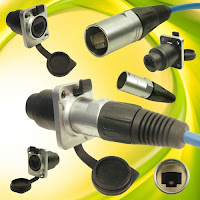
Cliff Electronics have added a new Cat5e RJ45 Feedthrough Connector to their very successful FT range which all fit into an industry standard XLR connector 24mm diameter panel cut out. In addition, a compatible, secure, snap-in lockable XLR style Plug Carrier is available to facilitate the connection of an RJ45 plug (not supplied) or cable assembly.

John Hall, Managing Director of Cliff Electronics, comments, “Wired Ethernet networks remain popular in both industrial and domestic environments as they can offer more stable, interference free and faster data connection than wireless and reduce the risk of data being hacked. Our FeedThrough RJ45 Jack has a wide variety of applications for safe data connectivity for OEMs around the world and brings another variant to our very flexible FT connector range.”

The new Cliff RJ45 FT Jack is a rugged nickel-plated diecast zinc metal construction offering protection to IP65, providing a dust tight and water-resistant connector for rugged applications and is supplied with an integrated dust cover for continued protection when not in use. Rated at Cat5e the socket is suitable for both Fast Ethernet (10/100) and Gigabit Ethernet (10/100/1000) data communications.

Widely used in IT systems, consumer and audio/broadcast products Cliff’s female RJ45 Feed Through Ethernet sockets meet the wiring standard for using an 8P8C connector as defined in Part 68 of the FCC rules and are generally mounted directly on a device or on an I/O patch panel. The all-metal design reduces the effects of EMI, has a dielectric strength of 1K VDC, frequency range from 1-100MHz, contacts are rated at 1.5A/50V, lifetime is greater than 1000 mating cycles and operating temperature range is from -30°C to +80°C.

#CliffElectronic #PAuto #Connectors

Wednesday, 22 September 2021

Architecture and specification approved.

FDT Group™ and OPC Foundation have announced their memberships have approved the update to the FDT OPC Unified Architecture (UA) companion specification (CS). The new specification launches the only protocol-agnostic, server-level, universal Device Information (DI) Model for both process and discrete manufacturing applications, empowering next-generation, open automation FDT architectures.

The updated FDT OPC UA companion specification is a key technology development unifying data for both IT and OT while enabling the transmission of uniform, real-time process, network, and device information for any OPC UA Client in the enterprise.

FDT Server-based distributed architectures with a built-in, “pre-wired” OPC UA Server seamlessly allow access to all device and network information and metadata via any authenticated OPC UA Client or application. Standard OPC UA browsing techniques are used to expose this information so that authorized OPC UA Clients can connect to the FDT Server to browse, collect, and act on the data as needed. Optional support for a Publish-Subscribe environment allows for efficient, real-time data monitoring and exchange.

“The new companion specification matches the strengths of the FDT 3.0 IIoT platform by harmonizing IT/OT data access for any OPC UA Client supporting smart manufacturing practices,” said Thomas Hadlich, chairman of FDT architecture and specification. “Based on the new OPC UA ‘System Architecture’ template, the updated CS now references OPC UA for Device 1.01 and supports new process device data along with mapping for protocol support files as outlined in FDT 3.0. These important use cases, driven by the automation industry, meet the FDT 3.0 Server architecture requirements and have been strengthened by mapping of Device Type Manager [DTM] static functions and by describing I/O signals for configuration and observation of production process and/or of device performance. The enhancements included in the universal information model will drive industrial automation monitoring and visualization optimization for the enterprise.”

Since 2011, FDT Group and OPC Foundation have collaborated in support of a unified DI model to promote device- and network-level data access in a uniform way for higher-level enterprise applications. The two organizations first announced the release of their joint DI model companion specification in 2016 based on the FDT 2.0 client/server architecture, and as of today, FDT 3.0 Server distributed architectures are supported by a new server-level universal DI model enabling end users to freely mix and match any device with any device information model, from any vendor, and communicate on any network while the FDT Server transparently unifies all the device information and pushes the data to the enterprise for any OPC UA Client in real-time.

“Without interoperability and reliable information, we can’t open automation to innovation,” said Jim Luth, OPC Foundation CTO. “Both OPC Foundation and FDT Group are key industry organizations and leaders in their respective IT and OT interoperability and data domains. Harmonization introduced via the collaborative universal device information model in the new FDT OPC UA companion specification solidifies IT/OT convergence and the path opening automation innovation for both the process and discrete markets. The result empowers a data-centric powerhouse core for any application, allowing the industry to evolve manufacturing best practices with a service-oriented architecture securing the exchange of data to effectively make use of valuable information.”

FDT’s secure, data-centric platform runs behind the scenes at the core of any automation architecture, harmonizing technologies, solutions, and people for today’s infrastructure and tomorrow’s intelligent enterprise. Visualization capabilities with the Universal DI Model are closely aligned with the requirements of major end user associations and their recommendations for an open architecture to make production data easily and securely usable for asset monitoring and optimization. These collaborative efforts supporting new FDT 3.0 architectures are another example of technologies, solutions, and people working together to help achieve a brighter future in industrial manufacturing.

See: IIoT platform enables uniform IT/OT data access to enterprises. (10/06/2021)

@FDTGroup @OPCFoundation #PAuto

Wednesday, 8 September 2021

Product officer for "Cloud-to-Edge" experts.

Centreon has appointed Raphaël Chauvel as Chief Product Officer. Contributing his extensive IT monitoring market knowledge, Raphaël will lead Centreon’s product innovation strategy and product team. He adds over 20 years of experience to the Centreon management team, taking charge of Centreon’s cloud strategy.

A Compiègne University of Technology graduate, Raphaël started his career at AKKA Technologie before serving as Product Manager and then Chief Technology Officer at Criston for 11 years. When Criston was acquired by Numara Software, Raphaël oversaw management and development for asset management solutions.

Prior to joining Centreon as Chief Product Officer, Raphaël was vice president of product management at BMC Software, managing a portfolio of SaaS and on-premise ITSM, ESM, asset management, and configuration management software solutions.

"Supporting Centreon as they evolve their business model and culture for increased customer centricity, working hand in hand with a diversity of stakeholders –users, customers, and partners, is a stimulating endeavor. I am thrilled to join Centreon and contribute to the growth and global reach of this technological leader," said Raphaël.

@CentreonFR #PAuto #IT

Wednesday, 25 August 2021

Starter Kit Options for IT/OT Convergence.

Advantech and Lynx Software Technologies have partnered to offer multiple Mission Critical Edge Starter Kit options that enable the convergence of IT (Information Technology) and OT (Operational Technology).

LYNX MOSA.ic™ for Industrial, Lynx’s mission critical edge platform, provides virtual air gapping between the control automation and other workloads. It is available for implementation on select Advantech industrial hardware, which reduces integration time for OT edge processing. These Mission Critical Edge Starter Kits enable the following:
  • Implementation of the edge use cases in the OT domain
  • Virtual air gapping of IT and OT workloads
  • OT operators’ ownership of the system management
  • vPLC, Machine Learning and Security running on the same system
  • Ability to host cloud workloads in the OT domain without impacting operators

The foundational building block in LYNX MOSA.ic for Industrial is the LynxSecure® Separation Kernel, which provides strong isolation of applications, deterministic real-time performance and management of critical system assets to increase immunity to cybersecurity attacks. Additionally, Lynx has developed unique management technologies that allow Mission Critical Edge systems to be deployed at scale and meet the strict requirements of systems that enable OT & IT convergence.

Many networks across a variety of verticals including government, military, financial services, power plants, and industrial manufacturing have been so-called “air-gapped.” This means they are physically and logically isolated from other networks where communication between these networks is not physically or logically possible.

The combination of Advantech hardware and Lynx software allows users to have IT/OT collaboration and network separation. In the starter kit, hardware partitioning is provided by Lynx Separation Kernel (LSK). Additional features ideal for customers include the following: 
•Nodes based on LynxSecure Separation Kernel Hypervisor 
•Support for multiple guest OS (VMs) 
•Virtual KVM support 
•Explicit allocation of storage and other dedicated resources 
•Precise definition of inter-VM connectivity and communication

“One of the primary concerns expressed to us by OT operators has been how to deploy edge technologies in the OT domain,” said Pavan Singh, vice president of product management, Lynx Software Technologies. “By leveraging virtual air gapping, OT operators can focus on the business benefits of new data and machine learning technologies without worrying about the impact on their operations.”

Advantech hardware devices targeted for both Level 1 operational hierarchy for direct control and Level 2 supervisory control include the MIC-770 modular industrial PC and the UNO-137 embedded automation computer. Depending on the level of consolidation needed, both devices combine with LYNX MOSA.ic for Industrial for an ideal OT/IT solution.

“We’re happy to be able to support the LYNX MOSA.ic for Industrial solution with our MIC-770 and UNO-137 industrial computing devices,” said Jon Towslee, Sr. Director, iFactory, Advantech Industrial IoT Group. “We’re always trying to offer more ways for customers to be able to securely and easily deploy solutions at the edge. Our goal is to continue working with innovative solution partners to make data connectivity easier and more efficient to adopt when utilizing our industrial, intelligent devices.”

Advantech’s MIC-770 series of PCs provide high-performance computing, multiple I/O interfaces, and flexible expandability with the integration of i-Modules and iDoor. They can be widely deployed to support various industrial IoT applications. The MIC-770 series can be equipped with a wide range of processors to provide custom entry-level and high-end solutions. With the provision of multiple I/O for connecting devices, MIC-770 systems can serve as a data gateway and industrial controller.

UNO-137 is an industrial-grade integrated IoT edge gateway ideal for industrial automation. Its new modular design includes a base unit and an optional extension kit, which supports Advantech’s iDoor technology to integrate additional industrial Fieldbus, I/O, and wireless communication.

@Advantech_USA @AdvantechEurope @LynxSoftware @NeeshamPR #PAuto #MissionCritical

Traps impeding OT data acquisition.

Oliver Wang, Product Marketing Manager, Edge Connectivity and Computing at Moxa explains the Three Types of Traps That Impede OT Data Acquisition

Industrial digital transformation seeks to break down the silos between an enterprise’s information technology (IT) and operational technology (OT), translating the physical behavior of OT devices into digital data, and distilling insights with the help of IT’s analysis.

Through OT-IT collaboration, these actionable insights can optimize the overall physical operational system. For instance, data from manufacturing execution systems (MESs) in factories can be integrated with the data from a customer relationship management (CRM) system to shorten time-to-delivery, expand production capacity, and reduce costs, among others.

However, according to the latest Industrial 4.0 Maturity Index, 96% of studied enterprises are still starting out on their digital transformation journey, while just 4% of the enterprises have attained the “visibility” or “analysis” maturity stage. Evidently, the journey has not been kind to most enterprises. Based on experience, the beginning is the hardest, with OT data acquisition being the most challenging part.

Three Types of Traps That Impede OT Data Acquisition

  1. Invisible environmental traps: Imagine your OT data comes from a drilling well in the middle of a desert where temperatures range from 40 to 50°C, an oil pipeline system that stretches for hundreds of kilometers in freezing cold areas, a transportation system of a fast-moving train that deals with high levels of vibrations, a chemical fuel tank, or a switchgear system inside an unmanned high-voltage substation. A variety of environmental interferences, such as extreme temperatures, vibrations, airborne chemicals, and electromagnetic radiation, can easily cause the malfunction of OT data-acquisition electronics, which results in data transmission instability from time to time, or worse, data inaccuracy, which leads to errors in analyses later on. For example, the large automated warehouse systems in smart factories generate strong electromagnetic interference at the moment of startup, causing anomalies in the network equipment nearby. Network disruption, even if just for a second, could wreck the accuracy in the calculation of incoming inventory as well as the production process of the entire product batch.
  2. Unexpected design traps: All OT equipment, from sensors and controllers to control systems, has one thing in common: it is intended to enable highly specialized industrial applications. By design, industrial equipment is for a special purpose. Controllers and sensors used in a drilling well are not the same as the ones supporting power monitoring devices, for example. But if you want to understand the correlation between control levels of a drilling well and power consumption, OT data must be collected from a variety of specialized equipment. Only now, most people realize that every device uses a specific communication protocol that only it can read and understand. Therefore, to glean OT data from more sources, it is necessary to first acquire the ability to “talk to” different devices; otherwise, it makes it much harder to analyze diverse OT data, and it entails direct cost increases.
  3. Data identification traps: Data generated from OT equipment or systems is mostly raw data, meaning it does not come with context. For instance, PLCs collect temperature data from sensors deployed in a variety of locations to support monitoring. When the temperature goes above 45°C, fans will be switched on to bring the temperature down. However, for OT data analysts, the raw OT data (i.e., 45°C ) captured directly from the PLCs lacks context, as they cannot tell what devices were sourced, the data acquisition time, and data owners, etc. This raw data is nothing but a meaningless value in their eyes. Therefore, preprocessing raw data and giving it a context is a key aspect in OT data acquisition. To achieve this, OT equipment vendors must incorporate IT capabilities in their development focus as IT user habits are very much involved in the preprocessing of raw data. Furthermore, if there is too much data, data analysts will be drowned in the sheer workload of converting the collected data into a uniform format for a database, which, fortunately, can now be facilitated by data transformation technology.

Step Up OT Data Acquisition to Accelerate IT/OT Convergence
OT data plays a deciding role in whether an industrial digital transformation endeavor takes off or crashes before getting off the ground. Before starting a project, it is wise to take stock of the different ways of obtaining OT data and the types of OT data available, as well as plan for converting the data into the format and contextures required by the IT database. Avoid these three kinds of traps and align with your company’s needs to strengthen the OT data acquisition ability ahead of time. In doing so, IT/OT convergence will effectively have to be sped up to allow you to take the first step towards industrial digital transformation, firmly and steadily.

@MoxaInc @OConnell_PR #Pauto #Industrie4

Tuesday, 18 May 2021

Automation research at Munich University.

Training the engineers of tomorrow is a much discussed and complex undertaking. Future machine developers need hardware, software, and programming knowledge. At the Institute of Automation and Information Systems at TU Munich (D) hydraulic test benches are now helping teaching staff provide the required expertise.

The Institute of Automation and Information Systems focuses on the methods used in the automation of machines and plants. This includes hardware, software, and the structured development of intelligent mechatronic systems and automation technology. The focus is on reliability and usability, as well as human-machine interaction in engineering and plant operation. For students, this means a mix of theory and practice throughout their course.

In order to learn about, and better understand, the automation of hydraulic drive systems, the Institute has recently been equipped with two hydraulic test benches, with four workstations in total. The test benches simulate the hydraulic and position control systems of a model sized hydraulic elevator.

Head of the Institute Prof. Dr.-Ing. Birgit Vogel-Heuser explains: "The test benches are used in the bachelor and master degree courses in automation technology. They enable students to test the effects of their software directly on a very dynamic, physical system. In addition, the test stand serves to illustrate to the students that the design of the hardware system and the automation programming are in constant interaction."

HAWE Hydraulik SE provided the test stands. "As a local company, we find it important to support the TU Munich and in particular the Institute of Automation and Information Systems. It's great that hydraulics education is a fundamental part of teaching there," said Axel Schwerdtfeger, CTO at HAWE.

The four control units employed in the test stands are ESX.3cs controllers from STW STW and HAWE have enjoyed a close partnership for several years. "HAWE provides the power, and we provide the intelligence for our customers' machines. Within our cooperation, each partner can access the specialized know-how of the other, and manufacturers, for example of agricultural and construction machinery, benefit from well-coordinated holistic systems acquired from a single source," said Steffen Dieterle, CEO at STW, explaining the advantages of the collaboration.

Therefore, it is only natural that STW control technology is also on board for this project at TU Munich. The ESX.3cs is a compact, robust and powerful control unit. Among other advantages, the control units are suitable for safety-oriented applications up to Performance Level PL d or Safety Integrity Level SIL 2. The application software for the ESX.3cs can be programmed in C or according to IEC 61131-3. For programming applications according to the latter standard, both logi.CAD 3 and CODESYS are available. With logi.CAD 3 - together with the runtime system Micro-Runtime-System µRTS 3 - cost-effective and powerful solutions can be implemented. One of the main advantages of logi.CAD 3 is a powerful ST (Structured Text) editor, which will eventually be used by the students of the TU Munich (As of April 2021, on-site practical courses are suspended due to COVID-19).

With logi.CAD 3, STW customers have the additional benefit that it is integrated into the STW lifecycle tool openSYDE. It can be started directly from openSYDE and through code generation, can automatically provide the configuration basis for control programming. The open approach of both openSYDE and logi.CAD 3 complement each other perfectly. In combination with the hardware advantages of the ESX.3cs, customers - and in this case students - have a powerful, flexible and user-friendly control package.

@Sensor_Technik @TU_Muenchen @HAWEHydraulics @PresseBox #PAuto #Education

Wednesday, 24 March 2021

End-to-end modular IT infrastructure.

Rittal and Stulz, leading specialist for data centre cooling systems, have entered into a global partnership, with immediate effect. 

Prof. Friedhelm Loh and Jürgen Stulz 
“Rittal and Stulz are both family-run companies, with a commitment to innovation and customer centricity,”
states Prof. Friedhelm Loh, owner and CEO of Friedhelm Loh Group. “Together, we can offer our customers an even larger portfolio of flexible, end-to-end data centre solutions.”

“In cooperation with Rittal, we will ensure rapid, reliable IT system implementation backed by an agile, global service organisation with a presence in more than 120 countries,” emphasizes Jürgen Stulz, Managing Director Stulz GmbH.

The two acknowledged pioneers will be better equipped to offer customers end-to-end, tailored solutions to their needs. Rittal’s broad IT infrastructure portfolio will now be combined with powerful liquid-based closed-circuit chillers, free-cooling products, side chillers and indoor chillers from Stulz. Rittal’s contribution includes IT enclosures, IT cooling units, and IT power-supply solutions, as well as software for data centre management and IT system monitoring.

The joint offering also extends to global support and other services for the entire IT infrastructure lifecycle. The result is data centre solutions that are future-proof and investment-protected. Moreover, customers can be sure of transparent TCO analysis, high availability and security, backed by robust monitoring.

Demand for one-stop data centre solutions is growing. The IT industry is evolving fast, with new technologies and applications such as 5G, machine learning and digital twins, in conjunction with the burgeoning use of videoconferencing and e-commerce. Consequently, companies must upgrade and expand their IT infrastructure at an ever-increasing pace. They need solutions that can be implemented quickly, that comply with high international standards of quality and security, and that can be tailored to their specific requirements. This is exactly what Rittal and Stulz are able to deliver, as innovators and global players with long and successful track records. 

The partnership brings together a broad choice of cooling options with the ability to quickly and flexibly install and extend complex IT assets. The precision cooling solutions, including free cooling and adiabatic technology from Stulz, blend perfectly with the modular structure of the new Rittal RiMatrix Next Generation (NG) platform. IT decision-makers pick and mix racks, cooling units, power-supply systems, and IT monitoring and security elements to create a made-to-measure solution. RiMatrix NG’s open architecture, in conjunction with the shared consulting, support and service offering, ensure answers are available to all possible IT scenarios, now and in the future. This extends from individual racks or container solutions, to central data centres and distributed edge data centres, to highly scalable co-location, cloud and hyperscale data centres.

@Rittal_Ltd @STULZ_USA @PresseBox #PAuto


Tuesday, 17 November 2020

IT and OT - beyond convergence.

ISA's Mary Ramsey
The International Society of Automation (ISA) has announced the release of its latest whitepaper, “Information Technology and Operations Technology: Beyond Convergence.”

The whitepaper begins by addressing the different approaches and priorities of security for information technology (IT) and operations technology (OT). It also explores why IT and OT can no longer be considered separately—especially when it comes to security—and it outlines the steps necessary for organizations to advance their IT/OT integration efforts.

Key highlights include:
• ISA’s definitions for information technology and operations technology
• Examples of ways that the modern, interconnected world has changed traditional IT and OT security priorities and approaches, as well as five trends that complicate these shifts
• A road map for moving organizations from isolation to convergence to integration

“The priorities and approaches of information technology and operations technology have begun to overlap in this increasingly connected world,” says Mary Ramsey, ISA executive director. “ISA’s latest whitepaper is an excellent resource for anyone who understands the importance of working together across teams to ensure strong cybersecurity at the organization level.”

@ISA_Interchange @irelandISA #PAuto #Cybersecurity


Wednesday, 25 September 2019

New head for MES and manufacturing IT in America.

Shawn Opatka is the new Executive Vice President and General Manager of Werum IT Solutions America. He succeeds Benjamin Pieritz who has worked for Werum in various positions, including Senior VP Operations and Strategic Program Manager. Benjamin Pieritz will take a sabbatical and return to Werum's global headquarters in Germany afterwards.

Shawn Opatka
By promoting a manager from within its own ranks, Werum is setting course for opportunities to further expand its US business. In his previous role, Shawn Opatka has been Vice President Sales & Marketing of Werum IT Solutions America ensuring that Werum's best-in-class MES solutions deliver unrivaled customer satisfaction. Before joining Werum, he had worked for more than eight years in various management positions at Emerson in the USA.

"As an accomplished, results-driven professional with nearly 20 years of experience in the IT sector of the life science and process industries, Shawn Opatka is best suited to further expand our operations in the Americas," says Jens Woehlbier, CEO at Werum IT Solutions GmbH. "Working at Werum since 2015, he is familiar with our business and has gradually been introduced to his new responsibilities by Benjamin Pieritz. We wish Shawn continued success in his new role."

At the same time, Jens Woehlbier thanked Benjamin Pieritz for successfully managing Werum America for many years: "Benjamin Pieritz has done a great job in expanding our American business. We wish him and his family a great time and look forward to welcoming him back to Germany."

#PAuto #MES @Werum #MES

Friday, 13 September 2019

OT, IT & Cybersecurity!

The lines have blurred between OT and IT systems, and the process is far from over. Process control and industrial automation staff have to focus not only on processes and their performance, but also on managing the systems, networks and security that support them.

In this Advancing Automation XIX: Industrial Cybersecurity ebook from Automation.com, the focus is on the latest insights and initiatives changing the landscape of cybersecurity. From the formation of the new Global Cybersecurity Alliance organization to a call for applying automation techniques to industrial cybersecurity alarm floods, OT and IT professionals are collaborating and learning from each other like never before.

Download your pdf copy here!


• See also our story: Tackling the Global cyber threat. (19 Jul 2019)
#Cybersecurity #PAuto @automation_com @ISA_Interchange

Monday, 4 February 2019

Tips for IT security.

Paresh Kansara, Rittal’s Product Manager for Industrial & Outdoor Enclosures tells us that Rittal’s teams work closely with leading industrial companies to create IT infrastructures for use with Industry 4.0 technology, including edge computing platforms. They have put together several tips to help companies implement fast-deploying and secure IT for production environments.

The first step when starting any Industry 4.0 initiative or digital transformation within a manufacturing environment, is to define the common goals and consistent use of terms.

One goal should be to achieve real-time processing of measured values through the use of more IT and additional sensors. This will enable innovative applications, such as machine learning, process optimisation and predictive maintenance, which can only be done via big data analysis. Deviations can be recognised very quickly, increasing the reliability of these environments.

Find a secure location for the IT systems
Another consideration where to put any IT systems (such as an edge computing system) within a production environment. This requires input from a range of different departments: facility management, fire prevention and safety managers, production managers, IT managers and other specialists in network technology and production planning.

Project managers should therefore start planning with the relevant departmental managers at an early stage to identify any issues. It may mean finding an alternative space or even building a whole new facility to house the additional IT systems, but it’s just as likely that a business will be able to retrofit IT systems in the manufacturing hall.

In one recent project, Rittal’s team installed the necessary IT for automated production on the second floor of the production hall. As part of the project, special security rooms were used for the IT racks. It works extremely well, however, because this arrangement used a water-based IT cooling system, it carried the risk of a leak onto the manufacturing facilities located below. To prevent this happening, leak detectors were installed in the IT racks and throughout the building to alert the facility management team of any problems at an early stage, increasing operational reliability.

In general, companies should select the best possible locations for IT systems from a technical security perspective as well as to support well thought-out network cabling. Ensuring there is sufficient distance to the manufacturing devices will protect IT systems from heat, dirt and vibrations.

Increase safety with monitoring
Small and medium-sized companies often find that the IT systems can send detailed alarm messages to control centres within the company, but not outside of it, as these alerts are blocked by the firewall.

The process of monitoring IT systems and sending an alert to relevant technicians also needs to be addressed collectively by all of the project participants, starting with a review of the existing organisation-wide IT security strategy.

For example, they worked with a manufacturing company to upgrade the IT cooling systems in its production hall to lower energy costs and increase the reliability of the IT system. Modern cooling systems are now able to send status messages directly to the manufacturer. In this instance, the firewalls had to be configured according to the data protocols used, otherwise the message would not have got through and the cooling systems would not be able to function in accordance with the designated levels of safety and efficiency.

Secure monitoring software
Monitoring software (DCIM) used to oversee production-related IT systems should be subject to special protection. Such a solution has a large number of interfaces and supports a variety of protocols, so it can be vulnerable to cyber-attacks.

To make the whole installation more robust, including the server platform, They recommend using software to conduct a security analysis. So-called network vulnerability tests check the systems for known but still open security weaknesses.

Without this protection, in extreme cases, attackers could shut down the fans in intelligent cooling systems or turn off switchable power distribution units (PDUs).

Set up edge computing quickly and securely
If areas of a production plant cannot be shut down while work is in progress, then it may be advisable to install pre-configured IT containers which are equipped with the required active IT components. Companies can therefore expand their IT capacities to decentralised production sites quickly and safely using what are termed “edge” data centres.

To set up an edge computing infrastructure for Industry 4.0 initiatives, partners Rittal and iNNOVO Cloud offer turnkey IT module and container solutions.

These contain IT environments in sturdy steel containers that house power distribution units, UPS, IT cooling systems, racks and, optionally, active components. This provides a quick and secure start to production, in locations across the world.

@Rittal #Manufacturing 

Monday, 29 October 2018

MES/automation implementation.

Werum IT Solutions has signed a partnership agreement with Shanghai Wellthinic Technology. Based in Shanghai with several local offices in China. Wellthenic is a leading IT solutions provider to the Chinese life science industry with focus on automation systems and MES.
At the closing of the agreement (from left): Yun Fan (KMS China), Paul Dong (Wellthinic), Olivier Néron (Werum), Matii Yan (Wellthinic), Torsten Isenberg (Werum) and Dong Wang (KMS China, Werum)
As a certified “PAS-X Endorsed Service Partner Local”, Shanghai Wellthinic Technology will support Werum customers in the People’s Republic of China with the on-site-implementation of Werum's PAS-X MES and automation systems. For instance, Wellthinic will provide resources for project management, MBR design, system configuration, installation, training as well as the implementation and integration of automation and equipment.

“We selected Wellthinic amongst many candidates based on their years of experience in the life sciences industry and because of their complementary capabilities on ISA-Level 2 systems” says Torsten Isenberg, Senior Director Services at Werum IT Solutions. “Wellthinic has an excellent reputation in China and successfully managed a wide range of services – from single-site projects up to large roll-outs. Furthermore, Wellthinic’s management has been working with foreign companies for decades hence being able to greatly bridge our cultural differences. Therefore, Wellthinic will provide our pharma and biotech customers with high-quality services and support for the years to come.”

Paul Dong, CEO of Shanghai Wellthinic Technology: “Wellthinic’s long experience in offering IT solutions to the pharmaceutical market offers Werum and its customers a stable and reliable partner for the implementation of PAS-X MES. With our deep understanding of the daily operations in the industry, we can perform the transition from a paper-based to a digital-based quality control system more efficiently and in high quality.”

PAS-X Endorsed Service Partners meet all requirements of Werum's PAS-X Service Partner Program. The main objective is to offer the same quality and competence of services to Werum customers all over the world – through reliable, experienced and certified partners. The Service Partners need to have comprehensive PAS-X knowledge, participate at PAS-X trainings on a regular basis, possess experience in the regulated industry and use a quality management system. The certification has to be renewed on a regular basis.

@Werum #PAuto #MES #China

Tuesday, 24 July 2018

Stepping stone between wireless sensor and IT system.

The Sensor Bridge from .steute's "Wireless" business unit is a new and key component for its wireless network sWave-NET®. As a classic middleware, this software interface processes all messages received from wireless switching devices in the field and bundled by access points. The Sensor Bridge then relays these messages to applications registered specifically for this purpose.


Installation of the sWave.NET® Sensor Bridge in a factory closes the gap between the high security requirements of a production hall on the one hand, and the integrated world of digital services on the other. The Sensor Bridge acts as a "translator" between different protocols and the administration level of the sWave.NET® wireless network.

Simplified data integration, safe local pre-processing, as well as detailed statistics of use, are further functions of the Sensor Bridge, qualifying it as a central data hub for state-of-the-art production environments and digital business models in industry.

Thanks to the universal connectivity of the interface, the sWave.NET® Sensor Bridge can be integrated in every kind of production environment. The range of supported protocols is continually growing and currently includes e.g. REST (XML/json), http(s) Notifications and MODBUS TCP, all without the need for additional hardware.

First applications for the sWave.NET® Sensor Bridge are being realised in E-Kanban systems and in the communication between automated guided vehicles (AGV) and their superordinate control systems.

#.steute #Transportation #PAuto

Tuesday, 24 April 2018

IT & Automation expertese for Ireland & Britain.

Novotek has launched its Britain and Ireland brand following the acquisition of Glasgow-based Kerrco Automation. The rebranded Novotek UK and Ireland will help businesses across the manufacturing, utilities, process and energy sectors to improve all aspects of operational effectiveness. The company aims to deliver this through smart use of both existing and new technologies to connect, analyse and visualise operation data.

Tobias Antius - CEO Novotek
Novotek UK and Ireland will fulfil the growing demand for digitalisation and interconnectivity in the UK market. The company channel partner in these territories for GE Digital and GE Automation and Controls, allowing Novotek to supply businesses there with fourth generation HMI and SCADA systems, such as the iFix HMI software, as well as the Predix industrial internet of things (IIoT) platform.

In addition to its GE offerings, Kerrco Automation’s rebranding gives it access to a selection of new digital products and systems through the Novotek Group.

The full portfolio of Novotek includes the Kepware suite of connectivity and Auvesy’s market leading versioning product for automation equipment as well as Novotek’s specially designed components for iFix and Historian by GE Digital. These components packages provide additional functionality to the standard products, allowing plant and facilities managers to improve the effectiveness of their systems.

“There has been a transformation in the UK IoT market in the past twelve months,” explains George Walker, managing director of Novotek UK and Ireland. “More sectors are now identifying the value to be found in the convergence of IT and operational technology (OT). It’s no longer a predominately industrial movement; we’re seeing a growing interest in the digitalisation of critical infrastructure and utilities, such as energy and water, with automation technologies.

“As part of the Novotek Group, we can apply the company’s insight into similar projects across Europe to better meet the needs of the UK market. Novotek has a history of providing creative solutions to customer requests in other regions, with the company often guiding customers out of their typical comfort zone to think differently and achieve more. By bringing this approach to the region, we can help businesses across the UK and Ireland to realise their full potential with modern, digital technologies.”

According to a recent global IoT survey, roughly one third of businesses will be looking to invest between $100,000 and $1 million over the next five years. However, Novotek argues that the amount that businesses are willing to invest in IoT is not necessarily as important as how the technology is implemented and how adoption is handled.

“The key to successfully adopting digitalisation is expertise and experience,” says Tobias Antius, CEO of Novotek. “Kerrco Automation and Novotek both had the technical capabilities, product portfolio and industry experience to provide this expertise. This brought the two companies together and, by pooling our resources, we are able to help more UK businesses lead from the front of the IoT market, as well as better serve our existing customers in the region.”

@Novotek #PAuto #Britain #Ireland @StoneJunctionPR