Showing posts with label France. Show all posts

Monday, 5 October 2026

Automation company's new campus in France.

Sustainable building design reduces energy consumption by about 70 percent.

Endress+Hauser has inaugurated its new company campus in Cernay (F). The event was attended by customers, partners, company employees, and business and government representatives.  Endress+Hauser has been manufacturing flowmeters in Cernay for customers worldwide since 1991. With the relocation of around 140 employees from its former sales centre to Cernay, the company has now brought together production, sales and central functions at a single site.

“The new campus provides the optimal environment for closer collaboration between sales, service and production. It enhances our customer closeness, promotes innovation and supports our long-term growth,” says Peter Selders, CEO of the Endress+Hauser Group. Steven Endress, President of the Endress+Hauser Supervisory Board, added: “The campus combines our long-standing roots in Alsace with a renewed focus on the future. It is an investment that highlights our commitment to our employees, to this region and to the sustainable growth of our business.”

The new sales building houses modern workspaces and meeting areas across 5,700 square meters. The facilities include a customer experience center, a Process Training Unit (PTU) for hands-on training, numerous breakout spaces and common areas, and a 120-seat auditorium. The building meets the highest environmental standards and was developed in close coordination with local employees, who actively engaged with the planning and execution phase and had input into their new work environment’s design.

To avoid paving over additional land, Endress+Hauser demolished an existing building. In the process, 96 percent of the total 1,405 tons of material was reused or recycled. Trees on the site were preserved or replanted. Further, the new facility meets the requirements of France’s RE2020 environmental regulation for new buildings. It will consume about 70 percent less energy than the previous headquarters, thanks to geothermal energy, photovoltaic installations, green roofs, and energy-efficient heating and cooling systems.

Endress+Hauser’s long-standing ties to Alsace also played an important role in the project’s implementation, with 95 percent of the companies involved coming from the region.


@Endress_Hauser @Endress_UK @Endress_US @Endress_France #PAuto #France

Tuesday, 5 May 2026

New Director of Laser Development.

Dr. Bertrand Viellerobe has been appointed as Director of Laser Development at TOPTICA France, reinforcing its capabilities in laser design and validation while further advancing its innovation activities.

Dr. Bertrand Viellerobe
In his new role, Bertrand Viellerobe will lead the development and validation of next-generation laser systems, contributing to TOPTICA’s portfolio of high-performance solutions for scientific and industrial applications. He brings extensive experience in laser and optical system development, with a strong track record of leading multidisciplinary R&D teams, managing complex innovation projects, and translating advanced photonics technologies into real-world applications.

The appointment reflects a strategic evolution of responsibilities within TOPTICA France. Dr. Germain Guiraud will transition to the role of Director of Laser Innovation, focusing on innovation and research, supporting forward-looking technology development and exploratory projects, notably within the framework of the joint laboratory Starlight+. 

 “With Bertrand, we are strengthening our laser development capabilities at TOPTICA France. His expertise will be instrumental in advancing our technologies and supporting our ambition to deliver high-performance laser solutions for quantum technologies and precision applications,” said Dr. Nicholas Traynor, President TOPTICA Photonics SAS.

“I’m pleased to join TOPTICA and contribute to advancing laser development. I look forward to working with the team and building on the strong technological foundation in France,” added Dr. Viellerobe.

By sharpening the focus on both product-oriented development and long-term innovation, TOPTICA France continues to play a key role in the company’s strategy to drive cutting-edge photonics technologies for research and industry.


@TOPTICA_AG @OpticaWorldwide @PresseBox@UnnGmbh  #Pauto #Laser

Tuesday, 14 April 2026

More sustainable plasterboard.

The manufacture of dry wall, also known as plasterboard, relies heavily on precise moisture control, so accurate temperature and humidity measurements during the drying process are essential. However, process conditions change significantly within a short period of time and this can be challenging for many sensors on the market. Looking for ways to enhance the efficiency and sustainability of this process, engineers at Saint-Gobain in France have worked closely with Vaisala to develop monitoring solutions that help optimise plasterboard quality, improve efficiency, save energy and improve sustainability.

Plasterboard manufacture

Background.
Many different industrial processes involve drying operations, and this is frequently the most energy-intensive stage of the process, so accurate monitoring and control of drying can represent significant potential for improvement.

Dry wall has had an enormous effect on the global construction industry since it was first developed in the early 1900s. Lightweight, simple to fit, moisture, fire and mould resistant, and with good insulation properties, plasterboard has become the world’s most commonly used construction material for internal walls and ceilings, after concrete.

Saint-Gobain is the worldwide leader in light and sustainable construction, with around 161,000 employees and over 1100 manufacturing facilities. As a signatory to numerous global sustainability initiatives, Saint-Gobain has committed to reach net-zero emissions by no later than 2050, and the company’s core purpose is to ‘Make the World a Better Home’.

The development of Saint-Gobain’s gypsum brands began with the acquisition of the British Plaster Board company in 2005. Today, the company is keenly focused on the improvement of plasterboard manufacturing – improving product quality and lowering carbon footprint.

Saint-Gobain has three controls during the drying process – temperature, air flow and air humidity. However, the accurate management of these controls depends on accurate measurements on the air inside the dryers.

The measurement challenge.
Plasterboard is manufactured by pouring gypsum slurry onto carton paper, drying the slurry and adding a second paper layer to form a ‘sandwich’ structure. The gypsum is cured and cut into panels before being passed through drying ovens to obtain the correct moisture content. The whole process can take less than one hour, during which the product can be exposed to temperatures as high as 300°C, depending on the process, and the moisture content of the air varies considerably during the process. “These conditions present a significant challenge for sensors,” explains Jérôme Cantonnet, Drying process Team Leader at Saint-Gobain. “We tried a number of different humidity and temperature sensor suppliers in the early days and found their products to be insufficiently accurate.

Saint-Gobain was one of the pioneers of dew point measurement in plasterboard drying. They chose dew point sensors because they provide an absolute measure of moisture in the air, unlike humidity which changes with temperature. Crucially, there are no similar dew point sensors on the market surviving high temperatures up to +350 °C. Saint-Gobain therefore established a relationship with Vaisala around 2010, working in partnership to adapt Vaisala’s dew point sensors for the specific requirements of their plasterboard application.

For Saint Gobain, it is critically important to be able to assess how reliable measurements are by accessing and monitoring sensor diagnostic data. Vaisala therefore developed a bespoke configuration for their DMP6 dew point, temperature and humidity probe to output these parameters.

Typically, a plasterboard factory needs four DMP6 probes – three to continuously monitor the drying ovens and a fourth for calibration and as a spare.

Advantages of Vaisala’s dew point sensors.
The Vaisala DMP6 overcomes many of the problems exhibited by the early trials with humidity sensors from alternative suppliers. This is primarily because of Vaisala’s DRYCAP® technology.

DRYCAP combines a capacitive thin-film polymer sensor with an auto-calibration function. The sensor’s thin-film polymer adsorbs or releases water vapor as the surrounding humidity increases or decreases. This causes a change in capacitance, which is converted into a humidity reading. The capacitive polymer sensor is bonded together with a temperature sensor, and dew point is calculated from the humidity and temperature readings.

The advantages of DRYCAP sensors are condensation resistance, due to the materials in the sensor, and an additional warming function which speeds up sensor drying in a condensing environment. DRYCAP also provides immunity to contamination from particulates, oil vapor and most chemicals. If the sensor does get wet, it dries rapidly and recovers its rapid response time. In low-humidity conditions, the sensor will auto-calibrate to ensure accurate, reliable, stable measurements.

“Vaisala’s DMP6 proved to be a very effective solution,” Jérôme explains. “It is able to maintain accuracy across a wide temperature range, with limited drift and a very low maintenance requirement. It measures directly inside the oven, so no sample line is necessary, and the response time is very quick.” 

Energy efficiency is the major driver for a high level of accuracy in the measurement of moisture inside the drying ovens. For example, Jérôme says: “A small drop in dew point accuracy, say ±2°C, could result in a loss of energy efficiency of up to 10%. This is hugely significant when you consider that our Paris facility has a power consumption of more than 30 MW.”

Heating ovens at plasterboard factories are generally powered by natural gas with electric fans. The implementation of accurate monitoring and control means that the ovens do not have to be run at full capacity, and instead can be managed to optimize energy efficiency. In addition, in line with its decarbonization goals, Saint-Gobain has already fully electrified two of its plants.

And next?
The long-term partnership between Vaisala and Saint-Gobain has resulted in a measurement solution to meet the specific needs of plasterboard manufacture. This has been deployed in Saint Gobain by applying good practice in the utilization of sensors and in the promotion of the energy efficiency objective across the group’s global facilities.

“This is a good example of the ways in which we continuously search for solutions to environmental challenges,” explains Jérôme Cantonnet.

Vaisala’s Juhani Lehto says: “We are delighted to have established this relationship with Saint-Gobain. Not just because it has enabled us to further develop our products, but also because Saint-Gobain and Vaisala share common sustainability objectives. Our core purpose is defined as ‘Taking every measure for the planet’ so it is great to be able to play a role in helping Saint-Gobain on its path to carbon neutrality.”


@VaisalaGroup @saintgobain @_Enviro_News #PAuto #Construction #France


Thursday, 12 June 2025

Observability.

Features for Real User Monitoring (RUM) and Synthetic Transaction Monitoring (STM).

Centreon has announced the acquisition of Quanta.io, a French software company renowned for its expertise in Web Performance and Green IT. With this move, it is claimed that Centreon becomes the only private and independent vendor to offer an end-to-end observability platform covering infrastructure, application, and real user experience monitoring.

By integrating Quanta’s technologies, Centreon enhances its offerings with advanced Digital Experience Monitoring (DEM) capabilities: Synthetic Transaction Monitoring (STM), Real User Monitoring (RUM), and Digital Sobriety metrics. This step enables organisations to monitor digital performance at every level—correlating data across infrastructure, applications, and end-user behaviour to anticipate performance bottlenecks or usage spikes.

In a landscape where digital performance and user experience directly influence business success, businesses require sharp, data-driven insights to guarantee optimal uptime and efficiency across critical and e-commerce platforms.

“Acquiring Quanta aligns perfectly with our vision for 360° visibility across the digital ecosystem. It empowers us to advance further by integrating IT and OT infrastructure monitoring with advanced web performance analytics and digital sobriety metrics at the core of our platform,” said Julien Mathis, CEO of Centreon.

A web performance specialist.
Founded in 2012, Quanta has become a key player in web and e-commerce performance monitoring and the reduction of digital carbon footprints. Its customer base includes leading brands such as Cultura, Le Monde, Reworld Media, and Orange, which rely on Quanta’s solutions to enhance performance with fast load times, smooth navigation, and a lower digital footprint.

“Joining Centreon elevates our technology and vision to a new level. From its inception, Quanta has been built on a fundamental belief: user experience is central to digital performance. With Centreon, it becomes a new standard for IT. Together, we’re delivering a complete, high-performance, and accessible solution to address the critical needs of IT and business leaders alike,” said Guillaume Thibaux and Romain Lamaison, co-founders of Quanta.

Real User Monitoring (RUM) capabilities.
As a Digital Experience Monitoring platform, Quanta enables the observation of actual user interactions as they access applications or websites. These RUM features are now integrated into Centreon’s platform. RUM captures real-time experience metrics, application by application, device by device. In contrast to synthetic tests, it measures performance in the real world.

For businesses, RUM thus becomes a vital tool for detecting hidden issues, prioritising resolutions, and aligning IT with business expectations. It also provides an objective assessment of the performance of third-party cloud or web service providers. In a hyper-digitalised environment, RUM is critical for ensuring a seamless, reliable, and continuous user experience. Monitoring is no longer confined to the datacenter—it follows the user.

Enabling Synthetic Transaction Monitoring (STM).
Quanta’s DEM platform also incorporates Synthetic Transaction Monitoring (STM) into Centreon’s capabilities. STM proactively simulates key user journeys—such as logging in, product searches, or checkout flows—to detect slowness or errors before they impact real users.

This allows 24/7 performance monitoring and validation of service availability at all points of presence. STM is a crucial incident-prevention and service-quality tool, particularly for e-commerce sites, business applications, and SaaS platforms. It empowers IT teams to detect, diagnose, and resolve issues before they affect end users.

Achieving cost-effective observability.
With Quanta’s integration, Centreon strengthens its mission: delivering a comprehensive observability platform that connects technical monitoring layers with user-perceived performance indicators. This integration of infrastructure, application, and user experience establishes a basis for more intelligent, proactive, and business-aligned IT.

In a rapidly evolving market, Centreon bolsters its position as a credible, independent European alternative committed to an observability approach that is open, cost-effective, and value-driven.

“Observability shouldn't be a privilege restricted to a select few. It must be accessible, actionable, and in line with business priorities. By merging the strengths of Centreon and Quanta, we’re delivering a platform that creates immediate value to customers of both companies—improve visibility, increased control, and ultimately, a better capacity to anticipate, diagnose, and enhance digital performance where it truly matters,” added Julien Mathis.


@CentreonFR @quanta_io #PAuto #IT #OT

Tuesday, 3 December 2024

Robotics power production and logistics efficiency.

An agreement for a state-of-the-art installation of 10 atlas pallet shuttles, 3 elevators and 4 escala bin shuttles at Knorr-Bremse’s plant in Lisieux (F) has been announced bu Movu Robotics.

Knorr-Bremse, founded in 1905, is a leading German manufacturer specializing in braking systems for rail and commercial vehicles. With over a century of experience, it stands as one of the world’s largest and most influential companies in its field. Movu's automation solutions are tailored to enhance Knorr-Bremse's production efficiency by optimizing warehouse automation processes for greater flexibility and responsiveness. Positioned directly upstream of the production lines, these solutions enable real-time parts replenishment, ensuring seamless workflow and minimal downtime.

Delta+ Consulting facilitated this project in close collaboration with Knorr-Bremse and Movu Robotics, underscoring the commitment to innovation and operational excellence shared by all partners involved. The project's go-live for the installation is scheduled for early 2026.

In a recent visit to Movu Robotics’ Experience Center in Lokeren, Belgium, Stéphane Devulder, Managing Director of Knorr-Bremse France, expressed his enthusiasm for the project. “At Knorr-Bremse," he said,  “we are always innovating to keep our manufacturing and logistic processes efficient and reliable, especially in the automotive industry, where precision is key. This advanced installation will feature two powerful systems working together: the Movu atlas, with space for 5,000 pallets managed by 10 shuttles and 3 elevators, and the Movu escala, handling up to 2,500 bins with 4 shuttles.”

Benjamin Letarouilly, Managing Director at Delta+ Consulting, emphasized the collaborative design approach, “With the Movu atlas and Movu escala systems working together, we have designed an integrated, modular solution to meet Knorr-Bremse's needs. This configuration will handle small parts as well as large volumes, ensuring continuous, real-time supply to production lines. Our priority is efficiency and reactivity to meet industrial challenges.

“We're proud to be able to contribute to this project and to this wonderful collaboration between Movu Robotics and Knorr-Bremse. Two companies with very different backgrounds but with a shared vision of the future. Knorr Bremse, by exploiting one of the latest cutting-edge technologies in intralogistics, is aiming to increase its operational efficiency through easier automation.”

Francisco Vinals, Sales Director at Movu Robotics, highlighted the adaptability and reliability of Movu’s solutions, “We’re excited to bring the Movu atlas and escala systems together for Knorr-Bremse. These solutions are designed to operate seamlessly, meeting their demand for reliable low-volume and high-volume part handling. This project is a perfect example of automation driving efficiency, precision, and flexibility. Movu Robotics stands behind its philosophy: 'No Warehouse Left Behind.' This project reinforces our dedication to bringing cutting-edge transformative solutions to the industrial world.”


@stow_Group @KnorrBremseAG #Movu #Automation #Robotics #France

Monday, 8 July 2024

Digital control system evolution project.

A project evolving ABB’s Distributed Control System (DCS) from a legacy version Advant MOD 300 to the new AC 800M, extending the plant’s life, as well as improving performance, availability and reliability is developing at the Naphtachimie plant in France.

The project, marking a significant evolution from Advant MOD 300 to AC 800M, is part of a plan to modernize the entire digital control system for the facility, and demonstrates ABB's commitment to helping customers extend the life of their automation investments.

Naphtachimie produces ethylene, propylene, hydrogen, methane, ethane, and fuel for the French market. Evolving the DCS will extend the life of the digital control system by decades and will help to optimize operations, minimize shutdown times, and enable more efficient project scheduling for the plant, which is located in Lavéra, Southern France, around 40 kilometers from Marseille.

“We have a long-standing relationship with Naphtachimie, going back to 1986,” said Louis-Christophe Delgado, Local Division Manager at ABB Energy Industries in France. “We have an extensive installed base with the company, and we follow an evolution plan that helps customers continue to get value from existing investments, while enabling them to evolve to new technologies.”

“ABB's comprehensive plan for technological evolution aligned with our modernization needs at the Lavéra site,” said Christophe Argenson, Purchasing Director at Naphtachimie. “We trust ABB to support us in the development of our new DCS”

The evolution on the controller layer from Advant MOD 300 to AC 800M comes with many benefits for the petrochemical facility. ABB's AC 800M enables smooth and precise system upgrades and evolutions, with minimal disruption to plant operations. Furthermore, adopting a stepwise evolution approach allows customers to plan capital expenditures in sync with and during already planned maintenance shutdowns.

Leveraging proprietary ABB tools facilitates an error-free evolution process for enhanced control system efficiency and reliability while retaining the intellectual property of the DCS control applications. The continued use of the already upgraded ABB Ability™ System 800xA® operator stations for the human machine interface reduces training needs for operators, ensuring a smooth transition and sustained operational performance.

“This project reflects ABB's leadership in control system evolution, emphasizing efficiency, strategic planning and technological excellence,” said Enrico Mantero, Hub Service Manager for Central and Southern Europe at ABB Energy Industries.

In addition to supporting the evolution to AC 800M, ABB will extend the current service agreement and provide a dedicated ABB expert stationed at the site.


@abb_automation @ABBgroupnews @ABBMeasurement @admiralpr #PAuto #France

Wednesday, 14 February 2024

Key measuring tube supplier to be acquired.

Endress+Hauser has announced plans to take over Swiss Angenstein ESTECH AG, including the company’s production site in Cernay (F), ESTECH Industries Angenstein SA. Representatives of both companies have signed a memorandum of understanding. All workplaces at the metal processing company are to be retained.
 
Angenstein ESTECH AG with its French branch has been a key supplier of measuring tubes for Endress+Hauser flowmeters for more than 25 years. The Cernay site and its roughly 50 employees are already incorporated into Endress+Hauser’s operation. “The acquisition of Angenstein ESTECH AG will allow us to retain the employees’ knowledge and integrate important work stages even deeper into our production processes,” said Christophe Stoos, managing director of the Endress+Hauser Flow France plant in Cernay.

The owner families Wiese and Helfenstein view the sale of Angenstein ESTECH AG as an ideal succession arrangement for their company. “Our focus was on preserving jobs and securing the future of the company. We believe the acquisition by Endress+Hauser represents the best possible solution,” said Martin Helfenstein, chairman of the board of directors of the Swiss-based company. 

Both sides wish to draw up and sign a purchase agreement by the end of September. The business transfer is to take effect on 1 January 2025. The main operation in Aesch, Switzerland, which also supplies Endress+Hauser Flow in Reinach (CH), will not be affected by the acquisition and will remain part of the ESTECH Group under the name ESTECH Industries Angenstein AG. 

Endress+Hauser has been producing flow measurement technology in Cernay (F) for more than 30 years. The site, which has been repeatedly expanded over the years, employs more than 500 people and primarily supplies the European market with electromagnetic, ultrasonic and vortex flowmeters. By 2026, the French sales center, which is currently based in Huningue, will also move into a new building on the company campus in Cernay. 

@EstechIndustrie @Endress_Hauser @Endress_US  @Endress_UK #PAuto #Automation

Friday, 15 December 2023

Control on world’s widest paper machine.

ABB has been selected as a project partner for the installation of the world’s widest uncoated machine-glazed (MG) paper machine at Gascogne Papier’s kraft pulp and paper production plant in Mimizan (F) They began deliveries early in 2023, with QCS and drives deliveries to the plant planned for 2024, along with commissioning of the machine.
“We have an established relationship with Gascogne and are delighted to continue supporting them in their mill production goals,” said Pamela Murphy, European Operations Manager for Pulp and Paper at ABB. “The project also underscores our important collaboration and the complementary technology and expertise that we will bring to Gascogne.”

Replacing three older machines, the facility’s PM7 will be fully integrated and standardized using the ABB Ability™ System 800xA® distributed control system (DCS), the ABB Quality Control System (QCS) for pulp and paper, drives and motors. Advanced QCS controls will enable automatic grade changes and multivariable cross-direction. The full scope of supply includes 8000 I/O, ACS880 multi-drives and ABB’s energy-efficient SynRM IE5 motors. The package will help Gascogne Papier save on energy costs while simultaneously reducing waste by making more on-spec paper.

ABB’s technologies will be used on the new paper machine that has a web width of 6.8 meters and a design speed of 1,300 meters per minute. It will be capable of producing 125,000 tons per annum of basis weight paper between 25 and 120 grams per square meter, setting a new industry benchmark for uncoated MG papers.

IE5 ultra-premium SynRM motors are the same size and output power as commonly used IE2 induction motors but offer up to 50 percent lower energy losses and significantly lower energy consumption. Additional benefits include lower bearing and winding temperatures for enhanced reliability and long life, and less motor noise. They can be used in a wide range of demanding industrial applications for accurate control and high efficiency a range of speeds.


@abb_automation @ABBgroupnews @ABBMeasurement @admiralpr #gascognepapier #PAuto #Paper

Tuesday, 20 June 2023

EV charging.

LEM has announced that its DCBM 400/600 direct current billing meter is the first of its kind to be certified in France by Laboratoire national de métrologie et d'essais (LNE), the country’s national laboratory for metrology and testing.

As Europe continues to develop extensive public charging infrastructure for EVs, the importance of fair and transparent billing based on energy usage (kWh) becomes crucial. The DCBM 400/600 facilitates kWh billing integration into the EV market, accelerating the time to market for rapid charging station manufacturers.

With its LCD display, industry standard data protocols, and compliance with metrology regulations, the DCBM 400/600 is suitable for both retrofit and new DC rapid charging stations, offering secure communication, authentic billing, and easy connectivity to Cloud services.


@LEM_Inc @LNE_fr @NapierPR  #Electrical #Automotive #France 

Thursday, 1 June 2023

Digital and control system for steel mill.

Helping steel producer in France to bring productivity to a new level, improve quality and performance.

ArcelorMittal Construction has awarded ABB a contract to deploy solutions specifically designed for metals processing at its cold rolling mill in Contrisson (F), as part of a modernization project. The solutions, which include ABB Ability™ Manufacturing Operations Management for metals (MOM4Metals), Roll-Gap (RGC) and Automatic Gauge Control (AGC), will help the world’s largest steel producer to bring productivity to a new level, improve quality and performance.

ABB MOM4Metals product, based on precise data analytics, improves information sharing, production planning, execution, reporting, asset monitoring and operational performance optimization. It is designed for and used in various metal production processes from rolling mills to processing lines delivering clear benefits over generic industry-agnostic MES platforms.

ABB is also modernizing advanced RGC and AGC technologies to reduce thickness deviations and off-gauge length. The project is expected be completed in the first quarter of 2024.

“ArcelorMittal Construction has placed its trust in ABB know-how and solutions for cold mill applications,” said Frederik Esterhuizen, Global Business Line Manager for Metals at ABB. “Through discussions with the customer we have been able to utilize our deep metals expertise to refine the ABB solution to meet their needs. ABB solutions enable cold rolling mills to improve and maintain performance and meet quality requirements in terms of thickness tolerances, flatness and surface characteristics via precise process control and equipment lifecycle management.”

“ABB will bring a combined MOM4Metals and RGC/AGC automation solution specific to metals processing to our modernization project at Contrisson,” said Frédéric Geoffroy in charge of process and automation department at ArcelorMittal Construction. “This stands out from standard automation and digital solutions and we are pleased that our needs can be met by one supplier with whom we have a long standing relationship at and beyond this site. ABB successfully revamped the drive of the cold rolling mill previously.”

“For ArcelorMittal Construction France, leader in the field of steel building envelopes, ABB supports us through its business solutions and allows us to offer our customers innovative solutions based on decarbonized and sustainable steel.”

Technology is a decisive factor in determining the quality of rolled products. ABB’s rolling mill solutions, including metals specific electrical, process automation and control technologies, leverage over 100 years of metals industry expertise to enable increased speed, reduced non-rolling time and threading problems while allowing for precise process control in terms of strip surface, flatness, thickness, off-gauge length and more to deliver improved strip quality, productivity and resource efficiency.

@abbcontroltech @ABBgroupnews #PAuto #Metal #France

Friday, 21 April 2023

Historical textiles in focus.

New approaches to investigate damage due to environmental fluctuation on textile artefacts by image processing.

Preventive conservation plays an important role in the preservation of art and cultural assets. In order to preserve their condition for as long as possible, it is essential to slow down ageing processes and evaluate factors that alter materials. To do this, it is necessary to grasp and have a holistic understanding of the artefact. Cultural heritage science and engineering methods for understanding material behaviour require an interdisciplinary approach. Textiles are among the most sensitive art and cultural heritage objects. In the course of their production and handling, their presentation and storage, they are often exposed to influences that can have a damaging effect.

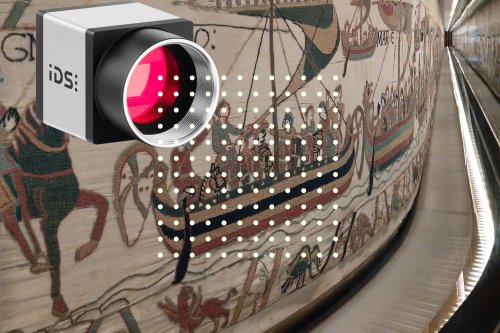
The French start-up company S-MA-C-H has studied the Bayeux Tapestry* as part of a research project and, with the help of IDS cameras, has developed a system that provides valuable insights for the conservation-optimised storage and presentation of this delicate and extraordinary artefact. The expertise of conservators, combined with state-of-the-art technology, helps to identify potentially damaging factors at an early stage, to minimise them or, at best, to exclude them altogether.

The system was designed for a comprehensive study looking at the mechanical behaviour of the Bayeux Tapestry - commissioned and funded by the Normandy Regional Office for Cultural Affairs. "We contributed our expertise in mechanical engineering by fully monitoring the stress and strain on the tapestry. In addition to monitoring, we helped to devise conservation solutions. This involved classifying and assessing the degree of risk and sensitivity of the tapestry in its surrounding indoor climate," explains Cécilia Gauvin, co-founder and managing director of S-MA-C-H.

A multidisciplinary team of textile and preventive conservators as well as heritage conservation scientists characterised the artefact's response to appropriate environmental fluctuations. "The project addressed two main questions: what are the optimal parameters for a presentation on sloping supports and how does the tapestry react to its microclimate?"

To be able to answer these questions, the tapestry was monitored by temperature and humidity sensors as well as by force sensors to record the gravity pressure. The heart and brain of the system: a non-contact 2D full-field Digital Image Correlation (DIC), consisting of an IDS camera and specially developed software for digital image correlation.

"Digital image correlation is an image processing technique that can be used to analyse movements and deformations of objects. For this purpose, high-resolution images of the object's surface are captured and then evaluated with the help of software algorithms to detect changes in the shape, position or size of the object," explains Patrick Schick, IDS Product Marketing Manager. In the search for the right camera model for the system, parameters such as interface, sensor and price-performance ratio were the main deciding factors. "For the analysis of the tapestry, extremely high-resolution images with low image noise are required to capture the smallest details.” The USB 3 uEye CP meets these requirements thanks to the particularly light-sensitive IMX183 rolling shutter CMOS sensor from Sony's STARVIS series. With BSI technology ("back-side illumination"), this sensor ensures outstanding image quality even under difficult lighting conditions. "The camera is thus ideally suited for demanding image evaluations such as this monitoring, which takes place in low light for conservation reasons. The USB3 Vision camera records high-resolution images at a very low frequency over a longer period of time," adds Patrick Schick. For the research project, for example, the monitoring ran around the clock for a month, with only one image capture per hour.

"The Python interface of the IDS peak API allowed us to quickly and easily develop software to parameterise the camera and capture images," explains Cécilia Gauvin. The images are then processed with DEFTAC3D, a software developed by the French Pprime Institute specifically for digital image correlation. This results in full-surface measurement data of the object's surface based on thousands of 2D or 3D coordinates with very high resolution. The displacement of the image points within the examination period is interpreted as a deformation that is due to a mechanical load or stress on the object. Based on the results, full-field strain maps as well as deformation maps are generated. Full-field strain maps illustrate the strains in a material over the entire surface. They therefore show whether and how the tapestry has deformed as a whole. Deformation maps, on the other hand, provide information about the local deformations in a material. They provide S-MA-CH staff with information on whether and how the tapestry has deformed at specific points.

The full-field strain maps are processed together with the environmental variation findings to understand the hygromechanical behaviour of the Bayeux Tapestry. Hygromechanical behaviour refers to the interplay between moisture and the mechanical properties of the textile. This can be influenced by a number of factors, including the type of yarn used to make the fabric and the type of weaving or embroidery technique used to make the tapestry, which adds to the complexity of the study. In order to incorporate scientific data into the decision-making process, tests were carried out on both facsimiles and the tapestry itself. On the facsimiles, the full-field strain maps were combined with the stress results from the force sensor measurement and the climate measurements (temperature and humidity). The results allow conclusions to be drawn about the climate regulation for optimal storage of the artefact.

The data collected by the sensors and camera system was documented in real time to analyse long-term trends. With the help of the information provided, it can be ensured that the climatic conditions in the Bayeux Museum are within the optimal limits to avoid damage to sensitive art objects or historical exhibits, such as the Bayeux Tapestry.

Outlook.

The market for the protection and preservation of cultural heritage is slowly opening up to structural diagnostic procedures. "Our goal is to develop appropriate systems for conservators in a plug-and-play system," explains Cécilia Gauvin. In addition, the French start-up wants to use vision systems to monitor structural damage to paintings in museum galleries and historical monuments in the future. This approach across disciplines makes it possible to assess the condition of exhibits so comprehensively that the appropriate conservation measures can be taken.

"Our knowledge of mechanical engineering, combined with industrial image processing, opens up new approaches, expands the range of actions and produces innovative solutions."

An elaboration of the conservation conditions for handling, storage or presentation of artefacts based on these interdisciplinary research results offers protection against further damage. Historical as well as modern products of textile art can thus be preserved in the best possible way for the future. Image processing components make a valuable contribution to this.


The Tapestry
• 68 metres long
• 52 cm high
• 9 panels of woven linen fabric
• 4 seams
• 10 colours of woollen yarn
• 58 individual scenes
• 623 people
• 202 horses
• 55 dogs
• 505 other animals
• 27 buildings
• 41 ships and boats
• 49 trees
* The Bayeux Tapestry, is an embroidered work created in the second half of the 11th century on a strip of cloth about 52 centimetres high. Depicted in images and text over 68 metres in 58 individual scenes, the Conquest of England is considered one of the most remarkable pictorial monuments of the High Middle Ages because of its abundance of detailed individual depictions, well thought-out iconography and quality of craftsmanship. Despite its name, the Bayeux Tapestry is not actually a tapestry but a narrative embroidery. It consists of images and text inscriptions and comprises nine interconnected linen panels.


@IDS_Imaging @BayeuxMuseum @mepaxIntPR #France #Heritage #Conservation

Tuesday, 14 February 2023

L'étoile verte!

Paris Waste to Energy plant improves odour mitigation with smart sensors and environmental intelligence

A waste to energy (WtE) plant in northern Paris (F), known as the ‘L'étoile Verte’ or ‘Green Star’ waste recovery facility, which was originally built in an industrial area, is now surrounded by residential development. This has presented a number of challenges; not least of which is odour. The company ELLONA has therefore been contracted to establish a smart continuous odour and gas monitoring network, so that the sources of odour can be identified, and improvement measures can be underpinned by scientific data.

Commissioned in 1990 and built in an area that has hosted industrial activity since 1919, the WtE plant is situated at Saint-Ouen-sur-Seine and has an incineration capacity of 600,000 tonnes of domestic waste per year. Steam from the combustion process is used to generate electricity; the majority of which is used by the plant. In addition, heat is supplied to the Parisian district heating network.

The WtE plant is owned by Syctom; the largest European Public Authority in charge of the treatment of waste produced by 6 million inhabitants of the Capital Region of France. With a focus on innovation, Syctom makes waste a resource and optimizes waste recovery channels. As such, Syctom performs a major role in the development of the circular economy and sustainable cities.

Green Star plant modernisation.
Situated within Les Docks, a 100-hectare eco-district, the owner of the WtE facility, Syctom, is implementing an urban integration project at a cost of €210 million, with completion due in 2024. The project involves construction work, tree planting and the improvement of the flue gas and wastewater treatment processes. In addition, with residents now located just a few metres from the plant, Syctom has installed a network of ELLONA continuous air quality monitoring devices to identify the sources of odour, so that effective mitigation measures can be implemented.

Odour management at the Green Star WtE plant.
In addition to the odour monitoring network, reports of odour occurrences by local residents help the plant to identify potential sources of odours. However, this process has a number of limitations. For example: some odour instances may go unreported, especially when they occur at night time; some odours may have been created by external sources; and odour is a subjective observation because different odours affect different people in different ways. Nevertheless, the main objective of odour management is to reduce or eliminate the effects of odour on local residents, so their feedback is essential.

Syctom has created a website for local residents association, Mon Voisin des Docks, which provides updates on developments at Green Star, and residents are able to report odour instances via the website http://etoile-verte.syctom-paris.fr/signalement-odeur/. A short training course was provided for some residents; helping them to better characterise and report odours.

Prior to the installation of the odour monitoring network, it was difficult to correlate odour complaints with potential sources, so it was clear that odour monitoring would be necessary. However, the traditional method involves the collection of spot samples, so it was determined that a continuous odour monitoring system was necessary.

“The ELLONA monitoring network was established for a number of reasons,” says Claire Bara, Syctom Director of Urban Ecology and Environmental Regulation. “Firstly, it was clear that we would need continuous monitoring to be able to identify odour events. Secondly, air quality monitoring alone would be insufficient because of the complexity involved with odour detection and perception. Thirdly, the identification of peaks would enable us to correlate odours with specific processes and locations within the plant. So, by identifying the main sources of odour, we would be able to implement improvements that would also be monitored by the ELLONA network.

“Classical modelling tools would not be able to accommodate the complexities of the urban environment, so one of the main aims of the tool was to be able to identify every odour source – both on-site and in the surrounding neighbourhood.” 

Odour monitoring.
The presence of an odour does not necessarily mean that it is offensive. Odour is considered to cause pollution if it causes offence to human senses or the environment. The characteristics of an odour that are taken into account when assessing its offensiveness are frequency, intensity, duration, odour unpleasantness, and location.

The standard method for the determination of odour concentration (EN 13725:2022) involves the collection of a gaseous sample for dynamic olfactometry evaluation by a panel of trained human assessors. The advantage of this method is that the human nose is extremely sensitive, and of course humans are the receptors for this form of pollution, so the method is appropriate. However, the major disadvantage, apart from the time delay and the cost, is that the gas sample represents one moment in time, so it cannot be truly representative. This is because odour levels may have been much higher or lower before or after the sample was taken, but there would be no data to show this. Continuous monitoring is therefore preferable, but only if the data are representative of the local odours.

A further complication with odour is that it is rarely the result of one individual chemical. Frequently, odours are caused by a mixture of chemicals, and there may be synergistic effects between different odorous compounds. For this reason, the standard method (grab samples) is based on human perception. In order to be able to monitor odour continuously, it is necessary to utilise an ‘electronic nose’ or IOMS (Instrumental Odour Monitoring System), with the capability to measure all of the most common odorous compounds. For this reason, the ELLONA monitors employ a suite of monovariant and multivariant sensors that are capable of measuring volatile organic compounds (VOCs), sulphurous compounds such as hydrogen sulphide, mercaptans and other odorous compounds such as amines or aldehydes. The detection of specific gases, however, is not sufficient on its own, to effectively monitor odour; it is also necessary to be able to identify site-specific odours and to conduct multidimensional mapping so that sources can be identified.

Prior to the configuration of Green Star monitors, ELLONA collected representative Tedlar bag samples from the site, and conducted comprehensive laboratory and dynamic olfactometry analysis of the potentially odorous compounds present. Odour threshold limits were established using the dilution method outlined in ASTM E679. This enabled ELLONA to create a quantitative fingerprint for the site’s odours and to thereby install monitors that are capable of detecting the specific odorous compounds that exist at the site. Using the same training, a quantitative fingerprint allows the identification of the nature of the odours as well as their sources.

At Green Star, the incinerator is burning domestic waste, from which odour production varies according to the weather (temperature), which is why continuous monitoring is so important.

Each of the ELLONA monitors (WT1) at Green Star features a comprehensive array of sensors measuring temperature, humidity, pressure, hydrogen sulphide, ammonia and VOCs. Other important variables are wind speed and direction, which have obvious effects on odours. Wind is therefore monitored at the site continuously; not just to be able to model the movement of odour plumes but also to be able to differentiate any odours that arrive from an external source. ELLONA therefore worked in partnership with the high-performance computing and modelling company NUMTECH to model the complex air flows that take place in the plant and in the surrounding urban environment. Meteorological conditions determine whether the site’s emissions are dispersed in the local streets. The combination of numerical simulations (forward and backward) and the network measurements make it possible to identify the contribution of the site and the potential sources.

The WT1 units store measurements internally, but the data are also transferred to the Cloud every 10 seconds for processing. Data from the physical sensors and from the virtual sensors (created from the physical sensors’ data and mathematical models) provide information on air quality, odour identity, intensity and duration. The measurements and the derived odour information are provided in real-time to Syctom via a dedicated website, which also provides the facility to view historical data.

The advantages of network monitoring.
It would have been possible to install a single ELLONA monitor at the Green Star site, and to model odour around that point, but by installing a network of 19 WT1 monitors Syctom derives a number of important advantages. For example, networks of IoT monitors improve the capability to track the speed and direction of odour as it moves across the network, which in turn helps to identify odour sources. Similarly, if all of the monitors report an unrecognised odour moving across the network, it is likely that it is derived from a diffuse external source or a distant point source. However, if one monitor in the network reports an odour incident; it is more likely to be derived from a point source within the network.

Odour levels at any point are generally comprised of odours from different sources, so the ability of the ELLONA system to identify sources means that it is able to measure the relative contribution of the different individual sources to each odour incident.

Most of the WT1 monitors are located within the local neighbourhood. This enables the evaluation of the amplitude of odour change in comparison with the reference situation. Alarm thresholds have been set for the physical and the virtual sensors, and an alert is issued each time a threshold is exceeded. Consequently, Syctom is able to respond quickly to any odorous incident.

Summary.
Continuous, smart odour monitoring has been shown to offer major advantages over spot sampling. However, the unique features of the ELLONA solution are that the monitoring network is developed to match the specific odours that exist at the Syctom site, and ELLONA’s mathematical models enable the continuous delivery of source identification with both qualitative and quantitative data.

The continuous odour monitoring system has improved Syctom’s understanding of the processes that affect odour, including specific events and the volume of waste being handled for example. In addition, the availability of trustworthy transparent data has provided reassurance to local residents.

Explaining the value of the insights that the ELLONA solution delivers, Claire Bara says: “The monitoring system has confirmed the main odour sources that we have on-site; in particular, it has demonstrated that odours arising from waste truck movements are more important than we initially expected. To-date, the measurement network has helped us to identify and implement the most effective mitigation measures. That work is currently ongoing, but we expect the system to show us that these measures have enabled odour improvement, for the benefit of our staff and local residents.”

Looking forward, now that the concept has been proven, the plan at the Green Star site is to further lower odour nuisance by implementing odour mitigation measures and identifying those which are the most successful. As time passes, the constituents of household waste are likely to change, but with the monitoring system in place, Syctom will be able to respond accordingly to any changes in odour generation.

@Ellona_Corp @_Enviro_News #Waste #WtE #PAuto #France

Wednesday, 1 February 2023

Hydrogen production at lower cost.

Agreement for energy management system to optimize hydrogen production costs for industry and mobility.

Hynamics has signed an agreement to collaborate with ABB and test the ABB Ability™ OPTIMAX® for Green Hydrogen energy management system (EMS), which was launched to market in November 2022, across Hynamics’ plants to help optimize electrical costs of hydrogen production by up to 16 percent, according to ABB modelling.*

In order to optimize production costs for low carbon and renewable hydrogen, the performance of the electrolyser process – which uses electricity from renewable sources to split water molecules into hydrogen and oxygen – can be improved. ABB Ability™ OPTIMAX® supports this by serving every aspect of a hydrogen plant lifecycle, from simulation at design and engineering phases to real-time monitoring of energy consumption when in operation. ABB Ability™ OPTIMAX® is already available for five other industrial applications.

The system provides data which can help determine optimal energy consumption levels required to produce hydrogen and minimize waste. The tool considers, among other things, the variability of electricity prices, asset availability and other associated factors.

The companies have agreed to share respective resources to determine the compatibility of their solutions. ABB Ability™ OPTIMAX® for Green Hydrogen EMS will be deployed at Auxerre (F), Hynamics’ first production and distribution site in Northern Burgundy, approximately 170 km southeast of Paris. The 1 MW hydrogen station for the urban community will supply five buses of the Leo network (Transdev), as well as light commercial vehicles and trucks, removing 2,200 tons of CO2 emissions from the road each year.

“With complementary areas of expertise, the cooperation between ABB and Hynamics will enable us to accelerate the deployment of hydrogen projects on an industrial scale,” said Christelle Rouillé, General Manager of Hynamics. “The integration of ABB's world-class power management system is a necessary step to improve the performance of the water electrolysis process and thus optimize the cost of hydrogen production.”

“We have recently pioneered our ABB Ability™ OPTIMAX® system specifically for green hydrogen to help production companies overcome the challenges of electrolysis in the way of high costs and energy intensive processes,” said Bruno Roche, Global Head of Energy Transition at ABB. “This first deployment of our EMS for green hydrogen is significant and hopefully the first of many if we are to achieve our collective goal of building a resilient global hydrogen ecosystem for a clean energy future.”

The scope of the agreement also includes the deployment of the cloud for the EMS at the Hynamics operation control center, potential performance and reliability tests carried out by EDF and deployment on further Hynamics production sites in 2023.


* 16% saving has been calculated by ABB Corporate Research Center in 2022 and is based upon an optimized versus an unoptimized operation of a hydrogen plant. The results showed an estimated reduction of >14% in electricity costs and >2% in electrical consumption. Thus the lower boundary of OPTIMAX reduction of electrical cost is up to 16%.


@ABBgroupnews @ABBMeasurement @abb_automation @EDF_Solutions #hynamics  #Transport #PAuto

Monday, 30 January 2023

Acquisition provides laser powerboost.

Tunable diode lasers merge with high power fiber amplifiers

TOPTICA Photonics AG has entered into a definitive purchase agreement to acquire the majority of the shares of French fibre laser technology company Azurlight Systems SAS.

Azurlight Systems is a French manufacturer of CW fibre lasers and amplifiers based in Pessac near Bordeaux. Tailored for high performance, their infrared (IR) lasers and visible (VIS) lasers all feature high power, ultra-low noise, single frequency, single mode, excellent power and pointing stability. At all wavelengths (488 nm, 515 nm, 532 nm, 976 nm, 1015 nm, 1030 nm, 1064 nm and other custom wavelengths), the compact architecture of the products ensures robustness and reliability. The cw fibre lasers are suited for quantum technologies, high power argon gas laser replacement, laser Doppler velocimetry, high brightness laser pumping, laser holography, metrology and interferometry.

Azurlight will continue and further foster its fibre laser business under the new name TOPTICA Photonics SAS and form the French hub of the TOPTICA brand. The parties have agreed to maintain confidentiality regarding the purchase price. The transaction is subject to the foreign direct investment (FDI) approval by French authorities.

LtoR:Dr. Wilhelm Kaenders, Founder & Member of the executive board of TOPTICA Photonics, Dr. Nicholas Traynor, Founder and President of Azurlight Systems who will become President of TOPTICA Photonics and Dr. Juergen Stuhler VP Quantum Technologies at TOPTICA Photonics to become General Manager of TOPTICA Photonics SAS.

The unique combination of world-class tunable diode lasers, highest quality frequency conversion technology and lowest-noise high power amplifiers will serve customers in the fast-growing markets of quantum technologies, biophotonics, and industrial metrology and help to establish an even stronger European position in these upcoming markets.

The combination of diode and fibre lasers with frequency conversion provides solutions ranging from low to high power and from ultraviolet to infrared wavelengths. They are invaluable tools used in a variety of industries including quantum technologies, medical research, industrial instrumentation, and in fundamental scientific research. Especially quantum technology applications and products will benefit from complete solutions in industrial footprint.

This acquisition will allow further strategic development of the combined entities. Customers will benefit from access to an experienced global team of experts covering laser technology application know-how and full technical support. The extended network is an important step towards TOPTICA's goal of providing world-leading professional-grade lasers with cutting-edge technology to scientific and industry customers.

Nicholas Traynor  from Azurlight Systems stated: “We are proud to join the TOPTICA group and excited about the opportunities this offers for the next stage in our development. Putting together the proven technologies of narrow band and tunable diode lasers with our lowest noise fibre amplifiers will be mutually beneficial for the product families of both companies. Together with the existing global sales and service network of TOPTICA, we will be able to serve customers' needs in quantum technology markets and beyond. We enthusiastically look forward to the years to come."

“We are very pleased to welcome Azurlight Systems under the TOPTICA brand, adding best-in-class fibre lasers and amplifiers to our product portfolio. We envisage further strengthening of fibre laser development in France and strong common product development including our subsidiaries in the US and Germany. This will grow our offering for industry and scientific research, especially in the growing markets of quantum computing and biophotonics and industrial metrology,” concluded TOPTICA Photonics' Wilhelm Kaenders.

@TOPTICA_AG @PresseBox #Azurlight #Pauto

Friday, 10 June 2022

New flowmeter facility opens in France.

A new production and office building has been opened in order to meet the growing demand for flow instrumentation.

The whole 37,000 square meter E+H site in Cernay
Endress+Hauser manufactures flowmeters in Cernay (F) for delivery to customers around the world. “Cernay is one of the Group’s fastest growing locations and has already been expanded nine times since it went into operation in 1991,” says Matthias Altendorf, CEO of the Endress+Hauser Group at the dedication ceremony of the new production and office building, which was held on 10 June 2022 in the presence of customers, partners and guests from government and industry.

The additional 10,000 square meters of space will be used primarily for the manufacture of electromagnetic flowmeters. Among the location’s core expertise is the lining of the measuring tubes of these versatile instruments, an important manufacturing step for the quality of the instruments. The extension building also features space for offices, meeting rooms, a company restaurant and a customer area for factory acceptance tests. The location currently has 430 employees.

Production in line with highest quality standards.
Construction began in January 2019 and was completed in April 2020. “Here in Cernay we produce with the highest quality standards, like at all of our locations around the world. For this reason, it’s important for us to offer our employees a work environment that meets their needs,” says Thierry Weissgerber, Managing Director of Endress+Hauser Flow in Cernay. Large bay windows provide natural light. Break and relaxation areas featuring sofas and kitchenettes were also integrated into the production building.

The new production and office building

As well as electromagnetic flowmeters, Cernay manufactures ultrasound and vortex meters. The new building was designed chiefly for the manufacture of the Progmag H and Dosimag H products, which are used primarily in the food and life sciences industries. A double-skin facade dampens the noise from the production systems. Circulation aisles enable delivery of the material close to the production lines and save space.

The company made numerous investments and carried out a wide range of projects in order to reduce energy consumption at the location, including an energy-recovery system that stores the heat from the compressors in the winter in the boiler rooms to prevent it from being wasted. The building’s construction complies with the latest RT 2020 standard and thus meets high specifications for thermal insulation. Certification in accordance with ISO 50001 is also in progress.

@Endress_Hauser @Endress_FR @Endress_CA @Endress_UK #Pauto #France

Saturday, 30 April 2022

Pre-owned test equipment easily obtained on-line.

Electro Rent has launched a new e-commerce feature to its website in France and Britain. This user-friendly feature provides current and new customers with the ability to purchase certified pre-owned (CPO) test equipment directly online. Supporting the company’s reputation as an easy trading partner, the customer purchasing experience just became even more efficient and effective.

Providing the customer with added value, Electro Rent’s e-commerce feature brings self-serve functionality and convenience to the CPO test equipment marketplace. Customers can now take advantage of straightforward, automated purchasing in just four steps. Available 24/7, e-commerce allows test professionals, engineers and project/programme managers to secure equipment in stock with immediate effect.

At the Electro Rent website, simply click on ‘Buy Used Test Equipment’ (under the Services tab) and browse the extensive range of fully calibrated and ready-to-ship CPO products available. A number of filters are available to refine each search, including manufacturer, product group and sub-product group. Full product details, specification and price are clear to view for each selectable product.

A shopping cart facility and the potential to create an account and track/view all order information makes for an experience that will be familiar to many who benefit from online retail shopping. Furthermore, secure and verified transactions provide complete peace of mind for finance co-ordinators, with all major credit cards accepted. Every order for CPO test equipment comes with free delivery.

“Electro Rent is constantly looking for ways to provide market differentiation and deliver genuine added value to customers,” says Gavin Lessing-Caller, the company’s Senior Vice President and General Manager EMEA and Technology Products. “The retail market has for many years utilised e-commerce, simplifying the entire online purchasing experience. We want to ensure that industry professionals benefit from the same level of convenience for their CPO test equipment needs. More and more companies are turning to CPO test equipment as a cost-effective yet reliable means of meeting the requirements of budget-conscious, lead-time restricted projects. The Electro Rent e-commerce feature simplifies that journey for our customers in France and the UK.”

@ElectroRentEMEA @mepaxIntPR #PAuto #TandM #France #Britain

Friday, 15 October 2021

Putting robots in the hands of operators.

The Franco-American start-up Fuzzy Logic has announced a €2.5 million seed round of financing from two European DeepTech funds: 42CAP, an industry-specialized German fund based in Munich, and Karista (via the Paris Region Venture Fund), an early-stage VC firm based in Paris.

Fuzzy Logic, which originated in the French start-up ecosystem (Agoranov and Wilco), is developing an "all-in-one" software platform that dramatically simplifies every step of robotization, from robotic cell design to daily reprogramming in the factory by operators. It reproduces a virtual environment in which the robot in the factory can be controlled "on the fly" and as simply as a video game.

Fuzzy Logic Founders Antoine Hoarau CTO and Ryan Lober CEO 

Fuzzy Studio™ (desktop application) and Fuzzy RTOS™ (embedded software) are no-code platforms, allowing users to control any make of industrial robot, without the need for training or complex programming. Non-roboticist users can intuitively design robotic cells and production operators increase their scope of activity: a clearer and simpler software solution for interacting with robots and “crushing” their complexity. It's the new standard for flexible automation.

Robotics in the service of operators
The platform is attracting strong interest from large companies, especially for applications with many different part types to be programmed or which have demanding quality requirements.

But as well as current users of industrial robots, Fuzzy Logic intends to open up a market that is still in its infancy, that of small and medium-sized industrial companies. The platform removes the complexities of robotic integration and eliminates the need for robotics expertise throughout the service life, two obstacles that until now have often been prohibitive barriers for SMEs and SMBs. 

Ryan Lober  and Antoine Hoarau, respectively CEO and CTO, co-founders of Fuzzy Logic, state:
“We help SMEs to power up their competitiveness and autonomy, by making robots adapt to them - not the other way around. This round of fundraising will allow us to strengthen our R&D teams and deploy our vision of intuitive and flexible robotics among client ambassadors throughout Europe.”

“Fuzzy Logic will be one of the key enablers of the flexible production paradigm changing the industry as we know it today. We were deeply impressed by Ryan Lober’s and Antoine Hoarau’s deep knowledge of the industrial robotics space, as well as the powerful solution they have built. They were able demonstrate everything we seek in entrepreneurs and bring their technology into the hands of industry leaders in real-world use cases. We are more than excited for what lies ahead and are proud to back the team on this journey.” declared Julian von Fischer from 42CAP.

“Fuzzy Logic arrives on the market with a perfect timing given the mass-adoption of industrial robotics and underlying applications. Yet projects remain complex, pricy, and lengthy to implement. We immediately shared Ryan Lober and Antoine Hoarau ’s vision: make robotics accessible for everyone, not only for experts, and revolutionize the way people interact and use industrial robotics. In addition, we have identified a stellar team of entrepreneurs with impressive tech expertise around software and robotics. We are very proud to back them in this new phase” commented Benjamin Zerbib, Investment Director and Yvan-Michel Ehkirch, Managing Partner at Karista.

A scalable software platform
Fuzzy Studio™ and Fuzzy RTOS™ are currently being deployed at customers in France and Germany, who were specifically chosen for their flexibility and precision requirements. Thanks to awards and support from the French public investment bank, Bpifrance, as well as the European Union, the company has accumulated more than 600,000 euros in pre-seed financing. The current round of fundraising will help them strengthen the technical team in order to deploy to new customers, "Platform Ambassadors", throughout Europe. 

The Fuzzy Logic mission: unlock flexible production for any manufacturer, by making the robot a simple tool - accessible to any operator.

@fuzzylogicrobot @42Cap1 @KaristaVC #PAuto #Robotics #France

Thursday, 9 September 2021

Making robotics accessible for everyone.

The Franco-American start-up  Fuzzy Logic originated in the French start-up ecosystem (Agoranov and Wilco), and is developing an "all-in-one" software platform that dramatically simplifies every step of robotisation, from robotic cell design to daily reprogramming in the factory by operators. It reproduces a virtual environment in which the robot in the factory can be controlled "on the fly" and as simply as a video game.

A €2.5 million seed round of financing from two European DeepTech funds: 42CAP, an industry-specialized German fund based in Munich, and Karista (via the Paris Region Venture Fund), an early-stage VC firm based in Paris for the start--up has been announced.

A scalable software platform
Fuzzy Studio™ and Fuzzy RTOS™ are currently being deployed at customers in France and Germany, who were specifically chosen for their flexibility and precision requirements. Thanks to awards and support from the French public investment bank, Bpifrance, as well as the European Union, the company has accumulated more than 600,000 euros in pre-seed financing. The current round of fundraising will help them strengthen the technical team in order to deploy to new customers, "Platform Ambassadors", throughout Europe. The Fuzzy Logic mission: unlock flexible production for any manufacturer, by making the robot a simple tool - accessible to any operator.
Fuzzy Studio™ (desktop application) and Fuzzy RTOS™ (embedded software) are no-code platforms, allowing users to control any make of industrial robot, without the need for training or complex programming. Non-roboticist users can intuitively design robotic cells and production operators increase their scope of activity: a clearer and simpler software solution for interacting with robots and “crushing” their complexity. It's the new standard for flexible automation.

Robotics in the service of operators
The platform is attracting strong interest from large companies, especially for applications with many different part types to be programmed or which have demanding quality requirements.

But as well as current users of industrial robots, Fuzzy Logic intends to open up a market that is still in its infancy, that of small and medium-sized industrial companies. The platform removes the complexities of robotic integration and eliminates the need for robotics expertise throughout the service life, two obstacles that until now have often been prohibitive barriers for SMEs and SMBs.

Ryan Lober (left) and Antoine Hoarau, respectively CEO and CTO, co-founders of Fuzzy Logic, state: “We help SMEs to power up their competitiveness and autonomy, by making robots adapt to them - not the other way around. This round of fundraising will allow us to strengthen our R&D teams and deploy our vision of intuitive and flexible robotics among client ambassadors throughout Europe.”

“Fuzzy Logic will be one of the key enablers of the flexible production paradigm changing the industry as we know it today. We were deeply impressed by Ryan Lober’s and Antoine Hoarau’s deep knowledge of the industrial robotics space, as well as the powerful solution they have built. They were able demonstrate everything we seek in entrepreneurs and bring their technology into the hands of industry leaders in real-world use cases. We are more than excited for what lies ahead and are proud to back the team on this journey.” declared Julian von Fischer from 42CAP.

“Fuzzy Logic arrives on the market with a perfect timing given the mass-adoption of industrial robotics and underlying applications. Yet projects remain complex, pricey, and lengthy to implement. We immediately shared Ryan Lober and Antoine Hoarau ’s vision: make robotics accessible for everyone, not only for experts, and revolutionize the way people interact and use industrial robotics. In addition, we have identified a stellar team of entrepreneurs with impressive tech expertise around software and robotics. We are very proud to back them in this new phase” commented Benjamin Zerbib, Investment Director and Yvan-Michel Ehkirch, Managing Partner at Karista.

@fuzzylogicrobot @42Cap1 @KaristaVC @mepaxIntPR #Robotics #PAuto #France