Showing posts with label LEM. Show all posts

Tuesday, 2 December 2025

IATF compliance in Bulgaria and Malaysia.

Consistent with a comprehensive program to ensure highest standards across all regions.

LEM's Bulgarian and Malaysian manufacturing sites are newly compliant with IATF 16949 requirements. This confirms LEM’s commitment to providing the highest standards of excellence.

“Today’s milestone builds on decades of automotive experience and highlights LEM’s commitment to excellence. I am proud of our teams and the dedication that went into achieving this,” says Raphael Surrel, Vice President of Quality, LEM. “Our intent is clear: To deliver solutions that adhere to the highest international standards, worldwide. Customers can be confident that our products meet the strictest requirements for quality, performance, and safety throughout their entire lifespan.”

LEM works with major car, bus, and truck manufacturers as well as Tier-1 suppliers. Its automotive solutions portfolio spans battery management systems, , motor control applications, DC/DC converters, on-board chargers (OBCs), and electric vehicle supply equipment (EVSE),

The certifications come as part of a wider concerted effort by LEM to define and implement a standardized and enhanced management systems across the group.

Certifications often involve multi-site collaboration. In achieving the IATF standard, for instance, LEM Japan, LEM Europe, the LEM Tech France R&D Competency Center, and LEM headquarters directly contribute through various supporting activities. The knowledge and expertise sharing within the group makes obtaining these certifications for all sites at LEM possible. Exchanging best practices and providing support to build competencies accelerates the learning curve across all sites and compounds employee skill sets.

Diversified compliance areas.
Their continuous progression model comprises increasingly diversified compliance efforts. It addresses the expectations of all stakeholders, including customers, investors, authorities, and LEM employees. Pursuing this range of certifications ensures LEM always operates according to the most demanding standards and drives efficiency across the group. LEM’s rich compliance history began in 1993, when LEM headquarters, Switzerland achieved ISO 9001. This was followed by LEM China in 2002 and subsequent locations.

Other historical certification highlights include (not an exhustive list):

  • Automotive: IATF 16949 – LEM headquarters achieved IATF certification in 2002, followed by its main production plant in Beijing in 2007.
  • Railway: IRIS/ISO 22163 – LEM headquarters was first certified in 2007, LEM China was certified in 2008, and LEM Bulgaria in 2016
  • Environmental: ISO 14001 – All LEM manufacturing sites are now certified.
  • Health and Safety: ISO 45001 – LEM China, LEM headquarters and LEM Malaysia are newly certified.
  • Laboratory accreditations: ISO17025 – Switzerland and China since 2013 and 2014, respectively.
  • Information security: TISAX Trusted Information Security Assessment Exchange – LEM International SA and LEM Europe GmbH are certified since 2024.

In 2022, LEM also pioneered in certification for its own designed and manufactured energy meters. Its Direct Current Billing Meter (DCBM) 400/600 and DCBM100 are compliant with MID module B and D European guidelines (METAS being the notified body), as well as national regulations for France (LNE) and Germany MessEV / MessEG (PTB, NMI, and CSA). Pursuing advanced certifications and deploying them globally creates significant value for LEM customers. It strengthens the LEM portfolio while embedding best practices, driving efficiency, encouraging knowledge sharing, and accelerating time-to-market.


@LEM_Inc @NapierPR #Automotive #Standards

Tuesday, 1 July 2025

DC energy meters for EVs.

A new series of DC meters is being launched by LEM. With the introduction of the DCES600 and DCES1500, LEM enables DC charging infrastructure manufacturers to accelerate time-to-market for both fast and megawatt charging solutions, with kilowatt-hour (kWh) billing services. The new meters offer enhanced performance, flexibility, and system optimization, making them particularly well-suited for applications such as e-truck charging.

Remote Display
The DCES600 and DCES1500 meters address a broad range of DC current-sensing requirements. They are designed to achieve class B accuracy at charger level with currents of up to 1500A, at operating temperatures from –40°C to +85°C without derating. Their high accuracy is maintained across the entire current range, ensuring precise measurements throughout the full charging cycle, from high currents at the start to low currents near completion.

The new meters comply with international legal metrology certifications and calibration standards, ensuring accuracy and traceability for kWh billing and regulatory compliance in EV charging applications. This, combined with the full-cycle sensing accuracy discussed above, is important when charging electric trucks, where the cost of transportation directly depends on the precise reporting of the amount of energy delivered during charging.

Designers can access the DCES meters over an RS485 communication interface that provides cybersecurity features. These features include authentication of measurements using digital signatures, and facilities that enable secure remote maintenance and firmware updates. These facilities are designed to help reduce the operating costs of EV chargers built using the DCES meters. LEM is also offering a comprehensive set of application programming interfaces (APIs) to enable quick and easy software integration, and other software tools to ease testing and product integration.

DCES600
The meters are available with an optional remote display unit, the RDU, which gives OEMs and systems integrators greater flexibility in the design of the human/machine interface compared to solutions with an integrated display. The RDU can be mounted on a front panel, DIN rail, or base plate, has a slim form factor, and doesn’t need additional connections, such as communications lines or power sources, other than its link to the DCES meters.

Both DCES meters have a robust mechanical design, with a glass-fibre reinforced case, which offers insulation resistance at up to 1000V DC for the DCES600, and up to 1500V DC for the DCES1500. They also offer large power terminals with large current contact areas. The DCES600 has two M10 studs that enable busbar termination to be screwed down onto a contact area of 33 x 36mm. In the DCES1500, there are four M12 studs in two pairs, with each pair offering a combined contact area of 45 x 100mm. The busbars for both meters are specified to operate at up to 110°C. Both meters are supplied with a protective cover and seals.

They offer real-time reporting of voltage, current, temperature and energy. These values can be used for both direct energy measurement, for example for billing purposes, and as part of a system management strategy for ensuring the end equipment is kept within safe operating limits through remote system diagnostics.

Applications for the DCES modules include in:

  • DC fast charging stations: The DCES600 is ideal for public and commercial fast-charging stations, enabling high throughput and rapid vehicle turnaround.
  • Megawatt charging hubs: The DCES1500 is purpose-built for megawatt-class charging, supporting heavy-duty vehicles, buses, and future high-capacity EVs.
  • Fleet and depot charging: Both meters can be integrated into fleet charging depots, providing accurate energy tracking for operational cost management and regulatory compliance.
  • OEM Integration: The modularity and advanced communication interfaces make the DCES family suitable for integration into OEM charging platforms and custom solutions, for control and monitoring of any DC applications such as battery storage.

LEM is now in the process of the certification of the DCES series by the end of the year. The DCES meters will then be compliant with European regulations such as MID 2014/32/EU, the EU’s Directive on measuring instruments, and with Eichrecht, the German calibration law. Samples are available now to enable developers to start work on charger integration and certification.


@LEM_Inc @NapierPR #Automotive

Tuesday, 10 June 2025

Optimising EV battery management systems at low cost.

A first of its kind high-voltage battery sensor that combines shunt and Hall effect technologies

A new current sensing unit for battery management in electric vehicles (EVs) has been launched by LEM. For the first time on the market, LEM has put together shunt and open-loop Hall effect technologies in a single part, called Hybrid Supervising Unit (HSU), to meet the challenges of small footprint, low cost and highest safety level in EV battery management systems.

“The HSU represents a significant innovation in sensor technology, being the first to combine shunt and Hall effect sensing into a single component. This integration simplifies system architecture, enhances safety, and allows for seamless upgrades without altering the mechanical layout. Additionally, it reduces the total bill of materials (BOM) and minimises cycle time at the customer's end,” said Jérémie Piro, Product Manager Battery Management Systems and Battery Storage at LEM.

The EV’s high-voltage BMS plays three key roles: it manages the battery’s state of charge and state of health, keeps the system and end user safe, and performs cell balancing as part of the battery optimisation process. For higher safety levels, system engineers typically use two separate devices, a shunt to measure 2000A and a current sensor fully isolated for measurements to 2000A.

Now LEM has combined the capabilities and performance of both technologies into a single unit, integrating it into the BDU. The signals from each section – the shunt and the current sensor – are then collected by the BMS.

At BDU level, the HSU allows:

  • Minimal footprint, weight and cost (BOM).
  • Minimised integration effort for faster time to market; and
  • Easy system upgrade, without impacting the mechanical layout while improving safety.

At the BMS level, the HSU enables system developers to easily reach the ASIL D safety level required for EVs.

The shunt’s resistance is very low at 25µΩ, and the Hall part is galvanically isolated, with accuracy of 2% at 500A and 5% at 2000A. Signal communication lines are separated (shunt signal and analogue or digital bus for the Hall part), and there’s NTC (Negative Temperature Compensation) signal for shunt temperature compensation.

The current measuring range is up to ±2000A at 10s for both parts, as is the wide operating temperature range of −40°C to +125°C.

The HSU is the only component on the market with two technologies fitted into a standard shunt footprint.It is a plug-and-play unit, allowing easy mounting. LEM initially offers the HSU00 part, with HSU01 to follow in June. The two are suitable for the two most common BDU busbar sizes: 84 x 36 x 3mm (HSU00) and 84 x 20 x 3mm (HSU01).

Samples are now available.

LEM plans to expand its HSU lineup, by introducing new technologies, for example combining a shunt with a coreless Hall-effect part. The goal is to continue to shrink the devices’ size and cost yet improve their performance.


@LEM_Inc @NapierPR #EV #Battery

Wednesday, 30 April 2025

Current sensors range completed.

Two new members to LEM's IN family of current sensors, suitable for a range of demanding systems in the medical, test and measurement, energy metering and power sectors have been introduced. The IN 1500-S current sensor is specifically designed for high performance and precision in 1500A nominal current applications, while the IN 1000-SHF current sensor is suitable for applications requiring very wide bandwidth. The new products are the latest additions to the highly successful IN family of high-precision sensors, known for their high reliability in applications such as MRI, calibration units, power meters, and energy measurement.

“Our high-precision range of current sensors is a flagship of unparalleled expertise in electrical measurement - no competitor has the same range, with the same performances,” said Marco Locatelli, Global Product Manager for smart grid and high precision at LEM. “The IN 1500-S offers all the advantages of the IN family for 1500A nominal current applications, such as high accuracy and low noise, while IN 1000-SHF is our champion for high bandwidth.”

With IN 1500-S, the IN family for current sensing now boasts eight devices, and it is LEM’s most advanced high-precision range of current sensors yet, underpinned by LEM’s closed-loop current transducers that use a highly-accurate zero-flux detectors based on LEM’s fluxgate technology. The current sensors achieve ultra-high precision current measurements for DC, AC and pulsed currents.

Using fluxgate technology in transducers for precise current measurement is not new; however, it has limitations linked to a ripple that stems from the excitation voltage. LEM’s innovation takes fluxgate current transducers to previously unachieved performance levels through digital technology, gaining not only a major reduction of the ripple from the fluxgate driving signal but significantly improving the device’s immunity to temperature effects, interference and supply voltage variation. In addition, LEM has used FPGAs for faster start-up, and the devices are also UL/UR certified for the Americas.

The IN family already boasts the IN 100-S, IN 200-S, IN 400-S, IN 500-S, IN 1000-S, IN 1200-S and IN 2000-S devices, for nominal currents of 100A, 200A, 400A, 500A, 1000A, 1200A and 2000A, respectively. Part IN 1500-S for 1500A now completes the lineup. All of them have a D-Sub 9-pin male interface connector, and large apertures for various sizes of cables and busbars. Their metal housing improves immunity to external interference and improves power dissipation. A status signal indicates the transducer’s state and an LED indicator confirms normal operation.

Their other main characteristics, including that of the new IN 1500-S device, are:

  • Best-in-class accuracy, with excellent linearity (to ±0.0002%) and minimum electrical offset;
  • Broad frequency bandwidth: up to 2MHz @ ±3dB;
  • Overcurrent and protection embedded in the design;
  • Extended operating temperature range, between -40°C and +85°C, except IN 1500-S which operates between -40°C and +50°C;
  • Extremely high stability: up to 0.1ppm/month.

The second device LEM is launching now is the IN 1000-SHF, bringing a breakthrough in current measurement. IN 1000-SHF pushes the bandwidth to 2.5MHz (at ±3dB), with a delay time of just under 1ns (at 10% of nominal current) – that’s a thousand times quicker than the IN 1000-S model and over five times the bandwidth. Electrical offset is improved by a factor of two, to ±5ppm at +25°C, temperature drift by a factor of three, to ±0.1ppm/K over its full operating temperature range, and the peak-to-peak noise level is under 0.218ppm – more than 82 times better than the standard IN 1000-S model. Current output is 1A at Ip = 1000A.

Its operating temperature range is -40°C to +85°C, and like with the IN 1500-S, an external LED shows its normal operation and there’s an additional output to show the state of the transducer. It is offered in a compact package, suitable for flat or vertical panel mounting.

With these characteristics, and its extreme accuracy, this makes in IN 1000-SHF a unique offering on the market.

All LEM IN devices are suitable for a wide range of industrial, laboratory and medical applications, which require high-precision sensors, including:

  • Feedback elements in high-performance gradient amplifiers for MRI;
  • Feedback elements in high-precision, high-stability power supplies, in power analysers and oscilloscopes;
  • Calibration units;
  • Energy measurement;
  • Feedback element for power meters (e.g. EV test benches) and T&M equipment; and
  • Medical equipment like various scanners.


@LEM_Inc @NapierPR #TandM #Electrical

Monday, 30 September 2024

Solution for the needs of FHEV, PHEV and BEV technologies.

The Single Monitoring Unit (SMU), just launched by LEM, brings previously unseen performance levels to all types of EV technologies – Full Hybrid Electric Vehicles (FHEVs), Plug-in Hybrid Electric Vehicles (PHEVs) and Battery Electric Vehicles (BEVs).

“It’s widely understood that the EV industry is continually looking to maximize driving range,"
Says Jérémie Piro, Global Product Manager BMS at LEM. "BMS designers will welcome a new sensor that is not just compact but also ensures accurate SOC estimation, which are the two main factors. We are very excited that the new SMU family will bring previously unseen performance levels to the FHEV, PHEV and BEV sectors.”

The new modular SMU family meets the needs of designers of automotive battery management systems (BMS) who are looking to extend as far as possible the maximum driving range of an electric vehicle. The SMU continuously monitors such vehicle parameters as battery performance and safety systems. They also identify anomalies and support diagnostics, which improves vehicle efficiency and ensures compliance with regulations.

The design of the new high-performance sensor recognizes the need for the smallest possible components so that EVs can weigh less and travel further on a single charge. The compact SMU measures just 29.1mm (H) x 35.5mm (W) x 49.9mm (L) while the busbar thickness is 2mm to 3mm compatible. The integrated busbar does not just keep size down and improve accuracy, it has been designed to accommodate a range of different busbar dimensions. The key to maximizing EV driving range is accurate State of Charge (SOC) estimation, which means precisely determining the remaining battery capacity. Accurate SOC estimation helps to optimize battery life and prevent unexpected power loss, while enhancing user confidence and delivering efficient energy management.

The SMU is a Hall effect technology sensor, open loop configuration using the latest LEM9 Application-Specific Integrated Circuit (ASIC). Designed by LEM to add intelligence at the Battery Disconnect Unit (BDU) level, the ASIC makes it possible to measure environmental factors while ensuring accurate sensor performance.

Many new features have been built into the SMU to optimize performance. For example, accuracy is improved by software algorithms that can correct or adjust measurement data to account for distortions or errors caused by mechanical stresses. This enhances the precision of the sensor's readings and makes it possible to reach 1% of accuracy up to 1300A and <1 .7="" 1500a.="" a="" accurate="" addition="" algorithm="" also="" and="" any="" applications.="" as="" avoided="" be="" bms="" built-in="" by="" calibration="" caused="" correct="" current="" dedicated="" detected.="" diagnostic="" digital="" drift="" eeprom="" eliminating="" end-to-end="" ensuring="" errors="" features="" flash="" for="" ideal="" improved="" in="" include="" includes="" internal="" is="" issues="" magnetic="" magnetism.="" malfunction="" measurement="" memory="" microcontroller="" mode="" more="" of="" offset="" or="" other="" over-voltage.="" p="" protection="" provides="" range="" readings="" reliable="" residual="" rom="" s="" safe="" sensitivity="" sensor="" should="" state="" such="" temperature="" the="" to="" under-="" up="" warnings="" which=""> The new sensor’s high isolation levels enable it to withstand voltage differences greater than 800 V between components or between the device and its surroundings. This improves safety and prevents electrical interference or damage.

Finally, unlike other similar sensors on the market, the new SMU family is compliant with functional safety conditions. This means that it satisfies the stringent Automotive Safety Integrity Level (ASIL) requirements built into the ISO 26262 standard for functional safety in vehicles. The first version to enter the market is ASIL B ready with the possibility to extend it to ASIL C. ASIL B applies to systems where moderate safety risks are present, balancing safety with practicality in automotive design, and the new SMU family incorporates all the safety mechanisms and design processes that are required to address the risks associated with safety-critical automotive applications.


@LEM_Inc @NapierPR #Automotive #EV


Friday, 23 August 2024

Electrical measurement technology R&D in Europe & Asia.

New offices in Munich and Shanghai to be closer than ever to major customers.

New research and development facilities in Munich (D) and Shanghai (CN) have been opened by LEM. This is to go to satisfying the growing global demand for current and voltage sensing driven by the push towards decarbonization and greater electrification.

“As a leader in electrical measurement, we strongly believe that integrated current sensing is a critical part of our future growth and competitive advantage, and it is vital that we have an ICS offering that can meet our customers’ needs," said LEM CTO Verena Vescoli. "The new R&D center in Munich will enable us to accelerate on IC design and enable a broad ICS portfolio. It is always a delight to see multiple teams working together to share the depth of their ICS design expertise and application know-how and I am very excited by the potential for growth that the new Munich and Shanghai sites will offer.”

Verena Vescoli & John McLuski
The two new sites will enable LEM to build greater intelligence into its sensors and to have development bases closer to key customers, while also promoting deeper collaboration on projects and the efficient sharing of vital product design information. While the China site will be kitted out with the very latest laboratory equipment, the site in Germany will focus on application-specific integrated circuit (ASIC) design and semiconductor technology that will help accelerate LEM’s innovation in integrated current sensors (ICSs).

This latest R&D investment in Europe and Asia follows on from LEM’s recent inauguration of a state-of-the-art factory in Malaysia which incorporates advanced manufacturing technology. LEM’s investment in the state of Penang was an acknowledgment of the region’s expertise in ASIC technology and its specialization in semiconductor design and production. The Penang factory was the latest example of LEM’s quest to secure its operations while diversifying its global footprint so that it could serve customers better through a combination of advanced production facilities and skilled personnel.

“In an increasingly competitive market place, we are continuing to invest in the future and to develop solutions that our customers value," said LEM SVP Asia John McLuski. "China is an important source of technology and innovation, both for our customers and for LEM. The new R&D facility in Shanghai will work together with the existing site in Beijing and enable us to be physically closer to our customers and to deliver our solutions to them even faster than was possible before.”

LEM is now backing up this significant investment in production capacity and flexible delivery with R&D capabilities that are designed to complement the existing site in Lyon (F), which opened in 2017, and to build on R&D activities that were already ongoing in Sofia (Bulgaria), now in their new office in the city centre. Led by Matthias Tänzer, the development team at the new Munich semiconductor facility will work closely with LEM’s existing ICS team in Geneva (CH). There are already 10 employees in place at Munich and this number will increase in line with LEM’s ambitious growth plans for the site. At the 1400m2 Shanghai facility, there are currently 30 staff with the capacity to more than double that number in the future, many of whom will be involved in R&D.


@LEM_Inc @NapierPR #PAuto #TandM #Eurasia

Friday, 19 April 2024

Measurement technology high-tech plant in Malaysia.

Electrical measurement technology specialist LEM has inaugurated a new €15.7m state-of-the-art factory in Malaysia that combines environment-friendly design with advanced manufacturing technology.

Setting up this new factory reflects LEM’s growth plan which is driven by increasing global demand for the company’s core products, current and voltage sensors. The need for decarbonization in mobility, industry, energy production, as well as our private lives has led to an increased need for our products across all sectors where LEM’s products are used, including automation, automotive, traction, and renewable energy.

LEM chose to make such a substantial investment in the state of Penang in recognition of the region’s expertise in semiconductor production.

From employing around 70 people in April 2024, LEM expects to increase the Headcount to more than 200 people by March 2025 and eventually more than 500, with sales from the factory expected to reach over €200m. With plans in place already for an extension on the additional 5,000 sqm of land, the new 11,800 sqm factory features a state-of-the-art logistic system including automatic guided vehicles (AGVs) on the shopfloor which transport components from the warehouse to the high-tech production lines. LEM Malaysia is also the pilot for the roll-out of our new ERP system and will produce a substantial part of its energy through solar panels.

Right Honourable Mr. Chow Kon Yeow, the Chief Minister of Penang, declared: “We are delighted that such an internationally renowned company as LEM, with a reputation for dedication to quality, has chosen to invest not just in the region, which is renowned for its supply chain resilience and a well-developed ecosystem, but also in the acknowledged expertise of our people.”

According to LEM CEO Frank Rehfeld, it is vital that the company continues to invest in state-of-the-art facilities where it can manufacture world-leading products for a range of rapidly developing markets. “We are always looking to find solutions that will secure our operations while diversifying our global footprint. The new Penang factory is the latest venture in this quest. It is essential in uncertain times that LEM looks to increase its resilience and serve our customers better. We will achieve this by investing in advanced production facilities and personnel capable of manufacturing the best products designed to meet the demands of this growing sector,” he said.

Andreas Hürlimann, LEM chairman of the Board of Directors, added: “I’m very optimistic that having a state-of-the-art facility in this region with the ability to test our own semiconductors will be a major boost for our integrated current sensing business.

“It was vital when we commissioned this new factory that it complied with the Green Building Index (GBI), Malaysia’s industry-recognized green rating tool for buildings. With 300kW of solar energy systems already installed and another 400kW scheduled for 2026, the building also uses rainwater harvesting and building automation to optimize energy consumption. This new factory is proof of LEM’s commitment to its CO2 roadmap which is part of a long-term vision to help customers and society in general transition towards a more sustainable future.”


@LEM_Inc #PAuto #TandM

Tuesday, 30 January 2024

Smaller current sensor for high-power apps.

The transition to a decarbonized economy is accelerating fast and the demand for innovative technologies is increasing to support the large-scale adoption of electric vehicles (EVs). Lightweight and compact design of power electronic components is key to enabling efficient design and increasing the driving range of EVs – adding value to Tier 1 supplier / OEM system engineers and consumers.

After working closely together for several years, LEM and Semikron Danfoss have designed a new concept, called Nano, that merges the capabilities of LEM’s range of current sensors with Semikron Danfoss’s DCM half-bridge power module platform for high-power automotive applications. The collaboration results in a core-based sensor that is 60% smaller than anything previously available without any compromise on performance.

“The Nano current sensor is a great example of how LEM is able to work hand-in-hand with industry specialists to tackle customers’ system challenges and create innovative current sensing solutions that deliver optimal performance levels. This project was a significant challenge, and the beauty of its success lies in the perfect collaboration with Semikron Danfoss. Both teams have been able to work almost like one single team. We have been able to push the boundaries because we created a synergy from our different expertise.” says Damien Coutellier, Senior electronics engineer and Nano project manager at LEM.

The newly developed sensor makes it possible to completely integrate the sensing function into the power module, minimizing component footprint, simplifying assembly and keeping costs down.

It is particularly ideal for use with electric vehicle (EV) traction inverters with the DCM platform, but also compatible with other Semikron Danfoss power module platforms. The innovative idea behind the Nano concept was to design a core-based current sensor that could fit into the unused space between the top side of the power module and the gate driver board.

This enables the footprint of the current sensor to overlap with the footprint of the power module. As a result, the Nano current sensor does not take up additional space in the inverter. Also, no additional components are required to fixate the sensor mechanically and connect it electrically to the driver board. This delivers the highest level of integration that a core-based current sensor can achieve. The Nano current sensor is mounted on the DCMTM power module, which uses the latest generation of 750V and 1200V SiC MOSFETs and has a rated current of 200A to 1000A.

Characteristics of the DCM platform mean that the new device satisfies insulation coordination requirements for 800V batteries per IEC 60664-1. At the same time, superior mechanical robustness, high-temperature stability and protection from humidity and vibrations enable inverters to deliver stable and reliable performance in a range of environments.

“By working hand-in-hand with LEM, Semikron Danfoss was able to develop a unique solution that combined the best of both worlds – our expertise in power electronics with LEM’s current sensing and metrology knowledge. As a result, this plug-and-play solution will save our customers a great deal of time and effort because they will no longer have to worry about the current sensor footprint, assembly, validation, testing or even performance – they are all taken care of in a single package,” says Thomas Zöls, Senior Electrical Engineers at Semikron Danfoss.


@LEM_Inc @semikrondanfoss #EV #Automotive

Monday, 8 January 2024

Current monitors.

LEM has launched a new product in its CDSR series of Residual Current Monitors. Now available with three output types - fault output, SPI bus, and analog output - the new product brings an increased level of safety and reliability to AC wall boxes and charging cables.

The new LEM CDSR offers cost-effective leakage current detection, reduces electromagnetic interference, aids preventive maintenance and improves the reliability of AC electric vehicle chargers and gives users confidence in the safety of their charging system.

Based on LEM’s Fluxgate technology, offering best in class performance, the new LEM CDSR is an RCM type B.

Compliant with international tripping standards (IEC 62752/62955/UL 2231), the CDSR family is suitable for 3.3 to 22 kW AC charging systems and is offered in both single and three phase versions.

As electric vehicles become more popular, users need a reliable and safe way to charge their vehicles from their home AC supply. Because EVs use a high voltage battery, they are also a high-power energy source. This needs to be carefully monitored to avoid any electrical shock to users or damage to household switchboard protection such as the RCM A that protects the house from electrical hazards.

Meeting these requirements demands a highly accurate method of monitoring AC and DC current leakages, with the ability to measure leakages as low as 5 mA, some 10,000 times smaller than the current flowing in the conductor.

The LEM CDSR family achieves this using LEM’s fluxgate technology with fixed jumpers phase current. This uses mechanical placement to optimize performance, making it the most accurate contactless technology available today.

It also ensures easy integration and layout of the power track design thanks to its unique vertical shape. Offering isolation in a compact solution, the CDSR’s external test winding is also readily accessible to the customer to test the sensor.

The high reliability and safety of the LEM CDSR family ensures manufacturers and users of AC wall boxes and charging cables can take full advantage of the benefits offered by current leakage sensors. Amongst these are a reduction in electromagnetic interference that can affect nearby electronic equipment, improving the overall electromagnetic compatibility of the charger.

The CDSR can also aid in preventive maintenance, flagging up potential issues before they become severe and reducing long-term repair costs. The device allows the detection of minor leakages from the very first signs of a drift from normal behaviour.

By ensuring that current leakage issues are detected and resolved promptly, the CDSR family improves the overall reliability of AC EV chargers, reducing unplanned downtime.

It also gives more confidence to EV owners, with the presence of current leakage sensors in an EV charger demonstrating the manufacturer's commitment to safety and quality. LEM has backed this up with the high reliability of the CDSR, which is offered with a five-year guarantee.


@LEM_Inc @NapierPR #Electrical #EV

Monday, 27 November 2023

Sensor for 800V 3 phase power modules.

Mechanically compatible with popular industry power modules.

The HAH3DR S07/SP42 is a new compact current sensor designed for 800V three-phase power modules from LEM.

Developers of automotive traction inverters are increasingly using three-phase power modules such as the popular and widely proven Hybridpack Drive from Infineon. These modules are now adopting the more efficient SiC MOSFET technology, allowing vehicles to use 800V battery systems that offer faster charging and longer driving range.

The HAH3DR S07/SP42 three-phase sensor has been designed to fit these 800V power modules. Fully calibrated over temperature and stable over the unit’s lifetime, they enable a quick time to market with little R&D effort. This makes them ideal for companies developing small passenger vehicle platforms, trucks and buses while restrained by limited R&D resources.

Wide current range.
The new current sensor offers a wide selection of current measuring ranges from 700A to 1200A, and compared to existing units in the HAH3DR family, the package isolation characteristics have been upgraded to cope with the challenge of 800V power modules. As well as the new sensor, LEM also offers a large choice of packages and current measuring range options.

It features a unique enlarged aperture that can accommodate busbars up to 1.5mm thick, making it compatible with newest generation of power modules.

It is also compatible with power modules from various other suppliers, such as the Acepak Drive from ST Microelectronics, the SSDC from ON Semi, and others such as Starpower and CRRC.

As an upgrade of an existing well proven product family, the HAH3DR S07/SP42 is backwards compatible with the first generation HAH3DR S07/SP4 for 400V inverters, meaning no design changes are needed to use the new device.

is a suitable for ISO 26262 safety-relevant applications within specific conditions, for which LEM can provide a safety enabling customers to achieve up to an ASIL D at the inverter level.


@LEM_Inc @NapierPR #PAuto #Electrical 

Friday, 23 June 2023

DC energy meter for EVs.

LEM will use PCIM 2023 to give the global e-mobility market advance notice of its new DC energy meter for DC wallbox chargers of electric vehicles (EVs). Offering compliance to the latest metrology regulations, the DCBM 100 energy meter will be introduced to the EU market in Q3 this year.

Florent Balboni
“Rapid deployment of new products and technologies is crucial to meet the diverse demands of EV charging applications,"
says Florent Balboni, LEM Global Product Manager for energy metering solutions. "Ensuring fairness and transparency for all users, kWh-based billing is essential for technology acceptance. DC meters must therefore be tailored to EV charging applications such as DC wallboxes which will play a significant role in charging infrastructure and the development of advanced V2G services.”
 
With the continuous growth at a rapid rate of the e-mobility sector, the new DC energy meter is expected to be of particular interest to manufacturers of EV chargers to enable kWh-based billing when charging in public or semi-public areas. To allow for kWh-based billing of charging sessions, energy metering solutions must be integrated into destination DC chargers, following calibration laws. kWh-based payment is increasingly required and enforced because it promotes accessibility, fairness and transparency of prices for all users during the charging process of electric vehicles.

EVs have the option of being charged using either AC or DC power. DC charging through a wallbox offers several advantages over AC charging because it overcomes the power limitation of the on-board charger used in AC charging. This results in shorter charging times and enables easier access to services like vehicle-to-grid (V2G).

With destination charging applications, where the charging time is typically between one to two hours, an average charging power in DC in the range of 30kW is usually adequate to recharge most EVs. To meet this demand, DC wallboxes are a crucial component of the charging infrastructure and provide reasonable charging times at an acceptable cost for charging point operators (CPOs). 

With its powerful bi-directional energy metering enabling V2G, the DCBM 100 DC energy meter is designed to ensure full transparency and enable end-users to have confidence in the fairness of their kWh-based charging experience. The future-ready DCBM 100 has been developed specifically for 11kW to 30kW DC wallbox applications, delivering Class B accuracy and 1000V DC and 80A rating in temperatures from -40°C to +80°C. Charging cables can be directly connected to the new meter.

Also, the DCBM 100 provides in real time additional data (voltage, current, power, temperature) that will be essential to developing the kinds of predictive maintenance tools needed to minimise EV charger downtime. As part of LEM’s larger family of direct current billing meters, the DCBM 100 also ensures easy software integration and secure data handling using the latest Open Charge Metering Format (OCMF).

@LEM_Inc @NapierPR #PAuto #Electrical #Automotive


Tuesday, 20 June 2023

EV charging.

LEM has announced that its DCBM 400/600 direct current billing meter is the first of its kind to be certified in France by Laboratoire national de métrologie et d'essais (LNE), the country’s national laboratory for metrology and testing.

As Europe continues to develop extensive public charging infrastructure for EVs, the importance of fair and transparent billing based on energy usage (kWh) becomes crucial. The DCBM 400/600 facilitates kWh billing integration into the EV market, accelerating the time to market for rapid charging station manufacturers.

With its LCD display, industry standard data protocols, and compliance with metrology regulations, the DCBM 400/600 is suitable for both retrofit and new DC rapid charging stations, offering secure communication, authentic billing, and easy connectivity to Cloud services.


@LEM_Inc @LNE_fr @NapierPR  #Electrical #Automotive #France 

Tuesday, 28 March 2023

Charge measurement accuracy in EV.

One of the biggest issues in the EV sector is the need to develop vehicles that can travel the furthest possible distances between charges and so design engineers are continually searching for sensors that can offer the superior levels of efficiency and accuracy they require.

The CAB 1500 is the latest member of LEM’s CAB series of automotive grade design sensors that use the properties of fluxgate transducer technology to deliver the high accuracy and low offset required for reliable coulomb counting – measuring the discharging current of Li-ion batteries to estimate their state of charge (SoC). The CAB series is renowned for compliance with the ISO 26262 functional safety standard (to automotive safety integrity level C) as well as easy application through a controller area network (CAN) interface offering 500 kbps.

Backed by LEM’s 50 years’ experience in developing electrical measurement solutions, the CAB 1500 open loop fluxgate sensor – equipped with electronic mechanisms and software that guarantee the levels of reliability required by BMSs – can be busbar or panel mounted and combines best-in-class resolution up to 0.1% with the lowest offset and highest accuracy. As well as offering an extended current range up to ±1500A and compatibility with 800V applications to the IEC 60664-1 standard, the new sensor boasts non-intrusive measurement for full galvanic isolation up to 2.5kV. Other features include low power consumption VS shunt technology and 0.5% total error over temperatures from -40°C to +85°C.

“Accurate battery charge level measurement is a crucial factor in being able to maximise the autonomy range of electric vehicles and design engineers will welcome this addition to LEM’s CAB family which offers the kind of performance levels they require. The CAB 1500 uses fluxgate technology to deliver the best SoC estimations on the market for today’s advanced EV battery management systems and will play a key role in enabling electric vehicles to go further than ever,” said Jérémie Piro, Global Product Manager BMS and Battery Storage 

@LEM_Inc @NapierPR #PAuto #Electrical #Automotive

Tuesday, 21 February 2023

Current sensor for high-power EV traction inverters.

Distance and speed of charging are vital in the competitive EV sector and, like all vehicle components, high-power integrated traction inverters – which convert DC into AC and capture energy for the vehicle – need to combine superior performance with being as small and light as possible. Measuring just 29mm x 21mm x 12mm and weighing 27g, LEM’s new HSTDR current sensor is significantly more compact than a traditional C-core sensor, making it much easier to be integrated into space-limited inverter boxes.

Sofiane Serbouh
, LEM’s Global Product Manager, Motor Control says: “Based on 50 years’ experience in electrical measurement, LEM is continually pushing the boundaries when it comes to developing the solutions that design engineers in the automotive industry are looking for when working with traction inverters. The designers’ challenge is to create EV car components that are not just high-performance but are also compact and light. The HSTDR fits the bill perfectly.”

The sensor enables traction inverters to operate at maximum efficiency by combining high accuracy with affordability and the ability to operate in demanding environments (the sensor has an operating range of -40°C to +125°C and is robust enough to cope with vibrations up to 10G). Using open loop Hall effect technology and an innovative magnetic core design, the HSTDR offers excellent immunity against external field and cross talk as well as consistent behaviour over frequency with little part-to-part phase shift dispersion, ensuring more accurate torque control.

What makes the sensor unique is not only that it is 42% smaller than its predecessor (LEM’s HSNDR) but also weighs 50% less and offers 50% greater measuring range, as well as best-in-class accuracy and a global error over temperature and lifetime below 3.5%. Giving EV manufacturers the choice of having different current measuring ranges in the same housing – from ±300 A up to ±1500 A – the sensor ensures galvanic separation between the primary circuit (high power) and the secondary circuit (electronic circuit), which is also suitable for 800V battery systems.

One way LEM’s designers managed to minimise the footprint of the HSTDR was by making it the only sensor for EV traction inverters, DC link and 3-phase current measurement to feature an integrated busbar, starting with the earlier HSNDR, fitting perfectly into the smallest possible core aperture. Now, with access to a fully calibrated package of core, busbar and sensing element, car component designers and EV manufacturers will have the flexibility to achieve major reductions in their products’ time to market.

@LEM_Inc @NapierPR #PAuto #Electrical #Automotive

Wednesday, 18 January 2023

Certified DC meter for rapid EV chargers.

A major step forward in supporting the deployment of fast electric vehicle (EV) chargers in North America, LEM's bi-directional DCBM will enable makers of electric vehicle charging stations (EVCSs) to accelerate their certification for DC metering requirements following Certified Test and Evaluation Professional/National Type Evaluation Program (CTEP/NTEP) certification. The DCBM will simplify the process of the manufacturers having to qualify their own charging stations for UL listed certification and, for extra peace of mind, will undergo a fresh audit every quarter.

Claude Champion
, General Manager at LEM USA says, “The US and Canadian markets for EVs are continually expanding but this growth could be held back by insufficient access to rapid DC charging stations. LEM understands exactly what the sector needs and has worked closely with EVCS manufacturers and installers when developing solutions like the DCBM 400/600. We are ready to help make a zero-carbon future possible for North America.”

Capable of monitoring current, voltage, temperature and energy, the new meter has been designed with data security, e-mobility, digitization and flexibility in mind and is a UL recognized component for the United States and Canada. The DCBM 400/600 complies with the standards UL 61010 and UL 810 with its certification in the FTRZ category for EV applications. To achieve this certification, the meter had to pass reinforced insulation tests, temperature testing of all its components and sub-assemblies, testing for protection against electric chock, durability of markings tests, equipment temperature limit tests and resistance to heat/fire risk tests.

In California, where there is a long-term transportation strategy of reducing CO2 and greenhouse gas emissions, it has been recognized that a widespread and reliable fuelling infrastructure is essential to meet the goal of increasing the usage of low-emission hybrid electric and zero-emission battery electric vehicles.

To achieve this, EV users need a ‘gas station’ like experience so vehicle charging times need to be reduced to just a few minutes. Direct current fast charging (DCFC) makes this possible by converting AC into DC outside an EV, by-passing its on-board charger (OBC) and delivering up to 350kW of power directly to the vehicle’s battery pack.

However, while this method boosts charging power, the conversion stage generates power losses – costs that are not covered by the EV owner. That’s why knowing exactly how much energy has been delivered to a vehicle after AC has been converted to DC is crucial for accurate and transparent billing.

Ideal for DCFC stations from 25kW to 400kW, the DCBM 400/600 enables costs to be managed precisely and integrates the signed billing data sets according to the Open Charge Metering Format (OCMF) protocol. The new meter doesn’t just deliver authentic billing but also secure communications and easy connectivity to Cloud services. Based on a straightforward plug & play approach for rapid and easy integration, even when retrofitting to existing charging stations, the DCBM 400/600 has a moveable measuring element for use with any type of charging station architecture.

Other features of the meter include an Ethernet communication capability, supporting the HTTP/REST protocol and Network Time Protocol (NTP) time synchronization, which again simplifies integration into many different types of EVCSs. Also, bi-directional energy metering makes it compatible with V2G (vehicle-to-grid) and V2X (vehicle-to-everything) standards. Finally, the robustly designed DCBM 400/600 is accurate in temperatures of -40°F to +185°F and has an IP20-rated casing.


@LEM_Inc #Automotive #EV #NorthAmerica

Monday, 14 November 2022

50 years innovation in electrical measurement.

LEM, has over 50 years, pushed back the boundaries of electrical measurement technology to become a global leader in supplying cutting edge sensors and solutions to such sectors as renewables, automotive, railway and traction, charging infrastructures, energy distribution, high precision and automation. With a strong focus on digitisation and mobility, these industries took delivery of 66m electrical sensors from LEM in 2021/22 in their drive towards a sustainable future.

e-Car 
Andreas Hürlimann, Chairman of the Board of Directors, and Chief Executive Officer Frank Rehfeld say: “All of us at LEM are inspired by a common purpose – helping our customers and society accelerate the transition to a sustainable future. We have come a long way since 1972 and we remain as enthusiastic as ever regarding LEM’s prospects for the next 50 years!”

‘Ingenuity and inspiration’ will be the theme for LEM at this years Electronica show (15-18/11/2022 Munich D) as the company underlines how it has used its expertise over the last half century to develop technology and product firsts that satisfy the demands of customers. LEM will also be emphasising its global presence across 15 countries and its significant investment in R&D to create the best sensors on the market.

Electronics design engineers and system design engineers visiting LEM’s booth will witness first-hand the company’s vast range of PCB-mounted current sensors and how they deliver best-in-class performance as well as unrivalled levels of reliability and safety. Continually working at solving customers’ challenges, LEM launched seven new products in 21/22, including the HOB-P high bandwidth current sensor developed specifically for fast-switching SiC MOSFETs in high voltage, pulsed power circuits.

Product development at LEM has been driven by a number of megatrends, such as greater electrification, robotics, renewable energy and the adoption of electric vehicles (EVs). The increased demand for smaller and smarter current sensors in, for example, heating, ventilation and air conditioning (HVAC) has led LEM to develop world-beating integrated current sensors (ICSs) that combine high performance with low form factor, robustness, cost-effectiveness and reliability.

These include the new HMSR series – the analog HMSR AN boasts best-in-class accuracy while the digital HMSR DA delivers high-resolution Sigma Delta digital bitstream output. Both devices feature 75A measurement range, reinforced isolation, 20kA lightning tests, and outstanding robustness against external magnetic fields, making them ideal for automation, robotics or HVAC applications.

For the automotive market, LEM will exhibit the recently introduced HC16, CAB and CDT which meet increased demand for more current measuring points in motor control, battery management and leakage current areas. For the charging infrastructure market, the LEM team will present the DCBM 400/600 DC meter designed for DC fast-charging stations. With the DCBM, LEM has become one of the first companies in the world to introduce integrated functions and a certified software solution for billing electricity for fast charger users. Finally, LEM will be exhibiting its CDSR sensor for leakage current detection in residential and commercial charging stations.

@LEM_Inc @NapierPR #PAuto #Electrical #Automotive

Tuesday, 28 June 2022

Manufacturer for systems for measuring electrical parameters opens new plant.

The inauguration ceremony has been held in Penang, Malaysia for LEM's new production plant. The ceremony was attended by the Chief Minister of Penang, the Chairman and CEO of LEM, together with invited guests including the Swiss Ambassador to Malaysia. The project was first announced in 2020, and this marked a major step in its construction with the first electric current sensor products expected to come on-line in Q1 2024.

“Supply chain resiliency and well-developed ecosystem are among the key differentiators that made Penang a sustainable location for the electrical and electronics (E&E) players." said the Right Honourable Mr. Chow Kon Yeow, the Chief Minister of Penang. "Being a leading company in electrical measurement that serves the emerging and high-growth industries, I am confident that LEM would be able to reap a myriad of benefits from its operation in Penang while complementing the State’s presence in the world map of technology.”

“The State, via InvestPenang and other relevant state agencies, is committed to work closely with LEM to ensure smooth project implementation on the ground,”

LEM's chairman Andreas Hürlimann remarked: “We are delighted to be welcomed today by the key persons in Malaysia who have made this investment process come to fruition so efficiently, despite the recent pandemic challenges. We selected Penang as a strategic location to improve our supply chains, increase our resilience and better meet the needs of our customers here in Asia, as well as Europe and the US. This plant will complement our existing facilities in China, Bulgaria and Switzerland as we invest in more capacity to achieve our ambitious but profitable growth objectives in the coming years.”

Frank Rehfeld, Chief Executive Officer of LEM, commented: “The talent and experience available here in Penang will be of significant benefit to LEM, particularly in the domain of semiconductors. This plant will be the main testing base for our integrated current sensor (ICS) products which are in great demand from customers in our automation, automotive and renewable energy businesses. As we develop our manufacturing operations here, we may also consider adding R&D investment and capabilities. We are grateful to everybody who has helped the project reach this important milestone today."


* LEM is celebrating its 50th anniversary in 2022, having been founded in Geneva, Switzerland in 1972. The company recently announced record annual sales of CHF 373.4m.

@LEM_Inc @NapierPR #Electrical #Malaysia

Tuesday, 10 May 2022

Appointment is major step for innovative electrical parameter measurement leader.

The renowned power electronic engineer Michael Sleven has been appointed as Managing Director of LEM Europe GmbH and Head of Sales for Germany.

Michael Slevin
Anticipating significant growth in the European market, LEM has chosen to boost its management team with the recruitment of a specialist in the power electronics community who has over 20 years’ experience in the sector in various management positions.

Michael joins the company after four years at Hitachi Europe’s Semiconductor Department, where he was responsible for business development and sales for power semiconductor (based on Silicon IGBTs and SiC MOSFETs). The main market sector here was automotive and industry applications in Europe. Before his time at Hitachi Europe, Michael spent more than a decade at Infineon AG in a number of key positions, including Head of R&D High Power Semiconductor Module Development.

The new appointment comes at a time when LEM is undertaking a recruitment drive in its ICs team with over 10 positions available. The company is looking for top quality design managers, product engineers, layout engineers, application engineers and project managers to help in the development of sensor interface integrated circuits for industrial and automotive applications. The new recruits will also support the development of innovative current sensors that meet the increasing electrification needs of the automotive industry, as well as power conversion in green energy applications.

“We have an excellent product portfolio at LEM that addresses today’s most demanding markets and applications. As a company that leads the way in innovation for electrical transducers and sensors, we are going to have a huge impact on everyone’s common target to reduce global warming.

In the future, life on the planet will be supported and enhanced by the modern way of motion so it is vital to promote renewable energy and to control energy consumption”, said Michael Sleven. “I am delighted to be joining a forward-thinking company that has the vision, the technology and the people to turn such an important strategy into reality. I am looking forward to playing an active role in LEM’s drive for exponential growth and market leadership in this crucial sector.”

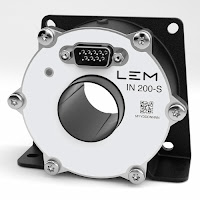
In recent months, LEM has announced two major market-changing products – the IN 200 current measurement transducer and the HOB-P/SP1 series of high bandwidth (1MHz) open loop transducers capable of current sensing in some of the harshest environments.

The IN 200 is the latest addition to LEM’s IN family of high-precision sensors which covers a current range from 100A to 2000A. Acknowledged to be the market’s most accurate sensor of its kind, the IN 200 is particularly suitable for a number of extremely demanding applications. These include high-precision test and measurement (T&M) equipment which is used to analyse the efficiency of inverters fitted to hybrid electric vehicles (HEVs) and electric vehicles (EVs). Using a ground breaking type of digital technology, the IN 200 boosts performance significantly in linearity, offset and noise immunity when compared to traditional fluxgate transducers.

Offering low power consumption, the HOB-P/SP1 current transducers are designed to cater for the high bandwidth sensing demands involved in using fast-switching SiC MOSFETs in high-voltage pulsed-power circuits, particularly where fast and flexible high-voltage pulses are required. As well as offering an unrivalled response time of < 200 ns – much faster than the market average of about three microseconds – the HOB sensor can measure DC, AC or pulsed current up to 250A. The transducer can also react like a current transformer due to a pick-up coil on LEM’s application specific integrated circuit (ASIC).

@LEM_Inc @NapierPR #PAuto #TandM #Europe

Thursday, 27 January 2022

The most accurate current measurement transducer.

The IN 200 current measurement transducer, from LEM, is offering record levels of accuracy performance in current sensing with the launch of its IN 200 current measurement transducer.

As the most accurate sensor of its kind on the market, the IN 200 is ideal for use in such demanding applications as high-precision test & measurement (T&M) equipment used to analyse the efficiency of inverters fitted to hybrid electric vehicles (HEVs) and electric vehicles (EVs).The IN 200 is able to offer significant performance improvements – particularly in terms of linearity, offset and noise immunity – over traditional fluxgate transducers through its use of a new kind of digital technology.

Unparalleled levels of accuracy are achieved in linearity and electrical offset. While the IN 200’s data sheet quotes 0.6 parts per million (ppm) and maximum 10ppm respectively, in-house tests have shown that the sensor can achieve linearity below 0.5ppm and offset of +/-5ppm.This compares with competitors’ transducers offering +/-20-25ppm.

With the new transducer fitted to automotive test benches, manufacturers will be able to improve the testing efficiency of inverters and validate their performance levels through access to the most accurate data. In turn, because inverters will reduce power losses, designers will have the potential to tackle the issue of “range anxiety” by enabling EVs to go further than is currently possible.

The IN 200 completes LEM’s IN family of High Precision sensors which now covers a current range from 100A to 2000A. The IN 200 itself is effectively three products capable of matching nominal currents of 100A, 200A and 400A.

The single biggest factor that sets the IN 200 apart from the competition is LEM’s switch from reliance on analogue circuitry to digital integration technology. To achieve the increasingly high levels of accuracy demanded by the T&M market, LEM is reinventing fluxgate technology. Traditionally, many analogue circuits would be required to cancel out noise and other impacts of having different fluxgate coils but LEM’s innovative solution makes it possible to reduce substantially the number of analogue circuits within the transducer through digital integration, transforming the signal. By operating in the digital domain, the new sensor offers a wider range of capabilities – including ripple compensation, detecting second harmonics and voltage regulator excitation.

LEM believes that the IN 200 is a long way ahead of its nearest competitor in virtually every single parameter. While the market has shown that it can manage with the lower performance levels offered by other power measurement transducers, the IN 200 offers manufacturers the potential to take accuracy and efficiency figures to hitherto unachievable highs.

“The trend is very clear,” says Horst Bezold, founder of Signaltec. “The increasing electrification of transport is putting huge pressures on test benches for inverters in the automotive sector and has generated a boom in demand for T&M equipment. LEM has come up with a market-leading solution that will help to ease these pressures. By eliminating traditional reliance on analogue technology, we have made it possible to reach levels of accuracy that nobody in the market has ever been able to reach. This is great news for the T&M sector.”

The IN 200 offers users many additional benefits, including significant noise reduction and outstanding immunity to external fields. The device’s digital technology ensures immunity to temperature effects, interference and supply voltage variation while its top-quality metallic housing (previous models used a plastic casing) improves EMC immunity, reduces temperature drift and enables high-precision operation over an extended temperature range (-40°C to +85°C). Other features of the IN 200 include very broad frequency bandwidth – DC to 1.1 MHz (-3 dB) – compact design with a 28mm aperture for cables and busbars, and a status signal to indicate transducer state.

@LEM_Inc @mepaxIntPR #Pauto #TandM

Tuesday, 19 October 2021

Current measurement at trackside.

LEM has introduced a new current transducer series, ideal for retrofitting trackside applications or for reducing the cost of new installations. Due to its robust design and standardized 4-20 mA out, it can also be used in automation or the control of PV-plants. The transducer’s innovative primary circuit (patent pending), in combination with two ASiCs to detect the magnetic field, enables precise current measurement.

The HTRS-series will be available in three current ranges (10 A / 30 A / 50 A), with peak current measurement up to twice that of nominal. Despite the very high insulation test voltage of 6.0 kV, the HTRS-series is compact, measuring 72 mm x 29 mm x 26 mm. The HTRS series also offers very good temperature stability, while mounting adapters allow the unit to be installed in existing applications.

The transducer complies with the International Railway Industry Standards (IRIS). With the HTRS, users in the field of railway technology have a versatile series of sensors at their disposal, regardless of whether they work in the field of rail or signalling technology. The HTRS series is suitable for measuring currents in point machines, crossing gates and signalling systems. It can also be used in industrial applications, such as process automation or DC current collection in solar parks.

A split core design offers a very high overall accuracy of 2% at +25 °C and high temperature stability in the operating temperature range between -40 and +85 °C. The HTRS has a measuring frequency bandwidth ( -3 dB point) of 1 kHz and also offers a fast response time of 10 μs at 90% of the rated current. The current consumption at maximum primary current is less than 50 mA at a supply voltage of +12 VDC or +24 VDC.

Thanks to the primary circuit the maximum deviation caused by neighbouring conductors with the same current is only around 0.3% (typical). The positioning error of the primary conductor is negligibly small compared to previous solutions.

Weighing only 35 g, the transducer is more than 70% lighter than previous split core current transducers for such applications. Other performance features include compliance with various internationally recognized railway standards as well as IRIS specifications.

The current sensor has been designed to the latest standards for railway technology and industry, including UL and UKCE,and is based on materials that meet all relevant fire protection requirements for railway applications. A CE certificate is available and, like all LEM current transducers for railway applications, the HTRS series comes with a LEM warranty of five years.

@LEM_Inc @NapierPR #IRIS, #Transportation