Showing posts with label Battery. Show all posts

Monday, 27 July 2026

Battery cell production.

More efficiency, more process stability.

NORD DRIVESYSTEMS supports the industry with tailor-made drive solutions with which manufacturers can have their total cost of ownership under control. This includes energy-efficient low-contamination components.

According to the International Energy Agency, in order to achieve the climate targets determined at the United Nations Climate Change Conference (COP28), the energy storage capacity has to increase sixfold to 1,500 GW between 2023 and 2030. Here, batteries will constitute 1,200 GW. This requires the battery cell production to increase production quantities without compromising quality and cost efficiency. Not an easy matter given the various highly sensitive and energy-intensive process steps. One aspect includes drive solutions that ensure stable and cost-efficient production processes. NORD supports OEMs and system operators along the entire process chain with complete solutions from a single source.

High output in continuously high quality.
One example includes drive solutions for the calendering process that plays an important role when it comes to the quality of the electrode. In this process step, the active material is rolled using a role-to-role method, getting its electrochemical properties. Here, NORD components ensure consistently high rolling forces that are decisive for the product quality. The UNICASE helical bevel geared motor achieves torques of up to 50,000 Nm and provides a wide ratio range. The decentralised NORDAC FLEX frequency inverter ensures the save and even power transfer to the rollers. It is characterised by high compatibility and scalable functions making it flexibly adjustable to different applications.

On demand, NORD equips its components with a self-developed coating to protect the sensitive material against contamination, especially in the lithium battery cell production. It does completely without copper, zinc and several other non-ferrous metals. Furthermore, galvanised components such as screws, washers or oil filler caps can be replaced by corrosion-resistant V4A stainless steel. The resulting drive systems significantly minimise the risk of ionisation between cathode and anode material and the drives.

Efficiency for energy-intensive process steps.
Above all, users benefit from the efficient NORD solutions when it comes to expensive process steps such as drying the electrodes. This includes the highly efficient IE5+ synchronous motor with worldwide certifications. Its efficiency surpasses the highest defined energy efficiency class and remains unchanged across the entire adjustment range. It can thus not only increase the conveyor system’s overall efficiency but also provides the possibility of variant reduction, significantly contributing to the reduction of the total cost of ownership.

Whether blending the input material or forming the finished batteries: The durable drive solutions from NORD ensure reliability of the production plants even under demanding conditions such as large temperature ranges or high axial and radial forces. The IIoT solution NORD DRIVE MONITOR surveys all status data in condition monitoring. Finally, the industry benefits from the solution provider’s proven strengths: With the modular product system and the process expertise in more than 100 industries, NORD develops precisely tailored and scalable drive concepts, while ensuring short delivery times and fast service thanks to its network comprising 80 countries.


@NORD_Drive @mepaxIntPR #PAuto #Manufacturing

Monday, 30 June 2025

Energy storage for months at a time.

The first commercial-scale AirBattery project in Germany is to be built by Augwind Energy. The facility will be the world’s first industrial-scale operational installation of Augwind’s AirBattery Hydraulic Compressed Air Energy Storage (CAES) technology designed specifically for grid-scale storage for up to months at a time - a game-changer for the global energy transition.

In regions in central Europe, long periods of low solar and wind output known as ‘Dunkelflautes’ severely challenge grid stability. Augwind’s AirBattery offers a resilient buffer, providing backup for up to months helping utilities, grid operators and traders to deal with renewables intermittency and stabilise electricity markets.

Or Yogov
“This is more than a project; it’s a milestone for achieving net zero," declares Or Yogov, Founder & CEO of Augwind (pictured).  "With the AirBattery, we’re introducing a storage solution that finally matches the scale and rhythm of renewable energy. Germany’s redundant salt caverns, industrial leadership, and climate ambition make it the perfect launchpad for our first commercial deployment. Our goal is to become Europe’s preferred partner for multiweek storage solutions. With this German launch, we are proving that long term energy storage to balance the grid is not only technically feasible, but it’s economically sound.”

This revolutionary AirBattery system combines two well-established technologies in an innovative way: it merges pumped hydroelectric principles with compressed air storage, circulating water between underground chambers to compress and decompress air at vast scales (see video below).

Excess energy is used to compress air to pressures from 50 bar all the way to above 200 bar, depending on the demand and geomorphic structure of the cavern, and feed the pressurised air into vast underground caverns, larger than the Empire State building. The excess renewable energy is effectively stored for times that the sun doesn’t shine, and the wind doesn't blow with a typical cavern having the potential to store enough compressed air to generate 3-8 GWh of electricity.

The energy is recovered from the system by simply returning the high-pressure air back through the water filled chambers, streaming the water to spin a turbine and generate electricity. Augwind has already reached a 47% AC-to-AC round-trip efficiency at its AirBattery demonstration facility in Israel, validating that commercial installations will exceed 60%.

Their first commercial scale AirBattery facility will be built in Germany and will utilize a mined salt cavern suited for such long-duration energy storage. The cavern will serve as a low-cost, high-capacity compressed-air reservoir, enabling scalable and cost-effective energy storage for up to several months, a vital capability as Europe races to increase renewable energy penetration beyond 50%.

With an initial target commissioning window of 2027–2028, Augwind is now working closely with local cavern owners, utilities, energy traders and industrial off takers to secure permitting and finalize the system design. The project will not only showcase the techno-economic viability of Augwind’s Hydraulic CAES but also lay the groundwork for broader deployment across Europe by 2030.


@Influenceemob #Augwind #Energy #Sustainability

Thursday, 26 June 2025

Battery trading in Japan backed by Ireland.

First battery has gone live in Japan’s Energy Market.

GridBeyond has officially commenced energy trading in Japan using a front-of-the-meter (FTM) battery asset. The announcement was made on June 24 during the Ireland Innovation Seminar hosted at the Embassy of Ireland in Tokyo, where GridBeyond presented alongside its local partner, PORT Inc.

Ahead of the announcement, PORT successfully brought online a 2 MW / 8 MWh grid-scale battery located in Gunma Prefecture. This asset marks GridBeyond’s first active trading project in Japan and serves as a launchpad for a broader portfolio of battery projects scheduled to go live between 2025 and 2028.

The event was also attended by Ireland’s Minister for Enterprise, Tourism and Employment, Peter Burke TD, who made the following remarks regarding the collaboration between the two companies: “Ireland is a global-leading innovation hub, particularly in digital fields such as AI and energy tech. GridBeyond is one of our key companies, a leading example of an Irish advanced technology and sustainable business. The launch of this new initiative in Japan, a critical growth market for the Irish economy, in partnership with PORT, is a testament to the global value of Irish technology, and we are extremely proud of this work. I look forward to seeing both companies achieve further success in contributing to Japan’s decarbonisation and energy optimisation.”

PORT, whose mission is “Transforming social debt into future opportunities,” announced its entry into the FTM battery power plant sector in March. This move aligns with Japan’s 2050 carbon neutrality goal and the country’s accelerating adoption of renewable energy. Since then, PORT has been working closely with GridBeyond to optimise battery operations.

Commenting on the project launch, PORT’s President and CEO Hirofumi Kasuga said: “This first trading milestone not only strengthens our business foundation but also marks a significant step toward large-scale battery deployment in Japan. Our collaboration with GridBeyond goes beyond a technical partnership—I believe it opens up new potential for the energy market as a whole. Together, we aim to expand installations and usage of energy storage systems, contributing to a more sustainable energy infrastructure.”

Atsushi Ito, Country Manager at GridBeyond GK (Japan entity), added: “In addition to grid battery operations, we are rolling out strategies that support flexibility on both the supply and demand sides, such as CHP optimisation, demand response using data centers, and AI-powered energy asset management. By leveraging our overseas expertise and adapting our services to Japan’s unique market structures and regulations, we aim to earn the trust of even more customers.”

GridBeyond is committed to delivering flexibility services in Japan and accelerating efforts to support the country’s decarbonisation goals as a trusted long-term partner.


@GridBeyond_ @Entirl @peterburkefg @IEAmbJapan @IrelandatExpo #PAuto #Energy #Japan #Ireland 

Tuesday, 10 June 2025

Optimising EV battery management systems at low cost.

A first of its kind high-voltage battery sensor that combines shunt and Hall effect technologies

A new current sensing unit for battery management in electric vehicles (EVs) has been launched by LEM. For the first time on the market, LEM has put together shunt and open-loop Hall effect technologies in a single part, called Hybrid Supervising Unit (HSU), to meet the challenges of small footprint, low cost and highest safety level in EV battery management systems.

“The HSU represents a significant innovation in sensor technology, being the first to combine shunt and Hall effect sensing into a single component. This integration simplifies system architecture, enhances safety, and allows for seamless upgrades without altering the mechanical layout. Additionally, it reduces the total bill of materials (BOM) and minimises cycle time at the customer's end,” said Jérémie Piro, Product Manager Battery Management Systems and Battery Storage at LEM.

The EV’s high-voltage BMS plays three key roles: it manages the battery’s state of charge and state of health, keeps the system and end user safe, and performs cell balancing as part of the battery optimisation process. For higher safety levels, system engineers typically use two separate devices, a shunt to measure 2000A and a current sensor fully isolated for measurements to 2000A.

Now LEM has combined the capabilities and performance of both technologies into a single unit, integrating it into the BDU. The signals from each section – the shunt and the current sensor – are then collected by the BMS.

At BDU level, the HSU allows:

  • Minimal footprint, weight and cost (BOM).
  • Minimised integration effort for faster time to market; and
  • Easy system upgrade, without impacting the mechanical layout while improving safety.

At the BMS level, the HSU enables system developers to easily reach the ASIL D safety level required for EVs.

The shunt’s resistance is very low at 25µΩ, and the Hall part is galvanically isolated, with accuracy of 2% at 500A and 5% at 2000A. Signal communication lines are separated (shunt signal and analogue or digital bus for the Hall part), and there’s NTC (Negative Temperature Compensation) signal for shunt temperature compensation.

The current measuring range is up to ±2000A at 10s for both parts, as is the wide operating temperature range of −40°C to +125°C.

The HSU is the only component on the market with two technologies fitted into a standard shunt footprint.It is a plug-and-play unit, allowing easy mounting. LEM initially offers the HSU00 part, with HSU01 to follow in June. The two are suitable for the two most common BDU busbar sizes: 84 x 36 x 3mm (HSU00) and 84 x 20 x 3mm (HSU01).

Samples are now available.

LEM plans to expand its HSU lineup, by introducing new technologies, for example combining a shunt with a coreless Hall-effect part. The goal is to continue to shrink the devices’ size and cost yet improve their performance.


@LEM_Inc @NapierPR #EV #Battery

Wednesday, 7 May 2025

Supercharging Global infrastructure!

The global energy landscape is evolving at an unprecedented pace. With the increased adoption of renewable energy sources and the drive for a more sustainable future, the demand for efficient energy storage has never been greater.

Enter Battery Energy Storage Systems (BESS) the backbone of modern energy infrastructure, ensuring stability, resilience, and efficiency in power distribution.  Advanced thermal imaging solutions, such as supplied by FLIR are becoming essential to keep BESS sites safe and operational. Fixed thermal cameras with advanced analytics are the go-to solution, as they can trigger alarms and suppression systems when temperatures pass a set threshold.*

In 2024, the US battery storage market saw record-breaking growth, with nearly 9.2 gigawatts (GW) of new capacity installed in late November alone, according to figures from S&P Global. But how is this supercharged leap into more stable power distribution fairing on a fundamental level?

Despite an estimated capacity increase in the United States of a staggering 89% in 2024, according to U.S. Energy Information Administration (EIA), there is still more to be done to ensure this rapid rollout of these mainly Lithium-ion battery systems don’t pose a threat to workers, communities and our energy infrastructure.

The global importance of Battery Energy Storage Systems.
BESS plays a critical role in balancing power supply and demand, especially as more countries transition to renewable energy sources like solar and wind. Typically, renewable energy sources are inherently intermittent meaning they don’t produce electricity consistently throughout the day, due to a variety of uncontrollable environmental factors. BESS helps to bridge the gap by storing excess energy when supply is high and distributing it when demand peaks.

While the idea of shoring up our energy infrastructure to greater withstand periods of intense strain is a laudable (and indeed, logical) one, we must ensure that in our haste to erect new BESS sites, we don’t overlook vital safety concerns.

In addition to grid stabilisation, BESS is instrumental in enhancing energy reliability. By storing surplus electricity, BESS ensures that power remains available even during blackouts or grid failures. It’s also an important element of reducing carbon emissions, as with stored renewable energy, reliance on fossil fuel-powered plants decreases, leading to a more sustainable energy mix. Let’s not forget how BESS underpins growing support for the electrification of transportation. As electric vehicles (EVs) gain traction, BESS can facilitate fast-charging infrastructure without overloading the grid.

The growing prominence of BESS installations can mean greater risks.
In February 2025 alone, renewable energy producers added 10.5 GWh capacity to the global energy network, according to market intelligence firm Rho Motion’s Battery Energy Stationary Storage Monthly Database. But while BESS sites are a useful way to prevent overloading the world’s power supplies releasing stored energy at peak times when power generators come under greater strain they come with challenges.

One of the greatest concerns is thermal runaway, a dangerous chain reaction in which rising temperatures spread from one battery cell to another. Without proper monitoring and early detection of potential failures, thermal runaway incidents can easily snowball into devastating fires. These fires spread rapidly, passing from unit to unit, causing sizable financial losses, environmental damage, and, of course, safety hazards including releasing toxic substances such as hydrogen fluoride gas.

That’s why advanced thermal imaging solutions are becoming essential to keep BESS sites safe and operational. Fixed thermal cameras with advanced analytics are the go-to solution, as they can trigger alarms and suppression systems when temperatures pass a set threshold.


* More about solutions for early fire detection at BESS and other industrial sites.


@flir @mepaxIntPR #PAuto #Energy

Thursday, 27 March 2025

Innovation and safety in batteries.

AMETEK Surface Vision is developing new partnerships with key battery industry organisations to help accelerate innovation and promote sustainable, cutting-edge solutions and business opportunities in electric battery technology globally.

As a leading provider of surface inspection systems for battery manufacturing, AMETEK Surface Vision is well-placed to join forces with major influencers including UPCELL Alliance and the Volta Foundation.

Jacqueline Peintinger, Product Marketing Manager said: “Joining Volta Foundation and UPCELL marks an important step in strengthening our commitment to advancing innovation and collaboration within the battery sector. These partnerships will enable us to actively contribute to industry discussions, stay at the forefront of emerging trends, and engage with key stakeholders to drive meaningful progress.”

UPCELL Alliance is a key European initiative bringing together industry leaders, research institutions, and governments to advance battery technology. AMETEK Surface Vision will work with the Alliance to accelerate innovation and strengthen Europe's position in the global battery market.

AMETEK Surface Vision has also joined the Volta Foundation. This partnership allows the company to collaborate with other industry leaders to drive innovation in battery technology. As surface inspection solutions including AMETEK SmartView and SmartAdvisor play a crucial role in ensuring battery quality and safety, which will contribute to the efforts of the Volta Foundation.


@surfacevision @codacomms #PAuto #Manufacturing

Friday, 21 February 2025

Partnership enhance battery management.

Emerson and Zitara Technologies, a leader in advanced battery management software, have formed a strategic partnership. This collaboration will integrate Zitara’s cutting-edge software into Emerson’s industry-leading Ovation™ automation platform, enhancing its capabilities and offering customers improved battery performance and monitoring solutions.

By incorporating Zitara’s advanced battery energy storage systems edge monitoring and control software into its Ovation automation platform, Emerson can now offer customers enhanced energy storage management, optimised battery usage, and improved battery lifetime and safety across various applications.

“Zitara’s innovative approach to battery management aligns perfectly with our vision for Emerson’s Ovation automation platform,” said Bob Yeager, president of Emerson’s power and water business. “By partnering with Zitara, we are expanding our energy storage technology offerings and service capabilities, ensuring that our customers have access to the latest advancements in battery storage management for accurate state of charge and health conditions, energy and power availability forecasting and predictive safety.”

Emerson’s Ovation software and technologies help utilities meet the increasing demand for reliable, affordable and sustainable power and water. The next-generation platform helps power operators and owners with a complex portfolio of distributed energy resources use real-time data to improve load and demand management. The integration of Zitara’s software will further enhance these capabilities by providing advanced battery monitoring and control solutions that support the growing demand for reliable energy storage solutions.

“We are thrilled to partner and integrate our software into Emerson’s renowned Ovation automation platform,” said Shyam Srinivasan, CEO of Zitara. “This collaboration opens up significant opportunities for both companies, allowing us to provide our customers with state-of-the-art battery management solutions that drive profitability, efficiency and sustainability.”

Emerson and Zitara’s partnership leverages both companies’ strengths to deliver innovative solutions to the market, underscores a shared commitment to advancing technology in the power and water sector, and supports the transition to more sustainable energy solutions. As part of this collaboration, both companies will work closely to ensure seamless integration and deliver exceptional value to their customers.


@EmersonExchange  @Emerson_News  @EMR_Automation @HHC_Lewis #Zitara #PAuto #Battery

Thursday, 12 December 2024

Why should dew point sensors have a fast response?

Humidity is the enemy of battery manufacturers, so its measurement and control is extremely important – not just for the plant’s energy efficiency, but also for the quality and yield of batteries, affecting issues such as range in EVs. One of Vaisala’s experts Antti Viitanen explains why a fast response time is so important for dew point sensors.

Humidity control is obviously critical to ensuring battery quality and preventing defects. Battery manufacturers use dehumidifier units (DHU) to ensure that the air circulating in the process meets strict specifications. In battery production, humidity levels need to be kept extremely low, which means that a lot of dry air is needed, and drying requires heat and, therefore, energy. One of the most important ways to optimize energy usage is to measure dew point and temperature and use these parameters to control the DHU.

Antti Viitanen is a Product Manager at Vaisala for Industrial Instruments and is mainly focusing on OEM products/Dew Point and Carbon Dioxide products. He has over 15 years of experience in electronic sensor technology. Antti holds a Master of Science degree in Electrical Engineering from Aalto University, Finland.

The amount of heating required changes as the outside humidity changes. On wet days more heat is needed and on dry days less, but the air fed into the manufacturing spaces must be consistently dry. So how can the dryness of the air blown in by the DHUs be kept at exactly the right level without wasting energy?

Accuracy and speed are essential.
In battery manufacturing the sensors used to measure humidity must be extremely accurate: At a dew point of around -70 °C, there will only be 2.6 molecules of water in a million particles of air.

Speed is also of the essence. The rotating drums inside DHUs consist of two main parts:

  • the drying section made of desiccant material that draws the moisture out of the air
  • the regeneration section that drives heated air in the opposite direction to take moisture away from the desiccant material

The segments typically rotate once every ten minutes or so. If the moisture level of the incoming air is above the set limit, more heat is needed to remove the water molecules; if the moisture level is below the set limit, less heat is needed. The sensor technology must be able measure the changes in humidity within the ten-minute window or the opportunity to adjust the heating for that rotation will have been missed. To get around this challenge, sensors that are too slow to detect such changes in time typically average out results across multiple readings. The problem with this approach is that drying cannot be controlled in real time. Lack of control over drying leads to unstable humidity conditions, increased safety risks, and potential negative impacts on product quality.

Fast response time enables real-time control.
The ability to measure humidity variations within one drum rotation, and not just between rotations, is a vitally important feature of dew point sensors in battery manufacture. With this capability it is possible to control the process in real-time to maintain optimal dryness levels in each stage of production and to prevent product defects.

Sensor response times are slower when air is dryer, and faster at higher humidity levels. The extreme dryness required in the DHUs of battery plants makes it challenging to measure fast enough, which means that operators risk relying on falsely high humidity readings. In turn, this could lead to over-drying of the air and wasting a lot of energy. Vaisala claims that its dew point sensors have a response speed up to many times faster than competing products. Accurate, fast-response sensors therefore help to optimize the efficiency of DHUs so that they only dry air as much as is necessary. This lowers both energy consumption and operational costs.

The ability to measure in real-time over a single rotation enables better control of humidity and costs. However, a further benefit can be achieved by comparing accurate data from each cycle, to identify small anomalies before they escalate into bigger problems. This supports predictive maintenance and condition-based maintenance, both of which further reduce operating costs – as well as the headaches caused by potential product quality issues.

In addition to the accuracy and fast response of a dew point sensor, low drift and long-term reliability are also essential features of sensors in environments like battery manufacturing where sensor failure could compromise production quality and safety, affecting issues such as charging speed and range in EVs for example.

In summary, an investment in accurate, reliable, fast-response sensors would be negligible in comparison with the cost savings and other benefits that it would deliver. In addition, at Vaisala we firmly believe that a compromise on sensor quality would not be worth the risks associated with the potential effects on battery yield and quality.


@VaisalaGroup @_Enviro_News #PAuto

Wednesday, 20 November 2024

Investment in advanced AI software for rapid production testing of batteries.

Emerson has made a strategic investment through its corporate venture capital arm Emerson Ventures in EECOMOBILITY, a start-up that specialises in advanced battery testing and monitoring software for electric vehicle, energy storage and industrial markets.

EECOMOBILITY builds AI software, rapid battery testing and characterisation systems designed to identify defects that may lead to fires or performance issues. Combining advanced characterisation techniques and AI, their solutions portfolio can be applied at the cell, module or full battery pack level, making the company a key asset in the automotive sector.

“EECOMOBILITY’s AI-driven software for fault detection and battery testing aligns with Emerson's acquisition of NI and growing leadership in test and measurement technologies and expertise across the automotive sector,” said Thurston Cromwell, head of Emerson Ventures and vice president of development and innovation at Emerson. “Our experience in high-volume battery production testing will help accelerate EECOMOBILITY’s product development and market reach, especially in the automotive, energy storage and industrial technology sectors.”

EECOMOBILITY specialises in AI and offers platform-agnostic software that supports both standalone applications and seamless integration into customer solutions, regardless of cloud or hardware infrastructure. The software features rigorously tested, self-learning technology to ensure high speed, accurate results, easy customisation and rapid deployment.

“With this investment from Emerson Ventures and anticipated collaboration with Emerson’s Test and Measurement business, EECOMOBILITY will be better positioned to transform transportation electrification,” said Dr. Saeid Habibi, chief executive officer of EECOMOBILITY. “Given Emerson’s leadership in automation and commitment to sustainability, we are confident their support will help us expand the development and applications of our EECOPower technology, enable strategic partnerships and accelerate our growth.”

Emerson Ventures will co-invest with Automotive Ventures, RISC Capital and a North American OEM (original equipment manufacturer).


@Emerson_News @EmersonExchange @EMR_Automation @HHC_Lewis #PAuto #Canada

Monday, 30 September 2024

Solution for the needs of FHEV, PHEV and BEV technologies.

The Single Monitoring Unit (SMU), just launched by LEM, brings previously unseen performance levels to all types of EV technologies – Full Hybrid Electric Vehicles (FHEVs), Plug-in Hybrid Electric Vehicles (PHEVs) and Battery Electric Vehicles (BEVs).

“It’s widely understood that the EV industry is continually looking to maximize driving range,"
Says Jérémie Piro, Global Product Manager BMS at LEM. "BMS designers will welcome a new sensor that is not just compact but also ensures accurate SOC estimation, which are the two main factors. We are very excited that the new SMU family will bring previously unseen performance levels to the FHEV, PHEV and BEV sectors.”

The new modular SMU family meets the needs of designers of automotive battery management systems (BMS) who are looking to extend as far as possible the maximum driving range of an electric vehicle. The SMU continuously monitors such vehicle parameters as battery performance and safety systems. They also identify anomalies and support diagnostics, which improves vehicle efficiency and ensures compliance with regulations.

The design of the new high-performance sensor recognizes the need for the smallest possible components so that EVs can weigh less and travel further on a single charge. The compact SMU measures just 29.1mm (H) x 35.5mm (W) x 49.9mm (L) while the busbar thickness is 2mm to 3mm compatible. The integrated busbar does not just keep size down and improve accuracy, it has been designed to accommodate a range of different busbar dimensions. The key to maximizing EV driving range is accurate State of Charge (SOC) estimation, which means precisely determining the remaining battery capacity. Accurate SOC estimation helps to optimize battery life and prevent unexpected power loss, while enhancing user confidence and delivering efficient energy management.

The SMU is a Hall effect technology sensor, open loop configuration using the latest LEM9 Application-Specific Integrated Circuit (ASIC). Designed by LEM to add intelligence at the Battery Disconnect Unit (BDU) level, the ASIC makes it possible to measure environmental factors while ensuring accurate sensor performance.

Many new features have been built into the SMU to optimize performance. For example, accuracy is improved by software algorithms that can correct or adjust measurement data to account for distortions or errors caused by mechanical stresses. This enhances the precision of the sensor's readings and makes it possible to reach 1% of accuracy up to 1300A and <1 .7="" 1500a.="" a="" accurate="" addition="" algorithm="" also="" and="" any="" applications.="" as="" avoided="" be="" bms="" built-in="" by="" calibration="" caused="" correct="" current="" dedicated="" detected.="" diagnostic="" digital="" drift="" eeprom="" eliminating="" end-to-end="" ensuring="" errors="" features="" flash="" for="" ideal="" improved="" in="" include="" includes="" internal="" is="" issues="" magnetic="" magnetism.="" malfunction="" measurement="" memory="" microcontroller="" mode="" more="" of="" offset="" or="" other="" over-voltage.="" p="" protection="" provides="" range="" readings="" reliable="" residual="" rom="" s="" safe="" sensitivity="" sensor="" should="" state="" such="" temperature="" the="" to="" under-="" up="" warnings="" which=""> The new sensor’s high isolation levels enable it to withstand voltage differences greater than 800 V between components or between the device and its surroundings. This improves safety and prevents electrical interference or damage.

Finally, unlike other similar sensors on the market, the new SMU family is compliant with functional safety conditions. This means that it satisfies the stringent Automotive Safety Integrity Level (ASIL) requirements built into the ISO 26262 standard for functional safety in vehicles. The first version to enter the market is ASIL B ready with the possibility to extend it to ASIL C. ASIL B applies to systems where moderate safety risks are present, balancing safety with practicality in automotive design, and the new SMU family incorporates all the safety mechanisms and design processes that are required to address the risks associated with safety-critical automotive applications.


@LEM_Inc @NapierPR #Automotive #EV


Monday, 23 September 2024

Advanced fixed thermal imaging.

Addresses the increasing risk of fires and explosions in battery storage facilities

The AMETEK Land LWIR-640 thermal image provides continuous, real-time monitoring of battery installations. By capturing detailed thermal images of battery modules and racks, the LWIR-640 identifies abnormal heat distributions, hot spots and temperature differentials indicative of potential issues.

Thermal runaway, a self-accelerating and uncontrollable rise in temperature that could lead to fires or explosions, is a potential threat in lithium-ion batteries. It can be triggered by overcharging, physical damage, overheating or short-circuiting but with early detection and intervention the risks are reduced.

James Cross, Head of Industry Management at AMETEK Land said: “With the growing prevalence and energy density of lithium-ion batteries, safety concerns are paramount. Our latest innovation, the LWIR-640 smart radiometric thermal imager offers an advanced solution for the early detection and prevention of thermal runaway in battery storage systems.”

The LWIR-640 thermal imager has been designed and developed by experts over 20 years, resulting in a highly accurate continuous monitoring solution for battery storage. Available in multiple models with a full temperature measurement range of -20 to 1000°C, the LWIR-640 provides versatile solutions that meet the diverse needs of battery storage facilities.

They have published an informative Application Note.


@landinst @codacomms #PAuto #Battery #Safety

Thursday, 27 June 2024

Batteries and humidity!

The climate crisis is driving demand for the electrification of transportation and energy infrastructure, which in turn is accelerating the need for more powerful and safer rechargeable batteries, including li-ion, sodium-ion, and solid-state. However, one of the key issues affecting battery quality is accurate humidity monitoring and dry control during manufacture, and in the following article, Antti Viitanen from the measurement technology company Vaisala, explains why.

The importance of humidity.
Battery manufacture is a delicate process performed in a highly controlled, ultra-low humidity environment. Stable, accurate, fast-response dew point probes are therefore an essential component of control systems that help improve safety, yields and energy efficiency.

The midstream stage of battery manufacturing involves electrode production, cell assembly, and cell finalization. It is during these steps – in dry rooms, dry booths, and glove boxes – that humidity control is especially important to prevent unwanted reactions. These include lithium forming lithium hydroxide and hydrogen gas, lithium salt forming hydrogen fluoride (HF), and electrolyte generating corrosive byproducts. Efficient and effective drying ensures:

  • protection of people and materials, because the chemicals used are sensitive to moisture and present an explosion risk if exposed to elevated moisture levels
  • yield maximization whilst maintaining product quality, because excessive moisture negatively impacts the quality and therefore the lifetime of batteries
  • energy optimization by maintaining dry room ambient dryness at optimal levels. This avoids over-drying and under-drying, both of which are extremely costly

Dew point measurement in solid state battery manufacturing.
The ambient dew point temperature in dry rooms is typically maintained within the range from -30°C to -40 °C, and these low humidity levels are controlled by high-end dryers. This is one of the most energy-intensive parts of the battery manufacturing process, so minimizing over-drying is key to the plant’s overall energy efficiency.

The dew point sensors in the dryer need to be highly responsive to control the dryer quickly and accurately, but it is important to note that sensor accuracy is not the only factor affecting drying efficiency. A probe with a fast response time, and without the complex internal measurement control loops of some analyzers, makes all the difference in dryer and overall dry room control. The volume of air being dried and pushed through the process is very large, so energy consumption can easily skyrocket if the drying process is not optimized.

Newer technologies such as all solid-state batteries may require drier conditions with the dew point temperature as low as -80 °C in individual processing steps. Typically, these steps are performed inside dry booths or glove boxes because it is not usually economically viable to dry the whole dry room to the same extremely low dew point level. Humidity levels in dry booths and glove boxes are therefore monitored at critical points.

Today, the most used measurement device for dryer monitoring and control is a dew point sensor based on thin-film polymer technology. Previous instrumentation suffered from drift, especially at low humidity levels, but the development of Vaisala’s DRYCAP® technology has enabled accurate, stable, and fast-response dew point measurement with minimum drift.

Maintaining accuracy in dew point sensors.
Battery manufacturers use large numbers of sensors throughout their processes to measure, monitor and control humidity levels. The cost of these sensors is negligible in comparison with the value of the assets and products that they protect. Nevertheless, it is vitally important that sensors are accurate and stable in the long-term, so it is important to select the right sensors, and to implement an effective program of calibration checks.

A key factor in choosing dew point sensors is the availability of proven reliability. This means that the providers of sensors should be able to demonstrate long-term accuracy and stability over many years, and in a wide variety of changing environments.

All sensors may deliver measurement results outside of acceptable limits for a number of reasons that may not be immediately apparent. The most important function of calibration is therefore to check results against a known standard. However, all measurement devices drift over time to a greater or lesser degree, so ensuring these sensors are properly calibrated at appropriate intervals is essential if their readings are to be reliable in the long term.

The dew point sensors used in the midstream processes of battery production are sensitive and highly accurate instruments, but calibration is necessary for more than just the avoidance of drift. For example, the accuracy of sensors can be compromised by physical damage or other environmental factors.

Calibration programs for dew point sensors.
A variety of calibration options exist for dew point sensors at battery manufacturing facilities. Handheld devices are available for quick and convenient spot-checking and on-site calibration. The advantage of this method is that probes do not need to be removed from the process and downtime can be kept to a minimum. In addition, some devices, such as Vaisala’s Indigo80, can be used as a reference probe and sent for factory calibration complete with a certificate for full calibration traceability.

Some sensor manufacturers operate accredited service centres to which swapped-out sensors can be sent for routine calibration checks. Alternatively, many battery manufacturers find it more convenient and economical to contract their sensor supplier to provide a fixed price calibration program.

Conculsion.
The purpose of this article is to highlight the potentially serious implications of failing to implement an effective humidity measurement program in battery manufacturing plants. Dew point sensors perform a critically important role, so it is vitally important to install the right sensors and to ensure that they deliver stable, long-term accuracy and reliability. To achieve this, no matter which sensor is deployed, an effective calibration routine is essential for the efficient, sustainable operation of the plant; protecting safety, energy efficiency and battery product quality.


@VaisalaGroup@_Enviro_News #PAuto

Wednesday, 26 June 2024

Battery system for data centre power management.

Energy solutions for enhanced operations.

The launch of Delta's latest innovation, the UZR Gen3 Series UPS Li-ion Battery System has been announced. Designed specifically for the data centre industry, this state-of-the-art lithium-ion battery rack solution is engineered for unmatched safety, reliability, and total cost of ownership (TCO) reduction. The UZR Gen3 Series represents a significant leap forward in critical power management, offering seamless integration with existing Delta solutions, including electrical power equipment, cooling systems, and other essential electrical hardware.

Commenting on the introduction of the UZR Gen3 Series, James Chen, General Manager of Energy Storage Product Business Development, Delta Electronics Inc., stated: “With the introduction of the UZR Gen3 Series, Delta now offers its data centre customers a complete integrated solution, that is comprised of its own branded lithium battery, electrical power equipment, cooling systems, UPS and other electrical hardware equipment. The introduction of the UZR Gen3 Series complements these existing solutions. Customers can now choose a Lithium-ion battery that benefits from the engineering knowledge and global support that is associated with the Delta brand.”

UZR Gen3 Series users also benefit from:
• Advanced safety and optimised reliability:
The UZR Gen3 has been engineered to provide optimised operational safety. It has finished UL9540A testing with no fire observed nor propagation occurring. No dangerous gasses are emitted under normal operation, and it conforms to a comprehensive array of international safety standards, including UL1973, IEC62619 and IEC60730. They confirm that the UZR Gen3 offers safety-oriented design in both its hardware and BMS integration. With durability of up to 2-3 times that of similar solutions, the UZR Gen3 Series is a reliable, long-term investment that matches the replacement cycle of other core IT infrastructure solutions. It also delivers a service life of up to 10 years operation, ensuring it is dependable and worry-free.

• Economic benefits:
With its smaller footprint, long service life and high energy efficiency, the UZR Gen3 Series delivers significantly reduced customer capital investment and operation expenses. Furthermore, with less self-discharge and heat dissipation, the UZR Gen3 Series helps save OPEX, and its long service life makes budgeting and IT investment planning easier.

• Usability and efficiency:
Enclosed in a Standard 19” rack cabinet, the robust battery cabinet offers top cable entry and front access, making maintenance easy. A third of the size of alternative UPS solutions, the UZR Gen3 Series’ excellent space management enables convenient placement against a wall, optimising floor space use. It is 45% lighter than a VRLA battery, which further simplifies installation and upkeep. Despite its compact size, performance has not been compromised; the UZR Gen3 Series delivers the highest power density battery system for a data centre UPS. It delivers up to 470kW output with rated energy of 62.1kWh. It also charges up to ten times faster for improved charge times (2C vs. 0.2C).

The UZR Gen3 Series offers data centres a powerful tool for boosting efficiency and reliability while substantially lowering costs. Its innovative design and integration capabilities make it a vital component in modernizing power management infrastructures.


@DeltaEMEA @mepaxIntPR #PAuto #PSU

Friday, 24 May 2024

Locating battery defects.

Battery manufacturers are being helped by AMETEK Surface Vision to improve quality and productivity by detecting and identifying defects in the production process with its industry-leading inspection system. Defect detection is a major consideration in battery inspection, as defects lead to product quality and safety issues as well as reduced productivity.

An automated surface inspection system that delivers 100% inspection is vital to detect and identify all defects, and when supported by machine-learning and classification capabilities, it can also help find the root cause of repeating defects.

SmartView is the industry-leading surface inspection solution, trusted worldwide to detect, identify and visualize surface defects in real-time. Merging state-of-the-art software and hardware into an advanced surface inspection platform, SmartView provides total vision integration for high-speed defect detection, monitoring, and reporting. It delivers robust features, flexible operation, and proven, high-quality results.

SmartView’s high-speed inspection system delivers high-resolution image acquisition of defects including contamination, strips, relief material, cutaways, coating defects, insects, pinholes, folds, foreign particles and pollution. SmartView technology is quick, easy to install, and designed with a user-friendly interface.

Real-time notification technology allows operators to add control labelling systems to highlight defect positions which optimize yield management and increase throughput.

Volker Koelmel, Global Manager - Plastics, Nonwovens and Paper, said: “Many defects are one-off occurrences, but occasionally they may be caused by a flaw earlier in the process. In this instance, the process will continue to create defects until the root cause problem is identified and remedied.
“Our surface inspection systems deliver reliable, highly sensitive defect inspection, with streaming high-definition video that allows re-inspection. By analysing the root cause, surface inspection solutions can stop repeated defects, resulting in less waste and more profit, while making it possible for battery manufacturers to meet increasing demand.”

Using the inspection and monitoring solution provided by AMETEK Surface Vision, battery cell manufacturers are assured of adaptable defect detection that supports quality and reduces the need for manual intervention.


@surfacevision @codacomms #PAuto #Manufacturing

Monday, 11 December 2023

Sustaining lithium-ion recycling plants.

Korea’s SungEel HiTech Co., Ltd., a specialist in lithium-ion battery recycling, has selected Emerson to provide advanced automation solutions in support of sustainable production and operational efficiency goals at the newest of three lithium-ion recycling plants located at SungEel’s Hydro Centre complex in Gunsan, Jeollabuk-do.

Through the combination of Emerson’s process automation technology and SungEel HiTech’s unique battery recycling methods, the collaboration aims to establish a robust resource cycle that will help enable a more stable supply of battery materials for electric vehicles in pursuit of bolstering the world's overall production capacity.

LtoR: SungEel HiTech CEO Yi Kang-Myung,
Emerson chief sustainability officer Mike Train
and Emerson VP North Asia, ChenFai Chung
.
“Our automation portfolio and expertise are empowering our customers to optimise and scale the circular economy for critical battery components, a key step towards meeting global net-zero targets head-on,” said Mike Train, Emerson’s chief sustainability officer.

SungEel HiTech operates a comprehensive battery recycling ecosystem across nine global locations, including a recycling park for collection and pretreatment, and a hydrometallurgical battery material production facility at the Gunsan Hydro Centre. The upcoming third Hydro Centre plant will be triple the size of the first two, contributing to increased production capacity that can supply raw materials for approximately 400,000 electric vehicles each year.

“As the battery recycling market continues to grow, the significance of automation solutions to improve productivity and process efficiency is increasingly apparent,” said ChenFai Chung, vice president and general manager for Emerson in North Asia. “We are proud to work with an innovative leader like SungEel HiTech to contribute to the advancement of battery recycling technology.”

Emerson will supply advanced instrumentation and valve solutions that provide the high levels of performance, accuracy and reliability required for the advanced proprietary hydrometallurgical processes that SungEel HiTech uses. The package will include a variety of flow, level, pressure, and pH sensors and transmitters, as well as robust control valves that are critical to safe and reliable operations.


@EmersonExchange @Emerson_News @EMR_Automation @HHC_Lewis #PAuto #EV #Korea

Friday, 20 October 2023

BESS communication in extreme circumstances.

The most talked about technology in the energy industry currently is large Battery Energy Storage Systems (BESSs). BESS harnesses the advanced technologies of lithium-ion batteries, integrating them with renewable energy sources. Yet this technology is more than just energy storage — BESS balances the supply and demand between renewable energy sources, power grids, and user needs. Therefore, a reliable communication system is critical for these three aspects to work well together.  Alvis Chen, Integrated Marketing Manager, Moxa discusses these challenges.

BESS communication systems must address extreme climate challenges, meet strict power auxiliary system demands, and enhance cybersecurity

Challenge of Extreme Climate Conditions.
Extreme weather events are happening more frequently now than in the past, according to the Intergovernmental Panel on Climate Change (IPCC). Heatwaves, for instance, are 2.8 times more likely to occur than in the previous decade. Such circumstances impose enormous strain on electronic communication products, as well as on human life and agriculture. Dramatic temperature fluctuations, sandstorms, and lightning strikes may cause communication equipment malfunctions, subsequently affecting the operation of BESS. Since these storage systems are often in remote areas, selecting highly durable, industrial-grade communication equipment that can withstand extreme environments is crucial.

Demand for Real-time Responses.
As power grids become more advanced and require stricter management, BESS's quick charging and discharging characteristics are essential in balancing supply with demand. Consider Britain's national grid, where the necessary power auxiliary reaction time has been decreased from a starting need of 10 seconds to just 500 milliseconds. Some countries hope that the newest storage batteries can achieve response times at the 100-millisecond level. This implies that future communication systems must have faster data transfer speeds, higher bandwidth, and more reliable network redundancy designs.

Recent Network Security Issues.
Cyberattacks on energy and power systems are increasing, leading stakeholders to pay more attention to data security. Many countries now regard the power grid system as a national-level critical infrastructure and are setting higher cybersecurity standards. NERC's "Security Integration Strategy" and the EU's "Network and Information Security Directive 2.0" are two examples of heightened security strategies. Thus, future BESS communication designs must feature improved cybersecurity to counter increasingly severe online threats.

To sum up, energy transition progress notwithstanding, BESSs face multiple challenges. In this journey, a stable communication system is key, one that addresses climate change, meets strict power auxiliary system demands, and enhances cybersecurity. Experience tells us that the selection and design of communication systems should consider all these factors to ensure stable operations. Moving forward, BESS providers must continuously monitor these crucial areas, consistently optimizing the performance and reliability of their communication systems.

As a pioneer in networks for renewable energy, Moxa recognizes the vast potential of BESS and has developed reliable, versatile, and secure products to take this battery energy storage technology to the next level. These include Moxa Arm and x86 computers, MGate protocol gateways, NPort serial device servers for environmental control, EDR routers with advanced cybersecurity, ioLogik Ethernet remote I/O, and a large portfolio of managed and unmanaged industrial Ethernet switches for superior connectivity and redundancy. 


@Moxa_Europe @OConnellPR #Energy #PAuto #Cybersecurity

Tuesday, 17 October 2023

Glass plant sees move from fossil fuels.

Ireland is an advanced market for energy storage compared to its size and as BESS projects expand, these will help to integrate more renewables into the grid and help the country to reach 70% of renewable energy by 2030.

GridBeyond has implemented a battery energy storage system (BESS) for CareyGlass at their site in Nenagh (IRL). 

The project includes the installation and management of a 1MW – 1.1 MWh battery. The battery will provide power resiliency to the CareyGlass site by balancing any voltage dips on the site and prevent any production equipment from tripping out. This will increase production efficiency without having to invest in any major network upgrades.

The battery will also participate in grid capacity and DS3 grid services where it helps balance the grid Frequency at 50Hz as well as feedback energy to the grid when supply is low.

The BESS will also allow CareyGlass to store energy from periods when the grid mix has a lower concentration of carbon and dissipating that energy to the site at peak hours of consumption, supporting the grid to reduce carbon emitting generation at those peak periods thereby reducing the carbon intensity of the power system.

GridBeyond will manage the flexibility of the site by connecting the batteries to its AI-powered energy technology platform, GridBeyond Point. The flexibility of the hub also enables the Grid to integrate more renewable energy sources onto the electricity network, whilst reducing the carbon footprint of the power grid. 

As one of Europe’s largest glass processing companies CareyGlass provides solutions and products that contribute to stunning architectural buildings around the world. While the products they produce are sustainable in their own right by reducing the requirement for electricity to light, heat and to cool buildings, CareyGlass takes a holistic approach and have engaged in an ambitious energy plan by implementing sustainability along its entire value chain. 

Denver Blemings, GridBeyond Regional Director for Ireland, commented: “We are extremely proud of working together with CareyGlass. As we move away from fossils fuels, energy storage batteries are a great asset, which can provide more resilience, mitigate risk of power interruption and deliver a great value for the businesses in term of savings and carbon reduction.”  

Roberta Delaney, CFO at CareyGlass commented: “At CareyGlass we recognise that there is a business imperative for addressing the climate change crises head on.  We view sustainability as an investment in the future, it has become part of the very core of our company and an integral part of our day to day lives.”


@GridBeyond_ #CareyGlass #BESS #Ireland

Wednesday, 4 October 2023

Battery industry recycling .

Automation, electrification and digital solutions for European battery recycling plants.

ABB has signed a Memorandum of Understanding (MoU) agreement with British-based clean technology group Altilium* to jointly explore how the integration of automation, electrification and digital technologies in plants across Europe can support the scaling up of battery materials recycling. Altilium is developing green processing technologies and building infrastructure at scale for the recycling of metals and electric vehicle (EV) battery waste, with the aim of ensuring a domestic supply chain of low-carbon battery materials for the automotive industry.

ABB will introduce the design and delivery of control systems equipment and solutions for the distribution and management of electrical power for this pilot battery recycling scheme, which will produce battery-ready cathode active material (CAM) from used EV batteries. The global technology leader will also explore the use of its ABB Manufacturing Operations Management (MOM) and Manufacturing Execution System (MES) digital applications. Such integrated automation standardizes and optimizes processes with intuitive interfaces and edge data collection.

The two companies plan to extend their work into commercial plants. This includes the retrofit of Altilium’s European Solvent Extraction-Electrowinning (SX-EW) facility in Eastern Europe, which will start processing battery waste in 2024; and development of a planned plant in Teesside (GB) from 2026 that will create 20 per cent of the country’s required CAM, making it one of the largest projects in the region.

“Teaming up with ABB aligns perfectly with our commitment to redefine battery recycling for clean energy transportation,” said Dr Christian Marston of Altilium. “This is just the beginning of our journey toward closing the loop in battery manufacturing and decarbonizing automotive supply chains.”

“By combining our expertise in automated control systems, electrification and digital technology with Altilium's approach to battery recycling, we are well positioned to drive positive change in the EV industry,” said Staffan Sodergard, Global Product Line Manager for Battery Manufacturing, ABB. “This is an important agreement in the vital and growing field of battery recycling, where ABB continues to build expertise with ambitious battery industry customers and partners.”

World Economic Forum figures show the demand for batteries is expected to increase 14-fold by 2030 due to the adoption of electric vehicles. As increasing number of these batteries reach end-of-life, it is critical they are recycled to ensure the reliable, sustainable supply of critical minerals.

ABB’s technology and approach will allow Altilium to speed up its time to market, supporting the provision of scalable solutions as the company expands its operations, and will significantly reduce the carbon footprint of EV batteries, aligning with both companies' commitment to a greener future. It is the latest example of ABB’s technology being put to good use in the recycling of used batteries.


* Altilium opened its EV Battery Recycling Technology Centre in Devon in 2022 and is currently the only company in the UK producing CAM recovered from EV battery waste. Its first European plant will recycle battery waste from over 24,000 vehicles a year, while the UK facility, to be located in Teesside, will process waste from over 150,000 EVs per year, producing 30,000 metric tons of CAM.

@abb_automation @ABBgroupnews @ABBMeasurement  @AltiliumP @AdmiralPR #PAuto #Automotive

Monday, 2 October 2023

Gas analyser enables carbon capture pilot.

Gas analyser & sampling system allow carbon capture pilot project to proceed.

Several abortive attempts were made to monitor potentially hazardous methane gas in a boiler’s emissions feeding a pilot carbon capture unit at a natural gas combustion plant in southern Arkansas (US). Engineers from Aqualung Carbon Capture eventually contacted Signal Group looking for a solution.
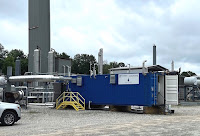
Pilot Carbon plant in Arkansas (US)
Pilot plant in Arkansas
Aqualung is trialling its novel carbon capture technology on a generic gas-fired boiler, and for safety reasons it is necessary to continuously check for non-combusted hydrocarbons in the boiler’s emissions. Measurement data are continuously fed to the on-site PLC, and the plant would be automatically shut down if unacceptable levels of hydrocarbons are found in the exhaust. Potential causes would be the boiler’s flame failing or the boiler management system failing to shut-off the fuel gas.

“We trialled a number of gas detection solutions, but they all failed,” explains Aqualung’s project manager Jonathan Garbett. “This represented an important challenge because the project could not proceed without gas safety detection in place, so there was an urgent requirement to find a reliable solution. During our research, we came across an article which described Signal’s gas analysis expertise, so we visited their facilities in Camberley (GB).

“During our visit, we explained the situation to Signal’s MD, James Clements, who said that there were two possible sources of error. Either the analysers that we had tried were unable to handle the conditions, and/or the sample handling method was inadequate.

“It transpired that the measurement of combustion emissions is a particular speciality of Signal’s, so they recommended a complete sample handling and analysis system, and given the urgency of our requirement, we decided to rent the equipment immediately.”

Carbon capture on a gas-fired boiler.
The pilot plant is designed to evaluate Aqualung’s carbon capture technology, and was built by a partnership between Aqualung Carbon Capture, Standard Lithium, a technology and lithium project development company, and Mission Creek Resources, the owner and operator of the natural gas processing site.

Standard Lithium is investigating the potential of Aqualung’s carbon capture technology as it seeks to build on its strategy for sustainable development; focusing on minimising all CO2 emissions that may result from its future operations and related supply-chain activities. The company has also identified several areas where CO2-rich gas streams may be used to optimise its process and reduce reagent costs, as well as potentially sequestering CO2.

In a 2021 Standard Lithium press release, President and COO Dr Andy Robinson said: “We are very pleased to be working in partnership with Aqualung and Mission Creek on this exciting project; the future of the lithium industry rests on being able to produce sustainable battery-quality chemicals with the lowest carbon footprint. We feel that successful proof of this carbon capture technology in southern Arkansas may demonstrate another important technological step towards making the Gulf Coast region an industry-leading producer of sustainable lithium chemicals.”

Unique carbon capture technology.
Global urgency to reduce greenhouse gas (GHG) emissions, whilst maintaining vital infrastructure and energy resources, means that there is an enormous demand for technologies that can capture GHGs such as CO2. As a leader in membrane carbon capture, Aqualung is seeking to accelerate the decarbonisation of heavy industry and transport.

Explaining the advantages of Aqualung’s membrane technology, Jonathan Garbett says: “Traditional carbon capture techniques such as absorption with amines are relatively expensive, with a requirement for amine, heat and a steady stream, so they are only used commercially in larger applications. In contrast, our patented membrane technology requires less power and works well on smaller, de-centralised plants. No raw material, such as monoethanolamine, is required, and we are able to handle lower CO2 concentrations. However, the product is completely scalable so it can be applied in a wide variety of applications.

“Many of the advantages of our technology are derived from the unique characteristics of the membrane and the selectivity of the nano-film coating Aqualung applies which provides a constantly renewable carbon capture capability.”

Membranes are simple systems, analogous to filtration, which enable gases like CO2 to permeate much faster and in larger quantities than other gases such as N2, O2 and CH4, due to the nature of the separation material. Aqualung membranes are in dynamic equilibrium, using the partial pressure differential across two sides of the membrane to constantly separate the gases from one side to the other. Aqualung’s membrane also encompasses CO2-reactive groups and mobile carriers which provide facilitated transport.

Reliable gas measurements.
The gas analysis equipment from Signal Group was initially rented for a few weeks. “The system worked very well, with no problems at all,” explains Jonathan Garbett. “We therefore purchased the equipment in late August 2023, and look forward to demonstrating the unique advantages of our technology, and working with our partners to optimise both carbon capture and CO2 utilisation.”
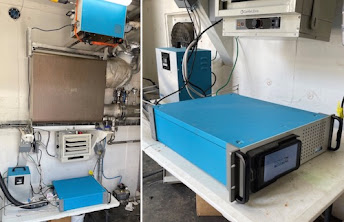
The installation of Signal Group Analysers at plant
Signal’s gas analysis system included an S4 SOLAR heated FID VOC analyser with a heated line and model 346 front-end filter. In most countries, FID (flame ionisation detection) is the standard reference method for the measurement of total hydrocarbons, and the sampling handling system is designed to ensure that the sample being delivered to the analyser is truly representative of the emissions, with no possibility of condensation in the sample line, or the analyser.

Expressing his enthusiasm for this project, James Clements says: “This is an ideal application for our equipment, and we were pleased to learn that our gas analysis equipment had enabled the project to proceed. However, it was particularly gratifying to be able to make a significant contribution to a project which is seeking to not just capture CO2, but to also utilise a local sink for the captured gas in the battery metal industry, which itself is helping to decarbonise transportation globally. This project is a great example of a win/win in the battle against climate change.”


@GasAnalysers @StandardLithium @_Enviro_News #PAuto #Environment

Tuesday, 7 March 2023

Inspecting batteries production.

Ametek Surface Vision has developed its high-performance inspection systems to overcome the challenges in battery production processes to improve quality and reduce defects.

Volker Koelmel, Global Manager - Plastics, Paper and Nonwovens said: “Our systems have been developed using decades of expert applications knowledge and are highly customisable for many different applications. This means they are ideal for battery production, where the identification of defects is critical.”

As battery technology expands and grows to meet the demands of industries, particularly electric vehicles, Ametek Surface Vision’s surface inspection systems help by delivering accurate real-time surface inspection and monitoring for applications including lithium-ion battery cell electrodes, solid-state batteries, and fuel cell components.

During battery production, surface inspection technology is essential to rule out problems and defects, improving quality and safety and reducing customer claims. A highly sophisticated optical set-up, combined with a powerful detection algorithm and a multi-step classifier, helps to ensure that battery producers can distinguish non-quality-related optical effects from defects in battery production

Based on the SmartView platform, Ametek Surface Vision’s customizable, modular inspection system uses streaming high-definition video, advanced LED illumination, highly sensitive line scan cameras and process control equipment. It also utilises powerful algorithms for detection and classification for proven, high-quality results.

@surfacevision #Automotive #Manufacturing