Showing posts with label Testing. Show all posts

Tuesday, 27 January 2026

Transceiver group.

The SIG (Special Interest Group) 48-V transceiver testing has been established by Can in Automation (CiA). The scope is the development of specifications related to CAN-based and LIN-based networks in 48-V supplied systems. This includes test plan specifications for 48-V physical media attachment (PMA) sublayer implementations.

The automotive industry is going to completely supply passenger cars with 48 V. The benefit: thinner power supply cables, reducing the wire harness weight. On the other hand, in-vehicle networks need to withstand higher voltage shorts. Loss of ground (GND) is also an issue. This means, PMA sublayer implementations such as PHYs, SBCs (system base chips), and stand-alone transceivers must not be destroyed by shorts.

The CiA specifications will extend the existing requirements given in ISO 11898-2 (CAN) and ISO 17987-4 (LIN). Additionally, CiA will specify related test cases for 48-V shorts and loss of GND. The SIG is chaired by Marko Moch, working with Cariad, a VW Group member (pictured).


@CANopen #Automotive #Communications #Standards

Wednesday, 13 August 2025

Co-operation for OTA testing for devices.

Microwave Vision Group (MVG) and Anritsu announce the availability of a joint testing solution supporting Over-The-Air (OTA) validation of Non-Terrestrial Network (NTN) communications for Mobile and IoT devices. MVG has adapted its multi-probe OTA systems to integrate the capabilities of Anritsu’s Radio Communication Analyzer MT8821C, delivering a lab-based environment for realistic satellite link emulation in compliance with 3GPP requirements.

As NTN deployments gain momentum particularly through LEO satellite constellations Mobile and IoT devices must now demonstrate robust performance under conditions that differ significantly from terrestrial operation. These include Doppler shift due to satellite motion, increased signal propagation delays, complex network reselection mechanisms between satellite and ground networks, and roaming across regulatory domains. Emulating these variables accurately in the lab is critical to ensure device readiness and reduce dependency on field trials.

To address this challenge, MVG has configured its OTA systems such as the SG system and StarLab to host Anritsu’s MT8821C as the core signal generation and analysis platform. The MT8821C, widely recognized for its reliability in LTE and IoT testing, brings advanced RF and protocol capabilities into MVG’s controlled OTA measurement environments. This allows manufacturers to evaluate critical metrics such as Total Radiated Power (TRP), Total Isotropic Sensitivity (TIS), and receiver sensitivity under satellite-like test conditions.

MVG's OTA Product Manager, Sebastien Gaymay, highlights a crucial benefit: 'By adapting our test chambers to operate with the MT8821C, we're giving R&D teams the ability to emulate key NTN communication scenarios directly in the lab.' This, he adds, 'enables earlier debugging and faster development cycles for satellite-capable Mobile and IoT devices.’

The MT8821C supports a wide frequency range and provides stable, high-throughput RF testing for LTE, LTE-Advanced, Cat-M1, and NB-IoT terminals. Within the MVG system, it enables synchronized measurements through WaveStudio software, allowing test engineers to simulate and assess device performance under realistic NTN conditions aligned with 3GPP TS 36.521-4.

Toshiya Otowa, Manager of Solution Marketing Department, Mobile Solutions Division at Anritsu, says,'Thanks to our collaboration with MVG, we are now able to conduct testing of NTN-compatible mobile and IoT devices under conditions that closely resemble real-world environments. Thereby, we are pleased to contribute to the realization of a truly connected society enabled by NTN technology, where connectivity is available anytime, anywhere.’

This solution is particularly suited to OEMs and integrators working on global asset tracking, remote monitoring, and industrial IoT applications—areas where NTN networks will be key to expanding coverage. It also facilitates testing against network specifications such as those defined by Skylo, helping vendors verify performance and readiness for deployment on commercial NTN services.


@Anritsu @AnritsuEMEA @NapierPR  @microwavevision #TandM #Communications 

Friday, 16 May 2025

Desktop and lab control design prototyping and testing.

The latest addition to Speedgoat's portfolio of real-time target machines has been launched. The Pulse test system is designed for control design innovation and hardware-in-the-loop (HIL) testing in automotive, aerospace, and other industries that demand versatility. The solution supports engineers working with an agile process, accelerating development iterations.

"Innovation depends on being able to experiment and adapt quickly to changing conditions. With the new Pulse real-time target machine, we empower engineers to prototype, test and bring their projects to life faster and with ease," says Speedgoat CEO, Martin Stoller.

The new test system is best suited for control design innovation, and entry- and component-level hardware-in-the-loop testing in a desktop or lab environment. For control design applications, it acts as a prototype controller on which users can run control designs for development and testing. In HIL applications, it runs the digital twin of the component or sub-system with which the controller under test interacts. Users can switch seamlessly between desktop simulation and real-time testing.

"For control design innovation and entry- and component-level HIL testing, the Pulse real-time target machine offers control and test engineers in automotive, aerospace, and other industries a compact and scalable platform. They can trust it to empower rapid innovation and deliver reliable test results," continued Martin Stoller.

For evolving and changing I/O requirements, users can easily expand the Pulse real-time target machine on their own with up to eight I/O modules. The new test system supports a wide range of I/O connectivity and protocols.

It offers seamless integration with MATLAB® and Simulink® Real-Time™ from MathWorks® for model-based design workflows.

The Pulse real-time target machine comes with a multiprocessor system-on-chip (SoC) which includes both a CPU and an FPGA. With the FPGA, engineers can run real-time applications at closed-loop sample rates in the MHz range.

It comes is delivered fully assembled, configured, and ready for use. It also comes with an extensive set of quality services. Jump-start workshops and training modules are available.


@SpeedgoatRTS #TandM #Automation

Thursday, 6 March 2025

High fidelity software validation at faster speeds.

Embedded Software Test for Hardware-in-the-Loop Engineers improves time-to-market while reducing costs.

The launch of the NI LabVIEW+ Suite for HIL has been annoinced by Emerson. This is a powerful new software solution designed to address the growing needs of engineers developing and testing embedded software. Tailored specifically for hardware-in-the-loop (HIL) customers, LabVIEW+ Suite for HIL brings together test, validation and data analysis tools in a unified platform to streamline workflows and accelerate time-to-market.

“This suite delivers the most comprehensive software stack available on the market for HIL engineers” said Rudy Sengupta, vice president and general manager of test and analytics software at Emerson’s test and measurement business. “Using the NI LabVIEW+ Suite for HIL, users can achieve greater test coverage, reduce development time, and lower costs – all while ensuring the flexibility to adapt to future testing requirements.”

NI LabVIEW+ Suite for HIL is a comprehensive software bundle that provides engineers with the essential tools to simulate complex conditions that would otherwise be difficult to replicate. The suite enables engineers to reuse modular components and leverage NI’s Switch Load and Signal Conditioning hardware for edge case detection across test systems. Engineers can easily upgrade their systems as new technologies emerge and customize software models to meet ever-changing requirements.

Embodying Emerson’s open, software-defined, intelligent test approach using modular hardware, NI LabVIEW+ Suite for HIL enables customers to adapt quickly to new challenges. As product designers shift functionality away from electromechanical systems toward embedded software, there is a greater requirement for rigorous testing through a continuous integration process. The HIL strategy enables significant savings in both time and resources while enhancing product reliability across industries such as automotive, aerospace and electronics.

The new suite adds value to Emerson’s existing HIL user base and new adopters of the platform by streamlining their workflows and future-proofing their designs against the evolving complexity of next generation products. It includes key development software such as NI VeriStand, NI LabVIEW, NI LabVIEW Real-Time, and NI LabVIEW FPGA, which have been available in previous bundles, and adds two software products with new native integration capabilities launched in 2025: NI TestStand, enables automation of complex test systems to meet the rising demand for efficient and scalable testing solutions.

NI DIAdem, allows advanced post-process data review and analysis, ensuring engineers can make informed decisions quickly.


@EmersonExchange @Emerson_News @EMR_Automation @NIglobal @Publitek #TandM #PAuto

Monday, 25 November 2024

Flash and test partnership.

JOT Automation has announced a new strategic partnership with ProMik GmbH, aimed at supporting the electronics manufacturing market with new and innovative testing solutions, and reinforcing the positions of both companies in the European and U.S. markets.

ProMik specialises in flash programming and testing of electronic components, PCBAs and electronic products, brings their industry-leading applications and technologies to supplement JOT Automation’s state-of-the-art solutions, such as the M Test Boxes. Together, JOT and ProMik are pushing the standards for electronics testing and flashing in particular.

"We are very thrilled to join forces with ProMik to develop and bring to market the technologies and innovation together. Integrating ProMik’s flash programming solutions to our M Test Boxes is creating some of the quickest, well-rounded and cost-efficient test solutions – in-line or stand-alone – on the market for electronics manufacturers across the globe," said Mika Puttonen, Product Manager at JOT Automation.

Alexander Rosenberger, CTO at ProMik, holds out the prospect: "By integrating ProMik’s cutting-edge flash programming technology with JOT’s state-of-the-art automation solutions, we are perfectly positioned to address the growing complexities and demands of future ECU production. Together, we offer an ideal partnership, providing a comprehensive solution that meets the evolving needs of the industry."


@PresseBox #JOTAutomation #ProMik #TandM

Wednesday, 9 October 2024

Which one of 18 million ways to detect air leak?

Teledyne's Daryll Taylor helps in looking for advancements on the soapy water technique.

Daryll Taylor
The other day I performed a Google search for ‘How to detect an air leak’. Not surprisingly it came up with millions of results, over 18 million in fact.

Whether solving the problem in a commercial establishment or a domestic home environment, the majority of search results pointed to one solution. Namely, soapy water!

Before we all ridicule the idea as belonging to a bygone era, take a vehicle with a slow puncture to a tyre fitting depot and the chances are they remove the wheel and spin it in water to determine the leak. It’s a simple time proven method for determining leaks from pressurised systems.

But of course, not all equipment can be placed in soapy water. What if a system is known to be losing pressure and yet the lines carrying the compressed air from the source are located 10 metres above the ground, and dismantling the system is out of the question? Thankfully there is a fast and effective solution to hand.

Each time air or indeed any gas, leaks from a pressured system there is an associated sound. If the leak is significant, it can be audible to the human ear and therefore easily identified and rectified accordingly. However, most leaks in high pressure systems are extremely small and are out of the range of a human ear.

Think about a pressured air system on a large factory delivering compressed air from a bank of compressors to various stages of production throughout the manufacturing process. The chances are there are hundreds if not thousands of connections in the form of joints, reducers, valves, elbows, condensers etc. Each of these has the potential to leak small amounts of air, reducing the pressure of the system.

One leak might make very little difference but multiply this by the number of potential leaking joints and efficiency can be significantly compromised. The compressor will seek to compensate for any pressure loss by simply working harder. However, as any engineer will know, compressors can be expensive to operate in terms of energy and therefore will certainly increase an operators energy consumption.

With electricity costs being so much higher in Europe due to geopolitical factors in recent years, most companies are seeking to reduce the amount of energy used. Having a compressor work overtime to compensate for leaking joints is certainly not something senior management would smile about!

These scenarios are certainly not uncommon, in fact one European compressor manufacturer has stated that in some industrial settings, up to 80% of air generated is lot in leaks. So clearly identifying these small leaks can make a real difference to a company’s energy bills.

Although the sound produced by a small leak is inaudible to the human ear a high performance acoustic imaging camera such as the FLIR Teledyne Si2 – LD will have absolutely no problem identifying the source. Launched earlier this year the camera is capable of detecting leaks of 0.05 litres per minute at a distance of 10 metres, meaning those elevated air lines pose no problem for this latest instrument in the FLIR acoustic imaging camera line up.

For closer work the camera is even more sensitive and can detects minute leaks of 0.0032 litres per minute at a distance of 2.5 metres. Coupled with this improvement, the third-generation camera has improved microphones now capable of detecting sounds over an extremely wide frequency range, namely 2 – 130 kHz.

Areas of plant are often dark or dimly lit. for this reason FLIR have fitted the FLIR Si2-series of cameras with two powerful LED lights to make component identification easy even in poorly lit conditions.

Of course, it’s not just compressed air that the camera is capable of detecting; noise emitted by any escaping gas is identified by the powerful microphones. However that’s only part of the story.

The FLIR Si2-LD has built in software termed Industrial Gas Quantification. If the leaking gas is ammonia, hydrogen, helium, or carbon dioxide, very commonly used gases in a number of industries, the software is capable of quantifying the financial loss caused by the leak. By simply entering factors such as the cost per litre, the software identifies the amount each leak is causing over a given period of time. Such data is invaluable to financial analysts and senior management within an organisation.

It goes without saying that the financial considerations are only one aspect of leaking gas. The gases mentioned above all carry significant health hazards and can present a variety of dangers to personnel if allowed to leak for any period of time. Ammonia and carbon dioxide can cause serious breathing problems and asphyxiation even in smaller concentrations, whereas hydrogen can explode in the presence of oxygen. Clearly the cost of such problems goes way beyond any financial considerations.

We’ve come a long way since the ‘soap and water’ approach. See how the latest technology from FLIR Teledyne can help in reducing downtime, lower energy bills and improve safety in your organisation.


@flir @mepaxIntPR #TandM #PAuto

Tuesday, 8 October 2024

Software verification.

The latest release of TrustInSoft Analyzer 2024.10 (TISA), which includes new and substantially updated features that streamline software testing workflows has been announced, significantly accelerating the testing process while ensuring compliance with strict industry safety and security standards.

“In today's fast-paced software development world, ensuring code reliability, security, and compliance is more critical than ever,” said Caroline Guillaume, CEO of TrustInSoft (right). “The rapid onset of software-defined services in many aspects of manufacturing, industry, and business demands software that is guaranteed to be error free. Using formal methods modelling techniques, this latest release of TISA ensures software safety, reliability and security like no other analyzer available today.”

Among several new features in the latest version of TISA is its improved GUI, which enables users to quickly create and configure projects.

The GUI also enables users to manage and track progress across multiple projects from a single interface and organize their analyses parameters more effectively. Easy access to project settings, analysis configurations, and results also make it easier for teams to collaborate and stay organized.

This version of TISA addresses the need for smarter, faster, and more automated verification tools with the inclusion of assisted analysis setup, which provides step-by-step, user-friendly guidance for configuring the analysis environment. This avoids common configuration errors by ensuring that every critical analysis and verification parameter is correctly set. This not only reduces the likelihood of errors during setup, but it also introduces additional functionality that further improves verification precision.

New drivers are automatically generated based on selected entry points and call conditions and users can easily view their lists in the tabular view of analysis, which simplifies the process and ensures comprehensive coverage of the code being analyzed. Building on the foundation of the assisted analysis setup, an automated analysis tuning feature offers suggestions for fine-tuning analysis parameters based on project specifics, reducing the need for deep manual intervention.

Additionally, a dynamic parameter adjustment tool analyses project context and recommends changes that further enhance precision and performance; and an improved accuracy feature ensures that the analysis is specifically tailored to the needs of the project. This release also delivers significant enhancements to the analysis of C++ programs. In testing, overall analysis time was reduced by 75 percent, further evidence of TISA’s ability to quickly and effectively process complex codebases.


@TrustInSoft @NapierPR  #Software #Testing 

Thursday, 15 June 2023

Reliable power analysis for automotive customers.

To meet its requirements, ATESTEO chose the Yokogawa WT1800E, a modular power analyzer which offers up to six input channels, as well as a wide range of display and analysis features, and PC connectivity.

Companies offering drivetrain testing services need to be flexible. With potential customers ranging from suppliers of specialist components for the powertrain or transmission, right up to the world’s leading car manufacturers, they need adaptable test solutions that can be quickly broken down and rebuilt to meet the needs of each customer. This was the type of test solution required by ATESTEO of Kassel, Germany to equip its automotive test beds.

As well as adaptability and ease of set up, ATESTEO was also looking for a solution that offered high accuracy and reliability.

The WT1800E meets ATESTEO’s needs with a guaranteed power accuracy of 0.05% of reading plus 0.05% of range. It is capable of harmonics analysis up to the 500th order of a 50/60 Hz fundamental frequency. The instrument also offers high stability, ensuring that precision measurements can be made reliably with the WT1800E today and over the long term.

ATESTEO is an independent automotive- testing services provider with over 170 test benches across nine locations in Germany, USA, China and Japan. The company provides a wide range of drivetrain testing services, including noise, vibration and harshness (NVH) measurements and environmental simulation, as well as tests of an entire vehicle on a dynamometer or on the road.

ATESTEO’s engineers can use the WT1800E to make simultaneous measurements on up to six inputs at a rate of 2 MS/s; all current and voltage measurement inputs are synchronized. A mechanical channel can acquire either analog or pulsed signals.

The built-in motor evaluation capability is ideal for their testing regime as it means that it can measure more than just electrical parameters: measurement of rotation speed and direction, torque, mechanical power, synchronous speed, slip, electrical angle, motor efficiency and total system efficiency can be derived from the analog or pulse outputs of rotation and torque sensors.

Tey also opted for the Yokogawa DL950 ScopeCorder, which captures and analyzes a wide variety of electrical and physical sensor signals and serial buses. It combines high sampling rates for a detailed view with long recording times to monitor trends over time. The DL950 measures signals at high resolution and secures data in the harshest environments with superior noise immunity and isolation technology.

Andreas Olf, Branch Manager at ATESTEO’s Kassel facility, says: ‘Underpinning ATESTEO’s service is our confidence that the measurement values that we supply to customers for efficiency, power output, NVH and the rest are true and accurate. That is why we choose to use Yokogawa products for power analysis. Over many years of operation, we can see the results from the Yokogawa equipment are stable, accurate and reliable, and so we have no hesitation in continuing to rely on the WT1800E and DL950.’

@Yokogawa, @Yokogawa_EU, @Yokogawa_Europe @ATESTEO_GmbH @NapierPR #Automotive #TandM

Wednesday, 1 June 2022

Ensuring audit on time!

Alkali Environmental has been awarded UKAS and MCERTS accreditation for its emissions testing services. However, just three weeks before the MCERTS audit, a vital piece of the company’s in-house instrumentation required urgent service and repair, so the company faced the very real prospect of having to defer the audit.

Ready for action!
“UKAS and MCERTS accreditation are pre-requisites in many of our target markets in regulated processes and combustion plants,” explains Alkali Director Paul Adamczyk. “So, we were anxious to demonstrate full technical compliance for the key pollutant species and their calibration, during the audit. Conscious of current lead times for spare parts and service work, we were therefore extremely nervous. The instrument was a Signal Group 821S Gas Divider, which is an essential tool in our calibration work, so we made an urgent, and somewhat nervous, call to Signal.

“Happily, they completely understood our predicament, and promised to turn the repair around as quickly as possible. We therefore drove the instrument from Leeds to Signal’s factory in Surrey, and were absolutely delighted to have it returned to us within 22 hours!

“The gas divider had previously provided over three years of problem-free operation, so we were already very happy with Signal Group, but we were incredibly impressed with their rapid response to our request, and we are now looking to invest in more Signal equipment, such as their NOXGEN 3 NOx Converter Efficiency Tester.”

The Cert on time!
Alkali Environmental is one of Britain’s fastest growing stack testing companies. Paul says: “Our success is built on the experience and expertise of our staff, coupled with a comprehensive fleet of analytical equipment. In fact, we have more analysers than people!

“As an independent company, we are able to deliver a fast, reliable service and with a revolutionary cloud-based data management and reporting system, we are able to set new standards in response times and data quality. However, this high level of service can only be achieved with a comprehensive instrumentation capability, so we are fastidious in our selection of partners.”

@_Enviro_News @AlkaliLimited #Environment #Testing

Thursday, 28 April 2022

Testing of commercial and prototype eSIM devices.

Anritsu Corporation and Comprion have announced the availability of downloadable 5G and 4G eSIM test profiles for use with Anritsu’s MT8000A Radio Communications Test Station and Rapid Test Designer (RTD) application software.


An increasing number of mobile device manufacturers are integrating embedded SIMs (eSIMs) into their products, whether phones, tablets, wearables or IoT devices, both for flexibility and to save valuable physical device real-estate. However, because eSIMs are non-removable, it is now more difficult to set-up communication testing between the mobile device and a network simulator in the lab.

Previously, test labs and handset manufacturers used a physical Anritsu Test SIM to configure the mobile device so it could be tested with the Anritsu network simulator. However, since there is no longer a card slot for eSIM-only devices, the device's configuration must instead be digitally loaded onto the mobile device-under-test via an Anritsu-specific eSIM test profile.

This is now also possible for prototype and commercial eSIM devices via the Comprion eSIM Test Profile Service. Comprion and Anritsu have jointly developed the necessary test profiles to test the mobile devices using the Anritsu MT8000A network simulator for the RTD 5G and 4G protocol test software environment in the R&D lab.

The Comprion eSIM Test Profile Service is fully GSMA SAS compliant and available online via a subscription service. It includes a repository of eSIM test profiles as well as a GSMA-standardized Remote SIM Provisioning service to deliver the test profiles to eSIM devices.

“The combination of a repository of eSIM test profiles and a GSMA-standardized and SAS-compliant Remote SIM Provisioning service to deliver Anritsu specific test profiles to eSIM devices is unique in the industry and makes testing easier, faster, and more cost-effective, significantly reducing time-to-market." says Dr. Marcus Dormanns, Lead Innovation Manager at Comprion.

Anritsu’s Marketing Director Kevin Ingrams added,  “ANRITSU is delighted that once again it is extending its successful long-term collaboration with Comprion to deliver market leading eSIM test solutions to its customers in order to keep them at the forefront of latest technology”.

@Anritsu @AnritsuEMEA @COMPRION @NapierPR #TandM #Telecommunications  

Wednesday, 27 April 2022

New development chassis.

Flexible, cost-effective platform for open-standards-based application development, integration, testing, and demonstration.

The new DEVPX3 development chassis, from AMETEK Abaco Systems, is aligned to both OpenVPX and SOSA™ standards, providing a flexible, cost-effective platform for open-standards-based application development, integration, and testing. The chassis helps you maintain a robust, fast-paced development program by being able to quickly demonstrate and prove the end capability of your 3U VPX solutions at a system or board level.

The lab-ready DEVPX3 development chassis allows sensor and system solutions providers to shorten lab and demonstration schedules by providing a fast and efficient way to stay up to date on VPX advancements from Abaco and its partners. By re-using existing boards or purchasing economical in-stock air-cooled variants, software and firmware time to market is also shortened.

With eight individual slots, the DEVPX3 supports both conduction and air-cooled Abaco 3U modules aligned to OpenVPX and SOSA standards. The open frame and backplane are quickly configured with off-the-shelf cabling or rear transition modules.

“The DEVPX3 OpenVPX development chassis gives our customers an easy and economical way to solidify and accelerate their own systems as well as enable future products and programs,” says Pete Thompson, vice president of product management, Abaco Systems. “The introduction is yet another example of how Abaco supports our customers by providing exactly what they need from board to lab to rugged production solutions.”

@AMETEKInc #Laboratory 

Monday, 28 March 2022

Expanded testing and troubleshooting IP networks .

The LinkIQ™ Cable+Network Tester has been upgraded to expand the tester’s ability to test and troubleshoot IP networks, and support users in 12 languages. This new software is shipping in all new LinkIQ units and is available as a free upgrade to existing customers*. 

While systems integrators and network administrators need to verify cabling performance to ensure network performance, they also need to ensure that the user’s traffic can reach its destination,” stated Robert Luijten, Field Marketing Director, Fluke Networks.

“Our network test features give these professionals visibility into network connectivity and response time of key resources, allowing them to verify and troubleshoot end-to-end network issues.”

The new release includes:

  • Expanded network testing – With version 1.1, customers can now verify connectivity and response time to key network devices with one touch of the screen. LinkIQ can now be configured to perform IPv4 or v6 ping tests and will display the response time for four pings to a target device of the user’s choosing. The test results display the DNS and DHCP servers and the gateway router. LinkIQ also displays the IP address of the nearest switch. The new version of LinkWare PC includes this information in its test reporting.
  • Two-pair cable tests – Cable performance tests up to 100 Mb/s can be specified for two-pair cables, widely used in industrial environments.
  • Language support – The LinkIQ user interface now supports 12 languages.
  • Reporting – A new version of the LinkWare™ PC software, the industry's de facto reporting solution, is also available. This new version provides reports including the expanded network testing, allowing users to document their work.

The 1.1 software release is available in the LinkIQ Cable+Network Tester, which can be purchased from Fluke Networks resellers worldwide or on-line.

* Current owners can access and download the new firmware and LinkWare PC from the Fluke Networks website here.


@FlukeNetDCI @FlukeCorp @NapierPR #TandM

Tuesday, 1 March 2022

Thirty years a testing!

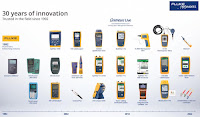
In celebration of Fluke Networks being trusted in the field since 1992, it is offering all customers up to 30% discount on 30 popular fibre testing products.

Fluke Networks launched its first tester in 1992, sticking to what professionals had come to expect from Fluke—a rugged, reliable, and portable tester with advanced measurement capabilities. The company will celebrate by giving new and returning customers a deal on 30 of their most popular fibre products.

Robert Luijten, Field Marketing Manager EMEA at Fluke Networks has been with the company for 25 years: “I have worked at Fluke Networks since the entrepreneurial early days, through to the established player we are today. Customers love what our products can do for them, and I am proud to represent a company that delivers value for its customers this way. Fluke Networks has delved deep into the intricacies of fibre-optic networks systems, to develop fibre inspection products for professionals with ease-of-use and accuracy at the heart of their design.”

How it started
In May 1992, Fluke leaders set a mandate to a small internal team to find a new business opportunity. The team was given 100 days and $100,000 along with the authority to employ anyone in the company to help them in their efforts. Soon, a team of about a dozen set out on their mission with a determined focus on the communications market, specifically, Local Area Networks. Fluke Networks’ first cable tester launched in December 1992.

Today’s Increased demand

Rugged, accurate, & easy to use, Fluke Networks
fibre tools have been the go-to for network
cabling installers, architects, technicians and
engineers since 1992.
Fibre optic cabling is increasingly preferred in the marketplace for use with innovative technologies and is the core of today’s datacom networks as demand for bandwidth increases. As network installation accelerates, the need for fibre testing and certification has also grown at a substantial rate. Fibre certification tests per TIA/EIA or ISO/IEC standards, when installing or upgrading fibre networks, are the best way to prevent problems.

Professional Network Tools Anyone Can Use
Rugged, accurate, and easy to use, Fluke Networks fibre tools have been the go-to for network cabling installers, architects, technicians and engineers since 1992.

Fluke fibre testers provide network professionals with the ability to reduce the time spent identifying the root cause of a fibre problem allowing them to be more profitable. Contaminated connections remain the number one cause of fibre related failures in data centres, campus, and other enterprise or telecom networking environments. Fluke fibre testers measure fibre length and optical loss, provide an instant PASS or FAIL indication, troubleshoot problems in fibre connections or help inspect fibre cabling to locate contamination.

Delivering value
In 2013, Fluke Networks introduced a revolutionary product that reduced cabling installation and maintenance costs by 65%: the Versiv™ Cabling Certification System. Cabling infrastructure market leaders in Britain, Redstone, almost upon availability upgraded their fleet to Versiv™ from the DTX and reported great efficiencies for their installation and maintenance technicians. Roger Stevenson, Service Director at Redstone at the time reported, “One of the best features is ProjX™ which allows infrastructure installation teams to manage test lists with ease, beyond that it shows our customers that we invest in the best tool sets to deliver for their network”. It’s future-ready design supports copper certification, fibre loss, OTDR testing and as well as fibre-optic inspection. In recent years Versiv has been enhanced with Cat.8 measurement capability, a High Dynamic Range (HDR) OTDR and a MPO Fibre Inspection Camera.

@FlukeNetDCI @FlukeCorp @NapierPR #TandM #Calibration #PAuto

Wednesday, 10 November 2021

Testing automated and streamlined.

FDT Group™ has announced that all FDT Accredited Test Sites are equipped with the new FDT 3.0 dtmINSPECTOR5 test tool and are ready to accept new FDT 3.0 device DTMs for testing and certification.

The launch of the updated FDT 3.0 DTM certification process and supporting dtmINSPECTOR5 test tool has been finalized, allowing instrument suppliers to streamline development, testing, and certification to bring new web based DTMs to market. FDT 3.0 Web User Interface (UI)-based DTMs support next-generation monitoring and optimization practices by empowering standardized IT/OT data access to any authenticated client or mobile device, thus improving production workflow initiatives.

FDT DTM certification to the FDT 3.0 specification and UI is a process whereby rigorous compliance testing using dtmINSPECTOR5 ensures the viability of the states of the DTM; its correct installation, de-installation and multi-user environment capability; mandatory and optional user interface functionality and robustness; network scanning communication performance and the ability to import and export the topology; and the audit trail capability.

“Unlike previous versions of the standard, FDT 3.0 DTMs are required to be certified, while also meeting both specification and UI Style Guide conformance,” said James Loh, FDT Group test and certification chairman. “Compliant FDT 3.0 DTMs allow open access to intelligent devices and the myriad of information available from those devices, networks, and processes. End users will benefit from the new generation of DTMs as they provide monitoring optimization capabilities, including uniform data and NE107 status alerts to the user interface that employs a responsive design focused on mobilizing secure remote access independent of the device, system, browser, operating system, etc.”

The key to FDT 3.0-compliant DTM development is the use of FDT Group’s Common Components and dtmINSPECTOR5 toolkits. Toolkit licensing is required and provides all the standard code needed to meet FDT 3.0 specification conformance including OPC Unified Architecture (UA) capabilities, allowing developers to focus on value-add parameter profile customizations. Additionally, Common Components provides a fast way for development teams to view DTMs in an FDT hosting (Desktop or Server) application and understand the communication flow between them. With the toolkit’s WebUI, they can see how different DTMs work together across various machines and operating systems. The use of dtmINSPECTOR5 enables developers to run internal tests to identify technical issues prior to submitting their DTM to an independent test site for certification. The test site uses the same version of the tool to run conformance test cases and generate a report on their results.

Once a DTM is developed and has met all the mandatory testing and compliance requirements with a FDT Accredited Test Site, the certification files are compressed, digitally signed, and submitted via a private channel to the FDT Group Certification Office. The FDT Group uploads Certified FDT 3.0 DTMs to the FDThub repository for convenient storage and management. This repository, which can be hosted in the cloud or on-premise, is the result of user-driven demand for a single location to find certified DTMs and updates. The FDThub leverages the workflow from independent test centers to the FDT Group certification office so that all certified DTMs are automatically uploaded to the repository and made readily available to the end user community. This solution eliminates work for the vendor and is a key benefit stemming from the mandatory DTM certification process.

@FDTGroup #PAuto #TandM

Monday, 18 October 2021

Revving electrical vehicles.

Saietta Group Ltd is a research and development company which designs motors for light-weight electric vehicle (EV) propulsion. The company’s latest innovation is the ‘S-AC’ which is an ultra-efficient brushless axial-flux AC motor. It boasts extreme efficiency levels at high torques from low speed onwards.
S-AC is designed for mass manufacture and is optimised for light-weight electric vehicles such as scooters, motorbikes, quadbikes, rickshaws, small cars and marine applications. The primary target market is Asia where Governments are mandating the rapid transition for all forms of transport to electric propulsion to combat chronic pollution.

The unique motor architecture was designed by Saietta’s engineering team, based on Saietta’s DC axial-flux motor, which was originally developed by Cedric Lynch (Saietta’s Chief Scientist) who is internationally recognised as a pioneer in electric motor design. Saietta motors have been used to achieve multiple world-firsts on land, sea and air, including winning the first Isle of Man TT Zero all electric motorcycle race.

Saietta works with vehicle manufacturers to firstly understand in detail the specific motor requirements for individual EV applications and then engineers the S-AC technology to deliver tailored solutions. Saietta also provides engineering and integration consultancy for entire electric drivetrains.

Saietta’s Applications Engineering team is heavily reliant upon a set of test rigs that it has developed in conjunction with its Oxfordshire (GB) neighbour Sensor Technology Ltd. A lot of Saietta’s work is based on constantly refining and testing motor designs, moving toward an optimum solution for each application field. As engineer Chris Lines explains: “The switch from DC motors to AC means we are able to improve efficiency still further and reduce maintenance requirements because there will be zero brush-wear.”

The test rigs at the heart of Saietta’s development work are based on the principle of running two motors back to back, adding power to counter the losses and measuring efficiency. For this the engineers selected a TorqSense transducer from Sensor Technology, which operates wirelessly so that setting up between test runs is minimal because there is no need to reset delicate slip rings.

The operating principle of TorqSense is based on bouncing a radio signal off the rotating shaft of the motor under test and measuring the distortion in the return wave. To do this two tiny piezo electric combs are glued onto the shaft at right angles to one another. These are pulled slightly out of shape as the shaft rotates and thus disrupt the radio waves as they are reflected back.

“The amount of twist in the shaft is proportional to the torque of the moment,” says Chris, “so we get a direct reading. The fact that we do not have to hardwire the transducer to the shaft through slip rings means we can set up a test very quickly and reset everything just as quickly. If we had to adjust slip rings every time, our test programme would take far, far, longer to complete.”

TorqSense offers CANbus output options for in-vehicle applications, so is popular with many organisations developing drive trains for electric vehicles and also in other low carbon developments such as wind turbines and tidal flow energy.

@sensortech @DriveSaietta #Automotive #Test

Tuesday, 31 August 2021

Simultaneous dual-port 400GbE measurement & 200GbE.

The 400G Dual/100G Quad Channel Expansion MT1040A-020 option offers upgraded functions for Anritsu's popular Network Master Pro. 

Installing this new MT1040A-020 option in the MT1040A supports simultaneous dual-port 400G Ethernet (400GbE) measurements using a combination of two 400G measurement modules. As a result, since data Tx and Rx tests can be performed simultaneously, it is possible to both test networks as well as measure the latency and execute quality tests of 400G equipment efficiently using just one MT1040A unit. Additionally, testing of 200GbE used in data centers is also supported.

By upgrading the MT1040A functions to support 400GbE in response to customers’ requirements, Anritsu is contributing to the deployment and smooth operation of high-speed networks.

Development Background
With the start of 5G services and the spread of Cloud computing, as well as the rapid increase in teleworking, supporting increased network speeds and larger data capacities has become an urgent issue for communications network operators. As a result, demand for 400GbE is increasing as a means to cope with reinforcement of these networks. However, configuring stable and high-speed, large-capacity networks using 400GbE requires careful attention to key points, such as assuring the quality of equipment prior to constructing the overall network.

On the other hand, reducing network costs is a continuing requirement, while the increasing complexity of network functions and test items demands a test solution offering easy evaluation of network equipment.

Product Outline
The 400GbE Network Master Pro MT1040A is a portable tester for evaluating the communications quality of various network types operating at speeds ranging from 10 Mbps to 400 Gbps. With its stackable configuration of measurement modules, the MT1040A can support simultaneous dual-port 400GbE measurements using a combination of two 400G measurement modules, facilitating quality tests (BER, throughput, frame loss/latency, etc.) of 400GbE equipment. Moreover, in addition to supporting 400GbE, the MT1040A also supports 200GbE, offering network operators a cost-effective, all-in-one quality tester.

The useful, automatic, one-button test function for pass/fail evaluation of multiple test results cuts the test burden and reduces the need to support inexperienced operators performing complex on-site work. of network problems.

@Anritsu @AnritsuEMEA @NapierPR #TandM #Communications

Monday, 5 July 2021

Test station ensures latest 5G Release 16 Technology.

Anritsu has successfully verified a number of key 3GPP Release 16 features using its Radio Communication Test Station MT8000A in combination with Samsung Electronics’ System LSI Business latest 5G Exynos Modem.

Product Outline
The Radio Communication Test Station MT8000A is an all-in-one platform supporting RF and protocol testing, functional and application operation testing, beam characteristics testing and more. As well as supporting both NSA and SA-mode base-station simulation functions required for development of 5G chipsets and terminals, it also covers FR1 frequency bands, including 600 MHz, 2.5 GHz, 3.5 GHz, 4.5 GHz, and 6-GHz unlicensed bands, as well as the FR2 24 GHz, 28 GHz, 39 GHz, and 43-GHz mmWave bands, to support all the main bands used by 5G services. Additionally, MT8000A supports the functions required for high-speed communications, such as 4x4 MIMO in FR1, 8CC and 256QAM in FR2 as well as supporting the latest 3GPP Release 16 features. Furthermore, the MT8000A provides a versatile and efficient test environment that is easily configured using a simple user interface and software to test device performance.
5G NR Release 16 greatly expands the reach of 5G to realize new services, spectrum and deployments. It offers many enhancements to the fundamental aspects of the 5G system that further improve capacity, coverage, power efficiency, mobility, latency, reliability and more. Together these enhancements will enable benefits across a broad range of 5G use cases.

As part of a longstanding collaboration Samsung and Anritsu have together been focusing on integration and testing of multiple new Release 16 power saving features that can extend battery life, such as a new wakeup signal (WUS), enhanced cross-slot scheduling, UE Assistance Information and optimized UE radio capability signaling (RACS). In addition, Release 16 mobility enhancements such as Conditional Handover (CHO), Overheating Assistance Information, MDT (Minimization of Drive Test) and SON (Self Organizing Network) are now being integrated.

These latest collaboration results build upon other recent successes in 5G NR Release 16 feature testing, most notably FR1 + FR2 Dual Connectivity, demonstrating Anritsu’s commitment to the wider rollout of new 5G services in support of an expanding ecosystem by delivering market leading 5G test solutions for verifying compliance to the 3GPP mobile standard for 5G.

“Anritsu’s powerful test platform has once again helped prove the technology-leading capabilities of the Samsung’s 5G Exynos Modem,” said Jonghan Kim, vice president of System LSI protocol development at Samsung Electronics. “Our continued partnership with Anritsu will lead to early development and faster time to market (TTM) for our global 5G mobile device partners .”

On achieving this joint test result, Shinya Ajiro, General Manager of Test & Measurement Company, Anritsu Corporation said, “By offering our leading test solutions, Anritsu is happy to have collaborated with Samsung in development of its market-leading 5G products. We look forward to continuing our future partnership with Samsung in clearing the path for advanced 5G to contribute to building a happy and rich global culture through new wireless technology.”

@AnritsuEMEA @anritsu @Samsung @NapierPR #5G #Test #Telecomms

Thursday, 3 June 2021

Avoiding breaking glass.

Vaccine production in connection with the corona pandemic is running at full speed internationally, which is leading to a consistently high demand for pharmaceutical primary packaging made of glass. The quality and safety of the products continue to have top priority.

The new version of the  StrainScope Pharma Tester, from ilis gmbh for fast and objective measurement of residual stresses in pharmaceutical primary packaging offers a completely redesigned, compact housing and simplified handling through an integrated sample holder for reliable and repeatable results.

The breaking strength of glass products is strongly influenced by internal mechanical stresses. This is particularly important when the products are exposed to mechanical loads or strong temperature fluctuations. In the case of pharmaceutical primary packaging made of glass such as vials, syringes and ampoules, the constant testing and monitoring of residual stresses is therefore an important part of quality control - during production at the glass supplier, but also as an incoming inspection in the pharmaceutical industry.

The StrainScope Pharma Tester, specially developed for this measurement task, delivers objective and precise measurement results. An automatic device rotates the test specimen and thus reliably and reproducibly identifies the maximum value of the residual stress - in just a few seconds.

The convenient archive function ensures that all measurement results are fully documented.

@PresseBox #ilis #Pauto #Pharma #packaging

Tuesday, 13 October 2020

Testing and approving lab. samples efficiently.

FAR Chemical is using Matrix Gemini LIMS to improve the efficiency of its operations By significantly reducing the time taken to test and approve samples in the laboratory, the hold-times of products in the reactors have been cut and the efficiency of the entire operation improved.

Based in Palm Bay, (FL USA), FAR Chemical is a leading manufacturer of complex specialty chemicals. With a wide range of products, they have experience of manufacturing for the pharmaceutical industry including APIs raw materials and excipients, as well as advanced polymers, catalysts, and precursors for structural composites. In addition, they manufacture chemicals used in paints, foams, and adhesives, as well as custom chemicals used in flavors and fragrances.

Moving to a paperless approach has consolidated and rationalized laboratory data in a way that simplifies and speeds up QC operations. An approval loop that used to take 2-3 hours is now achieved in minutes, dramatically improving plant productivity. In addition, Certificates of Analysis are now available immediately on QC approval, and customer audits have been simplified, with required data available in a single location instead of spreading across multiple notebooks and other paperwork.

FAR Chemical configured the Matrix Gemini LIMS themselves after taking a one-week configuration course. “The graphical configuration tool built into Matrix Gemini LIMS allows us to change any of the screens in the workflows ourselves, to suit our evolving needs”, they say. “Efficiency of our QC laboratory has vastly improved. We rarely now have reactor vessels standing idle awaiting release of intermediate QC results before the next production steps.”

The increased productivity of the QC laboratory, linked to the increased efficiency of the manufacturing operations is proof enough that a more efficient laboratory operation can improve business performance and profitability. The consistent use of Matrix Gemini LIMS in FAR Chemical’s QC laboratory is a vital comp

The case study on this application may be downloaded here on the Autoscribe site.

@AutoscribeLtd #Laboratory 

Friday, 21 August 2020

Capacitive Accelerometers.

Silicon Designs has announced its high-performance, Model 2276 Series for zero-to-medium frequency aerospace and automotive testing, industrial vibration monitoring and robotics instrumentation applications.

Available in eight standard ranges from ±2 g to ±400 g, the single-axis Model 2276 Series combines an integrated low-noise, nitrogen-damped, fully calibrated MEMS capacitive accelerometer chip together with high-drive, low-impedance buffering. Sense elements are contained within an epoxy-sealed, rugged anodized aluminum housing. This design allows the Series to reliably withstand shock inputs of up to 5000 g, as well as standard operating temperature ranges from –55°C to +125°C. The accelerometers further offer superior bias performance, including a temperature shift coefficient of -100 to +100 PPM of span/°C, and a scale factor temperature shift coefficient of -150 to +50 PPM/°C. Model 2276 Series accelerometers respond to both DC and AC acceleration, with choice of either two analog ±4 V (differential); or 0.5 to 4.5 V (single-ended) outputs, both of which vary with acceleration. At zero acceleration, output differential voltage is nominally 0 VDC (DC response). Onboard voltage regulation also minimizes supply voltage variation effects.

All Silicon Designs MEMS capacitive accelerometers and chips, including dies, are 100% designed, manufactured, assembled and tested at the company’s state-of-the-art global corporate headquarters and R&D center, located just outside of Seattle, Washington. Each module is serialized for traceability and fully calibrated prior to shipment.

The high-performance, low-impedance design of the Model 2276 Series is ideal for vibration and acceleration measurements within industrial and commercial environments, particularly in applications where an accelerometer’s low mass (9 g) and small size (0.94" by 0.63" by 0.425") can help to minimize mass loading effects on the test article. Typical applications include aircraft flight and flutter testing, automotive RLDA, industrial vibration monitoring and analysis, robotics, biomechanics, industrial machinery and equipment control, modal and structural analysis, crash event detection, and general in-laboratory testing.

 #SDI @EmbassyGlobal #Pauto #Testing