Showing posts with label Food. Show all posts

Thursday, 11 December 2025

Fail-safe weighing processes enhanced.

The natural medicine manufacturer Salus has successfully migrated to Körber’s new NextGen PAS-X MES at its headquarters in Bruckmühl (D) and at its subsidiary Schoenenberger in Magstadt (D). Körber's PAS-X MES ensures precise, recipe-driven digital weighing and dispensing for the production of medicinal teas, tonics, cosmetics, and spices.

Salus' HQ
Salus had been using a customised version of PAS-X MES since 2018. As the underlying third-party infrastructure and technology components were approaching obsolescence, requiring high maintenance costs and losing access to security updates, the complete PAS-X installation needed to be replaced. The NTS Apollo ERP system had to be integrated, as did a level-2 interface to the automation level.

“To minimise risks and ensure the continuity of our production, we decided to migrate to the new NextGen PAS-X MES,” says Florian Müller, Project Manager at Salus. “Together with Körber, we formed a cross-functional team of internal specialists, Körber’s migration and ERP experts, and Kubernetes service provider SVA to guarantee a smooth implementation.”

Körber supports PAS-X migration projects with a structured migration approach, expert services and smart automation tools that reduce complexity, accelerate timelines and ensure compliance throughout the project.

By adopting a fully standardised PAS-X MES system, Salus has significantly reduced maintenance costs while increasing system flexibility. The IT infrastructure is now state-of-the-art, offering maximum cyber security. The ERP system is fully integrated with the MES through a dedicated interface.

In the next phase, additional level-2 interfaces will be implemented to connect further systems, ensuring seamless data exchange with PAS-X MES and supporting continued digitalisation of Salus’ production processes.


@WerumKarrierec #Koerber #Salus #PAuto #MES  

Friday, 17 January 2025

Packing dumplings!

The robotic packaging line for rolled dumplings is in three parts: blister pack production and supply, filling the blister packs with dumplings, and closing the packages.

Four hygienic robots pack up to 160 fresh potato dumplings per minute – without making contact with the dumplings at Friweika in Saxony (D). The concept, which is as unusual as it is efficient and hygienic, was developed and planned by KRÖNING-Automation and implemented with Stericlean robots from Stäubli.

Things tend to get busy at Friweika before Christmas and other holidays – in the most literal sense. The company produces up to 180,000 rolled dumplings every day. And that's just a small part of its product range, which also includes dumpling dough (up to 90,000 kg per day), ready-made fried potatoes, potato gratin, and other semi-finished potato products.

Friweika, short for “frische Weidensdorfer kartoffeln” (fresh Weidensdorf potatoes), was founded in 1970 and employs around 350 people in western Saxony. As is to be expected with these quantities, production is highly automated. Because ready-made dumplings are a rapidly growing product segment – keyword convenience – the company was faced with the task of increasing output in this production area.

The task was approached with KRÖNING in Dohna (D), a specialist in automation for food production which had designed several production lines for Friweika in the past.

The KRÖNING specialists are setting standards in various respects with the newly created production line. The system is relatively compact, achieves high output, and impresses with a top-level hygiene concept using Stäubli Stericlean robots, which are approved for aseptic production areas in the pharmaceutical industry. But more on that later.

The production process starts with the weighing of the dumpling dough: Each dumpling weighs around 100 grams. After portioning, it is shaped (rolled) and conveyed to packaging. At the same time, the associated packaging line produces blister packages with cavities for four or eight dumplings. In the last step, the packs are filled with dumplings on two parallel lines.

The automation experts at KRÖNING implemented a clever concept here: No contact is made with the dumplings during packaging. As Owner Marcus Kröning explains, “A robot picks up the blister pack and holds it at an angle at the end of the conveyor belt so that the individual dumplings fall directly into the cavities. Depending on the type of blister pack, the robot adjusts its position four or 10 times before the package is filled. The next step is to close the blister pack and transport it to the secondary packaging area.”

One of the great advantages of this solution is that the robot grippers do not make direct contact with the dumplings. This is good for the robots, as the dough doesn’t stick to their grippers, but it is also good for the dumplings, which the robots catch without making contact, thus avoiding any pressure marks caused by mechanical gripping processes.

Four TX2-90 robots in Stericlean design pack up to 160 dumplings per minute.

Up to 160 dumplings can be packaged per minute. Two robots work together on each line to ensure that this process can take place continuously, i.e. with no need for a buffer zone and without delays when changing the blister packs. While one robot places a filled package on the conveyor belt heading for the sealing station, the second robot grips an empty blister pack and the first dumpling is placed into it.

It is not obvious to use robots in such a production environment. According to Marko Wunderlich, a board member at Friweika, “Anyone who has ever made or processed potato dumplings understands: That dumpling dough is extremely sticky. This is because of its high starch content. That is why we have to clean our systems frequently and extremely thoroughly so that our high hygiene standards are always met in all areas of production.”

These requirements are so high that Friweika does not use the same cleaning agents usually found in food production to lather and then spray the robots and grippers. Instead, it uses hydrogen peroxide (H2O2), which is more likely to be used in even more sensitive sterile processes in pharmaceutical production. Because H2O2 also affects surfaces, the fully VHP-resistant Stericlean TX2-90 robots, with their specially treated surfaces, are not only the right choice, but almost always the only option.

The fully encapsulated kinematics with sealed vertical cable routing and use of NSF H1-rated food-grade oil also show that these robots were developed from the ground up for hygienically demanding applications in the food and life science industries.

In addition to meeting the highest hygiene standards, KRÖNING and Friweika also made the right choice in other respects: Stäubli robots are characterized by consistently high precision and impressive dynamics. Best of all, the robots achieve their full performance even when using food-grade lubricants, and do not have to be operated at reduced power.

A high level of vertical integration with their own precision gearboxes and a compact design are other favored design features. “This was also important to us, as space in the wet area of the dumpling filling line is limited,” says Marko Wunderlich.

All in all, the robot-assisted packaging line, which does not require direct contact between the robots and the potato dumplings, enables highly dynamic and precise production. In addition to guaranteeing compliance with the strictest hygiene standards, it offers increased productivity and consistent product quality from the user's perspective.


@PresseBox #Stäubli # Kroening #Food #Robotics

Thursday, 4 April 2024

Driving Sustainable Innovation in Northern Ireland's Industries.

Digital Catapult, Britain's authority on advanced digital technology, has launched a cutting-edge accelerator programme with Northern Ireland’s Department of Agriculture, Environment and Rural Affairs (DAERA) to support the region’s net zero ambition. The Tenfold NetZero Accelerator Programme will support three of Northern Ireland’s leading agriculture and manufacturing businesses to develop proofs-of-concept that will drive adoption of sustainable innovation across the region, and solve complex industrial challenges.*

LtoR: Neville Graham, Head of Farmer Services, Dale Farm; Sue McGuire, Senior Strategic Partnership Manager, Digital Catapult; Andrew Muir MLA, DAERA Minister; Fiacre O’Donnell, Sustainability Director, Encirc; Jason Rankin, General Manager, AgriSearch

The solutions set to be developed during the programme aim to reduce glass waste during the production of dark glass bottles and identify novel agricultural innovation methods to enable more accurate measurement and usage of nutrients using advanced digital technologies. The programme is now taking applications from the UK’s world class technology startup and SME community to support the development of these solutions working alongside Northern Ireland-based AgriSearch, Dale Farm and Encirc.

Speaking at the launch of the call for applications at Dale Farm in Belfast, Minister Andrew Muir, said: “I am delighted to be here today alongside local industry. Tenfold NetZero demonstrates how Northern Ireland’s public and private sector can work together to develop solutions that benefit industry, drive innovation, achieve green growth and hopefully create sustainable business models that can be emulated across DAERA’s sectors.”

The Climate Change Act 2022 sets an ambitious target to reduce Northern Ireland’s greenhouse gas emissions to Net Zero by 2050 and it is hoped the programme can deliver sustainable climate action solutions and help local business achieve net zero.

Sue McGuire, Senior Strategic Partnerships Manager at Digital Catapult, said: “Our goal is to ensure businesses of all sizes can achieve business growth and improved efficiency in their journey to net zero. The programme is a unique opportunity for industry to partner with the wider UK technology ecosystem and leverage emerging digital technologies through their insights, knowledge and skills.”

Participating technology solution providers will have the opportunity to access the ideal testbed for sustainable agriculture innovation, by working alongside leading Northern Ireland dairy cooperative Dale Farm and AgriSearch, the farmer-led research organisation.*

Neville Graham, Head of Farmer Services, Dale Farm said: “As a farmer-owned cooperative we are committed not only to reducing our carbon footprint, but ensuring that the 1,300 farmers who own Dale Farm have resilient, sustainable and profitable farm businesses for years to come. We are delighted to support this project alongside government and industry partners, as we explore how new technologies and digital transformation can help the agri-food sector move towards net zero.”

Jason Rankin, General Manager at AgriSearch, said: “This programme offers our network of farmers the opportunity to gain access to expertise in advanced digital technologies that they would never formally have access to and solve mass challenges across beef, sheep and dairy farming, and help achieve our goals to reduce costs, improve performance, drive innovation and improve welfare for primary producers.”

Encirc, a market leader in glass container design, manufacturing, bottling and logistics solutions, is also providing a rare opportunity for an SME to partner and feed into a global supply chain. Encirc’s Sustainability Director, Fiacre O’Donnell, said: “Our challenge is around quality inspection for dark coloured glass at our Northern Ireland plant and solving this will reduce waste, improve our efficiencies and will help us drive towards our goal of producing zero emission glass.”


*The closing date for applications is 12th May 2024. Further information on the challenges, selection criteria and terms and conditions can be found here.

@DigiCatapult @daera_ni @AgriSearchNI @Encirc #PAuto Sustainability,

Monday, 13 November 2023

100 tons of hard cheese a day!

In hard cheese production at BMI (Bayerische Molkereiindustrie) in Jessen/Saxony-Anhalt (D), two cells, each equipped with a hygienic Stäubli six-axis robot, take over the primary packaging of freshly produced 15- and 20-kg cheese blocks at 10-second intervals for around 20 hours. This is followed by complete washing to the highest hygiene standards. This exceptional concept offers benefits in terms of performance, space requirements, hygiene and flexibility.

©2023 Marco Prosch
To produce 35,000 tons of hard cheese per year, about 350 million liters of milk are needed. Since each dairy cow yields around 10,000 liters of milk a year, around 35,000 cows – most from Saxony-Anhalt, Saxony and Brandenburg – supply the necessary raw material for the hard cheese factory of the BMI dairy cooperative in Jessen. The overall site, with mozzarella cheese factories, processes some 1.5 million liters a day.

This site, which also produces whey powder products, is not only the largest cheese factory in the BMI group, but also a major producer throughout Germany, especially since its product diversity is broad and its production is highly flexible: BMI produces Cagliata, white and red cheddar, Edam and Emmental among others in Jessen. A large portion of these products go to industrial customers, but they also go to retail chains for end consumers under the Paladin brand or private labels.

Between 2017 to 2019, the company invested the impressive sum of more than €100 million, including investment in a new hard cheese factory to produce these volumes and varieties economically with consistently high quality. The entire plant runs 20/7, as Thomas Benicke, production manager at the hard cheese factory explains, "We produce for 20 hours. Then the entire plant stops, gets cleaned, and a new production cycle begins.”

Primary packaging of cheese blocks in two robotic cells.
This pace also applies to the final stage, namely packaging. When the cheese leaves the drainage belt, it enters one of six Tetra Pak Casomatic SC7 systems via a pipeline. These systems continuously and fully automatically handle pre-pressing, forming cheese blocks, and filling. The final product is cheese blocks weighing precisely 15 or 20 kg, ready for packaging.

BMI commissioned Lemmermeyer GmbH & Co KG Edelstahl-Anlagenbau in Deiningen, Germany, which has extensive experience with handling and packaging lines for the food industry – and has broken new ground in this area. 5.5 tons of cheese per hour packed in blocks.
Three of each of the six Tetra Pak columns are assigned to a robotic cell with a Stäubli six-axis TX-200L robot in HE (humid environment) design. With a load capacity of 100 kg and reach of 2.60 meters, the robots are optimally prepared to handle the cheese blocks, and thanks to the gripper developed by Lemmermeyer, also have multitasking capability.

The base-mounted robot first grips a film tube and pulls it over the film shoe of the filling column. The system then pushes the 15- or 20-kg block of cheese into the tube, or two blocks of cheese if 40-kg units are being produced. The robot places the prepackaged cheese on a two-track pre-buffer conveyor belt, forming batches of 4 x 15 kg or 4 x 20 kg, or 2 x 40 kg. The batches are aligned and prepared for vacuuming and sealing. The following steps then take place: metal detection, labeling and leakage testing before the blocks are conveyed to the ripening area.

Because the robot is so versatile, the gripper developed by Lemmermeyer has several functions. A film spreader takes over the bag provided. Once the cheese has been pushed in, a flat gripper is used to place the block on the two-track conveyor belt. In doing so, it rotates every second block by 180 degrees so that the feed for the vacuum system is optimally utilized.

The two robots perform their tasks with great endurance and a remarkable packing capacity of up to 5.5 tons per hour – equivalent to eight to 12 blocks per minute. Despite the high throughput, the systems are also extremely flexible. For example, the division into two identical cells ensures that production and packaging can still be performed even if one of the two cells is at a standstill.

If required, the blocks can also be moved out of the cell in the opposite direction and removed via the infeed conveyor belt. And of course, blocks with different weights can also be packed and handled. The control system, with clear visualization of the entire system, offers many possibilities. Robots: Set for hygiene from base to wrist.
However, the main reason BMI invested in flexible automation was not for personnel reduction but for high hygiene standards. Thomas Benicke: "As a cheese factory whose core production processes are prompted by bacteria, we must avoid the risk of introducing contamination at all costs. This is best achieved when humans do not intervene."

That said, people do come into contact with the robots once a day during thorough lathering in cleaning mode. After just one process like this, a "normal" robot would hardly be operational. But Stäubli HE robots are prepared for this from base to wrist. All cables are routed inside the housing, which is also slightly pressurized to prevent liquid or moisture from penetrating. There are no dead spaces where residual dirt can settle, and the coating is also hygiene-compliant.

100 tons of block cheese a day – with a cycle time of 10 seconds.
This means that the robots can be used reliably in processes where hygiene is critical – even with thorough daily cleaning e.g., by washing with water-based media with a pH range from 2 to 12. Regardless, they work durably over long periods despite the high strain; after all, as the "sole workers" in their cell, they handle around 100 tons of block cheese a day with a cycle time of 10 seconds. This is proven by the packaging line developed by Lemmermeyer at BMI in Jessen – as well as many other installations with hygienic Stäubli robots in the food industry.


@PresseBox #Stäubli #Food #Robotics

Wednesday, 23 August 2023

A tale of sausage skins.

Our correspondent recently purchased all of the sausages that he could find with artificial casings at his local supermarket. He then cooked them, and "yes they were as delicious as they look!"

"... as delicious as they look!
He submitted a case study which contains a useful comparison of artificial casings and ‘natural’ casings, whilst also explaining how a team of British food processing engineers developed a technique for manufacturing synthetic casings that trebled productivity. However, as he said, "every silver lining has a cloud, and much as I would like to tell you who the engineers were, they requested anonymity… sorry!"

They have developed a technique for manufacturing collagen sausage casings which protects product quality and trebles output. The process relies on precise monitoring of temperature and humidity with Vaisala sensors, combined with multi-stage feedback control.

Advantages of collagen skins.
The manufacture of collagen sausage skins from animal hide is a good example of sustainable production because it effectively recycles a potential waste product into a valuable commodity that helps to improve the quality and consistency of sausages. However, all sausage casings are delicate and require precise conditions and careful handling during manufacture, storage and distribution, and throughout the subsequent sausage manufacturing process.

Natural casings from the small intestine of meat animals tend to be variable in length, diameter and thickness, so they are not ideal for high-speed sausage manufacturing processes. In contrast, collagen casings offer reliable, consistent features, and are therefore ideal for fast, efficient processes. Also, collagen casings do not need to be stored in chilled conditions and have a longer shelf-life than traditional casings.

Collagen casings are ready to use straight out of the package, horn loading is quick and easy, and there is no requirement for soaking and untangling of bundles. There are no seasonal variations, and sausages manufactured in collagen casings offer improved cooking coverage which delivers a superior cooked appearance in comparison with sausages in natural casings.

Developing a new collagen manufacturing process.
Initially, the sausage skin manufacturer utilised a conveyorised flat sheet collagen dryer, but this incurred a level of friction that could lead to ripping and product wastage. The process was slow and wasteful, so the engineers were challenged to develop a new, less damaging technique for drying and processing the extruded cylindrical collagen cases that are used in sausage manufacture.

Sausage casings have very specific physical characteristics and need to be extremely consistent in their properties, so it was vital that the new process minimises friction whilst providing optimal levels of temperature and humidity. If humidity is too high or too low, it can negatively impact the quality of the finished product, so it was important for the equipment to be able to respond to ambient conditions, irrespective of their geographical location.

HMT120
The new processing solution allows the casings to be inflated with hot, dehumidified process air provided by a silica-based desiccant rotor. New equipment was also developed for transporting the inflated gel using an innovative handling system.

The new system employs three precision sensors. A Vaisala HMT120 humidity transmitter monitors environmental humidity, so that dry air can be recirculated when outside conditions are too humid. In addition, two Vaisala DMT345 dewpoint transmitters monitor process air to ensure that the collagen products are maintained in ideal conditions by a multi-stage feedback control system.

DMT 345
The HMT120 transmitter contains Vaisala’s HUMICAP® technology; a thin-film polymer-based capacitive humidity sensor, which delivers accuracy, reliability, long-term stability and insensitivity to condensation or contamination. The DMT 345 dewpoint transmitters incorporate the Vaisala DRYCAP® sensor, which is also designed for accuracy, reliability and stability. The sensor is condensation-resistant and is immune to contamination, however, DRYCAP’s unrivalled performance is based on its capacitive thin-film polymer sensor and an autocalibration function. The sensor also has a rapid response time and quick recovery after getting wet.

Vaisala’s Juhani Lehto says: “This engineering team routinely utilises Vaisala sensors because their food processing equipment is supplied to customers all over the world, operating in a wide variety of environmental conditions. They therefore need sensors that are more than just accurate and reliable in the long-term; they also need to have a low maintenance requirement.”

Summary.
In addition to the manufacture of collagen sausage casings, the precise measurement and control of process temperature and humidity is fundamentally important in a wide range of food and beverage processes. By minimising friction between the equipment and the casings, the new processing system resulted in less wastage, time-savings and a three-fold increase in productivity.


@VaisalaGroup @_Enviro_News #PAuto #Food

Saturday, 12 August 2023

Transmitter optimises sterile processes.

Less energy consumption, less cleaning effort and more safety.

WIKA's new model DMSU22SA in-line process transmitter, as part of the pipeline, helps to optimise sterile processes in the pharmaceutical and food industries. The instrument communicates via HART® protocol and is 3-A- and EHEDG-approved.

The heart of the transmitter is an elliptical tube sensor with a Wheatstone measuring bridge. Its hygienic design features very good flow behaviour when compared to a hygienic case, for example. The DMSU22SA therefore enables time- and cost-saving CIP and SIP processes. Operators also require less energy to maintain process pressure.

Depending on the requirements, the tube sensor is made of at least 0.45 mm thick stainless steel and is therefore many times more resistant than conventional in-line solutions. Should damage nevertheless occur, the user is informed, as it happens, via the alarm function. Active temperature compensation is also integrated into the transmitter, which makes process control more precise.


• WIKA products are marketed in Ireland through Instrument Technology.

@WIKANews #PAuto


Tuesday, 9 May 2023

Analysis at Sub-Zero temperatures now possible.

The MultiScan MS 20 dispersion stability analysis system from DataPhysics Instruments can now also analyse dispersions at sub-zero temperatures down to -10 °C. The extended temperature range enables users to carry out measurements under real environmental and storage conditions. This enhancement is particularly interesting for product developments in the fields of pharmaceuticals, food, lubricants, and paints.

Many products consist of complex multi-component mixtures. Often, long-term homogeneity and durability of such mixtures is of high priority in product development, as separation processes have a negative impact on product quality. Traditionally, separation processes are observed with the naked eye in a so-called “shelf-life test”. However, this procedure is subjective and often several weeks of testing are necessary for each optimisation round.

Measurements at sub-zero temperatures possible for the first time.
To solve this problem, the German laboratory instrument manufacturer DataPhysics Instruments offers the MultiScan MS 20 dispersion stability analysis system for an automatic stability and ageing analysis of liquid dispersions. The device was specially developed for the characterisation of suspensions and emulsions and enables a time- and position-resolved analysis of separation processes. With the MultiScan MS 20, such processes can be quantified more precisely and evaluated in more detail than with a conventional shelf-life test. The MultiScan MS 20 consists of a base unit, to which up to six sample chambers can be connected.

Up to now, measurements at constant temperatures and temperature profiles between 4 °C and 80 °C were possible with the MultiScan MS 20. Now, DataPhysics Instruments has succeeded in lowering the minimum temperature for measurements to -10 °C. To measure at sub-zero temperatures, the tower-shaped sample chambers of the MultiScan MS 20 are encased with an insulation sleeve. To prevent humidity from condensing on the samples, the sample chambers are flooded with dry inert gas during the measurement. The sleeves can be ordered in the desired quantity when purchasing a new device. Existing devices can be retrofitted for measurements at low temperatures.

Replicate real storage conditions of many industries.
Temperature is one of the factors that influence separation processes in dispersions. Therefore, when investigating new or improved mixtures, it is essential to examine them under real storage conditions. Dr Sebastian Schaubach, Chief Innovation Officer at DataPhysics Instruments, says: “We are particularly pleased to be the first manufacturer in this field to succeed in carrying out measurements at sub-zero temperatures.”

The enhancement of the MultiScan MS 20 makes it possible to examine dispersions under real storage conditions even for products that must be stored refrigerated. The European Medicines Agency, for example, requires in its 2007 guidelines on the "Declaration of Storage Conditions" that medicinal products are tested for stability and then labelled accordingly. Here, storage in the refrigerator is based on a temperature of approximately 5 °C, in the freezer below 0 °C. The extended temperature range is not only interesting for the pharmaceutical industry, but also in the food sector. Here, products are often stored refrigerated during production, transport, and in the home of the customer. The typical temperature of a refrigerator is often cited at 4 °C or lower. These conditions can now easily be replicated with the MultiScan MS 20.

Similarly, the MultiScan MS 20 can be used for outdoor products. This includes lubricants as well as paints and agricultural products. “The experts in our in-house laboratory combine an in-depth understanding of our measurement methods with a broad knowledge of specific applications in many industries,” explains Schaubach. And he continues: “We are also happy to accompany customers on new, exciting measurement tasks at sub-zero temperatures.”

Measuring principle of the MultiScan MS 20.

The MultiScan MS 20 analyses separation processes by measuring light intensities in a time- and position-resolved manner. The experimental setup is as follows: A sample is filled into a glass vial, which is then placed into a sample chamber. Two light sources and a light detector move up and down along the sample simultaneously. During the measurement, the entire height of the sample is scanned. The software analyses the light intensities that pass through or are backscattered by the sample. The intensities of transmission (i.e. the light that passes through the sample) and backscattering (i.e. the light that is reflected from the sample) depend directly on the number, size and type of dispersed droplets or particles.

Particles can settle on the bottom of the sample container, so more particles interact with the light in this layer. Particles can also cream and collect at the top of the liquid, so that more particles interact with the light in the upper layer. The sample then shows decreasing transmission intensities in the respective region of dispersion, while the backscattering intensities increase. In addition, particles can aggregate and droplets agglomerate, which can be observed as global changes in transmission and backscattering intensities.

@PresseBox #DataPhysics #PAuto #Pharma

Friday, 14 April 2023

Galatian bread knot.

The next on-line technical meeting of ISA Ireland and InstMC Ireland on customising a robot to perform manual handling tasks. The presenter will be Miguel Vilariño Orgeira.

Unique bread from Galatia (ES)
Miguel will explain how he has successfully designed and developed from scratch a bespoke robot to mimic the complex muscle motions of a human hand to create the iconic knot of the Pan Gallego*.

He will outline the approach he used to identified and solve the problems he encountered when he was developing this solution. Pan Gallego is a tradition artisan bread from Galicia, in northwest Spain, recognized as a Protected Geographical Indication. Its distinct knot makes it instantly recognizable and requires incredible skill to create.

Register Now by emailing here: (info@isa.ie) by Tuesday 18th April 2023 and the MS Teams link will be emailed back to you.


* This video showcases a recipe on how to make Pan Gallego, a typical bread from the North of Spain. It is characterized by it special shape and great taste.


@IrelandISA @instmc @bonner_IRL #Robotics #Food

Tuesday, 22 November 2022

AI to accelerate growth.

Supporting ambitions to transform the agricultural supply chain.

A new partnership with Jones Food Company has been announced by Schneider Electric to design and install leading AI-driven software designed to optimise growing conditions and improve energy efficiency.

Jones Food Company (JFC) is one of Britains leading agri-tech companies, building world-scale vertical farms that supply 24,000kg of fresh produce weekly to customers around the country. The company, which employs 40 people across its sites, is committed to sustainably growing high-quality fresh produce through its vertical farming methods and increasingly sees automation as a critical enabler.

James Lloyd-Jones, CEO and Founder of Jones Food Company, added: “Automation is at the heart of everything we do. Without it, we wouldn’t be able to produce our high-quality, high-yield crops sustainably. Schneider Electric’s advanced technology and premium service level has meant we can continue to innovate at breakneck speeds. At the same time, our employees learn from Schneider’s support team, expanding their knowledge of the technology at our disposal.”

Schneider Electric is providing Jones Food Company with the state-of-the-art AVEVA Flex subscription, supplied by Aveva Select UK and IR, creating a centralised, automated model for data analysis that is flexible and scalable to JFC’s requirements. The subscription model includes the AVEVA Advanced Analytics Module. The AI-driven software solution enables JFC to make real-time changes to growing conditions (including temperature, humidity, nutrient mix, and water quality) to produce a higher yield at a lower energy cost.

Playing the yield.
Vertical farming is an energy-intensive process by nature, using controlled environments and growing vast amounts of fresh produce. In the current energy market environment, spiralling costs mean that Jones Food Company must ensure that every kilowatt of energy input returns the maximum output.

Schneider Electric has helped JFC to achieve this by using Artificial Intelligence to accurately detect and adjust the growing environment to the optimum temperature. As a result, the yield produced has more crops grown to specification dimensions, reducing food waste and handling time in the sortation stage. This will ultimately enable JFC to deliver value quicker to its customers by accelerating the speed to market.

Mark Yeeles, VP of Industrial Automation at Schneider Electric, commented on the deal: “Jones Food Company is one of the most exciting young companies in the UK agri-tech scene - they’re revolutionising the way that agricultural supply chains are built. Real-time, rich data is essential for JFC to create the foundation upon which they can develop and meet ambitious growth targets, and I am thrilled that they have selected us as a partner to support them on their journey.”

@SchneiderUKI @SchneiderElec @AVEVAGroup @teamlewisglobal #JonesFoodCo #Agribusiness #Food


Tuesday, 24 May 2022

Hygienic scale platforms.

In regulated, hygienic environments, ease of equipment sanitation is as important as the operational performance. It is increasingly important to streamline cleaning processes to not only eliminate contamination risk but also maximize productivity.

Mettler Toledo’s PBD659 and PBA639 hygienic weighing platforms enable manufacturers in the pharmaceutical, chemical and food industries to speed up cleaning processes and ensure regulatory compliance with an optimized hygienic design. The platforms strictly adhere to hygienic design guidelines, facilitate quick and easy cleaning, and meet higher weighing accuracy standards to expedite processing time and reduce production costs.

With PBD659 or PBA639, operators can boost cleaning speed by up to 40% with less effort compared to traditional weighing equipment. The following features of the platforms help operators to eliminate contamination risk in regulated environments:

  • No cavities, crevices or open threads
  • Open-frame stainless-steel design with rounded edges and minimal flat surfaces
  • Hermetically sealed load cell with IP68 and IP69k water ingress protection
The PBD659 and PBA639 platforms are designed to withstand impacts and ensure peak performance in challenging environments. Optimally placed and independently adjusted overload stops and additional side impact protection enable increased uptime, reduced maintenance and maximized equipment longevity.

The smart load cell used within the PBD659 platform actively corrects and compensates for measurement errors caused by external and internal factors, which improves accuracy by up to 100% to 6000e for legal-for-trade applications and 60000d for non legal-for-trade applications, compared to traditional analog weighing systems to prevent bad batches and reduce product waste.

Global approvals, which enable cross-border consistency, include OIML, NTEP, CPA (metrology); FCC, CE (EMC); IEC/EN61010, UL (safety). For firms operating globally, PBD659 and PBA639 are sold worldwide and serviced locally in over 40 countries by competent personnel. The analog version of the hygienic platform (PBA639) is also available with global EX approvals for use in Zone 1/21, Division 1 and Zone 2/22, Division 2 hazardous environments.

@mettlertoledo #Pharma #Food #Weighing

Tuesday, 17 May 2022

Vacuum grippers.

Coval offers vacuum grippers for automated applications, from gripping single parts to complete layers. The range equally suited to equipping either cobots or robots, offering a catalogue of modular, standard products, designed to meet the customers' needs.

Their complete range of vacuum grippers, can be applied at various points along the whole production line, from the manipulation of individual objects to palletizing a full layer of product at the end of the line. The range includes 3 complementary series, starting with the ultra-compact CVGC models, designed from carbon specifically for cobots. Further in the range is the CVGL series of compact and lightweight end effectors for robots. At the top end is the MVG modular series, which is fully configurable.

Carbon vacuum gripper for cobots
The CVGC carbon vacuum gripper is not just an adaptation of an existing product, but a plug and play product designed 100% for the various cobot models, The lightness of the CVGC due to its carbon material (the smallest model weighs less than 1 kg) facilitates the optimum use of collaborative robots and preserves their lifting capacity. The vacuum generator, control cartridge, vacuum switch, and silencer are grouped together in a compact function block. The CVGCs are versatile, with a foam grip interface suitable for many materials and available in three sizes: 150 x 150 mm, 240 x 120 mm and 320 x 160 mm. In addition, Stéphane Garcia, Marketing and Communication Manager at Coval, points out: "the attachment Interfaces and connectivity are adapted to the particular cobot model in each case, which means that the CVGC fits on all types of cobots. "

Lightweight vacuum gripper for robots
The dimensions and weight of the CVGL vacuum grippers make them one of the lightest and most compact ranges on the market. By reducing the weight and size of its vacuum grippers, COVAL enables integrators and manufacturers to integrate them into low-power robot manipulators. This translates into savings in terms of investment and operating costs.

To match the application requirements perfectly, the CVGL range of vacuum grippers is available in 3 standard lengths (424, 624, and 824 mm) or a custom length, and a fixed width of 120 mm, with 3 gripping interface technologies (foam, suction cups, or the gel-like COVAL-flex), 3 suction powers, and an integrated or remote generator. They offer a vacuum handling solution suited to parts of various sizes, weights, and materials.

Modular Vacuum Grippers: customization as standard
The MVG modular vacuum gripper, which is mainly used for heavy payload robots and palletizers, offers the possibility of configuring a gripper that is perfectly adapted to each application, for loads of several hundred kg. To achieve this result, major developments have been carried out and patented.

The first choice the user has to make is the size, because MVGs are custom-made to the desired size from 150x150 to 1200x1000 mm. To ensure that the vacuum gripper is perfectly adapted to the specific requirements the user can also configure the vacuum generator and the gripping interfaces such as foams and suction cups. "The MVG grippers are equipped with gripping interfaces, either by means of suction cups, foam, or Coval-flex. These solutions ensure an optimal grip regardless of the size or material of the object to be gripped (cardboard, metal, plastic, glass, concrete/stone, composites, wood, etc.)," explains Stéphane Garcia. "High performance, flexible and robust, the MVG grippers can be multi-zone, i.e. equipped with several independent gripping zones, which makes it possible to ensure staggered or multiple pick-up and drop-off, guaranteeing optimized vacuum management as well as a reduction in leaks and consumption."

Precise vacuum management with multizoning is particularly useful for staggered pick and place, managing different formats to be handled, or optimizing palletizing layers.

Stéphane Garcia adds: "Coval has been recognized for over 35 years as one of the world's specialists in systems and components for vacuum gripping. Our products are renowned for their quality and reliability. Our added value also lies in our teams of specialists who support our customers in the technical definition of the solution that precisely meets their needs and constraints. "

Coval supports manufacturers in various sectors: automotive, aeronautics, packaging, agri-food, plastics, and more.

@COVAL_SAS @mepaxIntPR #Robotics #Manufacturing

Tuesday, 3 May 2022

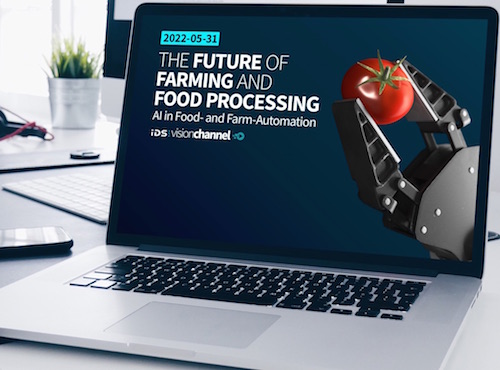
Vision session highlights farm and food automation.

Image processing can be used to accelerate, control and optimise processes. When artificial intelligence comes into play, the range of applications becomes even wider. This is especially true for agriculture and the food industry, as highly varying objects and processes are difficult to control with hard-coded machine vision applications. What does this mean in particular and which solutions prove themselves in practice? This is what the May event of the IDS Vision Channel is about.
Date: 31st May 2022
Registration for the session "The Future of Farming and Food Processing – AI in Food- and Farm-Automation" is free of charge and is available here.

The IDS Vision Channel is a video and online event platform of IDS Imaging Development Systems, one of the leading companies for industrial image processing. IDS regularly presents new products and technologies there and gives helpful tips on their application. For the one-hour event on 31 May, there will also be two guest speakers.

How can it be ensured that the consumer does not find any annoying shell fragments in end products such as muesli, biscuits or chocolate? Strelen Control Systems GmbH has developed a way to detect nuts and separate them from unwanted by-products and contaminants. The system is even able to detect quality defects in products – for example mould, dehydration or residues on the surface. The IDS Vision Channel explains how this works and how users benefit from it.

Genie Enterprises will present the trends and possible uses of data, sensors, cameras and artificial intelligence in the field of smart farming with practical examples. The company looks at scenarios that can already be used as well as areas where research is currently underway: from cameras to monitor the health of vines to an artificial nose for wine aromas to optimise crop protection.

IDS familiarises the audience with the possibilities of the AI system IDS NXT, focusing in particular on the question of why artificial intelligence is useful in dealing with highly varying products and how the technology can be used if the user has no prior knowledge of deep learning or camera programming.

In summary, the online event is dedicated to the following questions:

  • How can I ensure the best product quality in food processing?
  • How can I detect plant diseases in the vineyard at an early stage?
  • How can I use AI-based image processing without prior knowledge of Deep Learning?
@IDS_Imaging @mepaxIntPR #Agriculture #Food

Wednesday, 23 March 2022

Making a more efficient sausage.

Getting under the skin of sausage manufacturing efficiency

Stamp to be issued in late April 2022
The Irish Post Office is issuing a series of stamps celebrating the Irish Breakfast. An important component in the ever popular "fry" is the sausage. Coincidentally we have received details of a sausage manufacturing application. Markus Huuhtanen from Vaisala explains how speed, efficiency and quality can be gained by using in-line refractometers to monitor and control sausage artificial casing processes.

Background
Traditionally, sausage skins were made from the small intestine of meat animals, especially pigs, but also sheep, cattle and goats. These so-called natural casings have been utilized for centuries, but in recent decades artificial casings have become popular in many markets. Artificial casings include collagen (often derived from animal skin), cellulose (from plant materials), plastic, and more recently alginate (from seaweed).

Markus Huutanen - Vaisala
The growth in artificial casings has been prompted by a number of factors, including the high costs that result from the number of processes necessary to create the natural casing product. Also, natural casings tend to be variable in length, diameter and thickness, so it is more difficult to streamline sausage production, and the process incurs a heavier labour requirement. In contrast, continuous accurate monitoring of the artificial casing process removes the requirement for manual sampling and testing, and enhances both process efficiency and product uniformity.

Alginate casing
Alginate is found in the cell walls of brown algae which is a large group of multicellular algae, including many seaweeds located in colder Northern Hemisphere waters. An important feature of alginate is its ability to hold many times its own weight in water, making it a naturally gelling substance.

As a film-forming natural polymer, alginate can be used as a casing for sausages through its gel formation with calcium ions. During the production process, meat mixture is extruded to form the sausage, and a layer of sodium alginate is simultaneously applied (co-extruded) to the outer surface, before a calcium chloride brine solution is used to for dehydration and to induce gel formation. This creates a layer of calcium alginate film on the sausage, which provides the strength and flexibility required in a sausage casing.

The salt content in the brine solution is very important and needs to be closely monitored because it affects the colour, texture and overall quality of the sausage.

The main advantages of co-extrusion over natural casings are:

  • Lower purchase cost
  • Ideal for automation
  • Low labour requirement
  • Product consistency
  • Flexibility – can be used for many different types and size of sausages
  • Stored as alginate powder, so no refrigerated storage necessary
  • Speed and throughput
  • Suitable for vegetarian, vegan and Halal (if alginate)

Monitoring alginate brine with in-line refractometers The brine solution is stored in a brine tank, and spent brine is recycled to this same tank. Consequently, the brine is constantly diluted by the moisture that is removed from the casing gel. It is therefore necessary to monitor the salt solution so that the correct amounts of salt can be added to the brine solution. This function is performed by the Vaisala refractometer which monitors the salt content in real-time.

There are two possible locations for the refractometers; directly in the brine tank itself, and a second refractometer can be installed in the salt supply tank.

Refractometer in 3inch pipe
The Vaisala refractometer measures the refractive index (RI) of the liquid, which correlates directly with the salt concentration of the brine solution. In-line RI monitoring with automatic feedback control enables process operators to ensure consistent and reliable operations; thereby protecting product quality and reducing downtime. In contrast with many other liquid concentration methods, the Vaisala refractometer is extremely accurate and reliable and needs no regular maintenance. Importantly, these refractometers are not affected by particles, bubbles, crystals or colour, so they can be employed in a wide variety of solutions for measuring liquid concentration. The Vaisala K-PATENTS refractometers are also 3-A Sanitary Standards and EHEDG certified, which is essential for food processing equipment.

The refractometers produce mA and Ethernet output signals that allow automatic operation of the process. Moreover, the refractometers can be calibrated to read the concentration of NaOH in g/L, wt-% or any other engineering unit preferred by the factory.

Co-extrusion with collagen gel
In addition to alginate gel, it is also possible to use collagen gels in sausage manufacture. Collagen casing is largely derived from beef and pig hides, but it offers most of the speed and efficiency advantages presented by alginate gels.

After co-extrusion with collagen gel, sausages are passed through a brine solution in a similar manner to the alginate gel process. Vaisala refractometers are able to continuously monitor the process as outlined above, to ensure that the correct salt concentration is maintained and product quality is protected.

Emphasising the importance of the brine measurement, a sausage manufacturer in the USA said: “We treat co-extruded sausage casing with dipotassium phosphate to control the moisture, which directly affects the color and texture of the final product. Too much moisture in the casing makes the sausage too dark and the texture too chewy, while too little means the sausage will be too light and the texture too soft. The Vaisala K-PATENTS® refractometer helps to keep the moisture at the specified level, ensuring a standardized end product.”

Cellulose sausage casing Vaisala refractometers are also used in cellulose sausage casing processes. In this application a cellulose fiber cloth is used to create the sausage casing, but first the cloth is desulfurized by passing it through a Sodium Hydroxide (NaOH) bath. Also known as caustic soda, this solution is supplied from a tank, and spent caustic is returned to this tank. Consequently, the NaOH concentration needs to be replenished because caustic is lost in the cloth during the impregnation process. A Vaisala refractometer is therefore employed, in a similar manner to the alginate and collagen applications above, to continuously monitor (in this case) the NaOH concentration and ensure accurate replenishment.

Refractometer Control Room

Summary
In-line refractometry is the ideal technology for controlling the artificial sausage casing process. By providing continuous data, refractometers enable sausage manufacturers to control many of the key product quality features.

Unaffected by particles, bubbles or colour, the same technology is used for monitoring liquids in a wide range of other industries including semiconductor, chemical and refining, pulp and paper, textiles, pharmaceutical, brewing, beverages and of course food.

The popularity of cellulose and alginate casings is growing as manufacturers look for ways to lower costs, expand production and improve consistency whilst improving product quality, process efficiency, speed and flexibility. However, in order to take advantage of these benefits it is necessary to be able to continuously measure process liquids with a technology that is accurate, reliable and able to operate in challenging conditions. The Vaisala K-PATENTS refractometers meet that requirement and therefore help to meet the world’s growing passion for high quality sausages.

@VaisalaGroup @_Enviro_News #PAuto #Food

Tuesday, 12 October 2021

VFD technology for waste disposal.

The amount of waste produced in the meat processing industry can be considerable and costly in terms of production and disposal of the material.

A meat processing company has worked with Engefi Engenharia Eficiente Ltd to create greater speed control over its compactor, allowing for changes in the incoming quantity and type of waste. Engefi developed a solution that could be integrated into compactors using Optidrive E3 variable frequency drives (VFD).

Waste compactors are one way of continuing production without the need to stop to remove waste at intervals from containers or skips within the production process. By compacting the waste it can also be removed and handled more easily and safely for disposal.

“The existing compactors worked well but having greater control of the operating speed meant it could mirror production levels and the type of meats and waste being used,” said Marcus Silva, Head of Sales, Latin America.

“By matching the compactor’s speed to production levels and the type of product, created a faster process with less downtime. The compacted meat also takes up less room, making it easier to handle and dispose of. This provided added safety for staff involved in the production and disposal processes.”

An Optidrive E3, Frame Size 3 with an IP20 enclosure is being used in the application. Its compact size meant it could be easily installed into the panel, as well as being able to handle the environmental conditions.

The 380V, 3PH, 24A, drive was more than capable for the application. It will now be used on other compactors operated by the company.

Denner Ferreira of Engefi, said: “There were several factors in choosing the Optidrive E3 for the application. The first was reliability and ease of use. We needed a VFD that could operate in the production environment and could be easily set up. The Optidrive ticked all these boxes.

“Additionally, its compact size and robustness made it ideal for such an operating environment. It could also be easily installed into a smaller panel, taking up less space.”

The Optidrive E3 provides simplicity of installation, connection, and commissioning, allowing the user to benefit from precise motor control and energy savings within minutes.

@Invertek_Drives #PAuto #Waste #Brazil

Wednesday, 29 September 2021

Soft touch sensor!

The human hand exhibits a dexterity yet unmatched by technology. Force sensors can close this gap by offering feedback on the grip force, thus avoiding damage to delicate and fragile objects such as food and human body. The Sateco elastomer sensor works according to the capacitive operating principle and can continuously measure both touch and compressive force. It is soft and flexible, can be shaped three-dimensionally, and is suitable for various applications in agriculture, food, electronics, surgery and generally in cobots and prostethics.

Both the sensor's footprint and dimensions can be freely designed. As a result, it can be customized to curved surfaces and integrated seamlessly between the body structure and a soft surface. This enables an ergonomic design of robotic grippers, prostheses and exoskeletons and both on small and large surfaces. Used on the surface of a body structure the material feels similar to a human skin and offers a life-like soft and comfortable human-machine interaction.

The sensor combines two measurement functions in one component. It can detect the approximation of a body part at a short distance and precisely measure its exerted force as well. This keeps the combination compact and enables predictive operating and measurement systems.

Thanks to its elastomer material, the SXTSC sensor is robust, shock and impact-resistant, and it also enables high durability, even in rough environments at high (+85°C) and low temperatures (-40°C).

Silicone is gentle on the skin. Optional texturing of the surface can make it even more comfortable to wear. Silicone is chemical and temperature-resistant with regard to food.

The material’s flexibility makes it particularly compliant to soft and fragile object, helping in e.g. automated harvesting, packing and labelling of fruits and vegetable.

Samples including evaluation electronics are available in a starter kit and enable a quick and uncomplicated start into the new technology.

@mepaxIntPR #Sateco #Robotics #Food #Medicine

Thursday, 29 July 2021

Towards the perfect loaf!

Bread. Just thinking of the word pushes your olfactory senses to imagine yeast-based delights at the counter of your favorite bakery. But baking the perfect loaf, and in large enough quantities, demands furnaces that accurately control the process from beginning to end. This was precisely the task faced by Mechatronics Ltd., a system integrator and official distributor of Delta Motion, Drive, Control, and Robotics products based in Bulgaria.
“Most people would assume that baking bread is very simple. On the contrary, the bread furnace project has highlighted the skill required of both bakers and engineers to create a machine that delivers the perfect loaf. The auto-tuning function of the DTC1000/2000 played a large part in ensuring that bakers can deliver a quality product every batch, by providing excellent temperature control,” said Victor Ogedegbe, Field Application Engineer at Delta.

The requirements for the bread furnace machine defined four temperature zones. The first zone is especially powerful to compensate for the cooled conveyor belt and the relatively cool loaf entering the oven. At this step, steam is also injected into the furnace to give it that freshly-baked sheen. It is followed by three temperature-controllable baking zones that are carefully controlled for baking the optimal loaf. The conveyor belt of this traveling oven design must also be held at the correct speed throughout the process. Rounding off the specifications was a human-machine interface (HMI) to configure the baking process, deliver temperature status of each zone, and output any error status information.

For the HMI, the team selected the Advanced HMI DOP-107WV from the DOP-100 Series. This touch-based control panel features a 16:9 7” color TFT screen with a modern-looking, narrow frame. Its multilingual support meant it was well-suited for the target market, while user-friendly editing software ensured that the final user interface was easy to navigate. With several RS-485 capable COM ports, it integrated perfectly with the other components selected for the furnace. Considering the operating environment, the flat, wipeable surface of the DOP-107WV proved the ideal choice for a dusty bakery. Control for the conveyor was implemented using an MS300 Series inverter. This AC motor variable frequency drive (VFD) also supported the RS-485 Modbus interface and is ideal for open-loop control of IM and PM motors.

Of course, the quality of the bake is ultimately defined by the furnace. Special attention was given to selecting the optimal control approach for the seven heating elements used. After careful deliberation, the DTC1000 Temperature Controller was selected as the main controller, with DTC2000 controllers used in parallel for the remaining six heaters. These are also connected to the Modbus. The selection of established, reliable components, along with the careful programming, were critical in delivering a low-maintenance design that could be operated 24/7.

To provide optimal temperature regulation, the auto-tuning function of the DTC1000/2000 was used. The inputs are acquired from third-party PT100 temperature sensors while control of the heating elements is implemented with solid-state relays. Auto-tuning uses a training process to configure the closed-loop PID controller once the sensors and heaters are installed in this 250 kW furnace. Further complicating the implementation is the dual heating and sensing of the last three baking zones. With one heater above the conveyor and the other below, each needs to be set to a different temperature. Spare outputs from the Delta Temperature Controllers were available and linked to relays for audible and visible alarm signals. These signals were also replicated in the DOP-107WV HMI.

Closely coupled with the quality of the bake is the speed control of the conveyor belt. The MS300 VFD is linked to an inductive proximity sensor that is easy to clean and remains accurate in the dusty baking environment. Installed closed to the gears, the built-in programmable logic controller (PLC) of the MS300 is configured to monitor and calculate the conveyor speed. This is continuously compared it to the setpoint defined in the HMI. Thus, the end-customer only needs to set the desired baking time, the required temperature, and then press run to start baking.

The Mechatronics Ltd. team benefited from the broad range of industrial automation solutions in the Delta portfolio. Integration of the VFD, HMI, and Temperature Controller was simplified thanks to the out-of-the-box interoperability and connectivity of the components selected.

“Construction of the bread furnace was simplified by the availability of components that are interoperable and fulfilled the requirements demanded by our customers. Accurate temperature control was most critical for us, and the Delta team's support was essential in configuring the DTC1000/2000 auto-tuning function. This assistance contributed to the project moving from the initial design stage to full production in just seven months,” said Toma Draganov, Automation engineer at Mechatronics Ltd.

@DeltaEMEA @mepaxIntPR #PAuto #Food

Friday, 18 June 2021

Food grade pushbuttons.

The popular Series 82 family of pushbutton switches has been expanded by EAO Ltd with the introduction of a new 22mm mount device manufactured in food grade SUS 316L stainless steel and Tritan light-grade plastic.

The new attractively designed illuminated Series 82 pushbutton devices feature TPE overmoulding that is highly resistant to damage from vibration or impact. It also provides the switch mechanism with reliable protection against cleaning agents and environmental contaminants. The chemical resistant Tritan plastic used for the button and lens ensures consistent clarity of the ring illumination.

The new Series 82 switches feature a built-in industry standard M12 connector at the rear of the unit. Connecting any suitable pre-wired M12 cable to this connector makes the new switches all round IP67 compliant.

Advantages of overmoulded Series 82 switches
• Rugged 316L stainless steel switch housing
• High resistance to vibration and impact
• 24VDC ring illuminated versions for status indication
• Durable Tritan plastic illumination ring resistant to cleaning agents
• 24VDC ring illuminated versions ideal for status indication
• All round IP67 protection
• Integrated M12 connector for fast and reliable mounting

According to Robert Davies, Marketing Manager with EAO Ltd., pushbutton HMIs are often exposed to extremely harsh external factors: In the food & beverage industry and medical applications for instance, the actuators in pushbutton HMIs are often suffer from corrosion due to their exposure to harsh cleaning agents, leading to reduced reliability: “Corrosion from alkaline cleaning agents joins other external factors found in in-cab driver/operator controls in special vehicle - hard-to-remove dirt, fine dust, severe vibrations and blunt impact - in shortening the lifetime of pushbutton HMIs”, Davies said. “The TPE overmoulding, 316L stainless-steel and Tritan plastic used in EAO’s new Series 82 switches all but eliminate these risk factors”.

#EAO #PAuto #Food

Friday, 14 May 2021

Digitalisation in process temperature control.

Remote monitoring, support and digital process-optimisation in the temperature control of food processes

Lockdowns and pandemic-related employee absences are making it difficult for many food producers to maintain their usual production capacity. A machine or plant operator is not sent to work from home lightly. Production of dairy products, pasta, pastries, confectionery, food additives, even new types of foods such as plant-based meat replacements must continue, even when everything around is at a standstill.

The food industry therefore made advances in digitalisation last year which would otherwise have taken many years. And this development has had a major impact on temperature control. Systems which operate for 24 hours per day must record the core parameters over the entire production process to comply with the regulations of hygiene and traceability e.g.: the temperature of grinders for chocolate production, the bath or screw temperatures of extrusion plants for pasta or confectionery, temperatures in double-walled vessels (often with agitators) for tempering fluids, temperatures in pipe lines for transporting various semi-finished or finished products, and increasingly also large reactors which can be used for everything from sugar production to the production of natural flavourings for foodstuffs.

Any deviations from the standard, temperature deviations, alarms etc. must trigger the necessary remedial actions immediately, especially at those times when there is no-one standing by the system. There are also the needs for remote support by the plant manufacturers' service technicians and the ongoing optimisation of the whole production plant.

To provide even better support to its customers during this development, Regloplas AG offers a range of solutions for its temperature control units and cooling systems (-20°C to 350°C and 3 to 80 kW heating capacity) which drive forward the digitalisation of temperature control in the food industry.

Regloplas AG's new RT200 control system with integrated OPC UA server now offers maximum flexibility for digitalisation within the production process. The central concept of digitalisation is data exchange of all the process and machine data across the network and to higher-level IT systems such as MES, ERP and PPS.

All peripheral machines, devices and systems involved in the production process communicate with one another. This enables real-time process optimisations leading to higher productivity, reduced downtime, optimised machine capacity and improved product quality. (fig1)

The use of temperature control units from Regloplas AG's modular toolbox offers a series of additional advantages:

- Cost reductions compared to plant manufacturer's own solutions (produced in small quantities)
- Problem-free continued use of the temperature control unit in a new or upgraded system
- Technical improvement and increased reliability due to the use of a temperature control unit by a manufacturer specialising in temperature control

With less outlay on the integration of high performance and flexible temperature control solutions, is equally attractive to plant manufacturers and to processing operations. Regloplas AG is continuously developing its offers and technical expertise for these users. The motivation, in addition to economic considerations is being able to contribute to a healthier, tastier and sustainable food supply.

@regloplas @mepaxIntPR #Food #PAuto #digitalisation

Wednesday, 14 April 2021

Print your cake and eat it!

We sometimes get stories about subjects or products that do not fall into our usual, automation, instrumentation subjects. Here is one such story that we HAD to use. Hope you enjoy it!

Eddie is the world’s first-and-only NSF and GMP-certified edible ink desktop printer for printing directly onto cookies and other food items. DTM Print, international OEM and solution provider for specialty printing systems, has introduced the manual feed option along with custom food trays to make Eddie a very versatile to use food printer.

If used with the included carousel feeder Eddie can print on suitable food item such as cookies, candy, white chocolate, biscuits, marshmallows, chocolate lentils, and much more with a maximum diameter of 89 mm and 20-25 mm height. The manual mode extends these parameters to a maximum of 120 x 120 mm and allows thicker items with a maximum height of 27 mm. This is especially important for printing on macarons. This very famous French confection consists of a variety of soft fillings sandwiched between two meringue-based cookie halves. All parts put together are too high for a complete macaron to be printed with the automatic feed. By using the manual feed and a “macaron tray” bakers and pastry chefs can now print onto finished macarons saving them a lot of time.

The “macaron tray” is one of several new food trays designed especially for Eddie by DTM Print, including one for chocolate lentils and one with an engraved grid that makes positioning the food items a lot easier as users can align their products to the grid. Another tray with a generic grid and pins in order to fixate the contour of any desired shape is in development. By using the custom trays production of multiple items in one run (for example up to five macarons or 64 chocolate lentils) is easy, precise and depending on the item faster, too. DTM Print also offers the service to produce trays according to customer specifications.

• Eddie sells for € 2,995 (MSRP). The Eddie food trays range from € 29.95 to € 49.95 (MSRP) and are available directly from DTM Print or through authorised DTM Print partners in Europe, Middle East and Africa.

@DTM_Print_ @PresseBox #Food

Friday, 5 February 2021

LIMS in flour.

A new LIMS case study has been published by Autoscribe Informatics in conjunction with North America’s leading flour supplier and grain innovator, Ardent Mills. The Matrix Gemini Laboratory Information Management System (LIMS) took just 6 months to implement and is now being used across the three laboratories in its Denver-based Innovation Center (CO USA). The LIMS has not only improved the efficiency of sample management and tracking within the laboratories but is feeding information into the company’s data warehouse to facilitate key business decisions.
 
Autoscribe worked closely with Ardent Mills throughout the project to understand their requirements and deliver a configured solution for their defined needs. Professional services were provided by Autoscribes’s own team, prompting the customer to state “the Autoscribe skill set is excellent. The team was both articulate and professional, making the communication really good.”

As well as significantly improved sample management and tracking, Matrix Gemini LIMS allows the laboratories to provide a better service to the mills. An additional major benefit comes from importing the Matrix Gemini data into a central data warehouse where it is used in conjunction with other organizational data to drive business analytics and enhance commercial understanding.
 
“We are pleased to have worked with Ardent Mills to deploy LIMS into their Laboratories in Denver, Colorado,” said Tim Daniels, Marketing Manager, Autoscribe Informatics. “They are just one of a growing number of US Companies in the food and beverage sector to choose the highly configurable Matrix Gemini LIMS for their needs. The solution was deployed in just six months, helped by a well-developed user requirements specification, and Matrix Gemini’s drag and drop configuration tools that allow rapid implementation of the functionality within the system.”

@AutoscribeLtd @ArdentMills #LIMS #Food