Showing posts with label Refractometer. Show all posts

Friday, 5 May 2023

Inline refractometers to star!

For over 40 years, K-PATENTS was arguably one of the process industry’s best kept secrets, but within its user base, the company enjoyed an enviable reputation for accurate reliable measurements in even the most challenging process conditions. As such, K-PATENTS had a good fit with the global measurement technology company, Vaisala, which acquired the business in 2018.

“We knew that K-PATENTS customers are able to trust the data from their refractometers, and we were very impressed with the company’s experience and expertise in liquid measurements,” explains Jutta Hakkarainen, Director, Liquid Measurements at Vaisala. “Application expertise, measurement accuracy and long-term reliability are also family traits at Vaisala, but excitingly, we could see enormous growth potential for this technology, so it made perfect sense to put the global power of Vaisala behind it, in order to realise that possibility.”

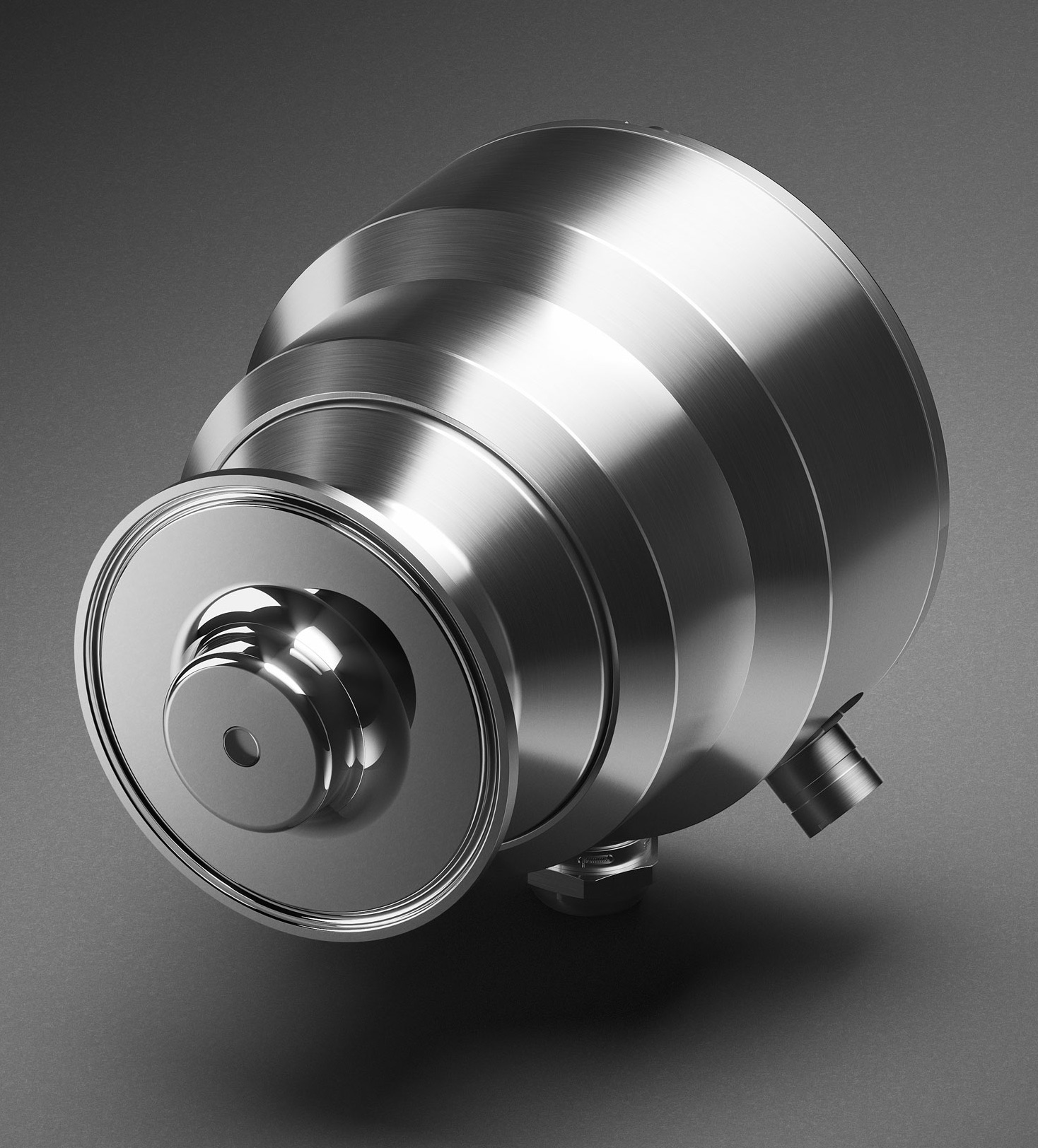
Earlier this year (Feb 2023) following a long period of consultation with customers and after a meticulous engineering review of the refractometer range, Vaisala announced the launch of Polaris™ - the latest generation of inline refractometers. The new Polaris™ instruments offer outstanding levels of performance, as well as compatibility with Vaisala’s family of high-quality Indigo industrial transmitters for data logging and display, prism wash control, instrument configuration, security, etc. “This new range of refractometers has been designed to meet the most demanding application requirements; providing accurate, reliable, inline liquid measurement technology for a wide variety of industrial sectors,” explains Hakkarainen.

Applications for Polaris™ inline refractometry.
Inline refractometers are used in a wide variety of industries, including food, beverage, brewing, dairy, pulp and paper, pharmaceutical, semiconductor, chemical, petrochemical refining, and textiles. However, in order to determine which processes are suited to refractometry, it is important to understand how this technology works.

Refractometers measure the Refractive Index (RI) of a liquid, which is the critical angle of refraction of light in a process medium. The critical angle is that from which the total reflection of light starts. Concentration values can be determined from the RI measurements taking pre-defined process conditions into account. Vaisala’s Polaris™ refractometers are therefore supplied factory calibrated to meet specific process requirements.

The most obvious applications for inline refractometers are those with binary solutions, where one (highly refractive) component is dissolved in a solvent, such as sugar in water. Consequently, one of the most common applications for Vaisala’s refractometers is the continuous measurement of Total Solids (TS) and Brix (dissolved solids) concentrations in beverages. Of course, inline refractometry is also suited to applications with multiple constituents, where process managers need to monitor aggregated changes in the levels of (refractive) components. Examples include continuous measurements in the pulp and paper industry; the monitoring of milk standardisation and homogenisation in diary processes, and for monitoring almost every stage of beer brewing.

Continuous RI data is particularly useful where process operators are looking for a specific change in the RI measurement. For example, in quality control and for detecting product-to-product and product to-CIP cleaning interfaces.

Refractometry vs other measurement methods.
At the risk of stating the obvious, continuous monitoring is preferable to laboratory analysis for the vast majority of process control applications. This is because sampling only provides a retrospective indication at one moment in time, the process is laborious and costly, and by the time the results are available they may no longer be applicable.

A variety of process measurement techniques are available, and the choice of technology will depend on the process. Density and RI instruments measure liquid concentration and composition. Density meters employ, among others, Coriolis, microwave, ultrasonic and nuclear techniques. Each of these can provide useful measurements in some applications, but their accuracy can be affected by air bubbles, particles, impurities, deposits, solids, flow variation, vibration, temperature, and turbulence.

Summary.
 “The benefits of Polaris™ refractometers extend beyond useful process measurements, because they come with the accuracy and long-term reliability that Vaisala customers expect. In contrast with other inline measurement instruments, Polaris™ refractometers are simple to operate and maintain, and they are insensitive to flow rate, suspended solids, crystals, bubbles, entrained gases and sensor coating. It therefore seems unlikely that they will remain a secret for much longer.”


See also: Making a more efficient sausage. (Refractometers in food application 23/3/2022)

@VaisalaGroup @_Enviro_News #PAuto

Friday, 17 February 2023

Process refractometer series for industrial liquid measurements.

The new robust platform of inline process refractometers adds to Vaisala’s leading-edge innovations by introducing the first fully inhouse developed refractometer series to product platform that combines both liquid and gas measurement capabilities.
Vaisala continues to strengthen its spearheading industrial product ecosystem by unveiling a next-generation process refractometer platform PolarisTM. The products are designed to optimise industrial manufacturing processes, product quality, enhance productivity, and save resources, energy, and time in various industries and hundreds of industrial applications.

Unique product platform for liquid measurement needs in industrial processes.
With the launch of its Polaris Process Refractometer product family Vaisala offers the most modern product platform for liquid measurement needs that brings together Vaisala’s over 85 years of measurement excellence with the latest liquid measurements expertise.

“We are thrilled to introduce Vaisala Polaris which bundles together Vaisala’s measurement and application expertise, innovative technology, world-leading measurement capabilities, and industry-known robustness. All this boosted with Vaisala’s state-of-art production system, which brings added value to customers through product quality and short delivery times,” comments Product Manager Jarkko Ruonala from Vaisala.

The launched refractometer platform further strengthens Vaisala’s modular Indigo measurement ecosystem.

Ruonala says: “The Polaris product family is designed to work seamlessly, out of the box, with Vaisala’s Indigo520 transmitters for process refractometers. By unveiling the Indigo connectivity to our refractometer customers, we are bringing more choices to their fingertips. Combining liquid and gas measurement possibilities is what makes the platform utterly unique.”

Vaisala Polaris™ PR53AC Process Refractometer and Vaisala Polaris™ PR53AP Process Refractometer are designed for hygienic applications in food and beverage, and life science industries, and for OEM customers. They measure Brix and other concentrations inline accurately and in real time. 

Vaisala Polaris™ PR53GP Process Refractometer is for oil & gas, chemical, sugar, and sweetener industry. It measures concentrations of sugars, acids, alkaline solutions, alcohols, hydrocarbons, solvents, and in various other solutions.
Vaisala Polaris™ PR53GC Process Refractometer is optimized to chemical industry, where it measures concentrations of acids, alkaline solutions, alcohols, hydrocarbons, solvents, and various other solutions.
In pulp & paper industry Vaisala Polaris™ PR53SD SAFE-DRIVE Process Refractometer measures the total dissolved solids and other concentrations. The unique design of the retractor tool and the isolation valve ensures operator safety during insertion and removal of the sensor, which can be done without depressurizing the line.
Vaisala Polaris™ PR53W Process Refractometer measures sulphuric acid, hydrochloric acid (HCI), sodium hydroxide, and other aggressive chemicals directly inline in the chemical, metal, and mining industries.
Vaisala Polaris™ PR53M Process Refractometer helps chemical and semiconductor industries in measuring hydrochloric acid (HCI), sodium hydroxide, sodium chloride, sulphuric acid, and other aggressive chemicals directly inline.
Vaisala Indigo520 Transmitter for process refractometers allows connectivity with all Indigo products including the liquid and gas measurements alike, for parameters such as temperature, relative humidity, carbon dioxide, and vaporized hydrogen peroxide. Indigo520 transmitter also provides user interface and data visualization through touch panel display, data logging, wash control, settings, and service updates
.

@VaisalaSuomi, @VaisalaGroup @_Enviro_News #PAuto

Wednesday, 23 March 2022

Making a more efficient sausage.

Getting under the skin of sausage manufacturing efficiency

Stamp to be issued in late April 2022
The Irish Post Office is issuing a series of stamps celebrating the Irish Breakfast. An important component in the ever popular "fry" is the sausage. Coincidentally we have received details of a sausage manufacturing application. Markus Huuhtanen from Vaisala explains how speed, efficiency and quality can be gained by using in-line refractometers to monitor and control sausage artificial casing processes.

Background
Traditionally, sausage skins were made from the small intestine of meat animals, especially pigs, but also sheep, cattle and goats. These so-called natural casings have been utilized for centuries, but in recent decades artificial casings have become popular in many markets. Artificial casings include collagen (often derived from animal skin), cellulose (from plant materials), plastic, and more recently alginate (from seaweed).

Markus Huutanen - Vaisala
The growth in artificial casings has been prompted by a number of factors, including the high costs that result from the number of processes necessary to create the natural casing product. Also, natural casings tend to be variable in length, diameter and thickness, so it is more difficult to streamline sausage production, and the process incurs a heavier labour requirement. In contrast, continuous accurate monitoring of the artificial casing process removes the requirement for manual sampling and testing, and enhances both process efficiency and product uniformity.

Alginate casing
Alginate is found in the cell walls of brown algae which is a large group of multicellular algae, including many seaweeds located in colder Northern Hemisphere waters. An important feature of alginate is its ability to hold many times its own weight in water, making it a naturally gelling substance.

As a film-forming natural polymer, alginate can be used as a casing for sausages through its gel formation with calcium ions. During the production process, meat mixture is extruded to form the sausage, and a layer of sodium alginate is simultaneously applied (co-extruded) to the outer surface, before a calcium chloride brine solution is used to for dehydration and to induce gel formation. This creates a layer of calcium alginate film on the sausage, which provides the strength and flexibility required in a sausage casing.

The salt content in the brine solution is very important and needs to be closely monitored because it affects the colour, texture and overall quality of the sausage.

The main advantages of co-extrusion over natural casings are:

  • Lower purchase cost
  • Ideal for automation
  • Low labour requirement
  • Product consistency
  • Flexibility – can be used for many different types and size of sausages
  • Stored as alginate powder, so no refrigerated storage necessary
  • Speed and throughput
  • Suitable for vegetarian, vegan and Halal (if alginate)

Monitoring alginate brine with in-line refractometers The brine solution is stored in a brine tank, and spent brine is recycled to this same tank. Consequently, the brine is constantly diluted by the moisture that is removed from the casing gel. It is therefore necessary to monitor the salt solution so that the correct amounts of salt can be added to the brine solution. This function is performed by the Vaisala refractometer which monitors the salt content in real-time.

There are two possible locations for the refractometers; directly in the brine tank itself, and a second refractometer can be installed in the salt supply tank.

Refractometer in 3inch pipe
The Vaisala refractometer measures the refractive index (RI) of the liquid, which correlates directly with the salt concentration of the brine solution. In-line RI monitoring with automatic feedback control enables process operators to ensure consistent and reliable operations; thereby protecting product quality and reducing downtime. In contrast with many other liquid concentration methods, the Vaisala refractometer is extremely accurate and reliable and needs no regular maintenance. Importantly, these refractometers are not affected by particles, bubbles, crystals or colour, so they can be employed in a wide variety of solutions for measuring liquid concentration. The Vaisala K-PATENTS refractometers are also 3-A Sanitary Standards and EHEDG certified, which is essential for food processing equipment.

The refractometers produce mA and Ethernet output signals that allow automatic operation of the process. Moreover, the refractometers can be calibrated to read the concentration of NaOH in g/L, wt-% or any other engineering unit preferred by the factory.

Co-extrusion with collagen gel
In addition to alginate gel, it is also possible to use collagen gels in sausage manufacture. Collagen casing is largely derived from beef and pig hides, but it offers most of the speed and efficiency advantages presented by alginate gels.

After co-extrusion with collagen gel, sausages are passed through a brine solution in a similar manner to the alginate gel process. Vaisala refractometers are able to continuously monitor the process as outlined above, to ensure that the correct salt concentration is maintained and product quality is protected.

Emphasising the importance of the brine measurement, a sausage manufacturer in the USA said: “We treat co-extruded sausage casing with dipotassium phosphate to control the moisture, which directly affects the color and texture of the final product. Too much moisture in the casing makes the sausage too dark and the texture too chewy, while too little means the sausage will be too light and the texture too soft. The Vaisala K-PATENTS® refractometer helps to keep the moisture at the specified level, ensuring a standardized end product.”

Cellulose sausage casing Vaisala refractometers are also used in cellulose sausage casing processes. In this application a cellulose fiber cloth is used to create the sausage casing, but first the cloth is desulfurized by passing it through a Sodium Hydroxide (NaOH) bath. Also known as caustic soda, this solution is supplied from a tank, and spent caustic is returned to this tank. Consequently, the NaOH concentration needs to be replenished because caustic is lost in the cloth during the impregnation process. A Vaisala refractometer is therefore employed, in a similar manner to the alginate and collagen applications above, to continuously monitor (in this case) the NaOH concentration and ensure accurate replenishment.

Refractometer Control Room

Summary
In-line refractometry is the ideal technology for controlling the artificial sausage casing process. By providing continuous data, refractometers enable sausage manufacturers to control many of the key product quality features.

Unaffected by particles, bubbles or colour, the same technology is used for monitoring liquids in a wide range of other industries including semiconductor, chemical and refining, pulp and paper, textiles, pharmaceutical, brewing, beverages and of course food.

The popularity of cellulose and alginate casings is growing as manufacturers look for ways to lower costs, expand production and improve consistency whilst improving product quality, process efficiency, speed and flexibility. However, in order to take advantage of these benefits it is necessary to be able to continuously measure process liquids with a technology that is accurate, reliable and able to operate in challenging conditions. The Vaisala K-PATENTS refractometers meet that requirement and therefore help to meet the world’s growing passion for high quality sausages.

@VaisalaGroup @_Enviro_News #PAuto #Food