Showing posts with label Fuel. Show all posts

Friday, 28 July 2023

Gas analysis in fuel and energy.

The 2nd FERIA Conference, the European Conference on Fuel and Energy Research and Its Applications, will take place at the University of Sheffield (GB) from 4th to 6th September 2023.

“This is an ideal sponsorship opportunity for us,” explains Signal Group MD, James Clements. “The majority of our gas analysers are used for the analysis of combustion emissions, and a good proportion of our order intake comes from the research and development sector, so the FERIA Conference will provide us with an opportunity to learn about the changing needs of our customers, and to show them the latest technological developments in gas analysis instrumentation, communications and software.”

The FERIA Conferences are organised by the Fuel and Energy Research Forum which brings together wide-ranging international interests in fuel and energy research, with a particular focus on biomass, waste and fossil fuels. In addition to a poster display, there will be three sessions running concurrently, offering delegates over 100 different presentations on themes such as carbon capture, hydrogen, ammonia and blended fuels, anaerobic digestion, gasification, pyrolysis of plastic waste, NOx emissions reduction, combustion efficiency and much more. 

“Almost all of the presentations will involve gas analysis,” comments James Clements, “So this will be a great opportunity for us to discuss the bespoke monitoring solutions that we are able to deliver.”

The Signal Group FERIA exhibition stand will feature the company’s latest gas analysers with detachable tablet screens, as well as the remote connectivity which is built into all of the company’s Series 4 instruments.


@GasAnalysers @_Enviro_News #PAuto #Research

Thursday, 1 December 2022

Smart, safe hydrogen refuelling.

Helping to decarbonise transportation industry while expanding global hydrogen refuelling infrastructure.

KOHYGEN (Korea Hydrogen Green Energy Network)* has chosen Emerson’s advanced automation solutions to help ensure the safety and reliability of its pioneering hydrogen infrastructure initiative, which recently marked the completion of the world’s largest hydrogen refuelling station for commercial vehicles. The project is an important step towards the two organizations’ goals of reducing emissions, driving investment in hydrogen and accelerating the transition to a net-zero global economy.

(Pic: KOHYGEN).

“We’re committed to building smart, safe hydrogen refuelling infrastructure by leveraging IT-based integrated operations, using large capacity, high-efficiency charging systems and, most importantly, strengthening design safety standards,” said KyungSil Lee, KOHYGEN’s chief executive officer. “Emerson is helping us secure abundant clean energy for Korea and the world.”

The JeonjuPyeonghwa Hydrogen Refuelling Station (Pictured) is the first of 35 high-capacity gas and liquid hydrogen refuelling stations KOHYGEN plans to construct across Korea by 2025. The first station has a charging capacity of 300 kilogrammes per hour, which can fuel up to 15 buses and trucks per hour, or over 100 per day – 12 times more than an average capacity hydrogen station.

To further lay the foundation for a stable hydrogen supply chain, the two companies are collaborating on technical standards for future high-capacity commercial refuelling stations and similar projects. KOHYGEN plans to expand its hydrogen supply platform to service hydrogen-powered aircraft, ships and other diverse forms of transportation.

“In line with Emerson’s ‘Greening By’ sustainability strategy, we’ve worked on a range of hydrogen projects globally, applying our expertise and innovative technologies to scale hydrogen consumption and make renewable energy a reality,” said Mike Train, Emerson’s chief sustainability officer. “Partnering with KOHYGEN is another critical step forward in diversifying our global energy mix.”

In addition to deep domain experience across the hydrogen value chain, Emerson is providing core technologies, including temperature transmitters, flow meters, pressure transmitters, programmable logic controllers (PLC) and valves, to deliver the high level of performance necessary for developing a commercially viable hydrogen charging model that can expand Korea’s domestic hydrogen market and serve as a template in other countries.


* KOHYGEN is a special purpose company held jointly by nine energy industry leaders: Korea District Heating Corporation, Hyundai Motors, GS Caltex, S-Oil, Hyundai Oilbank, SK Energy, SK Gas, E1 and Air Liquide Korea.

@EMR_Automation @Emerson_News @EmersonExchange @HHC_Lewis #PAuto #KOHYGEN #Korea

Tuesday, 15 November 2022

Hydrogen fuel development.

As the market for innovation in hydrogen fuel generation develops in line with the growing need for low carbon energy, Variohm EuroSensor offers a range of pressure and temperature sensors that fulfil safe measurement and monitoring of hydrogen processing, storage, and transportation systems. With pressure ranges from 1.0 bar to 1000 bar, both the EPT31H2 and SMO31H2 series pressure sensors have EC79/2009 and EC406/2010 type-approvals for hydrogen processing and storage systems whilst the SMO31H2 also has European E1 automotive type-approval to comply with the required standard for mobile pressure monitoring applications on transportation vehicles. Furthermore, the SMO31H2 is designed to meet requirements for use in PL:d/SIL2 systems. 

These H2-ready pressure sensors are complemented with Variohm’s ETP21H2 series temperature sensors - specifically designed for hydrogen processing tasks where aggressive, pressurised gas or liquid media requires accurate and reliable temperature measurement.

All EPT31H2, SMO31H2 and SMO31-Pl:d series pressure sensors feature high-grade 316L stainless-steel wetted parts for extreme resistance to hydrogen embrittlement and permeation with IP67 protection as standard and IP69K optionally available. Internally, a piezo resistive sensing element coupled with the latest ASIC circuitry assures excellent accuracy and high resistance to shock and vibration across an operational temperature range of up to 125°C. Several pressure range options from 1.0 bar to 1000 bar are available for gauge or vacuum measurement (EC79 approval is limited to 700 bar for all model lines). A choice of four pressure ports include ¼ NPT, M16x1 Male, 7/16“- 20 UNF 2A Male, and 3/8“-24 UNF2A. Further application flexibility is ensured with optional 600 mm cable connection, M12x1 round connector or Packard Metri-Pack connector. All sensors feature a 4 - 20 mA output from a 10 - 32 VDC supply voltage whilst the EPT31H2 also includes a 0.5…4.5V ratiometric output from a 5V DC supply. With room temperature accuracy specified at less than 0.5% of range, the sensors are rated for more than 10 million pressure cycles.

Variohm’s ETP21H2 hydrogen temperature sensor is built to the same exacting quality as the H2 pressure series with its stainless-steel housing protecting a PT100 sensor element that has a measurement accuracy to greater than +/- 1.0 % at RT. A choice of output options cover 10…32 VDC for 4…20 mA, or 5 VDC for ratiometric 0.5…4.5 V, and the same electrical connection options as their pressure sensing counterparts ensure straightforward installation where required. Specifically targeting hydrogen powered fuel cell applications on mobile vehicles, the sensor’s low current consumption of just 7.5 mA will suit battery powered use. A working temperature range from -40 to +125 °C enables wide application flexibility whilst short-circuit and reverse voltage protection provides security.

Variohm EuroSensor’s hydrogen process pressure and temperature sensors are based on well-proven sensor design technologies developed over several year’s extensive use and application success in demanding automotive, agricultural, construction and industrial measurement tasks. They have been specially adapted and certified where appropriate for precise measurement tasks across hydrogen production, processing, storage, and distribution logistics.

@Variohm @mepaxIntPR #transportation #PAuto 

Tuesday, 11 January 2022

Testing facilities for electric mobility.

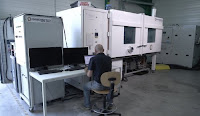
The Emitech Group offers a variety and a number of unique test facilities in France, constantly evolving with the aim of supporting its customers’ innovation, in particular in the field of electric mobility. The Group already has significant test facilities available in this field. For example there is the EMCEM facility, which aims to characterize an electric vehicle motor from the electromagnetic compatibility (EMC) point of view, as well as test benches for high-voltage (HV) batteries, power electronics, calculators etc. It announces new equipment and facilities for tests in the field of hydrogen (fuel cells systems, tanks + valves). The implementation of the hydrogen sector by several stakeholders and regions in France is a strong axis of the energy transition.

Hydrogen activities: EMC, electrical, mechanical, climatic and fire testing
Hydrogen fuel cell testing requires complex facilities that incorporate a large number of constraints. These installations must be secured because hydrogen (H2) is a potentially explosive gas when it reaches a concentration of 4% in the air. Moreover, a power equivalent to 50% of the electrical production of the hydrogen fuel cell system is also dissipated as heat. This is why Emitech, after having selected a hydrogen supplier and installed H2 supply systems, had to fit out its laboratories to secure its installations with H2 sensors and to equip laboratories with dedicated cooling units.

The Group has now two laboratories in France adapted to receive all kinds of equipments, including high power hydrogen fuel cells (45kW testing capabilities now, 100kW in mid-2022). A third laboratory installation more specialized for H2 tank applications testing is also in preparation.

The first electromagnetic compatibility and electrical test laboratory has a 70m² semi-anechoic Faraday cage (H>5m) with facilities dedicated to hydrogen: an H2 supply unit connected to four V18 cylinder racks (4x158m3 of H2 compressed to 200 bars / 15°C), hydrogen detection sensors, an ATEX extractor hood for any vapors and a 45kW cooling unit. In the mechanical and climatic second test laboratory, the climatic chamber has been completely adapted and secured to receive a complete fuel cell system with a H2 supply unit connected to two V18 racks of cylinders (H2 compressed to 200 bars at 15°C) and detection sensors.

The third mechanical and climatic test laboratory has a unique expertise in fire testing as well as tank testing capabilities (hydraulic and pneumatic testing: endurance, pressure resistance, bursting, puncture, impact, overloading). It is currently being adapted to become a type IV H2 tank testing center.

Testing: a first complete 45kVA fuel cell system
Emitech is currently working with one of the leaders in Fuel Cell System in France and Europe on a project for utility vehicles powered by hydrogen fuel cells. The equipment supplier provides the manufacturer with the electrical energy, a fuel cell, for integration into a conventional electric vehicle architecture. It is a complete and complex system that includes cooling system as well as regulators for humidity, air compression, etc. In addition, the fuel cell is completed by a high-voltage battery for transient power requirements such as acceleration and for energy recovery storage, especially during braking.

The system is tested in EMC, climatic and mechanical domain in Emitech laboratories according to the automotive manufacturer's specifications involved in this project. Emitech is the only one French laboratoy to offer these campaigns and the qualification of the system regarding environmental parameters.

Emitech was able to adapt its laboratories in a few months to meet its customer's needs regarding hydrogen and to conduct these tests. Testing began in autumn 2020 for mechanical and climatic, and then in January 2021 for EMC. Other campaigns are planned and international customers have already expressed their interest for these installations. In order to support the sector's development and the increase in the power of the various equipment manufacturers' fuel cell building blocks, laboratory upgrades are already planned for 2022 to enable tests performance on 100kW FCS (Fuel Cell System).

An expansion of the developing skills
Emitech has become a member of two major networks in France in the field of hydrogen. Emitech has been a member of FRANCE HYDROGENE since january 2021, an association federating the actors (more than 400) of hydrogen and fuel cells in France. EMITECH also belongs to the general H2 circle within the NEOPOLIA network, which brings together more than 250 companies mainly from the French region Pays de la Loire.

At the same time, Emitech actively monitors standards and technical normative working group in order to keep on developping its facilities and adapt them to the customers' future needs while meeting test standards requirements. This is the case, for example, for the use of hydrogen in ports, whether for recreational boating or for the merchant marine in the long term, but also for automotive or aeronautics and its green aircraft.

• Emitech is also referenced as H2 testing laboratory in the "Guide for conformity assessment and certification of hydrogen systems", a reference synthesis document on the subject published in July 2021 by INERIS (National Institute for Industrial Environment and Risks) on behalf of ADEME (French Environment and Energy Management Agency) and FRANCE HYDROGENE.

@EMITECH_SA @mepaxIntPR #Transport #France

Friday, 1 February 2019

Monitoring ship carbon emissions.

Krohne Marine has introduced a new version of EcoMATE: the software system for fuel consumption monitoring now also includes monitoring and reporting of carbon emissions for ships. It enables crews, operators and fleet owners to monitor all vessel types with a single integrated software tool that provides automatic calculation and reporting of emission and efficiency data.

EcoMATE is compliant with the European Union (EU) regulation 2015/757 on the monitoring, reporting and verification of carbon dioxide emissions from maritime transport (EU MRV) and the global International Maritime Organization Data Collection System for fuel oil consumption on ships (IMO DCS), both aiming at reducing greenhouse gas emissions from shipping.

EcoMATE consists of four modules: fuel consumption monitoring, bunkering verification, EU MRV & IMO DCS emission reporting, and a Cloud module. The fuel consumption module provides for continuous measurement and monitoring of all fuel types consumed on board. Readings from (Coriolis mass) flowmeters mounted in supply and return lines of engines are consolidated, visualized and stored in the control room to monitor current and total usage of fuels, for example to validate efficiency.

The bunkering module provides for monitoring, verification and logging of fuel quantities received through the bunkering line: EcoMATE visualizes readings from an inline flowmeter as trend graphs during the bunkering process, e.g. mass flow or (compensated) volume flow rate, density and temperature. While all relevant data is logged and stored, reports showing total quantities of fuel types received together with verification of density can be printed or sent digital to a shore station.

The EcoMATE EU MRV & IMO DCS module helps crew, owners and operators to generate emission reports compliant to these regulations. It also incorporates a set of features easing daily operation and reporting requirements per voyage or per vessel.

The EcoMATE Cloud is a centralized web reporting tool for vessels running the EcoMATE system: data from the other three modules is automatically transmitted to a cloud where it can be viewed, downloaded or analysed via a dashboard that is accessible through any web browser. For example, trends of fuel consumption or emission in correlation with temperature, speed and/or kilowatt thrust per vessel can be shown. Vessels can be compared for the same voyage sailed months apart, and measured data from each vessel down to individual fuel consumer level can easily be analysed.

To suit different ship types, Krohne Marine offers an extended scope of supply for EcoMATE, including workstations, flowmeters, valves, supporting equipment and services depending on the installation.

• Krohne products are marketed in Ireland through DWN Instrumentation.

@krohnegroup #Transport  

Friday, 27 July 2018

Fuel Analyser.

PAC has officially launched the OptiFuel, a top of the line FTIR Fuel Analyser. The new OptiFuel provides superior precision and portability with expert service and support worldwide. The unit comes in a rugged yet elegant design with a friendly user interface, which makes it ideal for refineries, pipelines, terminals and mobile labs.

For more than 20 years, PAC has been at the forefront of infrared (IR) fuel analysis with its PetroSpec products. Now we are combining the best of our GS PPA, TD PPA and QuickSpec capabilities into one analyzer and adding the latest FTIR technology into the most robust fuel analyzer in the market.
Every OptiFuel comes with more than 50 different calibration models built using hundreds of global fuel samples following ASTM E1655. Calibrations can easily be cloned and transferred to additional units. Unlimited additional properties can be added or updated quickly per user-defined requests.

Key features:
• Compliance with ASTM, EN, and ISO methods
• Updatable factory calibrations
• Intuitive interface requires minimal user training
• Complete connectivity with network printers, LIMS systems and USB drive
• High resolution FTIR with ATR flow cell
• Extensive support network through our offices and distributors worldwide
• Unmatched warranty on critical components

PAC has already sold more than 40 OptiFuels around the globe. Schedule a demo or get a quote from your local representative.

Monday, 12 March 2018

Diesel fuel analyser.

The Phase Technology DFA-70Xi, from PAC, is the world’s first 4-in-1 analyser that tests diesel fuel viscosity, density, cloud and pour point.

The multi-function DFA-70Xi automatically performs all four critical tests in less than 25 minutes. With just the touch of a single button, the analyser delivers real-time results via a 15” color touch screen display.

The DFA-70Xi is completely self-cleaning, without the need of solvents. The otherwise time-consuming, tedious task is totally avoided, freeing laboratory staff to concentrate on other job duties.

Using its own self-contained thermoelectric cooling and heating systems, the DFA-70Xi does not require an external liquid bath as commonly found with conventional viscometers. There are no glass tubes, thereby eliminating the risk of injury and contamination.

The DFA-70Xi offers the best measured repeatability and reproducibility of any comparable automatic or manual test method. Kinematic viscosity is compliant with ASTM D7945, with perfect correlation to ASTM D445 and IP 71. Cloud point is compliant with ASTM D5773 and IP 446, with perfect correlation to ASTM D2500 and IP 219. Pour point is compliant with ASTM D5949, with perfect correlation to ASTM D97 and IP 15. Density complies with ASTM D4052 and IP 365.

The new DFA-70Xi combines versatility and convenience with the proven reliability and precision Phase Technology analyser users have enjoyed for decades. The new model includes all the standard data exporting capabilities, including easy connection to LIMS systems.

The DFA-70Xi can also be configured to include the capability of testing freeze point of jet fuel. An optional 48-position autosampler is also available.

#PACplc #PAuto, #Transport 

Friday, 17 October 2014

ASTM D7345 microdistillation method for aviation fuels!

PAC’s ISL PMD 110 Complies to Newly Included Method


ISL PMD 110 from PAC, is now approved for use in the ASTM Reference Standard D1655 for Aviation Fuels. ASTM recently added ASTM D7345, the PMD Method, to the jet fuel reference standard, D1655 as an alternative to ASTM D86. ASTM D7345 is the “Standard Test Method for Distillation of Petroleum Products at Atmospheric Pressure (Micro Distillation Method)”.

Based on an innovative micro-distillation method, the PMD 110 determines the boiling range characteristics of any commercially available petroleum product, including light and middle distillates, in less than 10 minutes and using only 10 ml of sample. Thanks to its compact, robust, and portable design, the PMD 110 is easily installed in mobile or on-site laboratories.

The PMD 110 is in perfect correlation with ASTM D86 (groups 0-4), ISO 3405 (groups 0-4), IP 123, and D1160 (for Biodiesel B100). With its automated features, such as built-in calibration, automatic sample detection, and an automatic pass/fail notification makes the PMD 110 one of the easiest distillation instruments on the market.

Thursday, 23 January 2014

PAC Jet fuel testers win award!

The Chicago Athenaeum Museum of Architecture and Design presents the JFTOT IV with the GOOD DESIGN™ Award

PAC’s Alcor JFTOT® IV recently won a GOOD DESIGN award presented by The Chicago Athenaeum Museum of Architecture and Design in cooperation with the European Centre for Architecture, Art, Design and Urban Studies. Founded in Chicago (USA) in 1950, GOOD DESIGN remains the oldest and most recognised program for design excellence throughout the world. These awards are given out annually in different categories. The JFTOT IV won a 2013 award in the industrial category.

PAC released the JFTOT IV last May. Alcor’s JFTOT analyzers are the globally recognized standard for jet fuel thermal oxidation testing with a worldwide installed base over 1000 instruments of various generations of instruments. In addition to its accurate and reliable jet fuel analysis, the JFTOT IV offers enhanced safety features and simplified operational capabilities in a smaller, more streamlined package than previous generations. Its appearance and user interface design, aided by Vanberlo design agency, were also greatly enhanced. The JFTOT IV strictly follows ASTM D3241, IP 323, and ISO 6249 standard test methods.

“PAC is very proud to have received the GOOD DESIGN Award from the Chicago Athenaeum Museum of Architecture and Design for one of our most advanced products, the JFTOT IV,” said David Tran, PAC Vice-President of Product Management and Marketing, “One of our main goals for the new instrument was to improve the ease of use and enhance the safety features for our customers. To do this, we incorporated several unique features into the design, such as the quick connect containers, sliding door over the heater tube, and a large touch screen, to enhance the ease of use and safety for the operators. The JFTOT IV also won the Good Industrial Design Award by Designlink recently. It is gratifying that these well-respected organizations have recognized the excellence in our product design and bestowed it with such distinguished awards.”

Thursday, 29 August 2013

Heat rate reduction kit!

Magnetrol International, has introduced the Heat Rate Reduction Kit, aimed at helping power companies manage controllable losses through effective, accurate feedwater heater level control. The Heat Rate Reduction Kit is available for download and addresses the mission-critical need to increase the efficiency of power plants in today’s challenging economic and regulatory environment. The Heat Rate Reduction Kit, an industry first, provides solutions that will help reduce fuel expenditures, which can account for 70% to 80% of production costs, by minimising heat rate. According to Magnetrol, the potential savings represent an estimated €500,000 annually for a 500 megawatt power plant.*

Included in the Magnetrol Heat Rate Reduction Kit are several useful guides to reducing heat rate, why it is important and how the process will help reduce costs:
• Heat Rate and Feedwater Heater Level Control white paper
• Managing Heat Rate and Controllable Losses video
• Next-Generation Level Instrumentation for Heat Rate Awareness and Control special applications bulletin
• Reduce Your Heat Rate and Drive Down Fuel Costs brochure

“We created the Heat Rate Reduction Kit because we recognize the challenges power companies face today in an increasingly competitive environment and with the advent of climate change protocols and the Clean Air Act,” said Magnetrol's Product Manager Jim Homoly. “The kit explains how minimizing heat rate can help plants use energy more efficiently and save significant fuel expenditures.”

The causes of heat rate inefficiency can be due to aging level instrumentation or instrument-induced errors, which negatively impact heat rate and fuel costs, according to Homoly.

“Effectively controlling feedwater heater levels drives overall plant performance and fuel cost savings,” said Homoly.

* A 1% improvement in heat rate is worth €500,000 in annual fuel cost savings based on: Fuel cost of €1.25/million kJ, capacity factor of 85% and boiler efficiency of 88%.

• Magnetrol products are marketed in Ireland by Ntron Ltd of Navan

Friday, 9 August 2013

Cooperative relationship supports marine sector!

Two companies are pairing to provide marine fuel measurement solutions, helping marine customers save in operating expense and ensure accurate billing

Emerson Process Management and SeaTec Repair Services have formed a cooperative relationship to offer marine customers no-hassle installation of Micro Motion® fuel measurement solutions on a global scale. Emerson’s Micro Motion fuel measurement solutions provide accurate measurement of heavy fuel oil, in bunkering and control of fuel burn, which help customers save on operating expense and ensure accurate billing.

SeaTec Repair Services, a part of V.Group, is recognised as the global marine afloat repair and installation leader. SeaTec will install Emerson’s bunkering, fuel consumption, and viscosity offerings to help customers meet tight deadlines and keep projects on schedule and within budget.

"By working with Emerson and SeaTec, customers can upgrade the vessels in their fleet faster and work with an expert installation partner experienced in the marine business and with Micro Motion products," said Martin Stafford, V.Group director of marine services.

"The Emerson and SeaTec Repair Services cooperative relationship helps us offer installation scope, scale and speed for marine fuel measurement solutions and increased value to customers globally," said Neal Ingram, president of Emerson’s Micro Motion busines

Friday, 5 August 2011

Flow rate, running time, fuel theft & more...

The rising cost of diesel means it is a valuable commodity for bulk commercial users across a variety of industries, making it vital to ensure that expensive fuel is used wisely, not wasted or pilfered. So the launch of the new multifunctional Fuel-View digital meter from Bronkhorst UK, which monitors flow rate and fuel consumption, engine operating times, diesel theft volumes and other parameters, should be of considerable interest to owners and operators of commercial vehicle fleets, construction plant, civil and military aircraft tow tractors, leisure boats, diesel-powered factory equipment, standby generators, heating boilers and diesel-fired burners.

Their new Fuel-View series of flow meters, for fuel flows between 1 and 400 litres per hour, offers a compact, lightweight and cost-effective solution for measuring diesel consumption and operating times of road vehicles, agricultural and aircraft tractors, construction plant, marine vessels, generators and all types of mobile and static engines, at competitive prices from stg£200 ex VAT. The design’s unique features for preventing the theft of fuel, protecting against the overstatement of readings and any interference with compressed air, magnetic fields and disconnection, make Fuel-View one of the best multi-purpose instruments available on the market.

The standard configuration is a ‘blind’ instrument, with integrated cable for the remote digital processing of signals. As an option, Fuel-View also comes with an on-board LCD readout, displaying such information as actual flow, total consumption and engine operating time in idling, overload and optimal modes. The instrumentation is either operated with an external power supply or, on LCD models, via an embedded standby battery, which provides autonomous running of the flow meter for up to 2 years.

The Fuel-View series operates on the principle of a rotary piston, which is mounted in a chamber, and the rotating speed is measured by electronic sensors that record magnetic pulses, the number of pulses being proportional to the actual flow rate. This distinctive design allows mainstream fuel flow even if the measuring chamber becomes clogged up, although a filter does protect the chamber from contamination and can be removed and cleaned without dismantling the flow meter itself.

Mounted in a strong, moulded zinc-aluminium alloy case, with full IP54 protection, the Fuel-View can be fitted in any position and withstands both vibration and hydraulic shock. There are a dozen different models with wired outputs, integral LCDs, or combinations of both, for various flow rates and engine power output. The smallest model, DFM-50, has a nominal flow rating of 25 litres per hour, with a minimum of 1 l/hr and a maximum of 50 l/h, for diesel engines up to 80kW (108 hp). The highest rating model, DFM-400, has a nominal flow rate of 200 l/hr (min 30 / max 400 l/hr), for engines over 300 kW (400 hp).

“As a multifunctional system, the Fuel-View has many interesting commercial applications,”
says Bronkhorst UK’s Managing Director, Andrew Mangell. “For engine design and testing, it will give instantaneous and totalised fuel flow rates, engine operating times and data on optimal running and overloads. Leisure boat owners will want to know about fuel consumption and any incidents of diesel theft, for billing purposes, as well as engine statistics for preventative maintenance. Engine overload times, fuel pilfering and possible engine interference statistics are also useful for operators of construction plant, commercial vehicles and aircraft tugs, tractors and pushbacks. While hospitals and factories with standby diesel generators can tell whether the engines are running efficiently, when the next planned service is due and check that fuel isn’t being siphoned off or simply leaking away. Similarly, factory owners can gain valuable data about the carbon footprints of fork lifts and heating plant.”

“These instruments are relatively inexpensive, easy to fit, extremely robust in use and will introduce a high level of management control over diesel fuel inventories,” he adds.

Thursday, 26 May 2011

Diesel flow measurement!

Measuring flow rate, running time, fuel theft & more

The rising cost of diesel means it is a valuable commodity for bulk commercial users across a variety of industries, making it vital to ensure that expensive fuel is used wisely, not wasted or pilfered. So the launch of the new multifunctional Fuel-View digital meter from Bronkhorst, which monitors flow rate and fuel consumption, engine operating times, diesel theft volumes and other parameters, should be of considerable interest to owners and operators of commercial vehicle fleets, construction plant, leisure boats, diesel-powered factory equipment, standby generators, heating boilers and diesel-fired burners.

Their new Fuel-View series of flow meters, for fuel flows between 1 and 400 litres per hour, offers a compact, lightweight and cost-effective solution for measuring diesel consumption and operating times of road vehicles, tractors, construction plant, marine vessels, generators and all types of mobile and static engines, at competitive prices. The design’s unique features for preventing the theft of fuel, protecting against the overstatement of readings and any interference with compressed air, magnetic fields and disconnection, make Fuel-View one of the best multi-purpose instruments available on the market.

The standard configuration is a ‘blind’ instrument, with integrated cable for the remote digital processing of signals. As an option, Fuel-View also comes with an on-board LCD readout, displaying such information as actual flow, total consumption and engine operating time in idling, overload and optimal modes. The instrumentation is either operated with an external power supply or, on LCD models, via an embedded standby battery, which provides autonomous running of the flow meter for up to 2 years.

The Fuel-View series operates on the principle of a rotary piston, which is mounted in a chamber, and the rotating speed is measured by electronic sensors that record magnetic pulses, the number of pulses being proportional to the actual flow rate. This distinctive design allows mainstream fuel flow even if the measuring chamber becomes clogged up, although a filter does protect the chamber from contamination and can be removed and cleaned without dismantling the flow meter itself.

Mounted in a strong, moulded zinc-aluminium alloy case, with full IP54 protection, the Fuel-View can be fitted in any position and withstands both vibration and hydraulic shock. There are a dozen different models with wired outputs, integral LCDs, or combinations of both, for various flow rates and engine power output. The smallest model, DFM-50, has a nominal flow rating of 25 litres per hour, with a minimum of 1 l/hr and a maximum of 50 l/h, for diesel engines up to 80kW (108 hp). The highest rating model, DFM-400, has a nominal flow rate of 200 l/hr (min 30 / max 400 l/hr), for engines over 300 kW (400 hp).

“As a multifunctional system, the Fuel-View has many interesting commercial applications,” says Bronkhorst UK’s Managing Director, Andrew Mangell. “For engine design and testing, it will give instantaneous and totalised fuel flow rates, engine operating times and data on optimal running and overloads. Leisure boat owners will want to know about fuel consumption and any incidents of diesel theft, for billing purposes, as well as engine statistics for preventative maintenance. Engine overload times, fuel pilfering and possible engine interference statistics are also useful for construction plant and commercial vehicle operators. While hospitals and factories with standby diesel generators can tell whether the engines are running efficiently, when the next planned service is due and check that fuel isn’t being siphoned off or simply leaking away. Similarly, factory owners can gain valuable data about the carbon footprints of fork lifts and heating plant.”

“These instruments are relatively inexpensive, easy to fit, extremely robust in use and will introduce a high level of management control over diesel fuel inventories,” he adds.