Showing posts with label Flow Research. Show all posts

Monday, 31 July 2023

Study on thermal flowmeters market.

Thermal flowmeters are riding the surge of gas flow measurement in both renewable and traditional natural gas applications, according to a new study from Flow Research, The World Market for Thermal Flowmeters, 3rd Edition. The study found that the worldwide thermal flowmeter market totaled $190 million in 2022 and projects that it will increase at a compound annual growth rate (CAGR) of 4.7 percent per year through 2027. The study expects multipoint thermal meter revenues to grow faster than inline and singlepoint insertion types. It identifies landfill gas and biogas recovery as the fastest growing applications for thermal meters, with biomass fermentation and recovery growing second fastest.

“The future of gas measurement is extremely promising,” says Dr. Jesse Yoder1, president of Flow Research. “Natural gas is no longer just a bridge to renewables, it is a renewable. As biogas and biogenic methane become more and more mainstream, new opportunities in gas flow measurement are multiplying, and thermal technology is well positioned to take advantage of that trend. Thermal meters aren’t accurate enough for custody transfer measurement, but there are plenty of other applications in the energy chain where they are cost-effective and useful.”

A Wide Range of Applications.
Thermal mass flowmeter technology designs vary more by industry and specific fluid applications than most other types of meters. Important selection factors include the type of gas to be measured, low/high flow conditions, sensor material, approvals, measuring accuracy, available diameters, and pressure and temperature tolerances. Thermal flowmeters, used almost entirely for air and gas flow measurement, are found in a wide range of industries, including oil & gas, chemical, power, and water & wastewater. Applications include flare stacks, nuclear plants, automobile testing lines, natural gas submetering, gasification plants, and compressed air systems. They are used in both traditional and renewable natural gas measurement, including biogas production and creating synthesis gas (syngas).

Frontiers in thermal flowmeter development.
Thermal flowmeters are cost-effective and versatile, respond quickly, and excel at measuring flow at low flowrates. They offer value, high turndown ratio, cost-effectiveness in large line sizes, flexibility for a wide range of gases, and high repeatability. One limitation of thermal flowmeters is that they are used almost entirely for gas flow measurement because of the slow response time involved in using the thermal principle on liquids. Thermal flowmeters need to be calibrated on the type of gas they are measuring, and they need to be calibrated periodically. Condensed moisture in the gas can reduce measurement accuracy, and changes in gas composition can affect measurement accuracy. These limitations are the focus of product development by many thermal suppliers.

A bright spot for thermal meters is multipoint meters, which traditionally have been used to measure flow in large ducts and stacks and are now being used in other applications and smaller line sizes. Greater accuracy can be derived from multiple measuring points. Other enhancements that also improve accuracy include flow conditioners, smart meters, and user-programmable meters that can accommodate changing gas requirements. Today’s thermal meters evolved from hot-wire anemometers The roots of thermal flowmeters go back to the hot-wire anemometers that were used for velocity profile and turbulence research in airflow measurement in the 1960s. Hot-wire anemometers are based on the principle that a heated wire cools as wind passes over it. The anemometer calculates the wind speed based on the heat loss of the wire. Hot wire anemometers have a quick response time but are too fragile for industrial environments.

Thermal flowmeters were first introduced for industrial applications in the 1970s after Dr. Jerome Kurz and Dr. John Olin developed an industrialized version of the hot-wire anemometer. Together they formed Sierra Instruments in 1973. Kurz formed Kurz Instruments in April 1977 and it became the first company to bring industrial thermal flowmeters to market. Fluid Components International (FCI), founded in 1964, developed flow switches to detect the flow of oil through pipes in the oil patch. In 1981, FCI created thermal flowmeters for measuring gas flow by adding more electronics to its switches. A second generation of suppliers appeared in the 1980s and 1990s.

Thermal flowmeters compute mass flow by measuring the effects of cooling on the flowstream, based on the principle that higher velocity flows result in greater cooling. Thermal meters introduce heat into the flowstream and measure how much heat dissipates using one heated sensor and a second sensor that measures the temperature of the flowstream.

This research details market shares and the worldwide supplier market size for thermal flowmeters in 2022 and forecasts market growth through 2027. It also outlines the history and development of thermal flowmeters and their principle of operation, analyzes thermal meter technology, profiles significant supplier companies, and suggests market strategies for suppliers. The study also draws on in-person interviews with Dr. Olin, Dr. Kurz, and Bob Deane and Mac McQueen from FCI. This is the third edition of this study, with previous editions published in 2009 and 2017.


1 Dr. Jesse Yoder, founder and president of Flow Research, has written more than 300 articles on flowmeters and other instrumentation for technical publications and has authored four books, including a two-volume set, Advances in Flowmeter Technology, published by CRC Press in 2022 and covering New-Technology Flowmeters and Conventional Flowmeters.

@flowresearch @KurzInstruments  #PAuto #Oil #Gas #FCI

Monday, 20 March 2023

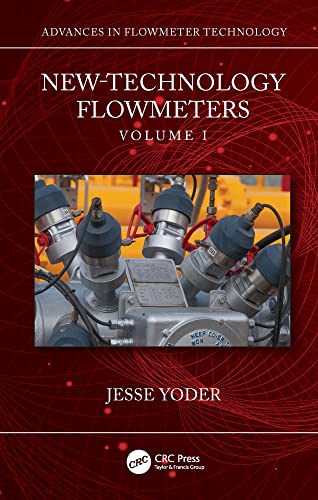
Advances in Flowmeter Technology (2 volume set).

Dr. Jesse Yoder's New-Technology Flowmeters Part 1  (CRC Press) describes the origin, principle of operation, development, advantages and disadvantages, applications, and frontiers of research for new-technology flowmeters, which include Coriolis, magnetic, ultrasonic, vortex, and thermal. Focusing on the newer, faster growing flowmeter markets, the book places them in the context of more traditional meters such as differential pressure, turbine, and positive displacement. 

Taking an objective look at the origins of each flowmeter type, the book discusses the early patents, for each type, and which companies deserve credit for initially commercializing each flowmeter type. This book is designed for personnel involved with flowmeters and instrumentation, including product and marketing managers, strategic planners, application engineers, and distributors.

His Conventional Flowmeters: Volume II (Kindle Edition) covers origin, principle of operation, development, advantages and disadvantages, applications, and frontiers of research for conventional technology flowmeters, which include differential pressure and primary elements, positive displacement, turbine, open channel, and variable area.

@flowresearch @routledgebooks #Pauto

Thursday, 27 January 2022

World flowmeter market.

Get Ready for a rebound in 2022 with brand new flowmeter data in Volume X!

While 2021 was an unusual year, it was definitely an improvement over 2020. And even though many companies suffered a decline in 2020, pent-up demand and an improving economy are causing a rebound in the flowmeter markets. Are you prepared for this new reality with the data you need to successfully compete in these expanding markets?

"At Flow Research, we spent most of last year developing the numbers for our new study that covers the entire flowmeter market, including all flowmeter types. The study is called Volume X: The World Market for Flowmeters, 8thEdition. This is easily our most popular study. It is accompanied by a new edition of Module A: Strategies, Industries, and Applications," said Dr Jesse Yoder of Flow Research.

Between the two, there is a complete analysis of the world flowmeter market that allows comparing effects of the pandemic on each flowmeter type. In addition it details market size, market shares, industries, applications, company profiles, and growth factors for all types of flowmeters used in the process industries. "Volume X is the result of more than a full year of research on each one of the individual flow technologies. This is our 8th Edition, and it is the best edition yet!"

This study has two base years: 2019 and 2020, so that the effects of the pandemic on the flowmeter market as a whole and by flowmeter type is evident. The 2021 numbers reflect up to date projections, and the forecasts go through 2024.

As of today, oil prices exceed $86 per barrel. For those of you who sell into the oil & gas industry, this indicates that very good times are ahead for the flowmeter markets. Pent-up demand for crude oil and refined fuels, along with pent-up demand for flowmeters, will make 2022 a very strong year for anyone involved in flowmeters and instrumentation. And the recovery of the global economy is good news for the other process industries as well. "Now is the time to prepare for this boom by ordering the one study that gives you a complete view of where we've been and where we're going by flowmeter type," concluded Dr Yoder.

There are special discounts available for orders placed up to mid-February 2022.

@flowresearch #Pauto

Thursday, 16 December 2021

Positive Displacement flow.

A new study, The World Market for Positive Displacement Flowmeters, 3rd Edition, is now shipping from Flow Research. This is the most comprehensive study they have ever done on the positive displacement (PD) flowmeter market. 

The study includes a complete treatment of PD flowmeters by type, including oval gear, rotary, gear, helical, nutating disc, piston, diaphragm, and spur gear. They have taken unprecedented steps in analyzing these different PD meters, not only describing each principle of operation, but also including illustrations that show how each one works. Most importantly, the study includes dollars and units sold for each PD flowmeter type worldwide and by region. This means that those in the PD flowmeter market, or competing against positive displacement flowmeters, will find vital information in this study

The new Positive Displacement study comes at a special time for the PD flowmeter market. PD suppliers suffered along with other flowmeter suppliers through the pandemic. Now with the pent-up demand for refined fuels requiring more flow measurement, positive displacement suppliers are in a position to benefit from the growing economy. 

In conducting this study all known suppliers of positive displacement flowmeters worldwide have been contacted. Many of these companies have cooperated in providing data and illustrations for this important study. Besides market size and forecasts, the study features growth factors, company profiles, product analyses, market shares, and much more.

In order to provide an accurate perspective on the 2020 market, data on the PD markets in both 2019 and 2020 was collected. "The year of the pandemic, 2020, was a year like no other, and making this the base year would not provide a frame of reference for what came before or for what is happening now. Thus, this study has two base years, 2019 and 2020, with forecasts through 2024. This captures the effect of the pandemic, the resulting recovery based on pent-up demand, and the brighter future that lies ahead," said Flow Research's Jesse Yoder.

While the positive displacement flowmeter market was affected by the pandemic, these meters excel in downstream applications, and are less impacted by upstream changes in oil and gas production. As a result, the PD market is in a position to recover more quickly from the 2020 downturn as demand ramped up more quickly than supply in 2021. The crude oil inventories built up in 2020 have declined, helping push crude oil prices to over $70 and at times over $80 per barrel.

@flowresearch #Pauto #Oil 

Thursday, 25 November 2021

Flow into 2024.

Flow Research have been publishing studies for more than 20 years and have developed a flowmeter database that is like no other in the industry.

Flow Research spent most of 2021 developing the numbers for their new study that covers the entire flowmeter market, including all flowmeter types. The study is called Volume X: The World Market for Flowmeters, 8th Edition. This is their most popular study. It is accompanied by a new edition of Module A: Strategies, Industries, and Applications.

They have developed the data for this new study by researching all the flow technologies. A Coriolis study and three Ultrasonic studies, and a new positive displacement study were compiled. They are also working on a new turbine study as well as a new magnetic flowmeter study. They have also done extensive work on variable area and open channel meters. Finally, they are updating more recent studies on primary elements, vortex, and thermal meters to 2021.

There are some new touches to this version of Volume X, including illustrations (not just photographs) of the operating principles of the different flowmeter types. This study has two base years: 2019 and 2020, so that the effects of the pandemic on the flowmeter market as a whole and by flowmeter type can be revealed. The 2021 numbers reflect up to date input from this year, and the forecasts go through 2024.

Pre-publication discounts are available that will provide the market data needed today and going into 2022. This new Volume X study shows you the entire flowmeter market, and shows how the different flowmeter types fared during the pandemic. Forecasts through 2024 provide a basis for planning purposes. It is anticipated that this study will be available for shipping in December 2021.

Other studies may be paired with this , such as Coriolis, Ultrasonic, Magnetic, or Positive Displacement, in attractive bulk packages if desired.

@flowresearch #Pauto #Utility #Automation

Tuesday, 8 June 2021

The progress of US flowmeters.

Flow Research has been following the ultrasonic flowmeter market since 2000, and we have seen many changes occur during that time. It's been more than three years since their most recent study of this market was published - the 5th Edition. A new study "The World Market for Ultrasonic Flowmeters, 6th Edition." has now been issued.

This study consists of three separate studies which are now available:

• Core Study: The World Market for Ultrasonic Flowmeters, 6th Edition
• Module A: The World Market for Inline Ultrasonic Flowmeters
• Module B: The World Market for Clamp-on and Insertion Ultrasonic Flowmeters

These gathered data for both 2019 and 2020 and gives a clear picture of the market in 2019, along with data on how the pandemic affected the market in 2020. With conditions gradually improving, this study gives a sound footing for the rebound that is already occurring in 2021 and is likely to continue through the forecast period of 2024. In the past few days oil prices have reached a two year high and are now near $70 per barrel. Demand for natural gas is growing, and the next few years should be strong ones for ultrasonic flowmeters. Ultrasonic flowmeters will also be a major factor in the growth of renewable energy.

The ultrasonic flowmeter market has proved, along with Coriolis, to be one of the fastest growing flowmeter markets in the past 20 years. Ultrasonic flowmeters are unique in that they have three distinct mounting types: Inline, Clamp-on, and Insertion. This gives them a versatility that other flowmeters lack, and makes them ideal for check metering, measuring flare gases, and highly accurate Inline flow measurement. What ultrasonic meters are perhaps best known for is their ability to measure custody transfer of natural gas and petroleum liquids.

New Product Developments in Inline Meters
The Inline Ultrasonic market is especially important because these meters are used for growing custody transfer applications for both oil and natural gas. Ultrasonic meters are holding their own against competing turbine and differential pressure flowmeters because these other flowmeter types still present challenges for certain applications. Inline meters offer greater security and typically greater accuracy than clamp-on and insertion meters, and they are the largest market of the three types. Many of the new developments, like twin transmitters and more accurate multipath measurement, are occurring with inline meters.

Insertion and Clamp-on Markets: A Critical Part of the Picture
The insertion and clamp-on markets are also an increasingly important part of the ultrasonic picture. Insertion meters are widely used to measure flare and stack gas emissions. These meters are increasingly important in a world of tightening environmental regulations. They also are more economical than inline meters, since they can be hot tapped or cold tapped and do not have a meter body.

Clamp-on meters have the unique feature that they can measure flow with no pipe penetration - they simply clamp on to the outside of a pipe and send ultrasonic signals to a receiver on the other side of the pipe. Clamp-on meters are widely used as check meters and to spot check flows where inline meters are not needed or are impractical. The technology of clamp-on meters continues to improve.

Module B presents the data for insertion and clamp-on meters in their own separate dedicated chapters, complete with their own growth factors and detailed segmentation. Companies that only manufacture clamp-on or insertion flowmeters will find this module especially attractive.

The Ultimate Package: Putting it All Together
The Core Study takes the most critical data from Modules A and B and puts it together into a picture of the entire ultrasonic flowmeter market. The Core Study allows you to compare inline, clamp-on, and insertion meters in terms of market size, growth rate, and market shares. It also contains all the company profiles from both Modules A and B, and also the product analyses. The Core Study is great as a standalone study, but even better together with Modules A and B.

Flow Research is making a special offer on the ultrasonic studies they call the "Ultimate Package" that enables ordering of all three studies for the price of two. With this order, they offer a substantial discount on their new study, published in April, called "Flowmeters in the Oil & Gas Industry."

@flowresearch #PAuto #Research

Friday, 12 March 2021

The decade of natural gas!

As the world moves towards a greater reliance on renewable energy, natural gas measurement is becoming increasingly important. This is because renewable alternatives are not yet cost-efficient enough and await further research and development.  For those who want to move away from refined fuels, natural gas is an obvious choice.  It burns cleaner than coal and oil, is very plentiful, and is readily available in most locations.  The 2020s may become known as "the decade of natural gas."

Flow Research has recently published a series of studies on gas flow measurement.  These studies give the market for gas flow measurement by flowmeter type in 2019 and take into account the results of the COVID-19 pandemic in 2020.  They project growth until 2024.  The studies also provide production and consumption data for natural gas by region and by country. This series is called The World Market for Gas Flow Measurement, 4th Edition.

This is the 4th Edition of a series of studies that was previously published in 2005, 2011, and 2016.  If your company offers flowmeters that measure gas flow, or would like to get into this market, then this series of studies is the best possible tool for understanding and competing in the gas flow measurement market.  I have attached an Overview of these studies, along with an order form.  The order form offers a special discount on the group of studies.  Please contact us if you would like some other configuration.

@flowresearch #Pauto #Gas  

Wednesday, 3 March 2021

Flowmeters in oil & gas.

During February 2021, Flow Research published a new study* on flowmeters used in the Oil & Gas industry. 

One purpose of the study is to provide data on flowmeters sold into the Oil & Gas industry worldwide and by region.  This includes all types of flowmeters, whether new-technology or conventional. The data given is in both units and dollars

A second purpose is to provide data on natural gas and oil production in our defined regions, including by country.  Understanding where natural gas and oil is being produced is helpful in developing a strategy for selling into these regions.  Gas and oil production numbers in specific countries that stand out in terms of oil and gas activity are also discussed.  A discussion of some of the major natural gas and oil companies that are operating in these regions is included.  Examples include Gazprom, BP, Exxon/Mobil, CNOOC, ADNOC, Qatargas, and many others.

*This new study is called Flowmeters in the Oil & Gas Industry, and it was published in February 2021. 

@flowresearch #Pauto #Oil

Tuesday, 15 December 2020

Oil & Gas flowmeters.

Flow Research has nearly completed a new study on flowmeters used in the Oil & Gas industry. One purpose of the study is to provide data on flowmeters sold into the Oil & Gas industry worldwide and by region.  This includes all types of flowmeters, whether new-technology or conventional.  The data given is in both units and dollars.

"Our flowmeter data comes from interviewing suppliers about industries theysell into.  We've also talked to end-users, distributors, and OEMs.  Because we have studied every flowmeter type, we have a wealth of data to draw from. Even though the oil & gas industry has had its ups and downs, it plays a major role in the sales of many flowmeter types.  This especially includes Coriolis, ultrasonic, differential pressure, and turbine flowmeters.  We have received many requests to do industry-based studies, and this is our first one," says Jesse Yoder of Flow Research.

It also provides data on natural gas and oil production in defined regions, including by country.  Understanding where natural gas and oil is being produced is helpful in developing a strategy for selling into these regions.  Gas and oil production numbers are discussed in specific countries that stand out in terms of oil and gas activity.  A discussion is included of some of the major natural gas and oil companies that are operating in these regions.  Examples include Gazprom, BP, Exxon/Mobil, CNOOC, ADNOC, Qatargas, and many others.

This new study is called Flowmeters in the Oil & Gas Industry, and it will be published in January 2021.  

#PAuto #Oil @flowresearch

Monday, 17 August 2020

New research on the gas flow measurement market.

Flow Research has just released a series of three new studies on gas flow, which together amount to 1,214 pages 

World Market for Gas Flow Measurement
Pic Flow Research
The Core Study contains shipments of gas flowmeters by type in dollars and units worldwide and by eight geographic regions.  It includes growth factors, a product analysis of flowmeters used to measure gas flow, market shares, and company profiles of the leading suppliers.

Applications and Strategies for Gas Flow Measurement
Module A contains data on applications by flowmeter type worldwide and by region.  It also includes strategies for competing in the gas flowmeter market.

Natural Gas Production, Consumption, and Flow Measurement
Module B is their first industry-based study.  It includes flowmeters by type shipped to the oil & gas industry in dollars and units worldwide and by region.  It also contains extensive data on natural gas production and consumption worldwide and by region.

"We have held this study back so that we could better gauge the effect of
COVID-19 on the gas flowmeter market," says Principal at Flow Research, Dr Jesse Yoder.  "We have talked to many different companies about the projected effect of this pandemic on flowmeter sales. As a result, we have revised our initial forecasts for the gas flowmeter market in 2020." 

The forecasts were finalized in July 2020, and they cover the period from 2019 to 2024."

This is their first Gas Flow study since 2016.

@flowresearch #PAuto #Oil #Gas

Friday, 10 January 2020

Oil & gas flow industry studies!

Flow Research is working on two new gasflow studies. This is the 4th edition of their gasflow series of studies. The last gasflow study was published in 2016. They are now taking another look at this market, which has undergone significant changes in the past several years.

The new studies are called The World Market for Gas Flow Measurement, 4th Edition and Module A: Oil & Gas Industry Flowmeters, Gas Applications and Strategies, and both studies will are scheduled for publication in Q1 2020.

Flow Research has been following the gas flow market regularly since the first edition of our worldwide gas flow measurement study in 2004. Since then, the gas market has evolved considerably. -- and experienced extraordinary growth in the last decade.

Natural gas is a cleaner alternative to oil and coal, and the world community has welcomed the seeming abundance of natural gas because it:

  • Is available now to help meet energy needs around the world
  • Currently enjoys a favorable price point due to its surging supply
  • Can be delivered in a number of forms and through a variety of means, making it a highly versatile commodity and potentially lowering its distribution costs
  • A long-term bridge to renewable energy.

Flow Research's Jesse Yoder comments, "We believe this is an optimal time to quantify the growth in the gas flow measurement market, and to take an in-depth look at its present and future prospects. Research has resulted in new products that measure the flow of gas more accurately and reliably. In addition, expanded industry approvals have made the use of certain types of flowmeters viable in this market."

@flowresearch #PAuto 

Monday, 25 February 2019

The flow market analysed!

Flow Research are about to ship one of the most comprehensive studies ever published of the worldwide flowmeter market. This study is called Volume X: The World Market for Flowmeters, 7th Edition. This All-in-One Study gives 2018 market size and market shares, and forecasts through 2023 for all flowmeter types used in process environments.

In addition to Volume X, they are publishing a companion volume called Module A: Strategies, Industries, and Applications. This popular volume gives segmentation by industry and application for each flow technology. It also discusses the underlying growth factors and driving forces behind the different industries and applications. The strategies section shows how to gain an edge in a competitive market.
The study includes:
Market size in 2018 of the worldwide market by flowmeter type in US Dollars and units
Market size forecasts by flowmeter type through 2023 in dollars and units.
Market shares for each flowmeter type in 2018.
Both worldwide and regional market size and forecast data.
Growth factors and market trends for all flowmeter technologies.
A technology description and analysis for each flowmeter type, including major competitive strengths and weaknesses.
Company profiles with product information for easy comparison.

The study includes the following: New-Technology flowmeter markets: Coriolis, magnetic, ultrasonic, vortex, and thermal. 

It includes these Traditional Technology flowmeter markets: differential pressure, primary elements, positive displacement, turbine, open channel, and variable area. Emerging technologies in the study are sonar and optical.

The geographic segmentation includes North America, Western Europe, Eastern Europe/FSU, Mideast/Africa, Japan, China, Asia Pacific, and Latin America.

Over the past nine months, over 500 questionnaires were sent to all known suppliers of every flow technology. The questionnaire asked for geographic distribution and revenue information, along with industries, applications, fluid types, and projected growth from the base year of 2018. The results have been analysed and a complete study of the worldwide flowmeter market written. This is the 7th edition of this study, which was first published in 2003. At that time, the worldwide flowmeter market was $3.1 billion. The market has grown substantially since that time, and Flow Research have documented its growth every step of the way.

2018 was a very exciting year in the flowmeter market as it was one of recovery. Some technologies appear to have experienced unprecedented growth, especially in the magnetic flowmeter market. Their new Volume X captures this growth and makes it easy to determine which flowmeter types benefited most from the recovering market in 2018. Volume X is the only product on the market that captures the growth in all the flow technologies, including Coriolis, ultrasonic, positive displacement, turbine, variable area, and other types. 2018 is likely to be remembered as a year of unprecedented growth, and this will be reflected in this new Volume X study.

It makes it easy to compare market size, market shares, and growth rates for all types of flowmeters. They use the bottom-up method of determining market size for each flowmeter type, and then put these numbers together for the worldwide picture. This, it is mantained, is the only way to get a reliable picture of the world flowmeter market and to find out how the different flowmeter types compare with each other.

@flowresearch #PAuto 

Friday, 17 November 2017

MagMeter Market study.

Flow Research have completed  and published a new Magnetic Flowmeter study.   It contains some surprising and unexpected results. As it turns out, the magnetic flowmeter market was more affected by the downturn in oil prices than was anticipated. Applications for water measurement in the hydraulic fracturing, or “fracking,” industry are among the reasons. The study contains hard data on the changes in the market since 2013, and quantifies these changes by region, by segment, and by technology.

The World Market for Magnetic Flowmeters, 6th Edition is now ready for shipping. The on-line overview may be read here (pdf).

The magnetic flowmeter market has many unique aspects that make this study of vital importance to anyone competing in this market. Liner types, line sizes, coil power types, and battery operation are among the segments considered. Unlike many flowmeters, magnetic flowmeters do not measure the flow of gas, steam, or hydrocarbon liquids. Yet they loom large in water and slurry flow measurement, in hydrofracking, in pulp and paper, and in many other areas. Magnetic flowmeters are especially popular in Europe, and major suppliers are located there, in the United States, and in Japan.

Some of the important trends identified are the growing use of insertion meters, wireless technology, and battery operated magnetic flowmeters. The study has also segmented the clean water from the wastewater market in this study.

Some say that water is the new oil. Whether or not this is true, there is no question that water flow measurement is more critical than ever in a world in which clean and potable water is an increasingly scarce commodity. This study makes it clear that magnetic flowmeter technology is changing, and that it is more important than ever today. This study will be of special interest to any companies looking to expand their magnetic flowmeter product line, or potentially to add magnetic flowmeters to their current offerings.


#FlowResearch #PAuto

Monday, 17 July 2017

Inline ultrasonic flow - a study!

A just-published study from Flow Research should be of interest to those involved in the fast-moving ultrasonic flowmeter market. The study is called Module A: The World Market for Inline Ultrasonic Flowmeters, and it is hot off the press from Flow Research.

New Product Developments
The Inline Ultrasonic market is especially important because these meters are used for growing custody transfer applications for both oil and natural gas. While ultrasonic meters are holding their own against competing turbine, differential pressure and positive displacement flowmeters, these other flowmeter types still present challenges for certain applications. Inline meters offer greater security and typically greater accuracy than clamp-on and insertion meters, and they are the largest market of the three types. Many of the new developments, like twin transmitters and more accurate multipath measurement, are occurring with inline meters.

Flow Research spent a full year researching the entire ultrasonic market visiting many of the leading suppliers onsite. They attended conferences in April and June 2017 where many suppliers were exhibiting and product managers were in attendance. This gave the ability to cross-check our numbers and to make sure that the most accurate figures possible were reported. It has been over four years since the last edition of this study, and for those who want to stay competitive in the ultrasonic market, it is an absolute must-have.

@flowresearch #PAuto


Friday, 2 June 2017

Developments in US flowmeters.

It has been more than four years since Flow Research, published their last Ultrasonic Flowmeter study. During this time, a lot has changed in the ultrasonic flowmeter market. Oil and gas prices have come down, impacting the business of many companies. But now oil and gas prices are on the way back up. Suppliers have made more progress in developing multipath meters for custody transfer applications, for both liquid and gas. They have also been active in producing ultrasonic flowmeters with enhanced diagnostic capabilities.

Flow Research has taken a fresh look at this dynamic market. The ultrasonic flowmeter market has been one of the best performers in terms of growth over the years, and it is important therefore to gauge its performance in 2016 and beyond. Ultrasonic flowmeters are still displacing traditional technology meters in natural gas and petroleum liquid applications. They have virtually no pressure drop, are highly accurate, and have no moving parts. And ultrasonic suppliers continue to do research and release new products and features into this fast-moving market.

Their new study is called The World Market for Ultrasonic Flowmeters, 5th Edition, and it has a base year of 2016. It is made up of three separate studies:

  • Core Study: A complete picture of the entire ultrasonic flowmeter market
  • Module A: The Inline Ultrasonic Flowmeter Market, including detailed segmentation about Inline Ultrasonic Flowmeters, both single path and multipath.
  • Module B: The Core and Insertion Ultrasonic Flowmeter Markets, including detailed segmentation about each type.

Dr Jesse Yoder of Flow Research tells us that he has produced an overview for this study, which includes a Core Study plus Modules A and B.  "The Ultrasonic Study has always been one of our most popular ones. We think this is an especially important time to look at this market."

 @flowresearch #PAuto


Thursday, 2 February 2017

Flowstudys may be purchased on-line.

Flow Research has opened an Secure Online Store. From now on many of their studies may be purchased using the convenience of online ordering, saving money in the process! Currently, they offer a $200 discount on any study ordered through the Secure Online Store.
Among studies available are:
The World Market for Gas Flow Calibration Facilities (January 2016)
The World Market for Liquid Flow Calibration Facilities (January 2016)
The World Market for Multiphase Flowmeters, 2nd Edition (July 2016)
The World Market for Coriolis Flowmeters, 5th Edition (December 2016)
Core Study-Volume X: The World Market for Flowmeters, 6th Edition, January 2017)
Module A: Strategies, Industries, and Applications (January 2017)
The Market for Temperature Sensors in the Americas, 3rd Edition (February 2017) (Preliminary version available now)

And other studies will become available in the future.


@flowresearch  #PAuto

Monday, 14 March 2016

The latest study on gas flow measurement!

Have you ever wondered how large the gas flow measurement market is or which flowmeter technologies are leading in this market?

The answer to these questions and many more are contained in a newly published gas flow study: Core Study: The World Market for Gas Flow Measurement, 3rd Edition. Flow Reasearch developed the data for this study over the last nine months the result of reasearch involving the sending of 500 questionnaires on the gas flowmeter market. This data is compiled into a 606 page study that is chock full of valuable market size and forecast numbers, charts, trends, product analyses, and company profiles. It is an indispensable publication for any company involved in the gas flow measurement market today.

Gas flow measurement is especially important today, as companies are turning to natural gas as a cleaner alternative to oil. And natural gas has to be measured at many different points along distribution channel. It is measured at the wellhead, gathering station, processing plant, along the pipeline, and in the distribution channels to the point of use. Many of these are custody transfer measurements, which provide special opportunities to suppliers of Coriolis, ultrasonic, turbine, and differential pressure flowmeters.

This study is part of a broader series of studies on gas flow measurement. Another very popular study is Module C: The World Market for Custody Transfer of Natural Gas. This study was published in October 2015.  It gives market shares, market size, 5-year forecasts, growth factors, and much more. It also tells which products and technologies are dominant. Custody transfer of natural gas is one of the fastest growing niche markets in the flowmeter industry.

The Core Study and Module C are two in a series of five gas flow studies that are designed to give a complete picture of the gas flow measurement market. For a more complete view of both studies and of the series visit their Gas Flows Site.

@flowresearch #Pauto

Thursday, 14 January 2016

The hottest flow studies!

New schedule of flow studies, Coriolis, magnetic, ultrasonic, Volume X etc.

Dr Jesse Yoder founder Flow Research
Flow Research is continuing their work in this area through the industry group called Flow Recalibration Working Group they started building last year. This group’s membership continues to grow.  The goal is to formulate criteria for determining when a flowmeter should be recalibrated. The formation of the group is in direct response to requests made by end-users in the Middle East who want help in determining when their ultrasonic and turbine meters should be recalibrated.
In addition they have completed two flow calibration studies, Worldwide Gas Flow Calibration Facilities and Markets and Worldwide Liquid Flow Calibration Facilities and Markets. The reception for these studies has been extremely positive, and it is believed that they will make a significant contribution to companies who are concerned with the subject of flowmeter calibration.

Their schedule of studies for 2016. is also available on the website.

#FLOWRESEARCH #PAuto 

Monday, 17 May 2010

How's oil doing?

This past month (April/May 2010) when oil is mentioned, people naturally think of the tragic ecological disaster slowly unfolding on the Gulf of Mexico. However even as millions are being spent trying to save the beachs and wetlands of the Southern US shoreline we are continuing to use the stuff in our cars, homes and industrial processes. It is the very lifeblood of modern life.

Dr Jesse Yoder
of Flow Research has published a Worldflow Flash Report called “Crude Up and Down, but Mostly Holds above $80." The report looks at the price of crude oil over the past year, and especially over the past two months. The Flash Report, dated May 12, 2010, places the price of crude oil in the context of worldwide supply and demand. Flash Reports are part of their Worldflow Monitoring Service.

The Flash Report on Oil Prices is provided as part of their Worldflow Monitoring Service, which was started in 2002. This service consists of two publications: the Market Barometer and the Energy Monitor. The Market Barometer keeps you up-to-date on developments in the flowmeter industry on a quarterly basis. In every issue, they review each flowmeter technology and interpret changes, giving you the information and ideas you need to implement winning product strategies and make more informed decisions.

The Energy Monitor reports quarterly on the oil & gas, refining, power, and renewables industries. A section on New Projects in each issue provides details of new capital projects that instrumentation suppliers potentially can bid on. An “Issues and Perspectives” section provides market analysis of relevance to flowmeter suppliers and end-users. Flash Reports keep you aware of breaking news events in the industry. The Worldflow Monitoring Service provides vital information for anyone working in flow and instrumentation, and it is only available from Flow Research.

They are offering free trial subscriptions on the website.

They are working on quite a few new market studies, including a new edition of the very popular gas flowmeter study.