Showing posts with label Natural Gas. Show all posts

Friday, 14 November 2025

Advanced remote monitoring for natural gas infrastructure.

Enhances safety, increasing reliability and ensuring regulatory compliance.

The Fisher™ ARMOR™ solution for improving the operation of natural gas utility grid systems has been introduced. This digital field monitoring device features advanced measurement and communication capabilities designed specifically to enhance safety, streamline data collection and ensure regulatory compliance — all while supporting a digitally native workforce.

Natural gas utilities often need to monitor and analyze key variables at multiple points throughout their distribution systems, with data and information available locally or remotely. These capabilities are needed to improve safety and compliance, as regulatory bodies increasingly push for mandated monitoring at all natural gas district stations.

Enhanced monitoring can also improve efficiency by reducing the need for frequent field visits and excessive maintenance. Existing solutions are either too limited regarding the number of variables measured and communication options, such as with chart recorders and meter sets, or too complex, typically using remote terminal units based on programmable logic controller (PLC) technology.

ARMOR addresses these and other issues as the only natural gas monitoring device of its type that can monitor pressure, travel and discrete input. Pressure measurement includes up to three values for monitoring at various points in the network to provide system status and equipment operational performance.

Its templated and configurable dashboards and reports, along with its mobile app, simplify data gathering and analysis. It can serve as a regulator or station monitoring solution, and it can be used for end-of-line monitoring.

The new Fisher device leverages the trend of SCADA systems evolving to include cloud capabilities by providing additional monitoring capabilities through a cloud-based platform, making data accessible anytime, anywhere. 

The DeltaV™ SaaS SCADA platform complements ARMOR, providing a proven monitoring platform with analytics capabilities. This allows for data-driven decision-making with predictive analytics, a feature not available with most competitive products. It has an intrinsically safe battery with up to a 5-year life span. It's built to withstand harsh environments with an IP66 water and dust resistance rating, a CSA Class 1 Division 2 certification, and an operating temperature range of -40 degrees Fahrenheit to +160 degrees F.


@Emerson_News @EmersonExchange @EmersonProcess @EMR_Automation @FisherValves #PAuto #Utility

Monday, 20 February 2023

New technology enables the green transition away from natural gas.

Antti Heikkila* explains how GHG emissions can be reduced by replacing natural gas with biomethane, but he says this can only be a viable solution if it is environmentally and financially sustainable.
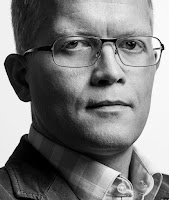
Antti Heikkila - Vaisala
Countries around the world are urgently seeking alternatives to fossil fuels in order to lower greenhouse gas (GHG) emissions and thereby limit global warming. One of the ways in which this can be achieved is by replacing natural gas with biomethane, but this can only be a viable solution if it is environmentally and financially sustainable. To achieve this goal, it is necessary to monitor biogas production continuously so that the process can be optimized. Vaisala has therefore developed monitors that are capable of measuring methane, carbon dioxide and humidity in-line.

Formed over a timespan of millions of years when layers of organic matter decompose deep underground at high temperature and pressure, natural gas consists of methane and small amounts of other gaseous hydrocarbons. Natural gas is therefore a fossil fuel, and its combustion is responsible for a significant portion of global greenhouse gas emissions. For example, according to the USEPA, emissions from natural gas consumption represented 79% of the direct fossil fuel CO2 emissions from the (USA) residential and commercial sectors in 2020.

Spiralling energy costs, supply chain disruption and the GHG emissions associated with the extraction, transport, and combustion of natural gas mean that cheaper, reliable, and more sustainable alternatives to natural gas are required.

As fossil fuels are phased out during the green transition, it has become necessary to find alternative sources of clean energy through innovation. New technology therefore has a vital role to play as we move into a profitable and sustainable era of green energy.

Replacing natural gas with biomethane.
Biogas represents an important green alternative, but only if it is economically viable and able to compete with alternative forms of renewable energy. In-line monitoring of biogas production and the upgrading process to biomethane enable significant production efficiency improvements; making biomethane an economically and environmentally viable alternative to fossil fuels.

Around 75% of the biogas currently produced in the EU is used as a source of local heat and power generation, with almost 20% of biogas being converted to biomethane. According to the European Commission’s RePowerEU scheme, biomethane production is projected to increase tenfold by 2030 and to grow even more rapidly up to 2050. Today, the production cost of biomethane has been estimated to be around 80 euros/MWh, but the European Biogas Association expects this to fall to 55 euros/MWh in the future. These increases in both production and efficiency can only be achieved with the latest technology in process control instrumentation.

Biogas also offers an opportunity for a more circular economy. This is because the feedstock for anaerobic digestion (AD) can include waste products such as food, crop residues, animal manure, and wastewater sludge, and the digestate from AD can be returned to the land as fertilizer.

Reducing methane slip.
Biogas represents an attractive opportunity, but its sustainability credentials would be damaged if methane is allowed to slip into the atmosphere from either the AD reactor or the gas upgrading process. This is particularly important because methane is a powerful GHG; roughly 30 times stronger than carbon dioxide, so it is vital that advanced monitoring and process optimization is employed to lower or prevent any potential emissions.

Renewable energy solutions.
Biomethane is a useful alternative where a gas fuel must be used, or where natural gas is used as a feedstock instead of a fuel. In the chemical industry, for example, natural gas is used as an energy source, and as a raw material for the production of ammonia, which in turn is used to produce fertilizers.

Substantial infrastructure is in place to facilitate the utilization of natural gas, so biomethane represents a logical alternative. However, there will be many instances where fossil fuel energy sources can be replaced by other forms of renewable energy such as wind and solar. Biomethane production must therefore be as efficient as possible if it is to compete, and this is where the latest monitoring technology has a vital role to perform.


* Antti Heikkilä is an Industry Expert and Product Manager at Vaisala, where he has been in charge of bringing Vaisala’s ground-breaking and sustainable innovations for biogas measurement to market.

@VaisalaSuomi, @VaisalaGroup  @_Enviro_News #PAuto #Energy

Wednesday, 7 April 2021

Natural gas analyser.

Proven measurement technology for monitoring moisture content in natural gas pipelines benefits from improved user interface, data handling and network connectivity, along with enhanced modularity for optimal field serviceability.

The J22 TDLAS Gas Analyzer has been launched by SpectraSensors, An Endress+Hauser company. . This new product addresses multiple issues with traditional technologies used for the measurement of moisture content in natural gas, while providing additional benefits.

Today’s natural gas market is more complex than ever, with an unprecedented range of supply sources and overall gas composition variability. Gas suppliers, pipeline operators, and industrial users must accommodate unexpected changes in heating value and contaminant levels by using analyzers to verify characteristics throughout the supply chain. One very critical contaminant must be monitored continuously: H2O. The presence of water content in liquid or gas can cause corrosion in a pipeline or other assets. Moisture and other acids can combine to cause severe asset degradation. 

The J22 moisture analyzer combines Endress+Hauser’s and SpectraSensors’ more than two decades of experience producing tunable diode laser analyzers with the latest advancements in data analysis, internal diagnostics, multi-functional enclosures, and web server connectivity. The combination of these features creates a comprehensive moisture monitoring solution with unique capabilities.

The analyzer can replace traditional electrochemical sensors, such as aluminum oxide, phosphorus pentoxide, quartz crystal microbalance, and chilled mirror. These technologies often lose accuracy due to contamination issues, require frequent maintenance, and can’t reliably distinguish between water and other liquids frequently found in gas streams, such as glycol and methanol.

TDLAS technology can identify the water molecules specifically, while being unaffected by a wide variety of other common contaminants. However, some traditional TDLAS analyzers are difficult to maintain and not suited to installation in the harsh environments that are often encountered with these types of measurement applications.

To address these and other issues, the J22 TDLAS Gas Analyzer is designed for almost zero maintenance. When service is required, its components are easily accessible and field-serviceable, allowing for quick replacements and upgrades. The gas sample cell is simple to remove and designed for convenient cleaning and servicing. The available IP66 and Type 4X enclosures for housing the analyzer system are suitable for installation in typical natural gas application locations.

Field operability is made all the easier thanks to Endress+Hauser’s Heartbeat Technology™, with diagnostic capabilities built into the J22 TDLAS Gas Analyzer. Alerts and verification reports advise operators on how the unit is performing and will inform the operator if the health of the analyzer is degrading. When severe enough, the system triggers alarms to call for maintenance attention. Operators can quickly interpret alerts, thanks to NAMUR 107 compliant alarm categories and diagnostic graphics.

The analyzer has a built-in web server, with connectivity provided to a laptop or other device via an Ethernet cable. This functionality allows operators to find further detail through information screens and verification reports, the latter provided in PDF format.

These features and options, combined with the J22 TDLAS Gas Analyzer’s reliable measurement technology, provide an ideal solution for measuring water content in natural gas streams. 

• See also Digging in at Houston (11/3/2021)

@Endress_Hauser @Endress_US @Endress_UK @Endress_CA #PAuto #Gas

Friday, 12 March 2021

The decade of natural gas!

As the world moves towards a greater reliance on renewable energy, natural gas measurement is becoming increasingly important. This is because renewable alternatives are not yet cost-efficient enough and await further research and development.  For those who want to move away from refined fuels, natural gas is an obvious choice.  It burns cleaner than coal and oil, is very plentiful, and is readily available in most locations.  The 2020s may become known as "the decade of natural gas."

Flow Research has recently published a series of studies on gas flow measurement.  These studies give the market for gas flow measurement by flowmeter type in 2019 and take into account the results of the COVID-19 pandemic in 2020.  They project growth until 2024.  The studies also provide production and consumption data for natural gas by region and by country. This series is called The World Market for Gas Flow Measurement, 4th Edition.

This is the 4th Edition of a series of studies that was previously published in 2005, 2011, and 2016.  If your company offers flowmeters that measure gas flow, or would like to get into this market, then this series of studies is the best possible tool for understanding and competing in the gas flow measurement market.  I have attached an Overview of these studies, along with an order form.  The order form offers a special discount on the group of studies.  Please contact us if you would like some other configuration.

@flowresearch #Pauto #Gas  

Tuesday, 18 August 2015

Natural gas analyser in hazardous area!


Michell Instruments’ OptiPEAK TDL600 moisture in natural gas analyzer now has a variant specifically designed to meet US NEC500 requirements for hazardous area installation.

The complete analyser, together with sample conditioning system, meets Ex certification requirements for Class 1 Division 1 areas with gas groups B, C and D. The system also conforms to NEC505 for Zone 1 installation.

A NEMA4X enclosure provides protection and allows the analyzer to be installed near to the process sample tapping point. This ensures maximum benefit from the fast, optical response of the OptiPEAK TDL600 by reducing sample transport times to a minimum. Standalone, outdoor installation also keeps installation costs low for both new plant projects and retrofits to existing plants.

To complete the installation package, Michell offer accessories such as factory fitted trace heated sample tubing, floor standing mounting frame with sun protection and optional enclosure cooling to tailor the system to individual site location and customer requirements.

• Michell Instruments are marketed through Instrument Technology in Ireland.


Friday, 27 March 2015

Control systems for floating LNG facility!

Yokogawa in Malaysia, has received an order from a consortium comprising JGC Corporation (J) and Samsung Heavy Industries (SK) that will supply control systems and safety instrumented systems for PETRONAS’s second floating liquefied natural gas (FLNG) facility, PFLNG2.

Under the terms of the contract, Yokogawa Kontrol (Malaysia) will deliver an integrated control & safety system (ICSS) for the monitoring and control of the liquefaction facilities and storage tanks on PFLNG2. The ICSS will consist of a Yokogawa CENTUM® VP integrated production control system, a ProSafe®-RS safety instrumented system, a Plant Resource Manager (PRM®) package, a plant information management system, and other components. Yokogawa Kontrol will also be responsible for engineering, and the support of installation, commissioning, and training.

The PFLNG2 facility will be moored offshore off Sabah, Malaysia, and is designed to produce 1.5 million tons of LNG a year, with production scheduled to start in early 2018.

An FLNG facility is a new type of LNG plant that performs all operations at sea, starting with the routing of natural gas from offshore gas fields and including the refining, liquefaction, storage, and transfer of this resource onto LNG carriers. FLNG is attractive because the technology does not require the acquisition of land or laying of pipelines, making it suitable for small to medium-sized offshore gas fields that are deemed economically unfeasible to develop.

Since its establishment in Malaysia in 1989, Yokogawa Kontrol (Malaysia) has developed a solid global track record and extensive know-how of LNG processing plants, LNG carriers, FPSO vessels, and other types of offshore facilities. It has delivered numerous control systems to PETRONAS production facilities.  


In 2013, Yokogawa set up an organisation dedicated to the growing marine resource business as part of its efforts to expand its control business in this sector and offer the latest technology solutions to its customers.

Friday, 10 January 2014

Video shows how to reduce power consumption in gas & oil sites!

Natural gas and oil wellhead application video

Moore Industries has released a new video showing how its HCS HART® Concentrator System saves money and time by consolidating wiring and reducing power consumption at remote natural gas and oil production sites. The video is available for viewing at the Moore Industries Interface Solution Video Library and uses a real-world example from a natural gas site to show the value of the HCS in these settings.

The video shows a typical natural gas wellhead set-up, which includes tanks that store liquid and gas remnants. These tanks need to be monitored by level transmitters while temperature, flow and pressure transmitters are at other points in the process, with signals sent to a Remote Terminal Unit (RTU).

Power is typically supplied by solar panels. All of these transmitters consume up to 20mA per measuring point, creating significant power needs and often requiring the use of large and expensive solar panels. Using the HCS allows up to 16 HART smart transmitters to be multidropped onto one twisted pair, locking the power consumption at 4mA. The HCS also solves issues relating to hazardous area wiring requirements when installed in conjunction with a HART-capable Intrinsically Safe barrier.

Thursday, 4 July 2013

Process automation technology for vast Gladstone LNG project (AUS).

Operation centre enables real-time monitoring and improved collaboration for facilities up to 1000 kilometres apart

Australian oil and gas giant Santos uses process automation technology from Emerson Process Management to coordinate and enhance operations across its €14.32 billion (US$18.5 billion) Gladstone Liquefied Natural Gas project in Queensland (AUS). Emerson served as Main Automation Contractor for the project, providing technologies and expertise to help Santos gather and integrate real-time information from thousands of wells.

Artist's impression of GLNG plant (Gas Today)
The pioneering project will convert coal seam gas to liquefied natural gas (LNG) for export to global markets. Gas from the Bowen and Surat Basins in eastern Queensland will be transported by a 420 kilometre underground pipeline to an LNG plant on Curtis Island, near Gladstone on the coast. Santos’ operations centre at Brisbane, approximately 500 kilometres south of Gladstone, integrates data from the gas fields, pipelines and plant for 24/7 real-time monitoring and collaboration with teams in the field.

"We have developed a world-class remote operation centre," said Santos general manager of operations Rob Simpson. "The centre has changed the way our gas fields in the Bowen and Surat Basins are operated. Emerson’s team brought the process automation expertise we needed to meet global standards, and their solutions have equipped us with the ability to centrally monitor the production and progress of our intelligent assets up to 1,000 kilometres apart."

Santos and Emerson collaborated to plan and equip the Brisbane remote operations centre where management, engineers and planners can use real-time information from the intelligent fields to anticipate issues, collaborate, improve decisions, and take actions to maximise key performance indicators.

Emerson technologies for the Gladstone LNG project include the DeltaV™ digital automation system using Electronic Marshalling with CHARMs technology, as well as Rosemount® measurement and analytical instruments, Fisher® valves, Bettis™ actuators, Roxar™ multiphase meters, ROC remote operations controllers, and AMS Suite predictive maintenance software.

"We are excited about our work with Santos on this world-class remote operations centre," said Sabee Mitra, president of Emerson Process Management Asia Pacific. "It showcases the integration of control and asset information that helps make GLNG a reliable, safe and efficient operation."

The GLNG project is on track to make its first LNG shipments in 2015. Initial capacity is planned to be three to four million tonnes annually.

Thursday, 9 May 2013

US meter for high-accuracy flow measurement for LNG

The new Daniel™ 3818 Liquid Ultrasonic Flow Meter for liquefied natural gas applications is specifically designed for reducing flow measurement uncertainty throughout the LNG value chain. This meter is ideal for many marine and offshore applications, including custody transfer, fiscal metering, line balancing, check metering, allocation measurement and tanker loading and unloading.

Measuring LNG volume dynamically using the 3818 Ultrasonic Meter delivers higher accuracy than static measurement methods and can result in real savings. The 3818 provides a factory-proven linearity within ± 0.15% and a meter factor uncertainty of ± 0.027% due to its sophisticated multi-plane British Gas design, fast signal processing, and advanced transducer technology. Improvements in measurement uncertainty equate to a reduction in risk of the financial transaction. Additional metering points on rundown lines can also improve process control.

Industry forecasts anticipate increasing amounts of LNG will be traded in short-term (spot) contracts. This implies dynamic measurement of delivered product will be required, as is currently the case for custody transfer of oil shipments. In addition, LNG facilities are using shared or commingled storage tanks which require dynamic measurement to quantify and allocate ownership among multiple parties.

With a completely redundant 4-path, multi-plane configuration that is the equivalent of two 4-path meters in a single body, the Daniel 3818 Ultrasonic Meter utilises two independent transmitters - one for each set of four chordal paths. This ensures complete measurement redundancy and the ability to poll each 4-path meter separately. Acoustic processing is performed by specialised electronics designed to achieve high sampling rates, provide stable ultrasonic signals and optimal low flow response, delivering accurate, stable and reliable measurement.

Each Daniel 3818 Ultrasonic Meter is calibrated at Daniel’s ISO/IEC 17025 certified flow calibration facility using a static zero flow test on liquid nitrogen and a full dynamic test on water. The 3818 is designed to withstand product temperatures ranging from -196°C to +60°C (-385°F to +140°F), making it an ideal choice for a wide variety of challenging cryogenic LNG applications.

The 3818 offers all the advantages of transit time and inline ultrasonic flow meters. They are full-bore meters with no internal moving parts to wear or drift, providing for low pressure drop and minimising the risk of LNG flashing. Also available in large sizes, ultrasonic meters are well suited for high volume LNG transfers which equates to faster tanker loading and offloading.

"We continue to develop and perfect a wide range of ultrasonic flow meters for liquid and gas measurement," said Peter Syrnyk, Vice President of Engineering at Emerson Process Management, Daniel. "The introduction of the 3818 Liquid Ultrasonic Meter addresses the industry’s need for custody transfer to be based on more accurate measurements by all stakeholders in the LNG value chain."

Capital and operating expenses are positively impacted using the this meter. With an integrated diagnostics software package, the 3818 allows operators access to easy-to-interpret diagnostic information, providing greater visibility to meter performance and product quality and generating alerts when abnormal operating conditions are detected.

Thursday, 28 March 2013

Automation and safety system for LNG

Yokogawa has been selected to supply the integrated automation and safety system for the new liquefaction trains at Cheniere’s LNG facility in Sabine Pass, (LA USA), which is being developed by its Cheniere subsidiary Sabine Pass Liquefaction, LLC (SPL).

SPL is the first company with US Department of Energy approval to export liquefied natural gas (LNG) to non-Free Trade Agreement countries. The development of liquefaction services at the Sabine Pass LNG receiving terminal in Cameron Parish, LA, will transform the terminal into a bi-directional facility capable of liquefying and exporting natural gas and importing and re-gasifying foreign-sourced LNG.

“We are proud to be part of this groundbreaking liquefaction project in the US”, says Chet Mroz, President and CEO of Yokogawa Corporation of America: “Yokogawa has a 25% worldwide market share for LNG plants as well as a long-standing relationship with Cheniere Energy, beginning with their purchase of Yokogawa’s CENTUM(R) CS 3000 control system for the original gasification facility at Sabine Pass in 2006.”

Yokogawa’s CENTUM VP integrated production control system was selected for the new liquefaction facility. While CENTUM VP is classified as a distributed control system (DCS), it goes beyond a traditional DCS by offering a more intuitive human-machine interface and a large-capacity field control station to process data faster while maintaining exceedingly high reliability. The dual-redundant configuration of processor cards combined with pairing each processor card with two CPUs (“pair & spare” configuration) ensures uninterrupted operation and high availability.

SPL will also utilise the ProSafe(R)-RS integrated safety instrumented system (SIS) from Yokogawa for the site. ProSafe-RS delivers the world’s first completely integrated SIS for DCS to simplify deployment, operation, and maintenance. Until now, two separate monitoring and operating environments were required for the DCS and SIS. ProSafe-RS eliminates the need to implement separate communications and distinctive hardware architectures for the DCS and SIS, thus fast-tracking implementation at Sabine Pass, lowering overall costs, and simplifying operation and maintenance.

Tuesday, 8 May 2012

Measuring consumption of natural gas in a process

Today, natural gas is one of the most important energy carriers in many factory processes with constantly increasing sales. In many companies and plants it is an easy to handle fuel, without which operation is virtually unimaginable. Although the current price tag of around 40 cents per cubic metre seems very low in and of itself, there are considerable costs that come to bear in practice: For example, at this gas price in a DN 100 natural gas pipe at 25 bars of pressure, 35 million euros flow through the pipe per year. In this case, it is worth investing in precise measuring equipment, especially if internal balancing of energy consumption is a goal.

In this application, a vortex flowmeter such as the OPTISWIRL 4070 C provides high accuracy at minimal investment cost. In order to check the characteristics of the OPTISWIRL when measuring natural gas, Krohne had a production model tested under practical conditions at the pigsar testing facility in Dorsten (D).

The high pressure gas meter testing facility operated by EON Ruhrgas is the national standard for the Federal Republic of Germany and as such is responsible for maintaining the reference value for unit of volume for high pressure natural gas and passing on this reference value to other laboratories. In association with and under the control of the Federal Institute of Physics and Metrology (PTB), pigsar conducts calibrations and verifications as an independent laboratory.

An OPTISWIRL 4070 C DN150 PN40 featuring integrated pressure and temperature compensation was used as a test device. The purpose of the test was the volumetric measurement (standard cubic metres) of natural gas routed directly to the calibration rig from the EON Ruhrgas operating network. Results were then compared to those of the turbine-type meters used as reference devices. Two series of tests at 16 and 41 bars of pressure were run as these are representative of the prevailing pressure range of 16-40 bar in practice. The result did not only confirm the specific measuring accuracy - it exceeded it considerably: at 16 bar of pressure, the measuring accuracy of the OPTISWIRL only deviates an average of ±0.24% from the turbine, while measuring uncertainty is at ±0.15%. At the higher pressure, the values were even somewhat better with the same measuring uncertainty, measuring inaccuracy was only ±0.135%. This puts the device clearly above the standard specified accuracy of 1% for gases in both tests.

For the user, improved measuring accuracy means more precise monitoring and, in the case of internal balancing that means more accurate billing: In the first example cited, 0.1% measuring accuracy corresponds to a sum of €35000. The price of an OPTISWIRL (size DN150) does not even amount to a fifth of this.