Showing posts with label FTIR. Show all posts

Thursday, 28 May 2026

Rack-mountable FTIR gas analyser.

The GT7000 Tellus, a rack-mountable FTIR gas analyzer for multi-gas analysis has been introduced by Gasmet Technologies.

GT7000 Tellus supports reliable gas analysis in conditions where stability, repeatability, and integration are essential. The analyser is suited for changing process conditions, and continuous or repeated measurement requirements. Typical applications include process gas analysis, emissions monitoring, laboratory testing and validation, combustion research, carbon capture and CO₂ purity monitoring, as well as air quality monitoring.

“GT7000 Tellus is designed for applications where gas analysis must operate reliably as part of a defined system and measurement workflow. The rack-mountable format supports integration into measurement systems, and the analyser can be configured for different setups where continuous or repeated gas analysis is required” says Jyrki Korpela, Director of Product Management, Gasmet Technologies.

This analyser enables simultaneous measurement of up to 50 gases from a wide gas library, including 500 quantifiable and 5000 identifiable gases. Combined with Calcmet 16 software, it supports analysis of complex gas mixtures with instant gas concentration results, data connectivity and identification of unknown gases. Measurement setups can be configured through software without hardware changes.

The rack-mountable format enables installation alongside other instruments as part of a broader measurement setup. Measurement conditions can be configured with selectable temperatures, optical path lengths, and pressure compensation options.

The measurement capability is based on Gasmet FTIR technology, with performance validated through EN15267‑4 QAL1 certification of the GT6000 Mobilis platform. GT7000 Tellus builds on 35 years of in‑house FTIR development and application expertise, with over 7 000 analysers delivered worldwide. The same measurement approach is used across laboratory testing, process applications, research, and environmental monitoring.

“It is great to see how we can respond to customer needs across different applications with the same core technology. GT7000 Tellus builds on proven FTIR technology and continues the next generation product family defined by GT5000 Terra and GT6000 Mobilis, supporting the use of FTIR-based gas analysis in the field, in testing, and in fixed system setups” says Nenne Nordström, CEO, Gasmet Technologies.


@Gasmet_Tech @Nederman #PAuto

Thursday, 2 March 2023

Benchtop FTIR spectrometer.

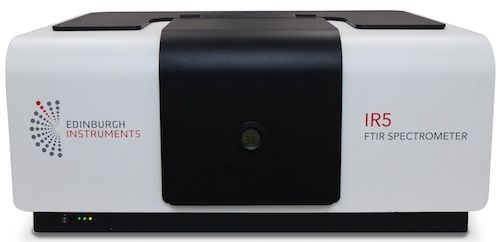
A benchtop FTIR Spectrometer, the IR5, designed and manufactured at their global headquarters in Scotland has been announced by Edinburgh Instruments.

The IR5 is the first Fourier Transform Infrared (FTIR) spectrometer of the Edinburgh Instruments brand, renowned for its expertise in instrumentation for Raman, fluorescence, and UV-Vis absorption spectroscopies. The IR5 is a modern, high-performance benchtop FTIR instrument which can be configured with a second detector or with Fourier Transform Photoluminescence (FT-PL) capability. The FT-PL option transforms the IR5 into a combined absorption and PL spectrometer in the MIR range, suitable for the most demanding research applications.

Key Features: 
• High sensitivity and spectral resolution
• Fourier Transform Photoluminescence upgrade with a choice of laser source
• Option for a second detector giving higher sensitivity at selected spectral ranges
• Simple operation suitable for all user levels, from beginner to advanced
• No maintenance required with moisture control technology
• Modern, powerful and intuitive MiracleTM software designed specifically for the IR5

Roger Fenske
, CEO, says “We are delighted to continue the growth of our molecular spectroscopy portfolio with the addition of the new IR5 Spectrofluorometer. Integrated FT-PL functionality broadens the IR5’s functionality so that it offers a wide variety of capabilities in one compact design. As always, our products come with outstanding customer support and service.”

@Edinst @Techcomp_Ltd #Laboratory #TandM #Scotland

Friday, 4 May 2018

Towards ruminant gas emissions reduction!

Scientists in South East Asia have measured greenhouse gas (GHG) emissions from goats and cattle in a series of research projects investigating the effects of different feeding regimes. By changing the animals’ diets, GHG emission reductions of up to 60% have been achieved.
21 different research projects have been reviewed by Gasmet Technologies* which supplied the portable FTIR gas analyzer that was used in the work. The research papers have been published by ‘Livestock Research for Rural Development,’ a peer-reviewed international journal for research into sustainable developing world agriculture.

Prof. Reg Preston, who participated in much of the research, says: “With an understanding of the enteric fermentation processes that result in the formation of methane, it is possible to speculate on the effects of changes to the diets of ruminants, so these research projects were designed to test our hypotheses. In each case, the effects of various diets were measured in terms of animal performance criteria such as feed conversion and growth rates, but also in terms of GHG emissions.”

Major concern exists relating to recent increases in global methane emissions. However, livestock play an important role in Asia, which extends beyond the supply of meat and milk; they are also used for purposes such as draft power, transportation, capital, credit, social value, hides, and as a source of organic fertilizer. Nevertheless, ruminants are significant contributors to atmospheric GHG emissions. It is essential therefore to find ways to reduce these emissions, and the research projects mentioned above demonstrate how significant reductions can be achieved while improving animal production and utilising low cost, locally available resources.

* A full review of the research is available on the Gasmet site here: Managing livestock diets to reduce greenhouse gas emissions.
@Gasmet_Tech  #Asia #Agriculture #Research @_Enviro_News

Thursday, 22 June 2017

The Grandmother retires!

After almost 20 years of reliable service a Gasmet FTIR multigas analyser has finally been retired. The instrument, which is a Gasmet 9540 was purchased at the end of the last century by VTT, the Technical Research Centre of Finland.

“We have utilised this analyzer in a variety of research projects over the years and it has performed extremely well. However, some of the spare parts are no longer available so we have purchased a new Gas DX4000 as a replacement,” comments Mari-Leena Koskinen-Soivi, a Research Scientist at VTT working in sustainable syngas R&D and analytics.

Mari-Leena Koskinen-Soivi
The old Gasmet 9540 was originally purchased for online wet gas analysis on a pressurised flat bed reactor conducting research work on catalysts, providing simultaneous analysis of compounds such as ammonia, hydrogen sulphide, methane, ethane, ethene, benzene, carbon monoxide, carbon dioxide and others.

Mari-Leena says: “We affectionately call this instrument the ‘Grandmother’ - the main advantage of the old Gasmet 9540 over our laboratory instruments was its speed and simplicity. We still have a requirement for the continuous analysis of multiple gases – usually over 60 compounds – so we are excited to see how the new Gasmet DX4000 will perform.”

Jari Jaakkola, from Gasmet says: “The core technology is still the same, but our FTIR instruments have continued to develop and improve since VTT bought their first instrument. Apart from the new instruments being smaller and lighter, VTT will see a vast improvement in performance. However, I am sure that Mari-Leena will be pleased to discover that the newer instruments have retained the speed and simplicity of their ancestors.”

Established in 1942 and employing over 2,400 staff, VTT Technical Research Centre of Finland Ltd is the leading research and technology company in the Nordic countries. VTT has a national mandate in Finland, using research and knowledge to provide expert services for domestic and international customers and partners in both the private and public sectors.

VTT develops new smart technologies, profitable solutions and innovative products, production processes, methods and services to produce technologies that benefit society. Much of Mari-Leena’s work is focused on efficient methods for the generation of renewable energy, and is therefore contributing to the global fight against climate change.

Mari-Leena has worked at VTT since 1979; starting in peat research and later moving to gasification. For the last 15 years she has been working with catalysts and synfuels. “Accurate multigas analysis is therefore a crucial element of our work,” she adds. “Continuous online monitoring provides much greater insight into process conditions and helps us to understand the chemical processes that are taking place. With the ability to fulfil this role on hot, wet complex gas mixtures, FTIR is one of our most important analytical tools, and with proven reliability lasting 20 years we don’t have to worry about the quality of Gasmet instruments!”


@Gasmet_Tech  #PAuto #Finland @VTTFinland

Tuesday, 6 December 2016

White paper on FTIR.

A free White Paper on the simultaneous measurement of multiple gases in a wide variety of applications using FTIR (Fourier Transform InfraRed) technology has been published by Quantitech.

With the ability to measure almost any gas, FTIR monitoring technology is employed in an enormous variety of applications including Continuous Emissions Monitoring, Stack Testing, Process Control, Industrial Hygiene, Engine Emissions, Semiconductor Manufacturing, Emergency / First Response, Greenhouse Gas Monitoring, Carbon Capture, Fire Testing, Research and many more.

The same FTIR technology can be deployed in fixed, mobile or portable versions and configured to analyse specific target compounds. However, FTIR can also be used to look for unknown compounds.

The White Paper answers the 22 most commonly asked FTIR questions, such as:
    • How is the IR spectrum used for the gas quantification?
    • What is the performance of FTIR in emissions monitoring?
    • When should a Gasmet FTIR be calibrated?
    • What is the typical response time?
    • What is a reference spectrum and what effect is there from the use of a reference spectrum from a different analyser?
The FTIR White Paper can be downloaded for free from the Quantitech website here!

@Quantitech #PAuto #Environment

Friday, 24 June 2016

Emissions monitoring certification awarded.

The Gasmet Continuous Emissions Monitoring System (CEMS II e) and the portable (DX4000) FTIR analysers have been awarded an MCERTS certificate (Sira MC030014/08) demonstrating compliance with the MCERTS Performance Standards EN15267-3 & QAL 1 as defined in EN 14181. The certificate demonstrates enhanced performance across an extended range of gases.

The MCERTS certificate confirms the performance of Gasmet’s FTIR analysers for the measurement of CO, NO, SO2, NO2, N2O, HCl, NH3, H2O, HF, CO2, O2, CH4 and CHOH. However, Quantitech MD Ken Roberts says: “Customers will be particularly interested in this certificate because of the exceptionally good figures for Hydrogen Fluoride, and the data for Nitrogen Oxide and Formaldehyde are also very significant because no other FTIR is certified down to 150 mg/m3 NO in 40 vol-% water and no other instrument is approved for Formaldehyde at all.”

FTIR is an extremely popular multiparameter emissions monitoring technology; able to monitor almost any gaseous compound. This means for example, that the Gasmet CEMS II e and the DX4000 are able to provide monitoring data for up to 50 compounds simultaneously.

The technology in all of Gasmet’s FTIR analysers is essentially the same and benefits from continual product development. It is this work that has enabled the dramatic improvements that are demonstrated by the MCERTS award.

• More about MCERTS

See also Quantitech acquired by Gasmet Technologies (April 2016)

@Quantitech #PAuto #FTIR #MCERTS #Gasmet

Friday, 17 June 2016

Gas analysis workshop report.

Gasmet Technologies organised a meeting in Lisbon, immediately prior to the CEM 2016 conference and exhibition in May, to provide delegates with an insight into the wide variety of applications for which FTIR technology is employed.
The measurement of greenhouse gases (GHGs) was a particular focus for the event, with presentations from a number of speakers outlining the advantages of simultaneous multigas analysis with Gasmet’s fixed and portable FTIR analysers. Dr Joseph Storlien from Saint John's University, Minnesota USA, described his work with portable Gasmet FTIR analyzers in the measurement of soil flux GHGs. He explained how robust field-use instruments such as the DX4040 enable faster, easier collection of monitoring data; delivering more data points than the more costly and time-consuming methods that rely on laboratory analysis.

Dr Storlien summarises his presentation in a short video that can be viewed on the Gasmet YouTube channel. This webpage also features a video demonstrating how to employ portable FTIR for soil gas analysis.

Prior to the Lisbon meeting, Gasmet received notification that its CEMS II e continuous emissions monitoring system had successfully completed EN 15267-3 testing for the analysis of low range Hydrogen Fluoride, low range Nitrous Oxide, Methane and Formaldehyde. “This means that it meets the performance specifications in European directives and also the more stringent specifications in the type approval standard EN 15267-3 for a larger number of components than any other FTIR in this market,” commented Gasmet’s Antti Heikkilä. Here is brief video explaining the importance of this certification.

The newly certified emissions analyzer was the highlight of Gasmet’s booth at CEM 2016, the industrial emissions monitoring conference that also took place in Lisbon. “Focusing as it does on continuous emission monitoring, CEM 2016 could not have been better timed,” says Heikkilä. “The Conference was attended by international delegates from key sectors such as Power Generation and Waste Incineration, so there was enormous interest in the new performance data for our FTIR analyzers.”


#FTIR #Gasmet

Monday, 30 May 2016

Emissions testing!

Engine emissions analyser further improves Intertek’s emissions testing capability

An advanced FTIR analyser installed at Intertek’s engine test facility in Milton Keynes (GB) is enabling engineers to improve the quality of their tests on the gaseous components of engine exhaust emissions.

The gas analyser manufactured by Gasmet Technologies and installed by Quantitech, measures multiple organic and inorganic components simultaneously from a large library of compounds, enabling Intertek’s engineers to quickly and easily change the measured compounds; to change the fuel type or cycle conditions, and to see the impact on the emitted gases. The FTIR gas analyser is also highly portable so that it can be employed in any of the test cells at Intertek, a leading Total Quality Assurance provider.

Intertek’s engine test facility, which accommodates every type of motor vehicle engine covering all fuel types and including both hybrid and battery powered vehicles, provides its customers with the ability to conduct research on prototype engines and evaluate developments in engine technology. Intertek works with vehicle manufacturers, tier suppliers and high performance driveline development businesses.

The work in the test cells is complemented by Intertek’s ability to conduct on-road emissions testing using its state of the art Portable Emissions Measurement System (PEMS) to measure Real World Driving Emissions (RDE).

Intertek test engineer Cory Graham said: “Vehicle manufacturers are focused on improving both the performance and the emissions of their vehicles. FTIR provides a greater insight into exhaust emissions so that Intertek can assist manufacturers with their goals of improving air quality and lowering greenhouse gas emissions.”

Most recently the FTIR has been deployed in one of Intertek’s most sophisticated cells, which hosts a complete drive line including an engine, a gearbox and also a rig, which creates a complete ‘virtual’ car.

The regulatory tests that are undertaken on vehicles to check their emissions against international standards, have recently been under the spotlight, and the latest developments in the European Union will result in a move to vehicle emissions testing while the car is being driven (RDE) and this is now provided by Intertek.

Quantitech’s Dominic Duggan says: “Engine emissions testing is an ideal application for FTIR technology, because it provides automotive research and development engineers with a broad spectrum of measured compounds, creating a more complete picture of the products of combustion.”

@Quantitech #PAuto #FTIR

Tuesday, 3 May 2016

Certification for enhanced FTIR emissions analyser.

The CEMS II e continuous emissions monitoring system from Gasmet has successfully completed EN 15267-3 testing using FTIR technology for the analysis of low range HF, low range NO, CH4 and Formaldehyde.

“This means that it meets the performance specifications in European directives and also the more stringent specifications in the type approval standard EN 15267-3 for a larger number of components than any other FTIR in this market,” comments Gasmet’s Antti Heikkilä.

Expressing his delight with the data he continued: “The results for Hydrogen Fluoride were as good as or better than other FTIR manufacturers, but the data for Nitrogen Oxide and Formaldehyde are also very significant, because no other FTIR is certified down to 150 mg/m3 NO, and no other instrument is approved for Formaldehyde at all!”

The performance tests, which involved laboratory and climate chamber tests, and a field test of six months, were undertaken by TÜV Rheinland, the internationally renowned independent test, inspection and auditing organisation. “While the field test was successfully completed in 2015, an extended field test is still ongoing, and this will extend the maintenance interval of 3 months up to 6 months after a year of faultless operation,” adds Heikkilä.

The technology in all of Gasmet’s FTIR analyzers is essentially the same, and benefits from continual investment in product development. It is this work that has enabled the dramatic improvements that have been highlighted by the TÜV tests.

Rami Vuorinen manages Gasmet’s development work. He says: “During 2014, we were able to reduce the baseline noise level significantly, improving sensitivity by a factor of two. However, we did not publish this information, pending the results of the TÜV tests, so it is very pleasing to be able to provide third party evidence that supports our own findings.”

The newly certified CEM system has been denoted ‘CEMS II e‘ to highlight the extended range of certified components and the enhanced analytical performance. The same improvements also apply to all Gasmet portable FTIR analyzers. German Type Approval and a QAL1 certificate from TÜV are pending for the CEMS II e system, and an update to the British MCERTS certificate is also being sought.

#Gasmet #PAuto #FTIR #MCERTS

Wednesday, 17 February 2016

Gas analyser builds complete picture of contamination.

Occupational health specialists from Wisconsin, USA, are utilising FTIR gas analysis technology to identify and quantify both known and unknown gas species in a wide variety of applications in which workers are potentially at risk.

The FTIR instrument, a DX4040 from Gasmet, is owned by North Shore Environmental Construction (NSEC), a specialist in the management of hazardous materials response and environmental challenges. NSEC routinely employs specialist consultants for the more technically complex investigations and Michael McCoy, M.S., CIH, CHMM, CSP from GZA GeoEnvironmental provides a high level of expertise in these applications, which includes evaluation of the data.

NSEC specializes in hazardous materials response and clean-up and field-based environmental construction. Much of GZA’s work involves site investigation to characterize levels of environmental contamination and human exposure to potentially hazardous or toxic substances. In some cases, such as a chemical spill, the contaminant is known, but in others the source of contamination may not be known. For example, land may have become contaminated by a number of different industrial sources over many years, and waterborne pollution can travel long distances and therefore be derived from unknown sources.

As a portable FTIR gas analyser, the DX4040 effectively enables laboratory grade analysis onsite which dramatically increases the speed with which contamination can be assessed, and avoids the problems, costs and delays associated with transporting samples to a laboratory. Explaining the advantages of FTIR, Michael McCoy says: “Many portable gas monitoring instruments either just measure an individual gas or provide an aggregated reading for a group of compounds – VOCs for example. In contrast, the DX4040 is able to measure up to 25 individual compounds simultaneously. It achieves this by producing a spectrum for the measured compounds, which means that we can set the instrument to display almost live readings for the compounds of potential interest.

“A major advantage of Gasmet’s FTIR analyzers, however, is their ability to identify unknown compounds. Calcmet software facilitates the identification of unknown peaks in a spectrum by comparison with Gasmet’s vast library of stored spectra.”

Michael is board certified in the fields of Industrial Hygiene, Hazardous Materials Management, and Safety. However, he is also a Medical Technologist with a Masters in Pharmacology and Toxicology. Consequently, he is able to provide advice on the toxicological and safety implications of the readings provided by the DX4040. “The ability of the FTIR to analyse multiple compounds is a major advantage; firstly because it enables us to analyse complex mixtures and secondly because it also facilitates the measurement of breakdown products,” Michael says, adding: “Once the contaminant profile and concentrations are known, my job is to compare these with internationally accepted safe levels, taking into account the effects of gas mixtures and to advise on any potential health and environmental effects.”

GZA has developed a strong working relationship with NSEC over the last 6 years; NSEC providing emergency response, and GZA delivering clean-up monitoring and site clearance. The DX4040 was purchased from Gasmet in October 2015 and since that time it has helped validate clean-up activities and provide confirmation of safe working conditions during remediation work.

The DX4040 is a relatively recent addition to NSEC’s equipment fleet, however, it has already been employed in a wide variety of applications. For example, it was deployed in a health and safety investigation to measure fumes and breakdown products following a nitric acid leak, and it has also been used to characterise the emissions profile of different processes within a specialist paint factory; analysing a variety of VOCs in the evaporative emissions. In a similar application, the DX4040 was used to characterise the emission from a ceramics manufacturer. In line with the USEPA’s approach to pollution monitoring, such investigations help manufacturers to identify the fate of different chemical species.

Michael says: “In addition to the practical advantages of FTIR analysis, a major benefit for us is the competitive advantage that this technology delivers; clients are really impressed with the quality and speed of the data, which provides reassurance that risks are being effectively managed.”

Prior to the purchase of the DX4040, a practical demonstration was provided by Gasmet’s Jim Cornish at a coffee roasting factory in Wisconsin. Articles in the media had raised concern about lung disease caused by high levels of diacetyl in popcorn manufacturing facilities and coffee roasters. As a result, NSEC and GZA were asked to investigate and this provided an opportunity to evaluate the benefits of portable FTIR. As a result of this investigation it was possible to list the components of the emissions from coffee roasting and to provide reassurance to the factory’s workers that they were not at risk.

Summarizing, Michael says: “Portable FTIR, in the right hands, is a very powerful tool, helping to define the composition of the gaseous contamination, which reduces risk and builds assurance in remediation activities. Looking forward, I believe that this technology will be employed in an increasingly larger number of even more diverse applications.”

• See also The Gasmet Story posted in 2013!

#Gasmet #PAuto #Environment

Wednesday, 29 April 2015

"Stars of the show!"

Visitors to AQE 2015 in Telford (GB 22-23 April), were treated to a practical demonstration of real-time simultaneous multigas analysis when Quantitech’s Dominic Duggan enlisted the help of three attendees to assist in the demonstration of the Gasmet portable FTIR gas analyser, the DX4040.
"Will you try our analyser?"
Seeking to explode the myth that FTIR gas analysis is complicated, Dominic encouraged participants to conduct the analysis without any prior training. One person held the analyser, whilst another briefly pressed the button on a can of ‘Air Duster’ – a dust removal spray. At the same time, the third volunteer held out the instrument’s PDA so that live data from the analyser (via Bluetooth) could be displayed for the audience.

“The attendees were surprised to see how many compounds were in the ‘Air’ and how easily speciated data could be generated for a wide range of gases,” Dominic commented. “My presentation included descriptions of this instrument’s application in Greenhouse Gas research, hazardous incident assessment, environmental investigation and research at NASA, but the practical demonstration helped AQE visitors to see how this technology could help in their daily work.”

Reflecting on the success of the event, Dominic said: “As a specialist event, almost every visitor to AQE 2015 was a potential customer for Quantitech, so the quality of the leads that we received was extremely high.”

The Quantitech stand was also staffed by Antti Heikkilä from Gasmet Technologies in Finland. He said: “I am delighted with the number of enquiries that we received from outside of the UK. As a specialist event, AQE 2015 is obviously very attractive to anyone with a professional interest in air quality and emissions monitoring.”

Friday, 19 September 2014

Certification boosts demand for FTIR multigas analyser!

Quantitech has experienced a surge in demand for the Gasmet portable FTIR emissions analyser, the DX4000. “We believe that this instrument is now the only portable FTIR with MCERTS certification, and this is driving demand for both instrument rental and sales,” says Dominic Duggan.

The Gasmet DX4000 portable FTIR gas analyser is typically used in stack emissions monitoring, comparison measurements, catalytic process control and other applications where multiple gas compounds need to be accurately monitored in a hot and humid sample gas. The corrosion resistant sample cell is heated to 180 °C, which ensures that the sample stays in the gaseous phase even with high concentrations of moisture or corrosive gases.

The DX4000 comes equipped with easy-to-use Calcmet™ software, which can display the concentration results in ppm, mg/Nm3 or Vol-%, and all measurement data can be stored for further analysis

Typical configuration for the instrument enables the simultaneous measurement of H2O, CO2, CO, NO, NO2, N2O, SO2, NH3, CH4, HCl, HF and different VOC´s. However, additional gases can be added without any hardware changes.

The instrument is often supplied with a Gasmet™ portable sampling system, which employs a hot-and-wet measurement principle (no drying or dilution), to ensure that samples are representative.

Tuesday, 19 August 2014

Multigas analyser supports liquid fuel research!

Two advanced FTIR analysers are being employed to monitor multiple gas concentrations simultaneously in laboratory scale reactors at Sasol’s Research and Technology Centre in South Africa. The monitors, which were supplied by Gasmet Technologies (FIN), are being used to study changes in gas composition during the preparation of Fisher Tropsch catalysts which are used in gas-to-liquids (GTL) processes.

Sasol is an international integrated energy and chemical company, and a global leader in GTL and CTL technology. The company’s Nishlan Govender, a Senior Scientist in Fischer Tropsch research, uses the FTIR analysers to determine the completion of a reaction in the preparation of a Fischer–Tropsch catalyst by tracking the tail composition in the reactor. This includes the analysis of CO, CO2, CH4, H2O and hydrocarbons up to C6. The H2O measurements are corroborated by readings from a dewpoint analyser that is used routinely in the laboratory.

Both of the FTIR analysers (DX4000) are used in conjunction with Gasmet portable sampling systems which utilise a ‘hot-and-wet’ measurement principle, so that a truly representative sample is analysed with no requirement for drying or dilution. This portable technology was chosen because it can be quickly and simply deployed, producing highly accurate readings for up to 50 compounds simultaneously.

Tuesday, 24 June 2014

Gas analyser supports carbon capture research!


Quantitech has commissioned an advanced Gasmet FTIR multiparameter gas analyser at the British Carbon Capture & Storage Research Centre (UKCCSRC) facility near Sheffield (GB). This Pilot-scale Advanced Capture Technology (PACT) facility was created to catalyse and support both industrial and academic research.

PACT Business Development Manager Dr Kris Milkowski, from the University of Leeds, says: “FTIR gas analysis performs a vital role in our work with all carbon capture methods; enabling us to monitor CO2 levels in addition to almost any other gas from the Gasmet library of over 5,000 compounds.”

The Gasmet DX4000 FTIR analyser was supplied and configured by Quantitech. “The system was delivered with a sampling system and heated sample lines so that hot, wet and even corrosive gases can be measured,” says Sales Director Dominic Duggan.

“Dr Milkowski’s work with the Gasmet DX4000 analyser has clearly demonstrated the suitability of multiparameter FTIR for monitoring CCS plants. In most applications we would recommend a fixed continuous emissions monitoring system (CEMS) for such applications, however, as a research site, the PACT facility requires maximum flexibility in its resources, so the portability of this system is ideal for PACT’s work.”

Friday, 31 January 2014

Warning for users of breathing gas!

Dr Andrew Hobson from Quantitech is urging the users of breathing gas to check that their supplies are tested for all potential contaminants, and not just the most common compounds.

He says, “It is important to use an analytical technique such as FTIR* because this methodology provides a spectrum result in addition to concentration measurements for a wide range of parameters,” adding: “This is important because unusual peaks occur in the spectrum when unknown contaminants are present.”

The standard BS EN 12021 requires that all contaminants should be kept to as low a level as possible and shall be not greater than 10% of the UK 8­hour time weighted average exposure limits which are specified in the HSE publication EH40.

However, contamination can occur when gases or vapours are drawn into a compressor accidentally as a result of a leak or a spillage, or from a nearby chemical reaction or combustion process. As a result, any analysis of the compressed gas that only measures specific compounds is unlikely to detect any unforeseen contamination and this is the reason for FTIR being the preferred analytical technology for breathing gas analysis.

*Fourier transform infrared spectroscopy (FTIR)is a technique which is used to obtain an infrared spectrum of absorption, emission, photoconductivity or Raman scattering of a solid, liquid or gas.

Wednesday, 20 March 2013

Wake up and smell the oranges!

Standing room only at FTIR workshop

The Quantitech workshop on FTIR gas analysis at AQE 2013 was completely full, with many attendees forced to stand outside the entrance. Commenting on the appeal of this event, Dominic Duggan of Quantitech said: “FTIR can measure almost any gas in almost any application, so anyone with an interest in three or more gases will need to know about FTIR.”

About half of the workshop attendees were British based, with the remainder coming from all over the world, and each attendee was provided with an orange to peel during the workshop, so that real-time air analysis could be demonstrated.

Quantitech’s second workshop on new sampling technologies for dioxins, particulates, mercury and heavy metals was equally well attended, with especially high levels of interest shown in the G4 automatic isokinetic sampler.

Wednesday, 16 January 2013

FTIR for hire!

FTIR gas analysers have become popular in a wide variety of gas detection and monitoring applications because of their ability to measure almost any gas. However, the cost of this equipment can exceed the budgets of those that could benefit from this sophisticated technology, so Quantitech has established a small range of FTIR gas analysers that are available for hire.

Typical applications for FTIR gas analysis include industrial emissions monitoring, occupational safety surveys, engine exhaust testing, process monitoring, leak detection, emergency response, chemical spill and fire investigations, breathing gas analysis and many others.

FTIR
An FTIR spectrometer obtains infrared spectra by first collecting an ‘interferogram’ of a sample signal with an interferometer, which measures all infrared frequencies simultaneously to produce a spectrum.

Sample identification is possible because chemical functional groups absorb light at specific frequencies. In addition, through calibration of the spectrometer, it is possible to determine the intensity of the absorption (relative to the component concentration).

The Gasmet library of reference spectra consists of reference files of gas spectra measured to-date with different Gasmet gas analysers. The library contains hundreds of spectra and each reference spectrum contains both quantitative and qualitative information about the component. This means that users are able to analyse samples retrospectively if a new parameter becomes of interest.

High levels of accuracy and low levels of maintenance are achieved as a result of continuous calibration with a He-Ne laser, which provides a stable wavenumber scale. In addition, high spectral signal to noise ratio and high wavenumber precision are characteristic of the FTIR method. This yields high analytical sensitivity, accuracy and precision.

Emissions monitoring
Able to monitor multiple gases simultaneously even in emissions that are hot, corrosive and high in moisture, the Gasmet FTIR analyser is ideal for a wide variety of emissions monitoring applications. Quantitech's Dr Andrew Hobson says "The DX4000 is popular for renting because of its portability and flexibility; it has the same capability as a rack mounted CEMS, but provides users with the ability to measure almost any gas at multiple sites, so it can be used to verify fixed CEMS, and for research and investigative work."

The DX4000 is typically set up to measure H2O, CO2, CO, NO, NO2, N2O, SO2, NH3, CH4, HCl, HF and a variety of different VOC´s, but additional gases can be added without any hardware changes. Easy-to-use Calcmet™ software is supplied with the analyser and results can be displayed in ppm, mg/Nm3 or Vol-%. All measurement data and spectra can be stored for later analysis.

The Gasmet FTIR analyser is MCERTS approved for nine of the most important parameters. However, with such a vast array of measurable parameters possible, existing users are also able to take measurements that help improve process control.

Ambient/workplace monitoring
The new Gasmet DX4040 portable FTIR multi-gas analyser is also available for hire from Quantitech. This unit contains exactly the same analyser as the other Gasmet FTIR instruments, but is housed in a backpack and communicates wirelessly with a PDA.

The PDA enables users to measure up to 25 (user defined) gases simultaneously, but the DX4040 can also operate with a laptop or PC to analyse spectra for thousands of gases. This means that the technology can be employed for the investigation of unknown gases.

Quantitech’s Dr Andrew Hobson is available to offer help and advice on the use of FTIR gas analysis and is responsible for configuring each rented analyser to best meet users’ needs.

Friday, 14 September 2012

FTIR gas analyser for hire

The new Gasmet DX4040 portable FTIR multi-gas analyser is now available for hire from Quantitech.

For each rental Quantitech’s Dr Hobson configures the instrument to meet the customer’s specific gas monitoring needs. He says: "The DX4040 has brought laboratory grade gas analysis into the field and the availability of a rental system means that even those with a limited budget or a short term requirement can have access to the best technology.”

The DX4040 is supplied with a PDA which enables the user to measure up to 25 (user defined) gases simultaneously. The FTIR sample spectrum is saved to the PDA with every measurement made; this allows post sampling analysis of additional compounds and identification of unknown gases.

Tuesday, 15 May 2012

Portable FTIR gas analyser!

Gasmet Technologies has launched their DX4040 – a portable FTIR gas analyser that enables the field measurement of literally thousands of gases.

The DX4040 is the second generation of the world’s first truly portable FTIR analyser which brought laboratory grade gas analysis into the field, and thereby brought the benefits of multiparameter FTIR gas analysis to monitoring applications involving industrial safety, medical gases, fumigants/pesticides, soil gas, contaminated land, first responders/hazmat, fire investigation, toxic industrial chemicals, chemical warfare agents and many others.

The new instrument is easier to use and more flexible than its predecessor. However, Gasmet CEO Mikko Suuntala says: "The most important development lies in the ability of the device to identify unknown gases in the field (at the touch of one button) when using a new version of the unit's Calcmet™ software on a Windows tablet pc."

Users of the DX4040's predecessor will be pleased to learn that the unknown gas identification capability is retrospectively applicable to existing DX4030 analysers when using the new software and a tablet PC.

The Calcmet™ Pro software makes it possible to retrospectively identify almost any gas from the recorded spectra. However, for those users investigating known species the unit can be used with a handheld Bluetooth PDA running Calcmet™ Lite and incorporating a 3G modem, camera and GPS so that time and location are assigned to each analysis. Using the DX4040 with a PDA is a popular choice because it enables the simultaneous display, in almost real-time, of up to 25 gases.

Summarising the benefits of the DX4040 Mikko Suuntala says: “This instrument is unique; it is able to identify both organic and inorganic compounds, whilst also storing sample spectra for post-measurement analysis using a chemical library of over 5000 compounds. There are no sensors that might need future replacement and operation is extremely easy; no sample preparation is required and calibration is simply a zero check with nitrogen or air.”

Friday, 20 May 2011

Unlocking the secrets of FTIR!

The place where the British decodified signals from the Axis forces in England was kept secret for years after the war. Now however the story of this hidden aspect of the struggle has been recorded and the people who worked quietly there have been acknowledged.

Bletchley Park has been chosen by Quantitech, as the location for a seminar that will focus on FTIR multiparameter gas detection. Taking place on Thursday 30th June, the seminar is being sponsored by FTIR specialist Gasmet and participation is free of charge.

The seminar is titled: 'Unleashing the Potential of Gas Monitoring with FTIR' and will focus on the technology and regulations that apply to both fixed and portable applications in stack emissions, process monitoring, occupational safety, research and ambient monitoring.

The seminar will include practical demonstrations and provide the latest guidance on gas detection (including Technical Guidance Note M22) with high profile speakers from NPL, Gasmet, Quantitech and a leading occupational safety organisation.

Refreshments will be provided and there will be an opportunity to participate in a guided tour of the Bletchley Park National Codes Centre, which explains how the Enigma and Lorenz codes were broken during WW2. 

This seminar is designed for both novices and those that already have FTIR instruments and places are being allocated on a first come/first served basis.