Showing posts with label Edinburgh Instruments. Show all posts

Thursday, 2 March 2023

Benchtop FTIR spectrometer.

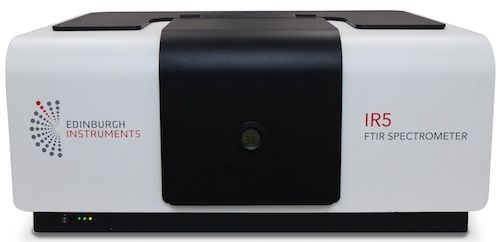
A benchtop FTIR Spectrometer, the IR5, designed and manufactured at their global headquarters in Scotland has been announced by Edinburgh Instruments.

The IR5 is the first Fourier Transform Infrared (FTIR) spectrometer of the Edinburgh Instruments brand, renowned for its expertise in instrumentation for Raman, fluorescence, and UV-Vis absorption spectroscopies. The IR5 is a modern, high-performance benchtop FTIR instrument which can be configured with a second detector or with Fourier Transform Photoluminescence (FT-PL) capability. The FT-PL option transforms the IR5 into a combined absorption and PL spectrometer in the MIR range, suitable for the most demanding research applications.

Key Features: 
• High sensitivity and spectral resolution
• Fourier Transform Photoluminescence upgrade with a choice of laser source
• Option for a second detector giving higher sensitivity at selected spectral ranges
• Simple operation suitable for all user levels, from beginner to advanced
• No maintenance required with moisture control technology
• Modern, powerful and intuitive MiracleTM software designed specifically for the IR5

Roger Fenske
, CEO, says “We are delighted to continue the growth of our molecular spectroscopy portfolio with the addition of the new IR5 Spectrofluorometer. Integrated FT-PL functionality broadens the IR5’s functionality so that it offers a wide variety of capabilities in one compact design. As always, our products come with outstanding customer support and service.”

@Edinst @Techcomp_Ltd #Laboratory #TandM #Scotland

Monday, 21 March 2022

Photoluminescence spectrometer upgrade.

Edinburgh Instruments has introduced a new upgrade for its photoluminescence spectrometers, designed and manufactured at their global headquarters in Scotland.

The MicroPL upgrade enables the study of spectral or time-resolved photoluminescence of samples in the microscopic scale by converting an Edinburgh Instruments photoluminescence (PL) spectrometer into a combined spectrometer and microscope system. A wide range of microscope configurations, source coupling and detector options are available enabling both steady state and fluorescence lifetime microscopy, as well as automated maps.

Key Features:
• Spectral and Time Resolved: Suitable for any type of photoluminescence experiment
• Customisable: Tailored to any application and upgradable in the future
• FLIM Add-On: Accessible and user-friendly fluorescence lifetime mapping
• Plug & Play: Easy to swap between MicroPL and FLS1000 Photoluminescence Spectrometer or FS5 Spectrofluorometer standard sample holders
• All-In-One Software: Including data acquisition, analysis and presentation

Roger Fenske, CEO, says "We are delighted to expand the functionality of our photoluminescence spectrometers. Not only is our new PL microscope option fully configurable, it can also be upgraded with additional capability in the future. This ensures that our products keep evolving as new research trends emerge."

@Edinst @Techcomp_Ltd #Laboratory #TandM

Wednesday, 29 September 2021

Pulsed light sources.

A series of pulsed light sources for time-resolved photoluminescence spectroscopy has been launched by Edinburgh Instruments. The VPL, VPLED and HPL series of pulsed diode lasers and LEDs expand the range of compact, monochromatic sources on offer, while the AGILE supercontinuum laser provides tunable picosecond pulses across the visible and NIR regions.

Roger Fenske, CEO, said “We are excited to expand our portfolio with this new range of pulsed light sources. This will help meet the ongoing requirements of our customers and will bring added capability and functionality to their work procedures.”

The HPL diode lasers are designed for time-Correlated Single Photon Counting (TCSPC) from picoseconds to microseconds and are fully compatible with Edinburgh Instruments systems. They are the perfect choice for challenging samples with low brightness, thanks to their high repetition rates up to 80 MHz and high-power output mode.

For longer decay times, the VPL and VPLED series may be used. The pulse width of these sources can be varied from 50 ns up to 1 ms so they are ideal for Multi-Channel Scaling (MCS) measurements, providing higher pulse energies than picosecond lasers and LEDs.

AGILE is a white-light picosecond pulsed laser available as a TCSPC source in the FLS1000 Photoluminescence Spectrometer. Coupled to the excitation monochromator in the FLS1000, its output wavelength can be tuned from <400 nm="" to="" up="">2,000 nm removing the need for multiple monochromatic sources.

<400 nm="" to="" up="">@Edinst #Laboratory #Laser

Tuesday, 25 September 2018

Greenhouse gas sensors made with new materials for climatic usage.

Recent reports on the measurement of greenhouse gas emissions have shown that CO2 levels within the atmosphere are steadily rising. The UN has consistently promoted the use of renewable energies for the control of atmospheric conditions. These need to be steadily monitored and in order to do so it is essential that cheap, robust, and accurate sensors are available for the acquisition of reliable measurements.

A recent review “Greenhouse Gas Sensors Fabricated with New Materials for Climatic Usage” has been produced by the School of Chemistry and Materials Science at Rochester Institute of Technology in the USA.

Edinburgh Sensors Gascard NG was used as part of the research in the filed of commercialised carbon dioxide sensors for field experiments. Classified within the report as a Type 1 sensor, these gas sensors generally have a non-metallic substrate on which the active material is deposited and kept in either ambient or selected experimental conditions (e.g., inert atmosphere) in the measuring chamber. The change in resistance of the active material is measured as a function of concentration of the greenhouse gas. The successive measurement requires flushing the measuring chamber.

The first part of this review is focused on the possible effects of greenhouse gas emissions in the atmosphere, and the second part surveys the developments of sensors for greenhouse gases with coverage on carbon nano-materials and composites directed towards sensing gases like CO2, CH4, and NOx. The purpose of the review is to emphasise the necessity for the development of greenhouse gas sensors for climatic usage by using selected examples.


@edinsensors  #Environment  

Friday, 8 June 2018

Gas detection products enhanced!

The latest development in Edinburgh Sensors NG range of gas sensor products, a Boxed Gascard, has been announced.

The Boxed Gascard provides users with access to the Gascard NG range of CO2 detection products in a convenient and robust desktop unit.

Requiring only a suitable power supply and sample gas, the Boxed Gascard provides fast and reliable CO2 concentration data over a wide range of barometric pressures and environmental temperatures. It brings the accuracy and reliability of the Gascard NG gas sensors to the convenience of a desktop instrument.

Suitable for CO2 monitoring in a diverse range of applications, it can be used in the areas of anaerobic digestion monitoring to plant physiology where the carbon dioxide concentration in air-like atmospheres needs to be measured from ppm to tens of percent concentration.

A bit-switch controlled 4-20mA or 0-20mA output is ideally suited for interacting with most data loggers. Alternatively, the optional RS232 interface and NG logger software may be used to log the concentration information onto a PC (with a serial to USB converter) or suitable tablet computer.

A new aluminium enclosure provides an elegant and robust solution to housing the Gascard NG. This also provides a versatile point sensor that may be used in many applications where a sensor is needed to remotely monitor carbon dioxide concentrations.

The heart of the Boxed Gascard is the Gascard which uses a pseudo dual beam NDIR measurement system for increased stability and the reduction of long term drift with minimum optical complexity and no moving parts.

Edinburgh Sensors Sales Manager, Julie McCormick, says "The new Boxed Gascard fills the gap between our fully featured Guardian NG wall mounted gas monitor product and the OEM Gascard NG designed for OEM customers who may wish to incorporate it into their own equipment. The Boxed Gascard now adds a point sensor to the NG range."

• The Boxed Gascard and other products may be seen at the Sensor and Test Exhibition in Nurnberg from 26th-28th June.


@edinsensors #PAuto @sensorplustest

Thursday, 1 March 2018

Acquisition to support Middle East enterprises.

Edinburgh Instruments parent company, Techcomp (Europe) Ltd (TEU), has acquired Dubai based AASolutions FZCo and re-named the business Techcomp (Middle East) FZCo (TME).

Chris O'Connor
This new Middle-East office enables Edinburgh Instruments to have a local platform in the region for supporting future sales and service requirements. In addition, TME will offer sales and service support for other leading Techcomp brands such as Scion Instruments, Precisa Gravimetrics, Froilabo and Techcomp’s strategic partner Hitachi HKK Centrifuges.

Commenting on the transaction, TEU Group CEO Chris O’Connor explained, “This is a very exciting time for Techcomp. This acquisition secures an excellent platform for us to expand our presence and support in the region for all of the Group businesses”.

TME will be launched at ArabLab in Dubai on March 18th where all of the existing brands and the full range of Techcomp businesses will be represented.

@Edinst #PAuto #Laboratory #Middle East

Wednesday, 29 November 2017

Energy meter accessory!

The LP980 Transient Absorption Spectrometer from Edinburgh Instruments now offers calibrated, software-controlled energy meters to monitor experimental conditions in real time. The meters are fitted inside the sample chamber of the instrument and provide the energy of each individual excitation pulse, as well as the energy after the sample. This makes absorbance measurements and photobleaching tests easier than ever.

@Edinst #Pauto #TandM

Monday, 25 September 2017

MP visits scottish instrument company.

Edinburgh Instruments welcomed Hannah Bardell, their local MP at Westminster (GB), and the SNP spokesperson for Small Business, Enterprise and Innovation recently. This was a follow up visit after their office expansion in 2015.

Dr Fenske, Chief Executive Officer of Edinburgh Instruments said, “It was a pleasure to welcome our local MP, Hannah Bardell at Edinburgh Instruments again. We look forward to work around stimulating business growth and economic activity in the area, generating more jobs and employment in the next few years.” .

The new building now houses two of Edinburgh Instruments’ sister companies – Techcomp Research & Engineering Centre (TREC) and SCION Instruments, a leading supplier of Gas Chromatography instrumentation. As planned, the company expansion has led to the creation of over 20 new jobs and further employment growth is planned for the next two years.


Building on the success of the Techcomp Group, Edinburgh Instruments launched the new FLS1000 Photoluminescence Spectrometer in April 2017. A spokesman told Read-out, "We were delighted to showcase to Hannah Bardell our continuing commitment to satisfy the most demanding needs of the scientific market."

Since its launch, the first installation of the instrument took place at the Materials Innovation Factory (MIF) in Liverpool. Dr Alexander Ciupa, a Technical Officer at MIF said, “We are delighted with the new FLS1000 spectrometer and the support we’ve received from the Operations team at Edinburgh Instruments”.

The MP made a short video following her visit! 


 @Edinst #PAuto @HannahB4LiviMP

Thursday, 7 September 2017

Batch measurement option.

Edinburgh Instruments have announced a new batch measurement option to their Fluoracle software for the FS5 spectrofluorometer and FLS1000 Fluorescence Spectrometer.

Fluoracle now features a new batch measurement wizard in addition to all the standard instrument control and analysis options. Batch acquisition enables our customers to design a sequence of multiple different measurements including repetition, delays and loops. Batch routines can be stored and edited, saving time in long measurements and screening assays.

Their intention is to allow our customers to run their measurements for several hours or overnight whilst the instrument can be left unattended. This feature can save time and give the opportunity to concentrate on other tasks without checking on the progress of the measurements.

 @Edinst #PAuto

Tuesday, 16 May 2017

Safe production of that glass of red?

Although, at first sight, winemaking might appear to be one of the most idyllic of occupations, it is an industry with its own serious safety concerns. The fermentation process that produces the highly desirable end product, whether it be a serious earthy, rich, Cabernet Sauvignon or a sweet, slightly decadent, Moscato, also produces a lot of carbon dioxide. In the realm of 40 times the volume of grape juice in fact. That is a lot of carbon dioxide and the health implications of that amount of fatal gas cannot be ignored.

Dizziness, headaches, shortness of breath and increased heart rate are just some of the symptoms of raised workplace CO2 levels. Asphyxia, convulsions, and coma are the more serious possibilities, plus of course other accidents related to over exposure can occur – even drowning. This is why accurate and rapid monitoring of CO2 is so important throughout a winery, acknowledging both how localised areas of high gas concentration can build up and the way that the gas diffuses. Workers with jobs that involve them operating over open fermentation vessels may be particularly at risk thanks to CO2 gas build up and Oxygen exclusion, but less obvious risks occur such as a night time build up of gas because of decreased ventilation through door openings.

Exposure limits for carbon dioxide in the State of Washington (USA) are 30,000 ppm as a short-term exposure limit averaged over any 15-minute work period and 5000 ppm as averaged over an eight-hour work shift. The National Institute for Occupational Safety and Health indicates 40,000 ppm (4%) as being immediately dangerous to life and health.

The Louis M. Martini Winery located in St. Helena, (CA USA) is one of the original five Napa Valley wineries founded in 1933 after Prohibition was repealed. They produce many of the wines that have made the California vineyards so famous. As such the Louis M. Martini Winery is a very popular stop on the Napa Valley wine tasting circuit. The need to ensure the safety of visitors, and, of course, their own employees, has ensured that the Louis M. Martini Winery has taken CO2 monitoring very seriously. This is why the Louis M. Martini Winery has invested in Edinburgh Sensor’s Guardian gas monitors. They have supplied six Guardian CO2 monitoring units, initially the Guardian Plus units, followed in 2011 by Guardian NG infrared gas monitors units in the winery barrel rooms and other particularly important places where CO2 levels are the most critical.

The Guardian NG monitors provide near-analyser quality with continuous CO2 sampling, measurement and display of target gas concentrations for detection level ranges of between 0 – 3000 ppm and 0 – 100% by volume. The Guardian NG wall-mounted monitors are easy to install and can detect gases from sampling points up to 30 metres away. The robust plastic IP54 rated enclosures prevent the ingress of water and particulates in this busy working environment. Graphical display of historic readings is possible for any period the winery may be interested in and data is easily transferred via an on board RS232 interface with optional Ethernet interface with relay outputs for control of external devices.

These particular units have been in continuous operation since installation and are linked to a comprehensive alarm and door closing system to alert staff and management if CO2 levels should ever reach levels of concern.


@Edinst #PAuto #Safety

Monday, 3 April 2017

Photoluminscence spectrometer.

The FLS1000 from Edinburgh Instruments, is a state-of-the-art, modular photoluminescence spectrometer for the most demanding applications in Photophysics, Photochemistry, Material Sciences and Life Sciences.

The instrument sets the standards in both steady state and time-resolved spectroscopy: the system demonstrates unmatched sensitivity and can be configured for spectral measurements from the Ultraviolet to the Mid-Infrared spectral range, and for lifetime measurements spanning time resolutions over 12 orders of magnitude from picoseconds to seconds.

High sensitivity is a prerequisite for measurements of low sample concentrations, small sample volumes or low luminescence quantum yields. The instrument’s ultimate sensitivity of >30,000:1 for the standard water Raman measurement is unmatched in the industry.

The FLS1000 comes with new proprietary electronics modules and a new all-in-one software suite, Fluoracle®. New, redesigned monochromators provide high stray light rejection, supreme accuracy and resolution, and increased automation not seen on any other instrument on the market. The combination of new and modern components, together with decades of experience in configuring complex modular designs, ensures maximum research performance, paired with ease of operation.

@Edinst #Laboratory #PAuto

Friday, 16 December 2016

NDIR sensing.

Since the 1940s Non-dispersive Infrared (NDIR) sensing has become an important, safe, reliable and accurate method for the detection of gases such as CO, CO2, CH4 and various refrigerants. In essence, one version of this equipment, consists of an infrared lamp, a sample chamber or light tube, a light filter and an infrared detector. The IR light is directed through the sample chamber towards a dual detector. One element of the detector is covered by an optical filter that passes light that is absorbed by the gas being detected the other element is covered by an optical filter that passes light that is not absorbed by the gas being detected.

A gas such as sulphur hexafluoride (SF6) is an extremely potent greenhouse gas and therefore leaks to the environment must be minimised. Inorganic, colourless and odourless it does however absorb strongly in the infrared, so NDIR sensors of the type described above are ideal for detection at very low ppm concentrations of this and other important gases.

NDIR technology has now been widely accepted and standardised by gas sensor manufacturers worldwide and our diverse range of robust OEM Gas Sensors and Gas Monitors enables fast, reliable and continuous gas detection which has given Edinburgh Sensors a truly global reputation for accuracy, safety and reliability. Applications are many and including horticulture, brewing, agriculture, process control, biogas, personal safety and indoor air quality.

The Guardian NG NDIR gas monitors from Edinburgh Instruments, typify their commitment to customers convenience and safety, backed by over thirty years of sensor design and manufacturing experience. They are wall-mounted and easy to install, detecting gases from sampling points up to 30 metres away, using the built in sampling system. Monitors are housed in robust plastic IP54 rated enclosures to prevent the ingress of particulates and water and have an integral LCD display with digital alarm set-point controls and password protection to prevent accidental or deliberate change of settings.

The Guardian NG infrared gas monitors provide near-analyser quality, offering continuous sampling, measurement and display of target gas concentrations for either CO2 or CH4 gases, where detection level ranges of between 0 – 3000 ppm and 0 – 100% by volume are required. Data can be easily transferred via an on board RS232 I/F with optional Ethernet I/F and relay outputs for control of external devices. Graphical display of historic readings is also possible over a period defined by the user.

These infrared gas monitor also offer near-analyser quality continuous sampling, measurement and display of CO2 concentrations between 0 – 3000 ppm by volume but from low voltage DC (18-30V) supplies. Like the AC Guardian NG these monitors offer long-term stability plus low maintenance, all part of our commitment to our customers that has helped make Edinburgh Sensors a leader in the field of gas sensing.

@Edinst #PAuto

Friday, 25 November 2016

Fairness in business in Scotland.

Edinburgh Instruments has been accepted to the Scottish Business Pledge, as part of its ongoing commitment to delivering fairness and equality in the work place.

The Scottish Business Pledge is a values-led partnership between the Scottish Government and business. It is a shared ambition of boosting productivity, competitiveness, sustainable employment, and workforce engagement and development.

Edinburgh Instruments pays all employees at least the Living Wage and has no employees on zero hours’ contracts. "We support workforce engagement through flexible working policies and are actively engaging the workforce in business decisions and operational innovation through product development plans. Our business operates internationally which has stimulated innovation and increased growth helping introduce us to new ideas and new markets. Edinburgh Instruments actively supports the local community by providing sponsorships towards local charities as well as supporting our employees who participate in charitable events."

As one of the world’s leading manufacturers of state-of-the-art fluorescence spectroscopic instrumentation, the company takes pride in being able to meet the most demanding research and technical requirements.

@Edinst #PAuto #TandM @scotgoveconomy

Tuesday, 4 October 2016

New website for Gas sensor manufacturer.

Edinburgh Sensors has launched a newly designed website edinburghsensors.com. The updated site features a bold and uncluttered design.

The aim is to make the new website faster, easier to navigate, and more user-friendly. They’ve also improved the structure of their content, so visitors will get more from a quick read.

The site includes expanded product information to help customers understand the complete range of gas sensors, accessories and spare parts. Technical data sheets, videos and product selector work together to provide a detailed view of our gas sensors.

The company intends to update content with articles, newsletters, company announcements and successes stories in order for their customers to know them better.

@edinsensors #PAuto

Monday, 26 September 2016

Development of new gas detection technologies.

Edinburgh Sensors, has a worldwide reputation for high performance gas sensing solutions which is built on 40 years of experience. A dedicated R&D team focuses on the development of new technologies, pushing the boundaries for gas detection.

Changes in global consumer patterns create new requirements for gas detection and the path to new gas detection solutions can be challenging. We work closely with our customers to find solutions for their current needs. The new 0-100% CO2 Gascard NG+ has been developed in co-operation with one of our customers who required an alternative performance specification to the standard Gascard NG, specifically reduced response time and noise. By compromising with the long term stability and drift we were able to modify the optical system used in our 100% CO2 product.

We are always working on new sensors and gas ranges; if you can’t see your particular specification listed among our standard products our technical team would be delighted to hear from you to discuss your target gas and concentration requirements.

@Edinst #Pauto #Sensors

Monday, 19 September 2016

Spectrometers help developing infrared lasers.

Research in optical materials is rapidly moving towards stable, high-power laser sources emitting in the mid-infrared (mid-IR) region. Despite their promising applications, there are currently not many commercially available lasers for this range of wavelengths (2 μm ‒ 8 μm). One of their main applications is in absorption spectroscopy for the detection of trace gases and atmospheric pollutants: many organic compounds have characteristic mid-IR bands, so the detection in this region is highly selective. There is also great potential for mid-IR lasers in the field of materials processing due to the strong absorption of some polymers in this region. In addition, human skin is a very efficient absorber at 3 μm thanks to a water band, which makes 3-μm lasers a powerful tool for surgery.

One of the first steps towards a commercially viable laser is to characterise the emission properties of the gain medium, which requires a spectrometer with detection in the mid-IR. Edinburgh Instruments mid-IR fluorescence spectrometers are currently used by leading scientists around the world to advance the research in laser materials.

One of Edinburgh Instruments’ mid-IR fluorescence spectrometers is in the Shanghai Institute of Optics and Fine Mechanics (China). Here, materials for solid-state mid-IR lasers such as rare earth-doped silicate or Cr,Fe:ZnSe have been successfully developed with help from an FLSP920 Spectrometer.

Near-IR lasers with emission near to 2 μm are also of great interest in medical imaging. Recently, a promising material with ~ 1.8 μm emission has been reported by the Changchun University of Science and Technology (China), also using an FLSP920 from Edinburgh Instruments.

Edinburgh Instruments offers an extensive range of IR detectors to characterise the spectra and lifetime of IR-emitting materials, with options to suit all budgets. The FLS980 spectrometer offers InGaAs detectors with cut-off wavelengths of 1.65 μm, 2.05 μm and 2.55 μm, InAs detectors (3.1 μm) and InSb (5.5 μm) detectors; as well as InGaAs detector arrays. The FS5 Spectrofluorometer has the NIRA+ option, covering up to 1650 nm.

As one of the world’s leading manufacturers of state-of-the-art fluorescence spectroscopic instrumentation, we pride ourselves in being able to meet the most demanding research and technical requirements.

@Edinst #TandM #Pauto

Wednesday, 17 August 2016

Slovenian distributor!

Edinburgh Sensors  have signed up a new distributor in Slovenia.

Echo Instruments will now represent Edinburgh Sensors in Slovenia, Croatia, Serbia, Bosnia and Herzegovina as well as Macedonia.

Edinburgh manufacture a range of robust OEM Gas Sensors and Gas Monitors enabling fast, reliable and continuous gas detection. With a global reputation for high performance. These products are an ideal solution for those applications where accuracy, safety and reliability are paramount

They look forward to working together with Echo Instruments as experts in the industry and offer invaluable service to our customers.

@Edinst #PAuto #EchoInstruments

Monday, 18 July 2016

New chief for leading edge spectroscopic instrumentation company. @Edinst #PAuto #TandM

Techcomp (Europe) Ltd has appointed Dr Roger Fenske as the new CEO of Edinburgh Instruments. Roger has worked for EI for over 14 years and brings a wealth of customer application and technology experience to the role.

Dr Roger Fenske
Since Techcomp acquired EI in 2013, the business has launched several new products, including the FS5 Spectrofluorometer, and expanded into new manufacturing facilities at their Livingston site.
Roger replaces the outgoing CEO Mark Vosloo who led the re-organisation of the operations following the acquisition.

Techcomp Europe CEO Chris O’Connor commented on the appointment, “Roger is well known in the Fluorescence world as a regular guest speaker at international scientific conferences and training seminars. During his successful career with EI, he has personally installed more than 240 systems for leading research institutes in over 30 countries. I am delighted that he now takes the lead role in this business and will oversee an exciting period of new technology and product innovation. I would also like to thank Mark for his valuable contribution during an important transition period”.

Roger added, “EI has an unrivalled position in TCSPC Fluorescence and laser research. Following a sustained period of investment from Techcomp, I am excited to be taking over as CEO to oversee a busy period of new product introduction and further expansion”.

Friday, 27 May 2016

CO2 Calibration kit.

The CO2 Zero Calibration kit was developed, following a customer request, to allow less calibration gas to be used when checking the Edinburgh Sensors CO2 Guardian monitor range.

The Guardian infrared monitors offer near-analyser quality continuous sampling, measurement and display of target gas concentrations. When a customers' equipment is installed in greenhouses worldwide, it is difficult to keep costs low when transporting cylinders of gas. Furthermore, there are strict rules in place when transporting high-pressure gas cylinders by air. As such, the company developed the CO2 Zero calibration kit without needing a cylinder of gas.

The CO2 Zero Calibration Kit for the Guardian NG wall mounted monitor works by removing CO2 from the air being drawn into the instrument. This provides a cost effective alternative to nitrogen, which is the usual method for checking zero readings on a CO2 sensor. The zero calibration kit is compatible with any of the CO2 Guardian NG range without modification.

The Guardian NG range has applications in landfill gas measurements, biogas, horticulture and much more.

@Edinst #PAuto

Thursday, 12 May 2016

Photochemistry and Photophysics examined.

The first annual Edinburgh Instruments’ Lectureship in Photochemistry and Photophysics at Duke University (NC USA) was held April 29th, 2016, with great success.

The plenary speaker, Prof. Richard Eisenberg of the University of Rochester, presented his talk, titled “Fuel from Water: The Light-Driven Generation of Hydrogen.” The lecture was attended by approximately 100 faculty, students, and researchers from Duke University, The University of North Carolina at Chapel Hill, and North Carolina State University, along with a post-lecture “meet-the-speaker” event allowing attendees to interact and chat with the speaker and each other over pizza and snacks.

The annually held event, sponsored by Edinburgh Instruments and Duke University, and organised by Professor Michael J. Therien, looks to become the leading annual photochemistry lecture series in the United States and is open to the public to attend.

The 2017 speaker for the event will be Professor Harry B. Gray, from California Institute of Technology.

@Edinst #Photo