Showing posts with label Infrared. Show all posts

Thursday, 19 November 2026

Innovative filters for IR and THz.

Nanostructured optics deliver reliable performance even under demanding conditions.

Laser Components is expanding its product portfolio with innovative all-silicon filters for IR and THz applications. Their revolutionary design eliminates the need for conventional multilayer coatings made from rare and expensive materials as well as germanium substrates. The resulting filters are highly durable and enable new applications, particularly in areas such as gas detection and temperature measurement, where the filters can be placed closer to the measurement point.

Germanium substrates are widely used in the industry, but their transmission decreases at wavelengths above 5.5 µm and at temperatures above 45 °C. Conventional dielectric coatings also have inherent limitations. Depending on the materials and layer structure, they can be vulnerable to aggressive chemicals, while thermal stress may lead to cracking or delamination. The new technology takes a different approach: Nanostructures incorporated directly into the silicon define the optical component’s spectral transmission characteristics.

The filters distributed by Laser Components are manufactured entirely within the EU and do not require raw materials such as germanium, helping to increase supply-chain resilience. They are available as bandpass and long-pass filters with broadband anti-reflection coatings, as well as neutral density filters.


@LaserComponents @lasercomp_uk @UnnGmbh @PresseBox #TandM #Pauto #TandM

Monday, 12 October 2026

Mid Wavelength Infra-Red (MWIR) Science Camera.

HD Resolution in a compact platform, providing a straightforward upgrade path for existing research and test environments.

The launch of the A8481 has been announced as part of  FLIR's A Series. This is a new compact HD MWIR science camera designed for researchers and engineers who need significantly more thermal detail without changing the workflows, optics, software, and infrastructure they already use. Built around a 1280 × 1024 HOT MWIR SLS detector, the A8481 delivers four times the pixels of VGA A-Series cameras while maintaining the compact form factor of the A67xx platform.

"The real advantage of the A8481 is that customers can increase the amount of thermal information they capture without disrupting established test procedures," said Jerry Beeney, Sales Manager, R&D Science, Teledyne FLIR. "Whether they're upgrading from an existing A-Series camera or building a new measurement system, the A8481 provides HD detail, measurement-grade data, and compatibility with the software, optics, and workflows they've already invested in. It delivers more insight while keeping implementation simple."

For many research programs, moving from VGA thermal imaging to HD has traditionally required adopting a larger camera platform, resulting in new mounting systems, optics considerations, integration work, and validation efforts. The A8481 addresses this challenge by bringing HD MWIR imaging into the same compact A-Series body already deployed throughout laboratories, test facilities, and research environments worldwide.

“The A8481 removes one of the biggest barriers to adopting HD thermal imaging,” said Matthew Hasty, Director of Product Management for Automation and Science at FLIR. “Researchers have long wanted more thermal detail without introducing the complexity of a larger camera platform. With the A8481, customers can move to 1280 × 1024 HD thermal imaging while continuing to use the same compact A-Series workflow, optics ecosystem, software environment, and integration infrastructure they already trust.”

The camera combines a 1280 × 1024, 8 µm HOT MWIR SLS focal plane with thermal sensitivity below 30 mK to deliver detailed radiometric thermal data across a wide range of scientific and industrial applications. Researchers can collect measurement-grade thermal imagery while using the same FLIR Precision Optics ecosystem, mounting interfaces, connectivity, and FLIR Research Studio workflow already established in their facilities.

The A8481 supports GigE Vision, GenICam, and CoaXPress connectivity while providing precision trigger and synchronization functionality for deterministic data capture. Its integrated motorized three-position filter wheel supports expanded temperature measurement ranges, while compatibility with motorized, manual-focus, microscope, and macro optics enables users to maximize measurement pixels on target.

The camera is designed for a broad range of research, testing, and measurement applications, including electronics analysis, battery research, combustion studies, propulsion testing, non-destructive testing, materials characterization, and academic research. The combination of HD spatial resolution, radiometric recording, and microscope optics allows users to measure thermal behavior from full assemblies down to individual components and microscopic features.

In addition to HD imagery, the A8481 supports fully radiometric .ATS recording within FLIR Research Studio Professional for acquisition, analysis, collaboration, and reporting. Windowed imaging modes can achieve frame rates up to 13,733 Hz, enabling users to capture rapid thermal events while maintaining the measurement capabilities required for scientific and engineering investigations.

The A8481 joins Flir's science camera portfolio as the compact HD MWIR upgrade path for existing A-Series users, providing enhanced thermal detail and measurement capability without requiring researchers to redesign their workflows or test environments.


@flir  @mepaxIntPR  #TandM  #Research 

Wednesday, 19 August 2026

Reliability throughout the whole enterprise.

From outer perimeter to inner rack: for a data centre operator, risk rarely comes down to a single system or department

For a data centre operator, risk rarely comes down to a single system or department. It can begin with a cut fence, an intruder approaching a substation, an alarm no one trusted enough to investigate, or a rack that ran hot overnight. The cause may be different, but the consequence is often the same: an interruption to operations that can be costly. More than half of significant data centre outages can now cost a company over $100,000,(€86k) and roughly one in five exceed $1 million (861k), according to the Uptime Institute's 2024 Annual Outage Analysis.

The challenge is that the industry tends to sell protection the way it is organized internally: one function at a time, with perimeter security pitched to the Security Director, substation protection routed to facilities, and rack thermal monitoring and inspection left to reliability engineering. A VP of Operations, however, is responsible for uptime across the entire site, making the fence and the rack part of the same operational risk conversation.

Reliability, not another security line item.
Perimeter detection, electrical monitoring, alarm management, and rack inspections may fall under different departments, but they all serve the same basic purpose: identifying problems early enough to prevent them from affecting operations.

A perimeter breach, for example, often begins as a security event. If the intruder reaches a substation or other critical equipment, it quickly becomes an uptime issue. Security may investigate the incident, but the operational impact will be measured by lost capacity, service disruption, and recovery time. Bringing these controls into a single program gives operators a more complete view of the risk they manage. It also helps reduce the gaps that appear when each department plans, purchases, and operates its systems independently.

Following the risk from the fence inward.
At the outer edge of a property, data centres can stretch for miles of dark, lightly staffed perimeter. Much of that darkness is by design. Many sites are built as low-light facilities to avoid adding light pollution to the surrounding area, which is good for neighboring communities but leaves conventional cameras with little to work with. Thermal imaging removes that dependency, reading the heat signature of a person or vehicle in complete darkness. Detecting movement early matters because the farther a potential threat travels into the site, the less time an operator has to assess and respond.

The solution can be a multilayered security approach, beginning with a radar system such as the Flir R-190/R-290 detecting movement as it approaches or crosses the perimeter. It works in concert with both the bi-spectral FH-Series Ai thermal/visible cameras and the bi-spectral Elara DX-Series thermal/visible PTZ cameras to verify the activity and continue tracking it. Instead of relying on a single sensor or an isolated alarm, the operator receives multiple sources of information that help determine whether the event requires action.

Those detections can feed into Flir Latitude VMS, giving the control room a common view of the event. Flir Nexus® connects sensors and systems so that information gathered at the fence reaches the person responding.

Moving deeper into the property, the substation is one of the most important points of exposure. The equipment feeding power to the data halls is essential to the operation, yet it is often less visible than the systems inside the building.

Fixed radiometric thermal cameras can continuously monitor transformers, electrical connections, and other energized equipment for abnormal temperature changes. While technicians could miss a loose or deteriorating connection during a visual inspection, an infrared camera detects the heat it produces well before the equipment fails. That allows the operations team to investigate and make repairs during a planned maintenance window rather than responding after an outage.

Inside the data hall, the available response time becomes even shorter. GPU-dense racks can draw several times the power of the traditional 8 to 12 kW rack, creating more heat in a smaller space. Under those conditions, a cooling issue or component failure that developed over several days could escalate within minutes.

Periodic handheld inspections also play an important role, as they allow maintenance teams to view assets from multiple angles and distances. Fixed thermal monitoring provides visibility between scheduled surveys, while handheld tools with route-based inspection capabilities, such as the Flir i65 and Assetlink software, support more detailed inspections, analysis, and documentation when a potential issue is identified. Onboard tools such as reference imaging ensure these handheld inspections result in repeatable, trackable thermal data, making it easier to identify changes over time and support repair decisions. When combined with safety equipment such as infrared windows, maintenance teams can help maintain uptime by safely inspecting energized electrical equipment.

Two budgets, one operational problem/
Security and operations are often managed separately, leading different teams to purchase thermal technology for different purposes. The security department may invest in thermal cameras for perimeter protection, while the operations team deploys thermal equipment for electrical inspections, early fire detection, and rack monitoring. Although these purchases are often made independently, they address closely related risks.

Simply put: the purchases come from different budgets because the organization is divided that way. The risk itself is not.

Grand View Research valued the data centre physical security market at $1.87 billion (€1.61b) in 2023 and projects it will reach $4.83 billion (€4.14) by 2030. Mordor Intelligence projects the thermal imaging systems market will grow from $5.78 billion (€4.78b) in 2025 to $8.71 billion (€7.7b) by 2031.

These may appear to be separate markets, but operators experience them as parts of the same uptime challenge. Both are intended to reveal developing issues, provide enough information to act, and prevent a larger disruption.


A more complete reliability picture.

Compliance requirements are also moving operators toward a more coordinated approach. The 2023 edition of NFPA 70B placed greater emphasis on documented electrical maintenance and thermographic inspection. Inspection records, identified deficiencies, and corrective actions are increasingly part of the facility’s broader maintenance and audit process rather than being managed informally or in isolation.

None of this means operators need to replace systems that already work. It means they should view perimeter protection, power monitoring, interior surveillance, rack conditions, and compliance as part of a single reliability program.

Flir supports that full path, from radar and thermal detection at the perimeter to radiometric monitoring of critical equipment inside the facility. By connecting those capabilities, operators gain a clearer view of risk across the site and more time to respond before a condition escalates into an outage.

For most data centre operators, the first step is not another purchase order. It is a change in perspective: seeing the path from the outer fence to the inner rack as one continuous reliability environment.


@flir @mepaxIntPR @UptimeInstitute @GrandViewInc @MordorIntel @NFPA #PAuto #Datacentres #security #Safety

Monday, 27 April 2026

PanEuropean optoelectronics.

Anglia Components has signed a Pan-European distribution agreement with Isocom Components the leading manufacturer of high performance infrared optoelectronic devices. Anglia now stocks Isocom Components full range of cost effective opto isolators including equivalents for all the popular commercial industry standard types, including discontinued models.

LtoR:John Bowman, Anglia with
Karl Murray, Isocom Components
“Isocom Components is one of the most respected brands in the worldwide optoelectronic industry”, says John Bowman, Anglia’s Marketing Director. “We are very impresses by the short leadtimes that the company offers which is due to its expertise and flexible manufacturing processes, and Isocom Components can also carry out special parametric selections to meet customer’s specific circuit design requirements.”


Karl Murray, Sales and Marketing at Isocom Components adds: “We are excited to join Anglia, especially as they are now bringing their famed customer service – which is renowned in the UK and Ireland – to customers all across the EU. Anglia’s innovative supply chain programs, including sampling, 90-day credit and customer loyalty schemes fit well with Isocom Components technological advantage and customer support ethos.”

Isocom Components opto isolators are approved to the leading recognised industry standards and all devices are available in various lead forms and in tape and reel packaging. The company also offers optoswitches and solid state relays.


@angliaLive  @BWW_Comms #Electronics #PAuto #Europe

Friday, 20 February 2026

Optimal cyclist position enhanced using thermal imaging.

One of the most advanced bike-fitting studios worldwide is tapping into the benefit of Flir thermal imaging technology to push the boundaries of sports science and biomechanics at all levels of cycling. Bikefit Van Staeyen (Antwerpen B) uses Flir-generated infrared images to visualise body heat and pressure distribution in real time, subsequently optimising rider position and bike set up. The enterprise offers professional bike fitting based on more than 20 years of experience in cycling. Founded by brothers Kevin and Michael Van Staeyen (a former professional road racing cyclist), the business has built its success on extensive expertise in sports science, biomechanics and cycling. What started as a passion for precision and performance evolved into one of the world’s most advanced bike-fitting studios.

The principal differentiator of Bikefit Van Staeyen is its dual-expert approach: every bike fit is performed by both brothers working together, merging technical analysis and professional cycling experience with medical understanding.

“This synergy allows us to identify patterns and dysfunctions far beyond what conventional systems can capture,” explains Kevin.

Real-time insight.
Central to the process is the use of advanced thermal imaging technology from Flir, which provides a real-time view into physiological asymmetries, pressure distribution, and underlying muscular imbalances.

“We use a Flir infrared camera to study a heat map of a rider pedaling to optimise body position and bike set up,” says Kevin. “By combining thermography with motion tracking, force analysis, and EMG [electromyographic] data, we can see what others can only guess: how the rider’s body reacts, compensates, and adapts under load. We’ve named our thermography application ‘Lava.flow’, a process that allows us to understand and optimise injury-prone areas, muscle activation, and pressure points in a completely new way.”

Bikefit Van Staeyen initially used a Flir E76 thermal imaging camera but has since migrated to the newer E96. The E96 is Flir’s first pistol-grip camera with 640 × 480 thermal resolution, allowing users to survey targets safely and quickly. This advanced sensor offers complete coverage of near and distant targets through a range of lens options. In addition, Flir Ignite provides the automatic uploading of E96 images directly from the camera to the cloud for easy, secure storage and sharing.

As pioneers in thermal analysis for cycling applications, Bikefit Van Staeyen works in close collaboration with Thermal Focus, a Flir Platinum Partner and stockist of the largest selection of Flir infrared cameras in the Benelux region.

Temperature in focus.
The hot spots and cold spots identified by Flir thermal cameras serve as direct indicators of how a cyclist’s body functions on the bike. An excessive temperature increase in certain areas can indicate overexertion, friction, or poor posture.

Using the Flir E96, Bikefit Van Staeyen can: detect hot spots and elevated pressure zones on the saddle, shoes, or handlebars; identify asymmetric muscle loading and unbalanced activation patterns; analyse vascular restrictions that may lead to numbness or reduced performance; and detect thermal irregularities that could indicate overload.

Bikefitter adjusting cycleheight
With this in-depth thermal analysis, the brothers are able to identify a range of issues that prompt adjustments for the optimal riding experience. For instance, asymmetric heat distribution around the kneecap points to a possible biomechanical problem, while too much heat in the ball of the foot typically means incorrect positioning of the cleat position. Similarly, increased temperature in the lower back could be the result of a compensatory mechanism or incorrect saddle adjustment.

"While traditional bike fits are often based on observation and feel, we use objective, data-driven measurements from the Flir thermal camera,” reveals Kevin. “Our Lava.flow process gives us unique, real-time insight into how a rider’s body responds while cycling. By way of example, we recently helped a cyclist experiencing unexplained knee pain during rides. Using our Flir infrared imaging technology, we observed excessive heat accumulation in the tibia [tibialis anterior muscle]. Thanks to the Flir imaging of this increased heat and our leg length software, we discovered that this leg was structurally shorter and that the rider had to pull the pedal excessively upward when cycling, resulting in knee pain.”

All levels of cyclist.
Cyclists turning to Bikefit Van Staeyen for assistance range from dedicated amateurs to World Tour professionals. They trust the company for the same reason: attention to detail. From saddle pressure to neural load; from crank dynamics to thermal asymmetry - no variable is left unexplored. The company is also pioneering the bike-fit domain at university level, a first in Europe, by collaborating with the University of Antwerp to integrate data-driven approaches.

“We want to serve as the fundamental partner and reference point for thermal camera technology within the sport of cycling,” concludes Kevin. “Our ambition is to help shape the future of performance diagnostics, not just for our own athletes, but as a knowledge and technology hub for teams and riders worldwide. With our expertise and experience we can demonstrate the immense potential of thermography in biomechanical and performance analysis.”


@Van_Staeyen_M @flir @mepaxIntPR  #BikeFit #Sport

Monday, 16 February 2026

Long range detection.

The launch of Neutrino SX8 ISR 50-1000, the latest addition to the rebranded Neutrino ISR Series (formerly the Neutrino Ground ISR Series) has been announced by Teledyne FLIR. With a 20x continuous zoom (CZ), the high-performance model represents the longest-range solution to date in the entire Neutrino ISR lineup.

“The intelligence, surveillance, and reconnaissance (ISR) market in 2026 continues to expand to accommodate new applications and changing needs. The Neutrino SX8 ISR 50-1000 is engineered to meet the most demanding long-range requirements for border surveillance, perimeter security, and counter-UAS (C-UAS) missions,” said Jared Faraudo, vice president of product management, Teledyne FLIR OEM. “The Neutrino ISR 50-1000 has the longest detection, recognition, and identification (DRI) ranges in the Neutrino ISR series with vehicle detection at 34 km, recognition at 23.5 km, and identification at 20 km.”

The Neutrino SX8 ISR 50-1000 is a turnkey solution for integrators developing mid- and long-range ISR systems. Combining Teledyne FLIR OEM’s world-class Neutrino mid-wave infrared (MWIR) camera modules with fully integrated CZ lenses delivers a complete, differentiated solution. The single-source camera, lens, and electronics delivers market-leading performance while reducing development risk, costs, and time to market.

Market-leading performance and reliability.
The Neutrino SX8 ISR 50-1000 utilises a cooled 1280x1024 thermal resolution Neutrino SX8 MWIR sensor with an 8 µm pixel pitch, providing optimal thermal sensitivity and high-performance imaging. The 50 mm to 1000 mm CZ lens is factory integrated to simplify integration and optimise performance. The system features a long-life Teledyne FLIR FL100 linear Stirling cooler with a mean time to failure (MTTF) of greater than 27,000 hours, backed by an industry-leading two-year warranty.

To simplify development and reduce time to market, the module incorporates market-leading image processing and interface electronics with AgileCore™ imaging electronics from InVeo Designs LLC. The industry-standard interface offers flexible connectivity options for seamless integration into networked systems, including Gigabit Ethernet, Camera Link, and HD-SDI.

The Neutrino SX8 ISR 50-1000 is also Prism™ Ai ready, supporting Teledyne FLIR OEM’s advanced Ai models for detection, tracking, and classification. Integrators can also leverage Prism ISP libraries for enhanced data fidelity through features such as super-resolution, atmospheric turbulence mitigation, and contrast enhancement.

The Neutrino SX8 ISR 50-1000 is NDAA-compliant and ITAR-free. It is classified under the U.S. Department of Commerce jurisdiction as EAR 6A003.b.4.a, providing greater flexibility for development with foreign customers. Integrators also have access to a comprehensive software development kit (SDK), integration support, and documentation from the highly qualified technical services team at Teledyne FLIR OEM.


@flir @mepaxIntPR  #Security

Thursday, 29 January 2026

Automotive safety.

Thermal Infrared Camera for Improved Pedestrian Automatic Emergency Braking and Autonomous Vehicle Safety.

Tura™, the first Automotive Safety Integrity Level (ASIL-B) thermal longwave infrared (LWIR) camera has been developed in compliance with ISO 26262 functional safety (FuSa) standards. FLIR's Tura is purpose-built to meet the stringent perception requirements for vehicle-based night vision, advanced driver-assistance systems (ADAS), and autonomous vehicles (AV) that demand high performance, low supply risk, and cost-effective thermal solutions.

The automotive-qualified Tura features a new, high-performance passive 640 × 512 resolution far-infrared (FIR) sensor with industry-leading sensitivity critical for detecting and classifying pedestrians, animals, and other vulnerable roadway users. It delivers perception far beyond headlights in complete darkness and through challenging conditions such as fog, smoke, sun glare, and headlight glare.


"Safety and reliability are non-negotiable pillars of autonomous technology, and Tura sets a new industry benchmark with compatible FuSa features starting from the sensor,"
said Paul Clayton, President and GM, Teledyne FLIR OEM. "We have manufactured more than one million automotive thermal camera modules over the last twenty years for driver warning systems and will continue to provide a high-volume, cost-effective solution."

Teledyne FLIR OEM and Valeo, a key technology partner of mobility players around the globe, previously announced their collaboration, and “Valeo and Teledyne FLIR will deliver the first Automotive Safety Integrity Level (ASIL) B thermal imaging technology for night vision ADAS. This system will complement Valeo’s large range of sensors and rely on Valeo’s ADAS software stack to support functions such as automatic emergency braking (AEB) at night for passenger and commercial vehicles as well as for autonomous cars.”

Tura enhances lifesaving pedestrian automatic emergency braking (PAEB) and helps provide a smoother, safer ride. It also supports the U.S. Department of Transportation’s National Highway Traffic Safety Administration (NHTSA) Federal Motor Vehicle Safety Standard (FMVSS) No. 127, which requires higher-speed nighttime test scenarios where existing AEB systems struggle.

Teledyne FLIR OEM thermal cameras are also deployed in fully autonomous vehicles. In addition to delivering forward-looking perception data, multiple thermal camera modules can be integrated to enhance 360-degree situational awareness. This enables reliable detection of heat-emitting objects—such as people, vehicles, and animals even in low-visibility conditions.

The Tura thermal camera module includes key safety and reliability features:

• ASIL-B Compliance: Developed in accordance with ISO 26262 FuSa standards.

• All-Weather Operation: Heated IP6K9K enclosure ensures reliable 24/7/365 performance.

• Shutterless Design: AEC-Q-qualified components maximize uptime, power efficiency, and affordability.

• AI-Optimized Integration: Simplified deployment with Teledyne FLIR OEM’s training data and Prism™ perception software, trained with millions of annotations.


@flir @mepaxIntPR  #Automotive #Safety
Wednesday, 21 August 2024

Short Wave Infrared cameras.

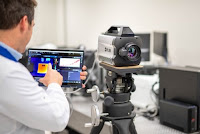
The Forge®️ 1GigE SWIR (Short Wave Infrared) 1.3 MP camera has been introduced by Teledyne FLIR IIS.

The first camera in the Forge 1GigE SWIR series is equipped with a wide-band and high-sensitivity Sony®️ SenSWIR™️ 1.3 MP IMX990 InGaAs sensor. The advanced sensor captures images across both visible light and SWIR light spectrums (VisSWIR) with 5μm pixels, providing an extended spectral range from 400nm to 1700nm. This capability enhances anomaly detection and material analysis, making it ideal for applications such as industrial semiconductor inspection, food and beverage quality control, recycling, security surveillance, environmental monitoring, precision farming, and more.

“We’re excited to introduce the Forge SWIR camera series to grow our imaging portfolio from the visible spectrum to SWIR wavelengths,” said Sadiq Panjwani, General Manager at Teledyne IIS. “The series expands on Teledyne’s SWIR line scan expertise to boost a range of 2D area scan applications such as industrial inspection, environmental monitoring, and recycling.”

The new camera features a design measuring 40mm x 40mm x 43mm that balances a compact size with superior image quality. Forge 1GigE SWIR includes advanced camera features such as Pixel Correction, Sequencer with ROI (Region of Interest), Logic Block, and Counter which provide reliable and precise control for variety of complex applications.

All IIS cameras are supported by Teledyne software development kits (SDK) Spinnaker® 4 and Sapera™ Processing and a powerful Trigger-to-Image Reliability (T2IR) framework. T2IR is a set of programmable functions within the Teledyne SDK that combine hardware and software features that work together at a system level to help improve the reliability and accuracy of inspection systems.


@flir  #PAuto

Thursday, 15 February 2024

Explosion proof infrared gas detector.

Teledyne Gas and Flame Detection is introducing a new infrared (IR) sensor for its class-leading OLCT 100 XPIR (explosion-proof IR) fixed gas detector that will bring the advantages of stable and reliable methane detection measurements to the industrial, utility and laboratory markets.

Methane poses many threats. Not only does it form potentially explosive mixtures with air, but it can also prove harmful to both humans and the environment. For these reasons, many sectors are keen to step up their methane detection capabilities. Increasing demand from the industrial, utility and laboratory markets stems from the need for enhanced measurement stability, aligning with the trend of lower alarm thresholds.

The economic advantage of investing in IR technology becomes apparent when considering factors such as total cost of ownership (TCO), especially in environments when gases such as methane are present. In such applications, IR technology outperforms catalytic oxidation, a process that typically requires recurring sensor replacements and frequent calibration.

To meet market demand fora more robust and cost-effective solution, Teledyne GFD is releasing a new IR sensor dedicated to methane detection. Designed for the company’s highly popular OLCT 100 XPIR fixed gas detector, the IR sensor ensures measurement stability and is impervious to catalytic poisons. Moreover, the solution offers a long lifespan, even with the presence of background gas, to deliver 100% LEL methane detection.

To explain the principle of operation, IR methane sensors deploy two wavelengths of IR energy: one active wavelength for gas absorption and one providing a reference wavelength to compensate for the impact of temperature and humidity. As IR sensors do not require oxygen to operate, these sensors are also suitable for use in 0-100% by volume methane gas environments.

The ATEX-approved OLCT 100 XPIR, a proven performer in the detection of refrigerant, CO2 and combustible gases, comes with 4-20mA output ensuring safe and reliable operation.

“Our new OLCT 100 XPIR with IR methane sensor ensures the protection of workers, assets and the environment from the potentially damaging and harmful effects of methane,” explains Régis Prévost, Product Line Manager at Teledyne Gas and Flame Detection. “Our expert design and development team is constantly looking at ways to meet the demands of customers, helping them overcome real market challenges. With this new product they now have access to a stable, reliable and cost-effective way of performing methane detection measurements.”

As a final point of note, the same IR sensor technology is available with Teledyne Gas and Flame Detection’s 700 series of fixed gas detectors. These advanced instruments display sensor status information on a built-in alphanumeric LED screen.


@mepaxIntPR #TeledyneGFD #PAuto #Safety
Friday, 2 February 2024

Power boost for single frequency infrared lasers.

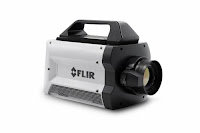
TOPTICA's new highly reliable Raman fibre amplifiers (RFA) are based on patented technology. With their high power of up to 30 W the amplifiers cover the wavelength range from 1120 to 1370 nm that is not accessible by Yb or Er fibre amplifiers.

The all-fibre design requires no re-alignment and provides a high degree of stability. The RFA offers a wide tuning range of up to 10nm, a relative intensity noise >1% RMS (10 Hz- 10 MHz) and excellent long term RMS power stability of less than 0.5 % over 100 hours (with a TA pro seed laser). For wavelengths outside this range please enquire for a custom system. The RFA is designed using the company's high quality engineering excellence and utilizing a stable European & North American supply chain.

Key Features:
• High power up to 30 W
• Available at wavelengths between 1120 & 1370 nm
•Wide tuning range of up to 10 nm
• High reliability and maintenance-free platform design

The RFA is utilizing the proven and stable DL pro or TA pro as a seed laser, enabling a seamless integration into the TOPTICA environment of for example wavelength stabilization options. Utilizing a third-party seed laser of your choice is possible. Please inquire for requirements.

To reach visible and UV wavelengths the RFA can be integrated with TOPTICA 's SHG & FHG portfolio of frequency doubling and quadrupling systems. With these, high power in the visible wavelengths (for example more than 15W at 589nm) can be achieved while maintaining tunability over the entire RFA tuning range. For UV wavelengths the RFAs can be combined with FHG systems, drawing on TOPTICA’s extensive experience of custom (D)UV systems, while also maintaining the full tunability.

The system consists of two modules:
• The fibre Pump Module: Providing pump light for the RFA module.
• The Raman fibre Amplifier Module: High power amplifier module with inputs from the pump module and the seed laser.


@TOPTICA_AG @PresseBox #PAuto #Communications #Ramen

Wednesday, 31 January 2024

Infrared detector breakthrough.

Advanced LTO Infrared Detectors for FTIR spectroscopy applications

Laser Components has introduced its latest achievement in detector technology. By creating an ultrathin LTO detector (Lithium Tantalate - LiTaO3), the company has developed a design that minimizes noise while increasing responsivity by four times using sub-pixel binning.

The Advanced LTO Infrared Detectors operate well within room temperature with no depoling concerns and require no temperature stabilization, typical for DLaTGS detectors. These pyroelectric detectors operate within single channel voltage mode without the need for cooling.

The Advanced LTO Infrared Detectors can maintain high performance up to 1 kHz and can be used out to approximately 10 kHz with fast response to IR flux changes. The flexibility to choose a wavelength range that best fits an application is enabled with the selection of transmission windows. The prominent choice being a KBr window that transmits out to 30 μm with an option for a parlyene moisture protective coating. Additional BaF2, CaF2, CsI, CVD diamond, silicon, and ZnSe transmission windows are also available.


@LCGermany @lasercomp_uk @PresseBox #Automation

Tuesday, 30 January 2024

Appointments at pyrometer leader.

AMETEK Land has introduced a new industry team structure to transform its approach to its customers, products, and solutions. The changes will mean a continued focus on global industrial solutions, and a drive to help customers meet their industry challenges.

James Cross
James Cross has been promoted to Head of Industry Management following five years as Regional Sales Manager in the Middle East as then Global Industry Manager for Hydrocarbon Processing industries. This new position will see James working with partners and customers to demonstrate where LAND’s technology is solving their most complex challenges. Commenting on the changes, he said: “This new role will allow me to highlight to our partners and customers where our technology is solving their most complex challenges. This is particularly important with the shift in industry towards safer, more intelligent, more sustainable manufacturing processes.
“I love having the strategic freedom to focus on solving serious challenges that can be replicated globally and across multiple industries. This means I’m constantly learning about new processes and how we can contribute to a more sustainable industry.
“AMETEK Land has seen the industrial landscape change and evolve dramatically, from its primary focus towards digitalisation to decarbonisation, and now to an equal focus on both. This is underlined by a demand to make more from less, with a reduced risk to human operators and engineers in the plant.”

Manfred Hayk
In addition, Manfred Hayk has taken on the role of Head of Product Management. This role will be focused on developing high-quality, accurate products in line with the wider team to support all industrial applications. He said: “I’m pleased to be working in this important role, which will see LAND develop new products and software to meet our customers’ process challenges and innovate with new algorithms to improve accuracy, save time, and increase safety.
“But it’s not an individual role – I look forward to the collaboration and teamwork across the whole AMETEK Land team to continue the market-leading product and application support we are known for.”

These team changes are key to AMETEK Land’s ongoing development towards greater digitalisation and decarbonisation, which balances between reacting to customer process challenges and innovating based on an expert understanding of what can be done with its technology.

These developments include building algorithms built into the company’s smart pyrometers to improve accuracy while saving operators significant amounts of time, and software development kits (SDKs) supplied with camera technology to allow developers the freedom to produce features using the accurate temperature data output by AMETEK Land instruments. The company is also building closer partnerships with industry-leading manufacturers, producing case studies and evidence showing the value of investing in advanced instrumentation


@landinst @codacomms #PAuto

Friday, 12 January 2024

Service and calibration assistance.

A service solution to ensure customers benefit from peak product performance and maximum return on investment over the life of their equipment is now being provided by AMETEK Land.

All thermometers, regardless of manufacturer, are subject to damage and deterioration over time. However, this can be limited proactively through their service and calibration support, providing ongoing confidence in the measurement accuracy of the instruments.

Service support, delivered through LAND’s worldwide network of regional accredited service centres, helps to maintain peak operating performance over time, while on-site calibration conformance testing maintains the accuracy of the temperature measurement being made.

“Many instruments are operated continually with little or zero maintenance which can affect their performance," said Victoria Jones, Team Leader - Aftermarket at AMETEK Land. "Our service and calibration adjustments restore instruments to ‘as new’, thus limiting their deterioration. This not only provides customers with the assurance that their instrument is working as it should but also protects the investment they have made in that equipment. It’s a proactive solution that maximises the availability and uptime of your AMETEK Land products.”

In addition to its service centres, AMETEK Land also operates three accredited ISO 17025 laboratories which provide certification to endorse the accuracy of temperature measurements being made.

ISO 17025 certification provides additional confidence through traceable independent testing and allows the thermometer operator to distinguish shifts in calibration and correct for calibration errors over and above the specification, providing a useful audit trail.

These ISO 17025 certification laboratories can also certify non-AMETEK Land thermometers/pyrometers within the scope of their approval, subject to the provision of necessary power supplies and cables.


@landinst @codacomms #PAuto #Maintenance

Tuesday, 18 July 2023

State of the art IR Thermometers.

Teledyne FLIR has created two new state-of-the-art spot IR thermometers: the FLIR TG54-2 and FLIR TG56-2. Built on the solid foundation of the TG54 and TG56 models, the new thermometers provide professionals in utility, manufacturing, building electricians, and industrial mechanics with advanced tools to perform accurate inspections and detect hazards before any contact is made.

The new TG54-2 is a 20:1 spot IR thermometer is designed to provide non-contact temperature readings swiftly and effortlessly. The tool offers a distance-to-spot ratio of 20:1, allowing users to measure smaller targets from a safer distance. Equipped with infrared technology, Class II laser sighting, and the ability to measure up to a maximum IR temperature of 850°C (1562°F), the TG54-2 ensures pinpoint precision. Built to endure a 3 m (9.8 ft) drop and carrying an IP65 rating, it's ready for even the most demanding applications.

    FLIR TG54-2 20:1 Spot IR Thermometer:
    Easily perform temperature measurement at safe distances
    Accurately target objects at long distances with a 20:1 distance to spot ratio
    Quickly adjust settings, set high/low alarms to efficiently perform inspections
    Equipped with Class II laser sighting for focused measurements
    Maximum IR temperature of 850°C (1562°F) for accurate measurements of high temperature targets.
    Store up to 99 measurement points that can be quickly referenced for comparison and trending
    Built-in LED worklights to illuminate dimly lit areas for faster and safer inspections
    IP65 rating to meet the demands of harsh environments
    3m (9.8 ft) drop tested protecting the longevity of the tool

For those dealing with higher temperature readings, the FLIR TG56-2 measures IR temperature up to 1300°C (2372°F) and includes a Type K thermocouple for contact temperature measurements. The TG56-2 is also designed to offer non-contact temperature measurements from an even safer distance, thanks to its infrared technology, 30:1 distance-to-spot ratio and Class II laser sighting. The TG56-2's color display screen is designed for easy viewing of current and reference temperature readings simultaneously.

    FLIR TG56-2 30:1 Spot IR Thermometer with Type K Thermocouple:
    Easily perform temperature measurement at safe distances
    Accurately target objects at long distances with a 30:1 distance to spot ratio
    Quickly adjust settings, set high/low alarms to efficiently perform inspections
    Equipped with Class II laser sighting for focused measurements
    Maximum IR temperature of 1300°C (2372°F) for accurate measurements of high temperature targets.
    Store up to 99 measurement points that can be quickly referenced for comparison and trending
    Type K Thermocouple to capture contact temperature measurements
    IP20 rating for proper operation in common industrial environments
    Ergonomic ‘Single Hand’ design for simplified measurements and menu access

Whether the TG54-2 or TG56-2 are chosen, both models are designed to be trusted tools for professionals who require reliable, accurate, safe temperature measurements in their everyday work.

Experience safer temperature readings and achieve pinpoint precision with the TG54-2 and TG56-2 spot IR thermometers.

@flir @mepaxIntPR  #TandM #PAuto

Monday, 29 May 2023

Infrared multimeter and clamp meters.

Multimeter empowers utility, manufacturing, building electricians, and industrial mechanics to troubleshoot electrical system components and identify hazards.

The DM286 Infrared Guided Measurement (IGM™) Multimeter, and two new clamp meters, the CM57-2 and the CM85-2 have been announced by Teledyne FLIR. The reimagined multimeter and clamp meters replace the predecessor DM285, CM57, and CM85, respectively, providing technicians with upgraded tools to perform safe and accurate electrical inspections and to identify hazards before contact is made.

“The FLIR DM285 IGM multimeter and the CM57 and CM85 clamp meters have proven to be enormously popular for electrical inspection, and we are thrilled to reintroduce these flagship products with even more compelling features,” said Rob Milner, business development director, Teledyne FLIR. “The redesigned FLIR DM286 Industrial Imaging Multimeter with IGM now features FLIR-patented multispectral dynamic imaging (MSX®) that adds visible light details to thermal images in real-time for greater clarity. It also includes video recording, longer run time, and compatibility with the new FLIR METERLiNK app.”

The DM286 is designed to enable electricians to pinpoint hot spots and other problem areas faster, safer, and more efficiently. It features 160 × 120 thermal resolution from the embedded Lepton thermal micro-camera along with an embedded visible-light camera and bright LED work light to operate MSX in low light. MSX is additive in that the visible light edge details are displayed on top of the thermal image without sacrificing any thermal detail or resolution.

The multimeter can also store up to 30,000 radiometric thermal images and log files and includes longer battery life for inspectors to capture images and log files all day long. For those using other FLIR test and measurement tools alongside the DM286, the new FLIR METERLiNK app, which replaced the FLIR Tools app, can work independently or in concert with compatible FLIR devices.

It is also effective for complying with the updated National Fire Protection Association (NFPA) 70B 2023 rules released in April, which changed the use of thermography for electrical equipment maintenance from “recommended” to “required.”

New Era of Clamp Meters.
Compatible clamp meter tools provide access to difficult-to-reach areas and adapt to operating condition-specific voltage measurement needs. The CM85-2 Clamp Meter is an industrial power clamp meter with advanced power analysis and variable frequency drive (VFD) filtering functions required by electrical troubleshooters for full-scale equipment. Technicians can accurately analyze voltage in complex machinery by including harmonics, inrush, current, and phase-rotation testing.

The CM57-2 Clamp Meter is designed to simplify difficult current measurements. Its narrow, 18-inch (45.72 cm) flexible coil clamp lets users easily take measurements in awkward and tight spots and it is ideal for multiple conductor measurements and double-wrap requirements. Like the CM85-2 and the DM286, the CM57-2 is also compatible with the FLIR METERLiNK app.

@flir @mepaxIntPR  #TandM #PAuto

Friday, 11 November 2022

A First! Wireless mobile infrared camera.

The FLIR ONE® Edge Pro is a wireless thermal-visible camera for mobile devices. Unlike previous models, the reimagined FLIR ONE Edge Pro doesn’t need to be physically connected to its companion mobile device nor does it have separate models for specific operating systems, providing maximum flexibility for thermal inspections.

“The FLIR ONE Edge Pro is the most versatile and advanced thermal-visible mobile camera yet thanks to its detachable form factor, designed to fit comfortably in your hand. It offers significantly greater flexibility by eliminating the need for specific connection ports or operating systems,” said Chris Bainter, vice president of marketing and business development, Teledyne FLIR. “In addition to the new hardware design, Teledyne FLIR is providing more software tools to empower new and untrained users to conduct thermography inspections, process images, and create reports. Common uses range from building inspection and auto repair to industrial maintenance applications.”

Flexible Yet Rugged Design.
The “RESNET” compliant and IP54-rated FLIR ONE Edge Pro has a spring-loaded clip designed to allow operators to attach the camera to many types of mobile phones and tablets. Thanks to the combined Bluetooth and Wi-Fi connection, users can operate the Edge Pro up to 30 meters away from their mobile device, providing the flexibility to effectively inspect hard-to-reach places or those scenarios requiring greater standoff distances to maintain operator safety.

Offering effective image quality and processing to deliver results, the FLIR ONE Edge Pro features a 160×120 resolution radiometric Lepton® thermal imaging camera paired with a visible camera. Along with VividIR, which combines multiple image frames to deliver one sharper, final image, the cameras are brought together via MSX®. The MSX patented image enhancement feature overlays the edge detail of the visible camera onto the thermal image without sacrificing any thermal data within the image, providing greater context and clarity to improve decision support.

The FLIR ONE Edge Pro has an extended battery life compared to previous generations of the FLIR ONE and an easily-recognized battery life indicator, making it ideal for more prolonged inspection situations including disaster restoration, home inspection, energy auditing, and industrial equipment diagnostics.

More image processing and reporting.
For cloud storage, imaging processing, and reporting, the FLIR ONE Edge Pro benefits from a rich set of Teledyne FLIR software including Tools Mobile, Ignite cloud, and FLIR Thermal Studio desktop software. This allows users to easily share Edge thermal photos with clients and seamlessly integrate them into professional reports.

App developers also have access to the FLIR ONE software development kit (SDK) to create custom applications for exclusive use with the FLIR ONE Edge Pro.

@flir @mepaxIntPR #PAuto 

Wednesday, 24 August 2022

Photometric gas analyser.

A new analyser promising to deliver their most advanced photometric gas analysis solution to date has been launched by Servomex.

The new SERVOTOUGH SpectraExact 2500 is built on the proven legacy of its iconic, industry-leading predecessor. Designed around an easier-to-use digital platform, the new analyzer is a rugged and reliable product ready to handle a wide range of industrial applications, including ethylene production, carbon capture, ethylene dichloride production, and the direct reduction iron process.

Rhys Jenkins, IP&E Spectroscopic Product Manager, said: “Built on a trusted pedigree of photometric analyzers, the new SpectraExact 2500 features some unique enhancements and connectivity options to ensure easy-to-use, next generation performance in a flexible, rugged and robust platform.

“This is an advanced, updated version of an existing, trusted analyzer that is well-known and widely used across a variety of industrial processes. It is a true next-generation product.”

It delivers flexible, real-time, on-line process analysis capability in corrosive, toxic, and flammable gas streams, making it ideal for an extensive variety of process and emissions gas analysis applications.

With a new, feature-rich design, and trusted non-depleting sensing technologies, the new SpectraExact 2500 offers extended maintenance intervals and dramatically reduced ongoing costs.

Enhancements include industrial-leading Infrared technology, a larger screen, more intuitive interface, simpler navigation and CE approval for the European market.

Designed using the latest standards and components, giving maximum longevity to the product, there is an onboard SD card to store data and improve customer support. The new model has also been designed using the footprint of the former model, with compatible wiring, to ensure simple and easy installation for customers.

@Servomex @codacomms #PAuto 


Thursday, 4 August 2022

Optical spectrum analysers.

Combines short and mid wavelength infrared with extreme optical precision to aid development of measurement lasers.

Yokogawa has launched two new optical spectrum analyzers (OSAs) to fulfil market demands for an instrument capable of measuring a wide range of wavelengths to meet new needs in optical product development and manufacturing. The Yokogawa AQ6375E and AQ6376E are the only grating based OSAs covering SWIR (Short-Wavelength InfraRed) over 2 μm and MWIR (Mid-Wavelength InfraRed) over 3 μm with world class optical performance.

Building on the pedigree of Yokogawa’s AQ6375B and AQ6376 OSAs, the new OSAs are offered in four versions.
  1. The AQ6375E Standard has a wavelength range of 1200-2400nm;
  2. the AQ6375E Extended Wavelength version has a wavelength range of 1000-2500nm;
  3. the AQ6375E Limited version has a wavelength range of 1200-2400nm (with reduced wavelength resolution);
  4. and the AQ6376E Standard has a wavelength range of 1500-3400nm.

The choice of wavelengths available gives developers increased flexibility to apply the OSAs in a wide range of applications. These include environmental measurement and gas sensing, where the AQ637xE can be used in the measurement of gas absorption spectra and the characterization of light sources used in Laser Absorption Spectroscopy.

Other major uses for the new OSAs are medical care and biotechnology and industrial laser applications. Typical applications will include the development and measurement of lasers; the characterization of broadband light sources such as supercontinuum light sources; optical passive devices; and optical fibres.

“The new AQ637xE has been launched to give developers and manufacturers greater flexibility in the range of wavelengths they can measure, all in one highly accurate and very useable family of OSAs,” says Terry Marrinan, Yokogawa Test&Measurement’s Vice President & Chief Marketing Officer. “The AQ637xE will extend the number of optical products that can be analyzed, both in development applications and in production, bringing feature rich, high accuracy measurement to all stages of the process.”

The AQ637xE incorporates numerous features that contribute to achieving maximum accuracy. The free space optical input offers single-mode fiber for the SWIR and MWIR regions and MMF (up to 400 µm) on the same OSA. The small variation in insertion loss at the input connector increases measurement repeatability, while the lack of physical contact with the connecting fibers ensures they avoid damage.

Also included is a built-in calibration light source for optical alignment and wavelength calibration. This maintains high optical performance by compensating for deviations in the optical axis caused by vibrations and impacts and wavelength deviation caused by changes in ambient temperature.

The AQ637xE also uses an air purging feature to compensate for another cause of possible error. In the SWIR and MWIR region, there are wavelengths where light shows strong absorptions due to the presence of water vapor and carbon dioxide, which can both disturb the spectral measurement. By continuously supplying pure purge gas such as nitrogen to the monochromator through dedicated connectors on the back panel, the AQ637xE can reduce the influence of light absorptions on the measurement.

High order diffracted light is also compensated for through a built-in cut filter in all versions except the AQ6375E-01 limited model. This is required because the monochromator generates high order diffracted light, which has wavelengths equal to the integral multiples of the input wavelength. The built-in filters reduce this higher-order diffracted light, minimizing its influence on the accuracy of the measurement.

To analyze results, the AQ637xE has built-in analysis functions to characterize optical spectrum from a variety of optical systems and devices, such as WDM system, DFB-LD, EDFA, and filters.

Analysis functions include: DFB-LD; FP-LD; LED; Spectral width (peak/notch); SMSR; Optical power; WDM (OSNR); EDFA (Gain and NF); Filter (peak/bottom) and WDM filter (peak/bottom). To improve measurement efficiency and productivity, the AQ637xE features an application (APP) mode, transforming a versatile OSA into a machine dedicated to a device under test (DUT).

APP mode provides a DUT-specific user interface that allows the user to move from configuration settings to test results without the need to know the wide variety of OSA settings. The AQ637xE comes pre-installed with several basic applications such as WDM test, DFB-LD test, and FP-LD test. A guide through wizard leads the user through an easy set up process for specific measurements and analysis.

New or additional testing applications will be made available for download from the Yokogawa website and can be added to the AQ637xE by future firmware updates. Enhanced user friendliness is achieved with the unit’s high-resolution, responsive 10.4-inch multi-touch capacitive LCD touchscreen, which makes operating the device even simpler and more intuitive.

Users can change measurement conditions, perform analysis and change the optical spectrum view as simply as operating a tablet device. The AQ637xE’s screen design and intuitive operability is inherited from Yokogawa’s best-selling optical spectrum analyzer. This proven interface has served the needs of many thousands of users around the world in areas such as R&D testing and manufacturing testing.

Usability is further improved by the addition of frequently used keys to the hardware keys on the front panel. These include keys for sweep control (Auto/Single/Repeat/Stop), resolution setting, and sensitivity setting.

The AQ637xE also features USB ports that are compatible with a USB storage device, mouse and keyboard. Data and screenshots can be saved to internal memory or USB storage to create test reports, while connecting a mouse or keyboard to the USB port allows the AQ637xE to be operated in the same way as a PC.

The standard LAN port allows convenient access to files stored in the internal memory as well as allowing remote firmware updates from a PC. The APP function also supports a fiber inspection probe, allowing users to visualize the quality of the fiber connector surface.

@Yokogawa, @Yokogawa_EU, @Yokogawa_Europe  @NapierPR #TandM 

Tuesday, 5 April 2022

Sensitive longwave infrared thermal camera.

The Boson+ has been announced by Teledyne FLIR. Its thermal sensitivity of 20 millikelvin (mK) or less, makes it the most sensitive longwave infrared (LWIR) camera in the market. It shares the industry-leading SWaP of the widely deployed and real-world-proven Boson thermal camera module. With identical mechanical, electrical, and optical interfaces, the Boson+ is a drop-in upgrade that also includes updated image processing to deliver enhanced sharpness and contrast for defense and commercial applications.

“Improved thermal sensitivity and automatic gain control (AGC) allows for more scene detail in the image for better detection, specifically in outdoor low-contrast scenes,” said Dan Walker, vice president, product management, OEM cores, Teledyne FLIR. “Improved thermal performance and proven market-leading reliability make it the ideal uncooled thermal module for integration in unmanned platforms, security applications, handhelds, wearables, and thermal sights.”

The Boson+ includes a redesigned 640 x 512 resolution, 12-micron pixel pitch detector with a noise equivalent differential temperature (NEDT) of 20 mK or less which offers significantly enhanced detection, recognition, and identification (DRI) performance. Improved video latency enhances tracking, seeker performance, and decision support.

The shared Boson series interface and access to the US-based Teledyne FLIR Technical Services team reduce development risk and shorten time to market. Truly designed for integrators, the Boson+ is available with a variety of lens options, comprehensive product documentation, an easy-to-use SDK, and a user-friendly GUI. Boson+ is dual use and classified under US Department of Commerce jurisdiction as EAR 6A003.b.4.a.

@flir @mepaxIntPR #PAuto #USA

Thursday, 27 January 2022

Scientific research and engineering infrared cameras

The mid- and long-wave thermal cameras feature advanced recording, triggering, and synchronization capabilities for scientists, engineers, and researchers.

 Two families of X-Series science cameras, the X858x and X698x have been introduced by Teledyne FLIR. They offer high-speed and high-resolution thermal imaging capabilities for scientific research and engineering applications within the mid-wave infrared (MWIR) and long-wave infrared (LWIR) spectrum.

The X858x and X698x cameras offer advanced recording, triggering, and synchronization capabilities. This includes the ability to remotely adjust the focus, improving the quality of thermal data acquisition while saving time and eliminating frustration when operating within dynamic environments.

Users can then seamlessly transfer the data from the onboard solid-state drive (SSD) to a computer for processing and analysis, executed through FLIR Research Studio or the FLIR Science Camera SDK. This simplified experience enables users to immediately access a local copy of the data, providing in-the-moment data review and analysis. The cameras also support long-duration recordings, only limited by the size of the on-board, off-the-shelf SSD. This feature eliminates the need for high-speed data recording systems for some users, potentially saving significant time and costs on additional hardware and integration.

“The new X858x and X698x families of FLIR X-Series cameras are the most flexible, high-performance models in the FLIR scientific camera lineup to date,” said Desmond Lamont, global business development manager for Teledyne FLIR. “In addition to enabling more precise and convenient thermal data capture with programmatic lens control, the cameras include the ability to record directly to the onboard SSD, meaning users can rapidly configure their cameras to record for long durations without the need to invest in or integrate frame grabber-based recording systems. This feature greatly increases the utility of X-series cameras where longer timescale data capture is paramount and can save the user tens of thousands of dollars in budget, in addition to offering an overall smaller size and weight footprint for the total system.”

Each new camera also includes a dedicated trigger input on the rear panel and a new Tri-level Sync input, providing easy access to all methods of recording and synchronization across multiple camera units and types. This affords greater flexibility for user-specific recording requirements. In combination with motorized lens support, each model includes an integrated, four-position filter wheel. The wheel can be loaded with neutral density or spectral filters that further improve the quality of recording while saving time and mitigating frustration, especially when the camera is in a remote location.

The X858x MWIR and SLS LWIR family of cameras feature a cooled thermal camera core with high-definition resolution (1280x1084) and a 180Hz frame rate, for capturing the most refined data imagery. The X698x MWIR and SLS LWIR cameras feature 640x512 thermal resolution with a greater than 1kHz frame rate to capture stop motion high-speed events – whether in the lab or on the test range.

@flir @mepaxIntPR #Pauto #Laboratory