Showing posts with label Cabinets. Show all posts

Monday, 3 June 2024

LED enclosure light.

The innovative LED enclosure light SL 025 expands STEGO Elektrotechnik portfolio . This new light is specifically designed for use in enclosures and cabinets with high component density. In addition to providing optimal illumination and easy handling, it also offers benefits for efficient sourcing through its all-in-one approach.

"With the SL 025, we offer our customers a versatile, high-performance, and user-friendly lighting solution for enclosures and technical installation spaces," commented Maximilian Vosseler, Senior Product Manager at STEGO. "The combination of high light quality, flexible mounting, and additional features like the integrated socket and motion sensor makes the SL 025 the ideal choice for industrial applications."

The LED enclosure light SL 025 impresses with its compact design and flexible mounting options. The light is equipped with an on/off switch and a motion sensor, making an additional door contact switch unnecessary. Thanks to the wide voltage range of AC 100-240 V, 50/60 Hz, the SL 025 can be easily used anywhere in the world.

The integrated socket allows for the simple operation of additional electrical devices such as laptops or diagnostic equipment. There are seven socket variants available, meeting the requirements of European and international standards, including those of the USA and Australia.

The all-in-one approach of the SL 025 light brings efficiency gains for companies that build enclosures. The combination of a wide voltage range, integrated motion sensor, and a broad selection of sockets makes the SL 025 a favorite among purchasers. With fewer device variants, a wider range of applications can be covered, creating synergies in procurement and inventory management.

The SL 025 is equipped with LED technology that ensures homogeneous illumination inside the enclosure. With a power consumption of 4 W and a luminous flux of 560 lumens, the light provides glare-free, daylight-white lighting with a color temperature of 6,000 to 7,000 K. This ensures accurate color rendering and enhances user safety through natural vision.

The robust and flat plastic housing of the SL 025, made in light gray according to UL94 V-0, is designed for durability. The light offers IP20 protection and Class I safety and can operate within a temperature range of -40 to +60 °C. With a long lifespan of 60,000 operating hours, the LED light is virtually maintenance-free.

The light can be mounted with screws either on its narrow or wide side, or it can be attached in enclosures using magnetic mounting without additional installation effort. This flexibility facilitates integration into existing systems and allows for practical application.

The LED enclosure light SL 025 is globally certified, offering safety through approvals from VDE and UL, with EAC and CCC certifications to follow shortly. This ensures reliable and safe operation in a wide range of applications.


@UkStego @stego_de @PresseBox #PAuto #Manufacturing

Friday, 30 September 2022

Enclosure heaters on display.

STEGO Elektrotechnik will be presenting its enclosure heater with a novel loop design at this year's SPS in Nuremberg (D).* STEGO's showcase for the return of the SPS trade fair also features an update to the KTO/KTS control cabinet thermostats and new smart sensors.

LTS064 loop-heater touch-safe
Their LPS and LTS product series give an update to its PTC-based convection heaters with capacities of between 10 and 150 W. The cooler bodies in the new loop profile design absorb the heating capacity of the PTC elements better and ensure a higher stability of the device against vibration. This means the LTS series of heaters is able to comply with the standards for mobile railway applications (DIN EN 60068-2-27:2010-02 and DIN EN 60068-2:64:2009-04). STEGO consistently uses push-in terminals for electrical contacts in the LPS and LTS series. Easily accessible on the front of the devices, the push-in terminals provide time savings of up to 50% by allowing for tool-free insertion of the cables. The terminals exert constant pressure on the supply lines, which provides added security even when transporting pre-assembled control cabinets, for example. You therefore do not need to worry about the connecting cables coming loose and resulting short circuits.

New editions of their KTO/KTS fine-tune STEGO's mechanical thermostats to better meet the needs of control cabinet construction in practice. The thermostats are designed as two-point regulators with a thermobimetal sensor element. The KTO 111 is a contact breaker (NC) for controlling heaters. The KTS 111 is a contact maker (NO) for controlling filter fans, heat exchangers, coolers and switching signal devices. Push-in terminals are used for making electrical contact. They ensure that connecting the power cables is safe, tool-free and fast. Users can expect a reduction in installation time of up to 50%. STEGO engineers have also optimized the housing design so that the thermostat now literally has more air. Larger air vents in the main unit, which tapers towards the back,

The newly developed DSS 015 Distance Smart Sensor (right) measures the distance of objects using the time of flight (ToF) of ultrasound waves. The DSS 015 Distance Smart Sensor is designed for monitoring distances or fill levels in industrial applications. The DSS 015 can even detect transparent objects such as glass, films and fluids. It is also unaffected by changing light conditions, and easy to connect to higher-level control systems (eg SPS) via its IO-Link interface.

STEGO is expanding its range of sensors for industrial applications that use IO-Link. Their SHC 071 Sensor Hub offers a cost-effective interface through which STEGO sensors can easily be connected to IO-Link installations. The SHC 071 Sensor Hub records measuring data on the process level from up to four external, non-IO-Link-capable STEGO sensors and transmits the data via the IO-Link Master to higher-level control units such as Edge computers, the cloud , SPS control etc. The Sensor Hub can be used to connect up to four external STEGO sensors while using only one port on the IO-Link Master, saving the IO-Link Master's connection capacity. The number of connected sensors and the allocation of sockets can be freely chosen by the user. Sensors from the SEN 073 series are available for the Sensor Hub. The sensors are pre-calibrated and are easy to connect to the Sensor Hub using a plug. Clustering IO-Link functionality in the Sensor Hub allows the sensors to take on a compact form factor. Sensors in the SEN 073 series can be used to record data in the following fields of application: temperature and relative humidity, temperature and absolute air pressure, visible light, illuminance and VOC.

*SPS - Nürnberg (D) November 8th-10th 2022

@stego_de @spsmesse @PresseBox #PAuto

Tuesday, 4 January 2022

Fans slash energy consumption.

EAO Ltd has introduced a new series of exceptionally energy efficient electronically commutated (EC) axial fans. The latest additions to the Sanyo Denki San Ace family of equipment cooling fans, the San Ace 172AD and 172ADW measure just 99mm by 250mm but deliver the cooling performance and low noise requirements demanded by high static pressure cooling applications such as FFU (fan filter units), air purifiers, cooling inverters and high-density telecom cabinets.

The new San Ace 172A axial cooling fans are 172mm by 51mm side-cut fitting devices that provide a maximum static pressure of 195 pascals (Pa) and a maximum airflow of 6.7 m3/min, which equates to 236 CFM (cubic feet\minute). Standard high performance cooling applications are served by the 172AD, while the 172ADW is an IP56 splash-proof version that delivers reliability in dusty or damp environments. There’s a choice of two power connections: a built in 300mm flying lead with connector or a terminal version that itself offers an optional plug-in wiring cord with connector. Both fans feature a wide 90 VAC to 260 VAC operating voltage (50/60Hz), enabling a single product family to suit applications world-wide.

According to Robert Davies, Marketing Manager with Sanki Denki’s representative in Britain, EAO Ltd., EC motor technology delivers significant power savings over traditional AC fans: “The new 172AD and 172ADW fans typically consume only 17W of power and reduce running costs by over 30% (avg.)” Davies said. “The fan speed is managed by a built-in PWM controller, which is also able to bring the fan to a complete stop when no cooling is needed. The built-in pulse sensor (tacho) connections can be used to monitor the fan speed and to assist in fault diagnosis”.

Engineered with a black aluminum frame and a fire-retardant impeller, the new San Ace 172AD and 172ADW fans feature motor and locked rotor burnout protection. The bearings are L10 rated (continuous operation survival rate of 90% in free air at 60°C), ensuring trouble-free long-term operation.

#EAO #sanyodenki #PAuto

Wednesday, 25 August 2021

Resolving media disruptions in data transfer.

Today’s ecosystem of industrial automation is characterised by many media disruptions during the processing and transfer of documentation. It is essential to resolve these issues within the development process for machines and plant systems – via targeted collaboration among all stakeholders and systems. Data created in the engineering process must be shared with everyone involved in the process. The ideal goal: machine builders and system integrators, control cabinet manufacturers, component manufacturers and also the machine or plant system operator all work networked together.


Operators of production facilities, machine builders and system integrators, control cabinet manufacturers and component manufacturers all have one thing in common: they all work together along the value chain, from the planning through to operating a finished machine or plant system – and continuously exchange information in the process.

The ecosystem of industrial automation
What does this process – the collaboration among the various process participants – look like today? In the planning phase, the characteristics of the desired machine or plant system are described. If the company has particular supplier specifications, these are also detailed and then passed on to the operator, who takes the specifications into account when designing the machine or system. The planning phase is followed by the preplanning process. Additional information such as devices, release lists from Excel, specifications in Word or preplanning tools such as Eplan Preplanning are taken into account and, in turn, are used by the basic engineering designers to prepare a quote, for instance. In the case of more complex production lines, this is traditionally taken care of by a system integrator, who is also responsible for the detailed engineering and for generating electrical and fluid-power schematics.

The new Eplan Platform 2022 with a completely redesigned user interface: the practical ribbon bars using modern technology flexibly adapt to the application.

Data is enriched in the Eplan Project
The project created with systems of the Eplan Platform – Eplan Electric P8 or Eplan Fluid, for example – is now transferred to the control cabinet manufacturer. This manufacturer creates the virtual prototype of the switchgear system in the form of a 3D assembly of the control cabinet using Eplan Pro Panel. The control cabinet is then built, approved and commissioned by the operator. With the delivery of the switchgear system, the control cabinet manufacturer processes are complete. The company hands over the Eplan Project, which has been enriched with data, back to the machine builder or system integrator, who then commissions the machine or plant system based on the final project data. The project is then made available to the operator, who can access the current documentation, for instance using Eplan eView, in the event that servicing or maintenance becomes necessary, and who can digitally document any changes using the redlining function as needed.

This process describes the daily work in this ecosystem of industrial automation. The challenge, however, is that all the data for an automation project is created and added at various stations along the value chain. Often, all the project participants are working with partially inconsistent data, which ends up making the process even more time consuming and error prone. For instance, the drive power of a motor is changed at some later point in a project, but this change isn’t taken into account when the machine or plant system is commissioned. As a result, the documentation is not up to date.

All changes in a project are centrally available in Eplan eView. The advantages are obvious: project documentation is always up to date – along the entire product life cycle and into operation and service scenarios.

A “data container” as the central source of information
This is where Eplan comes in: the systems of the upcoming Eplan Platform 2022, in combination with the new Eplan eManage cloud service, network together machine builders and system integrators, control cabinet manufacturers, component manufacturers and the operators of machines or plant systems. Eplan CEO Sebastian Seitz explains: “We connect companies with their clients and suppliers via the cloud, for easy and secure data sharing. The Eplan Project as the central, digital model of an automation solution supplies all processes with the necessary data. What we’re talking about is a sort of ‘data container’ that is fed from the systems of the Eplan Platform. This generates added value in the digitised collaboration of all participants – through secure data transfer and central access to the Eplan Project.” A new feature includes the connection to the cloud via Eplan ePulse, which also significantly facilitates mobile working in design and engineering.

An important building block is device data, which is provided on the Eplan Data Portal. What matters here is the quality and depth of the data, something being intensively advanced with the Data Standard.

Cross-project collaboration via the cloud
Using the new Eplan eManage, projects can easily be uploaded to the cloud and managed and shared from there. More specifically, this brings together the worlds of on-premises software and the cloud. Clear access rights via role management ensure data security and provide flexibility for accessing projects. Users of Eplan Electric P8 and Eplan Pro Panel can conveniently upload their projects to the cloud and transfer them to the Eplan Platform for further processing. This is accomplished without the time-consuming sending of project data via email or using an FTP server. And the centralised, clear availability in the cloud also enables all project participants to search quickly for specific content. With Eplan eView, all the changes in a project are centrally available. The advantages are obvious: project documentation is always up to date – along the entire product life cycle and into operation and service scenarios. 

High-quality digital device data is a key factor in:

• Processing orders in shop floor management and deriving production orders.
• Controlling automated machine fleets (Rittal Automation Systems).
• Providing information to partially automated workstations (for instance, simplifying wiring processes with Eplan Smart Wiring).

An important component of this method of working is device data, which is provided on the Eplan Data Portal. Seitz says, “What matters here is the quality and depth of the data, something we are intensively advancing with the Data Standard.” Comprehensive, integrated and end-to-end digital data serves as a project accelerator. And don’t forget, the data are consistent and the data transfer is secure.

Seitz continues: “With these optimised processes and increased efficiency, companies can optimise their machine and plant system design processes and sustainably increase the availability of their machines and plant systems. Collaboration among all participants ultimately increases the quality of the data and thus the added value.”

@EPLAN_global @mepaxIntPR #PAuto 

Tuesday, 29 June 2021

Bimetal Thermostats.

Small compact thermostats KTO 111 and KTS 111 from STEGO feature a practical innovation: Push-In terminals ensure faster and tool-free connection. The small-sized regulators can be quickly connected within an enclosure or control cabinet to switch heating and cooling systems. These provide a constant climate, prevent the formation of harmful condensation, and enable trouble-free operation of sensitive electronics.

Push-In terminals for faster connection
With the new KTO / KTS thermostats, STEGO has taken the opportunity to adapt its regulators to meet the requirements of the enclosure manufacturing industry. KTO 111 and KTS 111 connect to the power supply tool-free using Push-In terminals on the front of the housing. The terminals provide constant pressure on the connection wires ensuring safety even during transportation of preassembled enclosures. It prevents wires from becoming loosened. Another advantage of the Push-In terminals is a 2/3rd reduction of installation time due to tool-free wiring.

NC and NO Contacts for optimal climate
The mechanical thermostat may appear to be small and possibly unspectacular, however only at a first glance! Thermostats are important components in every enclosure. They regulate the climatization of electronic components within the desired temperature range and thus help protect against harmful condensation. The two new thermostats are designed as two-state regulators with a sensor element made of thermostatic bimetal. The flexible bimetal bends under the influence of temperature and switches a snap-action contact. The KTO 111 is a contact breaker (NC – normally closed - the contact opens when the temperature is rising) for regulating heaters. The KTS 111 is a contact maker (NO – normally open, the contact closes when the temperature is rising) for regulating filter fans, heat exchangers, cooling appliances, or switching signal devices. So, what is the advantage of using a thermostat duo over a thermostat with change-over contact? The combination of two single thermostats (NC and NO) is more economical and allows the user to individually set the temperature ranges for heating and cooling. On the other hand, the change-over contact provides a specific changing point between heating and cooling and is a good choice when space is at a premium.

More air to “breath”
The company has put a lot of effort into the re-design of the thermostat housing. Now the thermostat has “more air to breath”. Enlarged air gaps on the rear of the thermostat housing ensure an optimized air intake and thus improved response time to temperature changes. Noticeable is also the curved, ergonomic housing design on the front with a large setting dial, which is easier to read and increases safety against unintentional adjustments: the temperature setting can only be changed with a screwdriver. STEGO´s Head of Development Peter Witsch points out the company’s special relationship to the enclosure and cabinet thermostat: “Our company co-founder and former Head of Development Hartmut Eisenhauer developed the bimetal thermostat for enclosures and control cabinets around 30 years ago. Since then, this product invention has become an established industry product. Therefore, we are committed to further extend the product benefits for customers with each re-design.”

Tried and tested in harsh environments
The operating temperature of the thermostats ranges from -45 to +80 °C (-49 to + 176 °F) in an environment with a maximum of 90 % relative humidity (non-condensing). KTO / KTS are developed for protection type IP20 and protection class 2, achieve a verified service life of 100,000 cycles, and are suitable for the following switching currents: AC 250 V, AC 120 V, and DC 24 to 72 V. The maximum inrush current is AC 16 A for 10 seconds. The switch temperature difference is 7 K with a tolerance of ±4 K. They are mounted by the clip for a DIN rail. A special feature of the new thermostats is their suitability for use in high altitudes. The thermostats can be used up to 5,000 meters (in overvoltage category II) and up to 2,000 meters (in overvoltage category III), thanks to the optimized air gap and increased creepage distance. The thermostats KTO 111 and KTS 111 have standard agency approvals, such as safety approvals by UL and VDE.

@stego_de @PresseBox #PAuto 

Monday, 22 June 2020

Cabinets and components for Water and Waste.

Equipment enclosures and cabinets require careful consideration in these markets and protection from dust and water alone is often not enough. Electromagnetic interference emitted by electric motors, power supply, relays, solenoids or power lines can interrupt the operation of critical electronic devices used for control and monitoring of water treatment processes.

The nVent Schroff Varistar electronics cabinet platform from Foremost Electronics provides an innovative solution for highly effective EMC shielding of 60 dB at 1 GHz and 40 dB at 3 GHz to ensure reliable, uninterrupted operation of electronic equipment. A wide range of options are available as well as tailored solutions, all with lead times guaranteed to keep projects on schedule.

Emma Kempster, Key Account Manager, of Foremost Electronics, comments; "The water and waste treatment industry presents a number of specific requirements for system builders. In addition to just supplying individual products Foremost has the knowledge, experience and expertise to supply complete packages of products which will complement each other and fulfil these specialist needs. Our suppliers are also very happy to work with us to provide bespoke solutions."

Standard features include, environmental protection up to IP 55, doors with 4‐point locking and screw‐fixed side panels, static load‐carrying capacity to 800 kg and front, rear or base cable entry.
Secure cable entry is required for control cabinets to ensure cabinet IP ratings are not compromised while combining ease of access when installing, commissioning or during upgrades or maintenance.
The icotec KVT-ER split cable gland, available from Foremost, sets new standards in cable routing for cables with or without preassembled connectors. The KVT-ER cable gland is liquid and dust proof to IP66/IP68, has a very robust housing, is vibration resistant, easy-to-install and a cost-effective solution for cable routing, sealing and strain relief. It will also accept pneumatic or hydraulic lines and corrugated conduits. The icotec split gland system ensures retrofitting, repairs and maintenance are simple tasks to perform.

To ensure the EMC shielding integrity of the cabinet, direct earthing of cable shields at the point of entry (e.g. at the enclosure or machine wall) is possible by using the additional KVT-EMC shield clamp bracket, removing the need for additional EMC cable glands.

For connecting sensors and external equipment Foremost can supply miniature and sub-miniature waterproof connectors from Tajimi Electronics, a leading connector manufacture established in 1923. Their products are suited to many special application requirements and industries requiring high reliability. The product range includes 20m, 30m and 100m depth specifications and are suitable for extremely harsh environments where hermetically sealed connectors are required. Ideal for water and waste treatment plants the connectors are made from light weight brass and zinc alloy / nickel construction, with a temperature range of -25˚C to +85˚C.

For electronic equipment designers looking for a flexible human-machine interface (HMI) Foremost can supply the new E18 mechanical incremental encoder from ELMA Electronic. The industry standard footprint E18 product family incorporates all the features required for the widest range of applications while providing improved performance and manufacturability. Typical applications include water distribution controls, monitoring systems and industrial controllers.

The E18 encoder is available with an optional centre push button with the choice of 3N or 6N push force and may be further customised with bespoke shaft dimensions and shapes, user specified detent torque and IP60 or IP68 front panel sealing for rugged applications.

@4MostElectronic @proactivefleet #Water #Pauto

Wednesday, 6 May 2020

Modular system for server and network racks.

A new and unique generation of IT racks – in the shape of Rittal’s VX IT – is being launched by the company. Conceived as a universal modular system, the VX IT has been designed for all common applications and its versatility makes it suitable for use as a network and server rack. The large selection ranges from 15 to 52 U in height. Users can deploy it to provide edge installations, corporate data centres with suite climate control, modular IT containers, energy-efficient colocation data centres and the largest hyperscale data centres.

“All the experience gained from numerous IT projects worldwide has gone into the development of the new IT rack. The VX IT stands for speed, flexibility and modularity. However, it also stands for the certainty that our customers will be ideally equipped for every future IT scenario,” explained Uwe Scharf, Managing Director of the IT and Industry Business Units at Rittal, who is also the Head of Marketing.

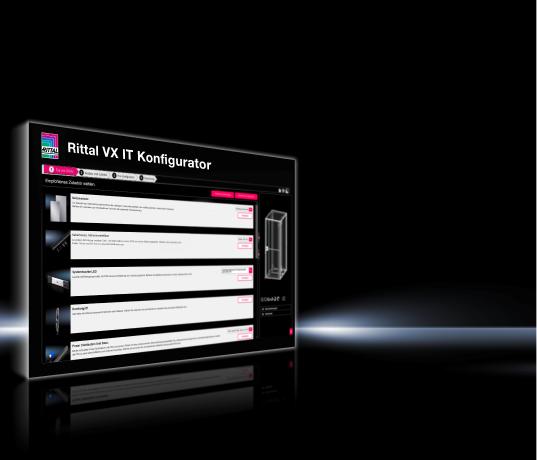
Faster, easier and more secure with digitalization: An online configurator guides the user step-by-step through the selection of components and it also performs a plausibility check: www.rittal.com/vx-it

With VX IT, Rittal exploits the full digitisation potential for the benefit of its customers. The entire process from selection, configuration, ordering and right through to delivery is digitally supported and transparent. During the configuration process, a 3D model is gradually built up, complete with accessories. Once finished, the 3D model is available for the client to use. The individually designed version of the IT rack is produced in a very high quality in a state-of-the-art manufacturing facility. Optimised logistics mean it is delivered quickly and on time.

And what’s even more for the benefit of the customer: all the VX IT variants designed with the configurator have already been tested and certified with all their components in accordance with international standards such as UL 2416, IEC 60950 and IEC 62368. Consequently, the customer needs no additional certification for the fully configured system. This means maximum freedom and security when setting up new IT infrastructures. With this solution, IT managers can save valuable time in planning and procurement, while at the same time being assured that all the components work in perfect harmony.

Important for existing customers: The VX IT offers compatibility with existing Rittal RiMatrix systems and other IT infrastructures achieved with Rittal components. This way, it is possible to replace individual components in existing data centres, as well as to expand data centres as desired. For example, companies can expand existing RiMatrix installations with the new VX IT and also use the VX IT-specific components for cooling, UPS or monitoring purposes. This provides investment security for present Rittal data centres.

Rapid tool-free assembly: Anyone working in a data centre will want a cleverly designed and easy-to-use solution. Rittal has consistently followed this principle in developing the VX IT. The IT rack is installed largely without tools using time-saving “snap-in” technology. The height units and pitch patterns are marked, which makes it easier to set the 19-inch distance between levels. All the panels such as side or roof panels are attached quickly and easily using snap-in fasteners and positioning aids. The new vertically split side panels, available as optional accessories, provide users with improved access in order to accelerate installation work and service. The vertically divided side panels are fitted with simple hinges, which means that they can be opened like doors and yet are still easy to remove. Horizontally divided side panels are also available; these also simplify access, for example to servers.

Load capacity of as much as 1,800 kg: Another key feature of the VX IT is its great stability: Thanks to an improved 19” frame design, the IT rack has more vertical stability than its predecessors. The load capacity has been verified both by internal tests at Rittal and by external certification by the Underwriters Laboratories (UL). Two variants are available: The VX IT standard rack variant permits a static load of 1,500 kg in accordance with the Rittal test procedure, or 1,200 kg in accordance with UL certification. The VX IT dynamic version permits a load of 1,800 kg in accordance with Rittal test procedures, or 1,500 kg in accordance with UL certification.

Everything a rack needs: A wide range of accessories is available for the VX IT so that it can be individually configured. These include options for the doors and side panels as well as for the floor and roof, as well as such innovations as the new LED strip for status display. Further accessories include pull-outs and cable management tools, as well as solutions for monitoring, power supply and asset management in the IT rack. Components such as PDUs, UPS systems, IT cooling systems and monitoring solutions are also available for interior installation, as are modules for early fire detection and extinguishing.

#PAuto @Rittal @PresseBox

Wednesday, 15 April 2020

Handles for enclosures and panels.

Foremost Electronics is a major supplier of standard and custom cabinets and enclosures and continues to add to its range of panel building accessories.

A wide range of high-quality handles from MENTOR, the world’s premier manufacturer, are now available from Foremost. The very diverse range of industrial, enclosure and equipment handles offer designers elegant and functional solutions to suit any application. It includes hundreds of plastic (including two-component and heat-resistant versions), anodised aluminium, chrome, steel and stainless-steel variants, all with multiple size options. MENTOR handles offer high quality, elegant, ergonomic and comfortable styles which and can be configured to meet any dimensional requirement.

Alan Vincent
, Sales Director of Foremost, comments, “Our enclosure and cabinet business is growing very rapidly, and our customers need high quality accessories to enhance the appearance and performance of their systems. MENTOR offer one of the most extensive ranges of handles available, making them an ideal partner for us to be able to offer a one stop shop for all of our customer’s panel and enclosure requirements.”

MENTOR’s plastic handles are cost-effective, versatile and easy to install. The range offers many bow section designs using single-plastic or two-plastic construction including handles for various load capacities and temperature requirements. Versions made with highly durable heat resistant black Duroplastic type FS 31 offer a maximum operating temperature of 100°C.

Aluminium is an ideal material for many handle applications offering lightness, strength and a high-quality surface finish. MENTOR's wide range of standard aluminium handles includes equipment handles, bow-type handles, fingertip handles, handle systems and folding handles. Colour-anodised versions are available with gloss or brushed finishes.

MENTOR's chrome handles are made from steel and are ideal for high load bearing and suitable for pulling, pushing and lifting actions in equipment and machinery applications while still being elegantly designed. Many types of chrome handles are available, including both straight and angled bow-types, as well as collapsible handles. Several styles are also available with plastic coating on the grip bar. The thin-coating, UL224 Polyolefine flame retardant, hand grips meeting E196690 approvals are available in black, red, white, blue, yellow, green, grey, orange and brown and have an operational temperature range of -55°C to +125°C

Stainless steel handles are the ideal solution for medical and catering applications and other product designs requiring elegance combined with strength. The standard range offers handles made of round or flat oval stainless steel, folding/collapsible handles and an easy to assemble modular handle system. The handles can be finished in matt, polished or uncoated stainless steel with several similar designs made in robust chrome-plated steel.

#PAuto @4MostElectronic @proactivefleet

Friday, 22 November 2019

Highest-level component data.

By implementing a new data standard, software solutions provider Eplan contributes to further simplifying control and switchgear construction. The new standard increases the quality of article and device data in Eplan Data Portal, a web service offering product catalogues from numerous component manufacturers. Several thousand data sets – for instance from Rittal, leading provider of enclosure systems and IT infrastructure – are already available at this premium level, and additional well-known component manufacturers are working on providing data in line with this new standard.

When control cabinets or switchgear systems are being designed in 3D, wire lengths automatically calculated, or mounting panels processed by machines, standardised component data are required. These data are also the foundation for the digital twin, which is becoming increasingly indispensable in the product life cycle. The new Eplan Data Standard defines the type of component data required to automate and simplify processes in (pre)planning, engineering, manufacturing and maintenance. Users of Eplan’s engineering software solutions benefit from a significant increase in quality in Eplan Data Portal, which gives them direct online access to the product catalogues from numerous component manufacturers.

Currently, Eplan Data Portal has more than 239.000 users and offers data of more than 913.00 products from 286 manufacturers. All of the software solutions embedded in the Eplan Platform can access this web service. The simple transfer of the available component data into Eplan documentation is via drag and drop, which reduces the effort required in design and increases the quality of machine and plant documentation. Manufacturers are also being optimally supported – the Data Creation Tool based on eCl@ss Advanced offers them an import option that significantly simplifies data provision.

First data in the new standard already available
Several thousand updated component data, with a focus on manufacturing integration, are already available in the new Eplan Data Standard. This includes, for instance, a schematic macro, a 3D file and connection diagrams for typical electrical components. Rittal – sister company of Eplan in the Friedhelm Loh Group – is one of the pioneers in this and has already integrated initial data for control and switchgear systems as the standardisation of such systems is one of the central USPs of the company.

Renowned component manufacturers including ABB, IFM, LAPP, Phoenix Contact, Puls, SEW-Eurodrive, Siemens, Schneider Electric, Wago, Weidmüller, Wieland and others are already implementing the standard – they all recognised the need for comprehensive, standardised data early on. The optimised, standardised data sets can be used to create complete bills of materials or to reliably calculate the weight of the control cabinet using defined weight specifications as just two examples.

A practical example
Around five hundred connections must be laid for the control technology in an average control cabinet – all with different colours, cross-sections and wire processing. Preparing and wiring all of the connections manually requires an average of four minutes per wire, which takes too long to keep up with the competition. Modern production methods get prefabricated wires from machines, saving the effort and time required for manually cutting to length and assembly. But how does the machine know which individual connections exist? The answer lies in the digital twin of the control cabinet, in which all the components were selected in engineering, presented with their characteristics in the schematics and subsequently assembled in the control cabinet in 3D. The connection points and designations for the components are already described in the 3D layout. Using this component data, the electrical designer can output the colors, lengths and wiring targets for the connections with a mouse click and transfer them to the processing machine.

#PAuto @EPLAN_Germany @Rittal @PresseBox

Friday, 7 June 2019

Metal hoods and housings for connections.

The metal hoods and housings of the Han® B, EMC and M series from Harting, now offer rear mounting options for contact inserts, a solution which greatly simplifies the preassembly of interfaces for control cabinets.

With the new Han® metal housings, it is possible to lock the prefabricated inserts directly from the rear into the bulkhead mounting housing from the interior of a control cabinet. In the past, Han® inserts had to be conducted from the inside of the cabinet through the panel cutout, before they could be preassembled outside. After that, they were pushed back and fixed into the bulkhead mounted housing.

In the newly designed metal hoods and housings, the insulation bodies are inserted into a plastic holding frame that snaps safely into the aluminum die-cast enclosure, supported by a lug. To achieve protection in accordance with class IP65/66 and to guard against the effects of UV radiation and ozone, the flange rubber seal is laid completely into the interior of the housings.

The housings of the Han® M series were redesigned according to the same principles. Han® M hoods are particularly suitable for harsh environments, for example, on the exterior of wind turbines.
By the end of this year, rear mounting inserts with a continuous 360°-degree shielding will also be available. With Han® EMC, the shielding is always on the metal hood or housing, with the hoods requiring special EMC cable glands.

With the new mounting options, the preassembly of cabinet components becomes simplified and increasingly efficient, as more elements of control cabinets, machine modules and cable harnesses can now be prefabricated separately. As a result, the proportion of prefabrication increases and the overall assembly costs decrease. Further cost savings are achieved as the new and old variants of the Han® metal hoods and housings are completely compatible with each other.

 @HARTING  #PAuto #Electrical @HARTING_Group

Thursday, 27 July 2017

Robust docking frame.

The Han-Modular® Docking Frame Metal is a new robust connector solution from Harting, for speeding the installation of systems that have to be mated “blind” or coupled automatically – in switch cabinet drawers, for example.

The new docking frame allows machine components to be switched quickly and securely, providing a cost-effective technique for incorporating slide-in modules in low-voltage switching systems or energy storage units along with signals, power and data.

The frame works as a receptacle for units in the company’s Han-Modular® family of industrial connectors, in which different modules for the transfer of power, signal and data or compressed air can be located side-by-side. With over 100 different modules, the Harting modular connector range offers almost endless flexibility and connection options.

The docking frame works without the need for any additional articulated frames, and connector modules can be fitted directly to it, saving time and cost. The frame has two long leading guide pins on the pin side to bring the two connector faces together.

The connectors are located in a “floating” mount with a ±2 mm tolerance, allowing the socket face to be oriented to the ideal position for greater accuracy and a more secure connection. Because grounding is separate in many insertion scenarios, the docking frame has no PE contact, but grounding can be added as required with a Han® PE module that can be obtained separately.

The Han-Modular® Docking Connector Metal can be connected either manually (directly or indirectly) or automatically. The construction of the device is particularly robust and mechanically stable to make it secure enough for all applications.

@harting #PAuto

Monday, 10 July 2017

Handle options.

Multitron has announced the availability of 50 new Stainless Steel and Chromium-Plated Handles, added to Mentor’s range of Equipment Handles, bringing the total range of Handle options to over 270. The majority are available ex-stock and at low MOQs.

Handles made of steel are ideal for high bearing loads and are suitable for pulling, pushing, and lifting actions in equipment and machinery applications, and if elegant design, high strength, chemical resistance or food hygiene are important in the product design, then stainless steel handles are a very good solution. Chromium-Plated Handles offer stylish, high-strength solutions, and many versions have anti-slip hand grips as options.

A product handle can dictate the overall aesthetics of the final product, so equal importance is applied to both form and function. Every handle offers elegance and quality, is ergonomic and comfortable to hold and can be customised to meet specific dimensional requirements.

In addition to Stainless Steel and Chromium-Plated Handles, MENTOR’s range includes aluminium and plastic handles, recessed and carrying handles, ledge, strap and tray handles, plus folding / collapsible handles. There are also “prop-up”, “spring-back” and “rear-up” handles, front-panel handles and circuit board handles, heat resistant handles and many modular handle systems.

Extensive product information is available on the new Multitron Handles Microsite, including fully-dimensioned drawings and selection charts. Information on availability and MOQs etc is presented using graphical icons with “instant on hover” explanatory text.

@MultitronUK  #PAuto 

Wednesday, 7 June 2017

Water cooling in food industry.

Climate control of enclosures with water cooling is highly efficient, especially if there is already a central cold water supply available in the production plant. The new Hygienic Design air/water heat exchangers from Rittal are ideally suited to the food industry, where hygiene requirements are exceptionally stringent.

Hygiene is an absolute must in the food industry: Machinery, plant and components must readily withstand daily cleaning with pressure washers and jet steam cleaners. There surfaces must also be easy to clean, and/or designed to prevent contaminants from adhering to them.

Use cooling water to dissipate heat
Liquid cooling of enclosures offers a number of benefits: Because water has a higher thermal capacity than air, liquid cooling can dissipate even large quantities of heat. What is more, industrial environments often already have a central cooling water supply available that can be used for enclosure cooling. All that is left to do is to mount suitable air/water heat exchangers on the enclosure. With Hygienic Design, it is particularly important that no air exchange takes place between the enclosure and the environment.

Rittal has revamped its air/water heat exchangers, and can now offer its clients in the food industry two variants of Hygienic Design. Air/water heat exchangers for wall mounting can supply cooling outputs of either 0.65 kW or 1.2 kW. The hygienic design reduces the risk of contamination in the food industry, thus helping to ensure product safety.

Modified design
For Hygienic Design, Rittal has modified the design in a number of respects. For example, the attachment to the enclosure wall using threaded bolts and nuts has been designed so that the screw fastening is not visible from the outside. The enclosure is made from stainless steel with a brushed grain size of 400, producing a surface roughness Ra of less than 0.8 μm. The smooth surface finish is easy to clean and disinfect. There are no hard-to-clean gaps where contamination could collect.

The silicone seal between the enclosure and the case prevents the transfer of colourants, flavourings and unwanted odours. The seal eliminates gaps between the air/water heat exchanger and the enclosure which would be difficult to clean. The seals are available as spare parts, and are easily replaced in the event of mechanical damage. The seals are dyed blue in accordance with FDA Guideline 21 CFR 177.2600, making them clearly distinguishable from contaminants such as food residues. The flat seals on the water connection fittings are likewise dyed blue, and geometrically designed to sit flush against the shape of the fitting. A metal end stop prevents compression of the seal, so that edges cannot protrude and allow contaminants or micro-organisms to accumulate.

Tested hygiene
The top of the enclosure tilts forwards by 30 degrees. This typical Hygienic Design feature prevents objects from being deposited on top of the enclosure, while at the same time ensuring that liquids, such as detergents and disinfectants, run off quickly. With protection categories of IP56/59, air/water heat exchangers meet the demanding requirements of pressure washing and steam cleaning.

The air/water heat exchangers have C-UR and CSA approval, making them suitable for international use. The Hygienic Design was tested by the DGUV Food department testing and certification agency in accordance with GS-NV 6 (test principles for hygiene). The devices comply with standard DIN EN ISO 14159:2008 and are suitable for use in the food sector in conformity with DIN EN 1672-2:2009.

@Rittal_Ltd  #PAuto 

Tuesday, 9 May 2017

Energy efficient lighting in housings.

The high-performance, energy-efficient LED technology of Rittal’s new LED system lights optimises illumination in housings and enclosures. As well as maintenance engineers, the new development also benefits control system and switchgear manufacturers. With user-friendly connection and assembly options, the lights facilitate everyday workshop production. This makes using the new LED system lights a no-brainer for Blumenbecker Automatisierungstechnik, a leading control system and switchgear manufacturer based in Beckum (D).

“That’s exactly what we want,” says Heinz-Josef Schmitz from Blumenbecker Automatisierungstechnik GmbH. Intelligent enclosure components that are easy to install like Rittal’s LED system lights are a great help to the senior executive responsible for switchgear production. “In our production processes with a large proportion of manual operations, it’s vital to find ways of achieving substantial time savings by making assembly easier,” he says, adding that Blumenbecker is benefiting from the lights’ fast, tool-free assembly and wiring. “Wherever we want to locate a system light at the end of the enclosure configuration process, it’s not fixed in a set position but can be installed flexibly in line with our requirements and fits anywhere in the enclosure frame.”

The new LED system lights from Rittal have been specifically developed for use in enclosure systems, where they ensure ideal illumination of the entire enclosure. With a luminous intensity of 1200 and 900 lumens, even large enclosures up to 1200 mm wide and 2,200 high are perfectly illuminated with the Rittal LED system lights. Should they require a lower light output in smaller enclosures, lights with 600 and 400 lumens are now also available for control and switchgear manufacturers. The version with 600 lumens of light output meets the standard requirements for the large TS 8 enclosure, for instance, while the 400-lumen lights meet those for wall-mounted enclosures such as the Rittal AE compact enclosure series.

An optical cover made of transparent plastic, in which a Fresnel structure is integrated, serves to optimally illuminate the enclosure. It focuses the light so that the entire enclosure is illuminated in a targeted way, even at the bottom. This means the light reaches exactly those places where it is needed – without being scattered into the outer areas. In addition, all the lights have been designed for a wide range of AC voltages (100 – 240 V AC) or DC voltage (24 V DC) and can therefore be used all over the world, so Rittal offers a light that is suitable for every market. This cuts storage costs and reduces complexity when selecting products.

The lights can be adapted to any type of installation, i.e. they can be fitted either vertically or horizontally in the enclosure section. They can be mounted quickly and easily simply by clamping them into the TS 8 enclosure section. They can also be screwed into the section. The use of a universal bracket aids rapid assembly in AE compact enclosures. Rittal also offers suitable accessories for all the LED system lights, such as door-operated switches and through-wiring for bayed suites.

@Rittal #PAuto @BLUMENBECKER

Wednesday, 22 March 2017

GRP inspection door for outdoor installations.

A unique inspection door for outdoor equipment protection enclosures has been announced by Intertec. The new GRP Inspection Door comes with a window frame made entirely from GRP (glass reinforced polyester) - a material offering a very high degree of protection against corrosion combined with excellent thermal insulation.

The design offers a more durable alternative to the conventional aluminium or stainless steel window frames commonly used for field equipment in harsh environments, helping to extend the lifecycles of business-critical process control and instrumentation equipment. Doors are available with either IP54 or IP65 ingress protection ratings.

Intertec's GRP inspection doors are ideal for enclosures and cabinets containing control and instrumentation equipment fitted with user interfaces, indicators and displays. This embraces a broad range of commonly-used field equipment including process transmitters and PLCs. A lot of this type of equipment is increasingly being located deeper inside the processing areas of a plant, where environments can expose the equipment to harsh and corrosive atmospheres.

GRP is an inherently inert material that is virtually immune to corrosion and atmospheric pollutants. It does not rust or degrade in any meaningful way, and is resistant to a wide range of chemicals. The GRP sheet material used in the door's construction also provides excellent thermal insulation for field equipment requiring heating or cooling. GRP's thermal conductivity is around 5,000 times less than aluminium and 1,000 times less than steel - alternative materials widely used for window frames in this application. This helps to eliminate 'thermal short cuts' between interior and exterior, which can lead to cold spots and condensation problems. In its basic form, these properties make GRP a superb material for robust outdoor enclosures - allowing maintenance-free lifecycles of 30 years and more.

Two variants of the new GRP inspection door are available with window frames measuring approximately 50x35 or 67x47 cm (19.7x13.8 or 26.4x18.5 inches). Intertec can fit these frames with acrylic, safety glass or insulated glass panels to suit the application. Options include an insulated glass panel filled with Argon - which has a significantly lower thermal conductivity than air. The U-value of the Argon-filled panel is 1.7 W/m²K. The inner glass pane of this unit also features a heat-reflecting coating offering a g-value of 50% to reduce the impact of solar energy heat transmittance (untreated insulating glass has a g-value of around 90%).

Intertec's GRP Inspection Door can be fitted with a variety of handles and locks to suit the application. As standard it comes in light grey, but it is optionally available in other colours. An antistatic version of the door is also available for hazardous area applications.

#Intertec #PAuto 

Monday, 21 November 2016

Protecting vital control systems!

Outdoor shelters with a novel combination of Intertec's passive and active cooling technologies have been chosen to protect vital control systems at a Middle Eastern refinery. The environmental protection solution is being provided as part of an upgrade to the burner management systems at the core of the plant's refining processes.

High-reliability PLC-based systems will provide the control and safety functions needed for management of eight separate burners. However, the physical location of the systems - deep inside the process - and the harsh coastal desert location of the refinery, pose major additional challenges for this engineering upgrade.

The project partners selected the field instrumentation protection specialist Intertec to provide the enclosure solution because of its experience of harsh environments, and for its novel protection ideas that will enhance the overall functional reliability of the control systems.

Intertec's design response to the engineering problem incorporates two major features. The first is custom-designed remote instrument enclosures (RIEs) based on composite GRP materials. The materials protect against the many environmental challenges of the application including very high levels of UV, extremes of temperature, dust and sand abrasion. The second key part of the protection solution is a regulated internal environment that provides the essential cooling required for the reliable operation of the electronics in the harsh Middle Eastern climate. This is maintained by a combination of three cooling methods, in order to provide exceptional redundancy against failure. The IP65-rated shelter also utilises the plant's instrument air service - after drying and filtering. This provides a slight positive pressurisation of shelter interior atmosphere for safe operation in a hazardous area, as well as ensuring there are no corrosive chemicals in the atmosphere.

"Intertec's novel approach to this field protection problem meets a growing need in today's process world," says Keith Wood, Intertec's project manager. "Control and instrumentation systems are being sited much closer to the process, deep inside corrosive and hazardous areas - and this in turn is demanding higher levels of reliability. GRP enclosure construction materials, combined with innovation in the associated protection systems such as cooling, are helping engineering consultancies to create advanced new plant solutions."

Three cooling technologies will protect the PLC-based control and safety systems: an air cooler, a water cooler, and a water-based passive cooling system. In normal operation, the water cooler and passive cooler operate in combination to decrease the internal operating temperature of the eight shelters. The aluminum heatsinks of the PLCs and cases will be installed directly onto conductive mounting plates, in contact with the liquid-based cooling media. This conductive heat transfer provides a much more efficient cooling mechanism in addition to conventional air convection.

The passive cooling system works by exploiting the regional climate's large temperature swing over the daily cycle, using water as a medium to store the coolness of the night and moderate internal temperatures during the day. Natural convection moves the water around the system and its heat exchangers. In this application however, Intertec's addition of an electrically powered water cooler improves efficiency - and reduces the size of the water tank needed for the passive cooling circuit. If the powered water cooler should fail, the electrically powered air cooler switches on to maintain the internal environment. If both of the powered water and air coolers fail, the passive system has enough cooling and storage capability to maintain a low shelter temperature for many days - giving refinery staff plenty of time to effect repairs.

One of the advantages of this multi-faceted approach to cooling is a reduction in size of the protection solution. A pure passive system would need to be sized to deal with the hottest days of the year, which would necessitate a large water tank for a Middle Eastern location. The inclusion of two other cooling technologies allows each cooling component to be reduced in scale - and cost - as the systems can work in combination to handle occasional extremes of duty cycle. In most normal operational cases, each cooling technology has the capacity to handle the load by itself. This particularly reduces the cost of the air cooler element, as the system must be ATEX-rated - adding significant costs.

Another interesting feature of Intertec's solution is the size of the shelters. The shelters are scaled to accommodate the PLC control and safety systems, but are also designed to be accessed only from the outside in normal plant operation. The powered water and air cooler units are mounted on an external wall. Several other small panel-mounting enclosures provide external access to the electrical connection and I/O termination points. The PLC is fitted with a touchscreen HMI panel that sits on an external wall - allowing operators on the ground to make adjustments to the control programs locally if needed. A door is incorporated in the shelter design but this is locked in normal operation, and only accessible under controlled circumstances. This reduces the size and cost of the enclosures, and eliminates the need to make them blast proof. All eight shelters use a common design with a footprint of around 2 x 3 metres, plus a heat exchanger on the roof, which also overhangs to provide shade.

The need for a custom shelter shape was easily handled by Intertec's extensive investment in manufacturing automation, which includes large-bed CNC cutting, routing and drilling machinery that can make custom panels in quantities as small as one.

The shelters will be assembled and factory tested at Intertec's European manufacturing centre in southern Germany. This plant incorporates a modern and well equipped assembly and testing line. Intertec will install the PLC and safety control system modules inside the shelter, to the design layout provided by the project engineers. The shelter will then undergo two separate in-depth testing programs. One will test all the features of the shelter including pressurisation and the correct operation of the cooling systems - which will involve the use of a very large and sophisticated environmental test chamber. The functioning of the PLC-based control and safety system will also be tested in conjunction with the project engineers, before the finished shelters will be transported in standard shipping containers to the refinery, ready for connection to the process. Delivery of the eight RIEs will start in the second quarter of 2017.

#INTERTEC #PAuto #Oil

Thursday, 28 July 2016

RF shielding effectiveness measurement.

Wave Scientific now provides an RF shielding effectiveness measurement service which measures the performance of 19” racks, cabinets and other small enclosures
Shielded racks have been widely used in military facilities for many years and are also increasingly used for commercial purposes such as IT and Telecommunication infrastructure. They may be used both for Electromagnetic Compatibility (EMC) purposes and also for protection from Electromagnetic Pulses (EMP).

Measurements of the shielding performance of racks and cabinets can be challenging as their small dimensions limits the size of antennas and other equipment that can be used inside the enclosure.
In order to optimise these measurements, Wave Scientific has designed a series of small broadband antennas specifically for performing shielding verification measurements of small enclosures. Using these antennas along with small signal generation and RF amplifiers allows measurements of high levels of shielding performance over a wide frequency range.

Wave Scientific offer measurements either at spot frequencies or with a swept frequency response and can cover frequencies up to 40 GHz. Measurements can include magnetic and electric field shielding effectiveness as well as plane wave and microwave field attenuation measurements.

The shielding effectiveness measurement of racks and cabinets complements Wave Scientific’s well-established shielding effectiveness measurement service for evaluating shielded rooms and large shielded facilities.

@WaveScientific #PAuto

Monday, 18 July 2016

Hardy non corrosive electrical cabinets.

Foremost Electronics has been appointed as a distributor for Fibox, leading manufacturers of a wide range of standard plastic enclosures for the electrical and electronics industries.

"We are very pleased to introduce our latest supplier with the launch of an exceptional new product." Says Alan Cook, Managing Director of Foremost Electronics. “The new ARCA cabinet range provides control systems with ultimate protection in demanding environments.”

ARCA cabinets are available in 14 different sizes form 300x200x150mm to 600x800x300mm and are simple to customise during system manufacture or on site, with no specialist tools required, leaving no possibility of rust on the worked surface afterward. Manufactured in high grade polycarbonate material ARCA cabinets are non-corrosive, suitable for use in extremely harsh and demanding environments and provide a long lifetime and excellent security. The UV stabilized polycarbonate material ensures high performance in outdoor installations, is chemical resistant and has a raw material flammability rating to UL 94-5VA

The ARCA product range is lightweight for ease of transport and installation, meets the Low Voltage Directive 2006/95/EC up to 1500 VDC, has a wide operating temperature from -40° to +80°C (+120°C short term) and has been designed to remain aesthetically pleasing for an indefinite time after installation.

The robust design meets IP 66 to protect from water ingress providing peace of mind in wet and dusty environments, offers high impact resistance and is able to withstand contact up to IK 10. The ARCA cabinets provide excellent protection against vandalism and are fitted with a patent pending strong hinge designed to withstand regular door opening to 120° and the fitting of door mounted components. Multiple locking options are available to provide a secure solution for every application.

• Fibox ARCA cabinets have a number of market leading innovative features including a patent pending lockable inner door requiring no tools for mounting, a patent pending quick to mount and easy to use DIN-rail frame set, equipment mounting pods on the base, cover and four base sides, variable depth option for internal plates and a wide range of accessories available to simplify system design. These include mounting plates, corner adjustment set, window cover, galvanised steel inner door set, DIN-rail frame set, support bar set for DIN-rail, pole mounting set, wall mounting lugs set, rain/snow hood and locking options.


#Foremost #PAuto @FiboxUSA

Thursday, 24 March 2016

Explosion proof cabinets for field instrumentation in process plants.

Intertec has launched a new range of explosion proof cabinets to protect field instrumentation operating in hazardous areas.

Ex p explosion proof cabinets 
According to Klaus Dieter Meyer of Intertec, “There is a growing need for Ex p field protection cabinets and enclosures in the process sector. Analyzers are getting smaller and plant operators are keen to site these as close to the process as possible, in order to shorten sample lines and thereby improve the accuracy and speed of results processing. Our ability to create Ex p cabinets and enclosures of virtually any design and complexity provides system integrators with a very flexible and cost-effective solution.”

Available in a diverse range of standard sizes, as well as in custom shapes up to walk-in shelter size, the cabinets are certified for use in Zone 1 and Zone 2 hazardous areas. They are ideal for housing forward-placed analyzer equipment in industrial process facilities such as petrochemical/oil refineries and fertilizer production/storage plants, and also provide the possibility to install non-Ex rated analyzers and instrumentation inside Zone 1 or 2 classified environments.

Intertec’s pressurised explosion proof (Ex p) cabinets are constructed from GRP (glass reinforced polyester) composite materials. These materials are highly resistant to corrosion and have a similar strength to stainless steel, but are about 75 percent lighter, making them ideal for equipment containment and personnel shelter applications. They are especially suitable when robustness and rigidity need to be combined with low mass – such as on offshore platforms. They are also ideal for areas where there is a need to mitigate injury to personnel or damage to equipment, such as on sites where there is risk of an explosion.

GRP composite materials also have a much higher thermal resistance than metal. This simplifies the construction of cabinets that provide excellent insulation, greatly reducing the energy required to heat or cool the equipment. It also makes it easier to build cabinets without any thermally conductive links between their exterior and interior surfaces, thereby avoiding creating cold-spots which can lead to problems with condensation.

Intertec is capable of producing single-piece panels of GRP composite as large as 6 x 12 metres. This enables the company to create cabinets of virtually any size. The panels can be chemically bonded to create very tight sealing that prevents the ingress of hazardous gas and reduces the consumption of air, which is used to create the slight positive over-pressure needed for Ex p protection. Any requirement for special air locks to allow unfettered access to equipment inside the cabinet or shelter can be accommodated very easily.

The pressurised cabinets are equipped with a control unit that regulates the flow of inert purging gas or compressed air, and then monitors the pressure inside the cabinet to ensure that it is maintained slightly above atmospheric pressure by automatically compensating for any leakage losses. Intertec works with a number of controls manufacturers to equip its Ex p cabinets with the most appropriate type of purging and pressurisation systems.

Each partially equipped enclosure is then tested by Intertec at one of its manufacturing plants, before being delivered to the system integrator for installation of the analyzer instrumentation. Final safety testing of the complete unit is carried out at the integrator’s facility, prior to its installation at the customer’s site. Intertec is certified by various competent bodies – including PTB (Physikalisch-Technische Bundesanstalt) – to perform the necessary compliance testing.

 #Intertec #PAuto #Ex

Wednesday, 16 December 2015

Foam Seals - protecting enclosed instruments & components?

Sonderhoff raises the standard for foam seals in the electronics industry

Nowadays, the life veins of highly automated industrial production come together in the switching cabinets used in the electrical distribution and control and safety technology of the production systems. The sensitive electronics involved are given the best possible protection against faults and mechanical damage by the control cabinet body. But the control cabinet needs to be sealed off too. This is where the 2-component Fermapor® K31 polyurethane foam sealings from Sonderhoff Chemicals come in. They seal off the control cabinet body and doors so that dirt, dust and moisture are unable to penetrate the interior and damage the electronics. The faults that such effects can cause could result in production downtimes that are invariably associated with high costs.

Sonderhoff Chemicals develops and produces special sealant materials for polyurethane foam seals used in a variety of applications in the context of control cabinets and electronics housings. They offer a wide range of characteristics according to the specific type of material selected: short assembly and tack-free times thanks to very fast reacting Fast-Cure foams, high flame protection compliant with fire safety standard UL 94 HF-1, suitable for indoor or outdoor use, excellent elastic recovery properties of the foam seals following compression and excellent sealing properties based on testing classifications defined by NEMA for North America or the IP classes (ingress protection) in Europe. These sealing properties increase the protection of electrical and electronic components in control cabinets against dust, rain, splash and stream water, as well as fire.

Fast-Cure foams for shorter assembly and tack-free times
The fast reacting foam seals from Sonderhoff for the sealing of control cabinets and electronics housings allow short curing times to be achieved. They can be adapted to the customer's production speed and application process cycle. With the ultra-fast, 2-component Fast-Cure Fermapor® K31-A-4530-2-B-FC polyurethane foam seal for indoor control cabinets, the sealing surface is tack-free after just 3.5 minutes and the assembly time can be reduced by more than half from its previous approximately 60 minutes to around 25 minutes - times vary depending on the temperature and processing and machinery-mediated influences.

For control cabinets that are permanently exposed to the influences of weather, Sonderhoff offers special Fast-Cure foam seals that have been tested outdoors. The ultra-fast-reacting FERMAPOR® K31-A-6065-1-B-FC foam seal used for this can be installed after just 20 minutes* (standard 60 minutes). And the tack-free time for this Fast-Cure foam seal is now around 3 minutes*, compared to the previous time of 12 minutes. The advantage: shorter tack-free times mean that further processing steps can start sooner.

Advantages of short assembly times for control cabinet manufacturers
During the development of seal formulas, Sonderhoff especially takes into account the specific production concepts and application processes used by its customers. In the development of 2-component control cabinet seals, for example, it is important to coordinate the reaction behaviour and pot time until the start of expansion, as well as the curing time of the foam seal, as precisely as possible with the customer's production processes in control cabinet assembly.

The installation time is also crucial in control cabinet assembly, i.e. the time needed for the foam seal to cure and the time from which the foamed components can be put together to create a control cabinet. Until final assembly, the individual control cabinet components - side pieces, back wall and doors - are usually stored in piles until they are fully cured. If the new control cabinet seals from Sonderhoff enable the installation times to be reduced by at least half, significantly fewer components need to be stacked up for a shorter length of time. This saves on storage space and warehouse costs. Investments in tempering furnaces, such as the type used to cure 1K foam seals, are not necessary thanks to the significantly faster reaction behaviour of the 2-component Fast-Cure Fermapor® K31 foams.

Good surface adhesion and elastic recovery
The type and characteristics of the substrate play a major role in the surface adhesion of foam seals. The new Fast-Cure foam seals generally adhere very well to control cabinet housings that are usually coated with powder paint. This is often not the case with stainless steel housings. Here, however, pre-treatment with an adhesion-promoting primer can produce good results. Plastic housings also exhibit adequately good adhesive properties; however this depends greatly on the type of plastic used. Foam seals on plastics such as ABS, PC or PA6 generally adhere well, whereas PE, PP, PS PVC or PMMA often require pre-treatment. In this case, primers or thermal processes such as flame treatment, plasma or corona treatment are usually used. In the case of electronics housings made from plastic, it is usually sufficient for the foam seal to be held in the groove. Essentially, the surface adhesion must always be checked on an application-by-application basis.

The seal foamed control cabinet side pieces, back walls and roof elements are installed during final assembly and then not opened again. In this case, assembly adhesion in association with the component construction is in many cases sufficient. The cabinet doors, on the other hand, are opened and closed frequently, which means that special requirements apply to the elastic recovery of the seal used here. Under test conditions (80° C, 50% compression, 22 h) the indoor foam seals recovered by around 92%. In the case of outdoor foam seals, the elastic recovery is even better, at around 95%. This means that the foam structure is able to maintain a consistently high sealing effect even after frequent opening and closing of the doors.

Optimised sealing parameters
The Fast-Cure control cabinet sealings for indoor or outdoor use are water-repellent. The water uptake in their compressed state at room temperature is less than around 3% for outdoor foam seals and around 5% for indoor foam seals. This means that protection classes up to IP 67 can be achieved, depending on the component design and the foam system used. In North America, the sealing of steel switching cabinets with Fast-Cure control cabinet seals from Sonderhoff is tested in a system test in accordance with NEMA 4. The control cabinets are subjected to a water jet test for this, in which all columns with seals are checked for tightness with a water jet sprayed at a rate of over 240 l/min and for a testing time of 40 minutes. The test also examines the protection against dust.

Flame protection for control cabinets in the event of a fire
One element of the broad spectrum of properties of the foam seals from Sonderhoff Chemicals for the sealing of control cabinets and electronics housing is the Fermapor® K31-A-45C4-2-UL-FR polyurethane foam seal with flame protection. It fulfils fire safety standard UL 94 HF-1, the highest fire safety class for polyurethane foam seals in the USA, and is therefore classified as self-extinguishing without burning droplets. It also complies with US testing standard UL 50E for control cabinets and electronics housings in non-explosion-protected zones, as well as UL 508 for the safety of electrical switchgear. All three are key requirements for the marketing of electrical equipment and other electronic applications in the US, Canada and Mexico.

Perfectly sealed control cabinets that ensure high-performance and fault-free electrical distribution are not only used in industrialised nations. They are one of the prerequisites for the industrialisation of developing countries all over the world. The plastic and metal processing companies in these countries can source everything they need for the sealing of control cabinets and electronics housings from the Sonderhoff group of companies, from the broad spectrum of properties in Sonderhoff Chemicals' sealing products to the mixing and dispensing systems for the foaming of components from Sonderhoff Engineering.