Showing posts with label Rotating Equipment. Show all posts

Friday, 20 May 2022

Predictive maintenance for rotary equipment.

A new asset monitoring solution that enables predictive maintenance for rotary assets and delivers actionable insights to plant managers has been launched by Sensata Technologies.

Unplanned downtime related to motors, pumps, and other rotating assets costs plants millions of dollars in production every year. But existing solutions do not provide the real-time insights plant managers need to truly monitor their assets.
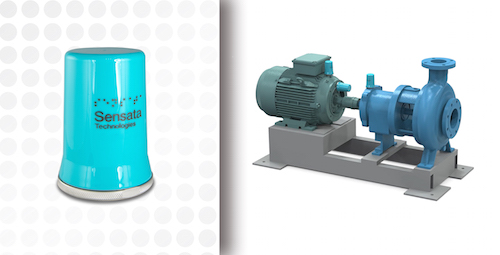
The new wireless 6VW series IoT sensor delivers insights via the Sensata IQ platform and can simultaneously monitor each asset using six sensing modalities - vibration, temperature, acoustic emission, speed, humidity, and magnetic flux. The sensors are designed for easy retrofit into a wide range of existing rotary assets - such as motors, pumps, blowers, fans, or compressors - regardless of brand or manufacturer with no changes needed to the company’s hardware or control platforms. The 6VW sensor series is an easy-to-use, self-install solution with a mobile app for device configuration, making setup and installation possible in less than five minutes.

Using powerful AI-driven algorithms explicitly designed for rotary assets by Nanoprecise, a Sensata technology partner, data from the sensor is analyzed at the edge for anomalies and then pushed to the Sensata IQ cloud-based platform for further analysis and data visualization.

The Sensata IQ platform uses the data to identify potential faults, calculate the asset’s projected remaining useful life and deliver alerts to plant managers on their laptops, tablets, or smartphones. The deep predictive maintenance analysis capabilities help plant managers rely less on manual walkarounds and better understand the health of their assets.

“The partnership with Sensata Technologies has been a tremendous success for both parties,” says Sunil Vedula, Founder and CEO of Nanoprecise. “Together, we know that our AI-powered solutions will help change the way plant managers around the globe monitor their rotary assets.”

Sensata is collaborating with technology companies such as Nanoprecise to develop comprehensive solutions for assets that are rarely monitored due to cost and complexity. Adding Nanoprecise’s technology to the Sensata IQ platform enables maintenance teams to make confident decisions and simplify maintenance programs across rotary assets with data that can be trusted and accessed anywhere, anytime.

“Sensata IQ is raising the bar in monitoring industrial assets, with reliable solutions that enable operators to easily increase productivity. This intuitive predictive maintenance solution, powered by Nanoprecise, allows plant operators to gain deep machine health insights on rotary assets in a simple way. Our mission is to make asset monitoring more accessible and this solution supports that mission.” says Naoto Mizuta, Vice President of Industrial at Sensata Technologies.

@Sensata #PAuto #AssetManagement

Thursday, 30 May 2019

Linear & rotary sensors.

Positek Limited has recently been acquired by The Variohm Group. The world-wide supplier of linear, rotary, tilt and intrinsically safe position sensors becomes the fifth member of the expanding Variohm Group; joining Variohm EuroSensor, Herga Technology, Ixthus Instrumentation for and Heason Technology.

Positek Limited brings its highly specialised linear and rotary voltage displacement sensor technologies (LVDT/RVDT) and customised design expertise to the Variohm Group as well as expand the overall production and customer support capability; taking the Group head count over 190, including 20 engineering staff operating across Europe and with world-wide distribution in major industrial markets. Furthermore, Positek is to benefit from a much broader sales and technical capability through the shared customer base and extensive synergy that is encouraged and prevails throughout the Variohm Group - headed by managing director, Graham Pattison.

Further expanding Positek’s potential for extensive growth and success through the acquisition, the Variohm Group is a member of the LSE-listed discoverIE Group plc (LSE: DSCV) - an international group of businesses that designs, manufactures and supplies innovative components for electronic applications.

Positek Limited was established over 25 years ago and today operates as an ISO9001:2015 certified designer and manufacturer of linear, rotary and tilt sensors with several specialist quality standard certifications including ATEX, IECEx, and CSA for both sensors and galvanic isolation measurement amplifiers. The Company has developed its own patented non-contact inductive position sensor technology and enjoys a high reputation for its fast-turnaround standard range as well as customised sensors and transducers that are extensively used in intrinsically safe, hazardous, automotive, submersible and other challenging environment measurement tasks. The extremely robust and highly accurate technology allows linear position measurement up to 1500 mm or more with angular position measurement capabilities from between 5° and 160° - notably in very compact form-factors. Application areas include, but are not restricted to, oil & gas, mining, medical, marine, hydraulic & pneumatic cylinder position feedback, tilt sensing on construction and heavy machinery, and more.

Commercial director Mark Spreadbury and production director Robert Munn will continue to manage the team at Positek, reporting to Graham Pattison who is delighted with the expansion of the Variohm Group: “The acquisition substantially boosts our design and manufacturing capability, and brings exciting new products and sales channels for both Positek and the existing Group members. We very much look forward to developing and enhancing our application-solving competencies by promoting the Group’s products through Positek and vice versa.”


@Variohm #PAuto @positekltd

Monday, 20 May 2019

SAW technology to harness tide!

Non-contact torque sensors from Sensor Technology are playing a key role in the development of commercial-scale in-stream tidal turbines produced by OpenHydro. The company is using these novel sensors, which are based on surface acoustic wave (SAW) technology, to accurately measure rotational speed and frictional forces in a simulator for the turbine bearings, thereby allowing it to optimise the performance and reliability of its innovative products.


OpenHydro is a technology company that designs and manufactures marine
turbines to generate renewable energy from tidal streams. The company's vision is to deploy farms of tidal turbines under the world's oceans, where they will dependably generate electricity with no cost to the environment. This method of producing electricity has many benefits.

Because the turbines are submerged, they are invisible and they produce no noise. And because they are submerged at a considerable depth, they present no hazard to shipping. An advantage that is possibly the most important, however, is that the tides are completely predictable, which means that the energy output of the turbines is equally predictable. There are no large seasonal variations and no dependence on the vagaries of the weather, as there are with many other renewable energy sources.

Reliably and efficiently harvesting energy from the tides, however, requires the use of novel technology and, in the case of OpenHydro, this takes the form of open-centre turbines that can be deployed directly on the seabed. Clearly, installation in such an inaccessible location makes reliability a prime consideration in the design and construction of the turbines. For this reason, OpenHydro carefully and comprehensively evaluates the performance of all of the components used in its turbines.

For the bearings, this evaluation involves the use of a simulator that allows the company's engineers to determine how frictional forces in the bearings vary with different loads and rotational speeds. Central to the operation of this simulator is the measurement of torque in a shaft from the motor that drives the bearing under test. With conventional sensors, it is hard to carry out this type of torque measurement accurately and reliably, but OpenHydro found that Sensor Technology's TorqSense RWT420 series sensor provided an ideal solution.

Like all TorqSense sensors, the RWT420 units depend for their operation on surface acoustic wave (SAW) transducers. These transducers comprise two thin metal electrodes, in the form of interlocking "fingers", on a piezoelectric substrate such as quartz.

When an RF signal of the correct frequency is applied to the transducer, surface acoustic waves are set up, and the transducer behaves as a resonant circuit.

If the substrate is deformed, however, the resonant frequency changes. When the transducer is attached to a drive shaft, the deformation of the substrate and hence the change in resonant frequency will be related to the torque applied to the shaft. In other words, the transducer operates as a frequency-dependent strain gauge.

Since the transducers operate at radio frequencies, it is easy to couple signals to them wirelessly. Hence TorqSense sensors can be used on rotating shafts, and can provide data continuously without the need for the inherently unreliable and inconvenient brushes and slip rings often found in traditional torque measurement systems.

"We chose the RWT420 because of its convenient wireless operation, and because it was easy for us to fix in line with an existing shaft in our experimental set up," said Kevin Harnett, Mechanical Engineer at OpenHydro. "In addition, this model of sensor has integral electronics and a serial output, which means that we can link it directly to a laptop computer in our test laboratory. This is a very straightforward and convenient arrangement.”

OpenHydro uses the RWT420 sensor in conjunction with Sensor Technology's TorqView software. This offers a choice of dial, digital bar and chart graph format display for torque, RPM, temperature and power. It also provides facilities for realtime plotting and for data recording, and can output stored results as files that are compatible with Matlab and Excel.

"We have found both the sensor and the software very easy to work with," said Kevin,   "and the sensor has proved itself to be well able to withstand the tough operating conditions in our laboratory. We've also received excellent technical support from Sensor Technology, which was very helpful as we have never previously worked with sensors of this type. Overall, we're very happy with product and the service we've received, and the sensor is providing invaluable data for our development work."

Proof that this development work is yielding dividends was amply provided late in 2009, when OpenHydro deployed the first commercial-scale in-stream tidal turbine in the Bay of Fundy, Canada, on behalf of its customer, Nova Scotia Power.

This 1 MW unit was operational, rotating with the tides, collecting data and producing energy within six days f arrival on site.

• See video on the Fundy Bay project here: OpenHydro connects north America's most powerful tidal turbine

@sensortech #POwer @openhydro

Monday, 13 May 2019

Prescriptive analytics for rotating machinery.

PeakVue™ Plus, a technology enhancement that brings prescriptive analytics to the field to help users improve the availability of rotating machinery has been launched by Emerson. The firmware streamlines the path from data collection to action and enables users to make timely, corrective decisions when analysing machinery vibration.

By embedding expertise into analysis algorithms, PeakVue Plus enables AMS 2140 Machinery Health Analyzer users to see at a glance not only whether a machine is in good working condition, but also the severity of an issue and whether it is related to a bearing defect or lubrication. This helps field technicians determine root causes and quickly resolve equipment problems before failures occur and cause unplanned downtime.

“PeakVue Plus prescribes to the user the necessary corrective actions to preserve bearing life and ensure long-term availability of their assets,” said Robert Skeirik, director of machinery health product management at Emerson. “It’s like having an expert available at the touch of a button.”

PeakVue Plus builds on proven PeakVue technology that filters vibration signals to focus on impacting, a leading indicator of overall asset health on any type of rolling element bearing machine.

New AMS 2140 analysers will include PeakVue Plus. Current AMS 2140 users will be able to upgrade their units to add PeakVue Plus, if they have an active Guardian Support subscription. Guardian Support is a service that helps optimise the reliability and performance of systems by providing a single online location where users can see the health of all their Emerson devices, receive around-the-clock technical support, and download software updates.

Emerson plans include adding PeakVue Plus to other Emerson machinery health products, allowing analytics to report into the Plantweb™ Optics asset performance platform so users can better manage asset health across the enterprise.

@EMR_Automation  #PAuto  @HHC_Lewis 

Wednesday, 4 January 2017

Rotation speed!

The SC-System's family of signal conditioners by Pepperl+Fuchs can now be used even more comprehensively: the single rotation speed monitor with just a 6 mm installation width processes digital input signals of all binary sensors currently on the market and is now fitted with a restart inhibit. This feature enables the module to have to be activated via a reset input after limit values have been exceeded for a short period of time so that possible faults are found and rectified before restarting.

The design of the rotation speed monitor meets the philosophy that all signals of a signal type currently on the market may be processed with just one module. Signals from NAMUR and SN sensors including line fault detection and short-circuit detection, as well as the measurement data from the 2-wire DC sensors may be processed in accordance with EN 60947-5-2. Signals can be transferred safely in the control level from S0 sensors for measuring the water volume and from 3-wire sensors with PNP or NPN switching outputs. With its S0 interface the rotation speed monitor is also of interest for areas outside industrial automation, such as building automation. The module can safely detect any signal up to 30 V with an input frequency up to 50 kHz. The device is set using a DIP switch or PC software. A start-up override is available to restart the system when standstill monitoring.

The SC-System from Pepperl+Fuchs includes a wide portfolio of signal conditioners for nonhazardous areas. With its space-saving enclosure design that is 6 mm wide and 97 mm high the modules are among the most compact on the market. They can be used at ambient temperatures of up to 70°C. The signal isolators are characterized by 3-way isolation withstanding a working voltage up to 300 V and a test voltage up to 3 KV. Optionally, they are supplied by terminals or a power bus.

• Pepperl+Fuchs products are marketed in Ireland through Insteco.


@PepperlFuchs  #PAuto @PepperlFuchsUSA


Friday, 16 December 2016

Rotation speed monitor enhanced.

The SC-System's family of signal conditioners by Pepperl+Fuchs can now be used even more comprehensively: the single rotation speed monitor with just a 6 mm installation width processes digital input signals of all binary sensors currently on the market and is now fitted with a restart inhibit. This feature enables the module to have to be activated via a reset input after limit values have been exceeded for a short period of time so that possible faults are found and rectified before restarting.

The design of the rotation speed monitor meets the philosophy that all signals of a signal type currently on the market may be processed with just one module. Signals from NAMUR and SN sensors including line fault detection and short-circuit detection, as well as the measurement data from the 2-wire DC sensors may be processed in accordance with EN 60947-5-2. Signals can be transferred safely in the control level from S0 sensors for measuring the water volume and from 3-wire sensors with PNP or NPN switching outputs. With its S0 interface the rotation speed monitor is also of interest for areas outside industrial automation, such as building automation. The module can safely detect any signal up to 30 V with an input frequency up to 50 kHz. The device is set using a DIP switch or PC software. A start-up override is available to restart the system when standstill monitoring.

The SC-System from Pepperl+Fuchs includes a wide portfolio of signal conditioners for nonhazardous areas. With its space-saving enclosure design that is 6 mm wide and 97 mm high the modules are among the most compact on the market. They can be used at ambient temperatures of up to 70°C. The signal isolators are characterized by 3-way isolation withstanding a working voltage up to 300 V and a test voltage up to 3 KV. Optionally, they are supplied by terminals or a power bus.

@PepperlFuchsUSA  #PAuto

Tuesday, 3 March 2015

Non-contact signal transmission for same cost as slip-ring types!

The Kistler Type 4520A sensor for measuring torque on shafts rotating at up to 10,000 rpm uses frequency modulation to transmit the torque signal from the rotating shaft without contact and convert it into an analogue signal.

This system is considerably more reliable than slip-ring signal transmission which can suffer signal loss due to dirt and wear on the slip-rings. In the past, contactless sensors have been more expensive than slip-ring types but this design costs about the same as inferior slip-ring types.

The sensor has a TTL speed signal at 60 pulses/rev. and an external 100% range check input. Ten units cover the range from 1 to 1,000 Nm, all with standard ±10 V signal output, and 150% overload capacity. Suitable for static and dynamic measurement of torque in assembly, for quality control in production and in laboratory applications.

Friday, 14 February 2014

New acoustic emission sensor for condition monitoring & preventative maintenance.

The new Type 8152C Piezotron® sensor, from Kistler, is ideal for monitoring acoustic emissions (AE) above 50 kHz on the surface of metal machines, structures and systems for preventative maintenance of rotating machines, monitoring cutting tools and press tools to detect signs of incipient failure and leakage monitoring of tanks, pipes and valves.

The rugged welded housing, wide operating temperature range from -54°C to 165°C and IP65 rating make the new sensor suitable for use in the most challenging industrial environments. ATEX Zone 0 and Zone 2 intrinsically safe versions are available for use in hazardous areas. Two frequency ranges, 50 to 400 kHz and 100 to 900 kHz, are offered in all versions. An integrated impedance converter provides a low impedance voltage output signal and a custom designed coupler supplies power to the sensor and provides signal processing.

The AE Sensor is simply mounted with an M6 or ¼ inch screw or a magnetic clamp onto the surface of the structure. The sensing element is acoustically isolated from the housing by design and is well protected against external noise and is ground isolated to prevent ground loops. Kistler AE sensors feature a very high sensitivity for surface (Rayleigh) and longitudinal waves over a broad frequency range and are designed to withstand high energy waves.

These new sensors provide a simple to install and highly reliable method of monitoring bearing based machinery, pressure vessels or flow turbulence with high frequency acoustic signatures. AE measuring can be used where vibration sensors are unsuitable due to the high energy nature of the emitted elastic waves. It also allows the reliable detection of fatigue and failure signals even in a high vibration environment. The measuring chain may be used for non-destructive testing or permanent online observation of continuous processes for condition monitoring and preventive maintenance applications. The high operating temperature of 165ºC and ATEX certifications option allows use in hazardous environments, such as processing industry applications where explosive gas or flammable dust is present.

Friday, 21 September 2012

Magnetic measuring system for rotative applications

Sensor specialist ASM is extending it’s magnetic POSIROT® position sensors range to the combination PMIS4/PMIR5, developed specifically for rotative applications. The advantages of this combination are high EMC protection, large guiding distance and a superior signal performance up to 327.680 pulses/360°.

The incremental, non-contact measuring system PMIS4/PMIR5 consists of the sensor head PMIS4 and an incremental magnetic ring PMIR5. The sensor head is made of a fully enclosed, shielded metal housing. It offers high protection against electromagnetic interference, thermal overload and has protection class IP67. Guiding distance is ± 1 mm. Available output types are HTL, TTL and TTL24V.

The PMIR5 magnetic ring comes in three sizes with flange sizes of 83, 133 or 233 mm. They are available with decadic, binary or degree division and reach corresponding 131,072 pulses / 360°, 196,608 pulses / 360° or 327,680 pulses / 360°. Temperature range is -40 °C to +85 °C, the maximum pulse frequency is 480 kHz.

Since the system operates magnetically, it is insensitive to contamination from oil and dust. For this reason its suitable for use in harsh, dusty industrial environments.

Wednesday, 1 February 2012

Design automation software for rotating requirements

Optimal design solutions to rotating electrical machine requirements can now be created in hours, by non specialists, using a new version of design automation software from Cobham Technical Services.

Optimal design solutions to rotating
electrical machine requirements can
now be created in hours, by non specialists,
using the Machines Environment design
automation software from Cobham.
Cobham's Machines Environment introduced a new level of user friendliness when it was launched by providing a design entry system that allows precision finite-element analysis (FEA) models of motors and generators to be created and solved in minutes. The two-dimensional (2D) version of the software has now been integrated with Cobham's unique optimization tool which automatically finds the optimal solution within a design space - even for multiple or competing design objectives.

Cobham's Machines Environment is an application-specific extension to the well known Opera electromagnetic simulation package. It provides a front-end to the simulator that speeds design entry by means of Wizard-style dialog boxes. Users select the style of motor or generator they want to design from a library of all common types, including induction, brushless permanent magnet and switched reluctance motors, and synchronous motors or generators. Then, dialog boxes allow the user to enter parameters to define mechanical geometry, material properties and electrical data, and the FEA model is automatically created.

The use of parameterized models and the ability to quickly load and modify previous designs has always made it possible for users to perform 'what-if?' design investigations. Now, to extend these possibilities to the maximum, Cobham has integrated a unique optimization tool that makes it simple for users to find the best solution across the design space. While auto-optimization tools are not new, they usually require manual intervention if the globally optimal solution is to be found, and the simulation times involved often make this impractical. Cobham's uniquely powerful tool - Optimizer - 'intelligently' selects and manages multiple goal-seeking algorithms including stochastic, descent, particle swarm and Kriging to eliminate the need for manual intervention.

Setting up an Optimizer run from the Machines Environment has now been made as easy as the design entry process. Because most FEA simulations can take as little as a few seconds, the integrated software makes it feasible to thoroughly explore the design space. Thousands of simulations can typically be executed within hours, making the 'perfect solution' achievable for all users - without expert assistance.

"This software makes the high accuracy of finite element analysis available to all engineers, not just the expert with years of experience," says Cobham's Jeremy Howard-Knight. "Even a novice engineer can now create a precision finite element model and find the best solution in a design space, without needing to know much more than what he or she wants to achieve."

The 2D Machines Environment is now in its fourth generation, and Cobham has developed an extensive library of rotating machine design styles, and design components. However, if there are still any unusual features that need to be incorporated in designs, users also have open access to the scripts that generate the models, and can modify them at will to automate proprietary motor and generator design concepts. A library of common material properties is also included in the design software. Again, if users employ any special materials, such as an unusual grade of steel for laminations, then a new menu item can be created within minutes. Cobham will also generate custom scripts for users on request.

Cobham's Machines Environment is expected to appeal to the many users of analytic motor design programs, giving a means of performing much more accurate analysis rapidly and without the engineering overhead usually required for accurate FEA. The tool can deliver significant advantages in today's market environment. Currently, there's enormous pressure to improve energy-efficiency for instance. The combination of highly accurate simulation and sophisticated optimization provides the means to identify the design characteristics of the perfect machine in very short timescales.

A three-dimensional version of the Machines Environment is optionally available.

Friday, 1 July 2011

Affordable non-contact torque transducer avoids need for slip-rings

For applications where measurements are to be taken from a rotating shaft without resorting to the use of slip rings, then the new Model 1700 Series transducers from RDP Electronics provide a cost effective solution.

The Model 1700 is a comparatively low cost, non-contact, amplified, torque transducer that uses a combination of optical and inductive technologies to take data off or on a rotating shaft. Although slip rings are today more reliable than in the past, the Model 1700 is also ideal for applications where slip rings are not appropriate.

The output is proportional to the torque applied to the shafts of the transducer either whilst the shaft is static or rotating. The compact Model 1700 can have speed or angle sensing and has integral signal conditioning and amplification electronics with a ±10V dc output that can optionally be connected to a digital display indicator. A range of models is available up to 10,000 rpm in speed sensing versions and 3,000 rpm for the angle sensing option.

Tuesday, 22 June 2010

Mini motors, power transmission & controls

New catalogue covers three additional DC motor technologies, a new brushless drive and increased resource material for miniature power transmission mechanics and controls

A new and revised full range catalogue from Rotalink includes several new products and additional technical information aimed at making an informed selection for highly cost competitive miniature power transmission systems and controls. The new resource covers performance specifications for three recently added DC motor technologies (rare earth, heavy case and brushless) as well as several new gearbox lines along with a completely new section on DC motor control - including new absolute encoders and a brushless version of Rotalink's flagship motion controller, Red Drive.

The new catalogue reflects just how busy the company has been over the past two years - developing and improving a complete range that allows its customers the benefit of volume sourced and low-cost DC, AC and stepper motor technologies from global partners which are integrated with in-house designed and manufactured miniature gearboxes, motor feedback components and motion control technologies.

Rotalink's strength and expertise lies in adapting advanced materials technologies into its own innovative designs for miniature gearbox and associated components to realise leading-edge and cost effective solutions for miniature power transmission systems up to 28 Nm torque and to 150 W shaft power. With its own manufactured range of planetary and ovoid style gearboxes that include a flexible choice standard or enhanced polymer gears with sintered or ball bearings, it is possible to exactly match a customer's specification without cost compromise. Furthermore, the choice of advanced materials and their unique ovoid gearboxes with spur/planetary output stages can yield extremely high torque in space restricted envelopes and are a perfect solution where miniaturisation in design or maximising power to size is of prime importance.

By adapting these same gearbox designs with their space saving incremental or absolute encoder feedback devices, and by adding speed or positional motion control, Rotalink provide a complete single-source service for miniature linear or rotary power transmission systems at costs which are much less than its competitors.

The new catalogue includes complete specification information for three recently introduced DC motor technologies; high power brushed DC motors with neodymium rare earth magnets, heavy case low inertia brushed DC motors, and low cost brushless DC motors complete with hall effect sensors for commutation.

Also, recently launched and available for the first time in the new catalogue is a brushless version of the Red Drive programmable motion controller for up to 10A output from a 12 – 24 VDC source with up to 27 configurable analogue and digital I/O points for comprehensive machine control interfacing.

For each of the DC, AC and Stepper motors section in the new catalogue, a detailed selection guide is included with technical assistance information available such as countermeasures for EMI and a discussion on customisation options for DC motor gearbox applications. Engineers and designers involved in miniature power transmission systems will find Rotalink's new catalogue an invaluable resource.

It may be downloaded in pdf format from their website.

Thursday, 10 June 2010

System response time and analytics for rotating equipment

Invensys Operations Management has announced the availability of version 2.1.1 of its Triconex® Trident™ safety system. The new version has two new input modules that enhance worker safety, reduce downtime and deliver more accurate trip analysis in power and turbomachinery applications, helping customers to achieve safety excellence. One new module enables faster response to unsafe equipment conditions; another optimises trip data analysis to prevent future upsets.

"Protecting rotating equipment from damage is critical to our customers' operations, and the ability to provide highly accurate plant information helps determine the root cause of trips more effectively, as well as achieve safety excellence," said Alejandro Fung, director of safety systems product management, Invensys Operations Management. "Enhancements to the latest Trident system bring another level of safety to production assets. High reliability, high availability, predictive over-speed condition and high-resolution sequence of event information helps customers achieve better uptime and a better understanding of the critical indicators that lead to process shutdowns."

The faster response time of the new Trident system offering is the result of an enhanced pulse input module, which measures speed, rate-of-speed change and the rate of acceleration of rotating equipment in milliseconds. This enables faster prediction of over-speed conditions, which can jeopardise personnel, interrupt operations and damage equipment.

The optimised trip analysis is the result of a new high-resolution digital input module, which monitors changes of state and sequence of events (SOE) and provides a timestamp resolution of one millisecond with an accuracy of one millisecond. Process trips generate valuable information about the conditions that caused the shutdown. Reviewing and analysing such data can be challenging and time consuming, however, and having SOE data with a one millisecond resolution can be a significant aid in determining the root cause of the shutdown.

By safely maintaining maximum process uptime, Triconex safety systems can help meet and exceed production targets. The scalable Triconex Trident safety system is based on industry-proven triple modular redundant (TMR) technology that helps customers protect plant personnel and production assets, as well as achieve compliance with rigorous environmental standards by providing the highest system availability and reliability in the market today.