Showing posts with label Torque. Show all posts

Thursday, 24 April 2025

Breakthrough in torque and angle measurement.

The SGR523, a state-of-the-art digital rotary torque sensor equipped with an integrated incremental angle encoder has been introduced by Sensor Technology. This innovative addition to the TorqSense SGR series sets a new benchmark for precision in torque and angular position monitoring across various industrial applications. The SGR523 employs non-contact strain gauge technology, eliminating the need for traditional slip rings and enhancing reliability. Its high-resolution angle encoder delivers up to 10,000 pulses per revolution with a remarkable resolution of 0.009°, making it ideal for applications requiring meticulous torque-angle analysis, such as mechanical testing, automated assembly, and process control. 

Key Features:

  • Torque measurement range from 175 mNm to 20 Nm
  • Accuracy of ±0.1%
  • High mechanical overload capacity of 400%
  • Overrange reading capability of 250%
  • High digital sample rate of 4000 samples per second
  • Digital outputs: RS232 and USB (standard); CANbus and Ethernet (optional)
  • Bi-directional angle and rotation count
  • Speed measurement up to 9000 RPM
  • Compatible with TorqView Advanced Torque Monitoring Software
  • Lifetime warranty

The SGR523's advanced capabilities enable engineers to detect mechanical anomalies, such as rotational stiction or thread damage, by analysing torque versus angle plots. This dual-parameter monitoring is crucial for quality assurance in manufacturing processes, including bottle cap tightening and bolt fastening.

The sensor's ability to monitor torque at specific shaft angles aids also in identifying potential issues in process control applications, thereby reducing production wastage. Its high-resolution angle measurement also facilitates precise motion control, allowing for better management of inertia in motion platforms and improved safety in automated machinery.

The SGR523's design simplifies system architecture by combining torque and angle measurement into a single unit, reducing component count and enhancing system reliability. Its robust construction and advanced diagnostics, including Built-In Test (BIT) self-diagnostics and shaft temperature monitoring, ensure consistent performance even in demanding environments.


@sensortech #PAuto

Thursday, 6 February 2025

Replacing DIY test rigs!

RTEC Engineering Ltd is on a mission to redefine accuracy standards for dynamometers amid the growing global interest in enhancing engine efficiency and performance. Their cutting-edge technology is grounded in a novel torque measuring technology.

Rob Langton, the Managing Director of RTEC Engineering Ltd and an engineering metrologist with over two decades of experience, sheds light on their innovative approach: "Our sub-division, RTEC Powertrain, is actively engaged in collaborative projects with B2B partners, concentrating on metrology solutions for the automotive industry, including ECM (engine control module) calibration and diagnostics."

Facing the challenge of obtaining a detailed performance profile for a specific engine within a constrained capital budget, Langton took matters into his own hands. Drawing on his extensive engineering expertise, he embarked on designing and manufacturing a dynamometer that replicates the accuracy and reliability of OEM or lab-grade systems but at a more accessible cost for small to medium-sized enterprises.

Striving to surpass the limitations of load cells and RPM sensors commonly found in traditional dynamometers, Langton turned to advanced technology. After researching specialised literature, he discovered Sensor Technology and their non-contact TorqSense transducer.

Engineers from Sensor Technology assessed Langton's requirements and recommended the SGR510/520 series TorqSense. This innovative transducer employs a full four-element strain gauge bridge. A rotor-mounted ultra-miniature microcontroller, powered by a non-contact inductive coil, measures strain values and transmits them digitally to the stator, providing high-precision torque measurements.

Langton highlights the benefits: "The inductive coils eliminate the need for wires with slip ring connections to the shaft, offering the ease of use we desire." 

He underscores TorqSense's remarkable 250% overrange capacity, enabling accurate measurement of sudden load spikes. Additionally, its immunity to noise and signal corruption, common in slip ring setups, along with a 4000/sec sampling rate, aligns seamlessly with their resolution requirements. With Sensor Technology's assistance, RTEC swiftly developed an ideal solution for manufacturing a high-performance dynamometer aligned with their design specifications. Recognising the potential broader applications, Langton explored the market's needs, leading to a realisation of a gap that RTEC aims to fill.

While calibration of elements like the load cell is typically carried out by UKAS accredited laboratories in larger organisations, RTEC identified a market gap for smaller entities. They are now working on a scalable, modular dynamometer design with TorqSense at its core. TorqSense's factory calibration to NPL standards and its self-contained nature, combined with a plug-and-play design, simplify exchanges during calibration, minimising downtime. RTEC's future projects include crafting bespoke test rigs tailored to users' exact specifications and retrofitting TorqSense into existing dynamometers and test rigs, spanning precision instrument drives to heavy vehicle power trains.


@sensortech #PAuto #Maintenance

Wednesday, 6 November 2024

Revolutionising torque measurement.

The TorqSense SGR521 transducer from Sensor Teachnology, is a significant enhancement in their innovative TorqSense rotary strain gauge series. In addition to standard digital outputs such as RS232 and USB, the TorqSense SGR521 now features an optional Ethernet output, providing users with enhanced connectivity and data transfer capabilities. This allows for seamless integration with various systems and facilitates real-time monitoring and analysis.

The SGR series transducer utilises non-contact technology, effectively eliminating the common drawbacks associated with slip rings, and employs modern strain gauge signal conditioning techniques to deliver a remarkable torque measuring solution. With a broad array of capabilities, the SGR521 transducer offers:

  • Torque Measurement Ranges: Available from 175 mNm to 13,000 Nm
  • High Accuracy: ±0.1%, ensuring reliable measurements
  • Mechanical Overload Capability: An impressive 400% overload capacity
  • Overrange Reading: Up to 250%
  • Rapid Sampling Rate: A high digital sample rate of 4000 samples per second

The Ethernet output supports high-speed data transfer, enabling smooth integration into networked systems and enhancing remote monitoring capabilities. This empowers users to operate with greater efficiency and effectiveness. This innovative connectivity solution is poised to transform how torque measurements are captured, analysed, and utilised across diverse applications.

The TorqSense SGR521 transducer connects effortlessly to a Local Area Network (LAN), allowing for seamless integration with existing structured cabling and infrastructure. This capability makes the transducer instantly accessible to any device on the network, significantly enhancing operational efficiency and data accessibility. Users can access the transducer from any location within the premises where structured cabling is present or extend their reach through wireless networking technologies. Furthermore, if the network is connected to the internet or gateways and VPNs are implemented, the accessibility of the transducers can be extended indefinitely. This means that monitoring and control can occur from virtually anywhere in the world, providing unparalleled flexibility for users.

Historically, our transducers relied on technologies that allowed only a single device to connect and consume data at a time. With the introduction of Ethernet connectivity, multiple devices can now access the transducer simultaneously, allowing for collaborative data monitoring and analysis. By implementing standard Internet Protocols, any network- or internet-connected device—from smartphones and tablets to PCs, laptops, and even Arduino or Raspberry Pi development systems—can easily access the transducer. Communication occurs primarily through low-overhead UDP packet transmissions, ensuring efficient data exchange. This is complemented by an embedded web server, enhancing the user experience by facilitating easy access to data and configuration settings.

To maximise these advancements, our TorqView Advanced Torque Monitoring Software has been updated to support network functionality. This integration streamlines data visualisation and reporting, empowering users with the tools they need to harness the full potential of our torque measurement systems.


@sensortech #PAuto #Ethernet

Friday, 13 September 2024

Low torque high band width.

A new benchmark performance standards for optical rotary torque transducers has been set by Sensor Technology, The digital ORT 230/240 series is ideal for applications when the demand is for low torque and/or high bandwidth, providing precise, dynamic measurement of rotary and static torque from 10mNm up to 100Nm and for bandwidths of up to 50kHz.

The ORT 230/240 devices benefit from electronics that deliver significant gains in resolution, frequency response, reduced sensor current consumption and faster digital data throughput.

The high speed capability comes from an inherently low inertia, since the electronics are not fixed to the shaft, while non-contact operation ensures a long and reliable life (backed up by Sensor Technology’s lifetime warranty) with high accuracy. The optical operating principle also ensures excellent noise immunity.

TorqSense ORT 230 series sensors provide fixed voltage or current analogue outputs – one for torque and one for either speed or power. The TorqSense ORT 240 provides two user selectable voltage or current analogue outputs – one for torque and the other for either speed, power or peak torque – plus digital outputs including RS232, CANbus and USB for interfacing with modern instrumentation and laptops. The ORT 240 enables users to connect up to 10 transducers via USB, and transducer configuration software for making changes to transducer variables.

Features of both devices include self-diagnostics to report if the transducer’s torque, speed ratings or calibration date have been exceeded, while inbuilt sensors monitor shaft temperature for better compensation and accuracy. The device also offers a simple ‘sensor status’ output.

Complementing these products is Sensor Technology’s TorqView software, providing an easy-to-use advanced torque monitoring package for Windows PCs to assist with data display and recording. It offers real time chart plotting, and is compatible with both Matlab and Excel. Further, LabVIEW VIs are available for users to design their own process control applications, and DLLs are available for users who wish to write their own custom software.

These sensors are an important extension to the Sensor Technology torque monitoring range, and offer an alternative solution when low torque or bandwidth requirements preclude the use of the TorqSense range.

Optical rotary torque sensors use a pair of gratings attached a short distance apart on a strain-sensitive shaft to modulate a light source. As torque is applied to the shaft, a slight twist results which changes the alignment of the gratings and thus varies the light transmitted through to a detector. The use of this technique results in a transducer which is able to detect torque bi-directionally, and which has a fast mechanical and electrical response, low inertia and complete freedom from brushes or complex electronics.

The absence of brush gear allows high-speed operation with a continuous rating up to 30,000rpm standard. Further increases in rpm are available depending upon shaft size. The torque shaft is of low compliance ½° maximum torsion deflection on the smaller transducers and ¼° maximum on the larger transducers at full-scale deflection. Any full scale torque can be specified within the range 10mNm to 100Nm.


@sensortech #PAuto

Thursday, 11 July 2024

Torque in medicine.

Medical experts and sports scientists are becoming increasingly reliant on engineers as their disciplines become more and more technical. Mark Ingham looks at some of the projects his company, Sensor Technology, has helped behind the scenes.

Mark Ingham
Like most rugby players I took my knees for granted until the day a twisting fall resulted in a torn anterior cruciate ligament. Fortunately, these days it can be fixed with surgery and nine months of physiotherapy, but I took some comfort in the fact that Sensor Technology has contributed – modestly – to the medical knowledge of this crucial joint. With the pending Olympics fuelling increased participation in sport, military personnel returning from active service with knee problems and the wear on tear on joints as people live longer the need for new knowledge is growing.

One research programme used a Sensor Technology TorqSense industrial sensor to analyse the performance of implanted replacement knee joints. To do this Sensor Technology helped develop a rig centred on a 100Nm TorqSense transducer with an extended through-shaft supporting crank arms on both ends.

The researchers very carefully align the axis of the TorqSense with the patient's knee and attach the ankle to the end of one crank. They can then use the other crank to move the knee without the patient having to put in any muscular effort, thus isolating the joint. Data collected from the TorqSense during a test sequence builds up a profile of the knee's performance.

TorqSense is based on a full four-element strain gauge bridge design, the transducers have the ability to accurately measure and record sudden spikes in torque load. This ability is becoming increasingly important in automated machinery, integrated systems, test rigs and continuously monitored plant.

TorqSense measures the torque 4000 time per second and uses high performance signal conditioning to provide a corruption-free, high bandwidth torque monitoring solution. This is further enhanced by 250% overrange and 400% overload capabilities, elimination of side and end load errors and real time temperature compensation. The non-contact signal transmission means the sensor exerts no load on the shaft it is monitoring, while maintenance-heavy slip rings have been designed out.

Drug protection.
Errors in drug delivery are being reduced year-on-year in all branches of medicine, due to advances in infusion and monitoring technologies. Most medical pumps are driven by stepper motors, which can be tested by driving them against a DC motor acting as a brake. In one programme we were involved with a TorqSense was mounted between the two motors to record the instantaneous shaft torque during test sequences. These data were then analysed and a model of the motor’s characteristics built up.

The alternative would be to use a very expensive dynamometer, which would also be slower to set up because it would need hardwiring instead of a radio link. Another drug protection related project was based on the observation that when using diagnostic fluids on ill or nervous patients, hospital staff are likely to be feeling the stress and will not take kindly to bottle tops that prove difficult to open. However, they will want the tops to feel secure enough that they can be confident of the fluid's sterility. Thus tightening bottle caps in pharmaceutical plants is a precision operation To this end Sensor Technology has helped develop specialist capping machines, which not only tighten bottle caps within precisely defined tolerance but also log every detail of every bottle. The machines are essentially simple: filled bottles are presented to a torque head, which quickly screws on a cap to a target torque.

Wireless torque sensor
However a batch size is typically 10,000 bottles, and they will have to be capped at say one per second. Every cap will have to hit target tightness, with the measurement logged for traceability. Sterility will be paramount, so the machine will probably operate in a high vacuum chamber to ensure that no bacteria or other contaminants are present. TorqSense met all criteria for this application, it being simple, robustness, high speed and wireless. Basically TorqSense could be used 'as is'; with a suitable mounting arrangements. Similarly, the associated software was ready to go after a bit of calibration and the addition of some bespoke front end graphics.

The software was required to do two things: run the torque up to 10kgcm within tolerances of 10 percent, and record the actual value achieved. This secures the cap to the bottle at a level of tightness that will ensure security and sterility, yet is at a level that can be opened relatively easily by an adult. The logged values are saved to a hard drive to provide a permanent record for traceability.

Diagnostic fluids are distributed widely, typically to every hospital in the country plus many overseas. But they may be stored for months before use. Tracing each bottle's origin would be practically impossible without full records being automatically produced and saved to a central location.

Sensor Technology helped provide a solution to this complex but critical problem using an out of the box technology.

Wheelchair reliability.
In a more conventional engineering environment a TorqSense is helping ensure the reliability of powered wheelchairs, having been incorporated into a dynamometer rolling road built by PG Drives in Dorset. The rolling road measures the torque between the motor under test and the inertia network it is driving, which is simulated by selective use of both passive and active loads. The TorqSense constantly measures the test motor’s torque at its output shaft, logging it for later analysis.

Prolonged and arduous tests are often run, simulating on and off road, every type of surface, steep gradients, gentle gradients, all sorts of extreme weather, heavy loads, shock loads and every other anomalous behaviour you can imagine.

Before the rolling road was built, the analysis regime was based on test driving around the town, but consistency and repeatability were, of course, impossible to achieve. The rolling road has been used constantly since it was built, so its reliability and ease of use are major issues, both of which are helped by the TorqSense.

As development engineers, we at Sensor Technology never know what our next job will be. But it is heartening to think that we are making such a direct contribution to healthcare and medicine.


@sensortech #Medical #Manufacturing

Tuesday, 21 May 2024

Breakthrough in powertrain innovation.

University College London's (UCL) HyperMile Racing Team proudly announces a pioneering advancement in automotive technology aimed at revolutionising efficiency in the Shell Eco-Marathon. Harnessing the power of Sensor Technology's TorqSense rotary torque transducer, the team has developed an innovative powertrain system poised to redefine performance standards in the eco-racing sphere.

UCL's HyperMile Racing Team, known for its dedication to pushing the boundaries of sustainable transportation, has partnered with Sensor Technology to integrate cutting-edge torque measurement capabilities into their vehicle design. This collaboration has resulted in the creation of a highly efficient powertrain system meticulously engineered to maximise energy utilisation and minimise waste.

The use of Sensor Technology's TorqSense transducer provides the team with real-time insights into the performance dynamics of their vehicle, enabling precise adjustments to optimise efficiency on the track. By leveraging this advanced sensor technology, UCL's HyperMile Racing Team aims to achieve unprecedented levels of fuel efficiency and endurance in the upcoming Shell Eco-Marathon.

"We are thrilled to unveil our latest innovation in collaboration with Sensor Technology," says Bartol Vahcic, Technical Director of UCL's HyperMile Racing Team. "By integrating the TorqSense transducer into testing our powertrain system, we are confident that we can push the boundaries of eco-racing and set new benchmarks for sustainability and performance." 

The Shell Eco-Marathon serves as the ultimate proving ground for innovations in energy efficiency, attracting top engineering talent from around the world. With the introduction of their groundbreaking powertrain system, UCL's HyperMile Racing Team aims to make a significant impact on the future of sustainable transportation and inspire the next generation of eco-minded engineers.

This years competition takes place on May 22nd -24th at Circuit Paul Armagnac, Nogaro, (F), and Sensor Technology will be willing the UCL team on.


Wednesday, 17 April 2024

Deep probing into machinery.

Sensor Technology has extended its new range of torque sensors with a model that has the sensing head and electronics in separate housings. This has two advantages: the sensing head can fit into very confined spaces, and the electronics can be located in a position where they are protected from physical damage, dust, dirt, moisture, electromagnetic forces, etc.

The new TorqSense SGR530/540 series operates on the same principle as all the other SGR510/520 units, namely a full four element strain gauge bridge. This uses four individual stain gauges affixed to the drive shaft; each measures the deflection of the shaft in a different direction as it rotates under load. The electronics collects readings from all four gauges and calculates the torque value.

Sensor Technology launched the TorqSense SGR510/520 range in 2020 as the successor to its RWT range which worked on surface acoustic wave (SAW) measurement and detection. It has specialised in real-time torque measurement for over forty years, and pioneered the development of wireless technologies that use radio frequency pickups rather than hard-wired solutions involving delicate and unreliable slip rings.

Initially launched in sizes up to 500Nm, interest in the SGR sensors was so high that the introduction of larger sizes up to 13,000Nm was brought forward 6-12 months to December 2020.

"Because of our experience with the RWT, we have been able to compress the development times for the new SGR models considerably,” says Sensor Technology’s Mark Ingham. “So, we have been able to react to specific enquiries from individual users and bring forward model launches. "

The new range is designed to meet emerging user requirements, notably accurately recording transient torque spikes. In the past transducers didn’t have the bandwidth to capture these spikes, so they were ignored. However, advances in automation, continuous operation and the increasing need for accurate track and trace data has led to the need for more detailed measurement and analysis, as Mark explains:

"A single spike could indicate say the wrong amount of an ingredient being added to a compound or an over-sized workpiece, both of which could affect product quality. A series of spikes would probably suggest the beginnings of a problem within the machinery, so their detection gives the plant engineers an early warning”.

In use, a rotor mounted ultra-miniature microcontroller, powered by an inductive coil, measures the differential values in each strain gauge and transmits them back to the stator digitally, via the same coil. The SGR510/520 series transducers then use state of the art strain gauge signal conditioning techniques to provide a high bandwidth, low cost torque measuring solution with high overrange and overload capabilities.

An advantage of the design of the SGR torque sensors is that they automatically compensate for any extraneous forces, such as bending moments, inadvertently applied to the sensor. They also offer high sensitivity and have a wide temperature tolerance, attributes that are required more and more and production machinery becomes more and more sophisticated and performance demands increase.

Other advantages of the SGR range include: elimination of noise pickup and signal corruption associated with slip rings and hard wired solutions, a 400% mechanical overload limit with accurate torque measurement even at these extremes, and multipoint calibration to eliminate linearity errors within the sensor.

All units are accurate to +/-0.1% and resolution to +/-0.01% of the transducer’s full scale. Other features include an adjustable moving average filter, power supply range from 12VDC to 32VDC, user settable analogue output voltages, and RS232, USB, CANbus and Ethernet comms options.

"Like the RWT sensors the new SGRs can integrate digitally with TorqView software and LabView virtual instruments," concluded Mark.


@sensortech #Manufacturing #Torque

Thursday, 8 February 2024

Ten top torque tips.

Driveshafts deliver power as a rotary force, and in most applications there is a need to know the amount of power in the system. Getting measurements from a turning shaft requires some engineering ingenuity, and Tony Ingham from Sensor Technology runs through the basics.

Tony Ingham
01. Torque is a turning force and, because every material from which a driveshaft can be made has a degree of elasticity, it is also a twisting force that deforms the shaft in the direction of rotation. This deformation is usually only very slight, but it is massively important when it comes to measuring torque.

02. Probably the most common way to measure torque in a turning shaft is to glue strain gauges onto it. A strain gauge is effectively a zig-zag of wire encapsulated in a flexible substrate for protection. When the shaft twists under torque the zig-zag will be stretched, which will change its electrical impedance. Therefore, the resistance of the wire is proportional to the torque in the shaft. However, there is a problem in that electrical leads connected to the strain gauges would wrap around the shaft as it turned and eventually snap. Fortunately, there are solutions to this, which we will look at later.

03. In fact, it is normal practise to use not one, but four strain gauges spaced along the shaft. All are at 45deg to the direction of rotation, two to the left and two to the right. These are then connected into a Wheatstone bridge configuration, which produces an electrical output that is linearly proportional to the torque in the shaft as it rotates. The circuitry is completed with a power supply, amplifier and a display, recorder or computer. These are usually mounted somewhere close to the driveshaft in a secure, static location.

04. We now come onto the elephant in the room. How do we connect the stationary parts of the circuit to the spinning Wheatstone bridge? One answer is slip rings – collars mounted onto and standing proud of the shaft, which contacts static brushes.
Unfortunately, the slip rings are rather delicate; so much care must be exercised in their use. Also, they need to be set up with some precision so that a constant and even contact is maintained in operation.
Because of brush wear, slip rings need regular attention and they are not really suitable for long-term use, nor for deployment in harsh working environments. It is also notable that the contact between the stationary brushes and rotating collars will create a degree of electrical noise which, particularly at higher speeds, will interfere with signal transmission. A final shortcoming of slip rings is that they create a drag force, which must be accounted for in signal measurements and frequently checked to make sure that it has not changed in value.

05. An alternative to the slip ring is the rotary transformer, sometimes called an inductive loop. This consists of two adjacent electrical coils – one static the other rotating with the driveshaft – the relative motion of which induces a current in the transducer.
There is no physical contact between the coils, nor between shaft and transducer, yet power and signals are passed between them. This overcomes many of the drawbacks of slip ring systems; set up is easier, operation is more robust, there is no friction and higher speed operations can be accommodated.
However, every rotary transformer will have a maximum operating speed due to its inertia. They are also susceptible to noise and errors, especially if the coils become misaligned.

06. The next development on a torque sensor is the type that is based on radio telemetry. These operate on the internationally licence-free 2.4GHz frequency band and are based on the concept of mounting a receiver pickup so that it can communicate with the strain gauges. The pickup can actually be many metres from the driveshaft, so long as communication is maintained.
Installation and maintenance are straightforward because there is no slip ring to adjust, coils to align or cabling to accommodate. However, a battery is required to power the signals, which although small and long lasting, does require consideration.

07. Perhaps the ultimate type of torque sensor is that based on the detection of Rayleigh waves or surface acoustic waves (SAWs). These are non-contact and use piezoelectric strain gauges. In a SAW sensor, the surface waves are produced by passing an alternating voltage across the terminals of two interleaved comb-shaped arrays, laid onto one end of a piezoelectric substrate. A receiving array at the other end of the transducer converts the wave into an electric signal.
The wave frequency is dependent upon the spacing of the teeth in the array and the direction of wave propagation is at right angles to the teeth. Therefore, any change in its length, caused by the dynamic forces of the shaft's rotation, alters the spacing of the teeth and hence the operating frequency. To measure the torque in a rotating shaft, two SAW sensors are bonded to a shaft at 45° to the axis of rotation. When the shaft is subjected to torque, a signal is produced, which is transmitted to the adjacent stationary pick-up via the RF couple.
Interestingly, SAWs were first detected by 19th century gentleman–scientist and Nobel Laureate Lord Rayleigh when he was investigating the cause and effects of earthquakes.

08. Selection of the type of torque transducer will be based on many considerations including: the working environment, the expected length of operation, the rotational speed of the driveshaft, mechanical connection options and costs. There is no overall ‘best’, but an optimum choice for each individual situation.

09. Positioning a torque sensor can be a complicated decision if a true reading is to be obtained. Inaccuracies can creep in due to the effects of adjoining elements in the drive train, the damping effect of the driveshaft’s own end couplings and drag caused by contact-type sensors.

10. The final piece of advice is that expert help is usually available through the company supplying your torque sensor. Availing yourself of this service will probably save time, money and frustration.


@sensortech #Automotive #Torque

Thursday, 29 June 2023

Haptic sensers.

The measurement technology manufacturer WIKA and the mechatronics group Wittenstein have entered a joint venture to open up the future market of haptic sensors. The aim of the joint venture, Resense, is the development, production and marketing of miniaturised six-axis force-torque sensors for industry.


WIKA is participating in the joint venture with its extensive expertise in the high-tech production of sensor and chip components. The latest silicon bonding technology comes to the fore here.

Wittenstein is contributing with its patented concept, with which the smallest six-axis hollow-shaft sensors currently available can be realised. This innovation enables high-precision measurement of forces and torques in the tight installation environments of robotics. 

Both companies each hold 50 percent of the shares in the new Resense GmbH is headquartered in Klingenberg am Main (D), location of the WIKA headquarters.


• WIKA products are marketed in Ireland through Instrument Technology.

@WIKANews @WITTENSTEIN_SE #PAuto

Thursday, 18 May 2023

Torque sensors for airline safety.

The aerospace sector is renowned for its safety standards and a whole industry has grown up to provide equipment and services for testing aircraft and their subsystems.

Airliners are subject to tremendous loads as they land and take off, from the touchdown of the undercarriage, to the back-thrust of the jet engines as they slow the aircraft on the runway and the wind pressure on the flaps and flight control surfaces when they are lowered to provide air-braking. Furthermore, these loads can increase exponentially in difficult or emergency situations, so it is essential that the relevant parts are regularly tested and recertified as fit for purpose.

SGN Electrical has recently built two test rigs, one for testing the landing gear, the other for the flaps on the tail plane, that are helping ensure transoceanic-scale airliners capable of carrying hundreds of passengers can land safely and reliably every flight.

SGN is well-known for its electrical contracting services to most industries in the south east, including at the region’s main airports where ‘right first time and right on time’ is the expected standard no matter how challenging the work. Its engineers have a wealth of experience in inspection and testing, from small installations to hazardous areas, aerospace and other specialist fields. As well as electrical skills it is equally well versed in mechanical engineering, so was a natural choice to build the test rigs. One rig tests the ballscrews used to raise and lower the tail plane flaps. Rather than just a function test, the rig simulates the high speed air flow over the aircraft while it is in flight, using a hydraulic actuator to apply a measured but varying load to the ballscrew.

The second rig is for testing the landing gear by simulating the loads on the main lead screw as the wheels are lowered and touch down. This includes the extra loads that are likely to be experienced in bad weather and the sudden shock loads that might occur in an emergency landing.

Both test rigs use a TorqSense transducer from Sensor Technology as their main element. TorqSense is much-favoured by test rig builders as it is a non-contact technology that uses reflected radio waves to measure the torque in a rotating shaft.

“There is no need to spend time setting up fiddly slip rings every time you use the rig,” explains SGN’s Scott Nicholson. “You just point the sensing head at the test piece and real time data is collected. We run this through a standard Sensor Technology controller and the results are both displayed on a digital screen and stored for later analysis.

“Using TorqSense makes it easy to build a test rig, but far more importantly it makes the tests much, much quicker and easier. Therefore more tests can be done in a given time, which means results can be checked, double-checked and checked again – which is pretty much the operating procedure required for aircraft safety.”

@sensortech #SGN #Aerospace #Automation

Thursday, 16 March 2023

Low capacity torque sensor.

The low capacity models of Sensor Technology’s non-contact torque sensors offer accurate measurement down to 200mNm (0.2Nm), for applications such as precision and high speed robots, medical devices, protheses and implants, small drives and micro motors.

The new TorqSense SGR 510/520 torque sensors cover capacities from 0.2Nm to 1Nm, making the full range 0.2Nm to 13,000Nm. The bigger units in the SGR family are designed for use in machine tools, production and processing plant, heavy duty pumps and similar large scale installations.

Based on a full four-element strain gauge bridge design, the SGR sensors have the ability to accurately measure and record sudden spikes in torque load. This ability is becoming increasingly important in automated machinery, integrated systems, test rigs and continuously monitored plant.

“Torque spikes can have an immediate effect on operations, or may indicate the beginnings of a problem,” explains Mark Ingham, Sensor Technology’s Sales Director. “The SGRs are designed to accurately record all torque data from any type of system, big or small, simple or complex, yet be robust enough for use in virtually any environment.”

The TorqSense SGR measures the torque 4000 time per second and uses high performance signal conditioning to provide a corruption-free, high bandwidth torque monitoring solution. This is further enhanced by 250% overrange and 400% overload capabilities, elimination of side and end load errors and real time temperature compensation. The non-contact signal transmission means the sensor exerts no load on the shaft it is monitoring, while maintenance-heavy slip rings have been designed out.

Three analog output channels on the 511 mean the SGR can measure real-time speed and power alongside the torque monitoring. A third output is dedicated to self-diagnostics and/or status functions. An Ethernet gateway module can also be fitted to the unit.

As well as analog outputs, TorqSense SGR 520/521 is also fitted with digital outputs for interfacing with state of the art instrumentation and laptops. Options include RS232, CANbus and USB. A digital input is provided so that the 520/521 can be set up directly from a PC running specialist configuration software such as Sensor Technology’s TorqView or LabView.

“Using the USB output, it is possible to connect upto 10 SGR 520/521s into one fully integrated system,” comments Mark, “allowing even the most complex installations to be comprehensively monitored from a single workstation. Torque measurement is playing an increasingly important role in modern plant and machinery monitoring and control, enabling steady increases in efficiency, productivity, availability and accuracy - all key drivers in the advance towards tomorrow’s technology.”

@sensortech #Pauto

Friday, 9 December 2022

Tested but not touched.

TorqSense, a non-contact digital torque monitoring system that could guarantee an infinite lightness of touch has proven to be the only way to test the seals of super high performance vacuum systems.

The ultimate fields of precision manufacture, such as electronics, biophysics and thin film deposition where tolerances are measured in atoms, are often conducted in hard vacuum to remove airborne contaminants and avoid the performance reducing effects of tiny air movements.

However the vast majority of vacuum chamber designs require seals for rotary drive shafts (called rotary feedthroughs) and ‘feedthroughs’ for the passage of materials, components, tools and finished products. In high vacuum applications conventional seals are unlikely to be able to achieve the performance specifications required, so magnetic fluid seals are used.

A ferrofluid is a stable colloidal suspension of sub-domain magnetic nano particles in a liquid carrier. The particles, which have an average size of about 100Å (10 nm), are coated with a stabilising dispersing agent (surfactant), which prevents particle agglomeration even when a strong magnetic field gradient is applied to the ferrofluid. With over thirty years of experience producing seals for the world's most demanding applications, Ferrotec of Woolwich in London is able to optimise ferrofluid materials for the most extreme performance requirements and incorporate them into bespoke vacuum system designs.

“About half of our work is to bespoke design,” says Jeff Lewcock of Ferrotec, “and we have to test every seal to the nth degree to meet out customers specifications. To test the feedthrough it is mounted onto a vacuum chamber that is connected to a helium leak detector. Helium is then spayed onto the feedthrough and the leak rate observed during static and dynamic running.”

As part of the test the starting and running torque of the seal are measured and the power loss through the seal is calculated. These readings allow Ferrotec to troubleshoot the individual seal, analyse the design’s performance and add to their knowledge base. “With the sort of tolerances we work to we needed a torque sensor that didn’t add any extra drag to the whole seal mechanism, so we were delighted to discover Sensor Technology’s non-contact TorqSense,” says Jeff.

@sensortech  #PAuto #Torque #Vacuum

Monday, 7 November 2022

"Talking the torque in test rigs?"

To analyse the long term performance and reliability of hard working valves and pumps, serial innovators Manchester-based Bifold Group (GB) has adopted digital torque transducers from Sensor Technology Ltd for two of its specialist test rigs.

An inter-generational commitment to advancing science and engineering has seen Bifold transform from a 19th century mining lamp maker into a leading manufacturer of instrument valves and accessories, piping valves and pumps for the oil, gas and wider industrial markets. It has particular expertise in subsea and wellhead control systems and has also developed market leading technology in areas such as solenoid valves with ultra-low power requirements.

Its corporate development is just as impressive as its technical advancements. Over the last 10-15 years it has consistently grown profits by 50% a year, and is on course to clear £33m this year. During this period it has moved into bespoke premises, created about 250 high value jobs, developed new products and technologies and entered high tech markets around the world. Today 95% of its output is exported.

By using the power of computer aided design many of Bifold’s products are built to custom designs, yet they are produced to very short lead times thanks to the efficiency of internet communications. To maintain this standard, sample products and components are comprehensively tested so that their reliability and capabilities are never in doubt. Bifold is as innovative in developing its test regimes as it is in advancing its product technologies and business systems. So when it wanted to assess the effects of wear on its long-life valves it set about designing a special test rig. 

Engineer Andrew Laverick recalls: “We wanted to measure the power required to operate the valve to see how it changed over time and with long term use. It was clear that the best way to do this was to measure the torque input over an extended period. We were open to any design concept for the test rig, but soon found ourselves gravitating towards a TorqSense solution because the Sensor Technology engineers were so helpful and really knowledgeable about test rigs.”

Sensor Technology’s Mark Ingham explains: “TorqSense has been used on many test rigs over the years and I was delighted to hear the Bifold engineers say how easy it is to use and how robust the software is.”

Laverick again: “As a test engineer you are almost resigned to long set up procedures and software that falls over at the drop of a hat. But Sensor Technology has designed these problems out of their TorqSense equipment, with the result that we were able to complete our long term test procedures with the minimum amount of fuss and heartache and well within the allotted time schedule.”

In fact Bifold has since bought a second TorqSense which is being fitted to a new test rig used to assess the performance of mission critical chemical injection pumps, as used at oil and gas wellheads and on process pipelines.

“This project is proceeding well,” says Laverick, “and is allowing us to further develop our abilities to quickly provide bespoke equipment for ultra demanding applications, safe in the knowledge that it will perform faultlessly over a long working life.”

@sensortech  #PAuto #Torque

Friday, 22 April 2022

To guarantee valve actuator performance.

Rotork Controls has established a global reputation for robust and reliable valve actuators, operating in some of the world’s most demanding and critical applications. Thorough testing of the motors used in the actuators is one of the keys to this assured performance, with TorqSense transducers from Sensor Technology playing a vital role in the test process.

Rotork’s electric valve actuator division offers an electrical solution to industrial valve control and actuation applications of virtually any size, description and complexity. Its capabilities encompass actuators and control systems for new plants, plant extensions and upgrades, together with life-of-plant support. The division’s unrivalled range of products offers a robust and economic solution for every valve duty and operating environment.

Rotork Controls chief development engineer Geoff Beeho comments: “If you look at something like an oil line, then any failure of the valve actuator could potentially be costing millions of dollars a day. We have to be able to guarantee the performance of the actuators in the most demanding conditions, so testing is vital. TorqSense torque transducers from Sensor Technology are a key element of our test rigs.”

Companies and businesses around the world rely on Rotork actuators, in applications as diverse as power generation, water and sewage, industrial processes, subsea, marine, HVAC, incinerators and cement plants. Common features in many of these applications are challenging environmental conditions, extremes of temperatures, and high costs associated with any downtime. Because of this, absolute reliability of the valve actuators is vital.

Rotork Controls designs custom actuator designs built around motorised gearboxes, using non-standard open frame motors. “We use a variety of motors depending on the particular application, including DC motors, single-phase motors and three-phase motors, but we don’t rely on off-the-shelf products. Instead, we use open frame motors that we integrate directly into our own systems.
“Performance testing is very important. The duty cycle is atypical – our motors are not in continuous use, only running intermittently and for short period. What is important to us is the short term ratings, and this data isn’t always readily available. We have to have performance data that will tell us exactly what we need to know about the motors in these most demanding applications.”

Rotork Controls designed its own rig to test the motors, with Sensor Technology TorqSense transducers at its heart. “We needed non-contact torque sensors in the rig. The early design used magnetically coupled torque sensors but we were never completely happy with these. So when we upgraded the rig to be able to perform a wider range of tests, we took the opportunity to look around the market and we found the TorqSense transducers.”

“The TorqSense transducers immediately struck us as being a much more robust solution, better suited to handling the torques we were subjecting them to,” comments Beeho. The common practices of over-specifying a motor that guarantee reliable operation in standard applications simply don’t apply in valve actuation. 

“Motor sizing is critical,” says Beeho. “If we put in a motor that is too big, then we can risk damaging the valve. We can use motors that appear to be under-rated, but because our duty-cycle is so short we can get better performance from the motor. But the performance data to support this sort of motor use isn’t always available, or isn’t always reliable, so we need to perform our own tests. We also need to know how our motors will handle extremes of temperature in given applications so that reliability is never compromised. The TorqSense transducers allow us to make all the required tests.”

An advantage of the TorqSense transducers in the Rotork test rig is that they provide both analogue and digital outputs. “This has proved to be a real bonus,” says Beeho. “Not only can we use one output to check the calibration of the other, but it also means we have the flexibility to use both outputs performing different tests. For example, we might use the analogue output to feed torque and speed data into the power analyser during a performance test, and then use the digital output for a temperature test. Here, we run the motor for 15 minutes at constant torque and see how hot it gets. The output from the TorqSense transducer allows us to close the loop so that we can keep the torque constant.”

In any application, the fundamental considerations are the actuator’s ability to overcome the resistive forces of the valve, and the dynamic performance requirements to enable the valve to adequately meet the process demands. With its comprehensive testing procedures built around the TorqSense transducers, Rotork Controls has the confidence that its electrically operated valve actuators will always meet the application requirements.

@sensortech @rotork #PAuto #Torque

Monday, 7 March 2022

Capping pharma products.

A regular customer of Sensor Technology Ltd has switched to its latest range of torque sensors.

Their new TorqSense SGR530/540, being introduced throughout 2020 and 2021, measures torque using a full four element strain gauge bridge. With this, four separate strain gauges are fixed to the drive shaft of the plant or machinery being monitored. The gauges are aligned so that each measures shaft deflection in a different direction as it rotates under load. Electronics within the sensor collects readings from all four gauges and uses them to calculate the torque value in real time.

Sensor Technology has specialised in real time torque measurement for over 40 years, pioneering the use of wireless solutions based on radio frequency pick-ups that do away with the need for hard-wiring and unreliable slip rings.

Strict international rules apply to the manufacture and packaging of pharmaceutical products and require that the correct environment is maintained within the bottle or other packaging following capping. To this end, Regulation USP 671 provides a guide to the torque range to be used for screw type containers with varying closure diameters. By ensuring that bottle caps are successfully applied to the bottles within the required torque tolerances, the integrity of the product can be maintained.

Over the years Sensor Technology has worked with many OEMs to develop high precision, high speed machines for use in pharmaceutical plants and a range of other applications. One of these, an Oxfordshire neighbour of Sensor Technology, has for over 10 years incorporated TorqSense units into its capping machines.

Bottle capping is nearly always performed at very high speed, so that production targets are met. A major advantage of TorqSense is that it does not need to physically contact either the bottle caps or shaft of the torque head it is monitoring, instead using a radio frequency link. This means initial set-up and change over to new product runs is fast and efficient while operational reliability is not dependent on delicate slip rings.

"All you have to do is set up a TorqSense transducer in the capping machine and turn it on." explains Mark Ingham of Sensor Technology.

Significantly, the new SGR530/540 sensors are designed to be drop-in replacements for the older RWT430/440 units they are replacing. They are the same size and shape as their corresponding older model, with the same mounting holes, cables in the same position etc.

"All we have had to do to the capping machines is a straightforward swap-out of new for old. It only takes a few minutes,” explains Mark. “Our new SGR TorqSense units are getting a realistic long-term work out on the capping machines, working for long hours at high speed, where they are required to be 100% reliable and consistently accurate."

@sensortech #PAuto #Pharma

Tuesday, 25 January 2022

Torque-range measurement down to 0.5 Nm.

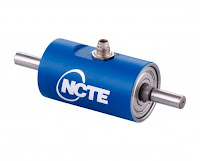
NCTE has expanded its 2300 torque sensor series with the introduction of a new variant for lower torque-range measurement tasks down to 0.5 Nm. The series now covers a torque range from 100 Nm down to 0.5 Nm. With measurement bandwidth up to 1,000 Hz, speeds to 10,000 rpm and accuracy to 0.5%, these non-contacting, long life sensors are perfect for torque, as well as speed, shear, and angle measurement in precision mechanics, test beds for smaller electric motors and engines, machine tool performance control, controlled screw fastening and capping operations, robotic manipulators and more.

Their torque sensors use the physical principle known as the inverse magnetostrictive effect in a patented process where magnetically encoded components in the sensor are modified by a surrounding magnetic field. Each sensor includes two magnetic fields in opposing directions which takes care of unwanted interference such as that from EMC. This real-time process, where torque measurement may be static, or dynamic detects miniscule magnetic changes for highly precise data acquisition. Factory calibrated and certified sensor outputs are 0…10V DC, 4…20mA, CANbus and USB with supply voltage requirement of 5 to 28 VDC. The USB option includes PC analysis software.

The 2300 series is available in nominal diameters of 8, 9 and 15 mm with seven measurement range variants between zero to 1 Nm and zero to 100 Nm. Full technical specifications are available from Ixthus Instrumentation. The plug and play sensors do not require external signal conditioning and as the sensor becomes a part of the shaft component, integration is easy. This non-contacting sensor technology has excellent resilience to shock and vibration and a choice of protection class allows use in harsh conditions – even in oil or under water – through a temperature range from -30 °C to +85 °C.

NCTE’s extensive range of standard torque sensors are available for measurement up to 10 KN with customised variants available on requests. The sensors are widely used for applications including but not restricted to agricultural and commercial vehicle take-off shafts, engine and turbine test beds, e-bikes, robotics and handling machinery, performance motorsports, and automotive engineering.

All are available with full support from NCTE’s distribution partner in Britain, Ixthus Instrumentation Limited,

@IxthusInst @mepaxIntPR @NCTE_AG #Pauto 

Tuesday, 11 January 2022

Probing deep into machinery.

Sensor Technology has extended its new range of torque sensors with a model that has the sensing head and electronics in separate housings. This has two advantages: the sensing head can fit into very confined spaces, and the electronics can be located in a position where they are protected from physical damage, dust, dirt, moisture, electromagnetic forces, etc.
 

The new TorqSense SGR530/540 series operates on the same principle as all the other SGR510/520 units, namely a full four element strain gauge bridge. This uses four individual stain gauges affixed to the drive shaft; each measures the deflection of the shaft in a different direction as it rotates under load. The electronics collects readings from all four gauges and calculates the torque value.

Sensor Technology launched the TorqSense SGR510/520 range in 2020* as the successor to its RWT range which worked on surface acoustic wave (SAW) measurement and detection. It has specialised in real-time torque measurement for over forty years, and pioneered the development of wireless technologies that use radio frequency pickups rather than hard-wired solutions involving delicate and unreliable slip rings.

Initially launched in sizes up to 500Nm, interest in the SGR sensors was so high that the introduction of larger sizes up to 13,000Nm was brought forward 6-12 months to December 2020.

"Because of our experience with the RWT, we have been able to compress the development times for the new SGR models considerably,” says Sensor Technology’s Mark Ingham. “So, we have been able to react to specific enquiries from individual users and bring forward model launches. "

The new range is designed to meet emerging user requirements, notably accurately recording transient torque spikes. In the past transducers didn’t have the bandwidth to capture these spikes, so they were ignored. However, advances in automation, continuous operation and the increasing need for accurate track and trace data has led to the need for more detailed measurement and analysis, as Mark explains:

"A single spike could indicate say the wrong amount of an ingredient being added to a compound or an over-sized workpiece, both of which could affect product quality. A series of spikes would probably suggest the beginnings of a problem within the machinery, so their detection gives the plant engineers an early warning”.

In use, a rotor mounted ultra-miniature microcontroller, powered by an inductive coil, measures the differential values in each strain gauge and transmits them back to the stator digitally, via the same coil. The SGR510/520 series transducers then use state of the art strain gauge signal conditioning techniques to provide a high bandwidth, low cost torque measuring solution with high overrange and overload capabilities.

An advantage of the design of the SGR torque sensors is that they automatically compensate for any extraneous forces, such as bending moments, inadvertently applied to the sensor. They also offer high sensitivity and have a wide temperature tolerance, attributes that are required more and more and production machinery becomes more and more sophisticated and performance demands increase.

Other advantages of the SGR range include: elimination of noise pickup and signal corruption associated with slip rings and hard wired solutions, a 400% mechanical overload limit with accurate torque measurement even at these extremes, and multipoint calibration to eliminate linearity errors within the sensor.

All units are accurate to +/-0.1% and resolution to +/-0.01% of the transducer’s full scale. Other features include an adjustable moving average filter, power supply range from 12VDC to 32VDC, user settable analogue output voltages, and RS232, USB, CANbus and Ethernet comms options.

"Like the RWT sensors the new SGRs can integrate digitally with TorqView software and LabView virtual instruments," says Mark.

* Contactless torque (May '21)

@sensortech #Manufacturing #Torque #PAuto

Thursday, 2 December 2021

Torque by wireless!

Sensor Technology has extended its new range of non-contact torque sensors up to 13,000Nm. When the range was launched in late 2020, the largest unit was 500Nm.
“We have been very encouraged by the interesting in the new sensors,” says Sales Manager Mark Ingham. “The launch plan was originally to start with the commodity sizes and gradually introduce the larger sensors, but interest has been such that we need to meet demand almost immediately.”

Sensor Technology has specialised in wireless torque sensing for many years, mainly offering a solution based on detecting surface acoustic waves. It’s new sensors, designated the SGR510/520 series, however use a full four element strain gauge bridge design.

“The new sensors have the advantage that they can accurately measure and record sudden spikes in torque load,” explains Mark. “In the past this data was generally not required by plant and machinery operators, but with the growth in automated continuous monitoring it is becoming more and more important. Any torque spike could have an immediate effect on operations, while a series of them may indicate the beginnings of a problem.”

The new design also compensates for any extraneous forces, such as bending moments, inadvertently applied to the sensor, improves sensitivity and has a wide temperature tolerance. Again these are all attributes that have become increasingly desirable in recent years as there is an increasing need for sophisticated modelling of operational performance.

In use, the four strain gauges are glued onto the shaft that is to be monitored in a square formation set at 45deg to the axis of rotation. When torque is applied to the shaft two gauges are stretched into tension and two go into compression, the difference between the tension and compression values being proportional to the torque in the shaft.

An ultra-miniature microcontroller, mounted on a rotor and powered by an inductive coil, measures the differential values in each strain gauge and transmits them back to the stator digitally, via the same coil. State of the art strain gauge signal conditioning techniques are then used to convert raw live data into precise torque value measurements. This set up provides a high bandwidth, high over range and overload tolerances.

The TorqSense SGR510/520 offers several significant advantages over conventional torque sensors. It eliminates the sort of noise pickup and signal corruption associated with slip ring and other analogue methods of transferring torque data from rotor to stator. The over range capacity means true overrange values are captured rather than ‘maxing-out’ at the technology’s upper limit, while the 400% mechanical overload limit is unlikely to be breached in the vast majority of applications.

Mark explains further: “External noise pickup into the wiring is virtually eliminated due to the short distance between the strain gauges and the rotor’s measuring circuits. Further, multipoint calibration reduces any linearity errors within the sensor.”

The range extension means the SGR series is available in sizes from 200mNm to 13000Nm. All units are accurate to +/-0.1% and resolution to +/-0.01% of the transducer’s full scale

Other features include an optional adjustable moving average filter, power supply range from 12VDC to 32VDC, user configurable analogue output voltages, a choice of RS232 communications, USB interface, CAN bus interface, external Ethernet gateway, TorqView software and LabView virtual instruments.

@sensortech #Pauto #Wireless

Thursday, 4 November 2021

Small torque!

An essential ingredient for developing the next generation of engineering systems.

The growing demand for high speed miniature and micro machines has prompted Sensor Technology to develop a torque monitor that can accurately measure down to 10mNm (ten milliNewton-metres). This capability is combined with a 50kHz bandwidth so that even the most fleeting of transient torques can be recorded with accuracy.

Engineering design has a number of on-going long term trends, including a desire for ever more compact systems, more accurate measurement and finer resolution of data, increasingly sophisticated information displays and higher operating speeds. Looked at over a period of say two or three decades, these are very obvious in many, many many fields, from consumer products to medical equipment, production machinery to transport solutions.

These advances are driven by user demand but enabled by emerging technologies, such as electronics and computing. Mark Ingham of specialist sensor manufacturer Sensor Technology Ltd explains it thus: “Most users of our equipment work at the leading edge of technology, developing new solutions for practical engineering or scientific projects. So it is only to be expected that they want to push our products towards ever greater performance.  Fortunately we can do this as the electronics and display technologies embedded within them are always improving.”

The company has now combined increasing electronic data processing speeds and the latest in display systems with new sensing techniques developed in-house to produce a new generation of optical rotary torque sensors that are designed for applications where precise, dynamic measurement of rotary and static torque in the range of 10mNm to 100Nm, with high resolution so that even ultra-short torque peaks and troughs can be recorded. Typical applications include profiling the acceleration and deceleration of high speed motors, controlling micro systems and miniature machinery, collecting data from repetitive scientific experiments, and testing industrial machinery to destruction.

Operating principle
The technology behind Sensor Technology’s ORT230/240 optical torque sensor is based on an extensively proven and developed measurement principle whereby two discs with segmented gratings are positioned on a rotating drive shaft a short distance apart so that the opaque sectors on one disc partially obscure the clear sectors on the other. Light passes through the sectors and is detected by photovoltaic detectors.

As torque is applied to the shaft, a slight twist results which changes the alignment of the gratings and thus varies the light transmitted through to a detector. The use of this technique results in a transducer which is able to detect torque bi-directionally, and which has a fast mechanical and electrical response, low inertia and complete freedom from brushes or complex electronics.

The intensity of light beams, which is constantly monitored, is modulated by the applied torque and produces an electrical output that is used to provide a precise indication of the torque transmitted by the shaft. The light intensity is automatically controlled within the transducer body by a monitor cell.

Very high full-scale sensitivity can be achieved with fast electrical responses up to 50kHz and low inertia. As the measurement is non-contact it also has complete freedom from brushes and complex electronics on the shaft, which are often found in traditional torque measurement systems.

The absence of brush gear and fixed electronics allows high-speed operation with a continuous rating up to 30,000rpm standard. Further increases in speed are available depending upon shaft size. The torque shaft is of low compliance 0.5° maximum torsion deflection on the smaller transducers and 0.25° maximum on the larger transducers at full-scale deflection. Any full scale torque can be specified within the range 10mNm to 100Nm. The non-contact operation ensures a long and reliable life of accurate operation (which Sensor Technology guarantees with a lifetime warranty). The optical operating principle also means there is total immunity to noise corruption.

TorqSense ORT 230 series sensors provide fixed voltage or current analogue outputs – one for torque and one for either speed or power. The TorqSense ORT 240 provides two user selectable voltage or current analogue outputs – one for torque and the other for either speed, power or peak torque – plus digital outputs including RS232, CANbus and USB for interfacing with modern instrumentation and laptops. The ORT 240 enables users to connect up to 10 transducers via USB, and transducer configuration software for making changes to transducer variables.

Features of both devices include self-diagnostics to report if the transducer’s torque, speed ratings or calibration date have been exceeded, while inbuilt sensors monitor shaft temperature for better compensation and accuracy. The device also offers a simple ‘sensor status’ output.

Complementing these products is Sensor Technology’s TorqView software, providing an easy-to-use advanced torque monitoring package for Windows PCs to assist with data display and recording. It offers real time chart plotting, and is compatible with both Matlab and Excel. Further, LabVIEW VIs are available for users to design their own process control applications, and DLLs are available for users who wish to write their own custom software.

These latest optical rotary torque sensors are an important extension to the Sensor Technology torque monitoring range, and offer an alternative solution when low torque or bandwidth requirements preclude the use of the more cost-efficient SAW-based TorqSense products.

@sensortech #PAuto 

Friday, 29 October 2021

MedTech friction problem solved.

When a dental laboratory commissioned special-purpose machinery manufacturer, Jonas & Redmann, to design and build a highly automated production cell capable of producing and testing five million mixing nozzles per year the company’s 30 years mechanical engineering experience was well up to the task but the short cycle time of 1.5 seconds was a problem when it came to the essential 100% final testing.

The mixing nozzles, used to produce the casting compounds used by dentists, are made of four separate parts and are assembled in the production cell and, like many MedTech products, are disposable, use once items. Final testing, a mission critical part of the production process, had to be based on a friction coefficient test (< 0.5 Nm) on the mixing mechanism of the assembled nozzle. Having worked successfully with Kistler on other projects, Jonas & Redmann looked to the sensor company for a solution.

The solution Kistler proposed used a combination of a type 4502A torque sensor and the maXYmos BL evaluation system to check the torque curve for each individual product. The measurement value produced by the torque sensor is used to generate an OK/NOK signal transmitted directly to the control system so that any product with an out of spec torque curve is automatically rejected. This 100% testing ensures that only perfect products are delivered by the production cell.

One important factor in the successful outcome was the close collaboration of Kistler and the consulting engineers who were executing the project. The two teams quickly devised a test rig to verify the solution which, at the first attempt, confirmed that the transducer produced values for frictional torque that were within the tolerances allowed by the system specifications.

#Kistler #Medical #Automation