Showing posts with label Particulate Matter. Show all posts

Wednesday, 4 February 2026

Particle analysis acquisition.

Optical inline systems group strengthen process analysis portfolio.

Endress+Hauser has acquired SOPAT, a Germany-based specialist in inline process measurement technology, retaining the company’s staff in Berlin and Chemnitz (D). This has further expanded its portfolio of measurement instruments, solutions and services for process analysis.

SOPAT and its subsidiary Parsum now come under Endress+Hauser’s liquid analysis product centre, based in Gerlingen, Germany. “The particle characterisation systems developed by SOPAT complement our existing portfolio by adding a range that is strategically important in terms of our core target industries,” said Endress+Hauser Liquid Analysis Managing Director Dr Thomas Buer.

Smart concept.

SOPAT GmbH was founded in Berlin in 2012 by Jörn Emmerich and Dr Sebastian Maaß. In 2022, it acquired Parsum in Chemnitz, a maker of inline particle size analysis systems founded in 1997. SOPAT and its subsidiary Parsum now have a combined workforce of 30. The co-founders, are to stay on as members of the SOPAT company’s management team.

SOPAT’s smart systems use a photo-optical image-based inline technology to analyse particles, droplets and bubbles in running processes in real time. The technology measures particle sizes and shapes without sampling or dilution, thereby enabling precision process monitoring, faster response times and enhanced product quality. Parsum probes, on the other hand, use a laser beam in combination with fiber-optic spatial filtering to analyse particle size and particle speed distributions, particularly for solids, powders and granulates.

Improved process insights.

Customers in multiple industries, including life sciences, food & beverage and mining, minerals & metals, use particle counting and analysis to ensure product quality. “This step is a continuation of our strategy and strengthens our analysis portfolio. We can now provide even better support for our customers across the board, from laboratory to production process,” Dr Thomas Buer said.

“Our strength lies in our combination of scientific precision and industrial practicability. As part of the Endress+Hauser Group, we can progress innovations through to broad-based industrial use more rapidly and hence contribute to more stable and resource-efficient processes worldwide,” commented SOPAT’s Jörn Emmerich. 

Co-founder Dr Sebastian Maaß added: “Accurate, reliable data taken directly from production processes gives our customers the improved process insights they need to effectively drive sustainable process optimisation in response to rising energy and raw material costs.” 

 Endress+Hauser acquired SOPAT effective 1 January 2026. Both parties have agreed to keep the details of the sale confidential.  


@Endress_Hauser @Endress_UK @Endress_US #PAuto

Tuesday, 15 April 2025

Optical aerosol analyser.

Unlock essential data for unmatched precision in air quality monitoring.

A new, cutting-edge Optical Aerosol Spectrometer designed for real-time particulate matter (PM) monitoring, delivering ultra-precise data in any environment has been launched by ENVEA. The OPM250 is a next-generation analyzer with a unique counting efficiency design for improved measurement accuracy and high-quality data. With a wide particle size range from 0.178µm to 29.4µm, the OPM250 is suitable for urban air quality monitoring, industrial emissions monitoring and scientific environmental research, as well as in-vehicle use due to vibration resistance.

"This innovative optical aerosol spectrometer offers unmatched precision for ambient environment monitoring, setting new standards for real-time air quality monitoring," said Azzedine Bendaoud, Product Manager - Ambient Sensors & Analyzers at ENVEA. "Air quality is a huge global concern, but with the OPM250, organisations and industries can take proactive measures and better understand the data to monitor and take relevant action.”

Operating at 1.2 L/min and measuring 100% of particles in real-time without statistical estimations, the OPM250 has low power consumption and low running costs. Flexible communication protocols and a user-friendly interface mean that the OP250 is simple to operate, and a versatile and dependable tool for PM monitoring, with an internal air purification system for reduced maintenance.

Equipped with optical technology, the OPM250 ensures reliable performance in all environments including challenging outdoor and harsh locations and is QAL1 certified by TÜV for PM10 and PM2.5, ensuring it meets the stringent standards required for air quality monitoring.

Industries that will benefit from using the OPM250 include government agencies, environmental monitoring organisations, manufacturing, energy, transportation and scientific research bodies.


@GlobalEnvea @codacomms #Environment #AirQuality

Wednesday, 31 July 2024

Nanoparticle detection added to environmental portfolio.

ENVEA has acquired Airmodus, a leading manufacturer of nanoparticle detection systems for the environmental monitoring industry. The acquisition will enable ENVEA to expand its product portfolio with a unique technology, which will be key for future regulations and expand its geographic footprint with an aerosol centre of excellence in Helsinki (FI).

LtoR: Rony Akiki, R&D Director Aki Pajunoja, CEO of Airmodus ,Trevor Sands, CEO Envea Global, Joonas Vanhanen, Co-Founder and CTO at Airmodus, Gregoire Didier, Director Strategy & ESG at Envea.

Founded in 2010, Airmodus develops and manufactures nanoparticle detection systems and analysers. Its key products include Condensation Particle Counters (CPCs) and Particle Size Magnifiers (PSMs). It also provides a wide range of accessories for aerosol measurements, as well as maintenance and calibration services. Based in Helsinki, Finland, the company sells its products in nineteen countries and has distributors in thirty.

Trevor Sands, CEO of ENVEA, said: “We are thrilled to announce the acquisition of Airmodus, a leading manufacturer of nanoparticle detection systems. With the addition of Airmodus' expertise and technology, we will be able to provide our customers with even more comprehensive environmental management solutions. We are excited to welcome the Airmodus team to the ENVEA family and look forward to working together to continue to drive innovation in the industry.”

Romain Azoulai, Director on the Carlyle Europe Technology Partners (“CETP”) advisory team, said: “This acquisition will significantly expand ENVEA’s R&D capabilities and product offering across nanoparticle technology, as well as further enhancing its position as a leading buy-and-build consolidation platform. Airmodus' cutting-edge technology and expertise will enable ENVEA to develop new and innovative solutions for its customers, further strengthening its position as a global leader in environmental management solutions.”

“We are pleased to be joining the ENVEA family and are excited about the opportunity to further develop our technologies and product offering alongside the ENVEA team," said Aki Pajunoja, CEO of Airmodus. "This agreement will allow us to leverage our expertise and accelerate our growth plans, enabling us to play a greater part in contributing to cleaner and healthier environments globally.”


@EnveaGlobal @airmodus @codacomms #Environment #Finland

Tuesday, 19 March 2024

Acoustic particle monitor.

Monitor entrained sand in real-time, providing data essential to improving well throughput, safety, and uptime.

The Rosemount™ SAM42 Acoustic Particle Monitor for measuring the amount of entrained sand in the output from oil and gas wells has been announced by Emerson. The monitor can detect extremely low concentrations of entrained sand in challenging conditions with a high level of measurement repeatability and sensitivity. Accurate real-time data helps minimize erosion risk, allowing producers to maximize throughput without compromising asset safety. An all-in-one design features onboard data processing, explosion-proof protection, and simple installation with no pipe penetration needed.

The output from oil and gas wells often contains varying amounts of entrained sand that can pose a serious erosion risk and lead to equipment damage, loss of containment, environmental risk, costly repairs, curtailed production, and reduced profits. Effective sand management depends on knowing the amount of entrained sand flowing through the topside piping infrastructure in real time.

Many facilities rely on “grab-samples” to characterize and quantify the entrained sand, which only measures the entrained sand for that one moment in time. This method is ineffective as sand production can fluctuate significantly, posing safety risks to personnel and equipment through delayed decision making. Failure to act quickly exposes assets to excessive erosion, increasing maintenance expenses and the risk of unexpected shutdowns.

The Rosemount SAM42 Acoustic Particle Monitor addresses these issues by sending critical data instantly to staff onsite and to asset management systems via a Modbus® RTU RS485 digital wired connection, where it is used to adjust production flows as needed. A compact and non-intrusive design makes the device easy to install without pipe modifications, simplifying field deployment and reducing maintenance costs.

The Rosemount SAM42 is available in two versions that are designed to accommodate pipe surface temperatures between -40 degrees Fahrenheit (-40 Celsius) and 554 F (290 C), making it suitable for oil and gas applications and geothermal energy production. It can be mounted on pipes with diameters between 2-48 inches and is rated for use in hazardous areas with Ex d (Flameproof) approvals, including ATEX, IECEx, USA, and Canada; and Ex i (Intrinsic Safety) approvals, including ATEX, IECEx.


@EmersonExchange @Emerson_News @EMR_Automation @futuresagency @HHC_Lewis #PAuto #Oil #Gas

Monday, 15 January 2024

Winning fine particulate sensor!

Airly’s particulate sensor has been announced as winner of the AIRPARIF AIRLAB Microsensors Challenge 2023 for the measurement of fine particulates (PM2.5) outdoors. “I am incredibly proud that our team has been recognised as a global leader in outdoor PM2.5 measurements,” comments Airly CEO Wiktor Warchalowski. “The challenge included major instrumentation companies from around the world, and Airly was proclaimed winner because our sensor was able to deliver the most accurate PM2.5 measurements.

“This victory is more than just another trophy on our shelf - it's a testament to the dedication and hard work of our R&D team, combined with a deep commitment to our mission – for which a key component is the provision of accurate, reliable, understandable air quality data.

“I would also like to pay special tribute to my co-founder, Michał Misiek for leading our R&D program from day one. His tenacity, vision and leadership have been pivotal in our journey to this remarkable achievement.”

Airly’s Microsensors Challenge success follows the recent award of MCERTS certification, which provides further third-party verification of Airly’s performance in the measurement of both PM2.5 and PM10.

Launched in 2016 by Airparif and its partners, AIRLAB brings together a community that is committed to the improvement of air quality. In 2023 the AIRLAB Microsensors Challenge involved an evaluation of the performance of microsensors for measuring air pollution simultaneously in both France and Thailand, from March to June.

Summarising, Warchalowski says: “34 sensors were evaluated for measuring outdoor air in two very different environments. Leading global manufacturers competed, and the results were evaluated by a jury of independent international experts, so we are deeply honoured to win, and we are hugely grateful to Airparif for allowing us to participate.”


@airlyorg @_Enviro_News @AIRLAB_Airparif #Environment

Wednesday, 30 August 2023

Particle monitoring.

The new VPC260 6-Channel Particle Counter from Teledyne FLIR, is an innovative solution that sets new standards in particle monitoring technology. The instrument provides unparalleled accuracy, intuitive design, and effortless configuration and control.

With six channels, the VPC260 captures an extensive range of particle sizes, delivering precise and reliable data for a comprehensive understanding of your environment's air temperature, humidity, and cleanliness.

It features an intuitive design that is lightweight and portable as well as a user-friendly interface, with data presented clearly on a high-resolution display.


@flir @mepaxIntPR #TandM #Environment

Friday, 28 April 2023

Importance of occupational safety equipment.

Employers have a duty of care to protect the health, safety and welfare of employees, so it is vitally important to keep workers’ occupational exposure to harmful gases within permissible limits. For businesses that handle hazardous vapours, failure to comply with this duty can have disastrous consequences, so it is extremely important to deploy trustworthy sensing technology.

Original equipment manufacturers (OEMs) help their customers lower risk, and as such cannot utilise unproven or low-cost sensors that could increase risk. For this reason, ION Science’s mission is to provide premium quality, highly accurate sensors that are the most reliable in the world.

Risks from Volatile Organic Compounds (VOCs).
VOCs exist widely in almost every industry as key components of fuels, petrochemicals, solvents, paints, adhesives, cleaners etc. Most VOCs are flammable and potentially explosive, as well as being harmful to both health and the environment. VOCs are organic compounds that evaporate under normal conditions. Some are harmful to the skin or eyes, and can be absorbed, but their volatility means that VOCs can be inhaled, and may cause a wide variety of negative health effects ranging from minor irritation to cancer, and even death.

Generally speaking, high concentrations (% levels) are necessary for combustion or explosion risk; low concentrations (ppm) can represent a toxic risk from short-term exposure, and trace levels (ppb) can cause long-term toxic effects.

The United Nations World Day for Safety and Health at Work on 28th April 2023, focuses on international attention on the magnitude of the problem, highlighting how promoting and creating a health and safety culture can help reduce the number of work-related deaths and injuries. ION Science wholeheartedly supports this initiative, and believes that effective systems and risk reduction rely on accurate, reliable data.
In addition to the potentially lethal effects of inadequate industrial health and safety, organisations which fail in their duty also risk huge financial losses from prosecutions, fines, and critical damage to their brands. Investments in health and safety monitoring and personal protective equipment, such as reliable gas detectors, are therefore negligible in comparison with the consequences of failure.

Workplace risk assessments should identify the presence of potential VOC sources and enable the implementation of appropriate measures to mitigate the risks. Personal, wearable VOC detectors help protect staff that have been identified as being at the greatest risk, and routine inspections with portable VOC detectors help to identify fugitive emissions from leaks or spills from equipment, tanks, pipes, seals, valves, etc. In addition, fixed VOC monitors continuously monitor workspaces to check that levels do not approach or exceed exposure limits; raising alarms if they do.

Why monitor?
Accurate, reliable measurements are necessary for the rapid detection of risks to plant and workforces. Monitoring also informs the development of mitigation measures, and allows operators to check the performance of such measures, and to demonstrate compliance with workplace exposure regulations.

The minimum concentration of a combustible VOC necessary to support its combustion in air is defined as the Lower Explosive Limit (LEL). Importantly, toxic VOCs concentrations are orders of magnitude lower than explosive limits, so it is vitally important for detection equipment to offer a wide range with sufficient sensitivity to measure trace toxic gases.

The health effects of exposure to VOCs depend on the concentration, the length of exposure, and the VOCs present. Workplace exposure limits (WEL) therefore exist for each VOC with short-term exposure limits (STEL) typically applying to the maximum concentration over a 15-minute period, and time-weighted average levels (TWA) typically calculated over an 8-hour period.

Choosing the right VOC sensor technology.
Gas detection equipment manufacturers have three main options for the measurement of VOCs. These are (1) electrochemical (EC) sensors, (2) metal oxide semiconductor (MOS) sensors and (3) photoionisation detection (PID) sensors.

EC sensors are low-cost, but they only respond to VOCs that are electroactive; they require electronic optimisation for target VOCs, have a slow response time (minutes) and are cross-sensitive to other gases commonly found in the workplace.

MOS sensors are also low-cost but suffer from baseline drift and humidity sensitivity. Their response is non-linear, and they also suffer from cross-sensitivity to other gases commonly found in the workplace.

PIDs are the most in-demand and appropriate sensors for the measurement of VOCs for health and safety applications. This is because of their fast response (1-3 secs), and because they are the most selective technique to VOCs. In addition, with a choice of PID lamps it is possible to optimise the sensor for different applications, and known response factors enable quantitative analysis of specific VOCs.

For most PID sensor manufacturers, sensitivity to contamination and humidity is a major challenge, but these issues have been resolved within ION’s MiniPID sensor range. This is one of the main reasons behind ION’s position as the largest PID sensor manufacturer in the world. All MiniPID sensors have a patented design with a third electrode that nullifies potential humidity interference, delivering a stable signal from 0 – 99% RH.

The sensitivity of PID sensors is extremely important in many applications; particularly where the sensors are deployed in the measurement of trace VOCs. Recognising the importance of this feature, ION’s MiniPID range includes the most sensitive PID in the world.

Reliability is a critically important feature of sensors that lower health and safety risks. Uniquely, ION’s MiniPIDs incorporate an ASIC chip, which continuously monitors lamp and sensor performance, providing fail-safe assurance of sensor performance. The ASIC also manages the sensor to give exceptional temperature stability from -40 to +65oC.

In contrast with other PID manufacturers, ION designs, develops and manufactures 10.0, 10.6 and 11.7 eV lamps. This is crucially important for OEMs because it means that their measurement capabilities are not restricted to compounds with an ionisation energy lower than 10.6 eV, for example. So, for example, where OEMs require sensors for monitoring gases such as chlorocarbons, unsaturated fluorocarbons, formaldehyde, ethylene and methanol; ION’s unique 11.7 eV gas sensor is the ideal solution. Equally, ION’s 10.0 eV sensor is ideal for toxic aromatic compounds such as benzene.

Choosing the right particulate sensors.
Dust and other forms of airborne particulates represent significant risks in the workplace; both as a combustion source and a breathing hazard. Consequently, the requirement for monitoring equipment is growing rapidly alongside tightening regulations.

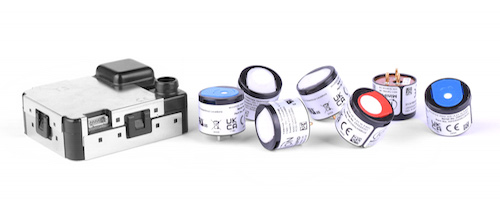
Responding to this growing demand, ION has added the NextPM sensor to its portfolio following recent independent testing by AQ-SPEC at South Coast AQMD in the USA. The NextPM sensors showed strong to very strong correlations for both PM1.0 and PM2.5 with reference instruments costing several hundred times the cost of the sensors.

Thanks to its patented airflow control technology, Next-PM ensures years of maintenance-free measurements, even in highly polluted environments. The sensor also incorporates patented technology to prevent humidity effects, so these sensors are ideal for inclusion in instruments and systems that monitor industrial processes or air quality; both indoors and outdoors, even in harsh conditions.

Conclusion.
The cost of designing ION’s world-class VOC and particulate sensors into OEM instruments, processes and systems is negligible in comparison with the potential costs and risks incurred by not specifying the best available technology.

@ionscience @_Enviro_News #PAuto  #HealthSafety #AirQuality

Monday, 27 March 2023

Meeting air quality demand.

Alphasense has increased its production capacity, automated elements of calibration and upgraded software for its Optical Particle Counter (OPC) products to meet rising industry demand.

Since the launch of the latest iterations of its OPC-N3 and OPC-R2 products in 2021, Alphasense has seen demand grow significantly as air quality moves up the global agenda.

Will Parrett, Sales & Marketing Director EMEA at Alphasense, said: “Alphasense’s range of OPCs has been developed hand in hand with aerosol scientists and engineered to deliver the accuracy expected from industrial-grade monitors in more workable size formats, and at a fraction of the price. Going forward, customers can expect the same high-quality standard of product but delivered much faster.”

Extensive growth in the use of Alphasense OPCs in an increasing number of instruments, plus the success of a number of field trials leading to further adoption has led to Alphasense investing heavily in the supply chain, training and infrastructure required to meet capacity and satisfy future demand.

In parallel, the company has enhanced its bespoke software capabilities to enable a higher volume of concurrent calibrations. As a result of these improvements, customers will soon be experiencing significantly reduced lead times as OPC stock builds.

Alphasense has refreshed its software offering as well, both improving the customer interface and giving users access to a range of features which were previously only available in-house. As the breadth of applications for particulate monitoring grows, this new feature will allow customers to configure devices to suit their specific applications more closely.

Unlike most low-cost particle sensors which measure particle count in a single size category and use that to estimate the volumes of others, Alphasense OPCs measure the full range from PM1 to PM10, giving end users reliable and repeatable data, not simply extrapolated values.

Both the wide-ranging OPC-N3 and the smaller footprint OPC-R2 provide digital outputs of PM1, PM2.5 and PM10 (and optionally PM4.25) along with a histogram of particle count for each of up to 24 user-configured size categories. Alphasense’s proprietary flow correction technology ensures stable readings, even in high-dust environments; this is a key factor in several universities and research organisations independently verifying Alphasense OPCs as providing best-in-class performance.

@AlphaSenseInc @codacomms #PAuto 

Tuesday, 25 October 2022

Dust pulse technology control systems.

System provides superior monitoring, optimizing dust collector system performance and increasing uptime

Emerson’s new ASCOTM DPT Control System optimizes the performance and improves the efficiency of filtration and dust collector systems by providing accurate and reliable low-level particulate monitoring, early warning leak detection, enhanced cleaning control and real-time diagnostics. The connected system serves as a cost-effective, scalable and purposeful step toward a facility’s digital transformation. It is now available in Asia-Pacific, Europe and Middle East and Africa regions, with availability in the Americas by mid-2023.

Using traditional sensing technology, low-level leakage is hard to detect in environments with high operating pressure, high humidity or oil and steam. The advanced signal processing of the DPT Control System helps ensure accurate, low-level measurement and detection of particles of less than 1 milligram per cubic meter in harsh, high-pressure (maximum 7 bar) and high-humidity applications, like those found in the cement, power plant, incineration, finishing aluminum and chemical industries.

“The digital transformation of the process industry is underway and connected facilities around the world are seeing the valuable sustainability and operation cost reducing benefits that real-time monitoring and diagnostics deliver,” said Stephan Cocciardi, director of marketing and global strategic accounts with Emerson’s discrete and industrial business. “The sophisticated monitoring capabilities of the ASCO DPT Control System can help facilities detect issues and prevent problems that would otherwise waste energy and accrue unplanned downtime, resulting in a more efficient and reliable dust collection system.”

By closely monitoring dust collector systems in real time, the DPT Control System can help users locate and address leaks before they become issues, improving energy efficiency and compressed air consumption savings. The loop-powered sensor enables intrinsically safe monitoring of difficult-to-access points of the filtration system, including coil, diaphragm and filter bag. The system’s condition monitoring and predictive maintenance capabilities can improve system reliability and efficiency while reducing maintenance costs and unplanned downtime. Its superior linear output can help users track real-time particle emissions levels and meet emissions regulations.

In addition to monitoring, the DPT Control System optimizes the performance and uptime of dust collector systems of all sizes through efficient and reliable pulse-jet filter cleaning control. For facilities that use large baghouses, application-specific control algorithms can reduce pulsing frequency, which can extend filter life and reduce the amount of compressed air consumed. The control logic can maintain quite low and stable differential pressure during operation and automatically maintains differential pressure within ±25 Pa (±0.1 inch) of water column of set point while minimizing pulsing. This ensures consistent cleaning performance, maintains a proper filter cake and can reduce compressed air use by 15% to 40% over standard, on-demand cleaning and up to 90% over continuous. It also helps ensure consistent airflow to maintain production, ventilation and dust recovery.

The system provides extensive general filter pulse jet cleaning control modes, such as easily selectable pulsing patterns and a full range of basic timing modes. Modes include continuous, high/low, single cycle and cycle down.

The complete DPT Control System solution includes the DPT P150 Particle Monitor, DPT P151 Controller and P152 DPT Particle Sensor. 

* See "Forward Focus..."  - the theme of the Emerson User Group Conference commencing 24th October 2022 in Grapevine (TX USA).

@EmersonExchange @EMR_Automation @Emerson_News @ASCO_EU @mepaxIntPR #PAuto #Dust

Thursday, 25 February 2021

Monitoring airbourne particles an NO.

The Praxis/OPCube from South Coast Science, just launched clearly meets market demand as the first production batch has already sold. It has proven popular with customers looking for monitoring of ONLY airborne particles (PM1, PM2.5 & PM10) and NO, where raw as well as corrected sensor data is available to customers for validation purposes.

Britain's upcoming Environment Bill is set to adopt the World Health Organisation target for PM2.5 as a legal limit in the country and the Praxis/OPCube is an ideal, low-cost monitoring instrument to aid with compliance. It is well suited for air quality screening applications during episodes of temporary construction, on fence lines or longer-term deployment in urban environments.

As with its big brother, thePraxis/Urbann, high-quality Alphasense sensors provide proven sensing technology. It can also be deployed in a high-density monitoring network using the same data infrastructure and sampling rates as the Praxis/Urban so that in terms of accuracy and reliability, the two devices operate in the same league.

The Praxis/OPCube has a single gas sensor combined with a particulate monitor, which is sufficient for most environmental health contexts. The obvious benefit for the construction industry or other urban monitoring applications is that customers do not pay for redundant functionality or infrastructure.

As with the Praxis/Urban, the units are designed to update remotely, meaning the device firmware stays current throughout its lifetime and therefore ongoing maintenance costs are minimal.

Housings ready for assembly

Product specification:
• Robust - designed for long-term outdoor deployments
• Compact: 154x154x130mm, 2kg
• Local MicroSD card data storage and 4G mobile comms as standard
• Equipped with sensor for gas (selectable) + particulates + T + H
• Battery back-up in the event of power loss
• Same open-source design and data dashboard as Praxis/Urban


#SouthCoastScience #Environment, 

Monday, 8 April 2019

Flexible particle monitoring.

As concern grows with the effects of both indoor and outdoor particulate pollution, Air Monitors has launched a new range of advanced monitors, Particles Plus monitors,  that improve the flexibility with which measurements can be undertaken.

Compliant with strict international standards, the Particles Plus monitors employ a range of patented technologies to simplify the collection of accurate air quality data including particulates, temperature, and relative humidity. The instruments monitor PM1, PM 2.5, PM5, PM10 and TPM (and any other PM size specified by the user) with an easy-to-use Channel Management control panel. Each instrument has alarm capability and also monitors flow, sensor status, date of last calibration, serial number and laser on-time.

Particulates are measured by passing the sample through a thin laser beam and scattered light is measured by a sensitive optical detector. The signal is amplified into an electrical pulse, the height of which corresponds to the size of the particulate. The height of each pulse is measured and ‘binned’ according to size and counted, and at the end of the sampling period, the counts in each bin or channel are reported. This provides users with detailed measurement of the size fractions, which is vitally important because of their health implications, and because size apportionment helps with source attribution.

A key feature of the Particles Plus instruments is their connectivity – they can be connected to a PC, a router, and the internet via an Ethernet connection. The instruments are also supplied with internal Wi-Fi or RS-232/RS485 capability. This means that users can access their monitors remotely, and also enables remote connection for updates, diagnostics and configuration.

Advanced, patented, power management is designed to extend battery life and ensure long runtimes. This is achieved with features such as sleep mode and a lower power profile when idle.

Each instrument can store up to 45,000 data records, so at 1 sample per minute, the instrument can record a full month’s worth of data before older records are overwritten. 15 minute sampling would facilitate the storage of more than 15 months of data from up to 1,000 user defined locations. Furthermore, data can be annotated – to note sampling conditions for example.

Summarising, Air Monitors MD Jim Mills says: “The Particles Plus monitors are a major addition to our product portfolio, offering customers enormous flexibility in the measurement of workplace and ambient dust and aerosols. With a range of instruments available, we will be able to recommend the best instrument for applications ranging from the heaviest PM pollution to the cleanest of cleanrooms.

“The instruments are small enough to be used as survey instruments, but powerful enough to be left to log data for extended periods, with remote communications reducing significantly lowering costs and labour requirements.”


@airmonitors  #Environment

Wednesday, 22 August 2018

Extremely small particle sensor for fine particles.

At just over 7cm wide and 2cm high, the new OPC-R1 sensor from Alphasense is extremely small in comparison with previous technologies. However, with outputs for PM1, PM2.5, PM10 and histograms for up to 16 ‘bins’ the sensor provides considerable particulate monitoring capability.


“The small size and weight of this sensor, coupled with a low power requirement, make it ideal for use in portable instruments,” Alphasense Director, Arthur Burnley told Read-out.

The OPC-R1 is an optical particulate sensor using laser technology to measure particles from 0.4 to 12.4 µm in diameter, based on a spherical equivalent size of 1.5 µm radius. The sensor is supplied with PC software and a specification sheet providing performance data demonstrating good correlation with a TSI DustTrak.

Typical power consumption during the measurement mode is just 95 mA and >5 mA with the laser on and the fan off. In addition to its compact size, the OPC-R1 weighs less than 30g and has an operating range of 0 to 95% (non-condensing) and -10 to +50 Deg C.

“In May 2018, the World Health Organisation published a report estimating that around 7 million people die every year from exposure to the fine particles that penetrate deep into the lungs and cardiovascular system, causing diseases including stroke, heart disease, lung cancer, chronic obstructive pulmonary diseases and respiratory infections, including pneumonia,” warns Arthur Burnley. “Consequently, there is a large and growing demand for monitoring technology to enable organisations and citizens to check the safety of locations and identify pollution hot-spots.

“We believe that the prospects for the new OPC-R1 sensor are extremely bright because instrument manufacturers are seeking to employ advanced, cost-effective technology to meet this rapidly growing demand.”

#Alphasense #PAuto #Environment @_Enviro_News 

Friday, 23 March 2018

Optical particle counter.

Alphasense has launched a new version of its optical particle counter. The new OPC-N3 retains all of the advantages of its predecessor (OPC-N2) with the added benefit of automatic range switching covering PM10, PM2.5 and PM1. With an expanded measuring range (0.38 to 40 µm), the OPC-N3 is able to measure the particulate fractions of most interest; from the finest of particles up to larger particles such as pollen.

 “This is an extremely important development for manufacturers of air quality monitoring instrumentation,” says Alphasense Director, Arthur Burnley.

“A few years ago, the public was generally unaware of the threat posed by air pollution. However, the many thousands of premature deaths that occur every year in almost every country, have finally caused a high level of media coverage and political interest, and this has led to demands for air quality improvement measures, which in turn have created a need for accurate particulate sensors.

“This bodes well for our customers as the demand rises for small, accurate, reliable, cost-effective particulate sensors.”

The OPC-N3 measures particulates with minimal maintenance using a patented design, providing both particulate matter readings and real-time particle size histograms. As such, the sensor competes in performance with existing analytical units, but at a fraction of the cost.

#Apphasense #PAuto @_Enviro_News 

Friday, 15 April 2016

Pollutant monitor is helping save 29,000 British lives.

Particulate monitoring technology has been added to the AQMesh air quality monitoring pods. “This is a major development,” says Stephen Hoskin from Air Monitors. “AQMesh already monitors the most important gases, but fine particulates are one of the pollutants of greatest concern - government figures suggest 29,000 people die prematurely in the UK every year from particle pollution.”

AQMesh is a lightweight, battery powered ambient air quality monitor that transmits data to a dedicated website via the ‘cloud’. Readings are taken at user-selectable intervals between 1 and 15 minutes, and data are normally transmitted hourly by GPRS. Standard AQMesh pods measure nitric oxide (NO), nitrogen dioxide (NO2) and ozone (O3) in addition to temperature, atmospheric pressure and relative humidity. Carbon monoxide (CO) and sulphur dioxide (SO2) can also be chosen as optional sensors. However, following successful trials, AQMesh can now include the measurement of total particle count, PM2.5 and PM10 using a light-scattering optical particle counter.

AQMesh was developed to provide monitoring flexibility and to lower costs, and with the ability to monitor both NO2 and PM, AQMesh is able to track the pollutants of greatest concern. As a small, battery-powered, web-enabled unit, the pods can be quickly and simply mounted in locations where air quality matters most, and by transmitting near-live data to websites, AQMesh offers an opportunity to provide air quality information that will have a real effect on people’s lives; helping them to choose a route to work; where to exercise; where to send their children to school, and even where to buy a house.

@airmonitors #PAuto #Environment

Wednesday, 14 November 2012

PM monitoring

A new report published in September 2012 by the European Environment Agency shows that almost a third of Europe's city dwellers are exposed to excessive concentrations of airborne particulate matter (PM); one of the most important pollutants in terms of harm to human health because it penetrates sensitive parts of the respiratory system.

Colin Craggs from instrumentation specialist Air Monitors says “This is a timely reminder of the dangers posed by particulates and coincides with the UK launch of a fixed area dust/aerosol monitor for continuous monitoring and a portable monitor for personal exposure at multiple locations.”

Both instruments are manufactured by Thermo Scientific and Colin says “National ambient monitoring systems are already in place and strict regulations restrict the PM emissions from industry and vehicles. However, employers have a duty of care to protect their staff, so accurate monitoring of the workplace is essential.”
PDR 1500

The new PM monitors are the latest versions of well-established and proven techniques offering a complete solution for monitoring particulate exposure in industrial and occupational safety applications including COSHH/NIOSH assessments.

Both the ADR-1500 Area Dust Monitor and the pDR-1500 Personal Aerosol Monitor employ light scattering photometers (nephelometers) with relative humidity compensation and true volumetric flow control to provide high-precision, real-time results with optional gravimetric validation.

In order to be able to function in a wide variety of applications, these high resolution instruments offer an extremely wide measurement range - 0.001 to 400 mg/m3 (auto-ranging) which covers all particulates from PM-1 to PM-10.

Weighing just 13kg, the ADR-1500 Area Dust Monitor has a weather-proof IP65 housing and a handle which allows for ease of transport and installation with mounting options available for wall, post or tripod locations. With a choice of AC or DC power, the ADR-1500 is simple to set up and run. Data are recorded at intervals ranging from 1 second to 1 hour, and the unit will issue an alarm as soon as PM levels reach a dangerous (user defined) level.

Weighing just 1.2kg, the pDR-1500 personal monitor can run from a fixed position or worn on a belt to facilitate real-time measurements as the user moves from one location to another. This personal monitor offers the same data recording capability as the area monitor and features interchangeable cyclones for superior particle cut points for PM10 & PM4 or PM2.5 & PM.

Summarising Colin Craggs says: “The pDR-1500 enables occupational safety managers and consultants to conduct accurate surveys in order to assess the levels of risk and identify potentially dangerous areas. The ADR-1500 complements this product by providing the ability to continuously monitor those areas and ensure the protection of staff and visitors.”