Showing posts with label Smart Grid. Show all posts

Monday, 24 August 2026

Low voltage grid status.

The true state of the Low-Voltage Grid - turning feeder data into actionable grid intelligence.

Corinex has announced the launch of the Grid Intelligence Node (GIN), bringing near-real-time measurement and event detection to low-voltage feeders. GIN provides high-precision insight into actual network conditions, creating a grid-truth layer that helps distribution system operators identify constraints, assess available capacity and verify whether grid actions delivered the intended result.

GIN combines high-performance broadband powerline communications with integrated current, voltage, and power-quality monitoring. Installed in secondary substations, street cabinets, and lateral branches, it gives utilities a clearer view of loading and operating conditions across the low-voltage network.

"Electrification is placing new demands on low-voltage grids, but utilities lack the information needed to see or predict where constraints are emerging," said Sam Shi, Chief Technology Officer at Corinex. "GIN tells the DSO when, where and how much control is needed. It provides the evidence for intervention."

Key technical capabilities include:

  • Three-phase voltage and current measurement with RMS error ≤0.5%
  • Measurement of power, power factor, frequency and energy
  • Harmonic monitoring up to the 51st harmonic and total harmonic distortion
  • Detection of voltage sags and swells, overloads and phase imbalance
  • One-minute operational snapshots, 15-minute energy aggregates and optional one-second reporting
  • Support for split-core CT or Rogowski coil sensors
  • Direct connection to 230/400 V networks and MQTT data transmission
  • An operating temperature range of −25°C to +70°C, with an IP67-rated enclosure option

The node combines high-precision metering for secondary substations with BPL communications, allowing feeder-level measurements and power-quality data to be transmitted through the existing low-voltage network. Monitoring up to the 51st harmonic, alongside the detection of voltage sags and swells, overloads and phase imbalance, helps utilities identify operational issues where they emerge and verify the impact of grid interventions.

Building more accurate digital twins.
GIN measurements can feed directly into Corinex Plexigrid Intelligence, connecting near-real-time field data with advanced grid modelling and optimization.

Corinex technology observes conditions across the physical grid, while Plexigrid software reconstructs, models and optimizes the network. Together, they give DSOs a digital representation that more closely reflects actual loading, voltage and power-quality conditions.

This enhanced digital twin helps utilities:

  • Improve low-voltage state estimation and grid model accuracy.
  • Assess available capacity for electric vehicles, heat pumps, and photovoltaic systems.
  • Determine whether constraints should be addressed through flexibility or physical reinforcement.

The result is greater certainty about grid assets and operating conditions, with less reliance on planning assumptions, delayed meter data, and estimated load profiles.

"Digital twins are only as reliable as the information behind them," Shi added. "GIN grounds the model in near-real-time measurements from the physical grid, helping utilities understand available capacity and make better-informed decisions as electrification grows."

Add intelligence without rebuilding the network.
GIN gives utilities a practical way to expand low-voltage visibility through infrastructure already in place. Designed for retrofit installations, it combines Corinex BPL repeater and Ethernet functionality while adding advanced measurement and event detection.

Existing low-voltage power lines carry both communications and measurement data. GridValue™ manages the Corinex BPL network and connected devices, while measurement data can support Corinex Plexigrid Intelligence, ADMS, SCADA and other digital-grid platforms. Utilities can gain a clearer view of network conditions without deploying a separate communications layer or installing revenue-grade meters at every monitoring point.

Its compact, IP67-rated enclosure is designed for demanding grid environments, while split-core current transformer and Rogowski coil options support different conductor sizes and cabinet layouts. GIN provides one-minute operational snapshots and 15-minute energy aggregates, with integration through Ethernet, Modbus RTU, and Modbus TCP.

The Corinex Grid Intelligence Node is available for utility evaluations, pilot projects, and commercial deployments.


@CorinexCorp @PRNewswire #Power #Energy #PAuto

Saturday, 6 January 2024

Gateways enable digital transformation of smart grids.

Digital transformation is converting outdated utility infrastructure into smart grids as the race to achieve net zero carbon emissions picks up speed says Kuru Kuruvilla, Industry Marketing Manager, Moxa . This model aims to improve energy management by collecting and analyzing data in real-time. However, maintaining a smart grid's smooth operation is no easy feat, which has engineers scrambling for ways to enable timely notifications, data analysis, and acquisition among complex subsystems*.
Smart grids are highly complex systems made up of multiple subsystems with unique requirements
Challenges and Solutions.
A smart grid is a vast system comprising multiple subsystems, ranging from traditional power generation, renewable energy sources, and transmission and distribution networks to digital substations, microgrids, and energy storage systems. Each subsystem has its own characteristics and requirements, including power distribution control, power monitoring, energy storage management, and more.

The challenge arises from the diverse communication protocols used among these subsystems. For instance, feeder lines commonly use IEC 61850, DNP3, or IEC 101/104, while meters rely on Modbus, renewable energy systems utilize CANbus, and backup power employs J1939. Unifying all this data poses a complex problem.

In this scenario, effective protocol conversion and data integration become crucial. This is typically done with programmable logic controllers (PLCs), but it is more costly and complex because PLCs require extensive programming. Industrial computers are another option, but such a solution demands expertise in numerous communication protocols. Even after the system has been operating for a while, potential problems can still occur, so installing diagnostics and troubleshooting tools on location is required. Furthermore, the solution must comply with cybersecurity requirements and the hardware robust enough across various environmental conditions.

Protocol gateways have proven to be an effective solution. They facilitate protocol conversion through simple configuration, eliminating the need for complex programming. Therefore, it is possible to accomplish data integration and system communication even without extensive programming knowledge. Here are a few features to look for:

Remote troubleshooting.
In a smart grid, many devices are in remote locations. Remote access and troubleshooting are crucial to minimize the time spent sending out staff to resolve issues on-site. Protocol gateways provide built-in tools for troubleshooting, significantly reducing the time needed for fault diagnosis while also cutting the cost of external debugging tools.

The importance of security.
Because remote connections to protocol gateways are possible, security becomes paramount. Protocol gateways need to provide secure connection features, including HTTPS and SSH connections, strict account and password management, and event log recordings. These features can mitigate potential risks of hacker attacks and ensure system security.

Reliability in harsh environments.
Equipment in smart grids typically operates in harsh environments. Therefore, protocol gateways need to be designed for ruggedness. This includes resistance to wide temperature ranges and electromagnetic interference to ensure the overall reliability of the system. You can consider adding something about fiber options as well as dual redundant power inputs and relay outputs provide added flexibility in challenging applications.

Easy configuration via web console.
Moxa MGate 5119 industrial Ethernet gateway.
Quick setup guides make configuration faster and more cost efficient. With Quick Setup, like that featured on the Moxa MGate Series of Ethernet Gateways, you can easily access protocol conversion modes and finish the configuration in a few steps. These gateways also support Auto Detection for DNP3 serial outstations, allowing the protocol gateway to automatically acquire all outstation objects when configured as a DNP3 master.

Modbus and DNP3 Protocol Traffic Monitor.
Troubleshooting, especially during the installation stage, is crucial to minimizing downtime. Communication issues are frequently caused by incorrect software parameters such as slave ID and register address or incorrect command configuration. If your gateway supports Modbus/DNP3 Protocol Traffic Monitor, you can check the captured data and easily identify the root cause.

Remote maintenance functions.
Protocol gateways should provide a web and Telnet console for remote maintenance. Support for encryption communication functions, including HTTPS and SSH, ensure better network security. In addition, look for gateways with firmware log functions that can record connection events and Modbus maintenance events.

Conclusion.
In the era of smart grids, protocol gateways play a pivotal role in facilitating smooth data flow between different systems. Because of the various communication protocols used among the different subsystems that make up the electrical grid, effective protocol conversion and seamless data communication are essential to fully realizing smart grid potential.

Protocol gateways allow for easy protocol conversion through simple configuration, remote troubleshooting, and system security. The application of this technology will contribute to achieving smarter, more efficient energy management, transforming the way electricity is delivered around the world


* Streamline Protocol Communications in Your Substation Automation Systems.

@Moxa_Europe @OConnellPR #Environment #PAuto #Energy

Thursday, 8 December 2022

Smart grid not just a buzz phrase.

Camille Bauer Metrawatt and Fichtner IT Consulting offer a solution.

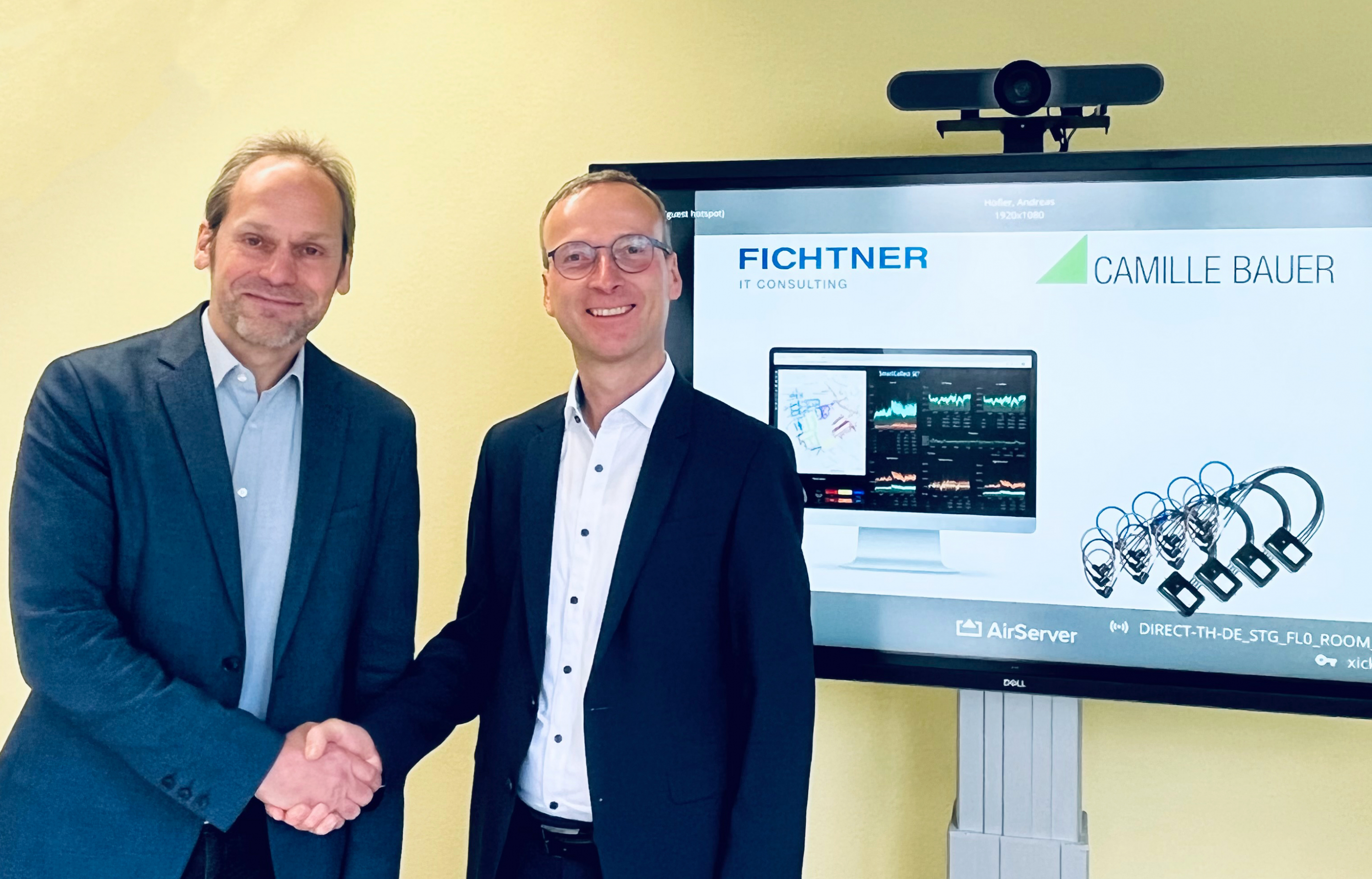
Two managing directors make a cooperation agreement, Andreas Höfler, CEO of Fichtner IT Consulting GmbH (left) and Sascha Engel, CEO of Camille Bauer Metrawatt AG).

The term “smart grid” has been bandied about for years. Frequently mentioned in connection with smart meters, it has been used so many times as a buzzword without any real content to back it up, that it has become almost worn out before a global and meaningful implementation could be realized.

Today, however, things appear quite different. Talk of a smart grid within the narrow context of actual "digital grid management” has now become far more meaningful. Renewable energy forms (e.g. PV systems, battery storage, wind turbines, etc.), the vast number of other energy consuming technologies (e.g. hydrogen generation, large-scale DC applications, heat pumps, etc.) as well as the often advanced age of existing assets play a major role. Not only that, distribution system operators, as well as consumers, have to cope with skyrocketing energy prices and an energy shortage. As a result, measures to improve energy efficiency with an optimal CO2 balance are becoming increasingly important. Thus, the focus on active grid management and supply-secure grid operation is intensifying. A future-oriented grid management system for the low-voltage range distribution grid, to complement the possibly existing medium-voltage grid management systems appears to be essential.

All this has prompted the two established companies, Camille Bauer Metrawatt AG and Fichtner IT Consulting, to join forces. High-quality and fundamental measurement data are combined with intelligent digital grid management to fit each application.

Safeguarding grid stability and hence security of supply.
The concept developed by the two established companies Camille Bauer Metrawatt and Fichtner IT Consulting defines a secure approach based on well-founded and market-tested core components. It is based on the fundamental definition of a smart grid as described, for example, by the Swiss Federal Energy Office.

Systemic design structure of measurement
technology and digital intelligence.
In short: it means to operate the existing grid digitally, and thus astutely avoid costly extensions which require a lot of expensive material (e.g. copper). In other words, a smart grid!

The path to digital grid management in four steps Since the cooperation involves the use and combination of proven and innovative technologies, it is advisable to proceed step by step. Both companies have a fundamentally scalable approach to:

    a) avoid overstretching the customer's budget
    b) generate productive benefits at an early stage
    c) ensure further expansion in line with current needs.

Consequently, the two companies propose a project implementation sequence in four steps:

  1. Secure measurement at the low-voltage level to capture the reality in real-time through grid transparency.
  2. Generation of a complete digital image of the grid by deriving the grid status and topology from existing sources.
  3. Presentation of an interactive visualization of the measured values at the measuring points and the resulting grid status in the grid diagram (grid cockpit).
  4. Finalization of a topological end result with the provision of analyses, forecasts and automatic procedures about further developments in the grid status. And this available specifically for each department.

The benefit: significantly lower costs for hardware and control room software, no additional copper in the ground and ultimately a greatly reduced workload, which can even be totally eliminated wherever feasible.

Two hundred and twenty two years of combined expertise.
Camille Bauer Metrawatt AG is a Swiss medium-sized company for the development and production of industrial measurement equipment. As such, Camille Bauer offers customers application-oriented solutions for the high-voltage monitoring and position sensoring markets. This includes a deep understanding of the needs of the electrical energy generation, distribution of energy as well as the industrial consumers. With its Swiss regard for highest quality and its strong capacity for innovation Camille Bauer Metrawatt AG delivers measurable added value to its customers.

A scalable metrological compass with high-resolution zero-blind technology

Fichtner IT Consulting GmbH is the IT competence centre of the world-wide Fichtner Group. They specialize in advising on and implementing high-performance IT solutions for technical networks, facilities and infrastructures. Fichtner combines industry expertise and process know-how with up-to-date technological competence to deliver innovative and cost-effective solutions for the success and satisfaction of their customers. The acquisition, structuring and linking as well as targeted preparation and presentation of information, including spatial referencing, are key to efficient and effective business processes. The concepts and solutions of Fichtner IT Consulting ensure that companies are optimally positioned for digitization.

What the two companies have in common is not only their complementary areas of technological expertise, but also their long track record of success. In 2022, Fichtner will celebrate its 100th anniversary, and Camille Bauer can look back on 122 years of activity. And both managing directors, Andreas Höfler of Fichtner IT Consulting and Sascha Engel of Camille Bauer Metrawatt, see this as a major advantage in an industry that focuses on security of supply. Long-term resilience and years of experience are not incompatible with innovative capability!

• Camille Bauer Metrawatt products are marketed in Ireland through Irish Power & Process (IPP).

@FIT_Fichtner @mepaxIntPR #Camille_Bauer_Metrawatt #PAuto #Energy

Wednesday, 20 August 2014

Fibre optic current sensor for high voltage applications!

Enabling digital substations and smart grids

The latest generation Fibre Optic Current Sensor (FOCS-FS)from the ABB stable complements its portfolio of optical sensors. The FOCS-FS gets its name from its innovative ‘free standing’ design.
ABB’s Fibre Optic Current Sensors (FOCS) are based on the Faraday effect principle, whereby light is used to deduce the precise magnitude of current that is creating the magnetic field. ABB’s FOCS series for high-voltage substations includes FOCS integrated with DCB (Disconnec-ting Circuit Breakers), FOCS kits for integrating with other high-voltage equipment such as gas-insulated switchgear and generator circuit breakers. FOCS-FS will add to this portfolio of offering.
A salient feature of the FOCS-FS is its digital interface capability making it ideal for deployment in digital substations and facilitating adaptability to future substation automation needs.

It also complies with IEC 61850 open systems communication protocol, enabling interoperability with equipment from other vendors. The new FOCS will be suitable for current measurement applications in 245 kV to 800 kV substations.

“ABB’s new FOCS-FS ‘free standing’ digital fibre optic current sensor solution will facilitate the development of digital substations and enable the grid to get smarter” said Giandomenico Rivetti, head of ABB’s High-Voltage business, a part of the company’s Power Products division. “It is also more ecoefficient and is designed to minimize footprint and enhance safety”.

Conventional current and voltage measuring devices in substations comprise of oil and SF6 based instrument transformers. However these devices are heavy, weighing up to several tons. They also consume significant amount of space.

The new FOCS addresses demanding performance requirements for accuracy across a wide temperature range. It is inherently free of magnetic saturation, making it ideal for capturing fast transient currents, short circuit currents, and alternating current (AC) with direct current (DC)-offset. The compact design helps achieve reduced substation footprint as it requires much smaller space compared to conventional instrument transformers. It is also an eco-efficient solution that uses no oil or gas,
eliminating the risk of explosion.

Wednesday, 27 July 2011

Mission critical wireless comms!

Partnership  to enhance connectivity for mission critical wireless solutions

MatrikonOPC™ has announced that CalAmp Corp. is the newest member to join its Global Partner Network. CalAmp will integrate MatrikonOPC’s full range of OPC servers into its mission critical wireless solutions.  CalAmp provides fixed and mobile connectivity for mission critical communications using licensed, spread spectrum and cellular technology from narrowband to broadband speeds. With MatrikonOPC’s secure and reliable OPC servers, the CalAmp product will effectively expand its secure connectivity to large SCADA networks.

CalAmp specialises in ruggedized wireless solutions from narrowband to broadband, using licensed, spread spectrum and cellular technology to support fixed and mobile connectivity for mission critical communications. They also offer world-class pre and post sales support to make planning, implementation, and maintenance of your wireless network easier with long-lasting results. At CalAmp, our mission is your success.
CalAmp solutions make distributed architecture designs possible, which allow extensive network flexibility with pass-through control, instantaneous reads, visual network status in the HMI, driver-level analysis of protocol data, and monitoring from anywhere in the network.  CalAmp makes efficient use of bandwidth and proactive system maintenance possible. By standardising on MatrikonOPC for its OPC data connectivity solutions, CalAmp will be able to provide its customers with world-class connectivity and support.

"SCADA solutions face many challenges, such as accessing remote devices, unreliable connections, managing those devices, and ensuring the integrity of the remote data. By choosing MatrikonOPC technology, CalAmp enhances its secure networking solutions to best serve its customers’ needs,” said Drew Brydon, vendor partner program manager-MatrikonOPC.

“We realize improving security and efficiency of data collection are critical for the Smart Grid vision,”
said Rick Nozel, senior vice president of sales and marketing for CalAmp's wireless networks business. “By leveraging MatrikonOPC’s secure and reliable solutions, we are able to provide the tools that power and utility companies need to easily manage all of the devices in their system, and to push network intelligence to the edge."

Wednesday, 2 February 2011

Increased Security Infrastructure for the Smart Grid

Advanced security and compliance tools enable utility deployment of integrated metering, communications and distribution automation solutions with confidence

Elster  and Industrial Defender has announced a technology partnership for cyber security and compliance with Elster's EnergyAxis® advanced metering infrastructure (AMI) Smart Grid solution. This announcement was made in San Diego at the DistribuTECH Conference and Exhibition, a leading annual Smart Grid and transmission-and-distribution event.

Industrial Defender's capabilities add to the robust security already embedded in EnergyAxis 7.5. Enhancements include advanced security intrusion detection and prevention at the end-point, server, perimeter and network levels, and high-availability centralized applications for monitoring, analysis, records management and compliance reporting.

The integration comprises the entire EnergyAxis solution. It also includes meters, networking devices, meter data management (MDM) servers, distribution automation (DA) servers, workstations and other devices. While EnergyAxis 7.5 already has secure technologies, including individual key management, the added Industrial Defender capabilities now support comprehensive situational awareness and security process automation across an entire AMI and DA infrastructure.

The partnership integrates security technologies into EnergyAxis, and creates a focused sales and service solution offering from Elster. This combination offers utilities a complete and accountable single source for reliable and compliant intelligent metering and distribution automation requirements.

"Cyber security is complex and multifaceted. By building individual key management and other security features into EnergyAxis 7.5, and integrating the enhanced applications offered by Industrial Defender, Elster continues to lead the way in creating secure, reliable infrastructure and proven Smart Grid solutions," said David Hart, Ph.D., senior vice president of systems and products at Elster Solutions.

"With Industrial Defender, we have found a partner that brings an extremely broad armament of security tools together on an integrated, utility-centric and utility-friendly basis,"
Hart added.

"The level of understanding and concern regarding threats to critical infrastructure and intelligent utility systems has increased among utility planners, suppliers, standards groups and regulators,"
said Brian Ahern, CEO of Industrial Defender. "By stepping up to create an integrated solution that incorporates comprehensive security and compliance capabilities, Elster is helping utilities get past the complexity and challenges of technology integration and move forward to take advantage of new business opportunities presented by the Smart Grid."