Showing posts with label Turbidity. Show all posts

Monday, 25 January 2021

Extended pressure for turbidity sensor.

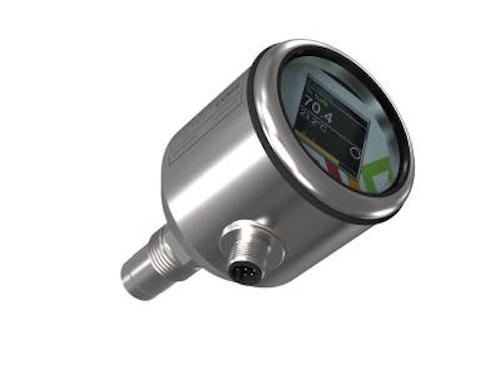
As a result of the optimisations carried out and extensive series of tests, the tried and tested EXspect 271 turbidity sensor can now be approved for an extended pressure range.

The NIR backscatter sensor EXspect 271 from EXNER is not only characterised by its economic use, but also by its compact and at the same time robust design. It is mainly used in the food and beverage industry as well as in many other applications where it is necessary to determine turbidity in medium and high measuring ranges. Cleaning and sterilization using CIP and SIP processes are of course possible. Another advantage of the sensor is the spherical design of the measuring optics. This minimizes the adhesion of air bubbles and the formation of deposits.

The compact sensor EXspect 271 has not only successfully completed extensive test series, but has also established itself in practical use. Thanks to the optimisations that have now been carried out, it is possible to use the sensor not only in applications with a process pressure of up to 20 bar (290 psi), but also in vacuum applications.

@PresseBox #EXner #E-P-E #PAuto

Tuesday, 19 May 2020

Robust turbidity measurement.

Sensor robust turbidity measurement in industrial applications, made to withstand aggressive media and is easy to maintain and operate.

The Turbimax CUS50D sensor has been launched by Endress+Hauser. This unit is a reliable absorption sensor for turbidity and suspended solids measurement in unfavorable environments. Its robust design is made to withstand aggressive media and is an ideal solution for applications in industrial wastewater or processes.

Turbimax CUS50D measures turbidity and suspended solids (attenuation of light in accordance with ISO 7027) reliably and accurately—even in very dark liquids and sludges. The sensor can be used in a wide range of applications; for example, turbidity measurement in processes within the chemical industry, concentration measurement of hot process water in the food industry, and solids measurement in industrial wastewater. Reliable measurement results are always guaranteed thanks to digital signal processing in the sensor and Memosens protocol.

It can be quickly and easily put into operation. The measuring principle is based on the attenuation of light and always provides reliable measuring values. These measurement results can be achieved, for most applications, from a single-point calibration. The sensor is also already pre-calibrated from the factory for turbidity and absorption measurements and includes various application models.

Turbimax CUS50D has a particularly long operating life thanks to the resistant material of the sensor head. The special Teflon-derivative sensor measurement surface minimizes the risk of dirt accumulating, thus guaranteeing a stable and consistent measurement. Surface contamination is removed by the sensor's air cleaning system so maintenance intervals can be ideally planned, and turbidity measurements can continue uninterrupted over a long period of time. The plastic version of the sensor is especially resistant to chemicals and is therefore suitable for measurements in media with a low pH value or high salt content.

Endress+Hauser has developed a solid-state reference to verify that the Turbimax CUS50D is functioning correctly and to check the long-term stability of the device. With this reference the sensor can be verified in a simple and reproducible manner. This makes the costly and complex production of reference media unnecessary. The solid-state reference is very easy to use and it provides reliable and definitive results for every turbidity measurement.

#PAuto @Endress_Hauser @Endress_US @Endress_UK

Monday, 9 December 2019

Turbidity sensor.

Exner's turbidity sensor EXspect 271 can now be used up to a process pressure of 16 bar.

The EXspect 271 is an NIR backscatter sensor for measuring turbidity. The sensor is distinguished not only by its cost-effectiveness, but also by its compact and durable design. It is suitable for determining medium to high turbidity values in a large number of applications, especially in the field of the food and beverage industry. The cleaning and sterilisation by means of CIP and SIP procedures are of course possible. A further advantage of the sensor is the spherical design of its measurement optics. This minimises the adhesion of air bubbles and the formation of deposits.

The compact sensor EXspect 271 has been available since February this year and has already proven itself in a wide variety of applications in dairies and breweries. Thi is a further improvement. Thanks to design and productional optimisations it is now possible to use the sensor up to a process pressure of 16 bar.

#PAuto #E-P-E @PresseBox

Monday, 16 September 2019

Easy turbidity measurement!

The new EXspect 231 NIR absorption sensor from EXNER is not only compact and robust, but also can be used in a multitude of processes and, at the same time, is easy to use.

With the EXspect 231 absorption sensor, EXNER brings a measuring device to market which can be reliably used to determine turbidity in a multitude of processes. The new type is based on the tried and tested EXspect 230 and EXspect 250 sensors. The robust stainless steel housing of the sensor has a hygienic design and is executed in protection class IP69. The measurement itself is done in the near infrared range (NIR) with a wavelength of 850 nm, which allows colour-neutral measurement. The LED light source and the detector are protected by a durable sapphire window. Cleaning by means of CIP / SIP processes is possible. For the calibration and verification of sensors in the field NIST-traceable reference filters are available.

Thanks to its hygienic and simultaneously robust design, the EXspect 231 sensor can be used for a wide variety of applications not only in the food industry, but also in the processing industry, as well as in environmental technology. Applications like the monitoring and control of separators, the determination of yeast concentrations in breweries, concentration measurement in the headbox in paper production, and the monitoring of purification processes in dairies, for example, are belonging to the areas of application.

The sensor is available in a variety of configurations and can thus be optimally adapted to suit the customer’s requirements. The new EXspect 231 type replaces the previous sensor types 230 and 250 of the EXspect range.

#Exnor #PAuto @PresseBox

Monday, 11 February 2019

Reliable turbidity measurement.

In its EXspect 271 backscattering sensor, Exner is launching a compact measuring device for reliable and economical turbidity measurement. One major benefit of the new sensor is in the spherical design of its optical measurement system. This minimises the attachment of air bubbles and the build-up of deposits.

The focussing of the beam due to the sapphire lens allows for a measurement right on the barrier layer of the medium, meaning only the reflection is measured, and not the proportion of the light beam absorbed. Both the attachment of all kinds of things to the measurement system and the measurement of absorbed proportions are drawbacks on the current market.

The measurement takes place in the near-infrared region (NIR) at a wavelength of 880 nm, which allows for colour-neutral measurement. The LED light source being used guarantees a long-lasting and stable signal. The stainless-steel case of the EXspect 271 has a hygienic design and is suitable for CIP/SIP. As another special feature, NIST-traceable reference standards can be obtained for calibrating or checking the sensors in the field.

Due to its hygienic and robust design, the EXspect 271 sensor is suitable not only for many applications in the food and drinks industries, but also for diverse applications in the processing industry. This includes, for example, yeast recovery, phase separation, purification processes in dairy plants, and the measurement of cellulose concentrations.

#EXner #PAuto #Food

Friday, 18 January 2019

Optical turbidity measurement.

The new OPTISYS TUR 1060 optical turbidity measuring system has been introduced by Krohne. The main application areas are quality monitoring or filter monitoring in drinking water, or in cooling water circuits or demineralisation processes.

The new analytical system employs 90° scattered light technology and is compliant to US EPA 180.1 and EN ISO 7027. It comes with 4…20mA and Modbus RS485 communication and features improved usability, fast measuring response time, simple and cost-efficient calibration, data logging, and low maintenance requirements.

Although OPTISYS TUR 1060 shares components with its predecessor OPTISYS TUR 1050 and can be retrofitted, the system has been completely redesigned: it provides improved usability due to cursor keys and simple start-up and operation without special knowledge. For flexible use, the measuring ranges can be adapted according to the application. It can be calibrated with reusable calibration cuvettes in less than 5 minutes, without dangerous formazine contact.

The new system has an integrated data logger for storing measurement readings and the last four calibrations up to one year, depending on selected logging interval between 1…60 minutes. Calibration data and logged data can both be downloaded via USB interface. OPTISYS TUR 1060 has the lowest maintenance requirements on the market due to a long lasting light source and automatic ultrasonic cleaning of the measuring cuvette that provides for minimal wear, high long-term stability and short downtimes.

• DWN Products are marketed in Ireland through DWN Instrumentation.


@krohnegroup #Water #PAuto 

Tuesday, 31 March 2015

Multi-application turbidity sensor!

Endress+Hauser introduces the Turbimax CUS52D turbidity sensor for process water filtration and other industrial process turbidity conditions. The Turbimax CUS52D performs laboratory-quality turbidity measurements without the need for extensive bypass installations, avoiding costly product or water losses.

The sensor measures turbidity from 0.000 to 4000 NTU with accuracy of 2% of measurement ±0.01 NTU at process temperatures from -4 to 185 °F with a detection limit of 0.0015 NTU.  The sensor measures turbidity in accordance with ISO 7027

The Turbimax CUS52D’s surface minimises the build-up of biofilms and particulates. The ability to operate at high pressures (up to 145 psi) makes suppressing air bubbles possible. For bypass operation an optional air bubble trap catches smaller air bubbles. In particularly challenging cases, the CYR52 ultrasonic cleaning system can be installed on a flow cell or even right on the existing pipe to prevent and remove surface contamination and bubbles without direct product contact.

The unit is available in immersion, flow cell and in-line versions. The immersion model can be installed in open channels and basins, while the stainless steel hygienic in-line model can be inserted directly into pipes. It can be used at the raw water inlet of any plant and the outlet of process filtration and clarification. The Turbimax CUS52D is well suited to filter monitoring, filter backwashing and all stages of industrial water purification.  With available 2” triclamp it is also well adapted to hygienic food and beverage processes in brewing, spirits, soft drink, dairy and others. Its fast response time of less than 1 second means it can also perform very well as a primary process variable (PV) in control applications.

The sensor uses the 90° light scattering principle in accordance with the ISO 7027 standard. The optical signals from the sensor are continuously monitored and tested for plausibility. In the case of discrepancies, an error message is sent via the transmitter.

A smart solid state reference for the Turbimax CUS52D allows the sensor to be verified and calibrated before insertion into the process without the use of liquid standards. As a result, neither employees nor processes come into contact with any harmful liquid standards such as Formazin, which are typically used for field calibration. The solid state references are matched to each sensor for maximum calibration accuracy, are simple to use, and provide consistent, reliable and clear results.

Monday, 24 May 2010

More than just a sampler

2 in 1 – The Liquistation CSF48 and Liquiport 2010 CPS44 are automatic samplers and measuring stations in one.
Next month (June 2010) Endress+Hauser is to launch its new generation of automatic samplers for liquid analysis worldwide. The stationary Liquistation CSF48 sampler and the portable Liquiport 2010 CSP44 version will revolutionise the world of sampling. They not only fulfill all international standards and laws, they also offer a unique level of flexibility for water-related applications. Furthermore, they are based on the new Liquiline-Memosens platform and can therefore be used as complete measuring stations.

Focus on flexibility

The core principle of our new analysis platform is ensuring that identical tasks are always carried out in an identical manner – to provide the customer with a high level of flexibility and simplicity. This platform concept also makes it possible to easily extend the sampler into a measuring station without needing to connect additional transmitters. Thanks to the flexible electronics and expansion slots, inputs for digital sensors with Memosens protocol can be added via plug-and-play. The sensors are automatically detected by the software and can therefore be put into operation easily. Product manager Karlheinz Bareiss proudly explains, "For the first time, one device can perform both tasks - take samples and simultaneously measure various parameters such as pH, turbidity, conductivity or nitrate content".

User-friendly, simple operation
The new sampler features the same clearly arranged operation concept as the rest of the Liquiline platform. The menu depth has been kept to a minimum to allow fast navigation, and the large graphical display guides the user through the software with its 9 lines, each 45 characters long. The sampling programs provide maximum flexibility and cater to all requirements – starting at the "Basic" program with just 5 inputs and ranging up to the "Standard" and "Advanced" programs whereby up to 24 sub-programs can be linked to each other. "The convenient navigator and 4 soft keys make entering the measured values and programs as easy as operating a pocket calculator or mobile phone", says Mr. Bareiss.

Modular housing with extra security
The modular housing consists of two parts with separately lockable doors to ensure that samples are always stored securely. Further protection is provided by the design, with no screws on the outside of the housing. Once locked, the sampler cannot be broken open. Great emphasis was also placed on the stability of the housing materials. In addition to the familiar V2A and V4A stainless steels, 2 plastic versions have been developed - polystyrene for use in all standard applications at wastewater treatment plants and ASA-PC (Luran®) for external use. ASA-PC is the plastic with the best characteristics for UV resistance, thermal stress, mechanical stress, insulation and chemical resistance.

Perfect sample preparation for laboratory analysis

The innovative power supply and cooling system ensure that the samples are not exposed to any fluctuations in temperature and therefore cannot undergo change. The power supply has primarily been designed for 24 VDC in order to cope with worldwide variations in mains voltage and mains frequency, and in order to meet safety requirements in every part of the world.

No overly heavy bottles, no back problems – the unique, dual bottle trays make it easier to transport samples to the laboratory. They meet all of the guidelines of the occupational accident prevention and insurance association. The dual trays also allow simultaneous use of individual bottles and containers in one device (e.g. 12 x 1 litre + 2 x 13 litres). This is particularly advantageous when "alarm samples" need to be taken and filled into special containers when specific events occur e.g. if the pH value is too high. The bottle configuration is also completely flexible in terms of the bottle materials. PE and glass bottles can both be used, ensuring perfect operation with any medium and guaranteeing compliance with DIN/IEC standards.