Showing posts with label Packaging. Show all posts

Tuesday, 30 June 2026

Visualisation, control and machine operation at once.

The MATCH product line with a specialised platform for industrial panel PCs that integrates control and operation functions within a single system has been expanded by Wahchendorf Prozesstechnik. The solutions are aimed at machine and plant manufacturers as well as operators of industrial production facilities requiring compact, robust and flexible HMI solutions.

MATCH CONTROL focuses on combining visualisation, control and direct machine operation.

It combines panel PCs with control elements for efficient HMI concepts in machine and plant engineering The panel PCs integrate high-performance computing technology with physical control elements such as push-buttons, switches or emergency stop functions.

The systems are designed for industrial environments and are suitable for direct installation on machines or support arm systems. Various display sizes and form factors enable precise integration.

Like all MATCH products, the devices follow a standardised structure with expansion options. Interfaces, design and functionality can be adapted. This combination of integration, robustness and flexibility reduces development effort and supports efficient HMI concepts.


@mepaxIntPR #wachendorff_prozesstechnik #PAuto

Thursday, 18 June 2026

Process advantages for the spray zone.

Comparable to stainless steel in hygiene and corrosion resistance and more efficient when it comes to space requirements and scalability.

Nord Drivesystems opens up new planning options for primary packaging using NXD tupH® surface treatment. Aluminium drive solutions are more compact and provide thermal benefits as well as – thanks to NXD tupH® – effective protection against moisture and aggressive cleaning chemicals in intensive cleaning intervals.

With NXD tupH®, Nord Drivesystems puts drive technology with aluminium housings into wet product-contact areas. The combination of surface treatment and high-performance sealer provides a particularly hard and non-porous surface that can be cleaned quickly and hygienically. Even after numerous cleaning cycles, the sealer does not flake off and thus does not enter the products to be packaged. Thanks to the surface treatment, the protective effect remains unchanged even with minor damages. A long-term test using Ecolab cleaning agents has proven the resistance to cleaning chemicals. Decisive for use in wet product-contact areas of primary packaging: NORD drive components with NXD tupH® surfaces are in accordance with the requirements of the FDA, EU and Switzerland as well as the MER-COSUR states.

More compact and more scalable.
With NXD tupH®, NORD refines the hygienically designed drive components of its wash-down modular product system and reveals process advantages in some additional application are-as of primary packaging. For example, drive solutions with aluminium housings can be de-signed more compactly than with stainless steel, as aluminium is more lightweight and has a significantly higher thermal conductivity. The modular product system furthermore allows the drives to perfectly fit into the machine. All these factors result in reduced space requirements and enable flexible scalability of the system.

Decentralised and suitable for servo.
With the NXD tupH®-capable NORDAC ON PURE, the solution provider will soon reveal the advantages of decentralised drive electronics for wash-down areas. Ethernet on Board, hy-brid cables and daisy chain technology enable efficient and hygienic topologies. This makes the inverter easier to clean and significantly more streamlined than conventional decentralised wiring. Furthermore, its integrated POSICON software allows for the creation of travel profiles for non-complex servo applications in packaging. This includes control functions such as synchronism and flying saw that are used, for example, when separating and sealing during flow wrapping.

Economic alternative to servo.
Wherever servo gear units are oversized in the primary packaging line, NORD offers helical, helical bevel and worm gear units as an economic alternative. With IEC, NEMA and servo adapters from the NORD modular product system, they can be combined with servo motors from various manufacturers. And here again: NXD tupH® makes the drive solutions resistant and durable.


@NORD_Drive @mepaxIntPR #Pauto  #Corrosion

Wednesday, 29 October 2025

Defeating the ‘whack-a-mole’* that is sustainable packaging!

Gas analysers are performing a vital role for packaging manufacturers looking to check the environmental performance of their latest products as they seek new ways to develop sustainable packaging.

Signal Group has seen a particular increase in demand for its continuous VOC measurement instruments in the packaging sector. VOCs (volatile organic compounds) are emitted during the manufacture of many packaging production processes, but these harmful pollutants are tightly regulated so continuous monitoring is necessary. In addition, it would not be possible, for example, to label a recyclable product as more sustainable if it caused an increase in VOC emissions.

“The packaging industry is currently under enormous pressure,” explains Signal MD James Clements. “Firstly, most of the major players have made commitments under their ESG policies to improve the sustainability of their products. They are doing this because their customers demand it, consumers want it, and of course it’s the right thing to do, but sustainability means different things to different people,” he says. “Secondly, new regulations such as the UK’s Extended Producer Responsibility (EPR) and the EU's Packaging and Packaging Waste Regulation (PPWR) are strongly encouraging packaging manufacturers to increase the use of recycled materials and to develop recyclable and reusable products.”

According to a recent McKinsey report: “The global packaging sector continues to be attractive and is expected to grow faster than global GDP. Industry demand for—or at least interest in piloting—sustainable packaging is also rising as a result of pledges by companies across the value chain to reduce material use, increase circularity, and make more use of recycled materials.”

However, as James Clements explains: “It’s not as simple as that. Yes, waste reduction is enormously important, but the development of new packaging products can be a bit like ‘whack-a-mole’ because sustainability objectives also include other important factors such as carbon footprint and environmental emissions.

“Whilst seeking to develop new, more sustainable and recyclable products, packaging companies are also looking to ensure that they do not inadvertently increase their emissions of pollutants such as VOCs, and this where we are seeing a large increase in demand for continuous analysers,” he adds.

VOC Sources.
VOCs are released by a variety of packaging manufacture processes. Plastics, resins, fibres, textiles, elastomers, solvents, pigments, adhesives and many other products can be manufactured from fossil fuels, chemicals, catalysts and recycled materials, but many of the processes by which these materials are transformed into packaging result in VOC emissions. During polymerisation, for example, unreacted monomers and residual catalysts can be released as VOCs. In addition, the chemicals that are added to the polymers can also be volatile and become VOCs, and during processing at high temperatures, polymers can degrade into smaller, volatile compounds, which are also VOCs.

The manufacture of some food packaging involves the application of a plastic membrane (PET, HDPE, LDPE, PP etc.) to cardboard or paper. This is a good example of a process that releases VOCs which have to be abated. Typically, a Regenerative Thermal Oxidizer (RTO) is used to destroy the VOCs and other industrial pollutants in exhaust gases by oxidizing them into harmless substances like carbon dioxide and water vapour. RTO abatement systems have to be controlled by a gas analyser. For example, a Signal FID can take samples from both ends of the RTO to check abatement performance and demonstrate regulatory performance. This can be achieved with two FIDs or with one FID and a switched sampling system.

Monitoring technology.
The standard reference method for the analysis of VOC emissions is by a Flame Ionisation Detector (FID), which for many years has been at the heart of Signal’s VOC analysers. The FID method is specifically designed to detect carbon-hydrogen (C-H) bonds, making it highly selective for VOCs.

Signal manufactures two main types of FID – fixed and portable. The fixed analysers are permanently deployed to measure VOC emissions in one location, and the portable analysers can be used at multiple sites, where discontinuous monitoring is permissible. These are generally sites with lower emissions where periodic measurements suffice.

In many countries, the monitoring of VOCs for regulatory compliance requires certification to specific performance standards. For example, Signal’s latest FID, the SOLAR CEMNEX, recently passed a rigorous program of tests at TÜV in Germany. As a consequence, this monitor has MCERTS approval verifying that it complies with the performance and uncertainty requirements specified in the UK’s Environment Agency Guidance: MCERTS for stack emissions monitoring equipment at industrial installations - Continuous emissions monitoring systems (CEMS) Updated 28 August 2024, EN 15267-1:2023, EN15267-2:2023, EN 15267-3:2007 and QAL 1 as defined in EN 14181: 2014.

Summary.
It is possible to claim that a product is more sustainable if it has a lower carbon footprint, produces less environmentally harmful emissions, uses less energy and/or water, or if it results in less waste. However, if it only achieves one of these admirable goals, it is important to check that it is not doing so at the expense of the others, and that is why packaging manufacturers are using more VOC analysers.


* ‘whack-a-mole’ = situation characterized by a series of futile, Sisyphean tasks, where the successful completion of one just yields another popping up elsewhere.


@GasAnalysers @_Enviro_News #Packaging #OPAuto #Manufacturing #Mcerts 

Tuesday, 5 March 2024

Putting the cap on correctly.

A vital role in packing leading edge medical test kits for management of critical illnesses.

Axis-Shield is a world leader in inventing new markers for identifying cardiovascular and neurodegenerative diseases, rheumatoid arthritis, sepsis, vitamin deficiencies and diabetes. Spotting early signs of such conditions during routine medical check-ups means treatment can be started in a timely manner, which leads to improved patient management, either curing or managing the problem.

The compounds it develops are initially produced in low volumes, where automated processes are not appropriate. This moves to medium volume production once the product has been proven, approved and certified and the medical fraternity begin using it. Some compounds later move into high volume production, but it is in the very nature of medical advancement that in other cases Axis-Shield will keep on improving the formulations and developing new products fairly quickly. Thus Axis-Shield has a need for highly efficient medium volume packaging solutions that guarantee accurate and consistent adherence to performance parameters.

This led the company to commission a bespoke packaging line that could handle multiple products in a variety of different packaging formats at a rate of around 500-2500 units per hour. The line fills bottles or other forms of container with the compounds, caps them, labels them, groups them into multi-packs, applies outer wrappers and overprints key data such as production date, use-by date, storage, handling and usage instructions, etc. “Capping the bottles is a critical part of the process,” explains Dean Harper of the company. “Our line can work with two sizes of cap and each one must be tightened to just the right level of torque to within pretty tight tolerances.”

A cap that is too loose may lead to spillage of the marker, which is usually very expensive, during transit or handling. A cap that is fitted too tightly may cause upset to the patient or medical staff, who are both likely to feel stressed if smooth medical procedures are upset. Equally, forcing open an overly tight cap could result in spillage. “Our packaging line has four capping stations and each one is fitted with a TorqSense transducer,” explains Dean. “These work in conjunction with a computer to ensure the correct level of tightness and record the data for traceability records.” TorqSense is unlike any other sensor in that it does not rely on delicate slip rings to transmit torque readings. It does this wirelessly using radio signals transmitted from a pick-up located near to, but not actually contacting the rotating drive shaft of the capping mechanism.

“The capping process is essentially simple,” says Dean, “but you have to allow for a fast cycle time and the need to guarantee torque while ensuring total sterility.” TorqSense met the design criteria of robustness, simple high speed operation and non-contact for sterility.

Mark Ingham of Sensor Technology gives the details: “TorqSense was ideal for this application; we just needed to work out mounting arrangements. We supplied the sensor with our standard TorqView software which both displays readings in real time and archives them should analysis or track and trace be an application requirement. Being wireless, TorqSense does not need to physically contact the bottle caps or shaft of the torque head it is monitoring.

Digital Inductive telemetry is used to transfer strain gauge sensor data from the rotating shaft. This method enhances reliability and precision of the torque measurement by digitizing the strain gauge signals very close to the sensors on the shaft which eliminates much of the noise associated with millivolt signals, slip rings and long cable runs. This also improves the temperature coefficient by removing the thermocouple effects of the cable. The digital data is also integrity checked using a checksum so only valid data will be presented to the end user.

For Axis-Shield, the software was required to do two things: run the torque up to a set level within tolerances, and record the actual value achieved. This secures the cap to the bottle at a level of tightness that will ensure security and sterility, yet is at a level that can be opened relatively easily by an adult. The logged values are saved to a hard drive to provide a permanent record for traceability purposes. 

Dean explains: “Diagnostic fluids are distributed widely, often globally, so they may be stored for months before use. Tracing each bottle’s origin would be practically impossible without full records being automatically produced and saved to a central location. TorqSense provided a solution to this complex but critical problem using an out of the box technology.”


• See also Top Ten Torque Tips (8/2/2024)

@sensortech #Automotive #Torque

Wednesday, 20 December 2023

Digitising packaging lines.

Drug manufacturer Heel has successfully implemented Werum PAS-X MES 3.3.0, Körber's NextGen MES for pharma, biotech, and cell & gene therapy, at its main plant in Baden-Baden (D). The pioneer in scientific research into natural pharmaceuticals has been producing medicines, such as Neurexan® and Traumeel®, based on natural active ingredients for over 80 years.

Built on more than 30 years of expertise and leading IT technologies, PAS-X MES 3.3.0 is GMP-compliant and designed to meet the future requirements of the industry. It can be integrated into any IT infrastructure via simple and secure interfaces – whether in the customer's data center, in the cloud or as a Körber-managed “Software as a Service”.

The NextGen MES offers maximum functionality as standard, so the system has been implemented “out-of-the-box”, allowing for seamless upgrades in the future. The implementation process followed the proven ready-fit-build-run method: many of the MES implementation tasks were taken over by Körber, which reduced the customer's workload and accelerated the implementation of the system.

“The successful introduction of PAS-X MES for the digital processing and documentation of packaging orders is an important milestone in the digitalization of our production,” says Monika Gartner, Head of Digital Transformation, Biologische Heilmittel Heel GmbH. “We have a very good, open and cooperative business relationship with the Körber team, characterized by mutual trust.”

With the help of PAS-X MES 3.3.0, Heel has digitized the first four packaging lines, replacing the paper-based packaging documentation of its products. The integration was implemented almost as standard, so that more than 2,000 finished products can be processed with just a few generic MBRs. SAP ERP is fully integrated via a standard interface. The customization of numerous bills of material and production versions from SAP has paid off: Heel can now automatically perform reconciliations in Electronic Batch Recording and benefit from the parallel Batch Record Review.

“Both the project team and the packaging team contributed greatly to the successful implementation of the project. They have been involved from the very beginning and have received comprehensive information and training through our specially developed training concept,” she continued.

In the next step, Heel will introduce PAS-X KPI in the packaging area. The software application is designed to monitor the performance of packaging machines in real-time, ensuring that machine utilization and overall equipment effectiveness is maximized.

“We are looking forward to further projects on the path to digital transformation and our 'Factory of Excellence'. In the coming months and years, we are going to gradually roll out PAS-X MES in other production areas. Integration into all processes is an essential step towards full digitalization,” concluded Monika Gartner from Heel.


@KoerberPharma @WerumKarriere #Heel #PAuto #Pharma

Wednesday, 13 December 2023

Gas analyser safeguards packaging environmental compliance.

A global packaging company is monitoring VOC emissions (volatile organic compounds) continuously at its facility in Ireland - primarily to manage and improve the plant’s environmental performance and to demonstrate regulatory compliance. Due to a changeover in equipment, a short-term requirement arose for VOC monitoring with a flame ionisation detector (FID) that was hired from the Signal Group.

Feedback from the project indicated that the Signal analyser proved to be accurate and reliable, and provided the packaging manufacturer with a problem-free transition as it updated its monitoring regime. However, there was a delay in the work, and the rental of the Signal analyser was extended for several months.

The plant’s VOC emissions arise from printing and laminating processes, and are treated by an oxidiser, after which an FID analyser measures the total organic hydrocarbon content post-oxidation. By monitoring the emissions continuously, the plant’s operators are able to refine their processes to improve efficiency, and to minimise emissions.

The hired Signal equipment included a heated FID analyser, a heated line with controller, and a filter. “We manufacture all of these items, whihc means that the complete system is delivered ready-to-go, so that clients can be assured of compatibility, accuracy and reliability,” explains Signal MD, James Clements. We have hundreds of these systems in operation all over the world, so our staff are highly skilled and experienced in delivering support.

“As the world strives to meet the COP28 goals, manufacturers are looking to reduce their carbon footprint, as well as the carbon footprint of their supply chains. Lowering VOC emissions is one of the ways in which companies can help achieve these critically important objectives.”


@GasAnalysers @_Enviro_News #PAuto #Environment #Ireland

Monday, 13 November 2023

100 tons of hard cheese a day!

In hard cheese production at BMI (Bayerische Molkereiindustrie) in Jessen/Saxony-Anhalt (D), two cells, each equipped with a hygienic Stäubli six-axis robot, take over the primary packaging of freshly produced 15- and 20-kg cheese blocks at 10-second intervals for around 20 hours. This is followed by complete washing to the highest hygiene standards. This exceptional concept offers benefits in terms of performance, space requirements, hygiene and flexibility.
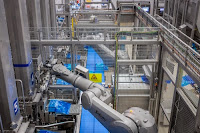
©2023 Marco Prosch
To produce 35,000 tons of hard cheese per year, about 350 million liters of milk are needed. Since each dairy cow yields around 10,000 liters of milk a year, around 35,000 cows – most from Saxony-Anhalt, Saxony and Brandenburg – supply the necessary raw material for the hard cheese factory of the BMI dairy cooperative in Jessen. The overall site, with mozzarella cheese factories, processes some 1.5 million liters a day.

This site, which also produces whey powder products, is not only the largest cheese factory in the BMI group, but also a major producer throughout Germany, especially since its product diversity is broad and its production is highly flexible: BMI produces Cagliata, white and red cheddar, Edam and Emmental among others in Jessen. A large portion of these products go to industrial customers, but they also go to retail chains for end consumers under the Paladin brand or private labels.

Between 2017 to 2019, the company invested the impressive sum of more than €100 million, including investment in a new hard cheese factory to produce these volumes and varieties economically with consistently high quality. The entire plant runs 20/7, as Thomas Benicke, production manager at the hard cheese factory explains, "We produce for 20 hours. Then the entire plant stops, gets cleaned, and a new production cycle begins.”

Primary packaging of cheese blocks in two robotic cells.
This pace also applies to the final stage, namely packaging. When the cheese leaves the drainage belt, it enters one of six Tetra Pak Casomatic SC7 systems via a pipeline. These systems continuously and fully automatically handle pre-pressing, forming cheese blocks, and filling. The final product is cheese blocks weighing precisely 15 or 20 kg, ready for packaging.

BMI commissioned Lemmermeyer GmbH & Co KG Edelstahl-Anlagenbau in Deiningen, Germany, which has extensive experience with handling and packaging lines for the food industry – and has broken new ground in this area. 5.5 tons of cheese per hour packed in blocks.
Three of each of the six Tetra Pak columns are assigned to a robotic cell with a Stäubli six-axis TX-200L robot in HE (humid environment) design. With a load capacity of 100 kg and reach of 2.60 meters, the robots are optimally prepared to handle the cheese blocks, and thanks to the gripper developed by Lemmermeyer, also have multitasking capability.

The base-mounted robot first grips a film tube and pulls it over the film shoe of the filling column. The system then pushes the 15- or 20-kg block of cheese into the tube, or two blocks of cheese if 40-kg units are being produced. The robot places the prepackaged cheese on a two-track pre-buffer conveyor belt, forming batches of 4 x 15 kg or 4 x 20 kg, or 2 x 40 kg. The batches are aligned and prepared for vacuuming and sealing. The following steps then take place: metal detection, labeling and leakage testing before the blocks are conveyed to the ripening area.

Because the robot is so versatile, the gripper developed by Lemmermeyer has several functions. A film spreader takes over the bag provided. Once the cheese has been pushed in, a flat gripper is used to place the block on the two-track conveyor belt. In doing so, it rotates every second block by 180 degrees so that the feed for the vacuum system is optimally utilized.

The two robots perform their tasks with great endurance and a remarkable packing capacity of up to 5.5 tons per hour – equivalent to eight to 12 blocks per minute. Despite the high throughput, the systems are also extremely flexible. For example, the division into two identical cells ensures that production and packaging can still be performed even if one of the two cells is at a standstill.

If required, the blocks can also be moved out of the cell in the opposite direction and removed via the infeed conveyor belt. And of course, blocks with different weights can also be packed and handled. The control system, with clear visualization of the entire system, offers many possibilities. Robots: Set for hygiene from base to wrist.
However, the main reason BMI invested in flexible automation was not for personnel reduction but for high hygiene standards. Thomas Benicke: "As a cheese factory whose core production processes are prompted by bacteria, we must avoid the risk of introducing contamination at all costs. This is best achieved when humans do not intervene."

That said, people do come into contact with the robots once a day during thorough lathering in cleaning mode. After just one process like this, a "normal" robot would hardly be operational. But Stäubli HE robots are prepared for this from base to wrist. All cables are routed inside the housing, which is also slightly pressurized to prevent liquid or moisture from penetrating. There are no dead spaces where residual dirt can settle, and the coating is also hygiene-compliant.

100 tons of block cheese a day – with a cycle time of 10 seconds.
This means that the robots can be used reliably in processes where hygiene is critical – even with thorough daily cleaning e.g., by washing with water-based media with a pH range from 2 to 12. Regardless, they work durably over long periods despite the high strain; after all, as the "sole workers" in their cell, they handle around 100 tons of block cheese a day with a cycle time of 10 seconds. This is proven by the packaging line developed by Lemmermeyer at BMI in Jessen – as well as many other installations with hygienic Stäubli robots in the food industry.


@PresseBox #Stäubli #Food #Robotics

Friday, 29 September 2023

Filling and packaging systems for pharmaceutical and biopharmaceutical production.

PAS-X MSI Plug & Produce Certified  partnership certificate has been awarded to machine manufacturer Bausch+Ströbel.

The partnership between Körber and Bausch+Ströbel enables customers to seamlessly integrate Bausch+Ströbel's filling and packaging systems with PAS-X MES, Körber's leading Manufacturing Execution System (MES). This significantly reduces manual configuration efforts for customers in the pharmaceutical, biotech, or cell and gene therapy industries, as the machines can be easily connected to PAS-X MES with just a few clicks.

Lars Horning, Körber
Lars Hornung, Senior Principal Alliances & Technology Partners Software in Körber's Business Area Pharma, expressed delight with the new addition to Körber's Ecosystem Partner Program: "The successful collaboration with Bausch+Ströbel in recent years confirms the acceptance and added value of the PAS-X MSI Plug & Produce interface in pharmaceutical and biopharmaceutical production. We are pleased to welcome Bausch+Ströbel as an MSI partner in our new partner program."

The innovative "PAS-X MSI Plug & Produce" interface facilitates a smooth and efficient integration of both systems. The no-code integration is based on standardized message-based communication, as described in the concept paper of the ISPE Plug & Produce Working Group.

Andreas Bühler, Head of Automation Project Design at Bausch+Ströbel, added: "The 'PAS-X MSI Plug & Produce Certified' partnership certificate is the result of our longstanding and open collaboration in many projects. I look forward to our partnership, which provides our mutual customers with the assurance of an efficient and secure integration. With the standardized and verified PAS-X MSI Plug & Produce interface, the cumbersome coordination of handshake signals is eliminated, and allows to immediately focus on the essential order and reconciliation data.”


@KoerberPharma @WerumKarriere #PAuto #Pharma

Wednesday, 19 July 2023

Packaging that doesn't cost the Earth.

Globally, companies are seeking opportunities to reduce waste and the carbon footprint of their products. This has increased demand for environmentally responsible packaging, and the manufacturing company Futamura has become the world’s largest producer of sustainable cellulose packaging films, including their leading NatureFlex™ range.

The production of sustainable films requires precise monitoring and control of process conditions. Highly accurate temperature and humidity measurement is therefore essential, particularly during the film drying process and when finished products are stored.

Futamura UK uses Vaisala measurement equipment across their site, including Vaisala HUMICAP® humidity and temperature transmitters HMT360 in their coating towers inside their conditioners. The coating towers contain solvents which are flammable, so the products used in these areas must be certified for the Ex environment. The Vaisala HMT360 transmitters, now superseded by the ATEX-certified HMT370EX, are intrinsically safe, making them ideal for use in hazardous areas such as these.

Their measurement instruments can also be found on Futamura UK’s casting machines, installed in the dryer ducting, measuring humidity and temperature. The Vaisala humidity and temperature meter Series HMT330 is designed to provide highly accurate measurements in demanding industrial applications. These transmitters control a valve which manages the amount of steam that goes into the dryers, allowing the humidity to be maintained at the drying set-point needed for each type of film. Moisture content is a significant factor in the properties of the final film, so accurate control is important to ensure product quality and minimise waste. The HMT330 is an older model, so, seeking to future-proof their measurement instrumentation, Futamura contacted Vaisala for advice.

A member of Vaisala’s technical sales team therefore visited Futamura’s site in Wigton, Cumbria (GB) to demonstrate the benefits of switching to Vaisala’s Indigo platform, and to discuss the options with Electrical Engineering Chargehand, David Carr, and Technical Engineers David Mansergh and Chris Reid.

David Carr
“We described the applications for the HMT330 series instruments and the Vaisala representative suggested we try the Indigo520 display with a relative humidity and temperature probe HMP5,” explains David Carr. “We were more than happy with the suggestion. His vast product knowledge and expertise in engineering and process systems was a huge benefit in the decision-making process. He also went through the calibration process and explained how to set up the equipment with our electrical engineers. Vaisala’s service and support have been first class – they have gone above and beyond to help us.” 

The Indigo520 can connect with two separate probes simultaneously and has a simple, clear, intuitive touchscreen display. Futamura particularly appreciates the screen size and easy-to-read graphs, as well as the ability to swap out probes for calibration. It has also been advantageous that the new HMP5 probes work mechanically in the same way as the previous devices, with which they were already very familiar.

Vaisala Indigo installation at Futamura UK

The key benefit of using Vaisala’s measurement instruments in Futamura’s manufacturing process is that they enable accurate control of the production process, which ensures consistent product quality and reduces waste.

Summarising David Carr said: " Futamura has been using Vaisala measurement instruments for many years helping us ensure the quality of our sustainable packaging films, and we will continue to do so in the future. When you find products, and a company, that you can trust, it makes good business sense to continue the relationship. As a plant we like to standardise because it makes spares management and equipment replacement simpler. It’s safe to say that Vaisala is our brand of choice because of product reliability and ease of installation and operation."


@VaisalaGroup @_Enviro_News @NatureFlexFilms #PAuto #Environment #Britain

Thursday, 4 May 2023

An efficient and economical solution for heavy loads.

End-of-line packaging: Decentralised drive technology with controlled frequency inverters

NORD have recently released a white paper: "Drive technology in end-of-line packaging: Advantages of decentralised drive solutions with controlled frequency inverters."

Heavy loads, high forces, long travel distances and lower requirements for precision and dynamics are characteristic for end-of-line packaging. The use of decentralised drive solutions with controlled frequency inverters can achieve cost benefits of up to 50 % depending on the type of system and application.

Drives with centrally controlled servo motors are commonly used in end-of-line packaging. However, in applications with large inertia or long movement distances – for example palletising, stabilising or handling – they are usually not mandatory. Decentralised drive solutions, for example with controlled asynchronous motors, are an efficient and economical alternative in this context. NORD Drivesystems is highly familiar with the industry’s requirements and implements modular drive concepts that are precisely tailored to the specific application and customer requirements.

Asynchronous motors with decentrally controlled frequency inverters.
Due to their high inertia, NORD asynchronous motors offer decisive advantages for end-of-line packaging. When moving heavy loads, it ensures better (movement) control than conventional servo solutions that must be adjusted to the respective application via large gear ratios. Furthermore, they enable highest process stability, reduce vibrations and the risk of damaging the load or packaging machine. A further advantage: asynchronous motors are available everywhere in a wide range, are easy to maintain and can be combined with different types of gear units and frequency inverters.

When used with decentralised frequency inverters, such as NORDAC BASE SK 180E, NORDAC FLEX SK 200E, NORDAC LINK SK 250E or NORDAC ON SK 300P, components such as control cabinets and wiring are eliminated and the setup effort is significantly lower. An additional important advantage is space saving. With a modular concept, the drive also remains maximally flexible, as changes to the system architecture can be made at any time without large structural modifications, and additional drives can be easily added later without changes to the control cabinet.

Cost benefits of up to 50 %.
Low procurement costs, constructive freedom in machine design, faster commissioning, simplified maintenance and repair processes: asynchronous motors with decentrally controlled frequency inverters and encoder feedback via absolute or incremental encoders enable highly economic and precise positioning applications and dynamic movement of large and heavy packaging units. This makes this technology a real alternative for application fields such as end-of-line packaging, where heavy loads and high forces are the norm. Depending on the system type and application, the savings can amount to up to 50 %.

 @NORD_Drive @mepaxIntPR #PAuto #Packaging


Friday, 9 December 2022

Photoelectric sensor.

The new LS25CI throughbeam photoelectric sensor from Leuze is powerful and flexible and can transilluminate even metalised and dark films - meets the stringent requirements of the packaging industry.

The films used in the packaging industry vary greatly: they are more or less transparent and sometimes even dark or metallized. This makes it challenging for photoelectric sensors to reliably detect the position of the objects in the packaging. With the LS25CI, Leuze is introducing a throughbeam photoelectric sensor that is up to the job: The LS25CI is very powerful and can transilluminate any type of film. This enables the reliable separation of products and sealing of the film in the right places. The infrared light used is harmless and poses no danger to the eyes.

System operators can pick from two models: The LS25CI.XR1 high power can transilluminate dark films as well as identify individual transparent films. The performance of the photoelectric sensor can be conveniently configured via a potentiometer. For even tougher requirements, customers may want to opt for the LS25CI.XX superpower: It transilluminates metallized and dark colored films, even if they are multi-layered. The receiver works with both transmitter models. The sensitivity of the receiver can also be quickly and intuitively adjusted via potentiometers.

The housings of the transmitter and receiver meet protection classes IP67 and IP69K. They are also ECOLAB certified for use in harsh environments that require frequent cleaning. The devices are wired with M8 or M12 connectors and can thus be easily integrated into systems.

@LeuzeUK @mepaxIntPR #PAuto #Packaging

Wednesday, 20 July 2022

Innovation centre in Singapore.

Palomar Technologies, is expanding its Innovation Center in Singapore to meet a growing demand in Southeast Asia for process development and specialty OSAT for advance semiconductor new product introductions.

Palomar opened its Innovation Center – Singapore in November of 2018 to address a vital market need for process development, device package prototyping, test and measurement, process maturation, and low-volume production. In 2019, market demand pushed Palomar to make its first expansion. This second expansion gives the center the added ability to work closer with customers on their specific needs.

The Singapore Cntre currently supports a wide range of customer applications including:

  • Micro optics used in 3D Imaging, LIDAR and Optical Sensors
  • RF LDMOS and RF GaN power amplifiers
  • High-reliability RF Microwave modules
  • Silicon Photonics and laser diode placement bonding
  • Thermal and Motion Sensors
  • Optical transceiver packaging
  • Active Optical Cable packaging
  • VCSEL, EEL, EML, LED placement and bonding
  • Lens placement and lens attach bonding

“Strong demand from our regional Asia Pacific customer base has driven us to expand the footprint of our Singapore Innovation Center for the second time in five years,” said Rich Hueners, Managing Director, Palomar Technologies (SE Asia) Pte Ltd. “This expanded area will serve to host plasma cleaning, dry boxes and customer-specific test equipment while the original lab area will continue to host the die attach, wire bond and vacuum reflow equipment. We are looking forward to forging ahead with new customer requirements in this larger space.”

 @PalomarTech #PAuto #Packaging

Monday, 7 March 2022

Capping pharma products.

A regular customer of Sensor Technology Ltd has switched to its latest range of torque sensors.

Their new TorqSense SGR530/540, being introduced throughout 2020 and 2021, measures torque using a full four element strain gauge bridge. With this, four separate strain gauges are fixed to the drive shaft of the plant or machinery being monitored. The gauges are aligned so that each measures shaft deflection in a different direction as it rotates under load. Electronics within the sensor collects readings from all four gauges and uses them to calculate the torque value in real time.

Sensor Technology has specialised in real time torque measurement for over 40 years, pioneering the use of wireless solutions based on radio frequency pick-ups that do away with the need for hard-wiring and unreliable slip rings.

Strict international rules apply to the manufacture and packaging of pharmaceutical products and require that the correct environment is maintained within the bottle or other packaging following capping. To this end, Regulation USP 671 provides a guide to the torque range to be used for screw type containers with varying closure diameters. By ensuring that bottle caps are successfully applied to the bottles within the required torque tolerances, the integrity of the product can be maintained.

Over the years Sensor Technology has worked with many OEMs to develop high precision, high speed machines for use in pharmaceutical plants and a range of other applications. One of these, an Oxfordshire neighbour of Sensor Technology, has for over 10 years incorporated TorqSense units into its capping machines.

Bottle capping is nearly always performed at very high speed, so that production targets are met. A major advantage of TorqSense is that it does not need to physically contact either the bottle caps or shaft of the torque head it is monitoring, instead using a radio frequency link. This means initial set-up and change over to new product runs is fast and efficient while operational reliability is not dependent on delicate slip rings.

"All you have to do is set up a TorqSense transducer in the capping machine and turn it on." explains Mark Ingham of Sensor Technology.

Significantly, the new SGR530/540 sensors are designed to be drop-in replacements for the older RWT430/440 units they are replacing. They are the same size and shape as their corresponding older model, with the same mounting holes, cables in the same position etc.

"All we have had to do to the capping machines is a straightforward swap-out of new for old. It only takes a few minutes,” explains Mark. “Our new SGR TorqSense units are getting a realistic long-term work out on the capping machines, working for long hours at high speed, where they are required to be 100% reliable and consistently accurate."

@sensortech #PAuto #Pharma

Thursday, 3 June 2021

Avoiding breaking glass.

Vaccine production in connection with the corona pandemic is running at full speed internationally, which is leading to a consistently high demand for pharmaceutical primary packaging made of glass. The quality and safety of the products continue to have top priority.

The new version of the  StrainScope Pharma Tester, from ilis gmbh for fast and objective measurement of residual stresses in pharmaceutical primary packaging offers a completely redesigned, compact housing and simplified handling through an integrated sample holder for reliable and repeatable results.

The breaking strength of glass products is strongly influenced by internal mechanical stresses. This is particularly important when the products are exposed to mechanical loads or strong temperature fluctuations. In the case of pharmaceutical primary packaging made of glass such as vials, syringes and ampoules, the constant testing and monitoring of residual stresses is therefore an important part of quality control - during production at the glass supplier, but also as an incoming inspection in the pharmaceutical industry.

The StrainScope Pharma Tester, specially developed for this measurement task, delivers objective and precise measurement results. An automatic device rotates the test specimen and thus reliably and reproducibly identifies the maximum value of the residual stress - in just a few seconds.

The convenient archive function ensures that all measurement results are fully documented.

@PresseBox #ilis #Pauto #Pharma #packaging

Wednesday, 27 January 2021

Sustainable shipping.

Intelligent use of raw materials protects the environment and increases economic efficiency.

IDS products leave the dispatch area plastic-free

Plastic is one of the most serious problems of the 21st century. This is not due to the raw materials or production processes, but to the fact that 32% of plastic packaging worldwide is not recovered (whether by landfill, incineration or recycling). They end up uncontrolled in the environment. A complete decomposition of plastics takes several centuries. Previously, plastic merely disintegrates into ever smaller particles, which ultimately find their way into the human body via the food chain – the keyword being micro plastics. The best strategy to combat plastic waste, including in the oceans, is undeniably to avoid plastic products and to replace them with 100% biodegradable alternatives made from renewable raw materials, e.g. paper.

IDS Imaging Development Systems has taken up the challenge. The industrial camera manufacturer's shipping department uses only paper instead of plastic. First of all, fillers for cartons were converted from bubble wrap to paper. A specially purchased packaging machine produces creped filling material in the desired length from normal, smooth paper layers. Even delivery note envelopes can only be found in the dispatch department in paper form. An alternative to plastic adhesive tape is currently being tested in order to feed shipping cartons into the recycling cycle largely free of plastic. 

"These measures have already enabled us to replace 95 % of the original plastic materials in the logistics/shipping area," reports IDS Logistics Manager Kai Schrödter.

But it is not only plastic-free shipping that plays a role for the camera manufacturer. The topic of recycling is also very important. "For example, we reuse all fillers we receive from customers instead of simply throwing them away," explains Schrödter and adds "In the future, all used cardboard boxes will also be pressed into bales directly at our premises and then used to produce new recycled cartons". In this way, IDS makes an economic contribution to sustainability. In addition, the company makes sure that all paper materials used in shipping are already purchased as recycled products.

"This has already enabled us to save a considerable amount of plastic waste at our customers in 2019. In 2020, this is likely to rise even further," explains Sebastian Liepe – Head of IDS Quality Assurance. At the same time, the intelligent use of raw materials alone increases the profitability of the entire packaging sector.

In the near future, the industrial camera manufacturer is planning further measures to conserve resources, such as CO2-neutral shipping. Switching to a shipping service provider that relies on electric mobility on the road directly avoids CO2 emissions. If goods have to be shipped to other countries by air, newly created green spaces, for example, provide the necessary compensation. A further project already underway is the introduction of shuttle packaging, which allows shipping free of disposable packaging. On the initiative of IDS, these containers are utilised wherever suppliers or customers receive or ship large quantities of products – each in the same individually configurable boxes.

In addition, exchangeable load carriers avoid returns of empty containers and help to use the resource of transport as sparingly as possible.

IDS is convinced that the changeover to sustainable action is the only right way forward and tries to develop resource-saving solutions together with business partners. After all, relatively "small" changes can make a big difference – for the environment and for the company itself. 

@IDS_Imaging @mepaxIntPR #PAuto #Environment 

Thursday, 29 October 2020

Augmented reality in packaging.

Harpak-ULMA announced that the company is extending its platform capabilities to support Augmented Reality on its Rockwell Automation-enabled packaging solutions. The company has entered Beta-phase testing and is targeting commercial availability for its Augmented Reality (AR) option next year. AR represents a leap forward for staff knowledge transfer — employing digital visual overlays through a combination of both handheld and hands-free devices. It supersedes traditional approaches to operator training and maintenance of industrial assets.  

AR presents a powerful solution for producers seeking to alleviate the well-known upskilling issues associated with high labor turnover, productivity, and error proofing. According to a study by the Manufacturing Institute and Deloitte, by 2025, almost 3.5 million manufacturing jobs will become available, of which 2 million will remain unfilled. AR can help producers bridge the skills gap at the root of this major disconnect. By 2025, three out of every four workers will be millennials who will be driving new workplace expectations. The Journal of Organizational Learning and Leadership reveals that millennials’ innovation and exploration traits are best enhanced through active learning (pdf).

While AR has not yet been widely employed in packaging markets, other industrial experiences indicate that real-time “active-learning” dramatically accelerates front-line staff learning curves and reduces error. For example, Boeing workers completed intricate wire harnesses assemblies using AR-based work instructions, cutting assembly time by 25%, and reducing error rates to nearly zero. Staff with little or no formal training can be rapidly up-skilled to perform nonrepetitive complex activities — the kind of work inherent in many unfilled manufacturing positions today. When a machine malfunctions or a tool change is required, AR guides the operator or maintenance worker visually step by step through task execution.

In 2018, Harpak-ULMA launched its strategy to produce smart, connected platforms that deliver packaging as an integral part of the manufacturing digital thread. These platforms enable emerging Internet of Things (IoT) software applications (such as AR) that leverage production data to digitally transform traditional plant asset maintenance and operational processes. However, simply enabling the utilization of such applications is insufficient to help producers realize value. The combination of skill sets required to develop AR content is not only atypical of producer staffing models – they’re in short supply altogether. 

Harpak-ULMA’s Innovation Engineer, Alexander Ouellet, leads the company’s AR development effort. He explains, “AR requires new roles such as UX or UI designers, graphic designers to create assets, and 3D modelers who understand how to turn an engineering data set into production-ready, user-facing graphics. You also need IoT software architects to define AR experience data flows to ensure experience scalability. We quickly understood that it wasn’t enough to simply enable AR on our platforms – our customers want more than a toolkit. That’s why we are building out fully contextualized, solution-specific AR content. When our customers opt for AR as part of their purchase, we intend to provide a library of experiences for tool changes, maintenance, expert capture of training processes, and related device recommendations. We do the heavy lifting so customers can deploy a complete AR experience along with asset commissioning. We also anticipate that customers may request custom AR content, which will be accommodated as well.” 

Ouellet noted he will present the opportunities and challenges associated with deploying AR solutions as part of the upcoming PackExpo Innovation stage on November 9th at 2 pm Central Standard Time (CST).

Harpak-ULMA utilizes applications such as FactoryTalk Innovation Suite, powered by PTC and PTC’s popular ThingWorx IoT solution platform and Vuforia AR platform. All leverage a Rockwell Automation controls platform to optimize IoT data availability and scalability. Vuforia enables the rich, contextual digital overlay users demand for a true AR experience. Kevin Roach, CEO of Harpak-ULMA, notes that “While we believe our vision and role is critical to accelerating digital transformation of producer packaging processes, ‘it takes a village’ to bring these disruptive technologies to market today. Rockwell Automation and PTC are both major, well-known vendors in our markets. Together we will continue to build out compelling value that’s easy for our customers to implement and use.”

Jim Heppelmann, PTC’s president and CEO, offered additional insight, “Succeeding in our new normal demands that we bring digital to the 75% of workers – 2.7 billion globally – who are part of the front-line workforce. Knowledge workers have tools like Microsoft Office, Zoom, and others that work great on a computer screen – but not on the plant floor. Front-line workers need a way to collaborate, publish, and share ‘how-to’ digital data and content mapped onto the real world rather than a computer screen – and that’s the very definition of augmented reality. AR is essentially the front-line equivalent of those tools on which knowledge workers rely so heavily.”

Blake Moret, Chairman and CEO of Rockwell Automation, also commented, “Manufacturers around the world are seeking integrated approaches to digital connectivity and automation controls to unlock unprecedented operational productivity, bring their products to market faster, and increase asset utilization while lowering risk. Our connected enterprise vision embraces practical approaches that make these concepts real. Including working collaboratively, as we have in this case with Harpak-ULMA and PTC, helps more producers leverage innovative technologies to deliver tangible improvements in production operations. Together, we’re combining our strengths to bring a more connected enterprise to life.”

@HarpakULMA @ROKAutomation #Packaging #PAuto #AR 

Tuesday, 29 September 2020

Virtual robotics.

ABB has created a virtual exhibition stand demonstrating its latest products and solutions for processing and packaging applications since the PPMA exhibition this year has been cancelled. The stand is built around a panoramic tour that enables you to discover the benefits robots can bring to many industries worldwide. 

“Our interactive exhibition stands provide an ideal way for visitors to find out more about our latest robots and how they can help to deliver value in industrial applications” says Julian Ware, Sales Manager for ABB Robotics in Britain and Ireland. “While there is obviously no substitute for personal contact, features like the inclusion of online enquiry mechanisms included on the stand provide the next best thing, enabling people to easily get in contact with us to find out more about how we can help them make a switch to robotic automation.”

A featured solution on the stand includes the ABB FlexPicker IRB360, demonstrating its fast picking capabilities in a compact footprint. Featuring easy to rinse-off surfaces and joints and designed for picking and packing applications with high payloads up to 8kg, the FlexPicker has established a reputation for fast, flexible, and accurate performance in a wide range of food and beverage and pharmaceuticals applications.

With space at a premium in many factories, solutions that can offer high performance in the smallest possible footprint are ideal. ABB’s fastest and most compact robot yet, the IRB1100, provides 35 percent increased productivity with up to 10 percent space savings, and consistently outperforms other robots in its class in terms of payload and repeatability, even when working in confined locations.

Also on the stand are examples of ABB’s single and dual-arm YuMi® seven-axis robots. Incorporating extensive safety features including padded arms and collision detection that automatically stops the robot if it detects the presence of a human worker. Both robots provide the flexibility needed to meet the production requirements of small and medium enterprises, with the ability to handle a range of precise and repetitive tasks involving components up to 0.5kg. The YuMi robots are part of a suite of exciting collaborative automation solutions that help people and robots work more safely and closer together than ever before.

Visitors to the virtual stand will also find a range of other interactive exhibits including display boards covering videos on elements such as the new RobotStudio® AR viewer, downloadable information including ebooks and white papers and 360 degree rotating models of each robot for full view so you don’t miss out on a thing.

There’s also a chance to visit a dedicated stand showing B&R Automation’s groundbreaking Adaptive Machine. As the machine automation specialists within the ABB Robotics and Discrete Automation Business, B&R Automation’s solutions allow OEM and special purpose machine builders to speed time to market, minimize development risk and reduce costs. Using the virtual stand, visitors can find out more about the Adaptive Machine concept and explore B&R’s ACOPOSTrack, which has been designed to deliver decisive technological advantages for adaptive, connected manufacturing by transporting parts and products quickly and flexibly.

@ABBRobotics @NapierPR #PAuto #Packaging

Wednesday, 23 October 2019

Single automation platform for North America.

Harpak-ULMA has introduced its latest smart, connected packaging solution: the Trave® line, built by G. Mondini, which utilizes Rockwell Automation’s Integrated Architecture® (Allen-Bradley®) production control and information system.

They also announced G. Mondini’s commitment to standardizing on a single automation platform in North America. The move reflects a growing awareness that a smart, connected automation platform delivers significant competitive advantages over traditional automation approaches - which often embody a mix of components from different automation suppliers.

Kevin Roach, Harpak-ULMA’s CEO, stated that the updated Trave line also represents a great opportunity to highlight Harpak-ULMA’s Augmented Reality strategy. He complimented Giovanni Mondini’s leadership foresight. “I have tremendous respect for Giovanni’s brilliant intuition – he has a knack for identifying the “next big thing” that will shake up the packaging industry. Adopting a smart, connected strategy in North American operations helps solidify Harpak-ULMA’s thought leadership by delivering real value for customers. It also is another important milestone in Harpak-ULMA’s technology vision and roadmap to introduce disruptive innovation across our served markets.”

“Smart, connected machines play an essential role in a manufacturer’s digital transformation process,” said Mike Wagner, global OEM business manager for Rockwell Automation. The Integrated Architecture platform dramatically accelerates and eases integration with advanced software applications, such as augmented reality (AR). Harpak-ULMA’s deployment of PTC’s Vuforia AR software, part of the FactoryTalk InnovationSuite, powered by PTC, guides staff maintenance or production activities through 3D step-by-step work instructions using available tablets, smartphones, or glasses. AR applications dramatically reduce staff learning curves while improving maintenance outcomes. Harpak-ULMA joined the Rockwell Automation PartnerNetwork as an OEM Machine Builder to facilitate Roach’s vision for delivering smart, connected packaging solutions that leverage digital technologies to improve producer agility or emerging capabilities such as cloud-based data models that enable predictive maintenance.

Standardizing on the Rockwell Automation Integrated Architecture platform for controls offers several immediate, tangible producer benefits. Allen-Bradley replacement parts and controls technicians are widely available through the company’s extensive distribution network. Such widespread availability, combined with easy access and modification of the control’s software, means producers have more options when it comes to resolving maintenance issues that might otherwise result in extended line downtimes, or limit them to more costly repair options. In addition, the combination of rich information access and easier integration with other systems is proving attractive to producers that place a premium on the competitive advantages of a more connected enterprise.

“We are excited to have Harpak-ULMA in the Rockwell Automation PartnerNetwork. They continue to pursue innovative solutions that respond to the demand for smart, connected equipment,” Wagner said.

The approach further enhances G. Mondini’s rugged, heavy duty Trave line of tray sealing machines, already renowned for high reliability, low maintenance requirements, and the industry’s longest warranties. The Trave line uses an elegantly simple electro-mechanical lifting and sealing design that replaces failure prone pneumatics and employs a unique, patented multi-film handling system. The extremely accurate servo-screw, torque-based lifting and sealing technology ensures repeatable, high-quality sealing process control. Harpak-ULMA’s Trave line is the only domestic tray sealer available today that accommodates multiple film handling technologies on the same machine, including Sealed Air’s Cryovac® Darfresh On Tray® vacuum skin packaging that achieves zero scrap loss.

The Trave’s design enables the highest output speeds available today, and its ‘open design’, full wash down/sanitary capability is unique to the market. Mondini’s reputation for innovation-driven packaging solutions dates to 1972, when it pioneered the use of rigid packaging food containers. The company continually invests in people and technology, while constantly monitoring market trends in served geographies. Mondini executive leadership noted a surge of demand by U.S. and Canadian producers for smart manufacturing-enabled packaging solutions as the impetus for adopting Rockwell Automation’s Integrated Architecture® control and information platform in this region.

 #Pauto #Packaging @HarpakULMA @ROKAutomation

Wednesday, 2 August 2017

Optical sensor!

With the new sensors of the 15 series, Leuze electronic is providing an optimized, economical solution for standard tasks in conveyor and packaging systems as part of the Global Beam family

Leuze electronic has introduced another member of the Global Beam family with the compact standard sensors of the 15 series in an IP67 housing. The new series is suitable for the reliable detection of objects in industrial environments - particularly when it is a case of dealing with standard automation tasks in the areas of conveyor systems, material flow or secondary packaging in which large operating ranges are required.

The SR 15 sensors are available with a cubic design. An extremely bright light spot and an easily accessible potentiometer make installation quick and simple, even in tight installation situations. The 15 series is available with different operating principles and can therefore be used in a flexible way - it is even suitable for special requirements such as detecting glossy objects and reflective surfaces.

The high function reserve makes reliable detection possible even in extreme situations, therefore reducing the risk of a system standstill. As far as the users are concerned, the new series represents an economical solution with a good price/performance ratio.

@TheSensorPeople #Pauto 

Wednesday, 11 November 2015

Track & Trace solution!

Werum IT Solutions is expanding its integrating role in the field of packaging serialization and aggregation and is extending its independent Track & Trace solution by a connection to OCS Checkweighers equipment. Thus, PAS-X Track & Trace does not only provide an adapter to OCS, but to all leading line controllers such as Antares Vision, Laetus, Optel Vision, Seidenader Maschinenbau, Systech, and Uhlmann.

“As a leading supplier of manufacturing IT solutions for the pharmaceutical and biopharmaceutical industries, we also actively participate in the Open-SCS Working Group,” says Jürgen Laskowski, Senior Head of Global Projects III, Werum IT Solutions GmbH. “Our working group is a partner of the OPC Foundation. Our aim is to develop an open standard comprising the complete business transaction for the data exchange in packaging serialization in the healthcare industry.”

With PAS-X Track & Trace Werum offers a solution for the pharmaceutical industry to help them to comply with anti-counterfeiting requirements for medical drugs. It provides serialization and aggregation functionality for packaging processes and integrates the Enterprise Resource Planning and Global Repository with the shop floor packaging equipment and line controllers. In contrast to the multi-line managers of the equipment suppliers, PAS-X Track & Trace comprises a database to store all serialization data so that a connection to a global external repository is not required. In particular, this approach enables the serialization tree management in the entire manufacturing area, such as repackaging and rework. PAS-X Track & Trace is a smart option to get started with Werum’s manufacturing IT solutions and can easily be extended to become the PAS-X Packaging Solution or the PAS-X Manufacturing Execution System (MES).
