Monday, 20 June 2022

Pioneering medical application for industrial imager.

A pioneering application of the Fluke™ ii900 Industrial Acoustic Imager has enabled a world leader in patient care to improve safety levels across multiple hospital sites while also being able to meet its own demanding sustainability targets.

The Mediclinic Group, an international hospital group with operations in South Africa, Namibia, Switzerland, and the United Arab Emirates, is focused on continually improving patient outcomes. It is also committed to maximising safety levels in all its hospitals while improving sustainability to ensure a positive impact on the environment.

When a specialist thermography consultancy, KN Thermography, was called in to inspect the thermal efficiency of a South African Mediclinic hospital, it was using the Fluke ii900 Industrial Acoustic Imager. Discussions between the thermography company and Mediclinic Southern Africa’s Sustainability Manager Petrus Swanepoel quickly identified the possibility of using the equipment to detect leaks of medical gases within the hospital.

Reducing waste
Mediclinic was aware that by fixing leaks in the distribution of oxygen and nitrous oxide across all their hospitals it could not only make significant improvements to patient safety but could also substantially reduce its carbon footprint and boost its sustainability levels by reducing the use of natural resources.

Nitrous oxide (N2O) and medical oxygen (O2) are used extensively in hospitals. High levels of energy are used to separate air and produce medical gasses. Preventing leaks in hospitals has positive implications for the environment but a significant leak of either gas in a hospital can represent a serious health hazard.

The ii900 Industrial Acoustic Imager has been used to carry out rapid visual inspections on all pipes that send nitrous oxide from hospital basements to operating theatres and deliver oxygen to patient beds. This has enabled all leaks to be dealt with, reducing wastage percentages, and boosting Mediclinic hospitals’ levels of patient safety.

Improving sustainable operations
Committed to the efficient use of natural resources to improve patient care within Mediclinic, Petrus Swanepoel, said: “There is a pressing need for companies around the world to act more sustainably and the Fluke ii900 Industrial Acoustic Imager enabled us to do this by minimising the leakage of any medical gases and our increased use of oxygen during to the pandemic, with its associated costs, focused our attention on the benefits of identifying leaks. We are delighted that the equipment has been able to make such a big difference to patient safety and to minimising wastage.”

Francesco Pagin of Fluke added: “The ii900 Industrial Acoustic Imager has become highly popular as a tool for detecting leaks in compressed air systems, so this innovative application at the Mediclinic hospitals for identifying medical gas leakage is a really interesting new area of use. It opens up opportunities for maintenance and sustainability teams across a range of other sectors to boost efficiencies and sustainability levels by incorporating this powerful yet easy to use tool into their inspection and testing regimes.”

With its seven-inch LCD touchscreen and battery life of at least six hours, the Fluke ii900 Industrial Acoustic Imager is designed for use in range of challenging environments where testing can be carried out from a safe distance. Using a SoundMap™ on a visual image for rapid identification of discharge or leaks between frequencies of 2-100 kHZ, the ii900 makes video recordings of up to five minutes.

@FlukeCorp @Mediclinic #Medical #PAuto #SouthAfrica

Mass flow range extended.

Sensirion mass flow controllers have been available to customers quickly and easily for evaluation and initial testing from their catalogue. The company is now expanding its product range with two additional mass flow controllers from the successful SFC5500 series and four new mass flow meters in the SFM5500 series. The new mass flow controllers and meters are ideally suited for analytical, medical and industrial applications.

The high-performance mass flow controllers and meters are calibrated for multiple gases and come with push-in fittings, which can be easily swapped out by the user from the list of compatible parts. Thanks to the ultra-wide range, each device can cover several of the flow ranges found in conventional devices. The versatile SFC5500 mass flow controller is now available in ranges from 50 sccm to 200 slm. In addition, a new mass flow meter series – the SFM5500 – is being launched; it is a valveless sibling of the SFC5500, featuring the same excellent performance. These pressure-resistant mass flow meters are now available in the following four flow ranges: 50 sccm, 0.5 slm, 2 slm and 10 slm.

The SFC5500/SFM5500 series represent the culmination of Sensirion’s excellent 20-year track record in precision control of the flow of gas. The sensor is based on the microthermal measurement principle and makes use of Sensirion’s proven CMOSens® MEMS Technology. This allows us to build radical mass flow controllers and meters with best-in-class performance and excellent reliability, which do not drift and do not require in-service re-calibration – unlike most other devices on the market.

Thanks to the exceptionally high control range enabled by the CMOSens® MEMS flow sensor, the SFC5500/SFM5500 series can cover several of the flow ranges of a traditional mass flow controller/meter in a single device. Coupled with multi-gas calibration and exchangeable fittings, the SFC5500/SFM5500 mass flow controllers/meters are the first on the market to be available as standard, off-the-shelf products suitable for applications in medical, analytical and industrial sectors. Thanks to this versatility, they are also the first mass flow controllers available via catalog distribution.

The SFC5500/SFM5500 series is suited to a broad range of applications where the highest accuracy and speed and the widest dynamic range are needed: gas mixing in medical and analytical instruments, flow control in bioreactor and semiconductor applications and process control in industrial automation, research and development and prototyping.

@sensirion #PAuto 

Friday, 17 June 2022

Service technician.

Developer and manufacturer of technologies seeks technician to help detect floods, make solar power more efficient, protect the environment, and ultimately save lives.

Following growth in the OTT HydroMet business in Britain, they are seeking a new service technician to add to their team there.

OTT HydroMet’s Service Technicians are the custodians of the company’s long-standing customer relationships. The successful applicant will be responsible for supporting the Senior Field Service Technicians, both in the field and the workshop. This role has direct customer contact as well as high visibility and exposure to all departments in the organisation. The medium to long-term goal for this role will be to reach a comfort level to work independently in the field.

This position will be based at OTT’s Sheffield (GB) facility, with 70% - 80% travel to customer sites. Most travel will be local day trips, but some may require an overnight stay.

Applicants must have completed studies or technician training, preferably in the field of electrical engineering, information and communication technology, or hydrometry/ meteorology.

A competitive salary is available, along with the benefits of working for Danaher - a global organisation with over 80,000 employees.

@OTTHydromet @_Enviro_News #Environment #Safety  #Britain

Improving wire connections.

A complete product line of S3TL series ferrules, wire strippers, crimpers, and screwdrivers has been released by the IDEC Corporation. Properly installed ferrules provide dependable wire terminations to both screw and push-in terminals, but installers and technicians need suitably rated parts and associated tools for making these connections, which are provided by this new line of products.

A ferrule is a metal tube crimped over the end of a stripped stranded wire to secure the strands together, preventing stray strands, increasing conductivity, and decreasing resistivity. Ferrules provide improved mechanical and electrical connections as opposed to using just bare wire. Ferrule use is identified by UL 508A section 29.3 “wiring methods”.

The IDEC S3TL ferrule product line includes various sizes accommodating wire gauges from AWG 26 to AWG 8, each with one or two wires, depending on part number. Each ferrule incorporates an electrically insulated cover, which is color-coded using the German Weidmüller standard, for easy recognition by installers. The ferrules are UL 486F certified when used together with S3TL series crimping tools.

For optimal and efficient installation, the company offers two wire strippers (6-10AWG and 10-28AWG ranges), three crimping tools (6-10AWG, 10-24AWG, and 12-30AWG ranges), and three insulated screwdrivers (60mm, 75mm, and 100MM shaft lengths).

The strippers and crimpers are ergonomically designed for comfortable function with minimal required force. Crimping tools include a ratchet function that does not release until the connection is fully completed, ensuring work quality by eliminating errors and avoiding crimp faults. Screwdrivers are IEC60900:2004 and VDE certified with insulation of up to 1000V AC and 1500V DC, providing safe user protection against electrical shock.

IDEC offers a wide variety of other control panel components using push-in terminals, such as buttons/lights, relay sockets, safety relay modules, power supplies, RFID readers, and PLCs. The S3TL series ferrules and tools are an ideal way for installers and technicians to electrically connect these and other devices.

IDEC provides a wide range of quality connectivity products, so users can select what best meets their requirements for standards, features, and pricing. As with all its products, IDEC offers free tech support for its S3TL ferrule products. 

@IDECUSA #PAuto 

IIoT suitable now, but in the future?

Future-proof IIoT networks require unified infrastructures, support for remote access applications, and powerful management tools

It may be tempting to rest on your laurels when you finally have your IIoT networks up and running. Nonetheless, change remains the only real constant in life, and the world of industrial networking is no exception. Your IIoT network may be sufficient for your current needs—it may even be ready for your foreseeable application requirements over the next several years. But what about the next decade or more? Change is always on the horizon, and we need to be prepared.

Since the early days of industrial automation, manufacturers have adopted a variety of purpose-built protocols and systems, instead of standard Ethernet technologies, for highly specialized industrial control applications. However, as the IIoT market is expected to grow at a CAGR of 24% by 2023, industrial networks of the future will in all likelihood be required to transmit large amounts of data between interconnected devices or collect data from remote devices. With these growing demands on the horizon, how well-prepared you are for the future of industrial networking may determine your success in tackling new challenges. This section provides three considerations to help you prepare your IIoT-ready industrial networks for the future.

Achieve Greater Integration With Unified Infrastructure
Over the years, various devices using different industrial protocols have been deployed on industrial networks to provide diverse services. Under these circumstances, network integration usually costs more than expected or becomes more difficult to achieve. Manufacturers can either choose the status quo, that is, maintain their preexisting isolated automation networks with numerous purpose-built protocols of the past, or alternatively seek solutions to provide deterministic services and integrate these “islands of automation”. 

If our goal is to be ready for the growing demands on our IIoT network in the future, the choice is obviously the latter. The rule of thumb is to take potential industrial protocols into consideration and ensure you can redesign your networks in case any new demands arise in the market. Time-sensitive networking (TSN) is a set of new standards introduced by the IEEE 802.1 TSN Task Group as an advanced tool box. With TSN, you can build open, unified networks with standard Ethernet technologies that reserve flexibility for the future. Furthermore, you may consider selecting solutions offered by the key players who are advocating this new technology because they actively participate in TSN plugfests to complete the ecosystem and ensure compatibility among different vendors.

Access Anywhere to Your Remote Machines With Hassle-free Cloud Services

Cloud-based remote access offers many benefits to IIoT customers, such as reducing the traveling time and expenses of sending maintenance engineers to multiple remote sites. Furthermore, cloud-based secure remote access can provide flexible and scalable connections to meet the dynamic, changing requirements of the future. However, operational technology (OT) engineers for water and wastewater treatment plants, machine builders, and other IIoT customers may find it cumbersome to set up and maintain their own cloud servers to provide new services and applications. Indeed, considerable efforts are associated with setting up new infrastructure, even if it is in the cloud. Fortunately, OEMs and machine builders can now deliver secure cloud-based services and remote access to their customers without having to maintain their own cloud servers.

One key issue you should definitely scrutinize is the cloud server license scheme. Often, upfront costs may seem low for limited server hosts. However, these apparent cost savings on server hosts may actually make your project uneconomical due to a limited scale of connections. Secondly, you may also need to consider central management capabilities in order to flexibly expand remote connections in the future. With this said, carefully weigh the costs and benefits of incorporating secure remote access to your industrial networks. Always select solutions that can eliminate the hassles mentioned and help you focus on delivering more value and benefits to your customers.

Visualize Your Network Status for Both OT and IT Professionals
You may have seen the following scene in a movie or photograph in the news. The control room of a metro system has a group of monitors showing the current status of each metro station in the system, the locations of all the moving trains, and so on. Managers or operators need to quickly judge the current situation and take action according to the information aggregated on the screens in front of them. This visibility helps them keep everything under control. When complexity increases with greater connectivity on industrial networks, it can become very difficult to identify the root cause of problems and maintain sufficient network visibility. Control engineers often have to revert to trial and error to get the system back to normal, which is time-consuming and troublesome.

Therefore, in order to facilitate and manage growing industrial networks, network operators need an integrated network management software to make more informed decisions throughout network deployment, maintenance, and diagnostics. In addition, as your systems continue to grow, you will need to pay attention to a number of network integration concerns. First, only managing industrial networks in local control centers may not be feasible three or five year later, especially when existing systems need to be integrated with new ones. It is therefore important to use network management software with integration interfaces, such as OPC DA tags for SCADA system integration or RESTful APIs for external web services. Furthermore, an interface to facilitate third-party software integration is also a key criteria to ensuring future flexibility.

As a pioneering expert in industrial networking, Moxa provides a number of innovative technologies and solutions, such as secure cloud-based remote access and a network management tool, that will help accelerate network readiness for future IIoT applications.  Download their E-book.

@MoxaInc @OConnell_PR #PAuto #IIoT

Thursday, 16 June 2022

Underwater pressure transmitter.

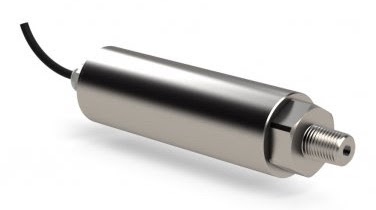
A new pressure transmitter specifically aimed at gas and liquid pressure measurement tasks in submerged instruments and equipment used in marine and offshore applications has been launched by Positek. With its protection rating of IP68 sealed to 10bar/IP69K, the new S401 series brings together their extensive application experience in challenging environment sensor technologies with a robust and durable 35 mm diameter, 316 stainless-steel housed construction and a high accuracy piezo resistive sensing element coupled with the latest ASIC circuitry.

The new pressure transmitter is available with gauge pressure measurement ranges set to customer requirements from 0.6 to 2000 bar and with a wide choice of high level ratiometric voltage, current outputs – some with a low power consumption option for use with battery powered wireless transmitting systems.

The S401 series has a specified range accuracy of less than 0.5% and a stated non-linearity of less than 0.15% of range. Repeatability and stability/year both at less than 0.10% of the measurement range. The transmitter is designed for use in temperatures from -40 to +125°C (compensated range -20 to +85°C) with temperature coefficients at less or equal to 0.15% for both offset and range. These specifications combine with a fast response time and generous burst and overpressure ratings plus exceptional shock and vibration characteristics to ensure precise and stable pressure measurement over a wide working range with an estimated life of more than 10 million pressure cycles. Installation flexibility is aided by a choice of 1/4" NPT or G1/4" threads for the wetted components and electrical interfacing is via a moulded cable to customer’s length requirement with connector/mating connector option.

The new pressure transmitter accompanies Positek’s wide range of linear, rotary and tilt position sensors, and other sensor technologies which are extensively used across oil & gas, motorsports, mining, marine, agriculture, construction, transportation, and many other demanding industries. The ISO9001:2015 designer and manufacturer has ATEX, IECEx and CSA certification across many product lines.

@positekltd @Variohm @mepaxIntPR #PAuto #Marine

Wednesday, 15 June 2022

Industrial lighting.

Their range of LED products for sophisticated industrial lighting solutions has been extended by Ledvance. The range of sensor luminaires, flex luminaires and compacts are designed with high IP ratings, easy installation fittings and long lifetimes for demanding applications where the quality of light is crucial not only for good production results but also for health and safety. They are suitable for damp environments and high ceilings of up to 12 metres, in areas including warehouses, supermarkets, logistics halls and underpasses.

The upgraded damp proof sensor luminaire allows for swift installation with simple 5-way wiring to establish a network of intelligent luminaires, based on the leader-follower or leader-leader principle. Toggle switches provide quick configuration of sensor detection areas, hold times and daylight threshold. The luminaire has an impressive efficiency of 139 lm/W and its IP65 protection makes it suitable for a range of environments including underpasses, garages and car parks.

The Low Bay Flex luminaire is designed to evenly illuminate areas with ceiling heights of between four and ten metres. It offers three different beam angles at 160 lm/W and provides easy installation with four mounting options, end caps and connections that are accessible without tools. The luminaire has a cost-effective lifetime of up to 100,000 hours and is equipped for complete through-wiring in both ON/OFF and DALI operation. Standard applications for the Low Bay Flex include storage facilities, discounters and supermarkets.

The High Bay Gen 4 Sensor luminaire significantly reduces operating costs in high-ceiling spaces of up to 12 metres thanks to increased luminaire efficiency and a configurable sensor. Such spaces may include airports, warehouses and logistics halls. The integrated corridor function provides increased light on demand without the need for any additional devices. To simplify system programming, an optional remote control permits further customisation of lighting levels and timings, extending these settings to all other luminaires installed in just one click.

The High Bay Compact luminaire has a modern, exclusive design of black aluminium housing and tempered glass cover, permitting operating temperatures of -20°C to 45°C. The high bay compact luminaire gives energy savings of up to 60% compared to conventional high bay luminaires and is a suitable replacement for existing high bay luminaires with mercury vapor or metal halide lamps. Potential applications include warehouses, logistics halls and other industrial spaces with high ceilings like lobbies and shopping malls.

These lighting solutions come in environmentally friendly cardboard packaging with all relevant product information immediately visible on the outside of the box.

@LEDVANCEUK @Ledvance @NeeshamPR #Lighting #PAuto