Showing posts with label Spectrometer. Show all posts

Thursday, 2 March 2023

Benchtop FTIR spectrometer.

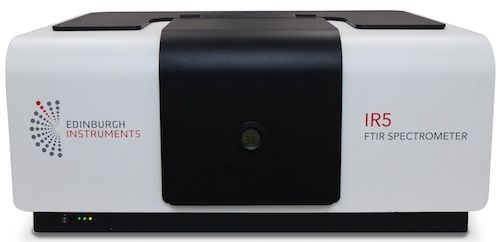
A benchtop FTIR Spectrometer, the IR5, designed and manufactured at their global headquarters in Scotland has been announced by Edinburgh Instruments.

The IR5 is the first Fourier Transform Infrared (FTIR) spectrometer of the Edinburgh Instruments brand, renowned for its expertise in instrumentation for Raman, fluorescence, and UV-Vis absorption spectroscopies. The IR5 is a modern, high-performance benchtop FTIR instrument which can be configured with a second detector or with Fourier Transform Photoluminescence (FT-PL) capability. The FT-PL option transforms the IR5 into a combined absorption and PL spectrometer in the MIR range, suitable for the most demanding research applications.

Key Features: 
• High sensitivity and spectral resolution
• Fourier Transform Photoluminescence upgrade with a choice of laser source
• Option for a second detector giving higher sensitivity at selected spectral ranges
• Simple operation suitable for all user levels, from beginner to advanced
• No maintenance required with moisture control technology
• Modern, powerful and intuitive MiracleTM software designed specifically for the IR5

Roger Fenske
, CEO, says “We are delighted to continue the growth of our molecular spectroscopy portfolio with the addition of the new IR5 Spectrofluorometer. Integrated FT-PL functionality broadens the IR5’s functionality so that it offers a wide variety of capabilities in one compact design. As always, our products come with outstanding customer support and service.”

@Edinst @Techcomp_Ltd #Laboratory #TandM #Scotland

Making laboratory miniaturized spectral sensing affordable.

Unsatisfied with smartphone camera color reproduction? Would it be useful for a user to detect different materials or even assess the freshness of food using a phone or other household appliance? The emerging technology of miniaturized spectrometers and multispectral cameras holds the solution. By detecting spectral information rather than just simple RGB color coordinates, these affordable devices can reveal previously available information via specialist equipment.

Acquiring spectral information with affordable sensors is part of a growing trend to detect optical information beyond what the eye can detect. As machine vision capabilities improve, algorithms demand more comprehensive input data than conventional RGB sensors can provide.

IDTechEx’s report, “Emerging Image Sensor Technologies 2023-2033: Applications and Markets”, covers a wide range of these emerging image sensor types, including shortwave infrared (SWIR) sensors based on organic semiconductors, quantum dots or germanium, event-based vision, hyperspectral imaging, quantum imaging and more.

Application Opportunities.
The desire to add more functionality in pursuit of differentiation means that spectral image sensors are in demand for smartphones. In 2021, German research center Fraunhofer ENAS announced its objective to produce infrared spectrometers for smartphone integration that weigh 1 gram and cost just US$1. This is a substantial improvement on the classic infrared spectrometers that weigh several kilograms and cost thousands of dollars. Fraunhofer’s low-cost spectrometer will be able to detect fake medicine and drugs, test air quality, and analyze food decomposition.

A notable player commercializing affordable spectral sensing is Spectricity, an early-stage Belgian company. Earlier this year, it announced its first product – a miniaturized multispectral image sensor that can detect 16 color channels within the visible region. The greater spectral resolution compared to conventional sensors enables more accurate color reproduction, with smartphones the target market given that camera quality is determining factor for many consumer purchase decisions.

Another consumer application that can benefit from spectral sensing is wearable health monitoring. While smartwatches can already track heart rate, oxygen levels, sleep patterns and respiration rates using LED light sensors, but more sophisticated sensors would provide greater functionality. Spectrally resolving wavelengths beyond 1000 nm, for example, by using one of the emerging SWIR (short wave infrared) detection technologies such as quantum dots, enables the detection of biomarkers undetectable by visible and NIR light. Wearable devices could then monitor glucose, lactate, hydration, and alcohol levels, broadening their appeal and providing a source of differentiation amongst the current field of smartwatches with increasingly similar capabilities.

Along with consumer electronics, miniaturized spectrometers and multispectral cameras are expected to gain traction for industrial inspection and robotics since lightweight permits integration into existing equipment. The most promising tasks are object recognition and distinguishing between different materials. Spectral resolution is especially valuable when aiming to distinguish visually similar materials such as different plastics or oil/water.

Outlook.
Due to their compact nature and affordability, miniaturized spectrometers and multispectral sensors promise to bring new capabilities to handheld devices, portable electronics, and industrial imaging inspection equipment. Capabilities that were once the preserve of the laboratory can now be applied to smartwatches, smartphones, and even robotic vacuums.

Miniaturized spectral sensing market in 2033 – by application and detection range
IDTechEx’s report “Emerging Image Sensor Technologies 2023-2033: Applications and Markets” explores a diverse range of image sensing technologies capable of resolutions and wavelength detection far beyond what is currently attainable. Many of these emerging technologies are expected to make waves within numerous sectors, including robotics, industrial imaging, healthcare, biometrics, autonomous driving, agriculture, chemical sensing, and food inspection. IDTechEx expects that the growing importance of autonomous technologies will lead the emerging image sensor market to over US$500 million (€471m) by 2033.

@IDTechEx @AgilityPRS #PAuto #Laboratory #Food

Monday, 21 March 2022

Photoluminescence spectrometer upgrade.

Edinburgh Instruments has introduced a new upgrade for its photoluminescence spectrometers, designed and manufactured at their global headquarters in Scotland.

The MicroPL upgrade enables the study of spectral or time-resolved photoluminescence of samples in the microscopic scale by converting an Edinburgh Instruments photoluminescence (PL) spectrometer into a combined spectrometer and microscope system. A wide range of microscope configurations, source coupling and detector options are available enabling both steady state and fluorescence lifetime microscopy, as well as automated maps.

Key Features:
• Spectral and Time Resolved: Suitable for any type of photoluminescence experiment
• Customisable: Tailored to any application and upgradable in the future
• FLIM Add-On: Accessible and user-friendly fluorescence lifetime mapping
• Plug & Play: Easy to swap between MicroPL and FLS1000 Photoluminescence Spectrometer or FS5 Spectrofluorometer standard sample holders
• All-In-One Software: Including data acquisition, analysis and presentation

Roger Fenske, CEO, says "We are delighted to expand the functionality of our photoluminescence spectrometers. Not only is our new PL microscope option fully configurable, it can also be upgraded with additional capability in the future. This ensures that our products keep evolving as new research trends emerge."

@Edinst @Techcomp_Ltd #Laboratory #TandM

Tuesday, 8 February 2022

Monitoring of satellite downlink bands.

The MS27201A Remote Spectrum Monitor series from Anritsu includes the industry’s first remote spectrum monitor that covers 43.5 GHz to support new satellite downlink bands. Combining high RF performance with supporting PC software, the MS27201A series delivers a unique package for long-term monitoring in a variety of commercial and regulatory environments.

The MS27201A series includes 9 GHz and 20 GHz remote spectrum monitors, in addition to the 43.5 GHz model. A wide 110 MHz measurement bandwidth to support common satellite downlink spans complements the 43.5 GHz model. With a displayed average noise level (DANL) of -164 dBm and a third-order intercept point (TOI) of typically +20 dBm, all the remote spectrum monitors assure accurate signal detection and measurement integrity.

A standard PC GUI with the familiar Anritsu spectrum analyzer interface allows users to control multiple instruments and view current spectrum from a single location. As an alternative, Anritsu can have the remote spectrum monitors interface with the MX280001A Vision software. Common trace capture and data storage applications are included in Vision software, eliminating the need for users to develop custom software.

Anritsu also supplies an IQ capture feature that allows users to conduct detailed off-line post-processing on signals of interest. Optional LTE and 5G demodulation software further expand monitoring capability, as does VSA software that allows modulation quality measurements to be made on narrowband signals in accordance with industry standards.

The series ensure reliable, 24/7 continuous spectrum monitoring over a wide geographic area. A built-in watchdog timer resets the instrument in the event of a software interruption. Should a power disruption occur, the instrument will resume immediate operation with no user intervention required.

The MS27201A spectrum monitors are standard 19-inch rack wide and 2U tall, so they can slot directly into test system racks using minimal space. The instruments are powered from a supplied 15-Watt power block that minimizes rack temperature gain.

It is targeted at the increasingly demanding requirements of spectrum owners and spectrum regulators. The remote spectrum monitors deliver stable performance in a variety of applications, including spectrum clearing, shared spectrum monitoring, satellite ground station monitoring, critical site security, interference monitoring, and regulatory enforcement.

@AnritsuEMEA @Anritsu @NapierPR #Aerospace #Communications

Wednesday, 1 December 2021

Fixed gas sensor for marine applications.

NevadaNano has announced a partnership with Recom Industrial in Genoa, (I),  to deliver the Gas Point Safe Zone system, their unique Molecular Property Spectrometer™ (MPS™) fixed gas sensor for naval and shipyard environments.

The Gas Point Safe Zone MPS-driven detection system reduces maintenance costs and increases uptime, protecting workers in virtually any environment where flammable gas mixtures are present. In addition to marine applications, the new standalone Gas Point detectors are ideal for use in the petrochemical, agricultural, chemical, oil and gas, airline, and mining industries.

“Recom Industrial has a proven track record in providing gas detection solutions across a wide range of industries and applications,” said Gary Collins, general manager, EMEA, for NevadaNano. “By integrating our MPS sensor technology, Recom is setting the highest standard in performance, reliability, and accuracy that will help save lives and ensure business operations continue without interruption.”

Using MPS sensors, a single Gas Point detection tool quickly detects and precisely quantifies more than12 different types of gases and mixtures, improving safety conditions. Those who work in a work environment at risk can rely on a single, extremely reliable device to warn promptly of the onset of danger. Unlike traditional models, the MPS sensor requires only a standard factory calibration eliminating the need for periodic field calibration for up to five years. With built-in compensation for temperature, pressure, and humidity, the gas sensor can detect methane and combustible gas with exceptional accuracy even in rapidly changing environmental conditions, minimizing false positives. Based on microelectromechanical system (MEMS) technology, the gas sensor device is very robust and immune to drift, decay or poisoning.

@Recom_Ind @CorridorComms #nevadanano #PAuto 

Thursday, 7 September 2017

Batch measurement option.

Edinburgh Instruments have announced a new batch measurement option to their Fluoracle software for the FS5 spectrofluorometer and FLS1000 Fluorescence Spectrometer.

Fluoracle now features a new batch measurement wizard in addition to all the standard instrument control and analysis options. Batch acquisition enables our customers to design a sequence of multiple different measurements including repetition, delays and loops. Batch routines can be stored and edited, saving time in long measurements and screening assays.

Their intention is to allow our customers to run their measurements for several hours or overnight whilst the instrument can be left unattended. This feature can save time and give the opportunity to concentrate on other tasks without checking on the progress of the measurements.

 @Edinst #PAuto

Monday, 3 April 2017

Photoluminscence spectrometer.

The FLS1000 from Edinburgh Instruments, is a state-of-the-art, modular photoluminescence spectrometer for the most demanding applications in Photophysics, Photochemistry, Material Sciences and Life Sciences.

The instrument sets the standards in both steady state and time-resolved spectroscopy: the system demonstrates unmatched sensitivity and can be configured for spectral measurements from the Ultraviolet to the Mid-Infrared spectral range, and for lifetime measurements spanning time resolutions over 12 orders of magnitude from picoseconds to seconds.

High sensitivity is a prerequisite for measurements of low sample concentrations, small sample volumes or low luminescence quantum yields. The instrument’s ultimate sensitivity of >30,000:1 for the standard water Raman measurement is unmatched in the industry.

The FLS1000 comes with new proprietary electronics modules and a new all-in-one software suite, Fluoracle®. New, redesigned monochromators provide high stray light rejection, supreme accuracy and resolution, and increased automation not seen on any other instrument on the market. The combination of new and modern components, together with decades of experience in configuring complex modular designs, ensures maximum research performance, paired with ease of operation.

@Edinst #Laboratory #PAuto

Tuesday, 15 December 2015

Tunable Diode Laser Spectrometer.

The TDLS8000 Tunable Diode Laser Spectrometer, from Yokogawa, can quickly make in-situ measurements of gas concentrations in various process conditions that are employed in the oil, petrochemical, electric power, iron and steel, and other industries.

As the successor to the TDLS200 laser gas analyser, the TDLS8000 offers improved reliability and operability. With this new product, Yokogawa aims to capture a greater share of the gas analyzer market by offering a solution that will make it possible to improve plant efficiency and safety.

Development Background
The original platform of the TDLS200 was developed off of a US Department of Energy program titled In Situ Sensors for the Chemical Industry. The product was released in 2005 and achieved success in many different process applications and in a variety of industries with over 1,500 units sold worldwide.

A second DOE program was launched in 2008 titled Advanced Combustion Diagnostics and Control for Furnaces, Fired Heaters and Boilers. It was highly revered success and has impacted the market with the inclusion of TDLS analyzers as the recommended instrument type for flue gas analysis by multiple internationally recognized organizations.

The TDLS800 is being introduced as the successor to the TDLS200 to satisfy the need for improved operability and to allow for greater adaptability in difficult applications.

Product Features
1. Highly reliable measurement
The TDLS8000’s laser module includes a newly developed reference cell board that improves the reliability of absorption peak detection, which is an important step in the spectral area method. In addition, the receiving unit employs a new auto gain function that can automatically optimize detection sensitivity depending on the measurement object. Increasing the signal-to-noise ratio (S/N ratio) improves the reliability of measurements taken in applications with varying levels of particulates. Designed to meet the requirements for SIL2 certification (certification pending) defined by the International Electrotechnical Commission (IEC), the TDLS8000 will play a key support role in ensuring the safe operation of plants.

2. Improved operability and maintenance efficiency
The TDLS8000 comes with a large 7.5-inch LCD touchscreen that can display a greater variety of data. The touchscreen replaces the push button interface used with preceding models, making the setting of parameters easier and more intuitive. The light source module containing the laser diode is fully sealed and damage resistant. To facilitate troubleshooting and reduce downtime, this module is able to store up to 50 days’ worth of raw data that can be used by your local Yokogawa response center.

3. Compact size
The redesigned TDLS8000 is just three-quarters the size and weight of the preceding model, allowing it to be installed in a greater variety of locations.

The TDLS8000 is certified to the IECEx, ATEX (Europe), FM (U.S.), cFM (Canada), and TIIS (Japan) explosion-proof standards. It will be suitable for installation in hazardous areas that required the use of an explosion-proof enclosure.


Major Target Markets
Industries such as oil and gas, petrochemicals, specialty chemicals, power generation, iron and steel with the following applications:

  • Measurement of O2 concentration in fired heaters for improved safety and lifecycle management
  • Measurement of CO concentration during combustion processes
  • Measurement of trace moisture in hydrocarbons and corrosive gases
  • Measurement of ammonia concentration for over injection during DeNox process


Yokogawa’s Laser Gas Analysers
These instruments make use of absorptional spectroscopy to measure gas concentration. A diode laser is scanned over a resonant frequency of the target analyte. A photodiode detector receives the light while the controller interprets the light loss into a gas concentration using our TruePeak direct absorption technique. The typical design consists of a Laser Unit and Sensor Control Unit mounted on opposing sides of a process.

Tuesday, 28 April 2015

Tunable diode laser spectrometer.

Yokogawa is releasing the TDLS8000 tunable diode laser spectrometer in May 2015. This new product can quickly make in-situ measurements of gas concentrations in combustion and heating processes that are employed in the oil, petrochemical, electric power, iron and steel, and other industries.

As the successor to the TDLS200 laser gas analyser, the TDLS8000 offers improved reliability and operability. With this new product, Yokogawa aims to capture a greater share of the gas analyser market by offering a solution that will make it possible to improve plant efficiency and safety.

Development background
Companies are always looking for ways to optimise processes by saving energy, reducing CO2 emissions, and improving safety and one way to do this is by optimising the air-fuel ratio in the combustion process. To accomplish this, sensors are needed that can continuously monitor the concentration of O2 and CO+CH4 in the radiant section of fired heaters.
The TDLS200 laser gas analyser is capable of quickly performing in-situ measurements of the concentration of near-infrared absorbing gases such as O2, CO, CO2, and NH3. Since the TDLS200 was released in 2008, its high accuracy and precision have earned it a good reputation in the marketplace, and it has gone on to become one of the best-selling instruments of its type in the global market (based on a Yokogawa market survey).

The TDLS8000 is being introduced as the successor to the TDLS200 to satisfy the need for improved operability and to allow for greater adaptability in difficult applications.

Product features
1. Highly reliable measurement
The TDLS8000’s laser module includes a newly developed reference cell board that improves the reliability of absorption peak detection, which is an important step in the spectral area method. In addition, the receiving unit employs a new auto gain function that can automatically optimise detection sensitivity depending on the measurement object. By increasing the signal-to-noise ratio (S/N ratio), this improves the reliability of measurements taken in coal combustion and other processes where there is high particulate loading. Designed to meet the requirements for SIL2 certification (certification pending) defined by the International Electrotechnical Commission (IEC), the TDLS8000 will play a key support role in ensuring the safe operation of plants.
2. Improved operability and maintenance efficiency
The TDLS8000 comes with a large 7.5-inch LCD touch screen that can display a greater variety of data. The touch screen replaces the push button interface used with preceding models, making the setting of parameters easier and more intuitive. The light source module containing the laser diode is fully sealed and damage resistant. To facilitate troubleshooting and reduce downtime, this module is able to store up to 50 days’ worth of raw data that can be accessed anywhere in the world by, for example, a Yokogawa response centre.
3. Compact size
The redesigned TDLS8000 is just three-quarters the size and weight of the preceding model, allowing it to be installed in a greater variety of locations.


The TDLS8000 is expected to be certified to the IECEx, ATEX (Europe), FM (U.S.), cFM (Canada), and TIIS (Japan) explosion-proof standards. It will be suitable for installation in hazardous areas that require the use of an explosion-proof enclosure.
Major target markets include industries such as oil and gas, petrochemicals, chemicals, electric power, iron and steel, and ceramics
Applications include measurement of O2 concentration in fired heaters for improved safety and lifecycle management; measurement of CO concentration during combustion process; measurement of amount of moisture in hydrocarbons and corrosive gases and measurement of ammonia concentration for leak detection during DeNox process.

Tuesday, 21 January 2014

Fluorescence Spectrometer for North American launch!

The US launch of a new, low-cost, high performance fluorescence spectrometer from Edinburgh Instruments is to occur at BioS 2014 and Photonics West 2014, 1-6 February 2014. They will demonstrate the operational capabilities of the analytical instrument live at the shows.

A fully integrated steady state spectrometer with single photon sensitivity, the FS5 is designed for the research and analytical market. It has a number of features that are unique in its class of fluorescence spectrometers, including:
 
·        Single photon sensitivity
·        High data acquisition speed and High Dynamic Range
·        Comprehensive yet easy to operate software
·        Unmatched range of plug and play sample cassette options.

The FS5 is an extension of Edinburgh Instruments’ portfolio of state-of-the-art spectrometer products. The instrument has been designed with the background of more than 35 years of experience in the field of fluorescence spectroscopy.